


What Helps with Muscle Spasms Your Guide to Lasting Relief
-
When that sudden, vise-like knot of a muscle spasm hits, finding relief is the only thing on your mind. Thankfully, the most effective ways to help a muscle spasm are often the simplest: a combination of gentle stretching, applying heat or cold, and making sure you're properly hydrated with enough electrolytes. These first-response actions can soothe the overactive muscle and get you on the path to lasting comfort.
What Exactly Is a Muscle Spasm?
That sudden, involuntary clenching of a muscle can be startling and intensely painful, literally stopping you in your tracks. But what’s actually going on inside your body?
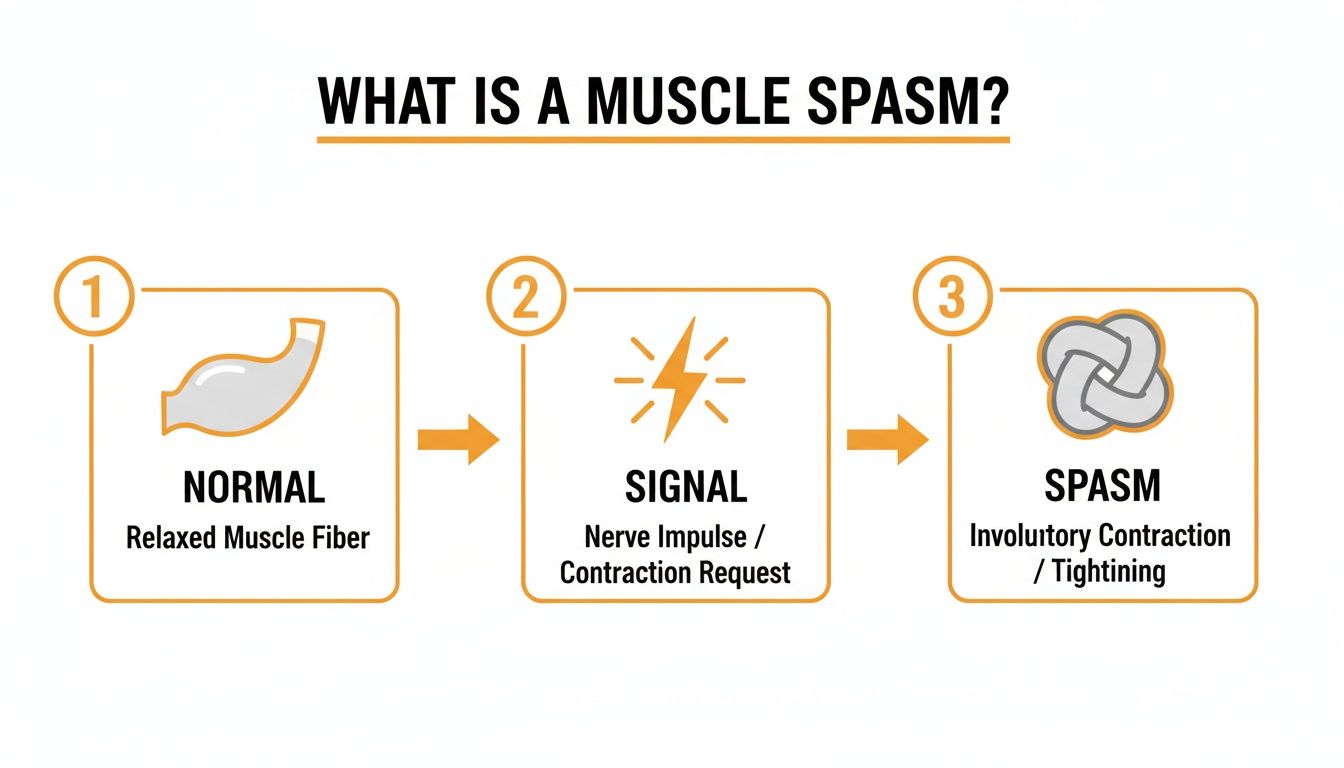
Think of it as a temporary misfire in the communication between your nerves and muscles. Normally, a nerve sends a signal telling a muscle to contract, and a follow-up signal tells it to relax. During a spasm, that "relax" message gets lost, leaving the muscle fibers stuck in the "on" position.
This creates that palpable, hard knot of tissue you can feel, which can last for a few seconds or, in some cases, several minutes. Digging into what causes back spasms can shed more light on these mechanisms and why professional care is sometimes needed for chronic issues. Understanding this basic process is the first real step toward finding relief that works.
Spasm vs. Cramp vs. Twitch
People often use these terms interchangeably, but they describe slightly different things. Learning to tell them apart helps you understand exactly what your body is telling you.
- Muscle Spasm: This is the umbrella term for any involuntary muscle contraction. It can range from a tiny, painless flutter to a big, tight knot.
- Muscle Cramp: This is a specific type of spasm that’s sustained and often very painful. That classic "charley horse" you get in your calf? That’s a perfect example of a muscle cramp.
- Muscle Twitch (Fasciculation): This is a small, fine movement involving just a tiny part of a muscle. You can often see it under the skin, like a flickering eyelid. Twitches are almost always brief and painless.
The key takeaway is that cramps and twitches are both types of spasms. The main differences are their intensity, duration, and whether they cause pain.
By starting with this clear foundation, you're better equipped to interpret your body's signals. This knowledge is empowering, reminding you that relief isn't just possible—it's achievable through a smart combination of immediate actions and consistent, long-term habits designed to keep your muscles happy and relaxed.
How to Stop a Spasm in Its Tracks
When a muscle suddenly seizes up, your first and only thought is getting it to stop. That sharp, vise-like grip is impossible to ignore and demands immediate action. The secret is to work with your body, not against it, using gentle techniques to coax those overactive muscle fibers into letting go.
The very first thing to do when a spasm hits? Stop whatever you’re doing. Trying to "push through" the pain will almost always make the contraction more intense. Instead, take a moment, breathe, and focus on gently encouraging the muscle to release.
This diagram breaks down what’s happening on a microscopic level when a muscle goes from relaxed to a full-blown spasm.
As you can see, a spasm is basically a miscommunication. A nerve signal tells the muscle to contract but forgets to send the follow-up "relax" command, leaving the muscle fibers stuck in a painfully tense state.
Gentle Stretches for Common Trouble Spots
The idea behind stretching a spasming muscle is to apply a gentle, opposing force that encourages it to lengthen and reset. The key word here is gentle — never force a stretch to the point of sharp pain.
- For a Calf Spasm (Charley Horse): Sit down with your leg stretched out in front of you. You can often get relief just by flexing your foot, pulling your toes back toward your shin. If you need a little more leverage, loop a towel around the ball of your foot and gently pull it toward you until you feel a light stretch. Hold for 20-30 seconds.
- For a Hamstring Spasm (Back of Thigh): Lie on your back, lift the affected leg toward the ceiling, and keep it as straight as you comfortably can. Clasp your hands behind your thigh and gently pull the leg a little closer to your chest.
- For a Back Spasm: A great way to ease this is by lying on your back and slowly pulling both knees to your chest, giving them a light hug. This simple move can help release some of that intense tension in the lower back muscles.
The Soothing Power of Heat and Cold
Once you’ve done some light stretching, one of the best things you can do is apply temperature therapy. While a cold pack is typically the go-to for a fresh injury involving swelling, heat is the champion for soothing muscle tension and spasms.
Imagine your tight, spasming muscle is like a clenched fist. Applying targeted heat is like running that fist under warm water; it encourages it to gently unclench. This warmth penetrates deep into the tissue, boosting blood flow. This fresh circulation delivers oxygen and nutrients, flushing out the waste products that contribute to pain and helping the exhausted muscle fibers finally relax their grip.
Here's how this can change your day: instead of being sidelined by a nagging back spasm after some yard work, you can apply a microwavable heat pack for 15 minutes. That deep, soothing warmth can reduce the pain enough for you to move comfortably again, turning a day-ruining event into a minor inconvenience. This simple, drug-free tool is a game-changer for managing everyday aches and tension.
For a complete rundown on getting the most out of this method, check out our detailed guide on when to use ice versus heat.
Unlocking Relief with Hands-On Massage
Stretching and heat are fantastic first steps, but sometimes a truly stubborn muscle spasm requires a more direct approach. This is where the true power of massage therapy shines—not as a rare luxury, but as a potent, accessible tool for managing and preventing painful muscle knots.
Massage works by applying focused pressure to tight bands of muscle, often called trigger points, which physically breaks up the tension. But its real benefit is how it transforms your circulation. Imagine a traffic jam on a highway; massage acts like a traffic controller, clearing the congestion. This allows blood to flow freely again, sweeping away metabolic waste that causes pain and ushering in fresh oxygen to help the muscle heal and reset.
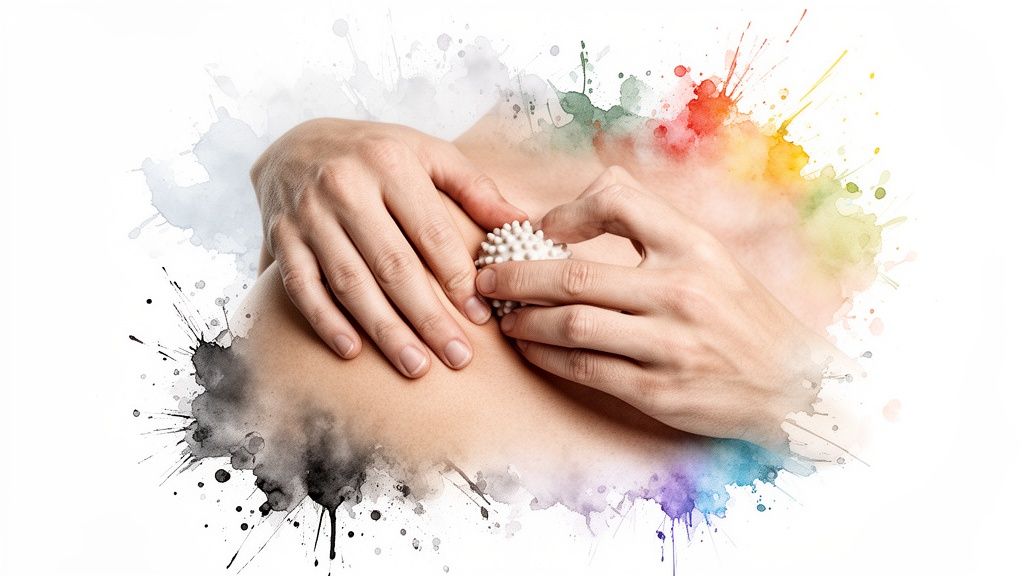
Simple Self-Massage Techniques You Can Do Anywhere
The best part? You don't need a professional to experience these benefits. By learning a few simple self-massage techniques, you can tackle muscle tightness the moment it starts.
Here’s how this helps in real life:
- At Your Desk: Feeling that familiar tension building in your shoulders after hours at the computer? Simply reach one hand across your chest to the opposite shoulder. Use your fingertips to knead the tight muscle where your neck and shoulder meet. Holding firm pressure on a knot for 15-20 seconds can stop a tension headache before it begins.
- After a Workout: If your calves are tight and threatening to cramp after a run, sit down and use your thumbs to press into the muscle in small, firm circles. This can prevent a full-blown "charley horse" later that night.
To take it a step further, simple tools like a foam roller or a spiky massage ball are game-changers. They help you apply deep, consistent pressure to hard-to-reach spots. By taking control with self-massage, you can stop a minor annoyance from escalating into a debilitating spasm.
The true power of massage lies in its ability to get right to the source of the spasm. By physically breaking up muscle knots and kickstarting circulation, it helps reset the muscle and offers relief that actually lasts, rather than just temporarily masking the pain.
Looking for more ways to ease muscle tension? Our guide on how to relax tight muscles is packed with other techniques you can easily add to your daily routine. Some people also find that adding a topical product like a magnesium oil spray for muscle comfort during a massage can help soothe achy muscles even further.
Building Your Defenses Against Future Spasms
While quick fixes like stretching and heat are great for stopping a spasm in its tracks, the real win is preventing them from happening in the first place. Lasting relief comes from creating a more resilient body that's less susceptible to these painful episodes. It’s all about shifting your focus to the building blocks of healthy muscle function.
Think of it as moving from a reactive to a proactive mindset. Instead of just treating the symptom—the spasm itself—you start tackling the underlying issues, like chronic dehydration or a nutritional shortfall. This is where we get into what really helps with muscle spasms for the long haul.
Fueling Your Muscles with Hydration and Electrolytes
Imagine your muscles are tiny, high-performance engines. Water is the coolant that keeps them from overheating, and electrolytes are the spark plugs that ensure they fire correctly. If you're low on either, the system sputters, and you get misfires—in this case, muscle spasms.
Drinking enough water throughout the day is non-negotiable, especially if you’re active. A good rule of thumb is to sip 8 ounces of water for every 15 to 30 minutes of exercise. When you get dehydrated, your muscles get stiff and irritable, basically setting the stage for a cramp.
But water is only half the equation. Electrolytes are the minerals that carry the electrical signals telling your muscles when to contract and when to let go.
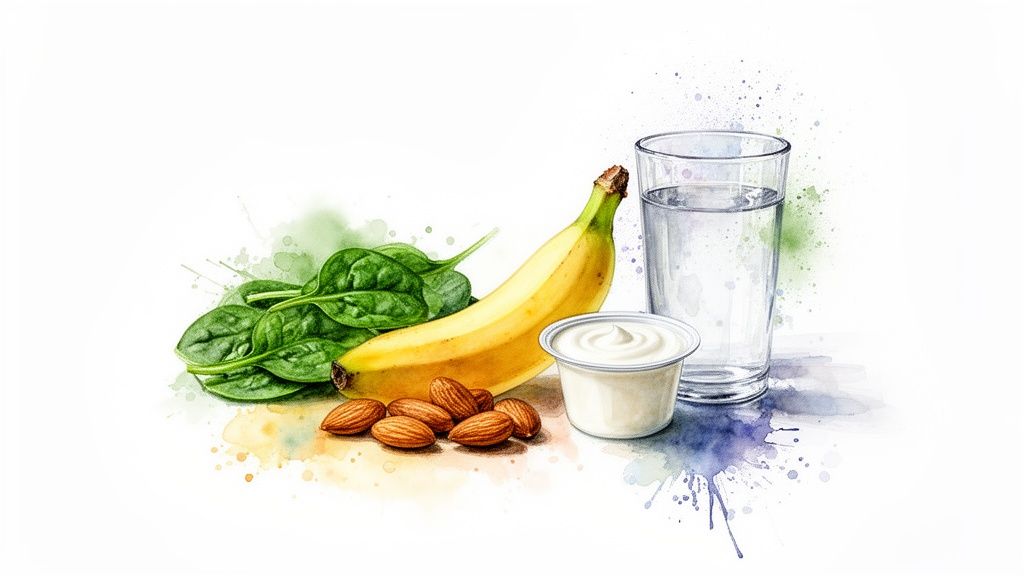
Electrolytes like magnesium, potassium, and calcium are the unsung heroes of muscle health. They keep the communication lines between your nerves and muscles clear, preventing the signals from getting crossed and triggering a spasm.
For instance, calcium is essential for the "go" signal that makes a muscle contract, while magnesium is the "stop" signal that allows it to relax. When they're out of balance, a muscle can get stuck in the "on" position. The good news is you don’t need fancy supplements; you can get them from your diet.
- Magnesium: Load up on leafy greens like spinach, nuts, seeds, and whole grains.
- Potassium: Bananas are famous for it, but avocados, sweet potatoes, and yogurt are also fantastic sources.
- Calcium: Find it in dairy, fortified plant milks, and leafy greens like kale.
Maintaining Flexibility with Daily Stretching
Another key to prevention is keeping your muscles flexible. Chronically tight muscles have a very limited range of motion, which makes them far more likely to seize up and spasm when you ask them to do something unexpected. A simple, consistent stretching routine is your best weapon against this.
You don't have to become a yoga master overnight. Even 5-10 minutes of targeted stretching each day can work wonders. Focus on the muscle groups that give you the most trouble, like your calves, hamstrings, and lower back. The idea is to gently lengthen those muscle fibers, which has the added benefit of boosting blood flow. In fact, you can learn more about how stretching helps with improving circulation naturally in our other guide.
By weaving these simple habits into your daily routine, you’re doing more than just putting out fires. You’re building a stronger, more spasm-resistant body from the inside out.
When to See a Doctor for Muscle Spasms
Most of the time, a muscle spasm is just a temporary, albeit annoying, interruption to your day. You can usually handle it at home without much fuss. But how do you know when it's signaling something more serious?
Think of it like this: a run-of-the-mill spasm is like a brief burst of static on the radio—it's there for a second, then it's gone. If that static becomes constant, however, or if other warning lights start flashing on the dashboard, it’s time to get a professional to check under the hood. Knowing when to call a doctor is just as important as knowing how to stretch a cramp out.
Red Flags to Watch For
You know your body best. If a muscle spasm feels "off" or is joined by any of the symptoms below, it's a good idea to schedule a visit with your doctor. These aren't necessarily cause for panic, but they definitely warrant a proper medical evaluation.
- They're severe or relentless: The spasms are incredibly painful, hang on for what feels like forever, or keep coming back without a clear reason (like a tough workout).
- You feel weakness or numbness: You start to notice a persistent weakness, tingling, or that dreaded "pins and needles" feeling in the same area as the spasm.
- You see physical changes: The muscle area is visibly swollen, red, or feels hot to the touch.
- Nothing at home is working: You've been diligent with stretching, hydration, and using heat packs, but the spasms just aren't letting up after a few days.
A spasm that doesn't feel like your typical post-exercise cramp, or one that brings along other neurological signs, shouldn't be ignored. Your body could be trying to tell you about a deeper issue, like a pinched nerve, a herniated disc, or even a major nutrient deficiency that needs professional attention.
When Medical Treatment Is Necessary
If your spasms are a chronic problem or are tied to another medical condition, your doctor might explore prescription-level treatments. For instance, Baclofen is one of the most well-researched medications for muscle cramps, with studies showing it can significantly cut down on both how often cramps happen and how bad they are. A key benefit is its solid safety profile, which makes it a go-to choice for people who need long-term relief. You can read the full research about its effectiveness to get a better sense of its clinical use.
At the end of the day, listening to your body is your best guide. While the vast majority of muscle spasms are completely harmless, knowing these red flags gives you the power to act and seek help when it really counts.
Your Action Plan for a Spasm-Free Life
So, let's put it all together. Understanding what causes muscle spasms is the first step, but the real power comes from turning that knowledge into a simple, sustainable routine. This isn't about a massive life overhaul; it's about building a straightforward action plan that gives you both immediate relief and long-term prevention.
The best place to start is with accessible, drug-free methods that support your body's natural healing process. Think targeted stretching to gently release tension, self-massage to work out those stubborn knots, and consistent heat therapy to soothe and relax tight muscles. These aren't just separate tactics; they work together, creating a powerful defense against future spasms.
A Simple Roadmap to Fewer Spasms
The goal here is to feel equipped, not overwhelmed. We're not adding a bunch of complicated chores to your day. Instead, we're focusing on small, meaningful habits that can make a huge difference over time. Think of it as a daily checklist for happier muscles.
Here's your clear roadmap to getting a handle on muscle spasms:
- When a spasm hits: Stop what you're doing. Gently stretch the affected muscle and apply direct heat. A microwavable heat pack is perfect for this, delivering deep warmth that boosts circulation and coaxes the muscle to let go.
- Every single day: Make hydration a priority. And be mindful of getting enough electrolyte-rich foods full of magnesium and potassium.
- Several times a week: Carve out just 10-15 minutes for stretching your major muscle groups. If you have recurring tight spots, use that time for some self-massage, too.
The key to a more comfortable, active life isn't a single magic bullet—it's consistency. By embracing these simple, repeatable steps, you're not just treating spasms; you're building a more resilient body.
Answering Your Questions About Muscle Spasms
When a muscle suddenly seizes up, you want answers—fast. Let's tackle some of the most common questions people have about muscle spasms to give you the clarity you need to handle them.
Can Stress Cause Muscle Spasms?
Yes, it absolutely can. Think about what happens when you're stressed or anxious: your shoulders tense up, your jaw clenches. Your body goes into a "fight or flight" response, pumping out hormones like adrenaline that get your muscles primed for action.
The problem is, when that stress is chronic—say, from a tough week at work—your muscles never get the signal to relax. They stay tense and tight for long periods, which eventually exhausts them and makes them highly susceptible to twitching and spasming. This is precisely where something as simple as heat therapy can be a game-changer. A warm compress applied to your neck and shoulders can help melt that tension away before it locks up into a painful spasm.
What Is the Best Mineral to Stop Muscle Cramps?
If there's one mineral to focus on for muscle cramps, it's magnesium. Think of it as the muscle's "off switch." It plays a crucial role in helping muscle fibers relax after they contract. When your magnesium levels are low, that relaxation process can falter, leading to those involuntary, painful cramps.
Of course, other electrolytes like potassium, calcium, and sodium are also part of the team, but magnesium is the star player in muscle relaxation. You can boost your intake with foods like spinach, almonds, pumpkin seeds, and whole grains. If you're getting cramps regularly, it's worth a chat with your doctor to see if a supplement might be a good idea for you.
Key Insight: A magnesium deficiency is one of the most common nutritional culprits behind recurring muscle spasms and cramps. Ensuring an adequate intake is a foundational step in prevention.
Should I Use Ice or Heat for a Muscle Spasm?
This is the classic question, and the right answer really depends on the why behind the spasm.
If the spasm is part of a new injury—something that just happened within the last 48 hours and involves swelling—reach for ice. Cold constricts blood vessels, which helps reduce that swelling and numbs the area for some immediate pain relief.
However, for almost everything else—like spasms from chronic tightness, tension headaches, or just a muscle that's knotted up for no apparent reason—heat is your best friend. Heat does the opposite of ice: it boosts blood flow to the area, which helps relax the cramped muscle fibers and soothe the underlying tension. This is where a good microwavable heat pack becomes invaluable for delivering targeted, drug-free relief right where you need it.
For reliable, clinic-trusted heat therapy you can use at home, explore the full range of U.S.-made microwavable packs from SunnyBay. Find the perfect solution for your needs at https://sunny-bay.com.


