


How to Relax Tight Muscles for Lasting Relief
-
That nagging ache in your neck or the frustrating tightness across your shoulders? It's more than just an annoyance. It’s your body sending out a clear signal that it needs a break. Learning how to relax tight muscles doesn’t require complicated routines or expensive equipment. It really just comes down to a few simple, effective techniques you can use right now.
This is all about combining gentle movement with targeted heat to calm down those overworked muscles in just a few minutes.
Your First Steps for Immediate Muscle Relief
When muscle pain hits, your first instinct might be to freeze and hope it goes away. I get it. But we've learned a lot about muscle care over the years, and staying still often makes the stiffness worse.
Believe it or not, tight, painful muscles are a huge global issue. We're talking about 1.71 billion people worldwide dealing with musculoskeletal conditions, making it the top contributor to disability. Decades ago, the standard advice was strict bed rest. Now, we know that active self-management—like the simple stretching and heat therapy we're about to cover—is much more effective. If you're interested in the data, the World Health Organization has some great information on their findings about musculoskeletal conditions.
This simple process shows how you can combine two of the most powerful methods for fast relief.
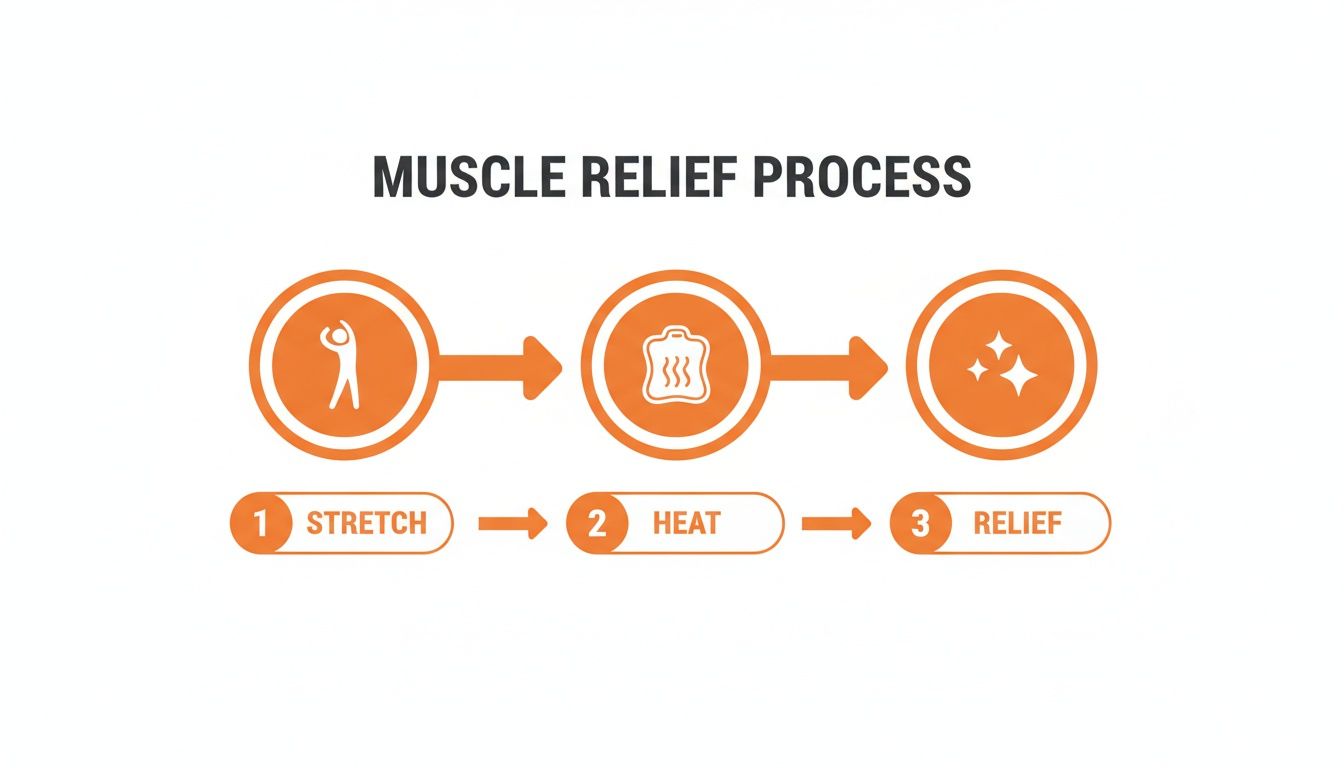
The real magic here isn't just one action, but a sequence where each step makes the next one work even better.
Why Heat and Movement Are a Power Couple
Think of a tight muscle like a cold, stiff rubber band. If you yank on it, it might snap. But what happens if you warm it up first? It becomes pliable, flexible, and much easier to stretch. That's exactly what heat therapy does for your muscle fibers.
Applying warmth to a tense area boosts circulation, bringing fresh, oxygenated blood to soothe the tissue. This helps flush out the metabolic junk that builds up and causes soreness, essentially prepping the muscle for gentle movement. For example, if you've been hunched over a keyboard all day, your neck and shoulder muscles get all bunched up. Applying heat first makes them far more receptive to gentle stretching, leading to deeper, more lasting relief.
Pro Tip: Try applying a microwavable heat pack, like a SunnyBay neck wrap, for 15-20 minutes before you start to stretch. I’ve found this makes a world of difference. The warmth relaxes everything, allowing for a deeper, safer release of tension when you finally move.
Try This Simple Stretch at Your Desk
Once your muscles are nice and warm, it’s time to introduce some gentle movement. You don't even need to leave your chair for this one.
- First, the Chin Tuck: Sit up straight and gently pull your chin backward, like you're trying to make a double chin. It feels a bit silly, but it’s fantastic for the muscles at the back of your neck. Hold it for 5 seconds.
- Next, the Neck Tilt: After the chin tuck, slowly tilt your right ear toward your right shoulder. Stop when you feel a gentle stretch along the left side of your neck. Hold that for about 15 seconds, then switch and do the other side.
This one-two punch of targeted heat followed by a specific, gentle stretch can provide immediate, noticeable relief. It's a simple habit that can completely change how you feel by the end of the workday.
Unlocking Deep Relief with Heat Therapy
There's a reason we instinctively reach for something warm when we're sore. Heat therapy is more than just a comforting feeling; it's a powerful tool that gets right to the root of muscle tightness. Applying warmth to a stiff area literally tells your blood vessels to open up. This process, called vasodilation, ramps up blood flow to your muscles.
Think of it like a rescue mission. Imagine your tired muscle cells are craving oxygen and nutrients after a long day. This fresh rush of blood delivers those essential supplies, all while whisking away the metabolic junk—like lactic acid—that makes you feel stiff and sore. The result? Your muscle fibers can finally unclench, easing that painful tightness and helping you move freely again. Heat therapy is your body's natural "relax" button.
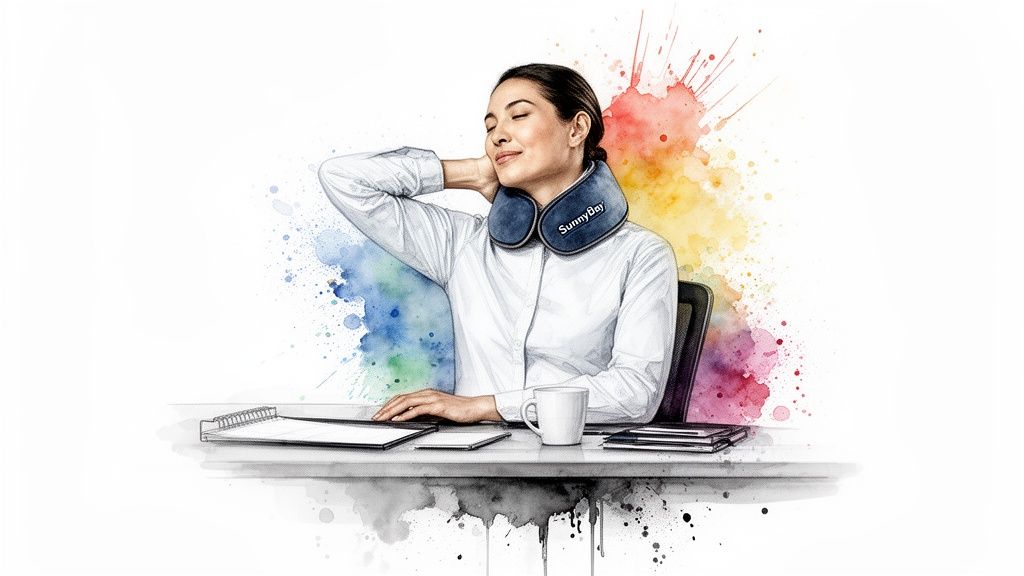
It’s an incredibly simple and drug-free way to manage nagging muscle tension, making it one of the best tools you can have in your self-care kit.
Using Heat Therapy Effectively
To get real relief from heat therapy, how you use it matters just as much as when you use it. The goal isn't just to warm your skin, but to send sustained, gentle warmth deep into the muscle tissue itself.
Take a common trouble spot like the lower back. After a long day hunched over a desk or doing chores, wrapping a well-designed heat pack around your waist for 15-20 minutes is a game-changer. The heat penetrates deep into those overworked lumbar muscles, calming spasms and taking the edge off that persistent ache. This simple act can be the difference between a restless night and waking up feeling refreshed.
A common mistake I see is thinking "hotter is better." That's not the case. The real magic happens with consistent, moderate warmth. Blasting an area with high heat or leaving a pack on for too long can irritate your skin or even cause minor burns. Sticking to that 15-20 minute window gives you all the benefits without any of the risks.
This targeted approach helps your body kickstart its own healing response from the inside out. If you're curious about the science behind it, you can dive deeper into the many benefits of heat therapy in our detailed guide.
Dry Heat vs. Moist Heat
Did you know there are different kinds of heat? Understanding the difference can make a huge impact on your results as you figure out how to relax tight muscles for good.
- Dry Heat: This is what you get from a standard electric heating pad. It's definitely convenient, but it can also pull moisture away from your skin, sometimes leaving it feeling a bit dehydrated.
- Moist Heat: This is the gentle, penetrating warmth you get from a microwavable pack (like our flax-filled ones), a steamed towel, or a warm bath. Many physical therapists and long-time sufferers of muscle pain swear by it.
From my experience, moist heat often wins out. The moisture helps the warmth travel deeper into muscle tissue, which can lead to faster and more complete relief. For instance, the subtle moisture from a heated SunnyBay neck wrap can feel like it's melting away stubborn knots far more effectively than the dry air from a plug-in pad. For anyone battling chronic tension, making moist heat a regular part of your routine can be a total game-changer.
Mastering Self-Massage for Those Stubborn Knots
While a good heat pack works wonders to warm up and soothe muscles, sometimes you need to get in there and work out a particularly stubborn knot. Think about that persistent ache in your shoulder blade that just won't quit. You don't always need to book a massage appointment to get relief—self-massage puts the power right back in your own hands, offering an on-demand solution that saves you time and money.
The whole idea is to apply focused, steady pressure to those tight spots, often called trigger points. These are tiny, hyper-irritable knots in your muscle tissue that can even send pain to other parts of your body. When you gently work on these points, you encourage them to release, which eases the overall tension and helps the muscle function normally again. For many, mastering self-massage is a life-changing skill for managing daily aches.
With a few simple techniques, you can learn how to effectively tackle tight muscles whenever and wherever they decide to act up.
Finding and Releasing Trigger Points
First things first, you have to find the knot. A trigger point usually feels like a distinctly tender spot when you press on it. Sometimes, it can even feel like a small, hard pea hiding under your skin. The goal is to apply pressure that feels firm and effective, but never excruciating.
Let's take the trapezius muscle, which runs from your neck down across your shoulders. It's a classic culprit for tightness, especially after hours spent hunched over a desk.
- Find the spot: Use the fingers of your right hand to gently probe the top of your left shoulder. Press and explore the area until you find a spot that feels noticeably tight and sore.
- Apply pressure: Once you’ve located it, press down firmly with your fingertips. Hold that pressure for a good 30 to 60 seconds while taking slow, deep breaths. You might feel the muscle start to twitch or soften under your fingers—that's a great sign that it's starting to let go.
For a more focused approach, you can learn more about understanding trigger point massage and how this method specifically targets these knots. Knowing the principles behind it can make your own efforts much more effective.
Tools That Give You an Edge
Your hands are fantastic, but they can't always get the leverage needed for those hard-to-reach places like the middle of your back or deep in your glutes. This is where a few simple massage tools can make all the difference.
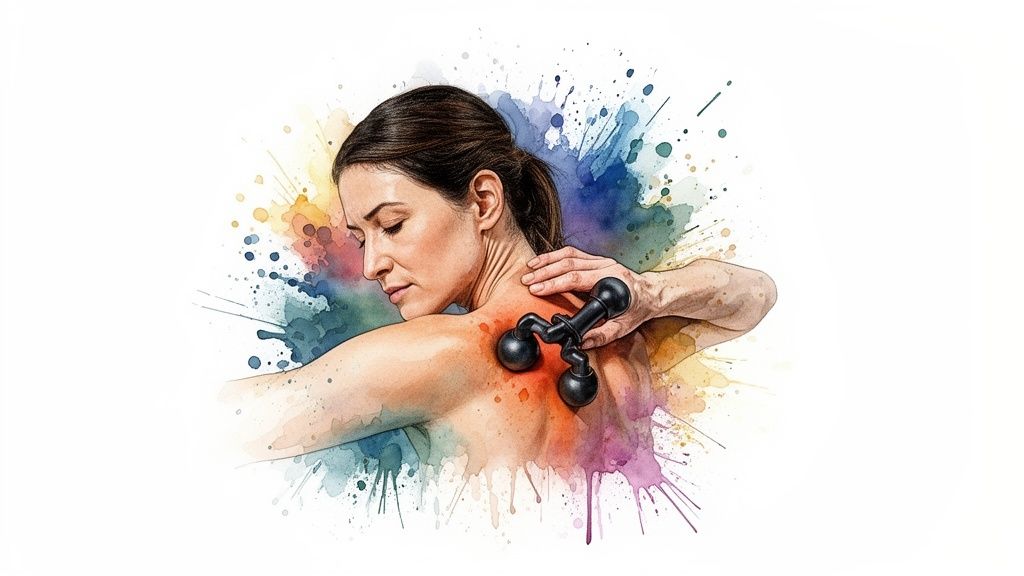
A dual-hand massage tool, for instance, lets you apply targeted pressure to your back and shoulders with way more control and less strain on your hands and fingers. It gives you the ability to work on knots with the kind of deep, consistent pressure a massage therapist would use.
Picture This: You've just wrapped up a long run, and your calf muscle is on fire. Instead of just rubbing it with your hand, you sit down, grab a massage tool, and apply direct, rolling pressure along the entire muscle. This helps break up the tightness, flush out lactic acid, and seriously speed up your recovery. It’s like having a personal physical therapist on call.
If you're curious about the science behind how this works, our guide on what is trigger point therapy is a great resource. Mastering self-massage isn't about becoming a pro; it's about learning to listen to your body and confidently giving it the relief it needs, right when it needs it.
Building Flexibility with Targeted Stretches
When it comes to fighting off muscle tightness for good, stretching is your best friend. It’s the long game. But we’re not just talking about a casual bend to touch your toes. To really get those tight muscles to let go, you need to be strategic with movements that specifically undo the stress of your daily grind. Think of it as hitting the reset button on your body's posture and bad habits.
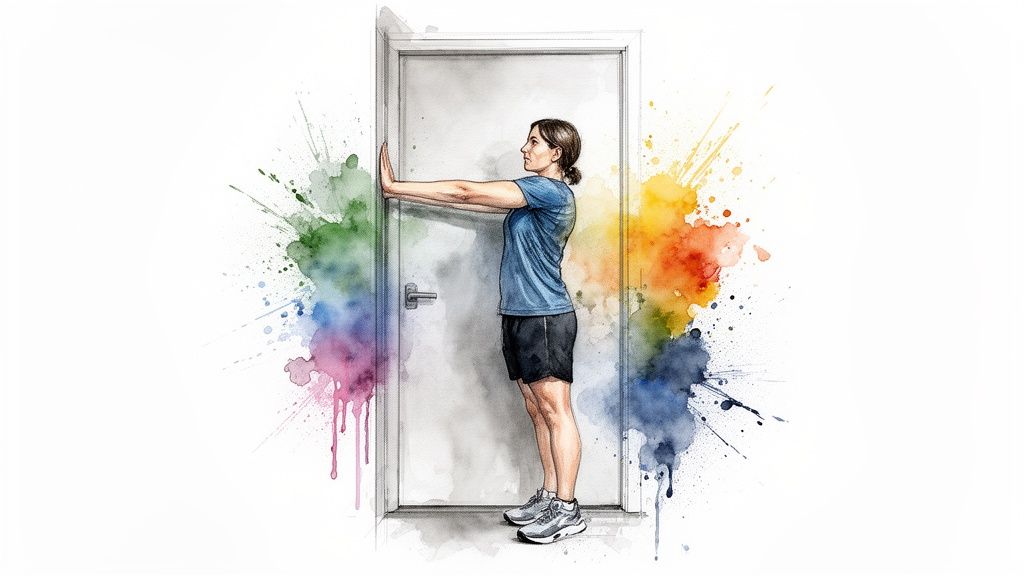
A good stretch is more than just pulling on a muscle; it gets to the root of the problem. For example, after hours hunched over a laptop, your chest muscles get all short and tight, yanking your shoulders forward into that all-too-familiar slump. A simple doorway chest stretch does wonders to reverse this, opening up your chest and finally giving those overstretched, screaming muscles in your upper back a chance to relax.
It’s this targeted approach that helps build a more balanced, resilient body, making you way less likely to deal with those same old aches and pains down the road.
Why Stretching Is More Important Than Ever
Let's be honest, our modern lives are tough on our muscles. Recent studies are showing a clear trend: lower functional strength combined with higher body weight is a recipe for postural strain and chronic muscle tightness. One large-scale analysis even found that handgrip strength—a pretty solid indicator of overall muscle function—actually dropped among young men between 2010 and 2019.
As our days become less physically demanding, our muscles are just not as prepared to handle daily strain. This is a big reason why current health guidelines now emphasize pairing strengthening exercises with a routine of stretching, heat, and massage.
Go-To Stretches for Common Trouble Spots
You don't need a complicated, hour-long routine. Consistency is what really counts. Just focus on the areas that take the biggest hit during your day—your neck, shoulders, and lower back are usually the main culprits.
Here are a few of the most effective stretches you can start doing today:
-
For the Neck: After warming the area up a bit, it’s time for some gentle neck tilts. Sit up nice and tall and slowly tilt your right ear toward your right shoulder. Stop when you feel a light pull on the left side. Hold it right there for 20-30 seconds, breathe, and then switch to the other side. The key is to let gravity do the work; don't pull on your head.
-
For the Shoulders: The cross-body shoulder stretch is a classic for a reason. Bring your right arm straight across your chest and use your left hand to gently guide it closer to your body. You should feel a great stretch in the back of your shoulder. Hold for about 20-30 seconds before swapping sides.
-
For the Hamstrings: So many people don't realize that tight hamstrings are a major cause of lower back pain. If that sounds familiar, you'll want to focus specifically on this area. You can find some fantastic, targeted routines in this guide to the 7 best stretches for tight hamstrings.
Making these simple moves a part of your daily wind-down or a quick break from your desk will make a huge difference, building flexibility that lasts.
To make it even easier to start, here’s a quick-reference table for a few essential daily stretches.
Essential Daily Stretches to Prevent Tightness
| Problem Area | Recommended Stretch | When to Do It |
|---|---|---|
| Neck & Upper Traps | Gentle Neck Tilts | During computer breaks, or before bed |
| Chest & Shoulders | Doorway Chest Stretch | After long periods of sitting or driving |
| Lower Back & Hips | Cat-Cow Pose | Morning, to wake up the spine |
| Hamstrings & Calves | Seated or Standing Hamstring Stretch | After a walk, or at the end of the day |
Integrating even one or two of these into your routine can prevent tension from building up in the first place, keeping you more mobile and comfortable.
Creating a Lifestyle That Prevents Tight Muscles
While getting quick relief with a good stretch or a warm compress is fantastic, the real win is stopping muscle tightness from becoming a recurring issue. The best way to relax tight muscles for good is to build habits that prevent them from seizing up in the first place. This isn't about a massive overhaul of your life; it’s about making small, smart changes to your daily routine that add up to a more resilient, pain-free body.
Think about where you spend most of your time—your desk, your car, your couch. These environments are either supporting your body or, little by little, contributing to the problem.
Often, that nagging tension isn’t from one big event. It’s the slow burn from hundreds of tiny postural mistakes we make every single day.
Fine-Tune Your Environment
Good ergonomics is really just about setting up your space to support your body's natural alignment. When your spine is neutral, your muscles don't have to work overtime, and you’d be amazed at the difference even tiny adjustments can make.
Take a hard look at your workstation. Is your monitor at eye level, or are you looking down all day, straining your neck? Is your chair adjusted so your feet are flat on the floor and your knees are at a 90-degree angle? These details feel small, but they determine which muscles are constantly under load.
The same idea applies to your car. Adjust your seat to sit upright, with your lower back supported, instead of hunching over the wheel. Simple tweaks like these take the pressure off your neck, shoulders, and low back, helping you avoid that stiff, sore feeling after a drive. For a deeper dive, our guide on the importance of good posture for pain relief has plenty more practical tips.
The Overlooked Role of Hydration and Movement
Here's the thing: you can have the most perfectly ergonomic chair in the world, but if you sit in it like a statue for eight hours, your muscles are still going to get tight. Our bodies are designed to move.
Try to get up every hour, even for just two or three minutes. Walk to the kitchen, do a quick stretch—anything to break the static posture. This short interruption gets your blood flowing and stops your muscles from locking into place.
Hydration is just as crucial. Think of water as lubricant for your muscles. When you're dehydrated, your muscle tissue gets less elastic, leading to cramps and tightness. A good rule of thumb is to drink 8 ounces of water for every 15 to 30 minutes of exercise, but don't forget to sip consistently throughout the rest of your day, too.
Real-World Scenario: Imagine a warehouse worker who constantly battles lower back pain. They can make two powerful changes. First, focus on proper lifting form—bending at the knees and using their core, not their back. Second, by keeping a water bottle handy and drinking from it all day, they keep their muscles hydrated and far less likely to cramp up during a physically demanding shift.
Answering Your Top Questions About Easing Muscle Tightness
When you're dealing with tight, aching muscles, you're bound to have questions. Getting the right answers is the first step toward feeling better and making sure you’re taking care of yourself safely. Let's tackle some of the most common questions I hear.
How Long Should I Use a Heat Pack on a Tight Muscle?
The sweet spot for using a microwavable heat pack is about 15 to 20 minutes at a time. This gives the heat enough time to work its way deep into the muscle tissue to boost circulation, but it’s short enough to avoid any risk to your skin.
It’s crucial to have a protective layer, like the soft cover that comes with our SunnyBay heat packs, between the pack and your skin. Never place a hot pack directly on bare skin. If you need more relief later, you can reapply the heat every couple of hours.
Think of it this way: gentle, consistent warmth is far more effective than one long, intense blast of heat. The goal is to soothe the muscle, not shock it.
Should I Use Heat or Ice for Muscle Pain?
This is the age-old question, isn't it? The answer really boils down to why your muscle hurts. A simple way I tell people to remember it is: ice for injuries, heat for aches.
- Reach for Ice: When you have a new, acute injury—something that happened in the last 48 hours and involves swelling. Think of a sprained ankle or a freshly pulled muscle. The cold helps constrict blood vessels, which is fantastic for reducing that initial swelling and numbing the sharp pain.
- Go for Heat: When you're dealing with chronic tightness, general soreness, or stiffness without any obvious swelling. Heat does the complete opposite of ice; it opens up the blood vessels to increase blood flow, helping those stubborn, tight muscles finally relax.
When Should Tight Muscles Be a Real Concern?
Most of the time, a little self-care at home is all you need. But sometimes, that ache is a sign of something more serious.
It’s time to call a doctor if the pain is severe, doesn't get any better after a week of trying things at home, or if you notice other symptoms popping up, such as:
- Numbness or a feeling of weakness in the arm or leg
- A persistent tingling or "pins and needles" sensation
- Signs of infection, like fever, redness, or major swelling
And, of course, if the pain started with a significant injury, don't wait. Always trust your gut. If something feels truly wrong, it’s always better to get a professional opinion.
Ready to feel the difference that targeted, soothing heat can make? Discover the full range of U.S.-made microwavable heat packs from SunnyBay and find the perfect match for your neck, back, and shoulder pain. Head over to our website to find your path to lasting relief.


