


What Is Trigger Point Therapy: A Guide to Lasting Relief
-
So, what exactly is trigger point therapy? At its core, it's a specialized bodywork technique that hones in on releasing those tight, tender knots you feel buried deep in your muscles. These incredibly irritable spots are called trigger points, and they’re notorious for causing what’s known as referred pain—that’s when you feel pain in one part of your body, but the real culprit is hiding somewhere else entirely.
Understanding the Source of Your Hidden Pain
Have you ever felt a persistent headache that actually seems to start from a tense spot in your neck or shoulder? Or maybe you’ve had an aching lower back that sends pain shooting down your leg. That confusing, far-reaching pain is the classic signature of a trigger point. It’s a tiny, balled-up knot of muscle fiber that can wreak havoc well beyond its immediate location.
Think of a snag in a sweater. Pulling on that one tiny thread can cause the whole garment to pucker and distort. A trigger point works in a similar way within your muscle tissue. It can restrict movement, cause weakness, and send pain signals to seemingly unrelated areas of the body. Getting a handle on this concept is the first real step toward finding relief. Instead of just chasing symptoms, trigger point therapy goes straight to the source to release the knot and restore function.

To help you get a quick grasp of these key ideas, here’s a simple breakdown.
Trigger Point Therapy at a Glance
| Concept | Simple Explanation | What It Means for You |
|---|---|---|
| Trigger Point | A tiny, hyper-sensitive "knot" of contracted muscle fibers that feels like a small pea buried in your muscle. | This is the source of the problem. Releasing it is the primary goal of the therapy. |
| Referred Pain | Pain that you feel in a different location from the actual trigger point. For example, a knot in your shoulder causing a headache. | It explains why treating the spot that hurts doesn't always work. You need to find the real source of the pain. |
| Targeted Pressure | Applying direct, sustained pressure to the trigger point to encourage it to release and "let go." | This is how the therapy breaks up the knot, relieves tension, and restores proper muscle function. |
This table shows how a tiny knot can cause widespread issues, and why a focused approach is necessary for true relief.
Why This Targeted Approach Matters
Unlike a general massage that works on broad muscle groups, this therapy is incredibly precise. It’s all about finding and deactivating the exact spots causing your discomfort. These knots don't just appear out of nowhere; they usually form because of:
- Repetitive motions from work or hobbies
- An old injury or recent trauma
- Chronic stress that keeps your muscles coiled tight
- Poor posture, especially from long hours at a desk
This pinpoint accuracy makes it a go-to treatment for conditions like myofascial pain syndrome, a chronic disorder driven by the presence of multiple trigger points. If this sounds familiar, you can get the full story on our detailed guide to what is myofascial pain syndrome. Understanding what causes these knots, including how to prevent and relieve back pain during specific life stages, is key to staying pain-free long-term.
Why Muscle Knots Form and Where They Hide
To really get what trigger point therapy is all about, we have to look at why we get these annoying, painful muscle knots in the first place. Picture a healthy muscle as a smooth, untangled rope. Every fiber glides easily past the others, letting you move freely and without pain.
Now, imagine someone tied a stubborn, tight knot right in the middle of that rope. That’s a trigger point in a nutshell. It's a tiny patch of muscle fibers that are stuck in a constant state of contraction. This knot doesn't just create a sore spot; it effectively shortens the entire rope, making the whole muscle tense, weak, and less flexible.
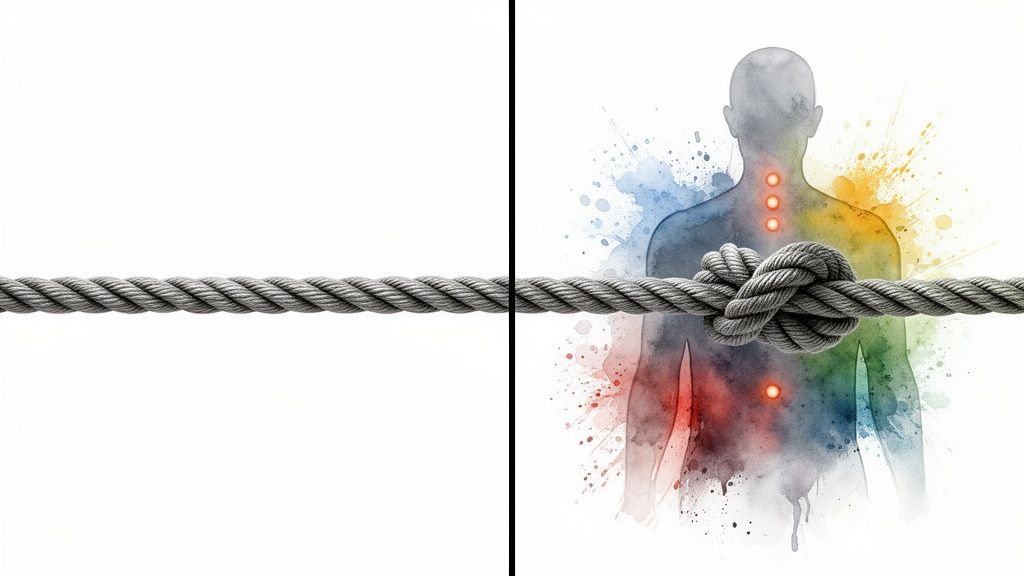
This localized tension also chokes off blood flow. When that happens, the area is starved of oxygen and nutrients while metabolic waste products get trapped. This kicks off a nasty cycle of irritation, pain, and dysfunction that can turn a small problem into a chronic source of misery.
The Most Common Causes of Muscle Knots
Trigger points aren't random. They’re usually the direct result of specific stressors that overload our muscles. Figuring out these root causes is the first real step toward both treating the knots you have and stopping new ones from forming.
The most common culprits are:
- Muscle Overuse: Think about any repetitive motion—typing at a keyboard all day, knitting, or even playing tennis. These actions can fatigue muscle fibers until they just give up and knot together.
- Acute Injury: A sudden trauma like a car accident, a bad fall, or a sports injury can shock a muscle into a protective spasm, creating trigger points almost instantly.
- Poor Posture: We're all guilty of it. Slouching over a desk, craning your neck to stare at a phone, or sleeping in a weird position puts a long, slow strain on muscles, especially in the neck, shoulders, and back.
- Chronic Stress: Mental and emotional stress isn't just in your head; it makes your body physically tense up. Hold that tension long enough, and you’ve got a perfect recipe for painful trigger points.
Common Hiding Spots and Their Deceptive Pain Patterns
Here’s where things get tricky—and why just rubbing the spot that hurts often doesn’t work. Trigger points are masters of disguise, frequently sending pain to completely different areas of the body. The real problem is often hiding somewhere else entirely.
For example: That nagging tension headache that feels like a band tightening around your temple? It’s very often not a head problem at all. The real cause is frequently a trigger point in your upper trapezius muscle, right at the top of your shoulder. Release that one knot, and the headache can disappear like magic.
This phenomenon, known as referred pain, is a cornerstone of trigger point therapy. Here are some of the most common places trigger points love to hide and the kind of trouble they cause:
1. Upper Back and Shoulders (Trapezius Muscles)
- Knot Location: That fleshy muscle running between your neck and the point of your shoulder.
- Referred Pain: This is the classic source of tension headaches, pain behind the eye, jaw aches, and a stiff neck. If you work at a desk, you know this pain well.
2. Lower Back (Quadratus Lumborum)
- Knot Location: These are deep muscles located on both sides of your lower spine.
- Referred Pain: It can feel like a deep, persistent ache in your lower back, but it can also refer pain to your hip or down into your glutes, sometimes fooling you into thinking you have sciatica.
3. Glutes (Gluteus Medius and Piriformis)
- Knot Location: Deep within the buttocks, often aggravated by sitting for too long.
- Referred Pain: A major culprit for "sciatica-like" symptoms that send shooting pain down the back of the leg. It can also cause pain directly in the hip and lower back.
Learning to recognize these pain patterns is incredibly empowering. It allows you to connect a mysterious ache to its true source. The next time you feel that familiar, nagging pain, take a moment and consider that the real problem might just be a hidden knot, waiting to be found and released.
How Professionals Release Those Stubborn Knots
When you've tried everything at home and that stubborn knot just won’t budge, it’s probably time to call in a professional. A trained therapist has a whole toolkit of specialized techniques designed to pinpoint and shut down those trigger points with a level of precision you just can't get on your own.
Knowing what these methods are can take the mystery out of seeking treatment. It also lets you have a more informed chat with your healthcare provider about what might work best for you. While each technique has a different feel, they all share the same goal: release the tightly contracted muscle fibers, get blood flowing freely again, and finally break that endless cycle of pain. For a broader look at how these methods fit into a bigger picture, it's helpful to understand how physical therapy addresses back pain overall.
Manual Pressure Techniques
The most fundamental tool in a therapist’s arsenal is manual trigger point therapy. This is a classic hands-on approach where a practitioner uses their fingers, thumbs, or sometimes even an elbow to apply direct, steady pressure right on the trigger point. Think of it as a laser-focused massage aimed at one single, angry spot.
First, your therapist will feel around to find that tight, ropey band of muscle and the specific, highly irritable knot hiding within it. They’ll then apply firm, consistent pressure for anywhere from 30 seconds to a couple of minutes. This action, called ischemic compression, temporarily squeezes blood out of the area. When they let go, fresh, oxygen-rich blood rushes back in, flushing out all the junk that’s built up and signaling the muscle fibers to relax and reset. This simple, powerful technique is often the cornerstone of any effective massage therapy session for chronic pain.
Myofascial Release
If manual therapy is like a spotlight on the knot, myofascial release is more like a floodlight for the whole area. This technique is less about the muscle itself and more about the fascia—the thin, Saran Wrap-like tissue that surrounds every muscle, bone, and organ in your body. Sometimes, this fascial web gets tight and stuck, which can either cause trigger points or make existing ones worse.
A therapist using myofascial release applies slow, gentle, sustained pressure to stretch and unwind these fascial restrictions. It doesn't feel like a deep, grinding massage; it's more of a gentle, steady pull that coaxes the tissue to let go. By freeing up the surrounding connective tissue, you improve the muscle’s overall mobility and relieve the underlying tension that keeps those knots coming back.
Myofascial release is fantastic when muscle tightness feels more widespread. It helps restore that smooth slide-and-glide between tissue layers, taking the strain off the system that can lead to new trigger points. It’s a great partner to more direct trigger point work.
Dry Needling: A Deeper Approach
For those really deep, stubborn trigger points that manual pressure just can’t seem to reach, dry needling can be a game-changer. This technique involves inserting a very thin, sterile needle—much like an acupuncture needle—directly into the trigger point. Don't let the word "needle" scare you; nothing is injected. The needle itself does all the work.
When the needle hits the spot, it often causes a local twitch response, which is a tiny, involuntary spasm of the muscle fibers. This twitch is a good thing! It's the muscle’s way of releasing its pent-up tension, improving blood flow, and essentially “rebooting” the nerve signals that were keeping it locked up.
Interestingly, this technique evolved from studies where doctors injected things like saline into trigger points and noticed patients felt better. But a pivotal double-blinded study in 1980 found something surprising: the substance being injected didn't seem to matter as much as the needle hitting the right spot. This discovery led Dr. Karel Lewit to pioneer dry needling, proving that the simple mechanical stimulation from the needle was enough to deactivate the trigger point.
Comparing Professional Trigger Point Therapies
So, which professional technique is right for you? It really depends on your specific situation. To help you understand the options, here's a quick breakdown of the most common professional therapies.
| Technique | How It Works | Best For |
|---|---|---|
| Manual Therapy | Direct, sustained pressure from hands, thumbs, or elbows is applied to the knot (ischemic compression). | Accessible, easily located trigger points; those who prefer a non-invasive, hands-on approach. |
| Myofascial Release | Gentle, sustained stretching is used to release restrictions in the connective tissue (fascia) surrounding the muscles. | Widespread muscle tightness, fascial restrictions, and as a complementary treatment to direct trigger point work. |
| Dry Needling | A thin, sterile needle is inserted directly into the trigger point to elicit a local twitch response and reset the muscle. | Deep, stubborn, or hard-to-reach trigger points that don't respond well to manual pressure. |
Ultimately, the best approach is a conversation with a qualified professional. They can assess your unique pain patterns and may even combine these methods—perhaps using myofascial release to warm up the area, followed by manual pressure or dry needling to zero in on the specific knots. This tailored strategy gives you the best shot at finding lasting relief.
Your At-Home Toolkit for Managing Muscle Pain
While seeing a professional can provide deep, targeted relief, don't underestimate the power you have to manage those nagging muscle knots right from your own home. You can actually make a huge difference in your daily comfort levels. Putting together a simple at-home toolkit is the first step toward taking control and finding relief between appointments.
The cornerstone of at-home care is self-massage. It’s all about using simple tools to apply slow, steady pressure to those tender spots. And you don't need a bunch of expensive gadgets—some of the most effective tools are the most basic.
Here are a few staples for any good at-home toolkit:
- Foam Rollers: These are your best friends for large muscle groups like your glutes, quads, and back. You simply use your own body weight to control the pressure and iron out widespread tightness.
- Massage Balls: A simple lacrosse ball or a firm rubber ball is perfect for zeroing in on those specific, hard-to-reach knots in your shoulders, back, or hips. You can pin it between your body and a wall or the floor for really precise work.
- Handheld Massagers: From simple S-shaped canes to electric percussion massagers, these tools give you the leverage to reach trigger points in your neck and back without straining your hands.
Think of it this way: the pros use targeted techniques, and you can mimic the core principles of pressure and release right at home with your own tools.
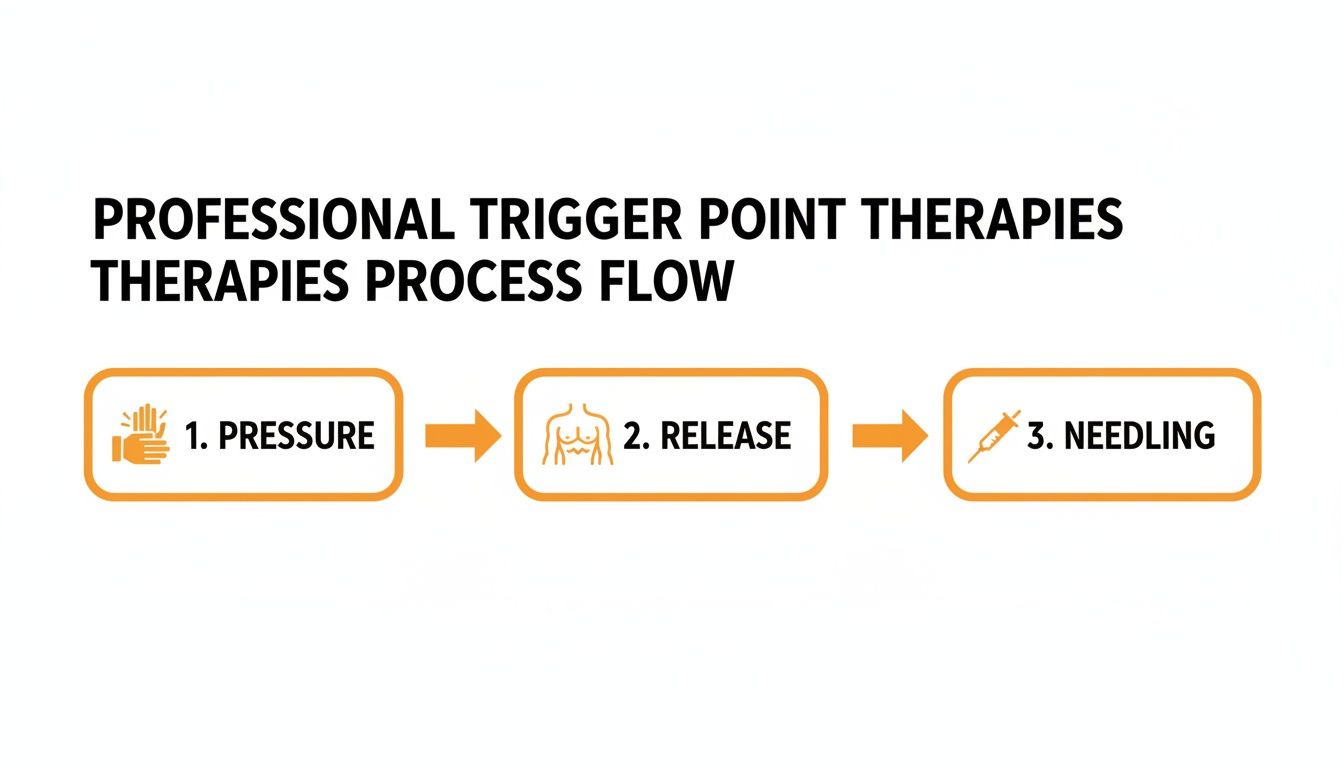
This process of applying pressure to encourage a release is exactly what you’ll be doing with a foam roller or massage ball.
The Power of Heat Therapy
Now, here’s the real game-changer for at-home care: combining those self-massage tools with the soothing power of heat therapy. Applying heat to a tense muscle before you work on it is like warming up clay before you try to shape it. It makes the tissue far more pliable and willing to change.
Heat works its magic by boosting blood circulation to the area. This fresh, oxygen-rich blood helps flush out waste products, encourages tight muscle fibers to relax, and dials down stiffness. When a muscle is warm, it’s much more receptive to pressure, making your self-massage more comfortable and way more effective. Just applying a warm compress for 15-20 minutes beforehand can make a world of difference.
By prepping the muscle with warmth, you're not just easing into the massage; you're actively helping the trigger point let go. This teamwork between heat and pressure helps you get a deeper, more lasting release with a lot less discomfort.
A Practical Example of Heat and Massage
Let’s walk through a real-world scenario. Say you have a stubborn knot in your shoulder that’s giving you a tension headache. Instead of just digging a massage ball into that cold, angry muscle, try this simple two-step approach.
- Apply Heat First: Drape a warm neck and shoulder wrap over the area for about 15 minutes. That gentle heat will soothe the surface muscles, increase blood flow deeper into the tissue, and begin calming that hyper-irritable trigger point.
- Apply Gentle Pressure: Once the muscle feels warm and a bit more relaxed, lean against a wall with a massage ball placed right on the tender spot. Gently lean in, applying steady pressure for 30-60 seconds. Focus on your breathing and wait until you feel that knot start to soften and release its grip.
This one-two punch is so much more effective than pressure alone. The heat sets the stage, and the massage tool delivers the targeted release.
If you’re looking for a reliable way to apply warmth, exploring different types of microwavable hot packs can help you find the perfect fit for your neck, back, or shoulders. Remember, consistency is everything. A few minutes of heat and self-massage each day can help keep chronic knots from taking over and dramatically improve your quality of life.
The Real-World Benefits of Releasing Trigger Points
Trigger point therapy isn't just a feel-good massage; it's a targeted technique that gets real, evidence-backed results. It's become a go-to tool for physical therapists, massage therapists, and chiropractors for a reason. This approach goes beyond simple relaxation to create genuine physiological changes that can significantly reduce pain, bring back your freedom of movement, and just plain improve your quality of life.
One of the first things people notice is a big drop in chronic pain. When a therapist deactivates that angry, hyper-irritable knot, they’re essentially cutting the wire on the pain alarm that’s been constantly blaring to your brain. This brings immediate relief not just in the muscle itself, but in all the other places that have been experiencing its referred pain.
You’ll also likely get a major boost in your range of motion. Think of a tight muscle knot as cinching a drawstring on the muscle, effectively shortening it. This is what restricts your joints and causes that stiff, limited feeling. Releasing the knot lets the muscle relax back to its proper length, restoring your flexibility and making movement feel smooth and easy again.
Restoring Normal Function and Speeding Up Recovery
Trigger point therapy is a game-changer for people who suffer from chronic headaches. A surprising number of tension headaches have nothing to do with your head—they're actually caused by trigger points in the muscles of your neck and upper shoulders. By zeroing in on these specific knots, you can often shut off the source of the headache and find lasting relief without reaching for a bottle of pills. To dig deeper into this, check out our guide on relieving tension headaches naturally.
If you’re an athlete or just lead an active life, this kind of therapy can be your best friend for recovery. It gets the blood flowing, which means more oxygen and nutrients are delivered to those tired muscles while metabolic junk is flushed out. This not only cuts down on that post-workout soreness but helps your muscles repair themselves much more quickly.
By getting to the root cause of muscle dysfunction, trigger point release helps your body find its way back to a more balanced and efficient state. This isn’t just about fixing a problem; it’s a proactive way to reduce the risk of future strains or injuries.
What to Expect: A Quick Reality Check
While the benefits are impressive, it's good to know what to expect. It's completely normal to feel some soreness or tenderness at the treatment spots for a day or two, especially after a deep session. Think of it as the muscle resetting itself—this is a positive sign that change is happening.
It's also important to remember that this therapy isn't for everybody. If you have open wounds, active infections, or a condition like deep vein thrombosis, you should steer clear. The best first step is always to talk with a healthcare professional to make sure it's a safe and appropriate option for you.
Trigger point therapy really started gaining traction in mainstream Western medicine back in the 1990s, marking a big shift in how we approach pain management. It became popular because it’s minimally invasive, gets quick results for muscle pain, and doesn’t come with a list of scary side effects. You can learn more about its journey into modern practice on myopainseminars.com. Its widespread acceptance today confirms what many have known for years: it’s a powerful tool for your health and well-being.
Got Questions About Trigger Point Therapy? Let's Clear Things Up.
Even after getting the basics down, it’s completely normal to have some questions floating around. Getting clear, straightforward answers is the best way to feel confident as you start exploring this approach to pain relief. Let's dig into some of the most common things people ask.
Think of this as your go-to guide for navigating treatment, setting the right expectations, and making sure your at-home care is both safe and effective.
How Is a Trigger Point Different From a Tender Point?
This is a fantastic and crucial question because these two terms get mixed up all the time. While most of us use "muscle knot" to describe any tight spot, a trigger point is a very specific, cranky little spot that does something unique: it causes referred pain.
Referred pain is a strange phenomenon where the spot that hurts isn't the actual source of the problem. For example, a hidden trigger point in your shoulder muscle could be the real culprit behind that nagging headache you feel behind your eye. That radiating pain pattern is the trigger point's signature move.
A tender point, on the other hand, is much more straightforward. It’s a localized area that hurts right where you press it, but it does not send pain signals elsewhere. Tender points are commonly associated with conditions like fibromyalgia. This distinction is vital because trigger point therapy is specifically designed to hunt down and release the source of that tricky, radiating pain.
How Long Does It Take to Feel Relief?
This really depends on the person and the problem, but many people report feeling a noticeable difference—less pain and better movement—after just one professional session. Don't be surprised if you feel a bit of post-treatment soreness for a day or two; that’s a normal sign that the muscle is recalibrating.
For knots that have been around for a while, a series of treatments is usually needed to get lasting results. If you’re using at-home tools, consistency is everything. Committing to a daily session of just 15-20 minutes, especially after applying some heat, can make a world of difference over a week. You’re gradually convincing that built-up tension to finally let go.
The bottom line is that you can get both immediate and long-term benefits. A single session might put out a fire, but consistent effort is what rebuilds the muscle’s resilience and keeps knots from coming back.
Can I Do Trigger Point Therapy on Myself Every Day?
Yes, you absolutely can—and in many cases, you should! Gentle at-home trigger point work is often most effective when it becomes a daily habit. The key word here is gentle. The goal isn't to bully the muscle into submission but to coax it into releasing.
Here are a few ground rules for a safe and effective daily routine:
- Always Warm Up First: Spend about 15 minutes with a heat pack on the area you plan to work on. Warming up the muscle tissue makes it more pliable and much more receptive to pressure.
- Apply Steady Pressure: Using a massage ball or another tool, apply firm, sustained pressure to a trigger point for 30-60 seconds. Press just enough to feel that “good hurt,” then take a deep breath and wait for the muscle to soften under the pressure.
- Listen to Your Body: This is non-negotiable. If you feel sharp pain, back off. Aggressive pressure can just inflame the area and set you back. If a spot feels extra tender after a session, give it a day off to recover.
Remember, gentle consistency will always beat infrequent, intense sessions that just leave you bruised and sore.
Is Heat or Cold Better for Trigger Point Therapy?
When it comes to releasing those stubborn, chronic muscle knots, heat is almost always your best friend. This is one of the most important things to get right for effective self-care.
Heat therapy works wonders by boosting blood circulation, which brings a fresh supply of oxygen and nutrients right to those tight muscle fibers. That warmth helps the muscle unclench and makes the whole area more flexible and less resistant to pressure. Think of it like warming up clay before you try to mold it.
Cold therapy (cryotherapy) has its place, but it's really for acute injuries with fresh swelling—like a sprained ankle. For the chronic, tight, and ischemic knots that define trigger points, warmth is the key. It soothes, relaxes, and sets the stage for a much more productive and comfortable release. A little heat followed by massage is a powerful one-two punch against muscle pain.
At SunnyBay, we're passionate about simple, effective, drug-free pain relief. Our wide range of microwavable heat packs and wraps are designed right here in the USA to help you warm up muscles, melt away tension, and get more out of your at-home trigger point therapy. Discover how much of a difference targeted heat can make by visiting https://sunny-bay.com.


