


Improving Circulation Naturally: Quick Tips & Practical Advice
-
Improving your circulation naturally is all about a smart combination of consistent movement, a nutrient-rich diet, and targeted therapies like heat application. It's not about huge, drastic changes. Instead, simple daily habits—like a brisk walk, staying on top of your water intake, or doing a few targeted stretches—can make a world of difference.
This is where the restorative power of things like gentle heat and massage really shines, helping to coax your blood vessels to relax and do their job more efficiently.
A Practical Blueprint for Better Blood Flow
Think of your circulatory system as your body's own personal courier service. It’s tasked with the critical job of delivering oxygen and nutrients to every single cell. When that network is running smoothly, you feel it. You have more energy, and your body just works better.
But when things get sluggish, you'll feel that, too. Maybe it’s a sense of constant fatigue, chronically cold hands and feet, or that frustrating tingling and numbness in your limbs. This guide is your roadmap to getting that system back on track, moving beyond temporary fixes to build lasting habits for better health.
We’re going to dig into actionable strategies you can start today, from specific movements and the smart use of heat therapy to simple but powerful lifestyle tweaks. The goal here is to give you a real starting point for revitalizing your body from the inside out.
Understanding the Core Components of Circulation
To get a clearer picture, this map shows how the key pillars of natural circulation work together. You can see how blood flow is directly influenced by movement, heat, and your day-to-day lifestyle choices.
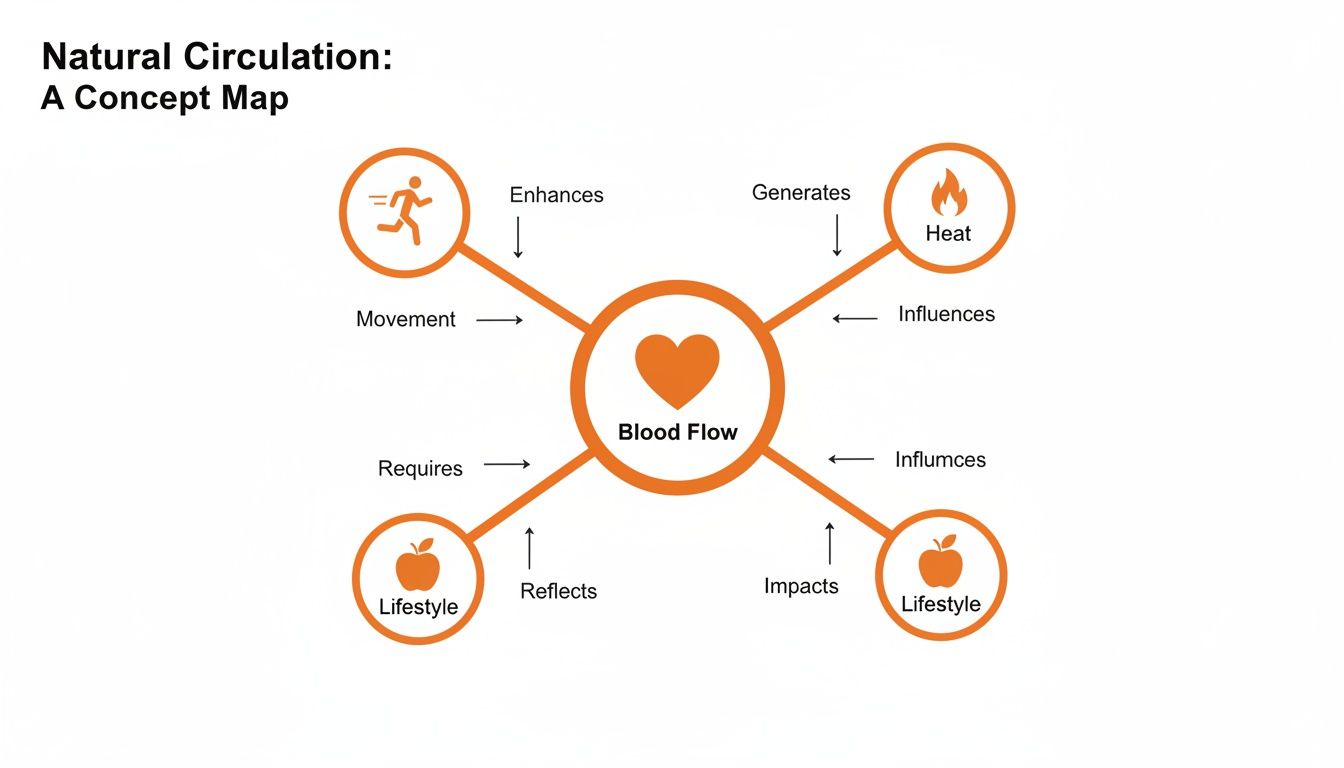
As the visual shows, these elements don't work in isolation. They have a synergistic effect—what you do, how you recover, and what you eat all play a role in how well that internal delivery service functions.
Sluggish circulation isn't just a minor annoyance; it’s a widespread problem with real health consequences. Poor circulation affects a huge number of adults globally, often leading to chronic issues like leg pain, numbness, and wounds that just won't heal. Conditions like peripheral artery disease (PAD) alone impact hundreds of millions of people worldwide, showing just how common this is.
Good circulation is at the heart of good health. Your circulatory system delivers oxygen and nutrients to every cell in your body, supporting organ function, muscle strength, and healing.
Making conscious choices is the first step toward boosting your blood flow. For a holistic look at enhancing your overall cardiovascular well-being, including circulation, exploring effective lifestyle changes for heart disease offers some great insights. Remember, small, consistent efforts in movement, diet, and recovery create a powerful ripple effect, helping you feel more energetic and resilient.
Why Good Circulation Is Your Body's Superpower
Think of your circulatory system as a massive, bustling highway network. It’s not just moving blood around—it’s the critical delivery service for your entire body. This network rushes oxygen to your brain, delivers nutrients to repair muscles after a workout, and carries away waste products. When this internal delivery system is running smoothly, you feel it. You’re energized, mentally sharp, and just feel good.
But what happens when traffic starts to back up on these internal highways? The effects start to creep in. Maybe it’s just a subtle tingling in your fingers, or toes that are perpetually cold no matter how many socks you pull on. It could also show up as stubborn fatigue, brain fog you can't shake, or muscle cramps that hit at the worst times. These aren't just little annoyances; they're signals that your body's vital supply chain is struggling.
The Common Roadblocks to Healthy Blood Flow
So, what causes these circulatory traffic jams? For a lot of us, the "desk job dilemma" is a huge factor. Sitting for hours on end puts pressure on blood vessels and slows everything down, particularly in your legs. It’s like putting a temporary roadblock on a major route.
Other common culprits include:
- Poor Diet: A menu heavy on processed foods, unhealthy fats, and too much salt can cause inflammation and plaque buildup in your arteries. This effectively narrows the highways your blood needs to travel through.
- Smoking: This is a big one. Smoking directly damages the lining of your blood vessels and makes your blood thicker and stickier—a perfect recipe for clots and blockages.
- Underlying Health Conditions: Things like high blood pressure, diabetes, and peripheral artery disease (PAD) are all tough on the health and flexibility of your blood vessels.
Getting to know these root causes is the first real step toward a solution. It lets you stop just chasing symptoms and start tackling the real problem. Once you know what the roadblocks are, you can make targeted changes to get your internal superhighway flowing freely again.
Tapping into Your Body's Natural Energy
It's simple, really: good circulation is directly tied to how energetic and alive you feel. When every single cell in your body gets a steady stream of oxygen and nutrients, your whole system just performs better. You feel more alert, your muscles have more stamina, and even your immune system gets a leg up because the white blood cells that fight infection can get where they need to go, fast.
Your circulatory system is the bedrock of your overall health. It dictates your energy levels, cognitive function, and your body's ability to heal itself. When it’s working right, it’s like having an internal superpower keeping every part of you nourished and ready for anything.
When you focus on improving circulation naturally, you’re making a direct investment in a more vibrant life. For more on this, exploring Ayurvedic ways to reclaim vitality and boost energy can offer some incredible insights. The connection is clear: better flow equals more energy.
Movement as the Engine for Healthy Blood Flow
If there's one thing you can do to dramatically improve your circulation, it's this: move your body. Think of physical activity as your body's own natural pump. It strengthens your heart, makes your blood vessels more flexible, and gets oxygen-rich blood flowing to every corner of your system.
When you start moving, your muscles cry out for more oxygen. This is a direct signal to your heart to kick things up a notch, pumping with more force and speed. A sedentary body is like a circulatory system stuck in first gear, but an active one shifts everything into overdrive. This regular "workout" for your heart and vessels keeps them in top shape, which can help put a stop to those tell-tale signs of sluggish circulation like cold hands and feet.
The real magic happens with consistency. You don't need to run a marathon; you just need to make movement a regular part of your life. It’s a direct investment in your daily energy and long-term well-being.
Smart Exercises for Better Blood Flow
While almost any movement is good, certain types of exercise are particularly effective at getting your blood pumping. The goal is to find activities you actually enjoy, so you’ll stick with them.
Here’s a quick look at some of the best choices:
- Aerobic Activities: Things like brisk walking, cycling, swimming, or even dancing are fantastic. They elevate your heart rate and challenge your circulatory system to work harder and become more efficient. For example, a daily 20-minute walk can completely transform your circulatory health over time by strengthening your heart and improving blood vessel elasticity.
- Targeted Movements: Don't have time for a full workout? No problem. Small, simple movements throughout the day add up. Ankle pumps (flexing your feet up and down) and leg lifts can be done right from your chair to keep blood from pooling in your legs.
- Stretching and Yoga: Poses that involve gentle twists and inversions are excellent for moving both blood and lymph fluid. Plus, staying flexible helps keep your arteries and veins supple and healthy.
If you’re looking for more ideas, check out our guide on 10 simple ways to get moving in everyday life. It’s full of practical tips that fit into any schedule.
Top Exercises to Boost Your Circulation
To help you choose the right activities, here’s a breakdown of some of the most beneficial exercises for blood flow.
| Exercise Type | Circulatory Benefit | Recommended Frequency |
|---|---|---|
| Walking/Jogging | Elevates heart rate, strengthens the heart muscle, and improves blood vessel elasticity. | 30 minutes, 5 days a week |
| Cycling | Low-impact cardio that builds leg muscle, which helps pump blood back to the heart. | 30-45 minutes, 3-4 days a week |
| Swimming | A full-body workout where water pressure provides gentle compression to aid circulation. | 30 minutes, 2-3 days a week |
| Yoga/Stretching | Improves flexibility of arteries and veins; twists and inversions help move stagnant blood. | 15-20 minutes daily |
| Strength Training | Builds muscle mass; strong muscles (especially in the legs) are crucial for venous return. | 20-30 minutes, 2-3 days a week |
Ultimately, the best exercise is the one you’ll do consistently. Mixing different types of activities is a great way to work your entire circulatory system and keep things interesting.
The 5-Minute Routine to Counteract Sitting
Let's face it: many of us sit for hours on end, which is one of the biggest circulation killers. You can fight back with this simple 5-minute routine. Try it once or twice during your workday.
- Neck Rolls (30 seconds): Gently tilt your head and roll it from one shoulder to the other. This eases tension and improves blood flow to your brain.
- Shoulder Shrugs (30 seconds): Lift your shoulders toward your ears, hold for a few seconds, then release. Repeat 10 times to get things moving in your upper back.
- Seated Spinal Twist (1 minute): Sit tall and twist your upper body to the right, holding the back of your chair for a gentle stretch. Hold for 30 seconds, then switch to the left.
- Ankle Pumps (1 minute): Your calves are your "second heart." Activate them by extending your legs and pointing your toes, then flexing them back toward you. Do this 20-30 times.
- Standing Hamstring Stretch (2 minutes): Get up and place one heel on your chair. Gently lean forward until you feel a stretch in the back of your leg. Hold for one minute on each side.
Movement is the most direct command you can give your body to improve circulation. Every step, stretch, and heartbeat is an instruction for your blood vessels to work better, delivering life-sustaining oxygen to every single cell.
Using Heat and Massage to Get Your Blood Flowing
Beyond getting up and moving, you can give your circulation a major boost with two of the most comforting therapies around: heat and massage. These aren't just for a spa day; they're incredibly effective, science-backed ways to improve blood flow by changing how your blood vessels work.
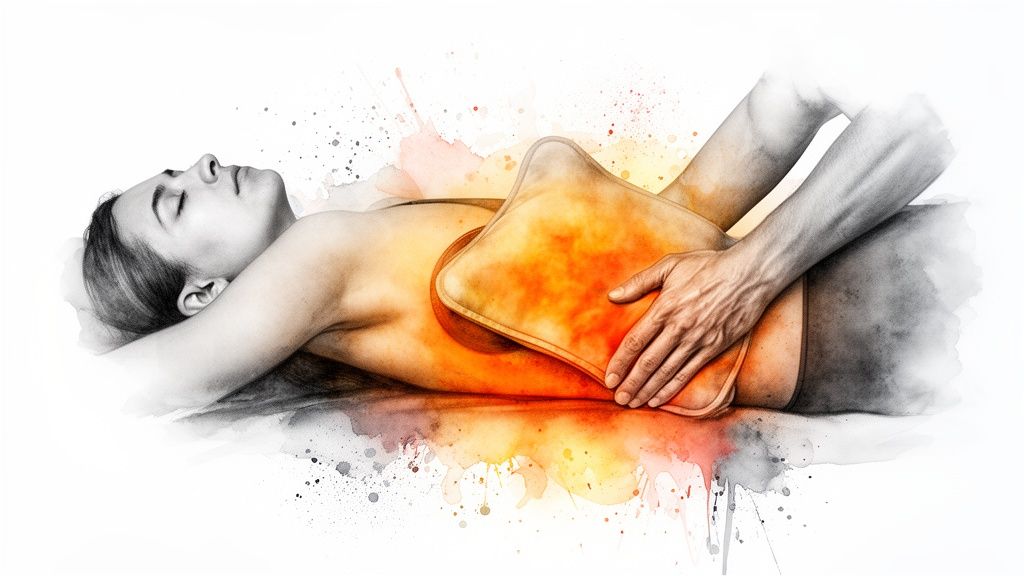
When you apply warmth to an area of your body, it kicks off a process called vasodilation. The best way to picture this is to think of a traffic jam clearing up. The heat tells your blood vessels to relax and expand, opening up more space for blood—full of oxygen and nutrients—to flow freely. This simple response is fantastic for soothing sore muscles and easing stiffness, turning discomfort into relief.

The Soothing Power of Heat Therapy
Something as simple as a microwavable heat pack can make a world of difference for targeted relief. Think about wrapping a warm, cozy pack around your neck after a long day hunched over a computer. You can almost instantly feel the tension melt away as blood rushes back into those tight, constricted muscles, bringing with it a wave of soothing warmth. This isn't just a feeling; it's your body healing itself.
This incredible benefit is why heat therapy has been trusted for centuries. It's clinically proven to enhance local blood flow, and modern research shows that just 20 minutes of targeted heat can significantly increase tissue oxygenation. More oxygen means faster recovery and less pain.
Think of heat therapy as a natural opener for your blood vessels. It gently encourages them to widen, allowing more blood to get to the tissues that are crying out for a fresh supply of oxygen and nutrients.
A product like our SunnyBay Extra-Long Neck Heating Wrap is perfect for this, as you can easily drape it over your shoulders or place it along your spine for targeted warmth right where you need it most. Combining that gentle warmth with a little self-massage can feel absolutely incredible.
A Hands-On Boost With Massage Therapy
While heat relaxes blood vessels from the outside, massage gives them a bit of a manual push. Imagine your muscles are like sponges that have become stiff and full of old, stagnant fluid. Massage therapy works by squeezing those sponges, forcing out the waste products and allowing fresh, oxygen-rich blood to flood back in. This process not only feels fantastic but also accelerates healing and reduces muscle soreness.
And you don't need a professional appointment to feel the benefits. A few simple self-massage techniques are perfect for daily maintenance.
Easy Self-Massage Techniques for Circulation
- For Your Calves: While sitting, use your thumbs to make firm, upward strokes from your ankle toward your knee. This helps push blood back up toward your heart.
- For Your Forearms: Rest your arm on a table, palm up. Use the knuckles or thumb of your other hand to press and glide from your wrist to your elbow, which is a lifesaver for releasing tension from typing all day.
- For Your Neck and Shoulders: Use your fingertips to make small, circular motions on those tight muscles where your neck meets your shoulders. This can provide instant relief from "tech neck" and get blood flowing to your head again.
Weaving these simple practices into your daily routine is a powerful, drug-free way to manage discomfort and keep your circulatory system healthy. To dig a little deeper, check out our guide on the benefits of heat therapy.
Fueling Your Flow with Diet and Hydration
Think of your circulatory system as your body's personal delivery service. What you eat and drink is the fuel that keeps this entire operation running smoothly. Just like you wouldn't put dirty, low-grade fuel in a high-performance engine, your body needs the right nutrients to keep blood vessels supple and your blood flowing freely.
A diet heavy in processed junk, unhealthy fats, and too much salt is like pouring sludge down a drain—it’s only a matter of time before you get clogs. On the flip side, a diet built around whole, nutrient-dense foods works like a maintenance crew, keeping all those internal pathways clear.
Foods That Give Your Blood Flow a Boost
Some foods are absolute all-stars when it comes to supporting your circulation. You don't need a drastic diet overhaul; just start weaving more of these into your meals.
Here are a few of my favorites to recommend:
- Fatty Fish: Think salmon, mackerel, and sardines. They're packed with omega-3 fatty acids, which are famous for their anti-inflammatory properties and their knack for keeping blood vessels healthy.
- Leafy Greens: Spinach, kale, and other greens are loaded with nitrates. Your body cleverly converts these into nitric oxide, a fantastic molecule that helps your blood vessels relax and widen, making it much easier for blood to get where it needs to go.
- Berries and Citrus Fruits: Blueberries, strawberries, and oranges are bursting with antioxidants. These compounds act like bodyguards for your blood vessels, protecting them from damage and keeping them flexible.
- Nuts and Seeds: A small handful of walnuts or almonds gives you a great mix of healthy fats, magnesium, and vitamin E. All of these play a part in vessel health and can help keep cholesterol in check.
It really can be as simple as swapping your afternoon chips for a handful of walnuts or tossing some spinach into your pasta sauce. Over time, these small habits add up and help tackle inflammation, which is often a major player in poor circulation. For a deeper dive, check out our guide on reducing inflammation naturally.
Don't Forget to Hydrate
Food gets a lot of attention, but hydration is just as critical. When you're dehydrated, your blood literally gets thicker. This sludgy consistency forces your heart to pump much harder to move it around your body.
It's like trying to push honey through a straw instead of water. That’s what dehydration does to your circulation. Staying hydrated keeps your blood thin and moving effortlessly.
Make water your best friend. Sip it consistently throughout the day. Herbal teas are a great option, too—green and black teas contain antioxidants that can even help widen your blood vessels a bit, giving your circulation an extra helping hand.
Your Weekly Routine for Better Circulation
Knowing what to do to improve circulation is half the battle; actually building those habits into your daily life is the other, more important half. The secret isn't about making drastic, intense changes overnight. It’s all about consistency. Let's walk through how you can take all the strategies we've talked about and weave them into a simple, practical weekly plan that actually sticks.
Think of this as a blueprint for your week, designed to make these circulation-boosting habits feel as natural as pouring your morning coffee. When you combine a little bit of movement, some targeted heat therapy, and a few mindful choices, you create a powerful effect that keeps your blood flowing just the way it should.

A Sample Daily and Weekly Plan
Remember, this is just a starting point, not a rigid set of rules. The best routine is the one you’ll actually do, so feel free to adapt this to fit your schedule and listen to what your body is telling you.
Daily Habits (Monday - Sunday):
- Morning Kickstart (15 mins): Get your day going with a quick, brisk walk. Even just a loop around the block is enough to wake up your circulatory system and set a healthy tone for the rest of the day.
- Hydration Goal: Keep a water bottle handy and sip on it throughout the day. Staying hydrated is one of the easiest ways to keep your blood from getting too thick, which makes it harder for your heart to pump.
- Movement Breaks (Every Hour): If you sit for work, set a reminder to get up for 2-3 minutes every hour. A short walk to the kitchen, a few simple stretches, or even just doing some ankle pumps at your desk can make a huge difference.
- Evening Wind-Down (20 mins): Settle in for the night by applying a warm SunnyBay heat pack to areas that feel tight or cold, like your feet, lower back, or shoulders. This not only coaxes blood flow to those areas but also helps quiet your nervous system for a better night's sleep.
A consistent evening routine with heat therapy does more than just relax you; it actively encourages vasodilation, widening blood vessels in key areas and ensuring a rich supply of oxygenated blood can work on repair and recovery overnight.
Structuring Your Week for Success
The key to sticking with it long-term is to mix things up. By alternating different activities, you keep things interesting and work your circulatory system in unique ways, giving you a well-rounded boost without burnout.
Weekly Focus:
- Monday, Wednesday, Friday (Cardio Focus): Carve out 30 minutes for something that gets your heart pumping. This could be anything from a brisk walk or bike ride to swimming or dancing.
- Tuesday, Thursday (Flexibility & Massage): Dedicate some time to gentle yoga or a full-body stretching routine. Afterwards, spend 10 minutes giving yourself a quick massage on your calves and forearms to manually stimulate blood flow.
- Saturday (Active Recovery): Keep it light and fun. Think a longer, more leisurely walk in a park, a bit of gardening, or a hike on a favorite trail.
- Sunday (Rest & Restore): Give your body a break. This is the perfect day to spend a little extra time with your heat therapy—maybe while you're reading a book or watching a movie.
Your Circulation Questions, Answered
When you start making changes to improve your circulation, it's natural to have a few questions pop up. We've gathered some of the most common ones and provided clear, expert answers to help you on your way.
How Long Does It Take to Naturally Improve Circulation?
You'll likely feel a difference right away—that pleasant warmth after a good walk or the immediate comfort from a heat pack. But for lasting improvements, consistency is everything.
Most people start to notice real, sustained changes within 4 to 8 weeks of making daily exercise and diet a priority. Think warmer hands and feet, less tingling, or fewer cramps. The real win is when these actions stop feeling like a project and become a natural part of your life.
Is Heat Therapy Safe for Everyone?
For most people, yes! Heat therapy is a fantastic, safe way to ease the kind of muscle stiffness and aches that often come with sluggish blood flow. It gently coaxes your blood vessels to relax and open up, which is why a warm compress feels so good on tight shoulders after a long day.
That said, you should talk to your doctor first if you have specific conditions like diabetes, deep vein thrombosis (DVT), or significant nerve damage. It's also best to avoid putting heat directly on open wounds or fresh injuries with a lot of swelling, as that can sometimes make inflammation worse.
Heat therapy is one of the most accessible methods for improving circulation naturally. It helps widen blood vessels through vasodilation, allowing more oxygen-rich blood to reach your tissues.
Are There Any Supplements That Genuinely Help?
Yes, some supplements have a good reputation for supporting circulatory health. Omega-3 fatty acids (think fish oil) and the amino acid L-arginine are known to help keep blood vessels flexible. Ginkgo biloba is another one that many people use to encourage better blood flow.
But here's the catch: supplements aren't a one-size-fits-all solution. They can work differently for everyone and sometimes interfere with medications, particularly blood thinners. It is absolutely critical to always speak with your healthcare provider before starting a new supplement to make sure it’s a safe choice for you.
When Should I See a Doctor About Poor Circulation?
Natural methods can do a world of good, but certain symptoms are red flags that need a professional's attention. Don't ignore them.
It's time to book an appointment if you have persistent pain in your calves when you walk, sores on your legs or feet that just won't heal, or skin that turns pale or bluish. Another major warning sign is if one leg or arm feels drastically colder than the other. These could be signs of a more serious issue like Peripheral Artery Disease (PAD) that needs a proper diagnosis and treatment plan.
For simple, effective, and drug-free support on your journey to better circulation, explore the range of microwavable heat therapy solutions from SunnyBay. Our U.S.-made products are designed to deliver targeted warmth and comfort, helping you get back to the activities you love. Discover your perfect heat wrap at https://sunny-bay.com.


