


How to Treat Fibromyalgia Naturally for Lasting Relief
-
Living with fibromyalgia can feel like a daily battle against widespread pain, relentless fatigue, and that frustrating "fibro fog." But the good news is, you can find real, effective relief without having to rely solely on medication. This guide is all about practical, evidence-based strategies that put you back in the driver's seat, using tools like targeted heat therapy, mindful movement, and smart nutrition. It's about how small, consistent actions can add up to a big difference in your quality of life.
Your Path to Natural Fibromyalgia Management
Finding a way to manage fibromyalgia often feels overwhelming. The condition—marked by that all-over ache, deep-seated fatigue, and cognitive hurdles—can make even the simplest daily activities feel like climbing a mountain. For so many, exploring natural ways to manage these symptoms offers a powerful sense of hope. It's about empowering your body's own ability to heal, not just putting a band-aid on the pain.
This isn't some quick fix or a single magic bullet. It’s about building a personalized toolkit of sustainable habits that work together to turn down the volume on your pain and genuinely improve how you feel day-to-day.
And you're far from alone in this. Waking up every morning to widespread muscle pain that makes basic tasks feel impossible is a reality for an estimated 3.8% of people worldwide. That number can even jump to 20.55% for individuals with related health conditions. Fibromyalgia impacts millions, with women being diagnosed up to 10 times more often than men. You can explore further data on fibromyalgia and treatment options to learn more.
A Holistic Framework for Relief
The path to treating fibromyalgia naturally is a multi-layered one that tends to both the body and mind. Instead of tackling each symptom on its own, a holistic plan understands that pain, sleep, diet, and stress are all tangled together. Making a small, positive change in one area can create a ripple effect that benefits all the others.
Think of it this way: starting your day with gentle heat therapy can make movement feel much more approachable. Placing a SunnyBay heat pack on your stiff shoulders while you sip your morning coffee can ease that morning rigidity. This simple act can make a short walk or a few gentle stretches feel less like a chore and more like a possibility. It sets a positive tone for the day, reminding you that you have tools to actively manage how you feel.
This visual captures the flow of a natural management plan, highlighting how foundational therapies like heat application kickstart the process.
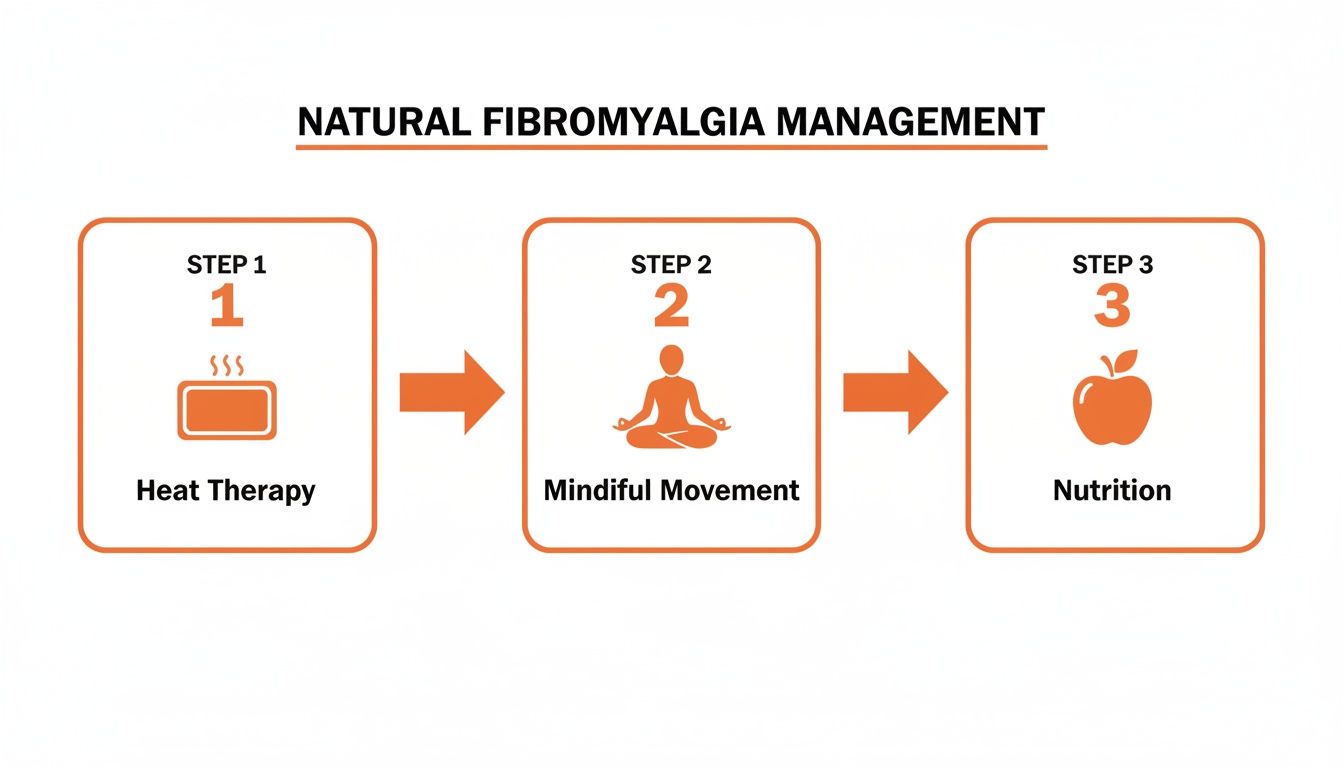
As the infographic shows, combining heat, movement, and nutrition creates a powerful synergy that can help you feel significantly better.
The core idea is simple: You are not passively accepting your symptoms. Instead, you are actively participating in your own care by incorporating simple, powerful habits into your daily routine.
This guide is designed to take you from theory to a practical, step-by-step framework. We’ll explore exactly how to weave these elements into your life in a way that feels doable and sustainable, proving that you can take meaningful steps toward a life with less pain and more energy.
To give you a quick overview, here's a snapshot of the key pillars we'll be covering in this guide.
Your Natural Fibromyalgia Management Toolkit at a Glance
| Treatment Pillar | Primary Benefit | Simple First Step |
|---|---|---|
| Symptom Tracking | Identifies personal pain triggers and patterns | Start a simple daily journal rating pain, fatigue, and mood from 1-10. |
| Targeted Heat Therapy | Eases muscle stiffness and reduces localized pain | Use a microwaveable heat wrap on your neck and shoulders for 15 minutes each morning. |
| Mindful Movement | Improves flexibility and reduces pain over time | Try 5 minutes of gentle neck and shoulder stretches while seated. |
| Sleep & Pacing | Restores energy and prevents symptom flare-ups | Set a consistent bedtime and wake-up time, even on weekends. |
| Mind-Body Practices | Calms the nervous system and reduces stress | Practice 5 minutes of deep belly breathing whenever you feel overwhelmed. |
| Anti-Inflammatory Diet | Reduces systemic inflammation and supports overall health | Swap one processed snack per day for a piece of fruit or a handful of nuts. |
This table serves as your roadmap. As we dive into each section, you'll learn how to build upon these simple first steps to create a comprehensive self-care plan that works for you.
Using Therapeutic Warmth and Gentle Massage to Your Advantage
When you’re living with fibromyalgia, some of the most powerful tools for relief are often the simplest. We're talking about therapeutic warmth and gentle massage. These aren't just feel-good remedies; they are foundational practices that directly target the physiological roots of your pain and stiffness. They help calm a nervous system that's on high alert and bring desperately needed blood flow to sore, tight muscles.
Imagine your body being able to move more freely, with less of that deep, gnawing ache. This is the promise of consistent heat therapy and gentle massage. By making these techniques a core part of your daily routine, you can significantly reduce stiffness, improve your flexibility, and reclaim a sense of control over your pain levels.
Why Soothing Heat Actually Works
There’s a good reason heat therapy is a cornerstone of natural fibromyalgia care. When you apply warmth to a painful spot, it triggers a process called vasodilation—a fancy word for your blood vessels widening. This simple action is a game-changer because it dramatically increases blood flow to the area.
Imagine your tight, aching muscles are starved for resources. That fresh rush of blood delivers oxygen and nutrients that help them finally relax and begin to repair. At the same time, it helps flush out the metabolic junk that builds up in your tissues and contributes to that deep, nagging ache. This is how you start to ease the muscle pain and stiffness that define so many fibromyalgia days. For example, if your neck is so stiff in the morning that turning your head is painful, applying a warm compress for 15 minutes can relax those muscles enough to restore your range of motion, making simple tasks like driving or working at a computer much more comfortable.
Heat therapy does more than just relax your muscles; it can actually change how your brain registers pain. The sensation of warmth stimulates sensory receptors in your skin, which can help block pain signals from ever reaching the brain in the first place, offering real, tangible relief.
Building Your Own Targeted Heat Therapy Routine
The real key here is consistency. Making heat therapy a regular part of your day is what brings lasting results, and it doesn't have to be complicated. The goal is simple: apply targeted warmth to your most stubborn trigger points, which for many people are the neck, shoulders, and lower back.
Here are a few real-world examples to get you started:
- Tackle Morning Stiffness: Before you even swing your legs out of bed, try using a microwavable heat pack like a SunnyBay neck wrap. Drape it over your shoulders for 15-20 minutes while you sit up and slowly wake up. That warmth can make all the difference in easing the rigidity that makes mornings so tough.
- Beat Midday Tension: If you spend your day at a desk, keep a versatile body wrap handy. Applying it to your lower back for a short session can stop the tension from prolonged sitting from escalating into a full-blown flare-up.
- Wind Down in the Evening: Use heat as a signal to your body that it's time to relax. Placing a warm pack on your hips or legs while you read a book can help calm your nervous system and set the stage for a more restorative night's sleep.
If you want to go deeper and understand exactly how warmth interacts with your body's pain signals, our detailed guide explores all the core benefits of heat therapy.
The Power Couple: Heat and Gentle Self-Massage
Combining heat with a bit of self-massage creates a powerful one-two punch against fibromyalgia pain. The heat gets the muscles primed, making them more pliable and much more receptive to gentle pressure. This makes any massage you do more effective and less likely to cause more pain—a common concern with fibro. It's a truly transformative approach because it allows you to work deeper into the muscle tissue without triggering a pain response, leading to longer-lasting relief.
After a 20-minute heat session, your muscles are warm and much more relaxed. This is the ideal time to grab a simple massage tool, like a tennis ball, and gently work on those knots and tender points.
Here's how that might look for lower back pain:
First, lie down and place a warm SunnyBay body wrap under the small of your back for about 15 minutes. Once you're done, remove the wrap and slip a massage ball between your back and the floor. Gently roll your body over the ball, applying just enough pressure to feel it working on the sore spots. This combination of prior warmth and gentle massage can release deep-seated tension that heat alone might not reach, helping you stand up straighter and move with less pain for hours afterward.
This combined approach isn't just about feeling better for a little while. Over time, it actively works to improve tissue health and flexibility. By making this simple duo a regular habit, you're taking a huge step toward reclaiming control over your body and your well-being.
Embracing Gentle Movement with Yoga and Tai Chi
When every single muscle in your body aches, the very thought of "exercise" can feel completely out of reach. I get it. The last thing you want to do is provoke a flare-up. But what if we reframe it? Instead of exercise, think of it as gentle movement. The right kind of movement can be one of your most powerful allies for managing fibromyalgia naturally.
This isn't about pushing through pain. It's about gently re-engaging with your body in a way that feels supportive and healing. This is where mindful practices like yoga and tai chi truly shine. They blend slow, deliberate movements with deep breathing, focusing on that crucial mind-body connection. This approach helps you build flexibility and strength without harsh impact, all while helping to soothe an overstimulated nervous system—a core issue in fibromyalgia.

Making Movement Accessible on Your Worst Days
The secret to making this work is to start small. I mean, really small. The goal isn’t to hit a certain time or intensity; it’s simply to be consistent and to tune into what your body is telling you. On those high-pain days, even five minutes of gentle activity can make a world of difference, preventing stiffness from taking over without draining your limited energy.
Here are a few simple starting points that you can do almost anywhere:
- Seated Cat-Cow Stretches: From a comfortable chair, place your hands on your knees. On an inhale, gently arch your spine and look toward the ceiling. On an exhale, round your back and tuck your chin to your chest. Flow between these for 2-3 minutes to gently wake up your spine.
- Simple Guided Tai Chi: You can find tons of beginner-friendly, five-minute tai chi videos online, many of which can even be done while seated. These slow, flowing movements are fantastic for improving your balance and melting away stress.
- Gentle Neck Tilts: Sit or stand tall and slowly tilt your right ear toward your right shoulder until you feel a light stretch. Hold for 15-20 seconds, then repeat on the left. This is a great way to release tension in those notorious fibromyalgia trigger points in the neck and shoulders.
A little prep can make these movements feel so much better. Try wrapping a SunnyBay body wrap around your hips or lower back for about 15 minutes before you start. That gentle warmth can coax your muscles into relaxing, improving your range of motion and making post-activity soreness less likely.
The Proven Benefits of Mind-Body Practices
Mind-body practices are finally getting the scientific recognition they deserve for their incredible impact on chronic pain. While fibromyalgia affects an estimated 2.9-4.7% of people worldwide, there's growing evidence that these ancient practices offer real hope. In-depth reviews have confirmed that both yoga and tai chi can lead to significant symptom relief.
In fact, the research is compelling. Studies show these Eastern traditions can slash pain levels by 30-50% and improve quality of life scores by 20-35% after just 8-12 weeks of practicing twice a week. What's even more encouraging is that about 75% of people were able to maintain those benefits six months later. You can read the full research about these mind-body findings to dive deeper into the science.
The real magic happens when you shift your mindset from "I have to exercise" to "I am mindfully moving my body." This small but powerful change takes the pressure off and lets you focus on what feels good in the moment.
How to Build a Sustainable Movement Habit
Once you’re comfortable with a few minutes of gentle movement, you can begin to build on that foundation—slowly and carefully. The golden rule here is to only change one thing at a time. Never increase both how long you’re moving and how intensely you're moving on the same day.
Here’s a practical way to ease into it:
- Start with Consistency: Your first goal is simply to build a habit. Aim for just 5 minutes of your chosen activity every other day. Stick with that for two full weeks, even if it feels too easy.
- Gently Extend Duration: After two weeks of consistency, if you're not experiencing any flare-ups, try increasing your time to 7-8 minutes. Hold steady at that new level for another week or two.
- Listen and Adapt: This is the most important part. Pay close attention to how your body feels the day after you move. If you notice a big spike in pain or fatigue, that’s a clear signal to scale back a bit. This isn't a failure—it's your body giving you valuable feedback to help you find your personal sweet spot.
By embracing this kind of gentle, mindful movement, you’re doing so much more than just exercising. You are actively calming your nervous system, improving your body's function, and taking a powerful step forward in your natural fibromyalgia management plan.
Rethink Your Plate: Embracing an Anti-Inflammatory Diet
When you live with fibromyalgia, what you eat has a direct line to how you feel. The pain and inflammation aren't just in your head—they're influenced by what's on your plate. Adopting an anti-inflammatory diet isn’t about deprivation; it’s about making smart, strategic choices that help calm your system from the inside out.
Think of it less as a strict "diet" and more as a way of life. The goal is to crowd out foods that can aggravate your symptoms by loading up on vibrant, nutrient-dense options. You're essentially giving your body the tools it needs to fight back against chronic inflammation.

Building a Plate That Fights Pain
An anti-inflammatory eating plan is packed with antioxidants, healthy fats, and fiber. These power players work together to combat oxidative stress, a known contributor to the chronic inflammation behind fibromyalgia. This means focusing on whole, unprocessed foods that are as colorful as they are delicious.
Foods like fatty fish, dark leafy greens, and berries are your all-stars. The omega-3 fatty acids in salmon, for instance, are famous for their ability to cool down inflammatory pathways. Likewise, the antioxidants in blueberries and spinach help neutralize the free radicals that can trigger pain and damage cells.
Here are a few simple ways to get started:
- Omega-3 Power: Try to get two servings of fatty fish like salmon, mackerel, or sardines each week.
- Go Green: Toss a big handful of spinach or kale into your morning smoothie, eggs, or a pot of soup. It’s an easy antioxidant boost.
- Berry Good: Blueberries, strawberries, and raspberries are low in sugar and bursting with compounds that fight inflammation.
- Smart Snacking: A small handful of walnuts or almonds provides a satisfying crunch along with healthy fats and fiber.
- Spice It Up: Turmeric contains curcumin, a compound with impressive anti-inflammatory properties. Add it to curries, roasted vegetables, or even a warm "golden milk" latte.
Finding Your Triggers and Making Smart Swaps
Just as important as adding good-for-you foods is learning to spot the ones that might be making your symptoms flare. A huge part of this process is understanding what foods cause inflammation so you know what to limit. Common culprits include processed snacks, refined sugars, and certain vegetable oils high in omega-6s.
These foods can tip the scales toward a pro-inflammatory state in your body, potentially making you more sensitive to pain. But you don't have to overhaul your entire pantry overnight. Start with simple, manageable swaps.
Here's a real-world example: Instead of that sugary granola bar for your 3 p.m. slump, try a crisp apple with a spoonful of almond butter. You're swapping out refined sugar for fiber, healthy fat, and protein, which helps keep your blood sugar stable and sends fewer inflammatory signals through your body.
To help you visualize these choices, here's a quick comparison of foods to lean into versus those you might want to limit.
Anti-Inflammatory Foods vs. Potential Trigger Foods
| Foods to Incorporate (Anti-Inflammatory) | Foods to Limit or Avoid (Pro-Inflammatory) |
|---|---|
| Fatty fish (salmon, mackerel) | Processed and cured meats (bacon, sausage) |
| Leafy greens (spinach, kale) | Sugary drinks and desserts |
| Berries (blueberries, strawberries) | Refined carbohydrates (white bread, pastries) |
| Nuts and seeds (walnuts, chia seeds) | Fried foods |
| Olive oil | Certain vegetable oils (corn, soybean) |
| Turmeric and ginger | Excessive alcohol |
| Cruciferous veggies (broccoli, cauliflower) | Trans fats (found in many packaged snacks) |
This table is a starting point. Your own body is the ultimate guide, so pay close attention to how you feel after eating certain foods. You can dive deeper into this topic with our guide on https://sunny-bay.com/blogs/pain-relief-tips-and-news/reducing-inflammation-naturally.
A Glimpse at an Anti-Inflammatory Day
Wondering what this all looks like in practice? Here’s an idea of a delicious, pain-fighting day of meals. Think of it as inspiration, not a rigid rulebook.
- Breakfast: A smoothie with spinach, ½ cup of mixed berries, a scoop of your favorite protein powder, and unsweetened almond milk.
- Lunch: A big salad with mixed greens, topped with grilled chicken or a cup of chickpeas, cucumber, bell peppers, and a simple dressing of olive oil and lemon juice.
- Snack: A handful of walnuts and a couple of squares of dark chocolate (70% cacao or higher for the antioxidant benefits).
- Dinner: Baked salmon seasoned with turmeric and black pepper, served alongside steamed broccoli and a half-cup of quinoa.
A Note on Supplements
While a food-first philosophy is always the best approach, a few supplements can offer extra support. For fibromyalgia, magnesium and vitamin D are two of the most researched. Magnesium is crucial for muscle and nerve function, while low vitamin D levels have been linked to higher pain sensitivity.
Crucially, never start a supplement without talking to your doctor. They can run tests to see if you actually have a deficiency and recommend a safe, effective dose. Self-prescribing can be risky, so always rely on professional medical advice.
Calming Your Nervous System to Improve Sleep and Reduce Stress
If you have fibromyalgia, you're probably all too familiar with the vicious cycle: pain ruins your sleep, which skyrockets your stress, and that stress, in turn, cranks up the pain. It’s a relentless feedback loop that can make you feel completely trapped.
One of the most powerful things you can do is learn how to intentionally break that cycle. This isn't just about "trying to relax." It's about using specific, tangible techniques to shift your body out of its constant "fight or flight" mode. When your nervous system is stuck on high alert, it literally amplifies pain signals, making deep, restorative sleep feel like a fantasy. Learning how to effectively calm your nervous system is a cornerstone of managing fibromyalgia naturally.
By weaving simple, mindful practices into your day, you can start to regain a sense of control and teach your body that it’s safe to power down.
The Instant Reset Button: A 5-Minute Breathing Technique
When a wave of pain or anxiety hits, you need a tool that works right now. This is where intentional breathing comes in. It’s not just a distraction; controlled breathing directly stimulates the vagus nerve, which acts like a built-in brake for your body’s stress response. One of the easiest and most effective methods is "box breathing."
The best part? You can do it anywhere, anytime. Stuck in traffic? Lying awake at 3 a.m.? This is your go-to.
- Inhale Slowly: Breathe in through your nose for a count of four.
- Hold Gently: Hold your breath for a count of four, without straining.
- Exhale Slowly: Breathe out through your mouth for a count of four.
- Hold Gently: Hold your breath again for a final count of four.
- Repeat: Keep this cycle going for 3-5 minutes, focusing only on the rhythm.
This simple exercise forces your body and mind to slow down. It’s an immediate signal to your brain that the perceived danger has passed, allowing your entire nervous system to take a much-needed breath, too.
Creating a Sanctuary for Restful Sleep
With fibromyalgia, sleep isn't a luxury—it's a non-negotiable part of your treatment plan. It’s during deep sleep that your body does its most important repair work, producing hormones to restore muscle tissue and processing pain signals more effectively. Of course, actually getting that sleep is the hard part.
The key is building a consistent pre-sleep ritual that tells your brain and body it's time to wind down. This is what experts call good sleep hygiene.
Your bedroom should be a sanctuary for rest and nothing else. That means no scrolling through social media, no checking work emails, and no watching stressful news in bed. The goal is to forge a powerful mental link between your bed and peaceful, restorative sleep.
Here are a few actionable steps to build your own wind-down routine:
- Keep a Consistent Schedule: Try to go to bed and wake up around the same time every day, even on weekends. This helps regulate your body's internal clock, or circadian rhythm.
- Dim the Lights: About an hour before bed, lower the lights in your home. This cues your brain to start producing melatonin, the hormone that makes you sleepy.
- Power Down Screens: The blue light from phones, tablets, and TVs actively suppresses melatonin. Put them away at least 60 minutes before you want to fall asleep.
- Sip Something Soothing: A warm, caffeine-free herbal tea like chamomile or peppermint can be incredibly comforting.
- Do a "Brain Dump": Spend five minutes writing down any worries, anxieties, or tomorrow's to-do list. Getting it all out of your head and onto paper can stop it from replaying on a loop all night.
For even more practical ideas, check out our guide on five tips for going to sleep quicker.
Enhancing Your Ritual with Aromatherapy and Gentle Warmth
To take your sleep routine to the next level, start incorporating sensory elements that encourage deep relaxation. For a nervous system that’s stuck in overdrive, the combination of gentle weight, targeted warmth, and calming scents can be a game-changer.

A lavender-scented SunnyBay eye pillow is perfect for this. The light, gentle pressure on your eyes can help stimulate the vagus nerve, kicking off that relaxation response. At the same time, studies show that lavender aromatherapy can help lower your heart rate and blood pressure, easing you into a calmer state.
Here’s how to put it all together:
As the very last step in your nightly ritual, lie down comfortably in bed and place the warmed eye pillow over your eyes. Spend a few minutes doing your box breathing. The combination of the gentle warmth, the soothing lavender scent, and your focused breath creates a powerful, multi-sensory cue that tells your entire body it’s time for deep, healing sleep.
Integrating Complementary Therapies Like Acupuncture
A truly effective fibromyalgia management plan often extends beyond what you can do on your own at home. Think of it as building your own personal wellness team. Bringing in complementary therapies can work hand-in-hand with your daily self-care routines, creating a much more powerful, layered approach to managing pain.
These evidence-based practices, from acupuncture to chiropractic care, can help calm the overactive nerve signals and inflammation that are hallmarks of fibromyalgia. By combining professional treatments with your own at-home strategies, you build a stronger, more resilient system for finding relief.
Unlocking Relief with Acupuncture
Acupuncture is one of the most respected complementary therapies for chronic pain, and for good reason. It’s a cornerstone of Traditional Chinese Medicine that involves inserting incredibly thin, sterile needles into specific points on the body.
The core idea is to stimulate the central nervous system. This stimulation encourages your body to release its own natural painkillers—powerful neurochemicals like endorphins. The result? A drug-free way to dial down pain perception and release the deep muscle tension that is so familiar to anyone with fibromyalgia.
The benefits are becoming more widely recognized. Acupuncture is gaining ground not just for pain reduction but also for improving sleep and easing stress. This is huge, considering that poor sleep is known to make symptoms worse in up to 90% of cases. Some clinics have even seen patients report 40-50% improvement in mobility and fatigue after just 6-10 weekly sessions. You can discover more insights about these alternative care trends on LexingtonSpinalCare.com.
What to Expect and How to Find a Practitioner
If you've never tried acupuncture, the thought of needles can be a little daunting. Let me put your mind at ease: the experience is typically quite gentle and surprisingly relaxing. The needles are as thin as a strand of hair, and most people feel just a tiny prick or a mild, dull ache as they are placed. Many find themselves drifting into a deep state of calm during the session.
When you're looking for an acupuncturist, make sure they are licensed and certified by the National Certification Commission for Acupuncture and Oriental Medicine (NCCAOM). It’s also a good idea to ask if they have specific experience treating patients with chronic pain conditions like fibromyalgia.
Expanding Your Care Team with Other Therapies
While acupuncture is a fantastic starting point, it's not the only option. Other therapies can be incredibly helpful for managing fibromyalgia naturally.
- Chiropractic Care: A chiropractor works on spinal alignment to improve how your nervous system functions. Gentle, targeted adjustments can relieve pressure on nerves, easing musculoskeletal pain and enhancing your overall mobility.
- Biofeedback: This is a fascinating mind-body technique. It uses electrical sensors to give you real-time feedback on bodily functions like muscle tension or heart rate, teaching you how to gain conscious control over your body’s stress response.
The best approach is rarely just one thing. It's an integrated one. Imagine your chiropractor, acupuncturist, and massage therapist all working together, each contributing a different piece of the wellness puzzle to support your overall health plan.
The real magic happens when you pair these professional treatments with your at-home care. For instance, using a SunnyBay heat pack on your shoulders or lower back after an acupuncture or chiropractic appointment can be incredibly soothing. The sustained warmth helps relax any lingering soreness and extends the muscle-relaxing benefits of the treatment, making sure you get the absolute most out of every visit.
Answering Your Questions About Natural Fibromyalgia Management
When you're exploring natural ways to manage fibromyalgia, it's normal to have a lot of questions. Let's tackle some of the most common ones I hear from people just starting out, so you can move forward with confidence.
How Long Until I Start Feeling Better?
This is the big question, and the honest answer is: it varies for everyone. Some therapies, like using a warm heat pack on a sore spot, can bring almost instant relief. You feel the tension melt away, and that acute pain starts to quiet down right away.
Bigger lifestyle changes, however, require a bit more patience. Things like adjusting your diet or starting a new exercise routine are more of a slow burn. The benefits build up over time. For example, research on mind-body practices often shows noticeable improvements in pain and mood after about 8 to 12 weeks of consistent practice. The key is sticking with it.
Can I Mix These Natural Methods with My Medications?
Absolutely, and in most cases, they're designed to work hand-in-hand. Gentle movement, stress-reduction practices, and targeted heat therapy are fantastic complements to conventional medical treatments. Think of them as adding more tools to your symptom-management toolkit.
The one crucial rule is to always keep your doctor in the loop. This is especially true before you start any new supplements or make major changes to your diet. You want to be sure nothing will interfere with your current medications or isn't right for your specific health needs. A quick conversation can prevent any potential issues.
What if Exercise Just Makes My Pain Worse?
This is a very real, very common fear. The thought of moving when you're already in pain can be daunting. The trick is to redefine what "exercise" means and to start smaller than you think you need to. I'm talking just five minutes of gentle, easy movement.
If you have a flare-up after trying, please don't see it as a failure. It’s simply your body giving you feedback. Rest, let things calm down, and then try again with a little less time or intensity.
Here's a tip that makes a huge difference: warm up your muscles with a heat pack before you even start moving. This simple prep work can dramatically reduce stiffness and post-activity soreness, making the whole experience feel safer and more comfortable.
For drug-free relief that fits seamlessly into your daily routine, explore the full range of therapeutic heat packs from SunnyBay. Discover our American-made neck wraps, body pads, and aromatherapy solutions designed for lasting comfort at the official SunnyBay website.


