


Flax Seed Heating Pad: Your Partner for Natural Pain Relief
-
If you're looking for a safe, natural way to handle aches and pains without reaching for a pill bottle, a flax seed heating pad is one of the best tools you can have. This isn't your average heat pack. It's a simple, therapeutic device filled with oil-rich flax seeds that provide a deep, moist heat when warmed in the microwave. Imagine coming home after a stressful day, your shoulders tight and aching, and being able to drape a warm, comforting pad over them. Within minutes, you feel that tension begin to melt away—that’s the power of this simple remedy.
The Natural Solution for Deep, Soothing Warmth
Anyone who's dealt with a stubborn knot in their shoulder or the ache of menstrual cramps knows that not all heat is created equal. A flax seed heating pad stands out because it delivers a unique form of moist heat therapy. The natural oils inside the flax seeds are fantastic at retaining and slowly releasing a gentle, penetrating warmth that sinks deep into your muscle tissue, unlike the dry, superficial heat from a standard electric pad.
This is what makes it so effective. That deep warmth boosts blood circulation right where you need it, helping to clear out pain-causing inflammation and bring in fresh, oxygen-rich blood to speed up recovery. For instance, if you've ever woken up with a stiff neck that makes turning your head painful, applying a warm flax pad for 15 minutes can dramatically improve your range of motion. For athletes, an office worker, or someone managing arthritis, this translates to real relief and better mobility.
A Drug-Free Approach to Pain Management
More and more, people are looking for pain relief solutions that work with their body, not against it. A flax seed heating pad fits perfectly into this philosophy. It's a simple, non-invasive way to manage pain and discomfort. Heat therapy is a cornerstone of pain management because it interrupts pain signals to the brain while simultaneously relaxing muscles.
- For Muscle Stiffness: After a long day hunched over a computer, just 15-20 minutes with a warm pad on your neck and shoulders can melt away the tension and restore flexibility, making you feel human again.
- For Chronic Pain: People with conditions like fibromyalgia or arthritis often find daily comfort by using a pad to soothe those persistent joint aches, helping them start their day with less stiffness.
- For Acute Soreness: The moist heat is a lifesaver after a tough workout. It helps ease delayed onset muscle soreness (DOMS) so you can get back to your routine faster.
The demand for these kinds of solutions is huge. The global heating pad market, which includes microwavable options like those from SunnyBay, hit USD 54.32 billion in 2024 and is expected to climb to USD 90.79 billion by 2034. This isn't just a trend; it's a reflection of people wanting effective, drug-free options. In fact, studies show that heat therapy can reduce muscle stiffness by 25-40%. You can check out more on this growing market over at Zion Market Research.
Combining Heat and Gentle Pressure
A flax seed heating pad does more than just deliver warmth; it also provides the gentle, weighted pressure of the fill inside. This one-two punch of heat and weight creates a therapeutic experience that’s surprisingly powerful.
Think of it as a warm, comforting hug for your muscles. The weight provides a grounding sensation that helps calm your nervous system, while the heat goes to work releasing physical tension.
Here’s a great visual of a flax seed heating pad in action, providing that targeted relief.
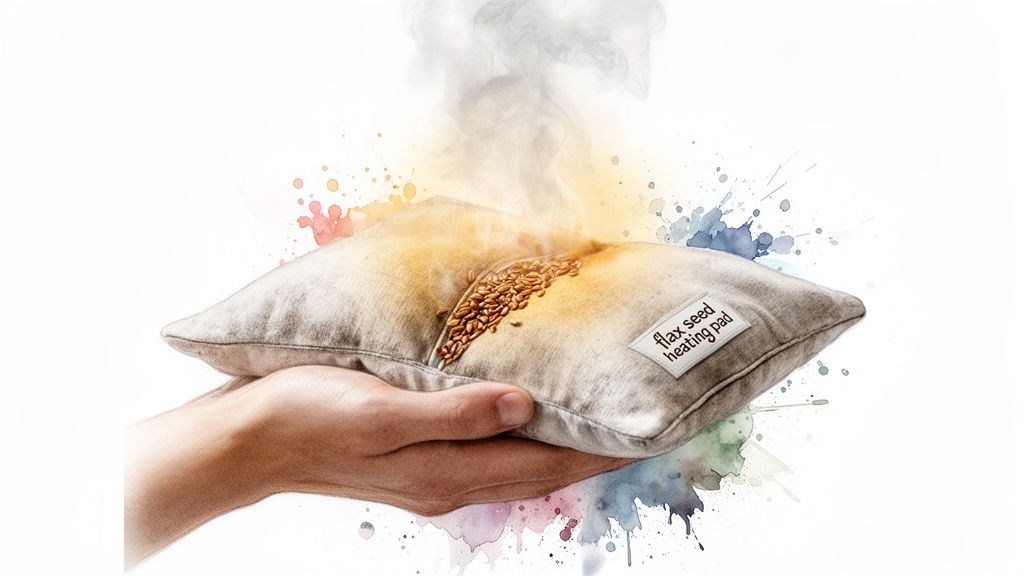
This image really shows how the flexible pad molds to the body, making sure that soothing warmth gets into every curve and contour. It’s a simple but profoundly effective way to take control of your own comfort, right at home.
Why Flax Seeds Are the Gold Standard for Heating Pads
When it comes to what's inside a natural heating pad, the filling makes all the difference. You'll see options like rice, corn, and buckwheat out there, but a flax seed heating pad is truly in a league of its own. The magic isn't just a matter of opinion—it comes down to the unique biology of the flax seed itself.
So, what’s the secret? It's all about the oil. Flax seeds are packed with natural oils, making up about 30-40% of their weight. This high oil content is precisely why they're so good at absorbing and holding onto heat.
Think of it this way: a cast-iron skillet seasoned with oil holds heat much longer and more evenly than a thin, dry pan. The oil in the flax seeds works the same way, turning each tiny seed into a miniature heat battery. This means you get long-lasting, consistent warmth instead of a quick burst of heat that disappears in minutes.
The Power of Moist Heat
That amazing oil content does more than just hold heat; it helps create a gentle, moist heat. This is where flax seed pads pull away from the competition. Most other fillers, and especially electric pads, produce a very dry heat.
The difference is night and day. Dry heat can feel harsh and only warms the surface of your skin. Moist heat, on the other hand, feels like it’s sinking in deep, relaxing muscles and easing tension from the inside out. It's that comforting, penetrating warmth that really gets to the source of the ache.
This penetrating moist heat is a game-changer for chronic pain and deep muscle tension. It enhances blood flow to the affected area, delivering oxygen and nutrients that accelerate the body's natural healing process.
Comfort That Molds to You
Heat therapy is only effective if it reaches the right spot. The physical shape and texture of flax seeds give them another huge advantage. They're small, smooth, and have an almost silky feel.
When you drape a flax seed pad over your shoulder or wrap it around your knee, the seeds flow and settle into every curve. There are no awkward gaps or cold spots—just consistent, even contact. This creates a gentle, weighted pressure that feels incredibly soothing, almost like a comforting hug that helps calm your nervous system. The flax plant's natural comfort extends beyond its seeds, as seen in the qualities of French flax linen, which shares a similar reputation for quality and feel.
Want to learn more about how we harness the power of these incredible seeds? Check out our article on the SunnyBay advantage with flaxseeds.
Comparing Heating Pad Fillers: Flax vs. The Rest
It’s one thing to say flax is better, but seeing it side-by-side with other common fillers really drives the point home. Here’s a quick look at how they stack up.
| Filler Type | Heat Retention | Heat Type | Scent | Durability |
|---|---|---|---|---|
| Flax Seed | Excellent | Moist | Mild, Nutty | Excellent |
| Rice | Good | Dry | Cooked Food Smell | Fair (can scorch) |
| Corn | Fair | Dry | Strong "Popcorn" Scent | Poor (breaks down) |
| Buckwheat | Good | Dry | Earthy, Strong | Good |
As you can see, flax seed consistently comes out on top. Unlike rice or corn, it won't start smelling like burnt food after a few uses. And its cellular structure holds up incredibly well to repeated heating and cooling.
When you add it all up—the superior heat retention, the therapeutic moist heat, and the unbeatable comfort—it's clear why flax seed is the best choice for natural, effective pain relief.
Combining Heat and Massage for Real Relief
You don’t need to book an appointment to get professional-level therapeutic relief. With a simple flax seed heating pad, you can unlock powerful, effective pain management right in your own home. Think of heat and massage as a dynamic duo for pain relief. Heat therapy warms up the muscles, making them pliable and receptive, while massage works out the stubborn knots and tension. Together, they offer a level of relief that neither can achieve on its own.
When you lay a warm flax seed pack over a sore spot, that deep, moist heat gets to work right away. It acts as a vasodilator, which is just a technical way of saying it opens up your blood vessels. This boost in blood flow is like sending in a cleanup crew; it helps flush out the metabolic waste and inflammatory junk that makes muscles feel so stiff and painful.
At the same time, all that fresh circulation brings a new supply of oxygen and nutrients to the damaged tissue. This is exactly what your body needs to speed up its own natural repair process. So, you're not just getting temporary comfort—you're actively helping your body heal.
Maximize Your Results by Pairing Heat with Massage
To really take things to the next level, try combining the heat from your flax pad with a little bit of massage. The flax seeds themselves have a nice weight to them, providing a gentle, steady pressure that starts relaxing muscle fibers before you even do anything. This pre-warming step makes your muscles much more receptive to deeper work.
It's like trying to stretch a cold rubber band versus a warm one. When your muscles are warm and pliable, they don't fight back, making it so much easier to work out knots and tension with less discomfort. This synergy between heat and massage is a technique physical therapists have been using for decades.
Let's say you're dealing with that all-too-common neck tension from a long day at your desk. Your neck and shoulders can feel like a solid block of concrete.
- Step 1: Drape a heated neck wrap over your shoulders for about 15-20 minutes. Let that moist heat really sink in and soften up those tight muscles.
- Step 2: After removing the pad, use a simple massage tool, like a dual-hand massager, to apply some focused pressure right on the knots along your upper traps.
- Step 3: You’ll immediately notice that the muscles give way more easily, helping restore flexibility and bringing a sense of relief that heat alone might not have achieved.
This simple two-step routine puts you back in control of your recovery. You can break down that stubborn tension before it escalates into a bigger issue.
Why Professionals and Clinics Rely on Flax
This combined approach is a trusted method in professional settings. In North America alone, musculoskeletal issues affect over 126 million adults, creating a huge need for reliable, drug-free ways to manage pain. It’s no coincidence that 67% of chiropractic clinics choose to stock flax-based packs. They value the therapeutic weight and the unique moist heat, which can mimic the preparatory effects of a professional massage and ease muscle tension by 30-50% in just one session. This clinical success lines up perfectly with the 90% satisfaction rates customers report for pain reduction.
This chart really drives home why flax is the go-to choice for so many.
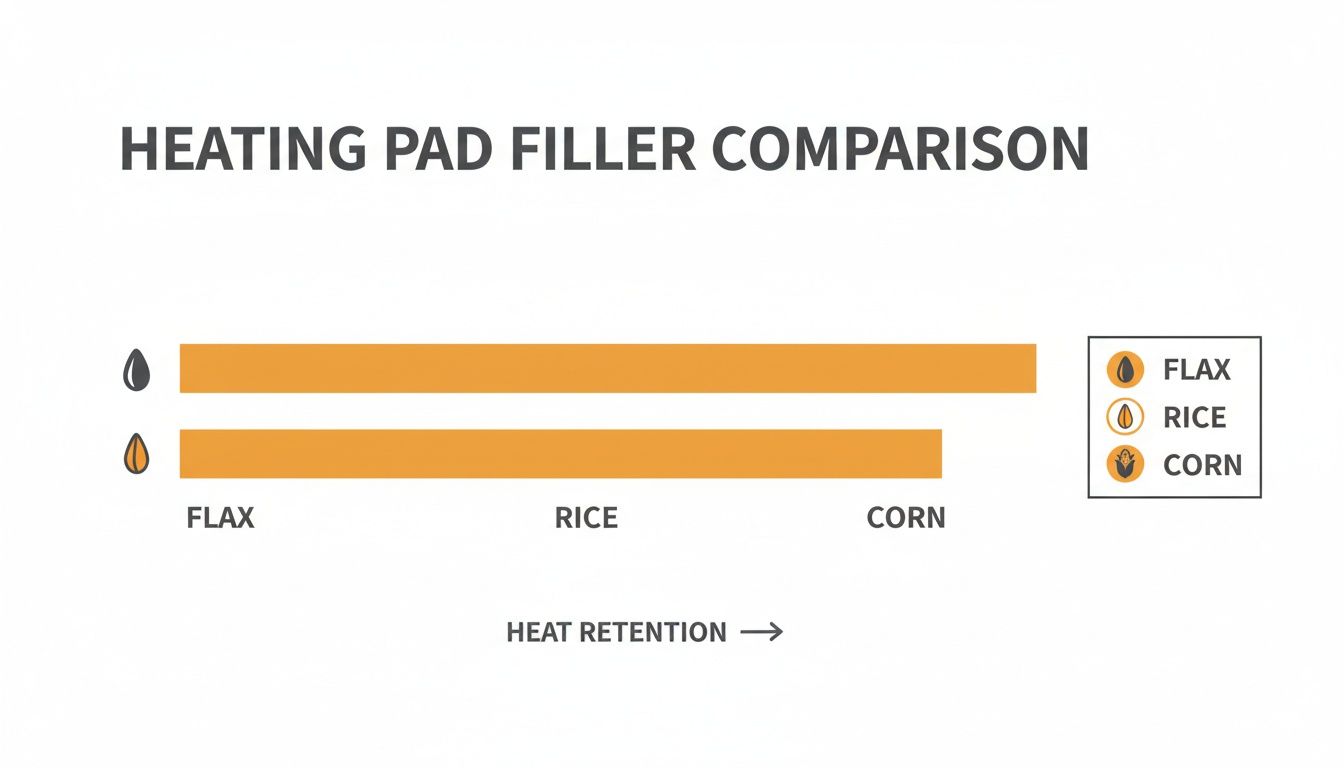
As you can see, flax seed's ability to hold onto therapeutic warmth simply outperforms other common fillers, making it the most effective option for relief that truly lasts.
The magic of a flax seed pad is in how it combines sustained moist heat with gentle, comforting pressure. This creates the perfect environment for muscle recovery, preparing the body for deeper therapeutic work. It's why it has become a favorite tool for everyone from home users to clinical practitioners.
By making these simple practices a part of your routine, you can manage pain effectively and stay ahead of it. And if you're looking to deepen your relaxation, learning about the benefits of aromatherapy massage can add another wonderful layer to your self-care. Taking these small, consistent steps is the real secret to maintaining a healthy, pain-free body.
How to Use and Care for Your Heating Pad
Getting the most from your flax seed heating pad is all about knowing how to use it right and taking good care of it. A few simple steps will ensure you get safe, effective relief every single time, helping your pad last for years.
Nailing the Heating Process
The secret to a great heating pad experience is hitting that "just right" temperature. Overheating is a no-go—it can damage the flax seeds and be a safety hazard. On the other hand, a lukewarm pad won’t deliver the deep, therapeutic warmth you’re looking for.
Here’s the simple, foolproof method.
Start by laying your flax seed heating pad flat in a clean microwave. Heat it for an initial 90 seconds. After the first cycle, carefully take it out and check the temperature against the inside of your wrist. If it feels good but you’d prefer a little more warmth, pop it back in.
From there, heat in short bursts of 15 seconds at a time, testing after each interval until it’s perfect for you. This step-by-step approach is the best way to prevent overheating and get the heat exactly where you want it.
A properly heated pad should feel deeply soothing, not uncomfortably hot. The aim is to relax your muscles with penetrating warmth, not to irritate your skin. Always test it first!
How to Apply It for the Best Results
Once your pad is perfectly warmed, you’re ready for relief. For most aches and pains, like a stiff neck or cramps, 15 to 20 minutes is the sweet spot.
That’s just enough time for the moist heat to work its magic, penetrating deep into your muscles to boost blood flow and ease discomfort. Any longer doesn’t really add more benefit and might be too much for sensitive skin.
Here are a few ways our customers use their pads:
- For a Stiff Neck and Shoulders: Drape the warm pad over your shoulders and let it settle around your neck. The combination of gentle weight and steady heat is amazing for melting away desk-job tension.
- For a Sore Lower Back: While sitting or lying down, tuck the pad against your lower back. If your pad has a strap, it's perfect for keeping it snug right where you need it most.
- For Cramps and Aches: Lie down and rest the warm pad on your lower abdomen. It's an incredibly comforting way to soothe menstrual cramps or discomfort.
Proper use is everything when it comes to getting results safely. For more in-depth tips, check out our guide on heating pad safety.
Long-Term Care and Storage
A little care goes a long way in making your heating pad last. When you’re not using it, keep it in a cool, dry spot like a linen closet or drawer, away from sunlight. This helps protect the flax seeds inside.
If you want to keep your pad fresh and clean for the long haul, a removable, washable cover is a must-have. Life happens—spills, sweat, and natural skin oils can build up. Being able to simply toss the cover in the wash means your pad is always clean and ready for your next session.
Choosing the Right Heating Pad for Your Needs
Not all heating pads are built the same, and finding the perfect flax seed heating pad really comes down to matching its design to your specific pain points. Making the right choice is the difference between temporary warmth and targeted, therapeutic relief. It's a bit like buying shoes—you wouldn't wear hiking boots to a dinner party. In the same way, the pad you grab for neck tension isn't going to be the best fit for that nagging ache in your lower back.
The path to finding your ideal heating pad starts with one simple question: Where does it hurt? Pinpointing that will immediately guide you toward the right size and shape, making sure that moist, penetrating heat gets right to the source of your discomfort.
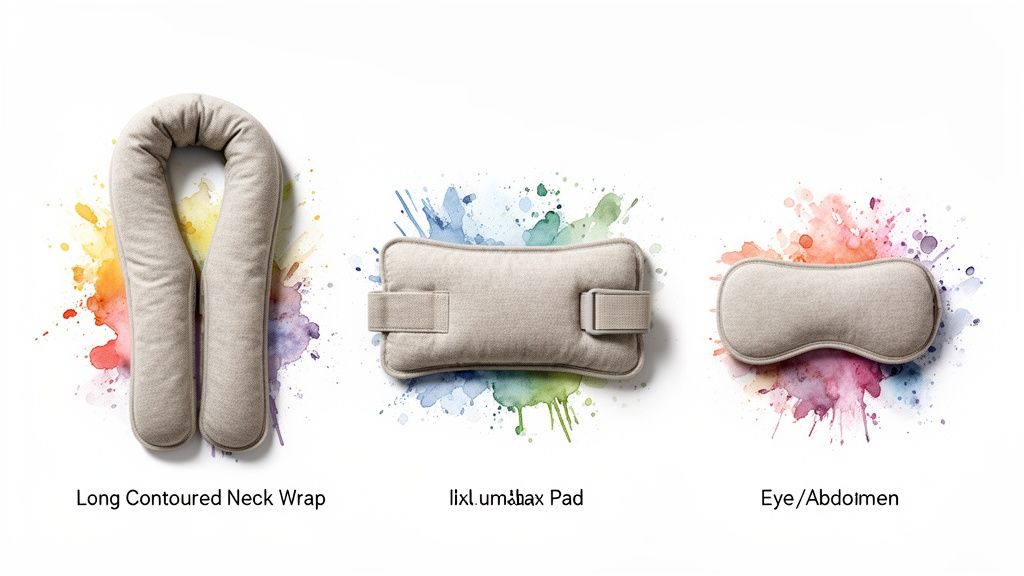
Match the Shape to Your Pain
Honestly, the most important feature of a heating pad is its design. A well-designed pad will actually conform to your body, delivering consistent heat and gentle pressure exactly where you need it, without you having to constantly hold it in place. That hands-free convenience is a huge part of being able to truly relax.
Here are a few common examples to see what I mean:
- For neck and shoulder tension: You'll want to look for a long, contoured wrap. These are specifically shaped to drape over your shoulders and hug your neck, targeting those trapezius muscles where so many of us hold our stress.
- For lower back or joint pain: A rectangular pad is your best friend here, especially one that comes with a strap. The strap secures it around your lumbar region, a sore knee, or an aching hip, which lets you stay mobile while still getting the therapeutic benefit.
- For abdominal cramps or headaches: A smaller, more flexible square or rectangular pad is perfect. It can rest gently on your abdomen or be used as a soothing compress over your eyes and forehead.
Consider the Fabric and Scent
Once you’ve zeroed in on the shape, the next thing to think about is the material that will be up against your skin. The cover’s fabric affects both your comfort and how the heat is delivered. A soft, anti-pill fleece, for example, feels incredibly cozy and is perfect for snuggling up with on a chilly evening. On the other hand, 100% cotton is a fantastic choice for its breathability and is often the go-to for people with sensitive skin.
Then, you can decide if you want to add a little aromatherapy to your heat therapy. Many pads are infused with natural herbs like lavender, which releases a wonderfully calming scent when heated to help you relax even more deeply. If you have sensitivities or just prefer a neutral experience, an unscented version gives you all the therapeutic benefits without any added aroma.
Choosing a trusted, U.S.-made brand known for high-quality materials is a crucial final step. It ensures your investment is not only effective but also durable and safe for repeated use, providing consistent, lasting relief.
Essential Features and What’s Happening in the Market
Beyond the basics, a few key features can make a world of difference. A removable, washable cover is, in my opinion, non-negotiable for hygiene. It just makes sense to be able to keep your pad fresh and clean. Hands-free straps are another game-changer, turning your pad from a passive tool into something you can use while you go about your day.
The demand for these thoughtfully designed features is growing fast. The market for microwavable heating pads, where flax seed products truly shine, is projected to climb to USD 562.84 million by 2032. This boom is driven by people wanting convenience, with 65% of users saying portability is a top priority for use at home, while traveling, and even at the office. With online sales jumping 28% annually since 2020, it’s clear that people are actively looking for pads with specific, high-quality features like those found in clinic-grade brands.
Ultimately, picking the best microwavable heating pad is all about understanding your own needs. By thinking through the shape, fabric, and features that fit your life, you can find a reliable tool for drug-free comfort whenever you need it most.
Got Questions About Flax Seed Heating Pads?
It's smart to have questions before you buy. After all, you’re looking for something that will genuinely help you feel better. Getting clear, straightforward answers is the best way to make sure you find a heating pad that delivers real comfort and relief.
Let's walk through some of the most common things people ask us. We'll cover everything from how long the heat lasts to whether you can pop it in the freezer for cold therapy.
How Long Does the Heat Last?
This is probably the number one question we get. A well-made, high-quality flax seed heating pad will give you a solid 20 to 30 minutes of deep, therapeutic warmth.
That timeframe isn't random—it's what many physical therapists recommend for an ideal heat therapy session. The secret is the high oil content in the flax seeds; it acts like a natural heat battery, holding warmth and releasing it slowly and evenly. This ensures the moist heat has enough time to penetrate deep into your muscles to ease tension and boost circulation, all without the worry of falling asleep with an electric pad plugged in.
Can I Use It for Cold Therapy, Too?
Absolutely! This is one of the best things about a flax pad—it's a fantastic cold pack. To switch gears to cold therapy, just place the pad inside a sealed plastic bag (this is key to keeping it dry and odor-free) and stick it in the freezer for at least two hours.
A chilled flax pad is perfect for bringing down swelling on a new injury, soothing a throbbing tension headache, or just cooling off on a hot day.
Unlike those stiff gel packs that freeze solid as a rock, a flax seed pad stays soft and flexible even when frozen. It will drape comfortably over your knee, neck, or shoulder, delivering targeted cold relief right where you need it most.
Does It Have a Strong Smell When Heated?
When you first warm up a natural flax seed pad, you’ll notice a very mild, nutty, and slightly earthy scent. Most people find it quite pleasant and grounding—nothing at all like the "cooked food" smell you can get from a rice-filled bag.
If you're sensitive to smells, you can easily find an unscented version for a completely neutral experience.
For those who enjoy a little aromatherapy with their pain relief, many pads come infused with dried herbs.
- Lavender: The most popular choice, and for good reason. Lavender is known for its calming properties that help melt away stress. The gentle scent turns a simple heat session into a mini spa escape.
- Peppermint: Another excellent option, peppermint has an invigorating scent that can help with inflammation and even clear your sinuses.
Are Flax Seed Heating Pads Safe for Everyone?
When you use them correctly, flax seed heating pads are an incredibly safe way to manage pain. You completely avoid the risks that come with electric pads, like faulty wires, dangerous hot spots, or forgetting to turn them off.
That said, a few precautions are always a good idea. If you have a medical condition that affects skin sensitivity—like diabetes, nerve damage (neuropathy), or poor circulation—it’s best to talk to your doctor first. Your ability to feel heat might be reduced, which increases the risk of a burn.
For everyone else, just use common sense. Always test the temperature on a small patch of skin, like your inner wrist, before placing it on a larger area. Never overheat the pad, and always use it with its protective cover, especially for children or the elderly. Following these simple steps ensures every use is safe, comfortable, and effective.
Ready to feel the deep, soothing relief that professionals trust? The SunnyBay flax seed heating pad is designed and made right here in the USA, offering targeted comfort for your neck, back, and shoulders. Find out why clinics and customers have relied on our drug-free pain relief for over 20 years. Find your perfect pad today at https://sunny-bay.com.


