


Finding Relief Beyond Pills Alternatives to Pain Medication
-
When you're dealing with chronic pain, it's easy to feel stuck. The idea of relying on medication long-term is a real worry for a lot of people, and for good reason. But there are powerful, science-backed alternatives to pain medication that work with your body, not just on it. Things like targeted heat therapy, specific movements, and mind-body techniques can make a world of difference, giving you a way to take back control.
Your Path to Drug-Free Pain Relief Begins Now
Living with constant pain often feels like being stuck in a frustrating loop, where your day is defined by how much you hurt. For a long time, the go-to answer was a prescription pad. But that often comes with its own set of concerns—side effects, dependency, and the feeling that you're just covering up the problem instead of actually addressing it.
The great news? You have more power over your pain than you might realize. Your body has an incredible ability to manage discomfort and heal itself when you give it the right tools.

Think of this guide as your roadmap. We're going to explore effective, non-drug options and walk through simple, accessible solutions you can start using at home today.
Shifting Focus to Natural Healing
Instead of thinking of these methods as just "alternatives," let's start seeing them as foundational tools for feeling better. Pain medication can be like a temporary patch; it might be necessary for a bit, but it doesn't fix the source of the leak.
On the other hand, things like heat therapy, gentle exercise, and therapeutic touch are more like repairing the actual structure. They work in harmony with your body’s own systems to calm inflammation, ease tight muscles, and even retrain how your brain interprets pain signals.
This isn't just a niche idea; it's a major shift. The global heat therapy market, for example, is seeing huge growth as a drug-free option. It's projected to hit USD 1,525.9 million in 2025, largely because people are actively seeking non-pharmacological relief. This trend shows a wider movement of people—especially those with chronic back, neck, and shoulder pain—turning to simple, effective home solutions like microwavable heat packs. You can review the full report about heat therapy market trends to see the data for yourself.
Simple Steps to Reclaim Your Life
Getting a handle on pain without constant medication doesn't mean you have to turn your life upside down. It really just starts with a few small, deliberate choices.
For instance, simply spending 15 minutes with a warm compress on your shoulders after a long day at the desk can melt away the tension that might otherwise blossom into a full-blown headache. It's that straightforward.
The goal isn't to magically erase all pain overnight. It's about building a personal toolkit of strategies that lessen its grip—reducing how often it shows up, how intense it feels, and how much it gets in the way of your life. Every little win builds on the last.
This guide is here to walk you through these strategies with practical, step-by-step advice. From understanding the science of why heat calms aching muscles to learning simple stretches that safeguard your joints, you'll get the insight you need to make smart, empowering choices for your own health.
When it comes to simple, drug-free pain relief, heat and cold therapy are two of the oldest and most reliable tools in the book. They're accessible, affordable, and you can use them right at home. But they work in completely opposite ways, and knowing the difference is what makes them so effective.
Think of heat therapy as a way to open things up. When you apply warmth to a sore, stiff area, the blood vessels in that tissue expand—a process called vasodilation. This simple action boosts circulation, ushering in more oxygen and nutrients to help damaged tissues heal faster. It’s fantastic for relaxing those tight, knotted muscles and easing the deep, persistent ache you get with chronic conditions.
Example: Imagine you've been hunched over a keyboard all day, and now your neck and shoulders feel like a solid block of concrete. Applying a heat pack for 15 minutes does more than just feel good; it increases blood flow to those tense muscles, flushing out waste products and bringing in fresh oxygen. That's why the muscles start to release and that "stuck" feeling begins to melt away, restoring your range of motion.
How Cold Therapy Puts Out the Fire
On the other hand, cold therapy is all about shutting things down. It’s your first line of defense for a fresh, acute injury. The moment you sprain an ankle or pull a muscle, your body floods the area with blood, triggering inflammation, swelling, and that sharp, throbbing pain. Applying cold does the exact opposite of heat: it constricts the blood vessels.
This constriction, or vasoconstriction, is crucial. It slows down the blood flow, which dramatically reduces swelling and tamps down inflammation. At the same time, the cold numbs the local nerve endings, giving you almost immediate relief from that intense, sharp pain. It’s no wonder an ice pack is the universal go-to for a new injury—it tackles both the swelling and the pain signal right at the source.
As you can see, managing pain isn't a one-size-fits-all approach. There are multiple pathways, both physical and mental, that you can explore.
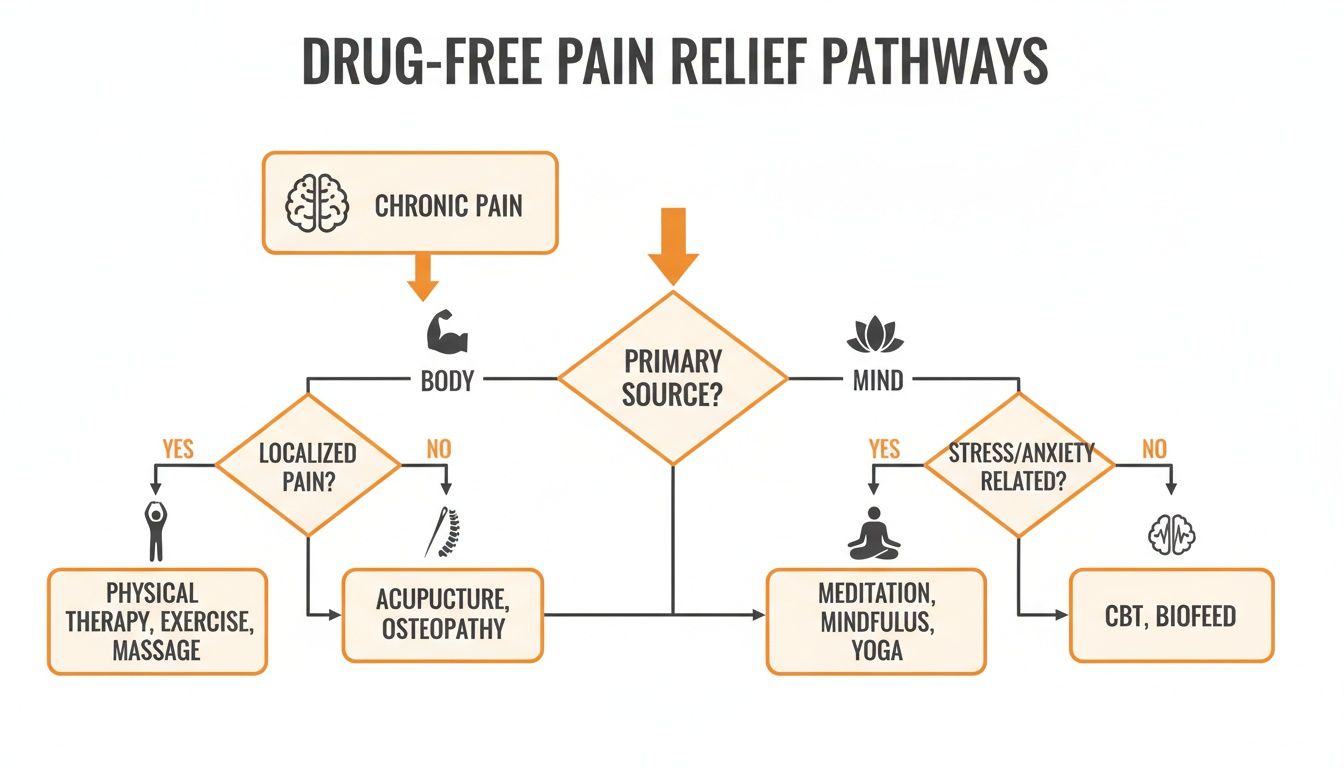
The key is to match the tool to the job, whether you're targeting the body’s physical symptoms or the mind’s interpretation of pain.
Heat vs. Cold: Which One Do I Need?
Knowing when to reach for the heating pad versus the ice pack is everything. Getting it right can make a huge difference in how you feel, but making the wrong choice can sometimes set you back. For instance, putting heat on a fresh, swollen injury will only increase inflammation and make it worse.
So, how do you remember which to use?
- Heat is for aches and stiffness. Think chronic muscle tension, joint soreness from arthritis, or any persistent ache where there’s no swelling.
- Cold is for new injuries. Grab an ice pack for sprains, strains, and bruises—anything that’s happened within the last 48 hours and involves swelling.
This quick reference chart breaks it down even further to help you choose the right therapy for your pain.
Heat vs Cold: When to Use Each for Pain Relief
| Symptom or Condition | When to Choose Heat Therapy | When to Choose Cold Therapy |
|---|---|---|
| Muscle Stiffness & Tightness | Yes. Heat relaxes muscles and improves flexibility. | No. Cold can make stiffness worse. |
| New Injury (first 48 hours) | No. Heat increases inflammation and swelling. | Yes. Cold reduces swelling and numbs sharp pain. |
| Arthritis Pain | Yes. Eases chronic joint stiffness. | Sometimes. Can help numb acute flare-up pain. |
| Pre-Workout Warm-up | Yes. Increases blood flow to prepare muscles. | No. Can tighten muscles before activity. |
| Post-Workout Soreness | Sometimes. Good for lingering muscle soreness a day or two later. | Yes. Ideal for immediate use to prevent inflammation. |
| Headaches (Tension) | Yes. Apply to the neck/shoulders to relax muscles. | Sometimes. A cold pack on the forehead can numb pain. |
Ultimately, it’s about listening to your body and understanding what it’s trying to tell you. Heat coaxes blood flow to soothe and relax, while cold restricts it to reduce inflammation and numb pain.
For a much deeper dive, check out our complete guide on heat therapy vs. cold therapy. It’ll give you the confidence to choose the right approach every single time, turning that simple hot or cold pack into a powerful tool for managing your pain.
The Power of Movement and Therapeutic Touch
When pain flares up, the first thing most of us want to do is curl up and stay perfectly still. It’s a natural instinct to guard a sore spot. But while a little rest is crucial for a fresh injury, staying sedentary can actually make chronic pain dig its heels in even deeper.
That's where two of the most powerful alternatives to pain medication come into play: physical therapy and massage. Both use the power of movement and touch to help restore your body’s natural function and deliver some truly profound relief.

This isn’t about gritting your teeth and pushing through agony. It's the complete opposite. These approaches are built on gentle, strategic actions that tell your nervous system it's safe to relax. They work to release built-up tension and gradually build strength, letting your body heal from the inside out.
Movement as Medicine for Your Joints
It helps to think of exercise less as a chore and more as medicine for your joints and muscles. When you start moving in a gentle, controlled way, you set off a chain reaction of positive effects that directly fight back against pain.
Activities like walking, stretching, or yoga help strengthen the very muscles that support your most vulnerable joints. Think of these muscles as a natural brace for your spine or knees—the stronger they get, the less pressure and strain is put on those painful spots.
Movement also gets your blood flowing, improving circulation. This is huge, because better blood flow delivers a fresh supply of oxygen and nutrients to damaged tissues while also washing away the inflammatory junk that contributes to pain. Even better, getting active signals your brain to release endorphins, which are your body's very own potent painkillers.
The right kind of movement sends a powerful message to your brain: "This area is safe to use." Over time, this helps recalibrate your body's pain alarm system, reducing the persistent fear and guarding that can keep you locked in a cycle of discomfort and stiffness.
Getting started is simpler than you think. You don't need a fancy gym membership or a grueling workout plan. Small, consistent efforts truly make the biggest difference. For some easy inspiration, check out our guide on 10 simple ways to get moving in everyday life.
Massage as a Reset Button for Tense Muscles
If movement is what strengthens and mobilizes, massage therapy is like hitting the reset button for tight, screaming muscles. Chronic pain often goes hand-in-hand with muscle "knots" (or trigger points). These are tiny, hyper-irritable spots in your muscle tissue that can shoot pain out to other parts of your body. Massage uses targeted pressure to convince these knots to finally let go.
This kind of therapeutic touch does a lot more than just feel relaxing. It physically helps break down adhesions in your muscle fibers, boosts circulation to clear out metabolic waste, and brings down levels of stress hormones like cortisol. Since we know high cortisol levels can actually make you perceive more pain, getting those levels down can bring immense relief.
Example: Consider someone who suffers from frequent tension headaches. Instead of just masking the pain with a pill, a skilled massage therapist can identify and release the specific trigger points in the neck and upper back muscles that are the root cause. This not only alleviates the current headache but also improves posture and muscle function, reducing the likelihood of future headaches. That’s not just relief; it's a long-term solution.
Simple Self-Massage Techniques You Can Try
The good news is you don’t always need a professional to reap the benefits. A few simple self-massage techniques can work wonders for day-to-day relief.
- For Neck Tension: Sit up straight and let your right ear gently fall toward your right shoulder. With your right hand, apply gentle pressure to the tense muscles on the left side of your neck. Hold it for 30 seconds while you breathe deeply, then switch sides.
- For Shoulder Knots: Grab a tennis ball and place it between your upper back and a wall. Lean into it and slowly roll the ball around until you find a tender spot. Hold steady pressure on that knot for 20-30 seconds to encourage it to release.
For those more localized muscle aches and stiffness, adding a soothing magnesium oil spray can really amplify the relief, helping both your muscles relax and your mobility improve. When you combine smart movement with targeted massage, you create a powerful one-two punch for building a more resilient, pain-free body without having to reach for a pill bottle.
4. Taming Pain with Your Mind and Nerves
Pain is never just a physical sensation. It’s a complex experience your brain actively interprets and shapes. This is a crucial piece of the puzzle because it means your mindset, thoughts, and emotions can dramatically change how you actually feel pain. By tapping into this powerful mind-body connection, you can unlock some of the most effective alternatives to pain medication out there.
These strategies aren't about pretending the pain doesn't exist. Far from it. They give you practical tools to change your relationship with pain, helping you turn down its volume and lessen its control over your life.
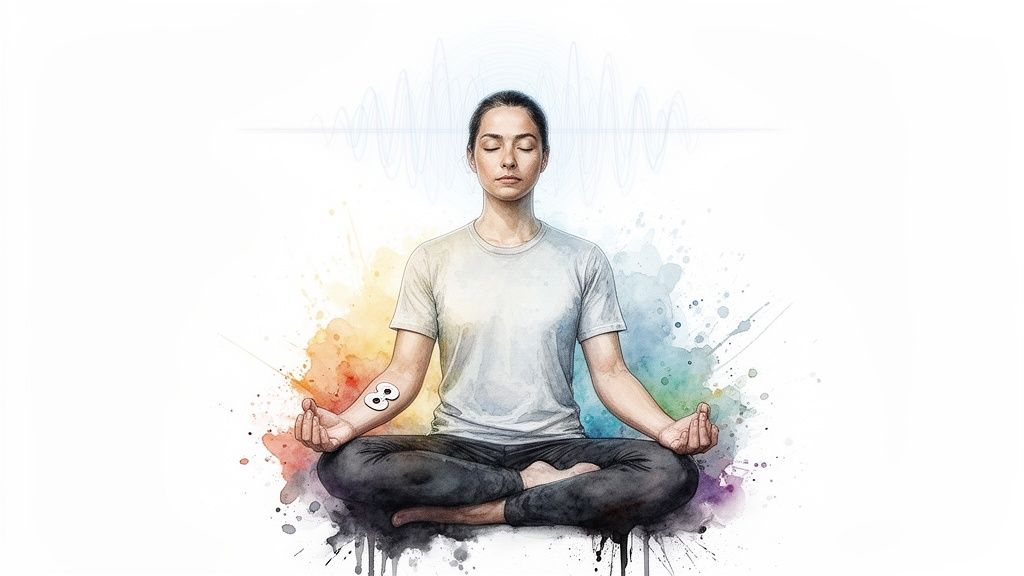
Cognitive Behavioral Therapy (CBT): Rewiring Your Body's Pain Alarm
Think of your pain response like a smoke alarm. After an injury, it works perfectly, alerting you to danger. But with chronic pain, that alarm can become overly sensitive, going off when there's no real fire. Cognitive Behavioral Therapy, or CBT, is a proven technique that helps you recalibrate this faulty alarm system.
CBT works by helping you spot and change the negative thought patterns and behaviors that so often pour fuel on the fire of pain. For example, a common thought trap is, "My back hurts, so I can't do anything today." This thinking leads to inactivity, which only makes stiffness and pain worse, reinforcing the whole cycle.
Through CBT, you learn to reframe that thought into something more empowering, like, "My back is sore today, so I'll start with some gentle stretches and then take a short walk to keep from stiffening up." It's a small shift, but it's powerful enough to break the cycle of fear and avoidance that keeps so many people stuck.
The core idea of CBT is that by changing how you think about pain, you can change how much it affects you. It’s about building practical skills to challenge catastrophic thinking and develop healthier coping strategies, effectively rewiring your brain's response to pain signals.
This kind of approach is more important than ever. In North America, over 50 million U.S. adults deal with chronic pain every year, which has understandably created a huge demand for effective, non-drug solutions. This highlights a broader shift toward preventive healthcare, where people are empowered to manage daily aches and pains without reaching for a pill bottle.
Mindfulness & Meditation: Turning Down the Volume on Pain
Mindfulness and meditation are other incredible tools for managing pain from the inside out. They teach you to observe your pain without judging it—a simple concept that can have a profound impact.
Imagine your pain is a loud, blaring radio that you can't turn off. Instead of trying to smash the radio in frustration, mindfulness teaches you how to calmly find the volume knob and just turn it down. By focusing on your breath and other bodily sensations, you create a little mental distance between you and the pain. You start to realize that you are not your pain; it’s just a sensation you are currently experiencing.
For a great starting point, exploring a guided meditation for stress relief and inner peace can be a fantastic way to begin managing how you perceive pain.
TENS: Intercepting Pain with a Gentle Buzz
Sometimes, the best approach is to stop the pain signal before it even has a chance to reach your brain. That's exactly what a Transcutaneous Electrical Nerve Stimulation (TENS) unit is designed to do. A TENS unit is a small, portable device that sends a mild electrical current through electrodes you place on your skin.
This creates a gentle tingling or buzzing sensation that essentially "jams" the pain signals traveling up your nerves. The science behind it is called the "gate control theory" of pain, which proposes that your spinal cord has a kind of neurological "gate" that can either block pain signals or let them pass through to the brain.
The gentle pulses from the TENS unit help close that gate, preventing the pain messages from getting through. It's a non-invasive, drug-free way to get targeted relief, and it can be especially helpful for muscle-related pain. Learning about the https://sunny-bay.com/blogs/pain-relief-tips-and-news/eight-benefits-of-deep-relaxation-you-must-know can be a great way to complement these nerve-calming techniques.
Building a Pain-Resistant Lifestyle
While targeted treatments like heat therapy or a good massage can be a godsend for immediate relief, building real, long-term resilience against pain often comes down to the small, consistent habits you build into your everyday life.
Think of it this way: these lifestyle adjustments aren't just more chores on your to-do list. They are the foundational pillars that support your body’s natural ability to manage inflammation, repair tissue, and turn down the volume on pain signals. Creating this kind of pain-resistant lifestyle is one of the most powerful alternatives to pain medication you can embrace, because you're addressing the root conditions that let pain stick around.
Ultimately, this is about making your body a less welcoming place for chronic pain. By dialing in your diet, sleep, and daily movements, you're not just chasing symptoms—you're actively changing your body's internal environment to one that promotes healing and is far less sensitive to pain.
Fueling Your Body to Fight Inflammation
Inflammation is a normal, healthy part of healing. But when it becomes chronic, it’s like a fire alarm that just won't shut off. This constant state of high alert is a major driver of persistent pain, and the food you eat plays a huge role in either fanning those flames or helping to put them out.
An anti-inflammatory diet isn't about deprivation; it's about crowding out the bad by adding in more of the good.
- Embrace Healthy Fats: Think less vegetable oil, more olive oil. Add more avocados and nuts to your plate. These are loaded with omega-3 fatty acids, which have been shown to dial back inflammatory markers in the body.
- Load Up on Color: Berries, leafy greens like spinach, and broccoli are bursting with antioxidants and polyphenols that help fight the cellular stress behind inflammation.
- Spice Things Up: Turmeric and ginger are nature's anti-inflammatory powerhouses. It’s easy to sneak them into smoothies, soups, or even a warm cup of tea.
Just as important is what you choose to limit. Highly processed foods, sugary drinks, and refined carbs (like white bread and pastries) can pour gasoline on that inflammatory fire, making your pain feel that much worse.
The Critical Role of Restorative Sleep
Sleep is when your body's repair crew gets to work. During those deep sleep cycles, your system releases growth hormones to mend tissues, your brain clears out metabolic junk, and inflammation naturally decreases. When sleep gets cut short or is constantly disrupted, this entire vital process grinds to a halt.
Poor sleep doesn't just make you cranky; it can physically make you more sensitive to pain. A lack of restorative sleep can actually amplify pain signals in your brain, turning a dull ache into a debilitating throb.
Example: Sarah was struggling with a nagging shoulder injury. She noticed a clear pattern: on days after she tossed and turned all night, her pain was a sharp, miserable 7 out of 10. But after a night of solid, uninterrupted sleep, it was a much more manageable 3 out of 10. The injury hadn't magically healed, but quality sleep had dramatically turned down its volume.
To get better sleep, start thinking of your bedroom as a sanctuary for rest. Keep it cool, dark, and quiet. Step away from screens for at least an hour before bed—the blue light messes with the hormones that tell your brain it's time to sleep. And sticking to a consistent sleep schedule, even on weekends, can do wonders for getting your body's internal clock back on track.
Mastering Pacing to Avoid the Boom-and-Bust Cycle
Anyone with chronic pain knows this frustrating pattern all too well: on a "good" day, you race around trying to catch up on everything you've missed, only to "pay for it" later with days of heightened pain and crushing fatigue. This is the boom-and-bust cycle, and it’s a massive roadblock to getting better.
The antidote is pacing. It’s a simple but brilliant strategy for balancing activity with rest to keep your pain at a steadier, more manageable level. Instead of pushing until you hit a wall, you learn to do a little less than you think you can, and then rest before you feel exhausted.
This isn't about giving up or being lazy; it's about being strategic with your precious energy. For instance, instead of trying to clean the whole house in one go, you might clean just one room, then take a deliberate 20-minute break with a heat pack on your back. This smart approach helps you get more done in the long run, without triggering the painful flare-ups that set you back for days.
Putting It All Together: Your Action Plan
We've covered a lot of ground—from the science behind heat therapy to the surprising power of your own mind in the fight against pain. But knowledge is only half the battle. Now, let’s talk about how to turn all this information into real, tangible relief. Finding effective alternatives to pain medication isn't about chasing a single cure-all; it's about building your own personalized toolkit of strategies that work for you.
The path to managing pain with fewer pills is absolutely within reach, and it starts with small, consistent steps. This is a process of listening to your body, trying new things, and patiently figuring out what makes you feel better. You're in the driver's seat. Here’s where to begin.
Your First Steps Checklist
Feeling a little overwhelmed by all the options? That's completely normal. The secret is to keep it simple. Just pick one or two of these ideas to try over the next day or so. The goal here isn't a massive life overhaul, but to see what clicks with your body.
- Try a heat wrap tonight: Before bed, grab a warm compress or heat pack and apply it to that one spot that's really bothering you—your neck, lower back, wherever. Give it a solid 15 minutes and just notice how your muscles start to let go.
- Schedule a 5-minute stretch break: Pop a reminder on your phone for sometime tomorrow. When it goes off, just stop and do a few gentle stretches. A simple neck roll at your desk or a hamstring stretch while the kettle boils is perfect.
- Practice a mindful minute: The next time you feel that familiar ache starting to build, just close your eyes for 60 seconds. Don't try to stop the pain; just focus on your breath moving in and out. That's it.
- Make one simple swap: Instead of reaching for that third coffee or a sugary drink, pour a big glass of water or brew a cup of anti-inflammatory ginger tea.
The most important thing is to just start. One small, successful step gives you the confidence to take another. Think of it as gathering personal data on what truly helps you feel better.
Knowing When to Call a Professional
These self-care strategies are fantastic tools, but they don't replace professional medical advice. It’s absolutely essential to know when it’s time to stop the home experiments and get an expert opinion from a doctor or physical therapist. They can give you a proper diagnosis and make sure nothing more serious is going on.
Book an appointment with a healthcare provider if your pain has any of these characteristics:
- It’s severe, sharp, or came on very suddenly.
- It started right after a major injury, like a car accident or a bad fall.
- It comes with other weird symptoms like numbness, weakness, or that "pins and needles" tingling in your limbs.
- It just seems to be getting worse over time, not better.
- You also have other concerning symptoms, like unexplained weight loss, a fever, or chills.
Reaching out for professional help is a sign of strength, not a sign that you've failed. A good practitioner can point you toward more advanced treatments and ensure you're on the safest and most effective path. This journey is all about taking control of your well-being, and knowing when to call in an expert is a huge part of that.
Got Questions? We've Got Answers
When you start exploring drug-free ways to manage pain, it’s natural to have a few questions. Getting the hang of these methods and using them correctly is the key to feeling better. Let's tackle some of the most common ones.
Can I Mix and Match Different Pain Relief Methods?
You bet. In fact, most people find that combining a few different strategies gives them the best results. Think of it as building your own personal pain-relief toolkit—each tool has a specific job.
For instance, you could use a microwavable heat wrap to relax those tight shoulder muscles before you do your physical therapy stretches. That little bit of warmth can make the exercises feel easier and more effective. Or maybe you pair mindfulness techniques with massage; calming your mind can reduce the stress that amplifies pain, allowing your body to get more out of the physical treatment. The golden rule is always to listen to your body and add new things one at a time.
How Long Before These Natural Methods Actually Start Working?
That’s the million-dollar question, and the answer really depends on the therapy you're using. Some give you that "ahhh" feeling right away, while others are more about playing the long game for lasting wellness.
- Quick Hits: Things like heat or cold packs can start easing discomfort in just 15-20 minutes. A good massage can also deliver that immediate sense of relief from knotted-up muscles.
- The Long Game: Strategies like physical therapy, improving your nutrition, or cognitive behavioral therapy (CBT) are about building strength and resilience over time. You might start noticing small improvements in a few weeks, but the really meaningful changes often take a few months of consistent effort.
A little patience goes a long way. While it's great to get quick relief, the most powerful and lasting benefits come from sticking with it. You're not just treating pain; you're building a body that's better equipped to handle it.
How Do I Pick the Right Heat Pack for My Aches?
Finding the perfect heat pack can make all the difference. It really comes down to matching the pack's shape and design to the body part that’s hurting.
If you’re dealing with that nagging neck and shoulder tension from sitting at a desk, a wrap that's contoured to drape over your shoulders is your best bet—it’ll stay put without you having to hold it. For lower back pain, a bigger, rectangular pad will give you the broad coverage you need. And for joints like your knees or elbows, you’ll want something smaller and more flexible that can wrap around easily.
Pay attention to the filling, too. Lots of people swear by flax seeds because they provide a gentle, moist heat that penetrates deep into the muscle.
Here at SunnyBay, we know that having the right tool is essential on your path to pain relief without pills. Our clinic-trusted, U.S.-made heat wraps are designed to deliver targeted comfort, from a contoured neck wrap for post-work soreness to a flexible joint pad for arthritic aches. Discover the right fit for your needs and start your journey to feeling better at https://sunny-bay.com.


