


Heat Therapy vs Cold Therapy Choosing the Right Pain Relief
-
When it comes to heat therapy vs. cold therapy, the old rule of thumb is a good starting point: use cold for new injuries and heat for lingering stiffness. Cold therapy, also known as cryotherapy, is your go-to for acute injuries like a sprain or a fresh muscle pull, especially within the first 48 hours. Heat therapy, or thermotherapy, really shines when dealing with older, more persistent issues like chronic muscle soreness or joint stiffness. Imagine how a warm compress can melt away the tension in your shoulders after a long day at the desk—that's the soothing power we're talking about.
Heat vs. Cold: When to Use Each for Pain Relief
Knowing whether to grab an ice pack or a heating pad can make a huge difference in how you feel and how quickly you recover. It’s not just about what feels good in the moment; it’s about applying the right physiological response to the specific problem you're facing. You're essentially giving your body the exact tool it needs to get the healing process started on the right foot.
Cold therapy works by constricting blood vessels, a process called vasoconstriction. This is exactly what you want right after an injury—think of a freshly twisted ankle or a pulled muscle. By narrowing the blood vessels, you limit blood flow to the area, which is key to reducing the swelling and inflammation that cause pain. As a bonus, the cold numbs the nerve endings, providing some welcome, immediate relief.
Heat therapy, on the other hand, does the complete opposite. It promotes vasodilation, which means it widens the blood vessels to ramp up circulation. This rush of fresh, oxygen-rich blood helps repair damaged tissues and carries away the metabolic waste products that can make muscles ache. That’s why heat is perfect for chronic conditions, stiff joints, and that deep-down muscle soreness that just won’t go away. The feeling is deeply comforting, like a warm hug for your muscles.
Quick Guide to Heat and Cold Therapy
Still not sure which one to choose? This simple table can help you make a quick decision based on your symptoms.
| Symptom or Injury Type | Recommended Therapy | Primary Benefit |
|---|---|---|
| Fresh Sprain or Strain (first 48 hours) | Cold | Reduces swelling and numbs acute pain. |
| Chronic Muscle Soreness or Stiffness | Heat | Relaxes muscles and improves circulation. |
| Arthritis Pain (non-flare-up) | Heat | Soothes stiff joints and increases mobility. |
| Post-Workout Muscle Soreness | Cold | Minimizes inflammation right after exercise. |
| Headache or Migraine | Cold | Constricts blood vessels in the forehead. |
| Menstrual Cramps | Heat | Relaxes uterine muscles to ease cramping. |
Ultimately, choosing the right therapy is about listening to your body and understanding the nature of your pain—whether it's a new, inflamed injury or a recurring, stiff ache.
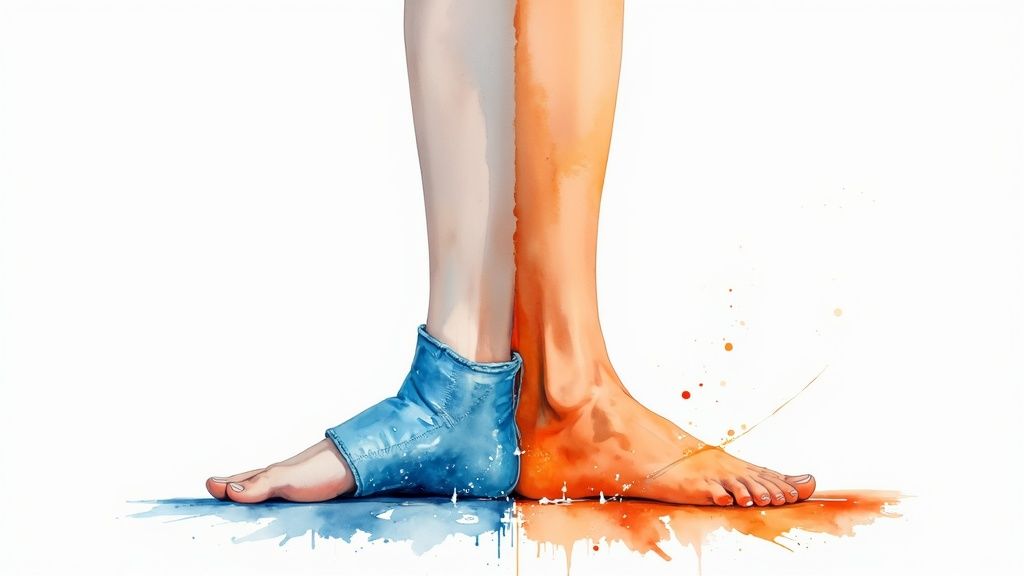
This visual helps illustrate the core idea: cold for the "ouch," heat for the "ache."
It’s no surprise that these simple, effective remedies are more popular than ever. The global market for hot and cold therapy packs was valued at around USD 1.2 billion and is expected to nearly double by 2035. This growth underscores just how many people rely on these trusted methods for drug-free pain management.
You can find more details about this growing trend from market research on Future Market Insights. It's clear that these basic wellness tools have earned their spot in everyone's medicine cabinet.
Understanding Cold Therapy for Acute Injuries
When you suddenly twist a knee on a morning run or sprain an ankle during a weekend game, your body's immediate response is inflammation. This is precisely where cold therapy, also known as cryotherapy, becomes your first and best line of defense. Think of it as hitting the emergency brake on the pain and swelling that inevitably follow a fresh injury.
The physiology is pretty simple but incredibly effective. When you apply cold to the injured area, it causes vasoconstriction—a fancy term for the narrowing of your blood vessels. It’s like pinching a garden hose to slow the flow of water. This process restricts the amount of blood and fluid rushing to the injury site, which is absolutely critical within the first 48 to 72 hours to keep swelling, bruising, and that awful throbbing pain under control.
Beyond just managing the swelling, cold therapy offers a wonderful numbing effect. It actually slows down the nerve signals responsible for sending pain messages to your brain, giving you fast, localized relief without reaching for a pill bottle. That’s why a good ice pack feels so immediately soothing on a new bump or strain.
How Cold Therapy Works in Real Life
Let's put this into a real-world context. An athlete might plunge into an ice bath after a brutal training session to calm down muscle inflammation and jumpstart recovery. In the same way, if you tweak your back while gardening, applying a cold gel pack right away can help prevent the area from stiffening up and manage that initial sharp pain.
For this to work at home, you need a reliable cold pack. A well-designed product like a large ice bag with a strap is perfect because you can secure it snugly around a knee, shoulder, or ankle. This ensures you get consistent cold right where you need it, hands-free.
Key Takeaway: Cold therapy's main job is to immediately reduce blood flow to a new injury. This is how you effectively manage inflammation and numb the pain, creating the best possible conditions for a smooth and speedy recovery.
The Science of Cold Application
The key to effective cold therapy is applying it correctly. Research on cryotherapy has identified specific protocols that deliver the best outcomes. For example, studies show that cold water immersions of 10–15 minutes at temperatures between 10–15 °C are highly effective. More advanced techniques like whole-body cryotherapy (WBC) can even accelerate muscle recovery by 30–40% and significantly reduce markers for muscle damage.
This kind of data backs up why cold is always the go-to first response. It’s not just about feeling better in the moment; it’s about actively interrupting the inflammatory process that can drag out your healing time.
When to Use Cold Therapy
Knowing when to grab an ice pack is a core part of the heat therapy vs cold therapy debate. Here are the classic scenarios where you should always reach for cold first:
- Sprains and Strains: The moment you twist an ankle, wrist, or knee.
- Bruises: To minimize the swelling and discoloration from a direct hit.
- Post-Surgical Swelling: As directed by your doctor to control pain and inflammation after surgery.
- Tendonitis Flare-ups: To calm down an angry, inflamed tendon.
- Insect Bites or Stings: To soothe the itch and reduce localized swelling.
By understanding how and when cold therapy works, you can use it with confidence as your immediate defense against acute injuries. It's a simple, drug-free way to take charge of pain and swelling from the get-go, helping you get back to your life much faster.
How Heat Therapy Eases Chronic Pain and Stiffness
If cold therapy is the first responder for a fresh injury, heat therapy is the seasoned specialist for chronic pain and stiffness. Known as thermotherapy, it delivers a deep, soothing comfort that tackles those persistent aches that have made a home in your muscles and joints long after the initial injury has passed. It's like a warm, welcome signal to your body, telling it to relax, repair, and move freely again.
The real power of heat therapy comes from a process called vasodilation—the exact opposite of what cold does. When you apply warmth, it encourages your blood vessels to expand, which significantly boosts circulation to the area you're treating. This isn't just about feeling cozy; it's a profound physiological response that sends a rush of oxygen and essential nutrients to tired, sore tissues. Think of how a warm shower can ease a stiff neck; heat therapy is a targeted version of that same incredible relief.
This increased blood flow also works to clear out metabolic byproducts, like lactic acid, that build up and cause muscle soreness. The end game? A much more efficient healing environment that helps relieve pain from the inside out.
Loosening Up Stiffness and Enhancing Flexibility
One of the best-known benefits of heat is how it affects tissue elasticity. Chronic issues like arthritis or that nagging lower back pain often leave you with stiff, rigid joints and muscles that just don't want to cooperate. Heat therapy gets to work on those connective tissues, making them more pliable and flexible.
Try applying a heating pad before you stretch or do a light workout. You'll find it warms up your muscles, making every movement feel less strained and more natural. For example, if your lower back always feels tight in the morning, spending 15 minutes with a heating pad can make getting out of bed and starting your day a much more pleasant experience. This is precisely why so many people swear by a hot bath to manage the daily stiffness that comes with chronic joint pain.
Key Insight: Heat therapy is fantastic for preparing your body for movement. By making tissues more elastic and boosting blood flow, it effectively dials down that feeling of stiffness, making your daily activities far more comfortable.
For a deeper dive into this topic, you can explore the many benefits of heat therapy in our detailed guide, which covers a huge range of applications for managing chronic pain.
Real-World Examples of Heat Therapy
The ways we use heat therapy are practical and often second nature. Think about using a warm compress to ease the tension of menstrual cramps—the heat helps relax the uterine muscles, bringing almost immediate relief. Or maybe you can picture draping a heated neck wrap over your shoulders after a long day at the computer to melt away that deep, nagging ache.
Heat therapy also plays well with other treatments. Using a heat pack before a massage can make a huge difference. The warmth loosens up the top muscle layers, letting your massage therapist get deeper and be more effective without causing you extra discomfort. Imagine your therapist being able to work out those deep knots in your shoulders with less effort and more comfort for you—that's the advantage heat provides.
And this isn't just anecdotal. Studies show that applying heat at around 42°C can ramp up local blood flow by as much as 144%. What's more, clinical expert panels have shown over 90% agreement that heat therapy offers effective short-term pain relief and can sometimes reduce the need for pain medication.
When it comes down to the heat therapy vs cold therapy debate for chronic pain, the choice is pretty clear. While cold constricts to numb a new injury, heat opens everything up to soothe and heal, making it the go-to for long-term, non-inflammatory aches and deep-seated stiffness.
Choosing the Right Therapy for Specific Conditions
Knowing the science is great, but what really matters is knowing what to do when you're the one in pain. Let's get practical and break down how to choose between heat therapy vs cold therapy for real-world situations. The golden rule is simple: reach for cold when an injury is new and swollen, and grab the heat for aches that are chronic and stiff.
Think about it this way: you twist your ankle on a run. It immediately starts to swell and throb. That's an acute injury, and your first move within the first 48 hours should always be cold. The ice constricts your blood vessels, which tamps down inflammation and helps numb that sharp pain. Applying heat at this stage would be a mistake—it would ramp up blood flow, making the swelling worse and slowing down your recovery.
The Clear Choice for Chronic Conditions
Now, let's flip the script. For those nagging, long-term issues like persistent lower back pain, fibromyalgia, or arthritis, heat is your best friend. These conditions aren't about fresh inflammation; they're defined by muscle tightness, stiff joints, and often, poor circulation. Heat does the exact opposite of cold—it opens up blood vessels, ushering in oxygen-rich blood that helps soothe sore muscles and make stiff joints more pliable. The warmth is incredibly comforting and sends a signal to your body that it’s okay to relax.
This decision tree nails down the approach for chronic pain.
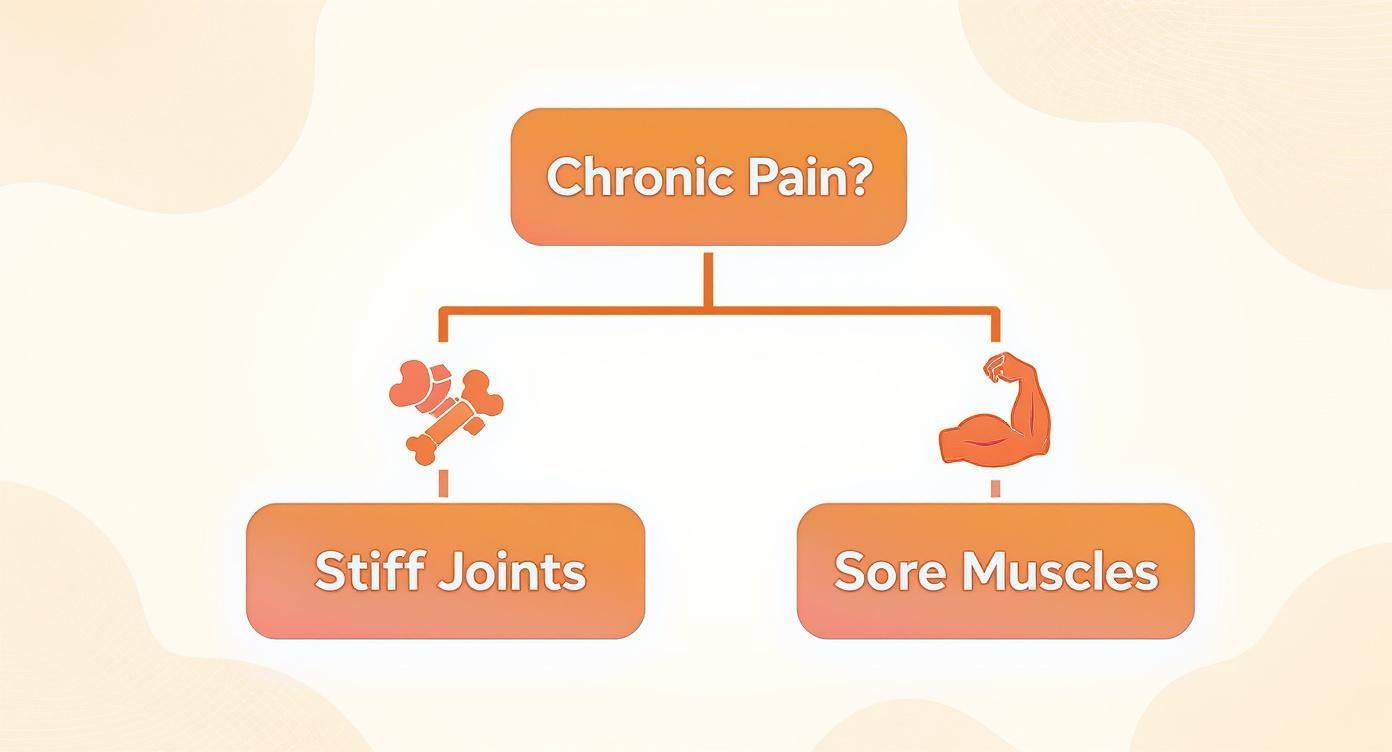
As the chart shows, if your chronic pain is coming from stiff joints or sore, tight muscles, heat therapy is almost always the way to go. It gets right to the root of the problem by relaxing that tightness and boosting circulation.
A Condition-Specific Comparison Guide
To make it even clearer, let's look at some common ailments and map out the best therapeutic approach for each. Think of this as your cheat sheet for choosing the right tool for the job.
Heat vs Cold: A Condition-Specific Guide
This table breaks down which therapy to use for common injuries and conditions, why it's the right choice, and a practical tip for applying it.
| Condition | Best Choice | Why It Works | Application Tip |
|---|---|---|---|
| Acute Sports Injury (e.g., sprain) | Cold | Instantly reduces swelling, inflammation, and numbs sharp pain by constricting blood vessels. | Apply an ice pack for 15-20 minutes every 2-3 hours for the first 48 hours. |
| Chronic Arthritis Stiffness | Heat | Boosts blood flow to stiff joints, improves tissue flexibility, and provides comforting relief. | Use a warm compress or heating pad for 20 minutes before gentle activity or stretching. |
| Delayed Onset Muscle Soreness (DOMS) | Cold | Best right after a workout to minimize the inflammation from muscle micro-trauma. | A 15-minute ice bath or a cold pack on the target muscles can reduce next-day soreness. |
| Persistent Lower Back Pain | Heat | Relaxes tight lumbar muscles, eases spasms, and improves circulation to the achy area. | Apply a heating pad while seated or lying down to help the muscles fully release. |
| Menstrual Cramps | Heat | Soothes and relaxes the contracting uterine muscles, offering direct relief from cramping. | Place a warm pack on your lower abdomen for 15-20 minutes for significant comfort. |
| Tension Headaches | Heat | Can relax the tight neck and shoulder muscles that are often the source of the headache. | A heated neck wrap can ease the muscle tension that triggers the pain. |
| Shin Splints | Cold (initially) | Reduces the acute inflammation and pain along the shin bone after physical activity. | Ice your shins for 15 minutes right after a run to keep inflammation under control. |
This guide helps you see just how specific the recommendations can get, ensuring you get the most out of every application.
For an issue like shin splints, you can get even better results by pairing thermal therapy with other supports. Using compression socks for shin splints can be a game-changer, as this combination helps manage both the inflammation (with cold) and the mechanical stress on your lower legs (with compression).
Expert Insight: Here's a pro tip from massage therapists: they often recommend applying heat before a session. A heat pack on the back or shoulders for 10-15 minutes helps relax the surface-level muscles. This allows the therapist to work more deeply and effectively without causing you unnecessary discomfort, ultimately leading to a better massage. This simple step can turn a good massage into a great one.
At the end of the day, the heat therapy vs cold therapy debate isn't about which one is better overall—it's about which one is right for you, right now. By understanding the nature of your pain, you can confidently choose the therapy that will not only offer relief but will actively support your body's healing process.
How to Apply Heat and Cold Therapy Safely
To get real results from heat or cold therapy, how you apply it matters just as much as which one you choose. Using these therapies the right way maximizes their benefits and, just as importantly, keeps you safe from accidentally making things worse.
Whether you’re grabbing a bag of frozen peas or your favorite heating pad, the basic rules are simple but non-negotiable. Ignoring them can lead to everything from skin damage to ineffective relief, which defeats the entire purpose.
Safe Application of Cold Therapy
When you're dealing with a fresh injury, the goal of cold therapy is to dial down swelling and numb that sharp pain. But be careful—ice applied directly to the skin is a recipe for trouble, potentially causing frostbite or nerve irritation.
Here's how to do it right:
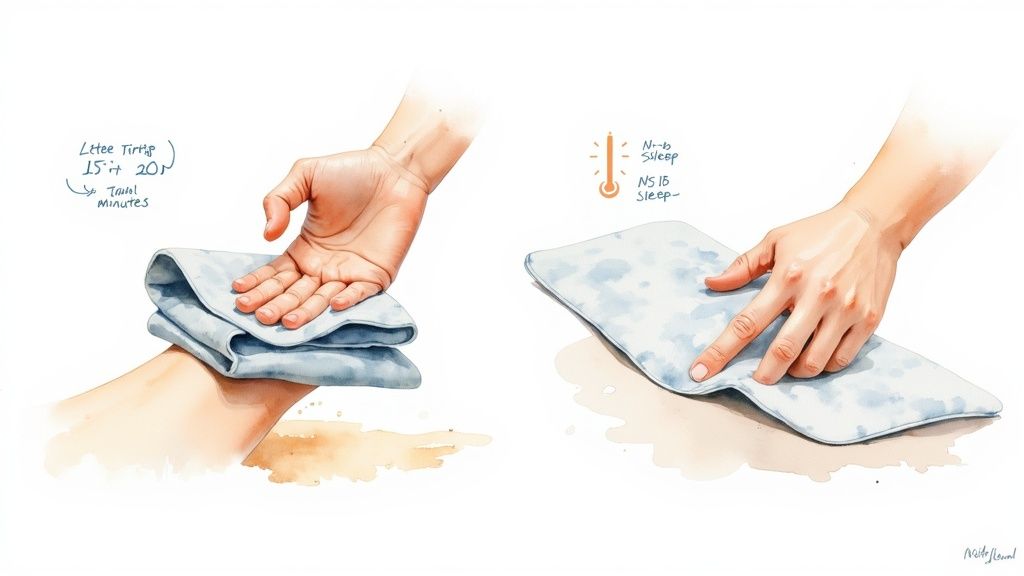
- Always Use a Barrier: Never, ever put an ice pack or frozen gel pack straight onto your skin. Wrap it in a thin towel or even a pillowcase to create a protective layer.
- Watch the Clock: Keep the cold on for no more than 15 to 20 minutes at a time. Any longer, and you risk a rebound effect where your body tries to overcompensate by flooding the area with blood, which is the exact opposite of what you want.
- Take a Break: Let your skin return to its normal temperature for at least an hour before you think about icing again. This simple step is key to preventing tissue damage.
A Pro Tip From My Kitchen: A bag of frozen peas makes a fantastic makeshift ice pack. It’s flexible and molds perfectly around tricky spots like an ankle or knee, giving you even cold coverage.
Safe Application of Heat Therapy
Heat therapy feels incredible on those deep, chronic aches, but it comes with a serious risk: burns. Skin tissue just can't handle high temperatures for long periods.
Follow these guidelines to stay safe while you soothe your muscles:
- Keep it Comfortably Warm: Your heating pad should feel soothing, not scorching. If it starts to feel uncomfortably hot, turn down the setting or add another towel between the pad and your skin.
- Set a Timer: Just like with cold, keep your heat sessions to about 15-20 minutes. That's plenty of time to get the blood flowing without risking a burn.
- Never, Ever Fall Asleep: This is the most important rule. Falling asleep with an electric heating pad on is one of the leading causes of serious burns from at-home therapy. For a deep dive into this topic, please read our guide on heating pad safety.
Knowing When to Step Away
Sometimes, the smartest move is not using therapy at all. Certain conditions, known as contraindications, can make heat or cold a very bad idea, potentially causing real harm.
Here's a quick rundown of when to hold off:
-
Avoid Cold Therapy If You Have:
- Poor circulation or a vascular condition like Raynaud's phenomenon.
- Any numbness or loss of sensation in the area.
- An open wound or broken skin.
-
Avoid Heat Therapy If You Have:
- A brand-new injury that's actively swelling (wait at least 48 hours).
- An open wound, stitches, or any kind of skin infection.
- Conditions like dermatitis or deep vein thrombosis (DVT).
By following these simple safety rules, you can use both heat and cold therapy with confidence to manage your pain. It’s all about being careful so you can get all the relief without any of the risks.
Advanced Techniques and Complementary Therapies
Once you have a good handle on the basics of using heat and cold, you can start exploring some more advanced strategies to really speed up your recovery. Think of it as moving beyond just applying a pack and instead, strategically combining therapies to get deeper, more lasting relief. These techniques can transform a simple hot or cold pack into a seriously powerful part of your pain management toolkit.
One of the most effective methods out there is contrast therapy, which is just a fancy way of saying you alternate between hot and cold. This creates a "pumping" action in your circulatory system. The cold constricts your blood vessels, and the heat that follows immediately dilates them. This process effectively flushes out inflammation and brings in fresh, nutrient-rich blood to the area.
Mastering Contrast Therapy at Home
Contrast therapy is fantastic for reducing muscle soreness and kickstarting recovery, especially after the initial 48 hours of an injury when the worst of the swelling has gone down. It's a favorite among athletes for good reason—it works.
Here’s a simple protocol you can follow at home:
- Start with Heat: Apply a heating pad to the sore area for 3-4 minutes. This initial warmth gets the blood flowing and helps relax the muscles.
- Switch to Cold: Immediately swap to a cold pack on the same spot for 1-2 minutes. This will constrict the blood vessels, starting that pumping action.
- Repeat the Cycle: Keep alternating between heat and cold for about 15-20 minutes in total. Aim for 3-4 complete cycles.
- Always End with Cold: Finishing your session with cold helps to close the blood vessels one last time, which can prevent any lingering inflammation from creeping back in.
Using Heat to Boost Other Treatments
Heat therapy isn't just a standalone treatment; it can be a powerful sidekick for other therapies, especially massage. Applying a little heat before a massage is a simple trick that makes a world of difference. The warmth is not only deeply relaxing but it also prepares your body to receive the full benefits of the massage.
Why Heat Before a Massage Works: Placing a heat pack on your back, neck, or shoulders for 10-15 minutes before a massage helps loosen up the surface-level muscles. This allows your massage therapist to get deeper into the tissue more effectively without causing you discomfort. It leads to a much more productive and enjoyable session, helping to release stubborn knots and tension that might otherwise be painful to address.
The benefits here are twofold: your muscles get the immediate soothing effect of the heat, and your massage becomes much better at tackling those deep, stubborn knots.
Choosing the Right Tools for the Job
You’ll find a huge variety of hot and cold therapy tools on the market, from basic gel packs to high-tech clinical gear. You definitely don't need a cryotherapy chamber in your living room, but picking the right product can make your treatments more effective.
- For Heat: Microwavable heat packs filled with natural materials like flaxseed are great because they provide moist heat, which penetrates deeply. Infrared heating pads are another option that delivers a different kind of warmth that can reach even deeper into your tissues.
- For Cold: Reusable gel packs are convenient, flexible, and conform easily to joints like your knee or elbow. And honestly, a simple bag of frozen peas is still a surprisingly effective and moldable option for tricky spots.
Remember, a holistic approach is often the best one. For example, if you're dealing with a chronic neck ache from desk work, consider making ergonomic adjustments to reduce neck pain alongside your heat or cold therapy. Combining these approaches will give you much more comprehensive and sustainable relief by tackling the root cause of your discomfort.
Common Questions About Heat and Cold Therapy
Even when you've got the basics down, you'll still run into questions when trying to decide between heat and cold. Let's clear up some of the most common ones so you can feel confident in your choice.
Can I Use Heat on a New Injury if it Feels Good?
I know it’s tempting, but this is a hard no. While the warmth might feel nice at the moment, putting heat on a fresh injury within the first 48-72 hours is a bad idea.
Heat boosts blood flow, which sounds good, but in a new injury, it just pours fuel on the fire, increasing swelling and inflammation. You'll actually end up slowing down your recovery. For any acute injury, stick with cold therapy to constrict blood vessels, keep swelling down, and numb the pain.
Is a Warm Bath as Effective as a Heating Pad?
It absolutely can be—it just depends on what you're trying to treat. A warm bath provides a wonderful, immersive moist heat that's perfect for general muscle soreness, widespread stiffness, or just helping you relax from head to toe.
A heating pad, on the other hand, is your go-to for targeting a specific spot, like a stiff neck muscle or a knot in your lower back. Think of it this way: a bath is great for post-workout aches all over, while a heating pad is perfect for zeroing in on menstrual cramp pain. Both are fantastic tools.
Expert Insight: Here's a tip I often share with massage clients: apply heat for about 15 minutes before your session. A simple heat pack helps relax the muscles, which allows your therapist to get deeper into those stubborn knots without as much discomfort. It’s a small step that can make a world of difference and significantly enhance the therapeutic benefits of your massage.
When Should I Try Contrast Therapy?
Contrast therapy—alternating between cold and heat—is best saved for a few days after an injury, once the initial, acute inflammation has calmed down. A typical approach is one minute of cold followed by three minutes of heat, repeated several times.
Athletes swear by this method for reducing delayed onset muscle soreness (DOMS) and kick-starting circulation to help with recovery.
For targeted, long-lasting relief from chronic aches and stiffness, SunnyBay offers a range of U.S.-made, microwavable heat packs designed for comfort and convenience. Explore our collection of hands-free wraps and versatile pads to find the perfect solution for your pain at https://sunny-bay.com.


