


How to Improve Blood Circulation: A Simple Guide to Better Flow
-
Learning how to improve blood circulation really boils down to a handful of simple, daily actions that support your body’s most vital delivery service. It's less about grand gestures and more about consistent habits like regular movement, staying hydrated, keeping stress in check, and eating foods that help get your blood flowing.
When you weave these habits into your daily life, you're helping ensure that every single cell gets the oxygen and nutrients it needs to thrive.
Why Your Blood Circulation Is Everything
Picture your circulatory system as a vast, intricate network of highways—an astonishing 60,000 miles of them, all neatly packed inside your body. This isn't just a transport system; it's your personal delivery service, rushing oxygen, hormones, and nutrients to every last organ and tissue. It’s also the cleanup crew, efficiently hauling away metabolic waste products like carbon dioxide.
When this network is running smoothly, you feel it. You’re energetic, sharp, and just plain healthy. But when things slow down and you get the equivalent of an internal traffic jam, the effects can be felt from head to toe.
What Poor Circulation Actually Feels Like
Poor circulation isn’t some abstract concept; it has real-world consequences that can sneak up on you. At first, the signs might be subtle, but they have a way of becoming more persistent over time.
You might start noticing things like:
- Hands and feet that are always cold, no matter the temperature.
- That annoying "pins and needles" feeling, or outright numbness.
- A nagging fatigue that sleep doesn’t seem to fix.
- Brain fog that makes it hard to focus.
- Cuts and scrapes that take forever to heal.
So, what causes these slowdowns? Often, it’s the usual suspects. A desk job that keeps you sitting for hours can cause blood to pool in your legs. And don't underestimate the impact of chronic stress; it floods your body with hormones that can tighten up your blood vessels over time. In fact, studies have shown that chronic anxiety can increase the risk of heart attack.
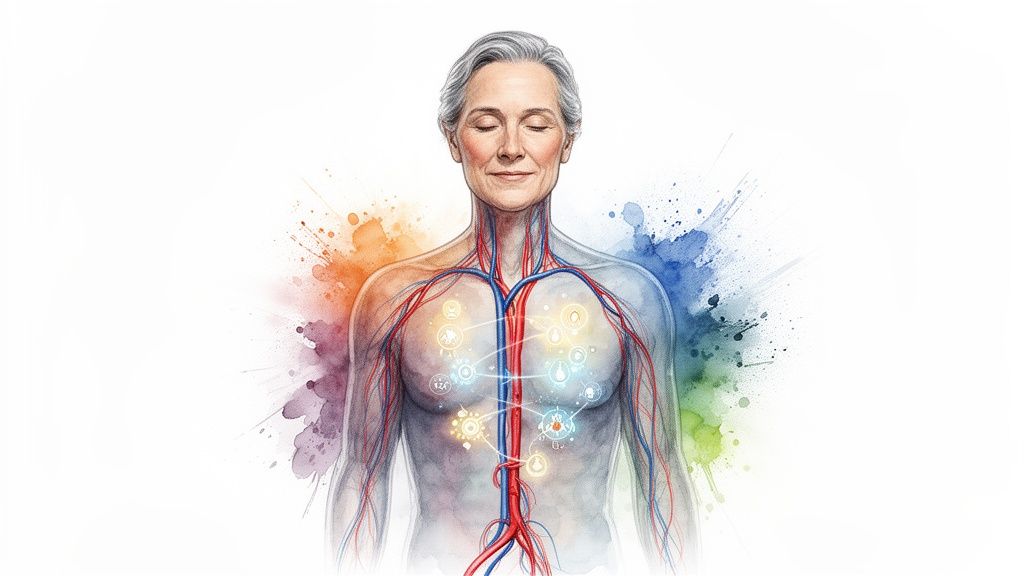
This internal "plumbing" is the foundation of your well-being, and keeping it in top condition is what improving blood circulation is all about.
The numbers really drive this point home. The global impact of cardiovascular diseases is staggering—an estimated 19.8 million people died from them in 2022. That accounts for about 32% of all deaths worldwide. This isn't just a statistic; it's a powerful reminder of why focusing on our circulatory health is one of the most important things we can do for our long-term vitality.
Build a Daily Blueprint for Better Blood Flow
You don't need a massive lifestyle overhaul to improve your circulation. Real, lasting change comes from the small, smart habits you weave into your day. The goal is to build a simple, repeatable routine that pushes back against the effects of a modern, sedentary life.
It all starts with changing how you think about movement. Forget the "one-hour workout or nothing" mindset. Instead, sprinkle your day with what I like to call "movement snacks."
These are just quick, two-minute bursts of activity that jolt your circulatory system awake. For example, while you're waiting for your morning coffee to brew, do a set of calf raises. This simple move fires up the big muscles in your lower legs, which act as a "second heart" to help pump blood back up toward your chest.
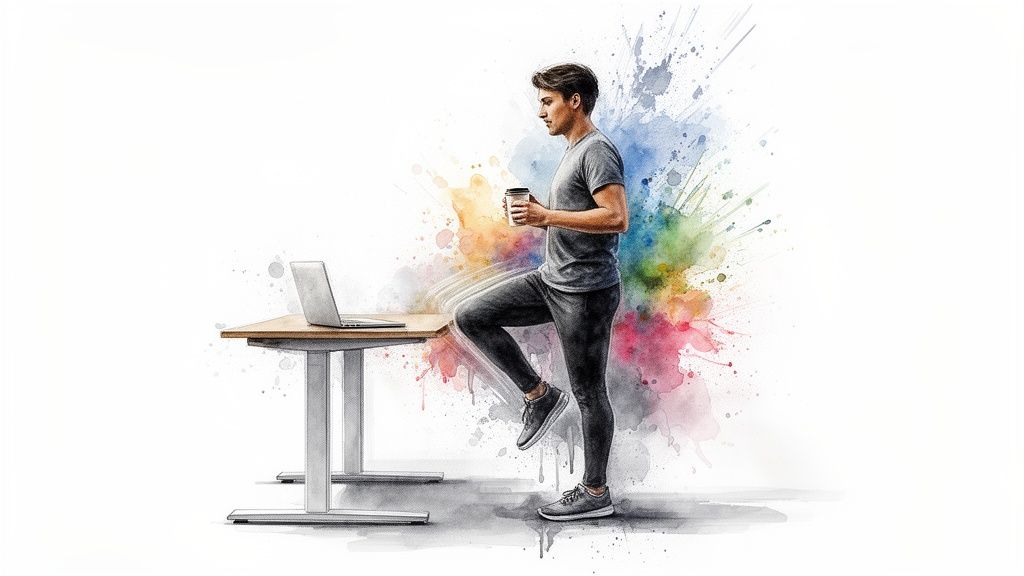
Embrace Micro-Movements Throughout Your Day
The real trick is to find those little pockets of time that already exist in your schedule. Stuck on a long conference call? Stand up and march in place. Waiting for a huge file to download? Squeeze in a few quick wall push-ups to get blood moving through your arms and chest.
These little movements stop blood from pooling in your legs and feet, a huge issue for anyone who works at a desk. Over time, these brief activities really add up and can make a huge difference in your overall circulatory health.
Here are a few more easy "movement snacks" you can try:
- Shoulder Rolls: Gently roll your shoulders back and then forward five times each. It's a great way to release tension in your upper back and neck where things get tight.
- Ankle Pumps: While you're sitting, just extend one leg and point and flex your foot 10-15 times. Then switch. This is fantastic for getting circulation going in your lower legs.
- The Quick Walk: Instead of shooting an email to a colleague down the hall, take two minutes and walk over to their desk.
Of course, consistency is everything if you want to see long-term benefits. For some great tips on making these habits stick, check out this guide on How to Stay Consistent Working Out.
Correct Your Posture to Unblock Circulation Pathways
Beyond just moving more, how you sit and stand plays a surprisingly big role. Picture your blood vessels as a set of garden hoses. If you're slouching or sitting in a weird position, you're basically putting kinks in those hoses, creating traffic jams for your blood flow.
A couple of common trouble spots are the neck and shoulders—that classic "tech neck" from staring down at a screen can compress major arteries. Your hips are another one; sitting with a bad posture can pinch the crucial femoral artery that supplies your legs with blood.
Proper posture isn't just about looking more confident. It’s about giving your circulatory system the open, clear highways it needs to do its job right. Think of an ergonomic setup as a direct investment in your blood flow.
Setting up your desk ergonomically can be a game-changer. Adjust your chair so your feet are flat on the floor and your knees are at a 90-degree angle. Get your monitor up to eye level so you’re not constantly craning your neck down. These simple tweaks prevent the kind of chronic compression that really slows circulation down.
Hydration: The Unsung Hero of Blood Flow
Finally, let's talk about one of the easiest and most powerful things you can do: drink enough water. Your blood is more than 90% water. When you get dehydrated, your blood volume actually drops, and the blood itself gets thicker.
Thicker, sludgier blood is much harder for your heart to pump. It has to work overtime to push that fluid through your veins and arteries, which can leave you feeling tired and sluggish.
By staying hydrated, you keep your blood at the right consistency—thin and fluid. This allows it to cruise effortlessly through your system, delivering oxygen and nutrients exactly where they need to go. Aiming for eight 8-ounce glasses a day is a good starting point, though you might need more depending on your activity level. Just keeping a water bottle on your desk is the best reminder to sip all day and keep those internal highways flowing smoothly.
Use Targeted Exercises to Stimulate Circulation
While weaving small "movement snacks" into your day is a great start, a more focused exercise routine can take your circulatory benefits to the next level. Think of it as upgrading from a gentle stream to a powerful river. Specific, targeted movements actively pump blood through your body, strengthening your heart and helping your veins in their constant uphill battle against gravity.
To really get the most out of your efforts, it helps to focus on three different kinds of movement. Each one plays a unique and essential role in keeping your vascular system healthy.
Strengthen Your Heart with Low-Impact Cardio
Your heart is the engine of your circulatory system. The most direct way to improve blood flow is to make that engine stronger and more efficient. Low-impact cardio is perfect for this—it gets your heart rate up without putting a ton of stress on your joints.
Great options include swimming, cycling, or going for a brisk walk. During these activities, your heart beats faster, pushing more oxygen-rich blood through your arteries with every pump. Over time, this strengthens the heart muscle itself, so it can pump more blood with less effort, even when you're just sitting around.
Here are a few ideas:
- Swimming: The buoyancy of the water is a lifesaver for anyone with joint pain. It's a full-body workout that gets your arms, legs, and core involved, giving your entire circulatory system a boost.
- Cycling: Whether you're hitting the trails or using a stationary bike, cycling is a fantastic way to work the large muscles in your legs. This action helps drive blood from your lower body back up toward your heart.
- Brisk Walking: Don't underestimate this simple classic. Just aim for a pace that elevates your heart rate but still lets you carry on a conversation.
Activate Your Second Heart with Leg Exercises
Did you know your calf muscles are often called the body's "second heart"? It's because every time you contract them, they squeeze the deep veins in your legs, powerfully propelling blood upward against gravity. Strengthening your legs is one of the single best things you can do to keep blood from pooling in your lower body.
You don't need a gym membership for this, either. Simple bodyweight exercises done at home can make a huge difference.
When you focus on your lower body, you're directly supporting the system that returns blood to your heart. This not only improves overall circulation but can also reduce that heavy, tired feeling and swelling in your legs at the end of the day.
For those who enjoy more intense activities like running, the right gear can also play a supportive role. Looking into the benefits of compression leggings for running can show you how compression wear helps your body's circulation during a workout.
Use Targeted Stretches Anytime, Anywhere
You can give your circulation a little nudge even while you're stuck at your desk or relaxing on the couch. Small, targeted stretches and movements are perfect for preventing blood from getting stagnant, especially in your feet and hands.
These gentle moves are ideal for breaking up long periods of sitting:
- Ankle Pumps: While seated, just extend one leg out and flex your foot. Point your toes toward the ceiling, then point them away. Do this 15-20 times on each leg to get that calf pump working.
- Leg Lifts: From your chair, slowly lift one leg until it's parallel to the floor. Hold it for a few seconds, then slowly lower it back down. This fires up your thigh muscles and gets blood moving in your upper legs.
The key is finding small moments throughout the day to sneak these in. For more great ideas, check out these 10 simple ways to get moving in everyday life.
To help you put it all together, here is a sample weekly routine that combines these different types of movement for a well-rounded approach to circulatory health.
Simple Circulation-Boosting Exercise Routine
| Day | Morning (15 mins) | Afternoon (5 mins) | Evening (20 mins) |
|---|---|---|---|
| Monday | Brisk Walk | Ankle Pumps & Leg Lifts at Desk | Gentle Stretching/Yoga |
| Tuesday | Bodyweight Squats & Calf Raises | Ankle Pumps & Neck Rolls | Cycling (Stationary or Outdoor) |
| Wednesday | Brisk Walk | Arm Circles & Shoulder Rolls | Full-Body Stretch Routine |
| Thursday | Bodyweight Squats & Lunges | Ankle Pumps & Leg Lifts at Desk | Swimming or Water Aerobics |
| Friday | Brisk Walk | Neck & Shoulder Stretches | Gentle Stretching/Yoga |
| Saturday | Cycling or a longer walk | Active Break (walk around) | Your Choice: Fun activity! |
| Sunday | Rest or light stretching | Rest or light stretching | Rest or light stretching |
This table is just a guideline, of course. Feel free to swap activities based on what you enjoy and what your body needs. The goal is consistency, not perfection! By mixing cardio for your heart, exercises for your "second heart," and frequent stretches, you create a powerful, multi-faceted plan to support your circulatory system from every angle.
Using Heat and Massage for Quick Relief
Sometimes, you need more than just long-term habits. For immediate, comforting relief that actively gets your blood moving, heat and massage are two of the best drug-free tools you can use. They work directly with your body’s own systems, especially in areas that feel tight, sore, or cold.
How Heat Therapy Opens the Floodgates
Ever wonder why a warm compress feels so good on a sore muscle? It's all thanks to a process called vasodilation. Applying warmth is like unkinking a garden hose; the heat gently signals your blood vessels to relax and widen, allowing a greater volume of blood to flow through. This is a game-changer for circulation. Imagine your blood vessels as tiny highways; heat therapy essentially adds more lanes, letting traffic flow freely and reducing congestion.
This fresh surge of blood is packed with oxygen and nutrients, which helps heal muscle tissue. At the same time, it flushes out the metabolic gunk that builds up and causes soreness. For anyone struggling with stiff joints or tight muscles from poor circulation, heat therapy is an incredibly effective and soothing solution. The benefit is twofold: you get immediate relief from discomfort and you actively support your body’s circulatory function. It’s a simple action with powerful, positive effects.
If you want to get into the nitty-gritty of how it all works, our guide on the benefits of heat therapy is a great place to start.
Here's a scenario I see all the time: You’ve been hunched over a desk for hours, and your lower back is screaming. That stiffness is a classic sign of restricted blood flow. Applying a targeted heat wrap, like a SunnyBay Lower-Back Heat Pad, for just 15–20 minutes can make a world of difference. The warmth sinks deep into those tense muscles, loosening them up and reopening those crucial circulatory pathways for fast relief.
How Massage Manually Gets Blood Moving
Massage takes a more hands-on approach, and its benefits for circulation are undeniable. The physical pressure—whether from a massage therapist’s hands or a simple self-massage tool—literally pushes blood through congested areas. It helps move out stagnant, deoxygenated blood and makes way for fresh, oxygenated blood to rush in. Think of it as manually breaking up a traffic jam in your body.
It's also fantastic for breaking up those painful muscle knots, also known as trigger points. These are basically tight, balled-up bands of muscle that can physically pinch surrounding blood vessels. A good massage releases these knots, freeing up the pathways for blood to flow unimpeded. For example, if you often get cold feet, a simple 5-minute foot massage before bed can manually stimulate blood flow and bring comforting warmth to your extremities. It’s a proactive way to feel better instantly while supporting your long-term circulatory health.
Bringing back healthy blood flow is about so much more than temporary comfort—it has a massive impact on your overall well-being. This is why tools that support good circulation are so valuable for daily health.
This isn't just a nice idea; it's backed by solid research. For instance, findings presented by the American Heart Association revealed that when patients with peripheral artery disease had blood flow restored, their pain scores dropped dramatically and their quality-of-life scores shot up. It really underscores how powerful these therapeutic interventions can be. You can read the research on these quality-of-life improvements to see the data for yourself.
When you put them together, heat and massage are a perfect team. Heat relaxes the vessels, and massage physically moves the blood. It’s a proactive one-two punch to support your body and get relief you can feel right away.
What to Eat for Better Blood Flow
It's incredible to think about, but your body is home to over 60,000 miles of blood vessels. What you eat provides the fundamental building blocks to keep this vast internal highway system clear and running smoothly. A circulation-friendly diet isn't about harsh restrictions; it's about strategically adding delicious, powerful foods that actively promote healthy blood flow.
Think of it this way: certain nutrients help relax blood vessels, fight off the inflammation that can stiffen arteries, and keep things flexible. By making a few smart choices at mealtime, you can improve your circulation from the inside out.
Foods That Give Your Circulation a Boost
Some foods are just naturally packed with compounds that get your blood moving. Weaving them into your regular meals is one of the simplest, most effective ways to support your entire vascular system.
Here are some of my go-to foods for better circulation:
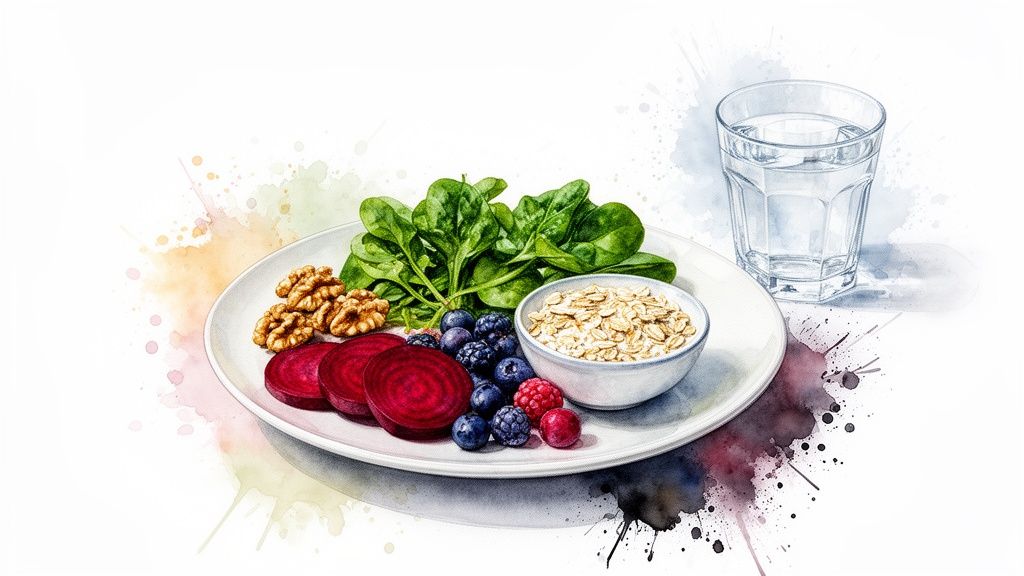
- Nitrate-Rich Veggies: I'm talking about beets and leafy greens like spinach and kale. Your body is amazing—it converts the nitrates in these foods into nitric oxide. This molecule is a superstar for circulation because it relaxes and widens your blood vessels, which literally gives your blood more room to flow.
- Berries and Citrus: Full of antioxidants called flavonoids, foods like berries, oranges, and even a little dark chocolate are fantastic for your arteries. These compounds are great at reducing inflammation and helping to prevent the sticky plaque that can clog things up.
- Omega-3 Fatty Acids: You've probably heard about the heart benefits of omega-3s, and for good reason. Found in fatty fish like salmon, as well as walnuts and flaxseeds, they help keep blood pressure in check and can prevent platelets from getting too "clumpy" and forming clots.
A simple swap can make a huge difference. Instead of reaching for a sugary cereal, try a bowl of oatmeal topped with a handful of walnuts and fresh berries. You'll kickstart your day with a powerful mix of fiber, antioxidants, and those crucial omega-3s.
Foods That Can Slow Things Down
Just as important as adding the good stuff is knowing what to limit. Some foods and ingredients can really strain your circulatory system, making your heart work much harder than it needs to.
The biggest culprits are typically excess sodium and sugar. A diet high in sodium often leads to higher blood pressure, which puts constant stress on your artery walls. Meanwhile, sugary drinks and highly processed foods can fuel inflammation and contribute to weight gain—both major roadblocks for healthy circulation.
Can Supplements Help With Circulation?
While I always recommend a food-first approach, certain supplements have shown some real promise for supporting blood flow. L-arginine, for example, is an amino acid your body uses to produce that all-important nitric oxide we talked about earlier. But it's vital to understand that supplements aren't a shortcut or a magic fix.
You should always talk to your doctor before starting any new supplement. They can tell you if it's a safe choice for your individual health situation and make sure it won't interfere with any medications you're already taking.
This is also a fascinating area of ongoing research. A study at Harvard Medical School found that NMN (nicotinamide mononucleotide) helped restore blood capillaries in older mice, boosting their blood flow to levels seen in much younger animals. Human trials are still needed, but it points toward exciting possibilities for tackling age-related circulation problems through nutrition. If you're curious, you can explore the groundbreaking research on NMN and blood flow to learn more.
Lifestyle Adjustments That Make a Big Difference
What you do every day matters just as much as your diet and exercise routine. The small, seemingly minor choices you make create the backdrop for your circulatory system's health. It's in these daily habits that you can either help your circulation thrive or unknowingly create roadblocks.

Manage Your Stress Levels
Ever notice how you feel tense all over when you're stressed? That's not just in your head. When your brain signals "fight or flight," it floods your body with hormones like cortisol. This causes your blood vessels to physically tighten up.
While that's great for outrunning a saber-toothed tiger, chronic daily stress keeps your system on high alert. Your blood vessels stay constricted, forcing your heart to pump much harder to get blood where it needs to go. Over time, this can lead to high blood pressure and wear and tear on your artery walls.
Learning to de-stress isn't a luxury; it's a core strategy for better circulation. You’re essentially telling your blood vessels it's safe to relax and open up.
- Practice Deep Breathing: It sounds simple, but it works. Taking just a few minutes for slow, deep breaths that make your belly rise can lower your heart rate and blood pressure almost instantly. A good pattern to try is inhaling for a count of four, holding for four, and exhaling slowly for a count of six.
- Try 5-Minute Mindfulness: Stop and tune into your senses. What are five things you can see, four you can feel, three you can hear? This simple exercise yanks you out of a stressful thought loop and back into the present moment.
Why Quitting Smoking Is Non-Negotiable
Let's be direct: if you're a smoker looking to improve your circulation, quitting is the single most impactful thing you can do. Nothing else even comes close. Smoking hits your circulatory system with a devastating one-two punch.
First, the nicotine acts as a potent vasoconstrictor, which is a fancy way of saying it instantly squeezes your arteries shut and chokes off blood flow. Then, the thousands of other chemicals in cigarette smoke damage the delicate inner lining of your blood vessels. This makes them stiff and promotes the buildup of plaque, creating dangerous blockages. The good news? Your body is incredibly resilient and starts repairing itself almost as soon as you quit.
Quitting smoking isn't just a suggestion; it's one of the most direct and effective actions you can take to restore your circulatory health and prevent long-term damage.
Small Habits With Big Circulatory Payoffs
Finally, let's talk about a couple of easy tweaks that can provide almost immediate relief, especially for your legs and feet. These habits work with gravity instead of against it.
Elevate Your Legs
At the end of the day, give your veins a break. Spend 15-20 minutes with your legs propped up higher than your heart. You can lie on the floor and rest your legs up a wall or just pile some pillows under them on the couch. This simple trick makes it so much easier for blood to flow back to your heart.
Choose Comfortable Clothing
Think of your clothes. Are they leaving deep red marks on your skin? Super tight clothing, particularly around your waist, thighs, or ankles, can act like a mini-tourniquet, physically squeezing off circulation. Opt for looser, more comfortable fits that let your blood flow freely. Your circulatory system is a highway, and you don't want to create any unnecessary traffic jams.
Common Questions About Improving Blood Circulation
It's completely normal to have a few questions when you start making changes to improve your circulation. After all, you want to know if what you're doing is actually working.
Let's tackle some of the most frequent questions I hear, covering how fast you can expect results and how two of my favorite therapies—heat and massage—can make a real difference.
How Quickly Can I See an Improvement?
This is the big one, and the good news is you can feel some benefits almost immediately.
Something as simple as a brisk 10-minute walk can get the blood moving and warm up chilly hands and feet right away. If your legs feel heavy after a long day, elevating them for just 15 minutes can bring surprisingly fast relief.
But those are the short-term wins. For the kind of deep, lasting changes that lead to a stronger heart and more resilient blood vessels, you need to play the long game. Stick with consistent changes to your diet, exercise, and stress levels for a few weeks, and that’s when you’ll really start to notice a difference—like having more energy or not feeling cold so often.
Is Heat Therapy Really Effective for Circulation?
Yes, absolutely. Applying heat is a wonderfully simple and effective way to boost blood flow to a specific area. When you warm up your body, your blood vessels naturally relax and widen in a process called vasodilation.
Think of your blood vessels like tiny highways. Heat essentially adds more lanes, allowing more traffic—in this case, blood—to pass through smoothly. This rush of fresh blood brings in more oxygen and nutrients to help tissues repair, while also carrying away the waste products that make muscles feel sore and tight.
For example, if you've got a stiff neck from hunching over a desk, that muscle tension is literally squeezing the blood vessels. Applying a gentle heat wrap for 15-20 minutes helps those tense muscles let go, opening up the circulatory pathways and bringing a wave of relief.
This makes heat a fantastic drug-free option for anyone struggling with chronic muscle tightness that’s getting in the way of healthy circulation.
How Does Massage Help Improve Blood Flow?
Massage gets things moving through direct physical pressure. The hands-on techniques—the kneading, stroking, and pressing—literally push blood through tight, congested spots.
It’s like physically breaking up a logjam in a river. The pressure helps move out old, deoxygenated blood and makes way for a fresh supply of oxygen-rich blood to flood the area. This is a big reason why your muscles often feel warm, light, and refreshed after a good massage.
Imagine someone who's on their feet all day and ends up with swollen, achy legs. A focused massage on their calves can manually pump that stagnant fluid back up toward the heart, giving the circulatory system a much-needed assist. It’s a proactive way to support your circulation, especially in those stubborn areas prone to sluggish flow.
Ready to feel the soothing power of targeted heat therapy? SunnyBay has a whole collection of U.S.-made, microwavable heat wraps perfect for your neck, back, and joints. It’s a simple, drug-free way to find relief and give your circulation a boost. Check out the full SunnyBay collection and start feeling better today.


