


How Do Heat Pads Work to Relieve Pain and Soreness
-
Heat pads might seem simple, but their effectiveness comes down to some fascinating science. At its core, a heat pad uses what’s known as thermotherapy to boost blood flow and get your muscles to relax.
When you place that warmth on a sore spot, your blood vessels widen in a process called vasodilation. This simple reaction helps flush out the things that are causing pain while bringing in fresh, oxygen-rich blood to speed up the healing. It's a straightforward process that provides comforting relief for everything from a stiff back to menstrual cramps. Imagine coming home after a long day with a tension headache; applying a warm compress to the back of your neck can feel like it's melting the stress away. That's the power of heat therapy at work.
The Soothing Science Behind Heat Therapy
Ever wonder how a simple warm compress can feel so good, melting away tension and making a stiff neck feel human again? The secret is a powerful, natural response your body has to warmth. Once you get how this works, you'll see why heat is such a cornerstone of effective pain relief.
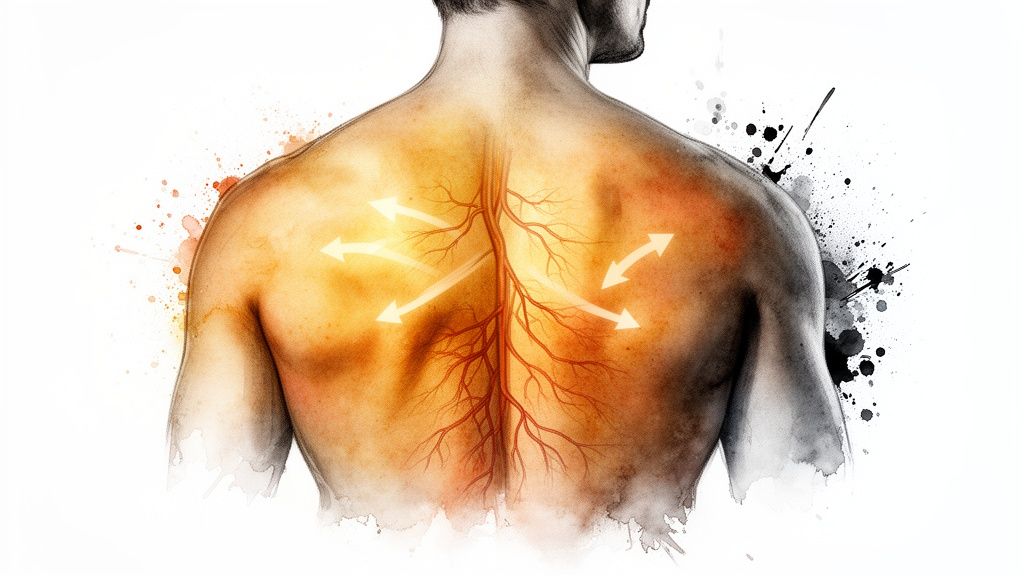
When you apply a heat pad, you're kicking off a wonderful chain reaction. Think of your blood vessels as tiny highways. Heat acts like a great traffic controller, opening up extra lanes and getting things moving.
This widening of the blood vessels lets a rush of blood get to the area you're treating. That increased circulation is a huge deal—blood is the delivery service for all the oxygen and nutrients your tissues are craving to repair themselves. This isn't just about feeling good; it's about actively helping your body heal faster and more efficiently.
At the same time, this improved blood flow is also the cleanup crew. It helps carry away metabolic waste products, like lactic acid, that build up in muscles and make you feel sore. By clearing out this gunk, heat therapy gets right to the source of your discomfort.
How Your Body Responds to Heat
But the benefits don't stop at better circulation. Heat therapy also has a direct line to your muscles and nerves. This is a key reason why it's so effective in different situations, including for natural pain management during labor. For everyday aches, the process is a game-changer.
To make it simple, let's break down exactly what's happening when you apply that gentle warmth.
How Heat Therapy Helps Your Body Heal
| Physiological Effect | What It Means for Your Body | The Benefit You Experience |
|---|---|---|
| Muscle Fiber Relaxation | The warmth makes tense muscle fibers more pliable and flexible. | Stiffness melts away, and tight knots begin to loosen up. |
| Pain Gate Control | The sensation of heat "distracts" your nerve endings, competing with pain signals. | The volume on your pain gets turned down, providing direct relief. |
| Increased Tissue Elasticity | Connective tissues around your joints become more flexible. | You experience a better range of motion and less joint stiffness. |
It's a powerful combination of effects working together to bring you comfort.
Think about it: if you have a tight lower back after sitting at a desk all day, applying a heat pad for just 15-20 minutes can get those spasming muscles to calm down and give you immediate relief. This is exactly why so many people trust this simple yet effective method for comfort. For someone with chronic arthritis, this increased elasticity can mean the difference between a stiff, painful morning and one with greater mobility and less discomfort.
If you'd like to dive deeper, you can learn more by understanding the basics of heat therapy and how to apply them for the best results.
From Hot Stones to Electric Comfort
We've known for ages that heat feels good on an aching body. Long before electric outlets and microwaves, ancient cultures were masters of thermotherapy. They used what nature gave them—stones warmed by the sun, geothermal hot springs, even heated sand—to soothe sore muscles and joints. It was simple, intuitive, and effective.
But these early methods had their drawbacks. A hot stone cools down fast, and a leaky bladder filled with hot water could be a recipe for a serious burn. The core idea was brilliant, but making it safe, consistent, and practical for everyday home use was the real challenge.
The Dawn of a New Era in Pain Relief
Everything changed in 1911. That's when an inventor named Earl Richardson created the first electric heating pad. He called it the 'El Warmo,' and it was a total game-changer, bringing controlled, reliable heat therapy out of clinics and into the home for the first time.
Suddenly, you didn't have to boil water or endlessly reheat stones. By 1917, thousands of homes had one, and the heating pad became a go-to solution for everything from post-workout soreness to chronic arthritis. This is the legacy that brands like SunnyBay continue today with their U.S.-made microwavable packs, which provide a solid 20-30 minutes of deep, soothing warmth. It's a method backed by science, too; studies show that consistent heat therapy can slash chronic back pain by up to 25%. It's why clinic-trusted wraps, like those chiropractors have recommended for over two decades, are still so popular. Learn more about the history of heating pads.
Think of it this way: Richardson’s invention did for heat therapy what the lightbulb did for illumination. It took a powerful but unpredictable force and made it safe, reliable, and available at the flip of a switch.
From Simple Warmth to Smart Technology
The 'El Warmo' was just the beginning. As technology evolved, so did the heating pad. Engineers started focusing on making them safer and more user-friendly. One of the biggest leaps forward was the thermostat, which stopped the pads from getting dangerously hot and kept the temperature right in that sweet spot for therapy.
Next came automatic shut-off timers. This was a huge relief for anyone who liked to drift off while using their heating pad. You could finally relax completely, knowing the device would safely turn itself off after a set time. These weren't just bells and whistles; they were crucial safety features built around one goal: delivering effective heat therapy without the risk.
Today's heat pads—from microwavable wraps to high-tech infrared models—stand on the shoulders of these early innovations. Every new design is part of a century-long story of refinement, mixing ancient wisdom with modern engineering to offer targeted, drug-free pain relief. It's this powerful combination of history and science that makes heat therapy a trusted solution for everyday aches and chronic pain alike.
Understanding Different Types of Heat Pads
Not all heat pads are created equal. Knowing the difference between them is the first step to finding the perfect match for your pain relief needs. The technology behind how they generate warmth varies quite a bit, from simple, natural fillings you pop in the microwave to advanced light waves that heat you from the inside out. Understanding how heat pads actually work empowers you to choose the right tool for the job.
To get started, this decision tree can point you in the right direction.
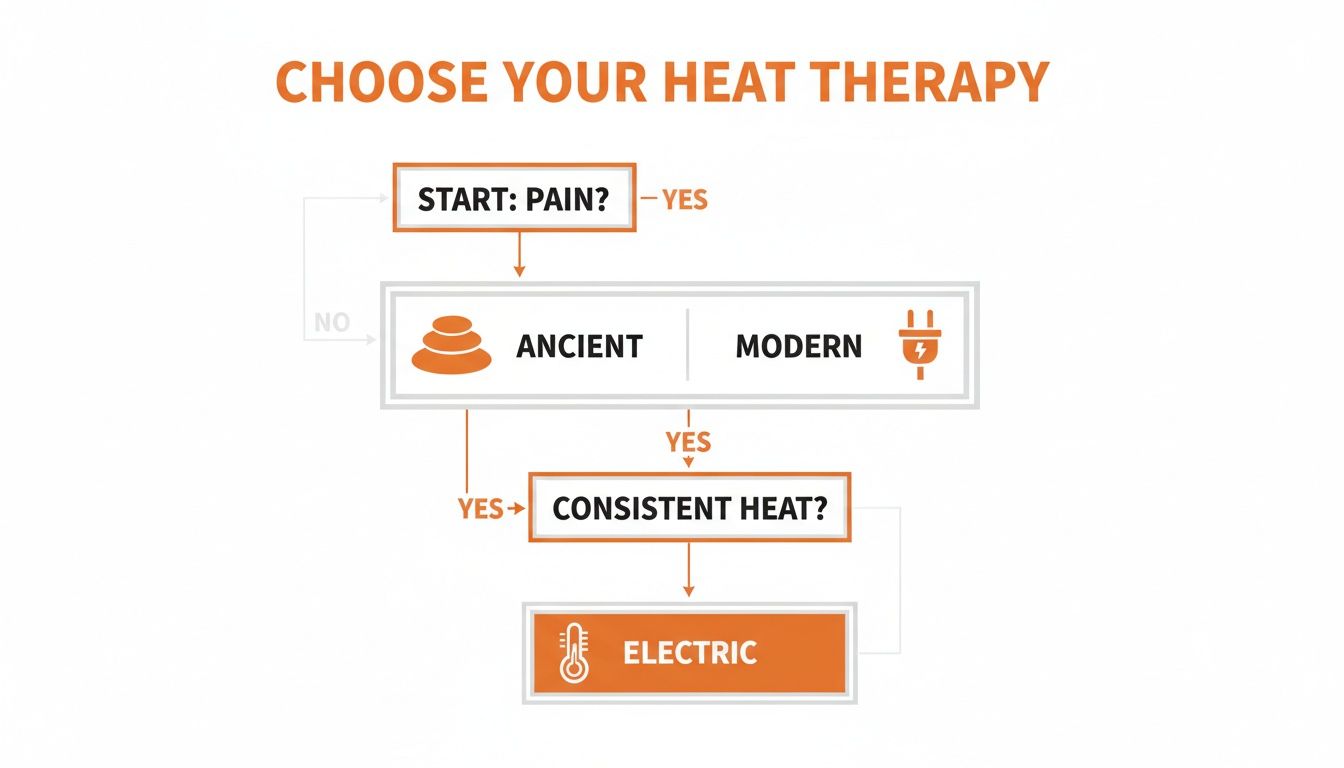
As you can see, the path from identifying your pain to choosing a therapy is pretty clear. When you need consistent, modern heat therapy, electric options are often the go-to choice. But let's break down the four main players in the world of heat therapy so you can really see what sets them apart.
Microwavable and Electric Pads
Microwavable heat pads are a classic for a reason. They’re incredibly simple and deliver a wonderful, deep, moist heat. Most are filled with natural materials like flaxseed, rice, or wheat, which do a fantastic job of absorbing microwave energy and releasing it slowly and evenly. This kind of moist heat is brilliant for penetrating deep into muscle tissue, making it ideal for soothing sore muscles after a tough workout or easing stubborn joint stiffness.
Electric pads, on the other hand, are all about providing a consistent, adjustable level of dry heat. Inside, there's a network of insulated heating coils that warm up when you plug it in, all regulated by a built-in thermostat. This makes them perfect for long-lasting, low-level warmth—think of it as a comforting companion for your lower back during a long day at your desk.
Chemical and Infrared Technology
Chemical heat pads are the champions of portability. These single-use pads work through a clever exothermic reaction, usually involving iron oxidation. Just tear open the package, and the iron filings inside react with the air, starting a process that’s essentially controlled rusting. This releases a steady, gentle heat for several hours, making them a fantastic option for on-the-go relief during a long car ride or a chilly outdoor event.
The innovation behind chemical pads is pretty fascinating. A major leap happened back in 1978 with the invention of reusable packs containing supersaturated sodium acetate and a little metal disc. Clicking the disc would start a crystallization process, releasing heat up to 130°F. This paved the way for the disposable patches we know today, which now command a whopping 40% of the $2.5 billion global heat therapy market. This technology can raise internal tissue temperature by 5-10°F, which is why it's so effective at boosting circulation and easing period cramps for 65% of users.
Finally, we have infrared heat pads, which represent a more high-tech approach. Instead of just warming the air around you, they use special light waves to penetrate your skin and heat your muscles directly. This allows for incredibly deep heat penetration without making the surface of your skin feel uncomfortably hot, offering a unique benefit for chronic pain conditions.
To help you decide, check out our detailed guide comparing the different types of heating pads and their specific uses.
Choosing the Right Heat Pad for Your Needs
Comparing the four main types of heat pads can help you find the best fit for your lifestyle and pain management goals. Each one shines in different situations.
| Heat Pad Type | How It Heats | Ideal for | Key Advantages | Potential Drawbacks |
|---|---|---|---|---|
| Microwavable | Natural fillers (flaxseed, rice) absorb microwave energy. | Soothing sore muscles, joint stiffness, and cramps. | Delivers deep, moist heat; conforms to body; portable. | Heat fades over time; requires a microwave. |
| Electric | Internal coils warm up with electricity. | Long-lasting, consistent warmth for chronic back pain. | Adjustable temperature; provides continuous heat. | Requires an outlet; dry heat can dehydrate skin. |
| Chemical (Disposable) | Iron filings oxidize when exposed to air. | On-the-go relief during travel or outdoor activities. | Highly portable; long-lasting single-use heat. | Disposable (less eco-friendly); lower heat intensity. |
| Infrared | Uses light waves to heat muscles directly. | Deep tissue relief for chronic pain or arthritis. | Penetrates deeper than surface heat; no skin irritation. | Higher initial cost; requires a power source. |
Ultimately, the best heat pad is the one you'll actually use. Whether you value the moist, comforting heat of a microwavable wrap or the plug-and-play convenience of an electric pad, understanding these differences will help you make a choice that brings you real relief.
The Stuff That Matters: Why Fillings and Fabrics Are Half the Battle
The heating element inside a pad is just the engine. What truly makes a heat pad effective—or not—is what it's made of, inside and out. The materials determine how well it holds heat, how it feels against your skin, and even how safe it is to use. It’s the difference between a simple hot pouch and a genuinely therapeutic tool.
Think of it like a chef choosing ingredients. The quality of what you put in directly affects the final result. A thoughtfully designed heat pad pairs the right filler with the right fabric to create an experience that’s not just warm, but deeply comforting and effective.
Inside Job: The Role of High-Quality Fillers
For a microwavable heat pad, the filling is everything. It's the "battery" that stores and releases thermal energy. Different materials have completely different personalities when it comes to holding heat, releasing moisture, and molding to the tricky curves of your body.
Here’s a look at some of the best fillers you’ll find:
- Flaxseed: This is a real standout. Thanks to its high oil content, flaxseed holds heat for a surprisingly long time. It’s also small and smooth, allowing it to conform perfectly to places like your neck and shoulders, delivering gentle, weighted pressure.
- Whole Wheat: A classic for a reason, wheat is fantastic at producing moist heat. The larger grains give it that traditional, comforting feel many people love.
- Lava Sand: When you need heat that lasts, lava sand is a powerhouse. It retains warmth longer than most grain-based fillers, making it perfect for those deep-tissue therapy sessions.
The right filling really depends on what you need. If you're dealing with deep muscle spasms, the long-lasting, penetrating warmth of lava sand might be your best bet. But for achy, stiff joints, the contouring, moist heat from flaxseed could be the perfect solution.
Believe it or not, modern microwavable heat pads owe a debt to NASA spinoff technology from the 1980s. A former NASA engineer created special thermal ceramic compounds that could hit 140°F in just 90 seconds and stay hot for 20-30 minutes. That innovation, along with heat-sealing materials from the space program, paved the way for the portable warmers we rely on today. It's no wonder a 2022 wellness report found that 78% of people with back pain turn to heat for muscle relief.
The Final Touch: Why Fabric Makes All the Difference
The cover isn't just for looks; it’s the crucial layer between a very hot core and your skin. Its job is to manage the heat transfer, prevent burns or irritation, and make the whole experience comfortable.
Breathable fabrics like 100% cotton are ideal because they let that therapeutic moist heat pass through without trapping sweat against your skin. For a touch of luxury, a soft anti-pill fleece provides a plush, cozy surface that feels amazing while still distributing heat evenly and safely.
Ultimately, a high-quality, washable cover isn’t just a nice-to-have feature—it’s essential for good hygiene and making sure your heat pad lasts. This commitment to quality is why we at SunnyBay insist on clinic-grade materials, so every time you use one of our pads, you know it’s both safe and soothing.
A One-Two Punch: Combining Heat and Massage for Better Relief
A good heat pad is a fantastic tool for soothing sore muscles, but when you pair it with massage, you unlock a whole new level of relief. Think of it as a powerful combination attack against stiffness and pain. The heat goes in first, warming up and relaxing the tissue, and the massage follows through to work out the stubborn knots. This approach amplifies the benefits of both, offering a more complete solution for pain management that you can easily do at home.
This isn't some secret technique reserved for physical therapists or pro athletes; it's an incredibly simple and effective wellness practice anyone can adopt. By bringing these two therapies together, you turn a simple act of pain relief into a more holistic and satisfying self-care ritual.
Making Muscles More Receptive
Here’s why this combo works so well: heat makes your muscles more pliable. Ever tried to knead cold, stiff dough? It’s a workout. But once you warm it up, it becomes soft and easy to shape. Your muscles react in a very similar way.
Applying heat for about 10-15 minutes before a massage encourages blood flow to the area and helps the muscle fibers loosen their grip. This pre-treatment step is what makes the massage so much more effective. With the muscles already warmed and relaxed, a massage tool—or even just your hands—can penetrate deeper into the tissue with less discomfort and effort.
The heat essentially coaxes the muscles into letting go, so you aren't fighting against your own body's tension. This allows the massage to be far more efficient at releasing trigger points and breaking up adhesions. It's about working smarter, not harder, to feel better.
Practical Examples for Everyday Relief
You don’t need a complicated setup to put this into practice. The goal is to seamlessly weave this combination into your routine, whether you're recovering from exercise or just trying to undo the damage from a long day at your desk.
Here are a few common scenarios where this duo really shines:
- For the Desk Worker: Hours hunched over a laptop can leave your neck and shoulders feeling like a block of concrete. Drape a heated neck wrap over them for 15 minutes to melt away the initial tightness. Follow up with a handheld massager, focusing on the knots at the base of your neck and between your shoulder blades. The difference is incredible; the massage feels more effective and provides longer-lasting relief.
- For the Athlete: Post-workout soreness is a familiar foe. After a tough leg day, apply a large heated body pack to your hamstrings or lower back. This jump-starts circulation and preps the muscles for recovery. Then, grab a foam roller or massage gun to target those specific sore spots, helping to reduce stiffness and flush out metabolic waste. This simple routine can significantly cut down on your recovery time.
- For Chronic Pain Sufferers: When dealing with chronic conditions like fibromyalgia or arthritis, a gentle approach is key. A soft, moist heat pad can soothe inflamed joints and sensitive tissues. Following that with a very light, gentle massage can help improve mobility and ease those persistent aches without triggering a flare-up. It's a way to reclaim comfort and control.
How to Use a Heat Pad Safely
Getting the most out of heat therapy really comes down to using it safely. It's one thing to understand how these pads work, but it's another to know how to use them correctly. When you get it right, a simple heat pad becomes an incredible tool for relief.
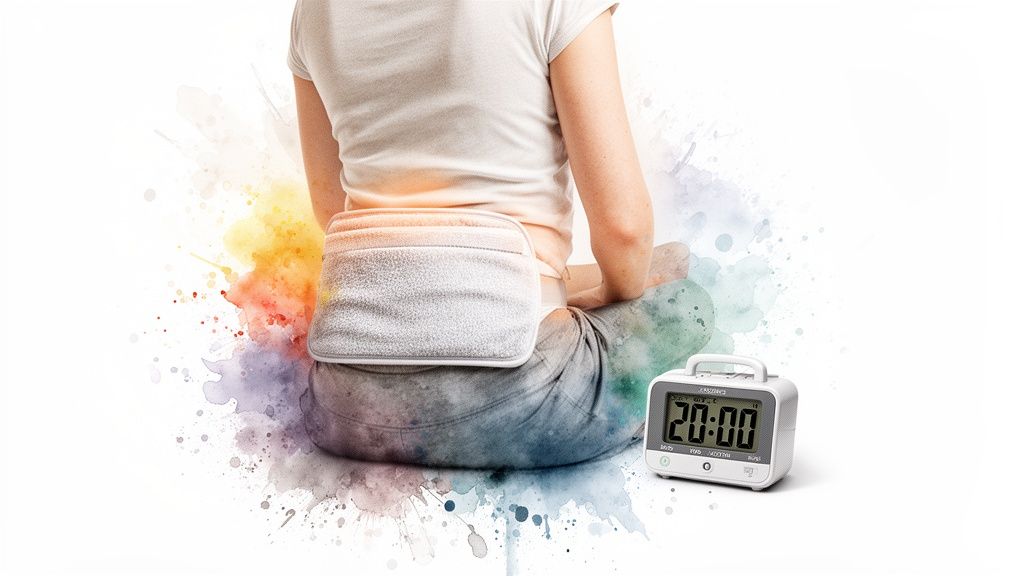
The single most important guideline I tell people is the “20-Minute Rule.” The consensus from medical experts is that 15-20 minutes is the magic number. That’s enough time for the heat to penetrate, relax muscles, and get the blood flowing, but not so long that you risk skin irritation or burns.
After a session, always give your skin a break. Let it return to its normal temperature before you even think about putting the heat back on. And this is critical: never, ever fall asleep with an electric heating pad still running. That’s how serious skin damage can happen.
Creating a Protective Barrier
You never want to put a direct heat source right against your skin. It’s just not a good idea. Always place a buffer—like a thin towel or one of those soft, washable covers—between the pad and your body. This simple step makes a huge difference, ensuring the warmth transfers gently and evenly.
This is especially true for microwavable pads. To avoid nasty hot spots, you have to heat them properly. Stick to the manufacturer's instructions, which usually means heating in short bursts and giving the pad a good shake to mix the filler around. This little bit of effort guarantees the heat is uniform and safe.
Think of your skin as your first line of defense. A protective barrier doesn't just prevent burns; it also helps trap the moist heat from a microwavable pad, which makes the whole therapy session more effective and comfortable.
When to Be Extra Cautious
Look, heat therapy is a fantastic tool for many, but it isn't the right answer for every person or every situation. Being aware of the exceptions is just part of responsible self-care.
For a more comprehensive look at best practices, feel free to check out our full guide on heating pad safety tips.
Here are a few times when you absolutely need to be careful or talk to a doctor before reaching for a heat pad:
- Open Wounds: Never apply heat to broken, cut, or damaged skin.
- Diabetes: Nerve damage is a common complication, and it can make it hard to tell if a pad is getting dangerously hot.
- Poor Circulation: If you have a condition that affects blood flow, your body might not be able to regulate temperature properly.
By keeping these simple rules in mind, you can use heat therapy confidently to manage your pain and feel better.
Got Questions About Heat Pads? We've Got Answers.
When it comes to using heat therapy, a few questions always seem to pop up. Knowing the answers helps you get the most out of your heat pad, safely and effectively. Let's clear up some of the most common things people ask.
Is Moist Heat or Dry Heat More Effective?
This is the big one: moist heat vs. dry heat. There's a reason so many people swear by moist heat for deep muscle pain. The kind of warmth you get from a microwavable pad just seems to penetrate deeper, getting right into those stubborn knots and sore spots.
On the other hand, the dry heat from an electric pad is great for consistent, surface-level warmth and sheer convenience. The best one for you really boils down to the type and depth of your pain.
How Long Should I Keep a Heat Pad On?
The sweet spot for heat therapy is generally 15 to 20 minutes per session. That’s enough time for the heat to work its magic—increasing blood flow and relaxing muscles—without irritating your skin.
It's really important to give your skin a break and let it return to its normal temperature before you reapply heat to the same area.
A critical word of caution: never put heat on a fresh injury like a sprain or strain, especially within the first 48 hours. Heat brings more blood flow to the area, which can make swelling and inflammation much worse. For those initial injuries, grab an ice pack instead.
Heat therapy is your go-to for chronic aches, stiffness, and cramps. Once you know when to use it (and when not to), a simple heat pad becomes a powerful tool for feeling better.
At SunnyBay, our focus has always been on creating clinic-grade, U.S.-made heat pads that offer safe, effective, and drug-free relief for all those everyday aches. Explore our collection of therapeutic wraps and find your perfect match.


