


A Guide on How to Treat Rheumatoid Arthritis Naturally
-
Living with rheumatoid arthritis can feel like a constant battle, but you have more power over your day-to-day comfort than you might realize. This guide is all about how to treat rheumatoid arthritis naturally, using practical, evidence-informed strategies that you can weave into your daily life.
While there’s no cure for RA, taking this kind of proactive approach can make a world of difference in your pain levels, mobility, and overall quality of life.
A Practical Guide to Managing RA Naturally
Rheumatoid arthritis isn't just about sore joints; it's a chronic inflammatory disease that can affect your whole body and mind. Medications are a cornerstone of treatment, but what you do every day matters just as much. This guide gives you drug-free tools and knowledge you can start using right away.
The goal here is to show you how simple, consistent habits can lead to big improvements. When you start incorporating these strategies, you're not just masking symptoms—you're actively helping your body manage inflammation and function better.
The Foundations of Natural RA Management
To get a real handle on managing RA naturally, we'll focus on a few key areas. Each one offers a unique way to reduce pain, improve your mobility, and help you feel more in control. Think of them as the building blocks for a more comfortable life.
- Targeted Heat Therapy: We'll get into how applying heat to stiff, achy joints can boost blood flow, ease muscle tension, and bring that immediate, soothing relief you're looking for.
- Anti-Inflammatory Eating: You'll discover the foods that can help dial down inflammation and, just as importantly, which ones might be making it worse. This puts you in the driver's seat at mealtimes.
- Mindful Movement: We'll explore gentle exercises that are specifically designed to keep you flexible and strong without adding extra stress to your sensitive joints.
- Evidence-Based Supplements: You'll get the real story on which supplements actually have some science behind them for RA, and why it's so important to talk them over with your doctor first.
These pillars work together to create a solid framework for managing your RA. They don't replace your medical treatment, but they are powerful additions that tackle the condition from every angle, helping you reclaim a sense of control over your health.
A layered strategy is often the most effective. Understanding the full range of options for arthritis joint pain relief gives you a bigger toolkit to draw from on good days and bad.
Building Your Daily Wellness Routine
The real magic happens when these natural strategies become part of your everyday life. It’s not about grand gestures; it's about the small, sustainable actions that add up.
Imagine starting your morning by wrapping a heated pad around your stiff shoulders before you even get out of bed. That simple act can ease the morning pain and stiffness, setting you up for a much better day.
Tools like specialized heat wraps can become your go-to allies, offering targeted comfort right where and when you need it. By combining these practical aids with smart lifestyle choices, you're not just following a plan—you're creating a personalized routine that supports both your body and your mind on this journey.
Using Heat and Massage Therapy for Joint Relief
Imagine waking up with less stiffness. Or opening a jar without that familiar, sharp twinge of pain. This is the kind of real, tangible relief that consistent heat and massage therapy can bring to your daily life with rheumatoid arthritis. These are simple, drug-free methods that get right to the source of your discomfort—stiffness, poor circulation, and tense muscles.
When you apply warmth to an achy joint, you're doing more than just finding temporary comfort. This process, called thermotherapy, actually boosts blood flow right where you need it. This fresh, oxygen-rich blood helps flush out inflammatory substances and delivers vital nutrients, which can soothe stiff joints and even help turn down the volume on the pain signals your nerves are sending to your brain.
This is exactly why heat feels so good on those chronically sore spots. For a condition like RA, where morning stiffness is practically a given, that boost in circulation is a game-changer. It helps relax the muscles gripping the joint, making movement easier and a whole lot less painful.
Creating Your Daily Heat Therapy Ritual
You don't need a complicated plan to make heat therapy work for you. The real secret is consistency and applying it at the right moments—when you know you'll need the relief most. Think of it as getting ahead of the pain before it really kicks in.
Here are a few practical ideas you can start using today:
- Before Your Day Begins: Try keeping a microwavable neck wrap on your nightstand. Before you even get out of bed, warm it up and drape it over your shoulders for 15 minutes. It’s a fantastic way to ease that all-too-familiar morning stiffness.
- Post-Activity Soothing: After a gentle walk or some light chores, apply a heated joint pack to your knees or hands. This simple step can help head off the delayed soreness that often follows even minor activity.
- Winding Down at Night: A larger heat pad on your lower back while you read or watch TV does double duty. It not only soothes aching joints but also promotes an overall sense of relaxation that can help you sleep more soundly.
The goal is to make heat therapy a seamless part of how you manage RA. Using clinic-trusted products designed for hands-free use, with soft, washable covers, makes it comfortable and convenient. That convenience is key to sticking with it.
This approach isn't just a home remedy; it's part of a much larger trend. Millions of people live with rheumatoid arthritis globally, and it's telling that between 30-60% of patients turn to complementary therapies. While diet is a huge piece of the puzzle, physical therapies like heat and massage offer that immediate, tangible comfort you can feel.
You can learn more about the specific science behind the benefits of heat therapy in our detailed guide.
Integrating Heat Therapy: A Sample Daily Routine
To give you a clearer picture, here’s a sample schedule showing how you can seamlessly integrate heat therapy to manage common RA pain points throughout your day.
A Daily Heat Therapy Routine for RA Symptom Management
| Time of Day | Common RA Challenge | Actionable Heat Therapy Tip | Focus Area |
|---|---|---|---|
| 7:00 AM (Morning) | Severe morning stiffness in hands, shoulders | Use a microwavable heating pad before getting out of bed. | Shoulders, Neck, Hands |
| 1:00 PM (Midday) | Achiness after morning errands or light work | Apply a heated joint wrap for 15-20 minutes during a break. | Knees, Wrists, Elbows |
| 4:00 PM (Afternoon) | Fatigue and general joint soreness sets in | Take a warm bath with Epsom salts. | Full Body |
| 9:00 PM (Evening) | Lower back pain from sitting; pre-sleep stiffness | Use a large heat pad on your back while relaxing before bed. | Lower Back, Hips |
This kind of routine helps you proactively address pain instead of just reacting to it, giving you a greater sense of control.
The Gentle Power of Massage Therapy
Paired with heat, targeted massage can do wonders for your comfort and mobility. When RA causes inflammation in your joints, the muscles surrounding them often tighten up as a protective reflex. Over time, this creates painful knots and tension, which only further limits your range of motion and adds another layer of pain.
Massage therapy works by manually releasing that built-up tension. It helps break down muscle adhesions and encourages deep relaxation, taking a significant amount of pressure off the affected joint. And you don't always need to see a professional—gentle self-massage can be incredibly effective for daily relief.
Here’s a real-world example of how this helps:
Let's say your RA primarily affects your hands, making it tough to write or cook. Each evening, you could start by applying a warm, moist towel to your hands for about 10 minutes. Afterward, use your thumb to gently massage the fleshy area at the base of your other thumb and the muscles between your fingers, moving in small, slow circles. This simple 15-minute routine can dramatically reduce hand stiffness and improve your grip strength for the next day, making it easier to hold a coffee cup or button your shirt.
By combining the circulatory benefits of heat with the muscle-releasing power of massage, you create a powerful, natural strategy for managing daily RA symptoms. This two-pronged approach helps you stay active, can reduce your reliance on pain medication, and most importantly, helps you regain a sense of control over your body.
Fueling Your Body With an Anti-Inflammatory Diet
What you put on your plate can be one of your most powerful tools for managing rheumatoid arthritis. Shifting to an anti-inflammatory eating style isn't about deprivation or bland, boring meals. It’s about making smart, nourishing choices that help calm your immune system and turn down the dial on inflammation.
Think of it this way: some foods act like kindling on a fire, encouraging the inflammatory processes that cause joint pain and stiffness. Others are like water, helping to douse those flames. Learning to manage RA naturally means getting really good at choosing the right fuel for your body.
Why Your Food Choices Matter So Much
The link between diet and RA is deeply rooted in how our bodies process what we eat. Foods rich in antioxidants, healthy fats, and fiber are incredible at fighting oxidative stress, which is a major driver of inflammation in the joints. For example, the omega-3 fatty acids you find in fatty fish get directly involved in our inflammatory pathways, acting like a natural dimmer switch on the body's pain signals.
This isn't just a theory—it's a practical strategy you can put into action at every meal. By consistently choosing anti-inflammatory foods, you begin to create an internal environment where the chronic inflammation that defines RA has a much harder time taking hold.
Every meal is an opportunity to either calm inflammation or contribute to it. The cumulative effect of these small, daily decisions can lead to significant improvements in pain, stiffness, and overall energy levels over time.
Building Your Anti-Inflammatory Plate
Changing your diet can feel like a huge task, so let's break it down into simple, manageable swaps. The goal isn't perfection; it's about crowding out the pro-inflammatory foods by loading up on more of the good stuff.
A great place to start is by focusing on whole, unprocessed foods that are bursting with color. Those vibrant pigments in fruits and vegetables? They're often a sign of powerful antioxidants at work.
Here are some of the cornerstones of an anti-inflammatory diet:
- Fatty Fish: Try to get in two servings a week of fish like salmon, mackerel, and sardines. They are absolutely packed with omega-3s, which are critical for putting the brakes on inflammation.
- Berries and Leafy Greens: Blueberries, strawberries, spinach, and kale are true antioxidant powerhouses. It can be as simple as adding a handful of berries to your breakfast or a side of steamed greens to your dinner.
- Nuts and Seeds: Walnuts, almonds, and flaxseeds offer a fantastic mix of healthy fats and fiber. A small handful makes for a perfect, joint-friendly snack.
- Healthy Oils: Extra virgin olive oil is a wonderful choice for dressings and low-heat cooking. Learning to integrate healthy fats like olive oil is crucial; you can learn more about its incredible olive oil's anti-inflammatory benefits.
Foods That Can Trigger Inflammation
Knowing what to add to your diet is only half the battle. It's just as important to know which foods to limit because they're known to actively promote inflammation. Reducing your intake can make a surprisingly big difference in how you feel day-to-day.
The usual suspects are foods that are highly processed and loaded with sugar or unhealthy fats. Keep an eye out for these:
- Sugar and Refined Carbs: This includes things like sugary sodas, white bread, pastries, and most white pasta. They can spike your blood sugar and trigger an immediate inflammatory response.
- Saturated and Trans Fats: Commonly found in red meat, full-fat dairy, and many commercially baked goods and fried foods, these fats can directly worsen inflammation.
- Processed Foods: Packaged snacks, fast food, and many frozen meals often contain a cocktail of inflammatory ingredients, from unhealthy oils and sugar to artificial additives.
A simple rule of thumb that I often share with clients is to shop the perimeter of the grocery store. That's where you'll almost always find the fresh, whole foods. For more ideas, you might find our guide on reducing inflammation naturally helpful.
A Sample Day of Anti-Inflammatory Eating
Seeing how it all fits together can make the whole process feel much more doable. This isn't a strict regimen, but just an example to spark some ideas for your own delicious, joint-soothing meals.
Breakfast
Scrambled eggs with a handful of fresh spinach, served with a side of mixed berries. The eggs give you a solid protein foundation, while the spinach and berries deliver a powerful antioxidant punch to start your day.
Lunch
A big, satisfying salad with grilled salmon, mixed greens, a sprinkle of walnuts, and a simple lemon-olive oil vinaigrette. This meal is a true champion of omega-3s and healthy fats.
Snack
An apple with a small handful of almonds. This classic combo of fiber and healthy fat will keep you feeling full and energized without causing an inflammatory spike.
Dinner
Baked chicken breast seasoned with turmeric and ginger, served alongside roasted broccoli and a side of quinoa. Turmeric and ginger are famous for their potent anti-inflammatory properties.
While dietary changes are a cornerstone of natural RA management, researchers are always exploring other avenues. Globally, RA affects about 1% of the population, impacting around 18 million people as of 2019. This has fueled the search for drug-free options, including traditional herbal remedies. One such herb, Tripterygium wilfordii Hook F (TWHF), has shown remarkable promise. In a significant clinical trial, TWHF extracts alone led to a 55.1% improvement rate in symptoms, and when combined with methotrexate, that rate jumped to an impressive 76.8%. These findings suggest that certain natural compounds can powerfully suppress the immune responses driving RA. Discover more insights about these powerful herbal findings on ncbi.nlm.nih.gov.
Gentle Movement for Stronger, More Flexible Joints
When your joints are stiff and painful, the last thing you probably want to do is exercise. I get it. But for managing rheumatoid arthritis, the right kind of movement is one of the most powerful tools you have—it’s about healing, not hurting. The trick is to stop thinking of it as a workout and start thinking of it as gentle, mindful movement designed to soothe and support your joints.
Your biggest goal here is consistency, not intensity. Even just a few minutes of regular, gentle activity can make a world of difference in your range of motion, build up the muscles that protect your joints, and ultimately bring down your pain levels. It's all about working with your body, not against it.
Finding Your Ideal Low-Impact Activity
The best exercises for RA are the ones that don't jolt or strain your already sensitive joints. These low-impact activities let you build strength and flexibility without putting your body under unnecessary stress. Honestly, the real secret to making it a habit is finding something you actually enjoy doing.
Here are a few options that I've seen work wonders for people:
- Aquatic Therapy or Swimming: The buoyancy of water is a complete game-changer. It supports your body weight, taking almost all the pressure off your joints while you move. This unique environment lets you build muscle and get your heart rate up with minimal impact.
- Tai Chi: This ancient practice is often called "meditation in motion" for a reason. It involves slow, flowing, and very deliberate movements that have been shown to improve balance, slash stress, and boost flexibility without any strain on your joints.
- Gentle Yoga or Stretching: A modified yoga practice that focuses on gentle, restorative stretches can be incredibly beneficial. It helps you stay flexible, eases that morning stiffness, and fosters a strong mind-body connection, which is so important for managing chronic pain.
If you're looking for more guidance on getting started, you can explore our tips for exercising safely with joint issues.
Remember, the best exercise for you is one that feels good and that you can do consistently. Start with just 5-10 minutes a day. As you feel stronger and more confident, you can gradually build from there.
To help you decide what might be the best fit, here's a quick comparison of some of the top low-impact exercises for people with RA.
Choosing the Right Low-Impact Exercise for RA
| Exercise | Key Benefits for RA | Best For | How to Modify |
|---|---|---|---|
| Water Aerobics/Swimming | Full-body support from water buoyancy reduces joint stress. Builds strength and cardiovascular health. | Individuals with significant joint pain, especially in the hips, knees, and spine. | Start in the shallow end. Use a flotation belt or noodle for extra support. Focus on range-of-motion exercises before swimming laps. |
| Tai Chi | Improves balance, flexibility, and muscle strength. The mindful, slow movements can also reduce stress and pain perception. | Anyone looking for a mind-body practice that is gentle on all joints and helps with stability. | Use a chair for support if balance is a concern. Focus on smaller, controlled movements and don't push into painful ranges. |
| Gentle/Restorative Yoga | Increases flexibility, reduces stiffness, and promotes relaxation. Emphasizes proper alignment to protect joints. | People wanting to improve flexibility and manage stress. Great for hand and wrist mobility. | Use props like blocks, bolsters, and blankets to support your body. Avoid poses that put direct pressure on sensitive joints. |
| Stationary Cycling | A great cardiovascular workout that's low-impact. Strengthens leg muscles that support the knees without pounding them. | Those who need a good cardio option but find walking painful. | Adjust the seat height so your knee is only slightly bent at the bottom of the pedal stroke. Start with no resistance and add it slowly. |
Ultimately, the goal is to find an activity that you look forward to. Don't be afraid to try a few different things until you find what clicks for you and your body.
Practical Movements You Can Do Anywhere
You don't need to block out an hour for a formal workout to reap the benefits. Integrating small "exercise snacks" throughout your day is a fantastic way to keep your joints from locking up.
Think about weaving in these simple moves:
- Morning Seated Spinal Twist: Before you even get out of bed, sit on the edge and gently twist your torso from side to side. This is a simple, wonderful way to wake up your spine.
- TV Time Ankle Circles: While you're on the couch, just extend one leg and slowly rotate your ankle in circles—first one way, then the other. It’s an effortless way to maintain ankle mobility.
- Kitchen Counter Stretches: Waiting for the kettle to boil? Place your hands on the counter and gently stretch your wrists and fingers. Make a soft fist, then spread your fingers wide, and repeat. It works wonders for hand stiffness.
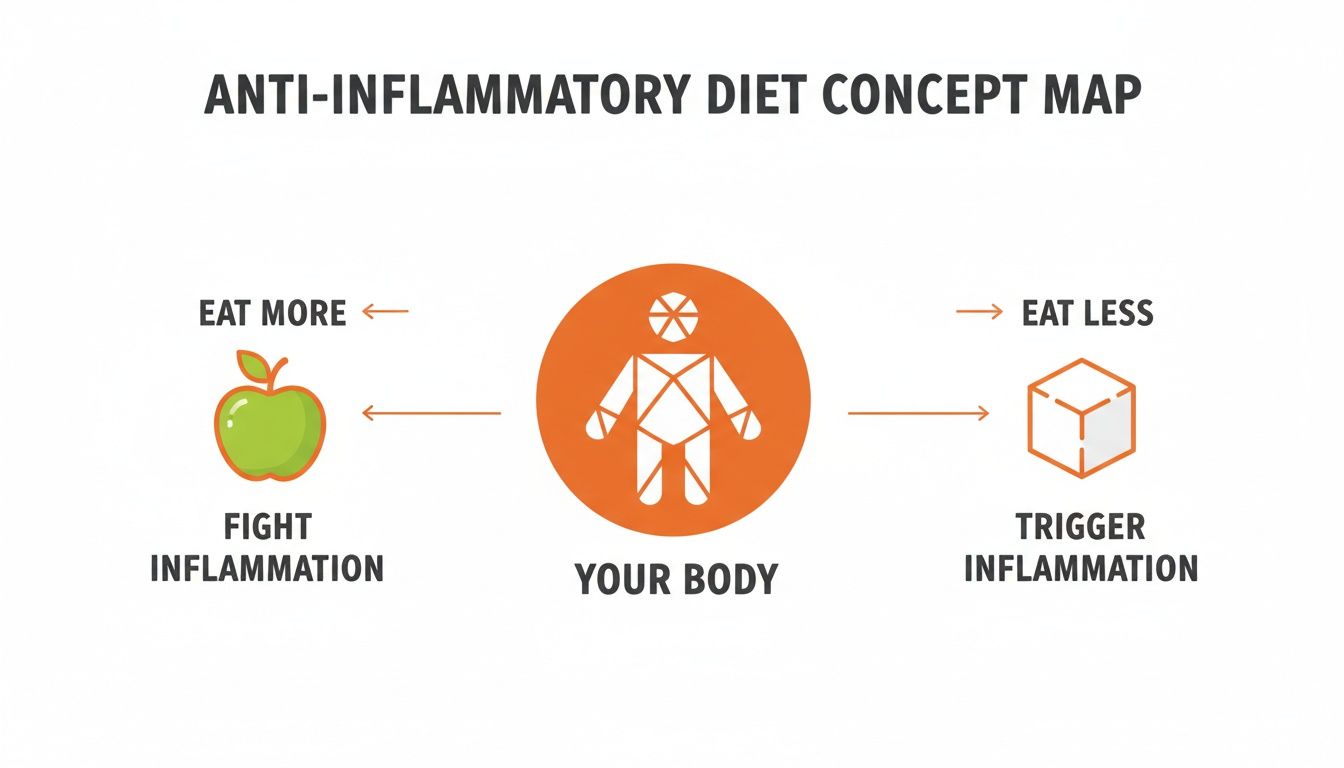
Just as with exercise, making conscious, supportive choices with your food is key to managing RA naturally. This visual shows how choosing anti-inflammatory foods directly supports your body, while pro-inflammatory foods can do the opposite.
Listen to Your Body and Prepare for Movement
This is the golden rule of exercising with RA: listen to your body. There's a big difference between the mild discomfort of moving a stiff joint and the sharp pain that's telling you to stop. On flare-up days, give yourself permission to scale back. A gentle walk might become simple stretching, or you might just focus on deep breathing exercises. That's perfectly okay.
One of the best ways to prepare your joints for activity is to warm them up first. Applying a heat pack to your knees, shoulders, or hands for 10-15 minutes before you start can make all the difference. This gentle heat boosts blood flow and helps relax tight muscles, making that first movement feel so much easier and more comfortable.
A Cautious Guide to Evidence-Based Supplements
Let's be honest, the supplement aisle can be a confusing place. When you're dealing with rheumatoid arthritis, it’s tempting to grab anything that promises relief. But while there's no magic pill that can replace your medical treatment, a few specific supplements have solid evidence behind them and can be a smart addition to your overall plan for managing RA naturally.
The key is to approach this with a healthy dose of skepticism and always, always keep your doctor in the loop.
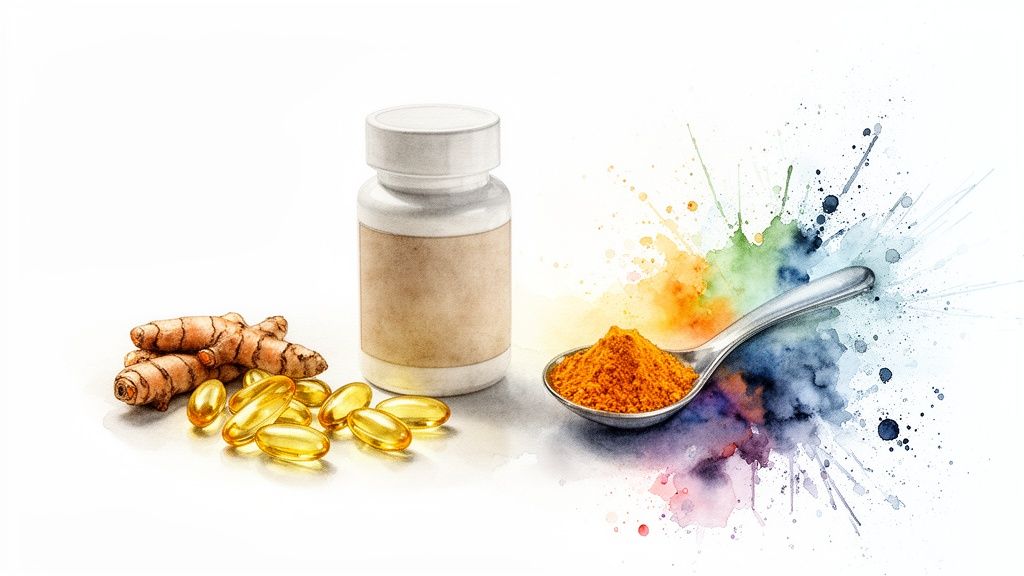
Think of supplements as backup dancers, not the main event. Their job is to support your body's efforts to cool down inflammation, working hand-in-hand with your anti-inflammatory diet, gentle exercise, and heat therapy. But it’s critical to remember that "natural" doesn't automatically mean "safe," especially when you're already taking prescription medications.
Promising Supplements with Scientific Backing
When you filter out all the noise and marketing fluff, a couple of supplements consistently stand out in clinical research for helping with RA symptoms. They offer a lot more than just a placebo effect.
- Omega-3 Fatty Acids (Fish Oil): This is probably the most well-researched supplement for RA, and for good reason. The active ingredients, EPA and DHA, have powerful anti-inflammatory effects that can make a real difference in joint pain, swelling, and that dreaded morning stiffness.
- Curcumin (from Turmeric): You know that bright yellow spice, turmeric? Its power comes from a compound called curcumin. Studies have shown curcumin can ease RA symptoms, sometimes as effectively as over-the-counter NSAIDs but often with fewer stomach-related side effects.
Picture this: someone who struggles with stiff, achy hands every morning decides to add a quality fish oil supplement to their routine. They don't notice anything overnight, but after a few months, they realize it's taking them less time to get their hands moving comfortably. That's the kind of subtle, supportive role these supplements play.
The most important thing to understand is that supplements aren't a quick fix. They work slowly, building up their benefits over weeks or months. It’s a completely different experience from taking a painkiller that works in under an hour.
The Importance of Medical Guidance
I can't say this loudly enough: always talk to your doctor or rheumatologist before starting any new supplement. It’s not just a friendly suggestion; it’s a crucial safety step.
Supplements can interact with your RA medications in dangerous ways, affect other health conditions like blood pressure, or cause side effects you weren't expecting. Your doctor can help you find a safe dosage and make sure you aren't accidentally working against your prescribed treatment plan. Think of your doctor as your co-pilot on this journey.
Exploring Advanced Herbal Options
Beyond the usual suspects, some potent herbal extracts have shown remarkable promise in clinical trials. However, these are not things you should experiment with on your own—they require strict medical supervision because of potential toxicity.
One of the most talked-about is Thunder God Vine (Tripterygium wilfordii). With 18 million RA cases worldwide in 2019, the search for effective natural options is serious business, and this herb has caught the attention of researchers.
The results are impressive. One clinical trial found that Thunder God Vine extract led to a 55.1% improvement in symptoms, which was actually better than the standard medication methotrexate in that study. When the two were used together, they achieved a 76.8% improvement rate. These are powerful outcomes, but they come with a big red flag about side effects. This makes it a treatment to be considered only under the careful eye of an expert who truly knows this herb. For a deeper look, you can review the data on these and other promising natural compounds at ncbi.nlm.nih.gov.
Common Questions About Managing RA Naturally
When you start exploring natural ways to manage rheumatoid arthritis, a lot of questions pop up. It’s completely normal to wonder how these strategies will fit into your life and what you can realistically expect. Let's walk through some of the most common concerns I hear from people just starting this journey.
Having the right information is key to moving forward with confidence. My goal here is to give you direct, supportive answers to help you weave these powerful approaches into your daily routine.
Should I Stop My RA Medication If I'm Using Natural Treatments?
This is easily the most important question, and the answer is a firm and absolute no. Think of natural strategies like diet, exercise, and heat therapy as your supportive toolkit. They are designed to work with your prescribed medical treatment, not replace it.
Your medications are doing the heavy lifting, working on a biological level to slow the disease and prevent permanent joint damage. Natural methods are fantastic for managing the day-to-day symptoms—easing pain, tamping down inflammation, and simply helping you feel better overall.
It’s truly a team effort. Your rheumatologist's treatment plan is the foundation, and these natural approaches are the reinforcements that strengthen your defense. Never, ever make changes to your medication schedule without talking to your doctor first.
How Long Does It Take to Feel a Difference from Diet or Supplements?
This is where patience becomes your best friend. Unlike a painkiller that might work in under an hour, natural approaches are all about making gradual, fundamental shifts in your body. The benefits build on themselves over time.
- Dietary Changes: After a few weeks of consistently focusing on anti-inflammatory foods, you might start to notice small things, like having a bit more energy or less intense morning stiffness. But for the more significant, day-changing benefits, you’re often looking at two to three months of sticking with it.
- Supplements: With something like fish oil, research consistently shows it takes at least three months of daily use to build up to levels that can have a measurable impact on joint pain and inflammation.
A great tip is to keep a simple symptom journal. Jotting down a few notes each day can help you see the slow but steady progress you're making, which is incredibly motivating when you feel like nothing is happening.
The goal isn't a quick fix; it's sustainable, long-term change. You're making an investment in your future joint health and well-being.
Is It Safe to Use Heat Therapy on My Joints Every Day?
For most people dealing with the chronic stiffness and achiness of RA, daily heat therapy is not only safe but often a welcome part of their routine. The sweet spot is usually 15-20 minutes per session. That’s just enough time to increase circulation and relax tight, sore muscles without risking skin irritation.
Here's a crucial safety tip: always place a barrier, like a towel or a soft cloth cover, between the heating pad and your skin. This simple step prevents burns and helps the heat penetrate more gently and evenly.
The big exception? An acute flare-up. If a joint is suddenly red, hot to the touch, and visibly swollen, heat can actually make the inflammation worse. In that specific scenario, reaching for a cold pack is usually the better move to help numb the pain and bring down the swelling. If you're ever unsure, a quick call to your doctor or physical therapist can set you on the right path.
What If Exercise Just Makes My Pain Worse?
This is a huge, and very valid, concern. The trick is learning to listen to your body and tell the difference between two kinds of discomfort. There's the "good" soreness—that feeling of working out the kinks in stiff joints. And then there's the sharp, "stop right now" pain that signals you've overdone it.
If you feel sharp pain or notice more swelling after an activity, that’s your body’s clear signal to pull back. But don't give up entirely! Try dialing it way down. Start with just five to ten minutes of the gentlest movements you can think of, like slow ankle rolls or easy stretches while seated in a chair.
If you're still struggling to find that balance, I highly recommend working with a physical therapist who has experience with arthritis. They are masters at creating programs that strengthen the muscles around your joints without actually aggravating the joints themselves. They can help you find that perfect sweet spot between beneficial movement and essential rest.
At SunnyBay, we know that managing chronic pain is a daily practice. Our clinic-trusted, US-made heat therapy products are designed to be simple, effective, and easy to fit into your life, giving you the comforting relief you need to stay active and feel your best. Discover a drug-free way to soothe your joints.


