


How to Relieve Lower Back Pain at Home A Practical Guide
-
When that all-too-familiar twinge in your lower back hits, your first thought is probably, "How do I make this stop, right now?" The good news is that you can often get the ball rolling on relief in minutes, right from the comfort of your home. The key is knowing what to do first.
Often, the fastest and most effective first step is targeted temperature therapy—using either a cold pack for a new, sharp pain or a moist heat pack for that stubborn, chronic ache.
Your First Response to Lower Back Pain
So, your back is hurting. Before you do anything else, you need to play detective for a moment. What kind of pain is it?
Is it a sharp, sudden pain from a specific event, like lifting that heavy box you probably shouldn't have? Or is it a dull, persistent ache that's been your unwelcome companion for days, weeks, or even longer? Pinpointing the "what" and "when" is the most critical first step because it dictates your immediate plan of action.
If you're dealing with back pain, you're in good company. It's an incredibly common problem, affecting a staggering 619 million people globally in 2020. It's actually the leading cause of disability worldwide.
For those persistent, non-injury-related aches, heat therapy is often a game-changer. Research shows that applying moist heat can slash chronic pain by up to 50% in just 30 minutes, helping you move more freely without reaching for a pill bottle.
Heat or Cold: What Your Back Needs Now
This is the big question. Getting this right is your first-aid priority.
Think of it this way: for a new injury (we're talking less than 72 hours old) where you see or feel swelling, cold is your friend. An ice pack helps constrict blood vessels, which numbs that sharp pain and brings down the inflammation.
On the flip side, for chronic pain, general muscle soreness, or that stiff feeling you get, heat is the hero. Heat therapy is a game-changer because it works by increasing blood flow to the area, which helps relax tight, spasming muscles and soothe achy joints. This is where a good microwavable heat pack really shines, as it provides a deep, penetrating warmth that you just don't get from a standard dry heating pad. It feels like a comforting hug for your muscles, gently coaxing them to let go of tension.
To make it even clearer, this decision tree can help you figure out whether to grab the ice pack or the heat wrap.
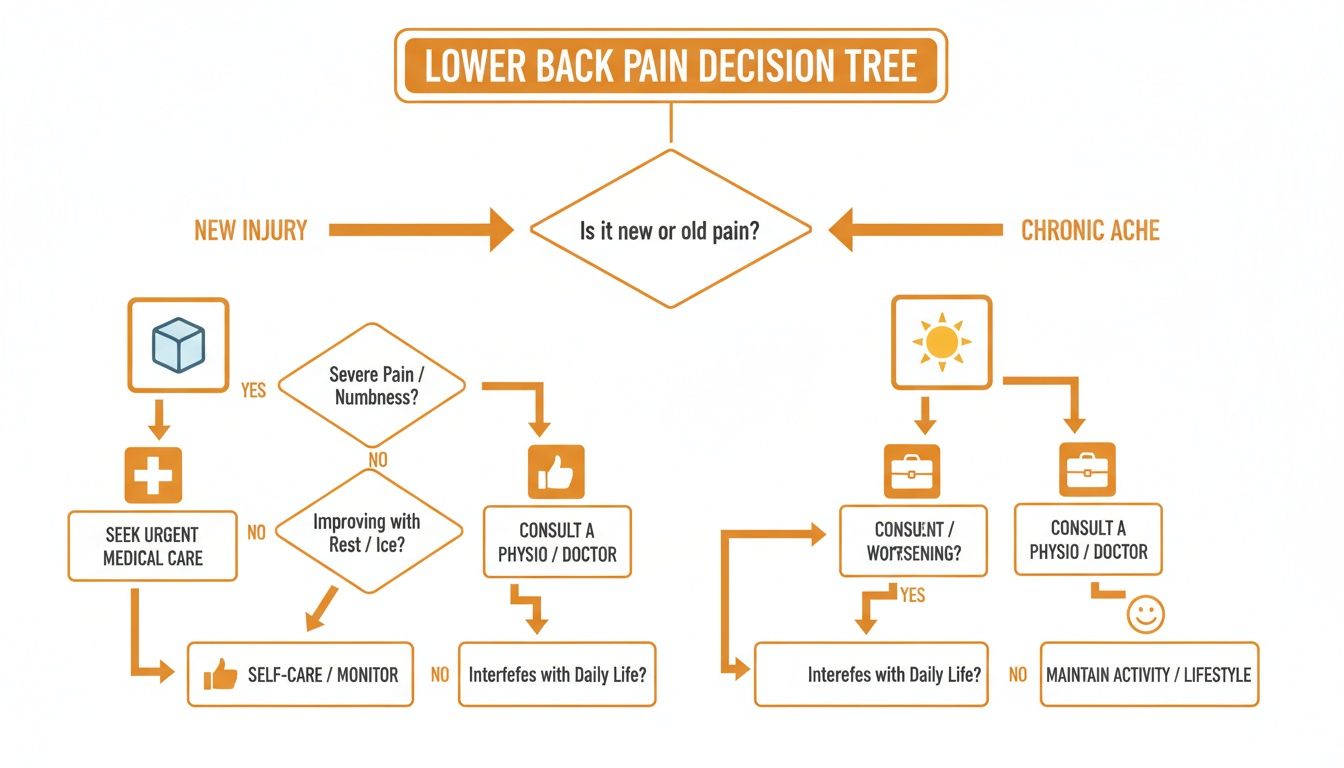
As the flowchart shows, the logic is simple: ice for recent injuries and heat for everything else. It’s a straightforward way to get on the right path to feeling better.
To break it down even further, here's a quick reference table to help you decide.
Heat vs Cold Therapy: What to Use and When
| Therapy Type | Best For | How It Works | When to Use |
|---|---|---|---|
| Cold Therapy (Cryotherapy) | Acute injuries (first 72 hours), swelling, inflammation, sharp pain. | Constricts blood vessels, reduces blood flow, numbs nerve endings. | Immediately after an injury like a strain or sprain. |
| Heat Therapy (Thermotherapy) | Chronic pain, muscle stiffness, soreness, stress-related tension. | Dilates blood vessels, increases blood flow, relaxes muscles. | Before stretching, or for persistent aches that aren't swollen. |
This table is a great cheat sheet to keep in mind, so you can act quickly and confidently the next time your back acts up.
The Power of Gentle Massage
Beyond temperature, a little self-massage can work wonders for immediate relief. Think of massage therapy as a conversation with your muscles; you're gently persuading them to release their grip and relax. You don't need to be a professional masseuse for this.
Simply using your hands, a foam roller, or even a tennis ball to apply gentle, steady pressure to the sore muscles around your spine can help release a surprising amount of tension.
For a classic example, try this: while sitting in a sturdy chair, place a tennis ball between your lower back and the chair back. Gently lean into it and roll it around the tight spots. This simple move acts like a targeted deep-tissue massage, helping to break up muscle knots and get blood flowing to the area. Imagine you've been sitting in traffic for an hour and your back is screaming. Pulling over to do this for just two minutes can completely change how you feel for the rest of your drive.
There are many great natural lower back pain relief strategies you can try at home, and gentle massage is one of the most accessible.
The Soothing Science Behind Heat Therapy
When your back aches, reaching for a warm pack often feels like the most natural thing in the world. It’s an instinct, and for good reason. That comforting warmth is more than just a pleasant sensation; it kicks off a powerful healing process in your body. This is called heat therapy, or thermotherapy, and understanding what’s happening beneath the surface can help you get the most relief.
When you apply heat to your lower back, it gently warms the tissues. This encourages the blood vessels in that area to open up, a process known as vasodilation. Think of it like opening up a traffic-jammed highway—this widening allows a surge of fresh, oxygen-rich blood to flow into those tight, sore muscles.
This boost in circulation is a game-changer. It delivers the nutrients your muscles are crying out for and, just as importantly, it helps flush away the built-up lactic acid and other metabolic byproducts that are causing all that pain and stiffness.
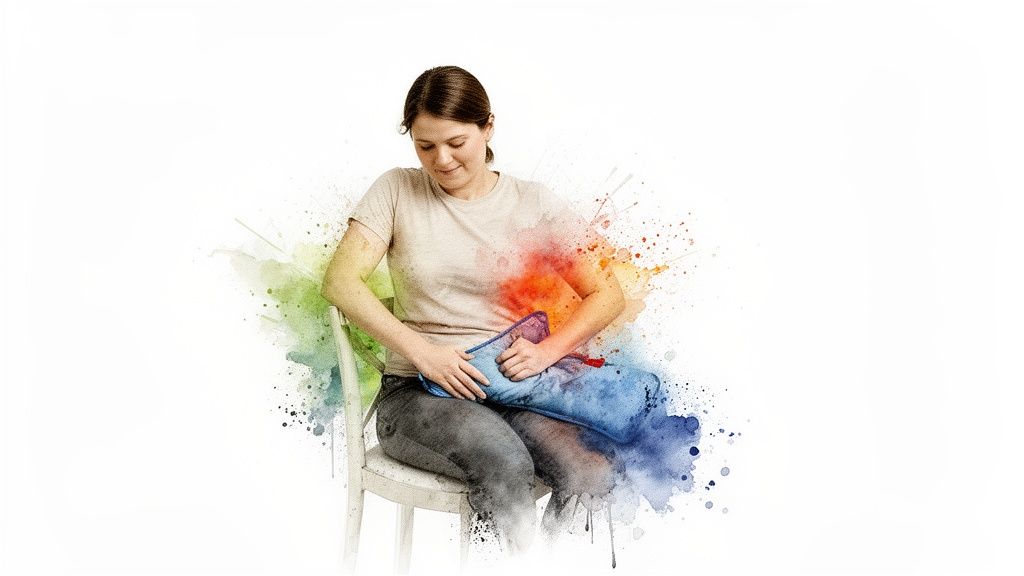
This is the essence of what makes heat so effective. You’re not just masking the pain—you’re actively helping your body's own repair crew get to work.
Easing Spasms and Restoring Flexibility
One of the first things you'll notice is how heat melts away muscle spasms. The warmth helps to soothe irritated nerve endings, quieting the pain signals being sent to your brain. It also coaxes those knotted, contracted muscles to finally let go and relax.
But it goes deeper than that. Heat also makes the collagen tissues within your muscles and ligaments more pliable and elastic. This is key for combating the stiffness that makes every movement feel like a chore, helping you regain flexibility.
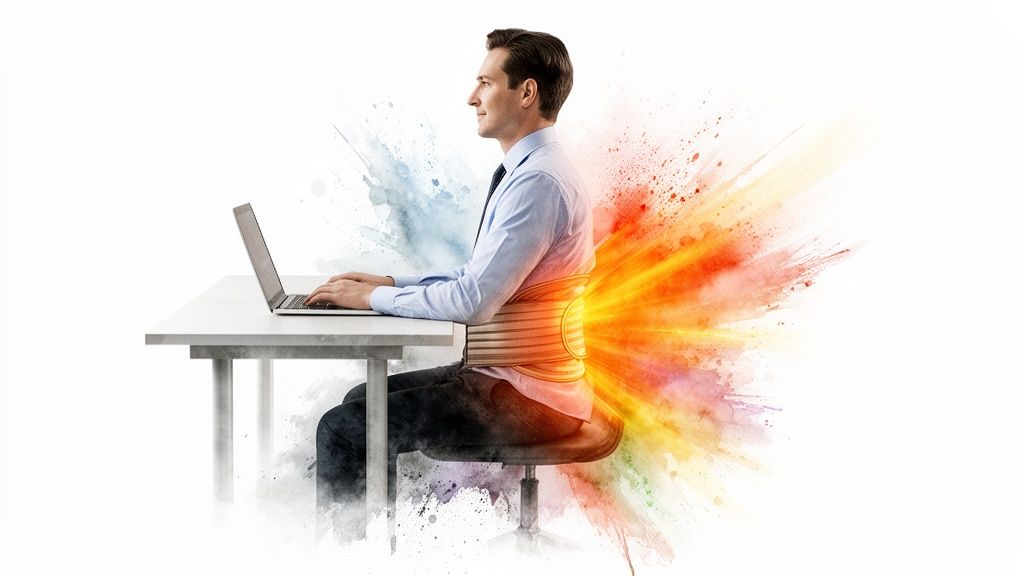
Imagine someone who works from home and feels their lower back stiffen up after a long video conference. Instead of just suffering through it, they could use a strapped heat pack. This allows them to apply gentle, consistent warmth right where it hurts, even while they're still at their desk. It’s a simple, proactive step that can turn a painful afternoon into a productive one.
Making Heat Therapy a Practical Part of Your Day
The best pain relief strategy is one you'll actually use. For heat therapy to be effective, it needs to be consistent and, above all, convenient. The idea is to weave it into your daily life so it becomes a go-to tool in your pain management toolkit.
Here are a few practical ways to do just that:
- A Better Morning Start: Before you do any morning stretches, try applying a heat pack for 15-20 minutes. This pre-warms your muscles, making them much more receptive to stretching and less prone to injury. For example, a gardener could use heat therapy before heading out to tend their plants, preventing the common aches that come from bending and lifting.
- Post-Activity Recovery: After a session in the garden, a workout, or even just a long day of running errands, a little heat can do wonders to head off stiffness and soreness before they set in.
- Workday Wellness: A wearable, hands-free heat wrap is a lifesaver for anyone who sits at a desk. It provides steady, therapeutic warmth without getting in the way of your work, preventing that all-too-familiar ache from building up as the day goes on.
When it comes to at-home remedies, heat is one of the most effective and accessible options out there. In fact, clinical reviews have found it can slash pain intensity by 40-60% during an acute flare-up by boosting circulation and relaxing tense muscles. This is especially significant when you consider that 70% of disability from lower back pain impacts adults in their prime working years. You can read the full public health findings on this in-depth back pain research.
To learn more about the different ways to apply it, check out our guide on using heat therapy for back pain.
Gentle Movement That Heals Your Lower Back
When your lower back screams in protest, the last thing you probably feel like doing is moving. The natural instinct is to freeze, to guard against anything that might trigger another jolt of pain. But here's the thing I've learned from years of experience: the right kind of movement is actually one of the best things you can do for healing and lasting relief.
It's all about choosing movements that gently release tension and build support, not ones that strain your already sensitive back. I like to think of the spine as a central pillar. When the muscles around it are weak or wound up tight, that pillar gets wobbly. Gentle stretching and strengthening is how we fix that imbalance.
Foundational Stretches to Release Tension
The point of stretching isn't to push through pain. Not at all. It's about coaxing those tight, knotted muscles to finally let go. These foundational movements are perfect for starting your day or for taking a quick break to undo the damage of sitting for too long. Just remember to move slowly and breathe through it.
Here are a few of the most effective stretches I recommend for targeting lower back tightness:
- Cat-Cow: Get on your hands and knees. As you breathe in, let your belly sag and look up toward the ceiling (that's the "Cow"). As you breathe out, arch your back like a Halloween cat, tucking your chin to your chest. This simple flow is fantastic for getting the entire spine moving.
- Knee-to-Chest: Lying on your back, gently hug one knee into your chest, holding it for about 20-30 seconds. You should feel a nice, easy stretch in your lower back and glutes. Switch legs and repeat.
- Pelvic Tilt: Still on your back with your knees bent and feet flat on the floor, gently press the small of your back into the floor. You'll do this by tightening your stomach muscles and slightly tilting your hips up. It’s a tiny movement, but it does wonders for "resetting" your pelvis and waking up those deep core muscles.
These controlled motions get more blood flowing to your lower back. That's crucial because blood brings the oxygen and nutrients needed for healing and helps flush out the inflammatory stuff that's causing the pain.
Building Your Natural Back Brace with Core Exercises
Stretching offers that wonderful, immediate sense of relief, but strengthening is what plays the long game. A strong core acts just like a natural back brace, giving your spine the stability and support it needs to function without pain. When your abs and back muscles are doing their job, they take a huge amount of pressure off your spinal discs and joints.
This is exactly the kind of internal support we're trying to build.
A fantastic, safe exercise to start with is the Bird-Dog. From your hands and knees, slowly extend your right arm straight in front of you and your left leg straight behind you, keeping your back as flat as a table. Hold for just a few seconds, then come back to the start and switch sides. This move is brilliant because it challenges your balance, forcing your core muscles to fire up and keep you steady.
The golden rule for any back exercise is simple: Listen to your body. A feeling of gentle muscle work is good. Sharp, stabbing, or shooting pain is a definite stop sign. If a movement hurts, don't do it.
Integrating Movement into Your Daily Life
The real magic happens when these exercises become a consistent part of your routine. You don’t need to block out an hour at the gym. Honestly, just five to ten minutes of focused stretching and strengthening each day can make a world of difference in how you relieve lower back pain at home.
Maybe you could try doing a few Cat-Cow stretches the moment you get out of bed to wake up your spine. Or, during a commercial break while you're watching TV, lie down and do a few Pelvic Tilts. Finding little pockets of time to incorporate movement is the secret. For more ideas, check out our article on 10 simple ways to get moving in everyday life.
By building these small habits, you create a foundation of strength and flexibility that acts as your best defense against future pain and injury.
Building a Back-Friendly Home Environment
Getting relief from lower back pain isn't just about the 20 minutes of stretching you do each day; it's about the other 23 hours, too. Your home environment plays a huge role. From the chair you work in to the sofa you relax on, every piece of furniture can either support your spine or slowly sabotage it. The real goal is to make small, smart adjustments that get rid of those hidden pain triggers in your daily routine.
Start by taking a quick look around your home. Where do you spend the most time? Is your desk chair making you slump? Do you find yourself hunching over the kitchen counter to chop vegetables? Pinpointing these little daily stressors is the first step toward creating a space that actually works for you, not against you. For a deeper dive, our guide on how to improve posture at a desk has some fantastic, easy-to-implement tips.
This minimalist room shows just how much an uncluttered and well-designed space can contribute to your physical well-being.

Often, creating a supportive environment is as much about what you remove—like clutter and bad habits—as what you add.
Optimizing Your Seated and Standing Positions
Since so many of us spend a good chunk of our day sitting, your chair is ground zero. You don't necessarily need to rush out and buy a fancy, expensive ergonomic model. It’s all about the adjustments. Try rolling up a towel or grabbing a small cushion to stick behind your lower back. This simple trick helps maintain your spine's natural curve. Make sure your feet are flat on the floor and your knees are at a comfortable 90-degree angle.
Here are a few practical ergonomic hacks that I've seen work wonders:
- The Kitchen Counter Trick: If you catch yourself hunching over while prepping dinner, open a lower cabinet and rest one foot on the shelf inside. It sounds strange, but this small shift in position tilts your pelvis just enough to take a surprising amount of strain off your lower back.
- Making Your Car Seat Work for You: On your next drive, adjust your seat so your knees are just a bit higher than your hips. A small lumbar pillow can also be a lifesaver for preventing that dreaded slouch on longer trips.
- Lift with Your Legs, Not Your Back: We’ve all heard it, but it’s crucial. When you pick something up, bend at your knees and hips, not your waist. Keep the object held close to your body and tighten your core muscles—this creates a natural corset that protects your spine.
Your Sleep Sanctuary
Think about it: you spend roughly a third of your life in bed. That makes your sleep setup one of the most powerful tools you have for managing back pain. A mattress that sags or doesn't offer the right support can undo all the good work you did during the day.
A critical component of a back-friendly home is a supportive sleep surface, and understanding how to improve this can significantly impact your comfort. Consider consulting a guide to finding a mattress for back pain relief to ensure your bed supports proper spinal alignment.
It's not just about the mattress, though. How you sleep matters just as much. Sleeping on your stomach is often the biggest culprit, as it can strain your neck and flatten the healthy curve of your lower back.
If you’re a side sleeper, try putting a pillow between your knees. This little change works wonders to align your hips, pelvis, and spine. For those who sleep on their back, sliding a pillow under your knees can take a huge amount of pressure off your lower back, helping you wake up feeling more refreshed.
4. Play the Long Game: Build Back-Healthy Habits
Once you've managed the immediate flare-up, the real work begins. Lasting relief isn't about a single fix; it's about weaving small, smart habits into your everyday life. Think of it as building a foundation of resilience against future pain. It's about looking at the big picture—how you sit, how you move, and even how you manage stress—and making small tweaks that add up.
This is where you move from defense to offense.
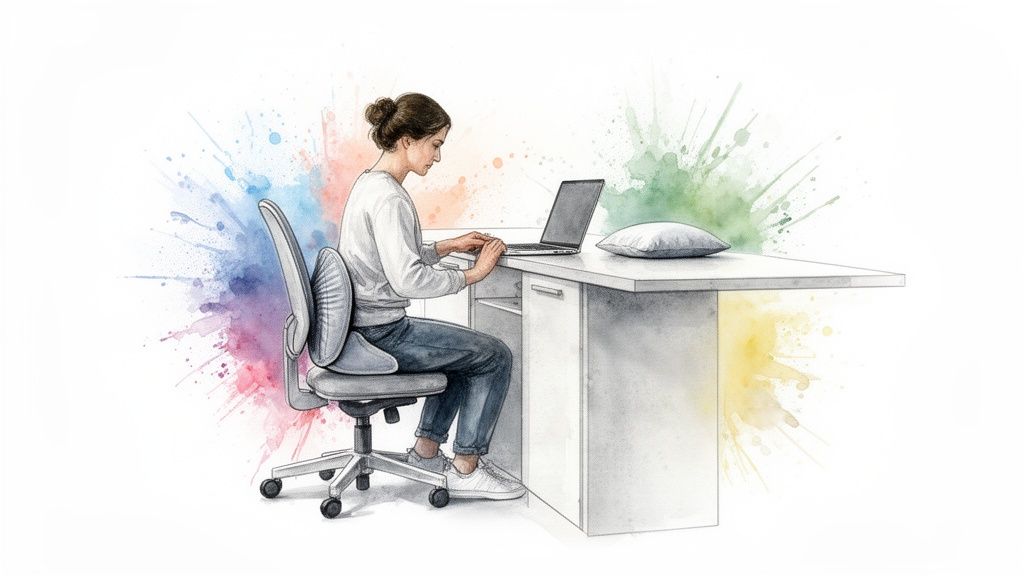
Creating a back-friendly workstation, like the one pictured, is a perfect example of a proactive habit that prevents pain before it starts.
Check Your Posture and Ergonomics
Slouching is your spine's worst enemy. Whether you're at a desk, on the couch, or in the car, poor posture puts constant strain on your lower back. The goal is to maintain the natural "S" curve of your spine.
- At Your Desk: Sit with your feet flat on the floor and your knees at a 90-degree angle. Your screen should be at eye level. A rolled-up towel or a dedicated lumbar pillow can make a world of difference.
- When Standing: Keep your weight balanced evenly on both feet. Avoid locking your knees and try to keep your shoulders back and relaxed.
- Lifting: You've heard it a million times, but it's true: lift with your legs, not your back. Bend your knees, keep the object close to your body, and avoid twisting as you lift.
Keep Moving (But Do It Right)
Movement is medicine for back pain, but it has to be the right kind. The key is consistency over intensity. A brisk 20-30 minute walk every day does more for your back than a punishing, once-a-week gym session. Walking gets blood flowing, loosens tight muscles, and strengthens your core without jarring your spine.
If you sit for long periods, set a timer to get up and stretch every 30-60 minutes. Even a quick walk around the room can break the cycle of stiffness and compression that plagues so many of us.
Sleep Smarter
Your sleeping position can either heal your back or make it worse. Sleeping on your stomach is often the biggest culprit, as it flattens the natural curve of your spine and forces you to twist your neck.
Try sleeping on your side with a pillow between your knees, or on your back with a pillow under your knees. This helps maintain proper spinal alignment and gives your back muscles a chance to truly relax and recover overnight. A supportive mattress is also non-negotiable for long-term back health.
Did you know? Since 1990, low back pain has been the number one cause of disability worldwide. Recurrent episodes are especially common in older adults and women. Simple, home-based strategies like improving posture and sleep habits are your first line of defense. You can learn more about the global impact of back pain from the International Association for the Study of Pain.
Your Top Questions About At-Home Back Pain Care, Answered
When you're dealing with a nagging lower back, a lot of questions pop up. It's completely normal to wonder if you're doing the right thing. Getting the details right on these home remedies can be the difference between feeling better and making things worse. Let's clear up some of the most common concerns.
How Long Should I Keep a Heat Pack On?
It feels good, so it’s tempting to leave it on forever, right? But with heat, there's a definite sweet spot. Aim for 15 to 20 minutes at a time. That's long enough for the warmth to get into those tight muscles and boost circulation, but not so long that you risk irritating your skin.
Always, and I mean always, put a thin towel or a layer of clothing between the heat pack and your skin. This is your best defense against burns. And please, never fall asleep with a heat pack on. If the pain is still there, you can use it again after a break of an hour or two.
Is It Okay to Exercise When My Back Hurts?
This is the big question, and the answer is a classic "it depends." The trick is to know the difference between helpful, gentle movement and the kind of strain that will set you back.
A slow, easy walk or the specific stretches we've covered can be incredibly helpful. This kind of light activity prevents your muscles from seizing up and keeps the blood flowing, which is exactly what you need for recovery.
On the other hand, you have to avoid any movement that triggers sharp, shooting, or radiating pain.
Listen to your body—it's the best expert you've got. If something feels wrong or makes the pain spike, that’s your cue to stop. The goal here is gentle encouragement, not powering through the pain.
When Is It Time to Call a Doctor?
Most of the time, lower back pain will ease up with a little self-care. But sometimes, it’s a sign of something more serious. It's time to stop the home treatments and see a professional if the pain is severe or just isn't getting any better after a week of trying these tips.
And you should seek immediate medical help if your back pain comes with any of these red flags:
- Fever or chills
- Numbness, tingling, or weakness that travels down your legs
- Sudden trouble with bladder or bowel control
- The pain started after a serious fall or accident
These symptoms could point to an underlying issue that needs a proper diagnosis from a healthcare provider.
For reliable, long-lasting heat that conforms to your body, explore the full range of microwavable heat packs from SunnyBay. Our products are designed to deliver soothing, drug-free relief right where you need it. Find your perfect solution at https://sunny-bay.com.


