


Shoulder Wrap for Pain: How Heat Therapy Actually Helps
-
A 2022 systematic review found a median shoulder-pain prevalence of 16.0 percent across community-based studies, so a shoulder wrap can be a practical self-care option for temporary comfort. It may soothe stiffness and muscle tension, but it won't cure the underlying cause of shoulder pain.
You might notice the problem when you wake with one shoulder feeling locked, after sitting at a laptop for hours, or following an activity that repeatedly lifts or rotates your arm. The pain may be dull and familiar, or sharp enough to make reaching for a shelf feel cautious. In that moment, searching for a shoulder wrap for pain makes sense, especially if you want a drug-free tool you can use at home.
A wrap can provide warmth, help you feel more comfortable, and make gentle movement easier. It can't diagnose a rotator-cuff problem, repair damaged tissue, or replace an exercise program. The physical medicine and rehabilitation guide from Longevity Medical Institute can provide broader context about rehabilitation approaches, while the sections below focus specifically on heat, cold, product design, and safe use.
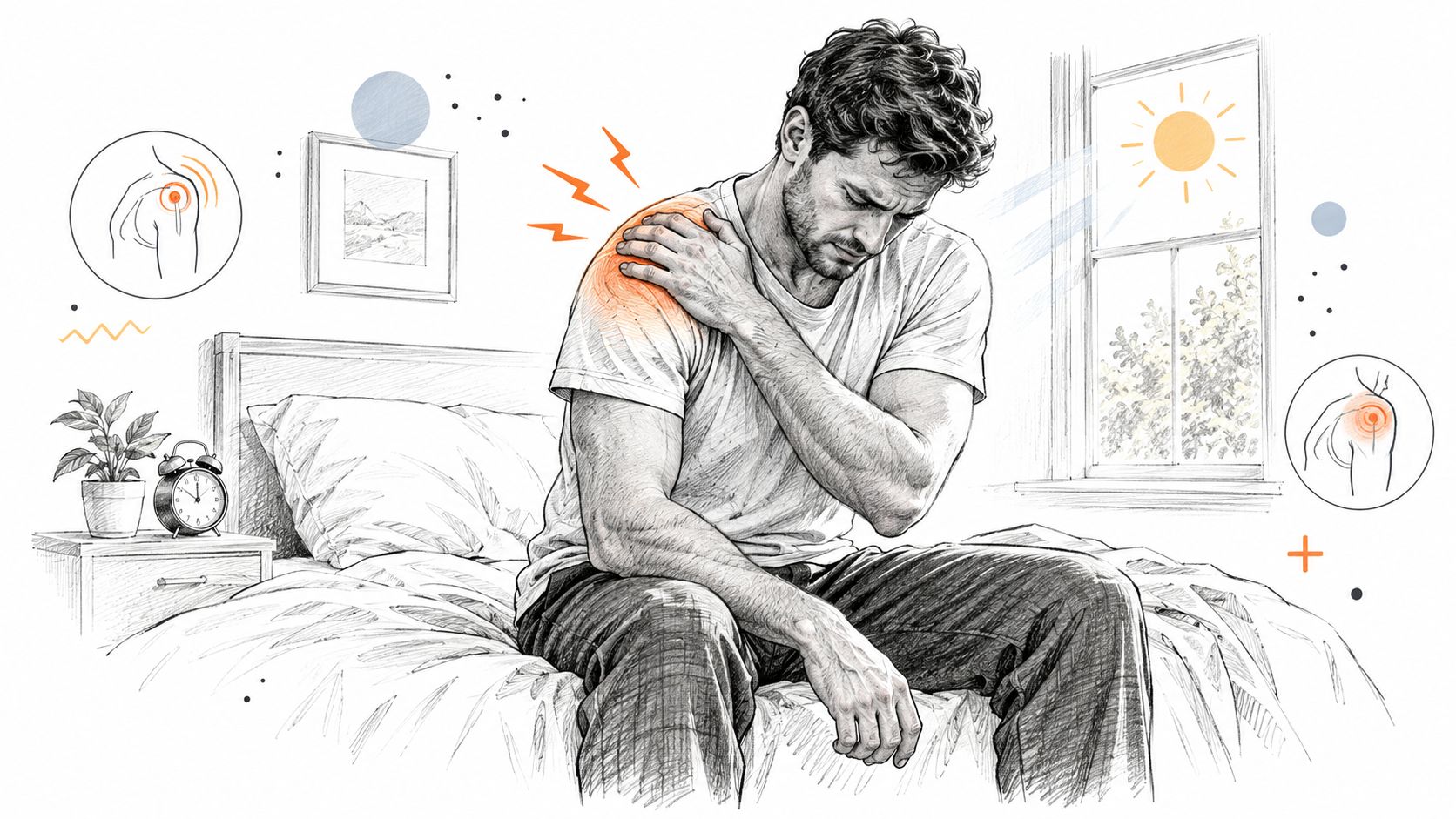
Table of Contents
- Why Shoulder Pain Makes You Reach for Relief
- How Heat Therapy Relieves Shoulder Discomfort
- Heat Versus Cold, Choosing the Right Approach
- Types of Shoulder Wraps and What to Look For
- Safe Usage Guidelines and Temperature Control
- Caring for Your Shoulder Wrap
- Shoulder Wraps for Common Pain Conditions
- Putting It All Together for Lasting Relief
Why Shoulder Pain Makes You Reach for Relief
A shoulder wrap is most appealing when pain interferes with an ordinary task. You may be trying to get dressed, settle into sleep, type through a workday, or return to exercise without constantly guarding the joint. A reusable wrap offers a simple ritual: warm it, position it over the shoulder, and use the period of reduced discomfort to move more comfortably.
The need is widespread, but the numbers require careful interpretation. The 2022 review examined 61 community-based studies and found a median shoulder-pain prevalence of 16.0 percent, with estimates ranging from 0.67 percent to 55.2 percent depending on the country, population, and measurement period (systematic review of shoulder-pain prevalence). That variation shows why a person's experience can't be reduced to one universal explanation or one universal treatment.
Comfort is not the same as correction
Heat may ease symptoms caused by tight muscles or stiffness, but shoulder pain can also involve tendons, joints, nerves, the neck, or an injury. A wrap can support comfort while you follow a clinician-approved plan, but it shouldn't become a reason to ignore worsening weakness, restricted movement, swelling, or pain that continues.
A useful expectation is simple: use warmth to make sensible movement easier, not to prove that the shoulder has healed.
This article separates practical benefit from product marketing. You'll learn how heat affects discomfort, when cold makes more sense, which wrap features matter, and how to use warmth without overheating the skin or compressing the joint.
How Heat Therapy Relieves Shoulder Discomfort
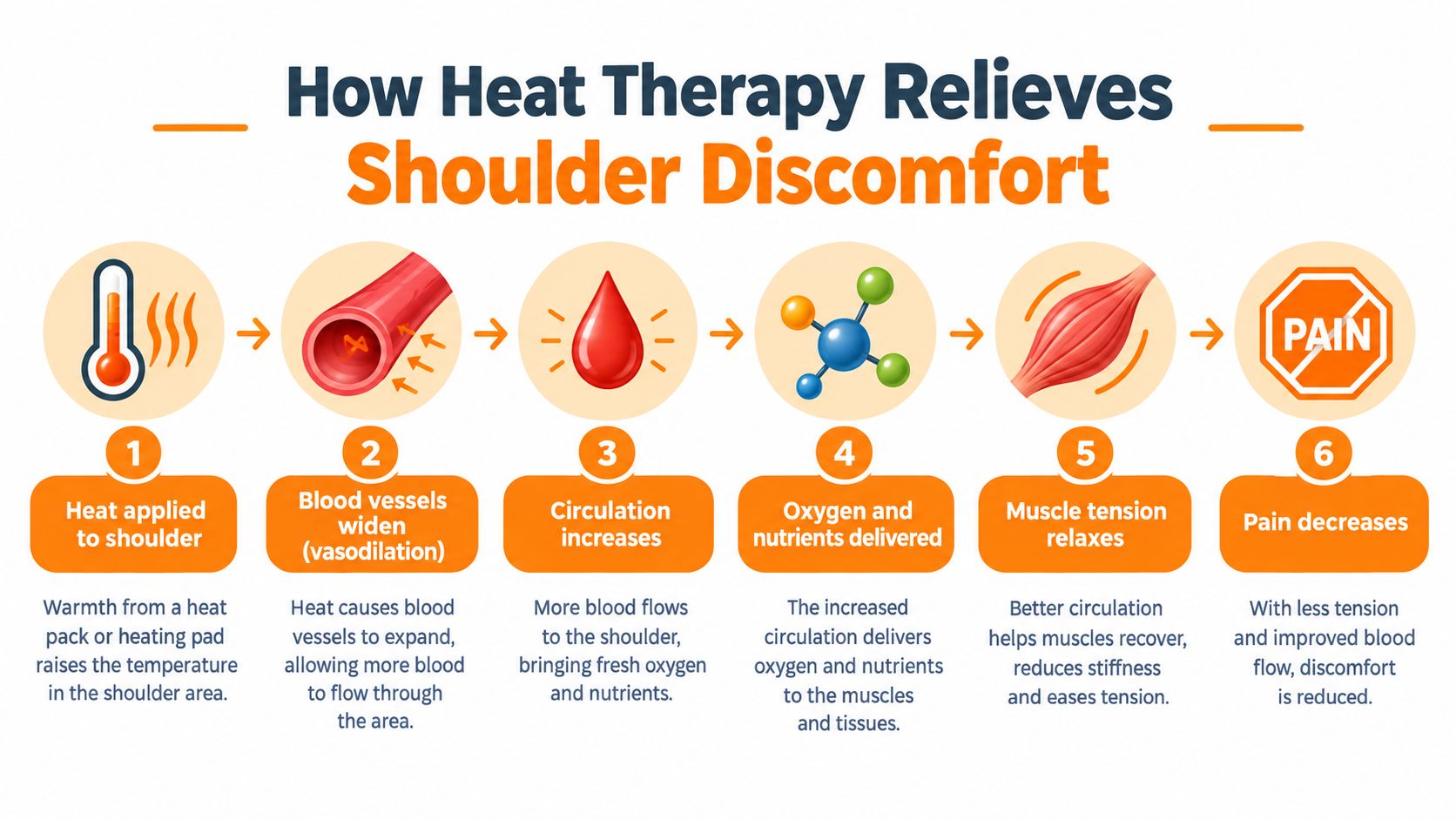
Warmth changes the local environment around the shoulder. It encourages blood vessels near the skin and superficial tissues to widen, a process called vasodilation. You can think of tense tissue as a crowded road. Gentle heat opens more lanes, allowing circulation to move through the area more easily.
That increased circulation can support the delivery of oxygen and nutrients while helping carry away metabolic byproducts. Heat can also influence how the nervous system processes discomfort, making a stiff or guarded shoulder feel less threatening during movement. This doesn't mean warmth removes the cause of pain. It means the temporary sensation may become easier to manage.
What the evidence supports
Clinical guidance supports self-applied, low-tech heat for acute, subacute, chronic, and postoperative shoulder pain, as well as rotator-cuff and bicipital tendinopathy. The same guidance emphasizes that evidence quality is limited and that heat shouldn't replace functional restoration, particularly exercise (ACOEM Shoulder Disorders Guideline).
That distinction matters. Feeling relaxed after using a wrap is useful, but comfort alone doesn't show that shoulder strength, range of motion, or daily function has improved. A practical routine often looks like this:
- Apply comfortable warmth to the shoulder and upper trapezius.
- Remove the wrap before the skin becomes hot or irritated.
- Perform gentle, tolerable mobility work if a clinician has approved it.
- Stop if movement increases pain rather than easing stiffness.
For additional practical guidance on warming tissues safely, see this overview of safe heat pack use in therapy. You can also read SunnyBay's explanation of the basics of heat therapy for a broader look at how heat fits into home care.
Heat Versus Cold, Choosing the Right Approach
The same wrap may be marketed for both hot and cold use, but your symptoms should determine which mode you choose. Heat is generally more suitable for stiffness, muscle tension, and ongoing discomfort without visible swelling. Cold is usually the safer starting point after a recent injury or when swelling and inflammation are present.
Guidance distinguishes these situations clearly. Cold is generally preferred during the first 24 to 72 hours after trauma or when swelling is present, while heat is more appropriate when there's no swelling and the symptoms aren't linked to a recent injury (guidance on thermotherapy for shoulder pain).
A symptom-based choice
| What you notice | More suitable first step | Why |
|---|---|---|
| Recent impact, fall, or strain with swelling | Cold, with a protective cloth barrier | Cold may help limit discomfort during the early inflammatory response |
| Long-standing stiffness without swelling | Gentle heat | Warmth may make guarded movement feel easier |
| Upper-trapezius tension after desk work | Heat, followed by posture or mobility work | The problem may be muscular tightness rather than an acute injury |
| Increasing warmth, redness, or swelling | Avoid adding heat | Extra warmth may aggravate an already irritated area |
| Numbness or reduced sensation | Avoid both until advised by a clinician | You may not accurately detect excessive temperature |
Never place a hot or cold pack directly on bare skin. Check the skin during and after use, and stop if you notice redness that doesn't settle, discoloration, blistering, numbness, irritation, or worsening pain. People with impaired circulation or sensation should ask a healthcare professional before using either therapy.
A reusable hot/cold wrap isn't automatically appropriate for every shoulder problem. The timing, swelling, skin response, and likely diagnosis matter more than the fact that the product offers two temperature options. For a side-by-side explanation, see heat therapy versus cold therapy.
Types of Shoulder Wraps and What to Look For
A good shoulder wrap should match the way you'll use it. Someone warming a stiff shoulder before stretching needs different features from someone seeking portable comfort during travel or work. Start with the design, then check the fit and temperature control.
Common formats
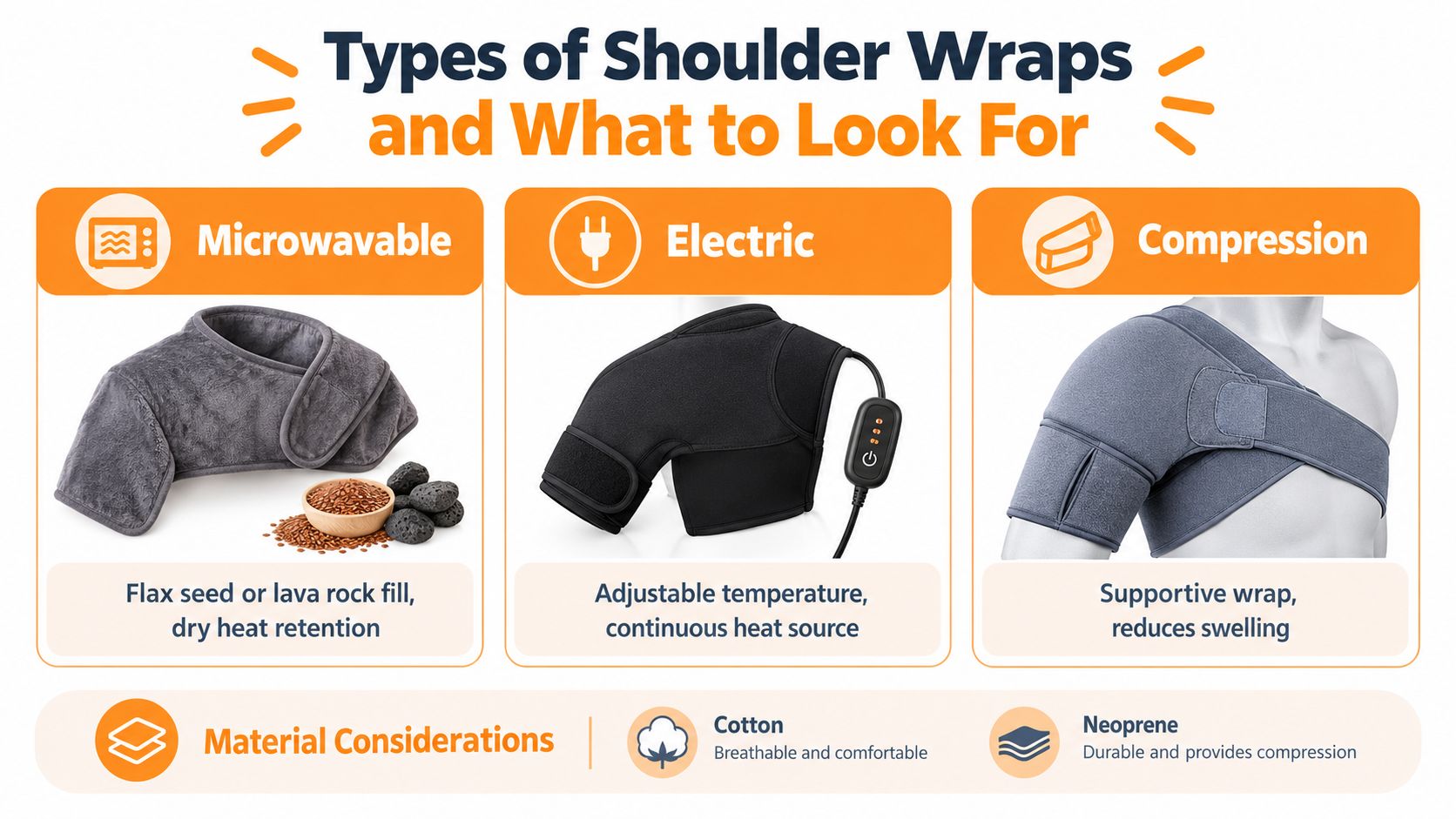
- Microwavable wraps: These often use natural fills such as flax seed or lava sand. They're convenient when you want a cordless option and can also be chilled for cold therapy if the manufacturer permits it.
- Electric wraps: These provide a continuous heat source and may offer adjustable settings. They're useful near an outlet, but you'll need to manage the cord and follow the device's operating instructions.
- Air-activated patches: These are portable and discreet, making them practical when you can't access a microwave or power source. They're usually better for targeted warmth than for shaping around the entire shoulder.
- Contoured wraps: These are shaped to rest over the shoulder and upper trapezius. A hands-free design can help you remain seated or walk around without holding the wrap in place.
- Compression designs: These may provide support or pressure, but compression isn't the same as heat. Avoid a fit that restricts arm elevation, causes tingling, or presses heavily on the joint.
A practical buying checklist
Look for broad, even coverage rather than a small hot spot. Dual-fabric covers using soft fleece and cotton can improve comfort and help distribute warmth during repeated use. Adjustable straps or elastic bands should stabilize the wrap without pulling the shoulder forward or limiting movement.
Also consider cleaning. A removable washable cover is easier to maintain than a permanently enclosed surface. Check the manufacturer's instructions for heating time, cooling, storage, and whether the fill can be frozen. The best design is the one you can use correctly and consistently without creating new pressure or skin problems.
Safe Usage Guidelines and Temperature Control
A shoulder wrap should feel comfortably warm, not intensely hot. Warmth works like a gentle signal that can reduce the feeling of tightness and make movement easier. It does not repair a torn tendon or replace assessment of a persistent problem. Use the lowest setting that feels helpful, keep sessions limited, and avoid increasing the temperature just because the first few minutes feel mild.
Research offers useful context. A randomized crossover study of 20 healthy young men examined a wearable device delivering heat at approximately 42.2 degrees Celsius after a typing task. Alternating heat and cold improved reported trapezius stiffness and fatigue compared with control conditions. The participants were healthy, however, and the task represented short-term postural muscle discomfort rather than a diagnosed shoulder disorder (study of wearable heat and cold therapy).
A safer routine
- Inspect first. Look for torn fabric, leaking fill, damaged wiring, or uneven heating.
- Protect the skin. Use a thin barrier unless the manufacturer states that direct contact is safe.
- Position gently. Cover the painful shoulder and nearby upper-trapezius area without forcing the joint into compression. This guide to wearing a shoulder wrap can help with fit.
- Stay awake and aware. Do not sleep with an active heat source unless the product and a clinician specifically permit it.
- Check your skin. Remove the wrap if you notice pain, marked redness, numbness, or irritation.
- Move afterward. Use the comfortable period for gentle, clinician-approved range-of-motion exercises.
Choose cold instead when the area feels newly swollen, hot, or irritated after activity. Stop self-treatment and seek evaluation for persistent pain, pronounced weakness, or reduced function. Longer heating sessions are not a substitute for diagnosis.
Caring for Your Shoulder Wrap
A reusable wrap needs routine care because damaged fabric, uneven fill, or residue can affect both comfort and safety. Before each use, inspect the seams and surface. If the wrap is microwavable, look for leaks, burnt areas, unusual odors, or clumping that could create a concentrated hot spot.
Follow the manufacturer's heating instructions exactly. Don't add extra microwave time just because the wrap feels cooler than expected, and let it cool fully before reheating. If the label allows cold use, seal and store it as directed rather than placing it loose near food or sharp objects that could puncture the cover.
Keep the outer surface clean
If the product has a removable cover, wash it according to the care label and dry it completely before putting it back on. Don't soak an enclosed fill pack unless the manufacturer says it's washable. Moisture trapped inside can affect the fill and create an unpleasant environment against the skin.
Store the wrap in a cool, dry place away from direct sunlight, heaters, pets, and anything that could tear the fabric. Avoid folding it sharply if that pushes the fill into one area. Replace it when the cover no longer closes securely, the seams split, the filling leaks, the heating pattern changes, or the product develops a persistent odor.
A short inspection takes less effort than managing a preventable burn or skin reaction. Clean, intact materials also make it easier to use the wrap as intended, particularly when you rely on it before mobility exercises.
Shoulder Wraps for Common Pain Conditions
You finish a long desk session with a tight upper shoulder, or notice pain when reaching overhead. A wrap may make the area feel more comfortable, but its useful role depends on the pattern behind the symptom. For posture-related tension and general stiffness, gentle warmth can ease the sensation of tightness and make gentle movement easier. It cannot identify whether rotator-cuff pain comes from a strained, irritated, or torn tendon.

Frozen shoulder calls for more caution. A study of 30 patients compared deep heating with stretching, superficial heating with stretching, and stretching alone, performed three times weekly for four weeks. All groups improved, while deep heating plus stretching produced significantly greater gains in several movement and functional measures than superficial heating plus stretching (frozen-shoulder heating and stretching study). A household wrap may warm the surface without reproducing deep heating, so the findings do not justify promising restored motion from a wrap alone.
Warmth can create a short window in which movement feels easier. The diagnosis and exercise determine how that window is used.
For desk-related trapezius tension, try warmth before gentle, pain-free neck and shoulder mobility. A fresh injury with swelling generally calls for cold rather than heat. Persistent night pain, pronounced weakness, trauma, or steadily worsening movement warrants clinical assessment. This guide to shoulder pain relief explains why symptom patterns can lead to different care choices.
Research on thermotherapy remains limited, so a wrap is best treated as an adjunct rather than a stand-alone treatment. Judge its value by changes in movement and daily function, not only by immediate warmth or relaxation.
Putting It All Together for Lasting Relief
A shoulder wrap works best when you match the temperature to the symptom. Choose cold for a recent injury or visible swelling, and choose gentle heat for stiffness or muscle tension without swelling. Protect the skin, keep exposure controlled, and stop if the area becomes numb, irritated, discolored, blistered, or more painful.
The next step matters more than the wrap itself. If warmth makes the shoulder feel easier to move, use that period for gentle, clinician-approved mobility or rehabilitation exercises. Don't force a painful range, and don't use temporary comfort as evidence that an injury has resolved.
A sensible home routine
- Before use: Identify whether the problem is recent injury, swelling, stiffness, or ongoing tension.
- During use: Position the wrap securely without excessive joint pressure, and check your skin.
- After use: Perform appropriate movement, record whether daily function improves, and stop if symptoms escalate.
- Over time: Clean and inspect the wrap, but seek evaluation if pain persists, weakness develops, or movement continues to decline.
A wrap is a comfort and preparation tool, not a diagnosis or cure. Used with realistic expectations, it can make self-care more manageable while exercise, activity changes, and professional guidance address the problem behind the symptom.
SunnyBay offers reusable microwavable hot and cold wraps, targeted shoulder designs, air-activated heat patches, and related massage tools for home use. Visit SunnyBay to compare options and choose a wrap that fits your symptoms, routine, and preferred temperature therapy.


