


Best Moist Heating Pad for Neck: What to Look For
-
A 2020 Global Burden of Disease analysis estimated that 203 million people worldwide had neck pain, according to the 2020 Global Burden of Disease neck pain analysis. That's why the best moist heating pad for neck use isn't the hottest, longest lasting, or most scented option. It's the pad that delivers steady, even warmth at the skin, stays where you put it, and makes burn prevention easy during repeated home sessions.
Table of Contents
- Which Moist Heating Pad Type Suits Your Neck
- What Moist Heat Can and Cannot Do for Neck Tension
- Surface Temperature and Heat Retention Benchmarks
- Fill, Cover and Moisture Design for Comfort
- Fit, Coverage and Hands-Free Positioning
- Safety Checks and Care for Repeat Use
- Pick Your Moist Heating Pad by Situation
Which Moist Heating Pad Type Suits Your Neck
Neck pain at that scale includes people managing recurring tightness and stiffness, not only people seeking one time treatment. That favors reusable products you can warm correctly, position the same way each day, and inspect for wear. It doesn't prove any one design works better, so start with your setting, then judge temperature, fit, and safety.
Moist Heating Pad Types Compared for Neck Use
| Pad type | How it heats | Heat duration | Best for | Main caution |
|---|---|---|---|---|
| Microwavable moist-cover neck wrap | Microwave 1 to 2 minutes, flip halfway | About 30 minutes (manufacturer figure) | Daily home neck tension | Check for hot spots after warming |
| Electric moist heat pad | Plugged in, adjustable thermostat | Continuous while powered | Seated desk sessions | Needs auto-shutoff and a cover rated for damp use |
| Clinic-style moist pack | Heated in a hot-water unit | One supervised session | Structured sessions with a clinician or therapist | Heavy and hot; always needs a towel barrier |
| Dry microwave gel wrap | Microwave 1 to 2 minutes | One short session before reheating | Users who dislike damp heat | Less moisture, so comfort may differ from moist wraps |
| Air-activated disposable patch | Oxidation, no power or microwave needed | One wear period, then discard | Portable use in cold weather | Single-use dry heat, not reusable |
A microwavable wrap suits quick daily use at home because there's no cord and the shape can follow the neck. An electric pad suits a seated desk session when you want continuous warmth, but only with auto-shutoff, a damp-rated cover, and enough alertness to check your skin.
Clinic-style packs are poor casual purchases because they need a heat source and a reliable towel barrier. Disposable patches solve portability, not repeat use, and they're dry heat rather than moist heat. SunnyBay sells neck wraps, body pads, neck pillows, heat patches, small and light heat packs, and eye pillows and hand warmers, so our range maps across several rows rather than one universal winner.
Pick the type that matches where you'll actually sit, lie, or travel. Then apply the same temperature and safety tests to every candidate.
What Moist Heat Can and Cannot Do for Neck Tension
Moist heat may make a tense neck feel more comfortable, but comfort during a session does not establish that the underlying cause has improved.
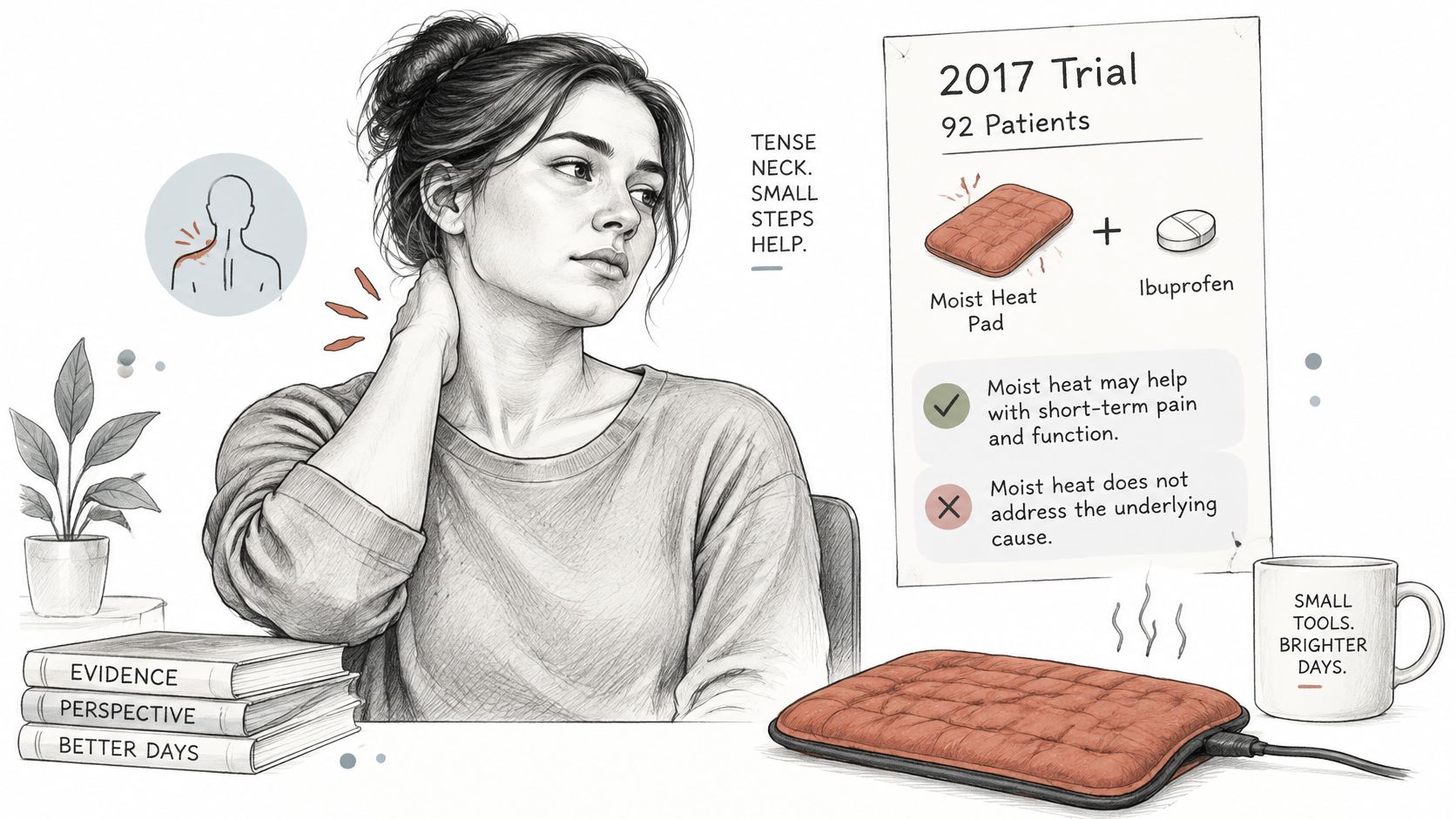
A review of heat therapy evidence for neck pain describes a randomized trial in which low-level continuous heat, used alongside ibuprofen and physical therapy, improved pain relief, disability scores, neck range of motion, and adherence to home exercise. The review also reports reductions in pain scores with heat therapy and ibuprofen. These findings support heat as an adjunct to care, not as a substitute for movement or other treatment.
The Limit You Should Not Ignore
A systematic review found very few eligible studies, leaving too little evidence to recommend either for or against heat as a self-management approach. Treat warmth as possible symptom relief, not a standalone treatment or a cure for an underlying condition.
The available findings also do not establish that moist heat outperforms dry heat, or that a particular fill, cover, shape, scent, or advertised retention time improves clinical outcomes. See this comparison of moist heat and dry heat for how the two approaches differ.
A Practical Way to Test Benefit
Try a comfortable warm session before gentle neck movement. Move slowly within a range that feels manageable, and track morning and evening stiffness and how freely you can turn your head over the next two weeks. Short mobility routines for busy professionals can provide a simple structure for desk workers.
This short demonstration shows gentle movement alongside warmth.
If your notes show no improvement, a hotter pad is not a reliable fix. Review your routine, workstation, and sleep position, or seek an assessment. A session that feels soothing is not, by itself, evidence of clinical benefit.
Surface Temperature and Heat Retention Benchmarks
A useful neck pad should deliver controlled warmth at the skin, not just reach a high temperature inside the fill. An international multidisciplinary consensus identified about 40 °C at the skin or superficial tissue interface as a balance point between therapeutic efficacy and safety for superficial heat therapy, according to the international consensus on superficial heat therapy.
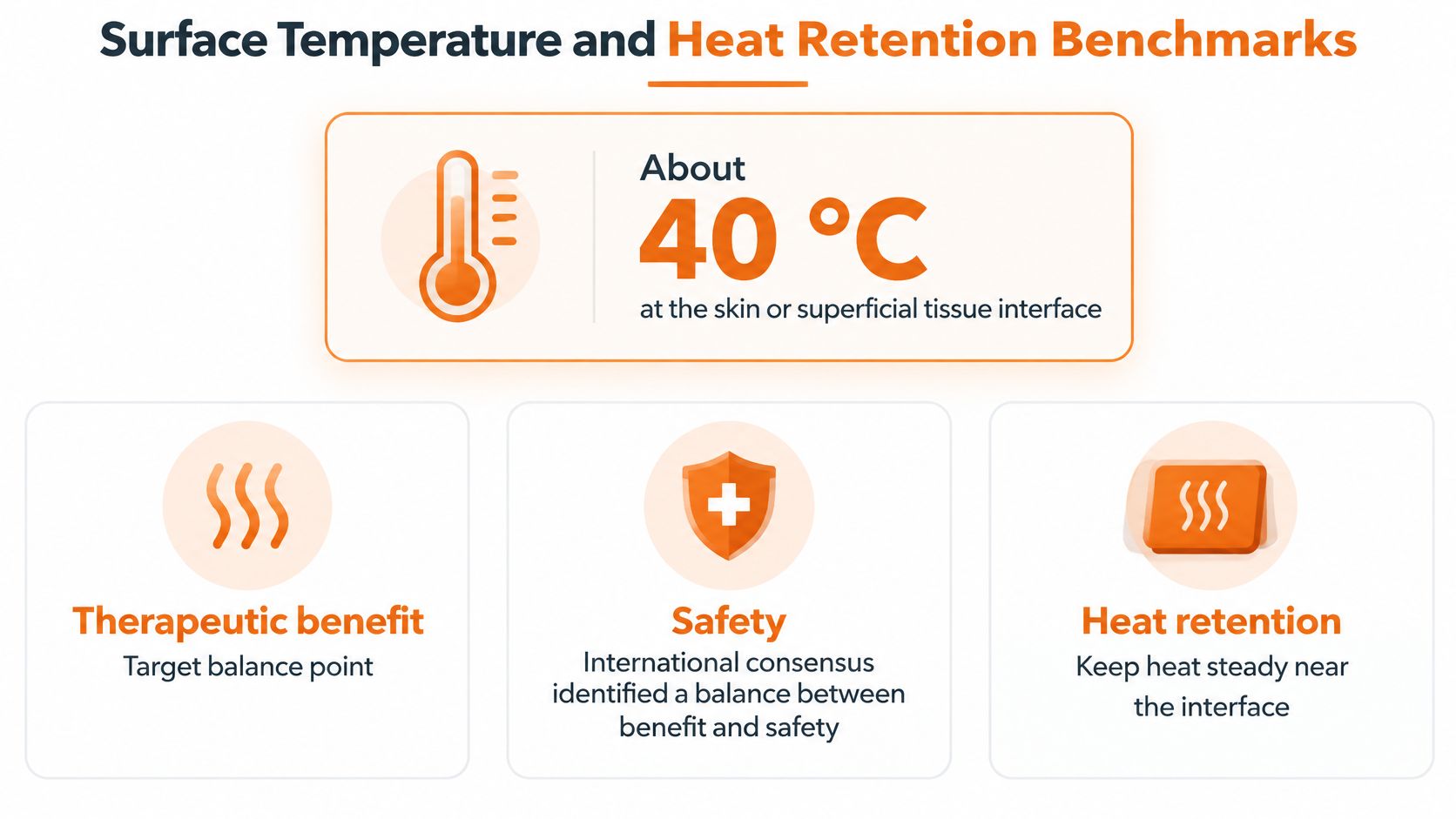
That benchmark describes the skin-contact interface, not the pad's internal temperature or a microwave setting. Clinic-style hot packs run much hotter than home pads and need thick protective layers before skin contact. Burn risk also depends on exposure time, pressure, and individual sensation, so a maximum-heat claim alone tells you little about safe use.
Heat Specifications to Check on a Moist Neck Pad
| Criterion | Target | Why it matters | Red flag |
|---|---|---|---|
| Skin-contact surface temperature | About 40 °C at the interface | Balances therapeutic warmth and burn risk | Feels scalding at first touch |
| Heat retention window | Repeatable 20 to 30 minute session | Helps you judge whether warmth lasts through a practical session | Cools noticeably before 20 minutes |
| Microwave warm-up | 1 to 2 minutes, flipped halfway | Reduces hot spots from uneven heating | No flipping instruction, or hot spots at the folds |
| Temperature evenness | No pronounced hot spots after warming | Spreads heat across the neck area | Patchy warmth that can be felt by hand |
| Basis of heat claim | Surface temperature stated or measured | Burn risk depends on the interface, not the source | Marketing based only on maximum microwave heat |
SunnyBay's Best Sellers collection includes neck and body heating pads that hold heat for 30 minutes. Treat that as a starting point, not proof that the pad stays comfortable throughout a session. A pad can remain warm yet feel too hot at first and too cool later.
To heat a SunnyBay wrap, fold it and microwave it for 1 to 2 minutes, flipping it halfway for more even warmth. Folds and thicker fill pockets can warm unevenly. After heating, wait briefly, then check the pad across its surface and through the cover or towel you plan to use.
The Wrist Test
- Press the inside of your wrist: The pad should feel warm, not hot enough to make you pull away.
- Check the full surface: Move across the center, folds, seams, and ends to find any noticeably hotter spots.
- Test through your barrier: Check again through the cover or towel that will sit between the pad and your neck.
- Pause and retest: Some fills continue releasing stored heat after microwaving, so the first touch may not reflect how the pad will feel.
Buying rule: If a product page does not state session length, warming steps, or whether its temperature claim refers to the surface, treat its retention claim cautiously.
Choose even, comfortable warmth over a pad that starts fiercely hot and fades. Mild redness and occasional burns remain possible, despite heat wraps generally having a good safety profile. Avoid damaged skin and use extra caution with impaired sensation, circulation disorders, neurological disease, inflammatory skin conditions, cancer, or active infection.
Fill, Cover and Moisture Design for Comfort
Fill changes how a pad drapes, how quickly it warms, and whether warmth feels settled or patchy. Flax seed flows into the curve behind your neck and gives a flexible, weighted feel. Lava sand feels denser and more stable, which can help contact, but extra weight may bother a sensitive neck or make microwave handling harder.
Polyester-filled designs are lighter and can work where weight is the main barrier, though they may not mold as closely as loose natural fill. Gel-type inserts can feel smooth and uniform at first, but they need careful warming because a sealed insert can develop uneven areas and doesn't redistribute as easily by hand.
Covers Change the Interface
- Fleece: Feels soft and keeps warmth close, which many people prefer in a cool room or during evening use.
- Cotton: Breathes better and feels less plush, which suits users who dislike a warm, fuzzy surface against sensitive skin.
- Dual-fabric cover: Lets you choose the side against your neck, but only helps if both sides lie flat without bunching.
Our portable pain relief heat pads provide even, balanced heat, and our wrap heats evenly and is easy to keep in place around the neck. Those are design goals you should verify in use, because a soft cover can't rescue fill that clumps into one end after warming.
Moisture Without a Mess
A moisture-retaining fabric or dampened insert can make warmth feel more comfortable, but the construction has to prevent leakage, condensation, and microwave overheating. Check whether the cover is removable and washable as the label directs. A pad you'll use after workouts, during illness, or across several household members needs a cover routine you won't avoid.
Look for stitching that keeps fill spread across channels without making the pad stiff. Seams should not create narrow ridges against the cervical curve. The cover should sit flat, because folds create pressure points and tiny air gaps at the same time.
Say your neck stiffens after a day of screen work. A hotter pad with two intense spots may make you keep shifting it, while a moderate pad with continuous contact lets you sit still and finish the session. Before buying, ask one practical question. Which fill and cover will I warm, wash, and wear most often without fuss?
Fit, Coverage and Hands-Free Positioning
A wrap needs to stay in contact with the areas you want to warm. For neck tension, that often means the back of the neck, the base of the skull, and the upper shoulders. SunnyBay's portable heat pads have a flexible fit that molds to the neck, and customer feedback describes heat reaching the back of the neck and base of the skull.
A contoured wrap can follow the neck and shoulders while you sit upright. The 26 x 5 inch wrap offers broader coverage and can be arranged in different positions; a shorter pad may suit one focused spot but leave the shoulder transition uncovered. The guide to choosing a heating pad size and shape can help you compare targeted and broader coverage.
Why Contact Beats Appearance
A pad may look ergonomic in a product photo yet leave a gap behind the neck. Gaps make contact less consistent, while a sliding pad can prompt you to hold it in place and tense your shoulder.
SunnyBay's flexible, weighted fill molds to the body, allowing movement, stretching, or hands-free work. Weight is useful only if the wrap stays comfortably positioned. If it slips down, presses on your throat, or makes you brace your shoulders, choose a different fit.
Run This Fit Test First
- Sit upright: Place the pad without leaning back. Check that it covers the back of the neck and upper shoulders.
- Turn slowly: Rotate your head left and right, then tilt each ear toward its shoulder within your comfort range.
- Lie back: Check that the pad stays behind your neck rather than riding onto your throat, jaw, or ears.
- Release your hands: Sit for several minutes and note whether you need to adjust the pad.
A useful fit keeps coverage stable during the session and leaves your hands free. The University of Lübeck publication record describes moist heat used for 10 minutes before mobilization, and a salt pack used for 30 minutes twice daily for five days alongside neck-stabilization exercises. For either approach, stable contact helps keep coverage predictable; sliding and gaps can shift where the warmth reaches.
Choose a design that needs little adjustment during this fit test. Secure placement is more useful than a long advertised session spent repositioning the pad.
Safety Checks and Care for Repeat Use
Comfort is not a safety signal. Damp warmth can feel soothing while the interface stays too hot for too long, and a close neck fit can reduce your awareness of heat and pressure. That's how a session drifts past the time you planned.
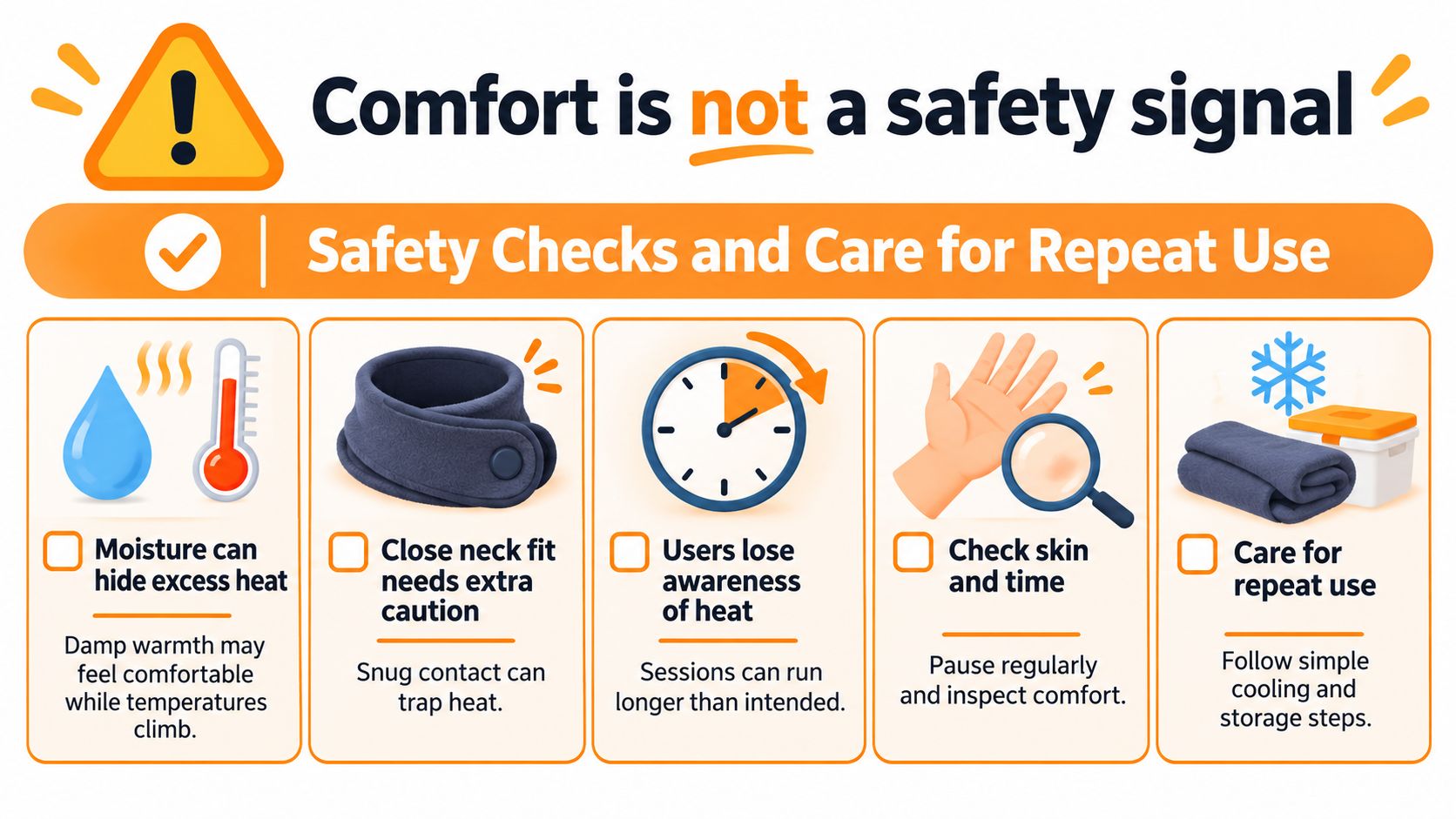
FDA adverse-event instructions emphasize checking the skin frequently, avoiding use on sensitive skin or by people with poor circulation, placing the pad on top of, not underneath, the body, and discarding covers showing deterioration, according to the FDA adverse-event detail record. Direct skin exposure for 15 to 30 minutes at high heat can cause burns, and reduced sensation from diabetes or nerve problems can delay detection.
Adjustments and Stop Signs by User Risk Case
| User case | Adjustment | Stop or ask a clinician if |
|---|---|---|
| Diabetes or nerve problems that reduce sensation | Check skin often, keep a barrier in place, shorter sessions | Redness persists, blisters form or numbness develops |
| Reduced circulation | Use the lowest setting, avoid sensitive skin | Skin darkens, feels cold or pain worsens |
| Older adults or fragile skin | Light pad, towel barrier, no use in bed | Skin tears, bruising or new marks appear |
| Anyone who may doze off or lean on the pad | Use only while awake, pad on top of the body | Any burn or lasting skin change |
| Broken, swollen or acutely injured skin | Do not apply heat | Any injury needs medical assessment first |
Use these steps every time, not only when a pad feels unusually hot. Our heating pad safety guide is worth reading before your first session if anyone in the household has reduced sensation or fragile skin.
- Place it on top: Never lie on the pad or wedge it between your neck and a firm surface where pressure traps heat.
- Keep a barrier: Use the cover or a towel unless the manufacturer explicitly specifies direct contact.
- Set a timer: Stay within the planned session and don't extend it because the damp warmth still feels pleasant.
- Inspect during use: Lift the pad and check for blotchy, persistent, or sharply defined redness.
- Inspect afterward: Look again once the pad is removed, because numbness or color change may be easier to notice then.
- Stay awake: Don't use a neck pad in bed or in a recliner if you're likely to doze off.
If you can't reliably feel heat, move the pad yourself, or stay awake for the full session, get clinician advice before using moist heat.
Care affects safety because worn fabric changes the barrier between fill and skin. Wash removable covers as the label directs, let the pad cool and dry fully before storage, and replace covers showing fraying, thinning, staining, or seam damage. Don't reheat beyond the label's microwave time to chase a longer session.
Stop for persistent redness, blistering, numbness, or worsening pain and seek medical advice. Never apply heat to broken, swollen, or acutely injured skin. For higher-risk users, predictable temperature and frequent checks matter more than scent, plushness, or an extra few minutes of claimed retention.
Pick Your Moist Heating Pad by Situation
Choose a pad for how you will use it, then compare price and fit. The examples below are product prices, not evidence that one option offers greater clinical benefit.
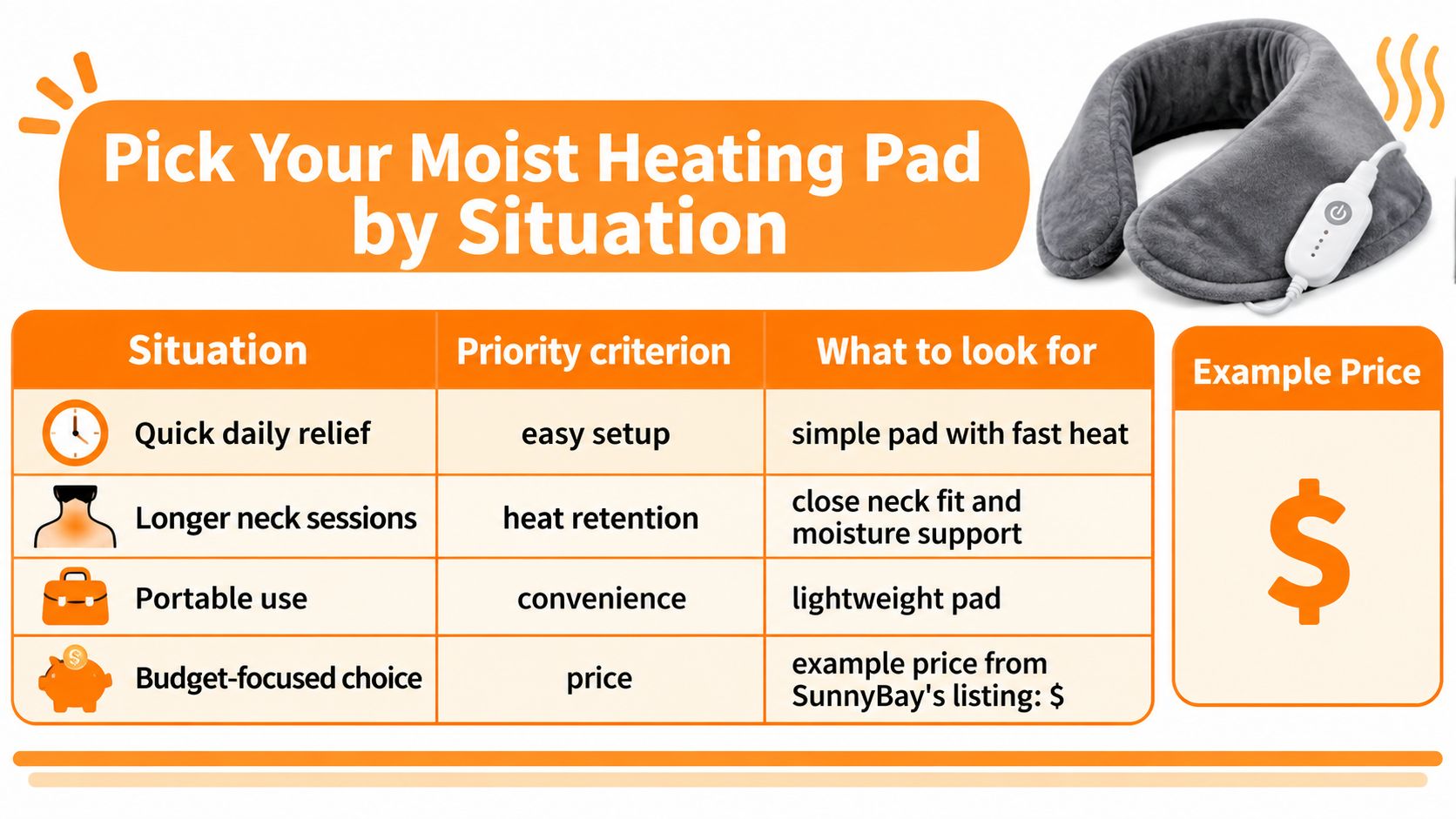
| Situation | Priority criterion | Pad type and specification to look for | Example price |
|---|---|---|---|
| Desk worker with daily neck tension | Hands-free fit and repeatable session | Microwavable neck wrap with even fill | Neck and shoulder pad $32.99; odorless wrap $37.99 on sale |
| Older adult | Light weight and easy handling | Lightweight neck and shoulder pad | Lightweight neck and shoulder pad $32.99 |
| Reduced sensation | Predictable temperature and skin checks | Choose only with clinician guidance; use a barrier and timed sessions | |
| Outdoor or commuter use | Power-free portability | Air-activated disposable patch | |
| Shared household | Enough pads and washable covers | Multiple neck wraps so one can cool or be cleaned | Buying 3 neck heating wraps gives 25% off |
Desk Worker With Daily Tension
A microwavable neck wrap that stays in place can leave your hands free while you type or read. The Microwavable Neck Shoulder Heating Pad For Upper Back Soreness, Light Weight For Seniors, Blue costs $32.99; the Microwavable Neck and Shoulder Heating Wrap, Odorless, Blue is $37.99 on sale. Choose the odorless option if scent would be distracting at work or around other people.
Older Adult or Low-Grip User
Prioritize a light, easy-to-handle design over maximum coverage. The lightweight neck and shoulder pad costs $32.99. Check that you can lift, fold, flip, and position it without rushing; if handling feels awkward when warm, it may not suit independent repeat use.
Reduced Sensation or Circulation Problems
Ask a clinician whether heat is appropriate before choosing a pad. If use is approved, a barrier, shorter timed sessions, and skin checks matter more than plushness or heat retention. Predictable surface warmth and even heating should guide your choice.
Commuter or Outdoor Use
An air-activated disposable patch provides warmth without a microwave or outlet, trading reusability for portability. Follow its placement directions. It is a different option from a moist, reusable neck wrap for home use.
Shared Household
Separate wraps mean one can cool or be cleaned while another is available. Buying 3 neck heating wraps gives 25% off. Label covers when users have different hygiene needs or preferences.
A useful comparison is how consistently each pad fits and warms during ordinary use. The surface temperature at the skin matters more than maximum microwave heat or a claim of longer retention, particularly for anyone at greater risk of burns.
SunnyBay sells reusable neck wraps, body pads, and portable heat patches. Compare product specifications and prices, then choose a design that fits your use and skin-safety needs at SunnyBay.


