


7 Best Hot Cold Pack Picks for Daily Pain Relief
-
An $11.99 grain wrap and a $44.14 strapped clay pack sit near opposite ends of this list, and both are the right answer. Just for different bodies and different aches. The pack that works on a stiff lower back is rarely the one you want on a swollen knee, and brand prestige has almost nothing to do with which is which.
Heat and cold do different jobs in tissue. Heat opens blood flow to tight muscle and stiff connective tissue, so a warm pack before movement helps a locked-up back loosen. Cold narrows the small vessels around a fresh injury and calms the swelling that makes a joint feel hot and tight. Pick the wrong one and you get a pack performing exactly as designed, on the wrong problem.
Clinical opinion backs that split. A review of the clinical literature describes broad expert agreement that superficial heat gives short-term pain relief and can reduce the need for analgesic medication. Cold earns its place mainly around fresh injuries, where swelling is the actual complaint.
Every pack below does both heat and cold, so the decision is physical. Three things decide whether a pack works for you: coverage shape, fill material, and whether it stays put hands-free. A wide drape reaches a whole band of muscle that a small gel rectangle cannot. Fill decides weight, drape, and how the temperature feels against skin. Strapping decides whether the pack holds position while you move or needs a hand keeping it there.
Shape decides coverage. Fill decides feel. Straps decide whether your hands stay free.
Prices and availability are as listed at the time of writing, and all seven are legitimately useful. If you are building a wider toolkit, these packs sit alongside other drug-free approaches to chronic pain.
Table of Contents
- 1. Lavender-Scented Extra Large Body Heating Pad, Navy Blue
- 2. Core Products Dual Comfort Clover Pack
- 3. Carex Bed Buddy Hot & Cold Wrap
- 4. Sherpa Therapy Small Reusable Hot & Cold Gel Pack
- 5. Mueller Reusable Fabric Cold/Hot Pack
- 6. North Coast Medical Comfort Hot/Cold Gel Pack
- 7. TheraPearl Sports Pack
- The Seven Hot Cold Packs Side by Side
- Match the Pack to the Ache With a Quick Buying Checklist
1. Lavender-Scented Extra Large Body Heating Pad, Navy Blue
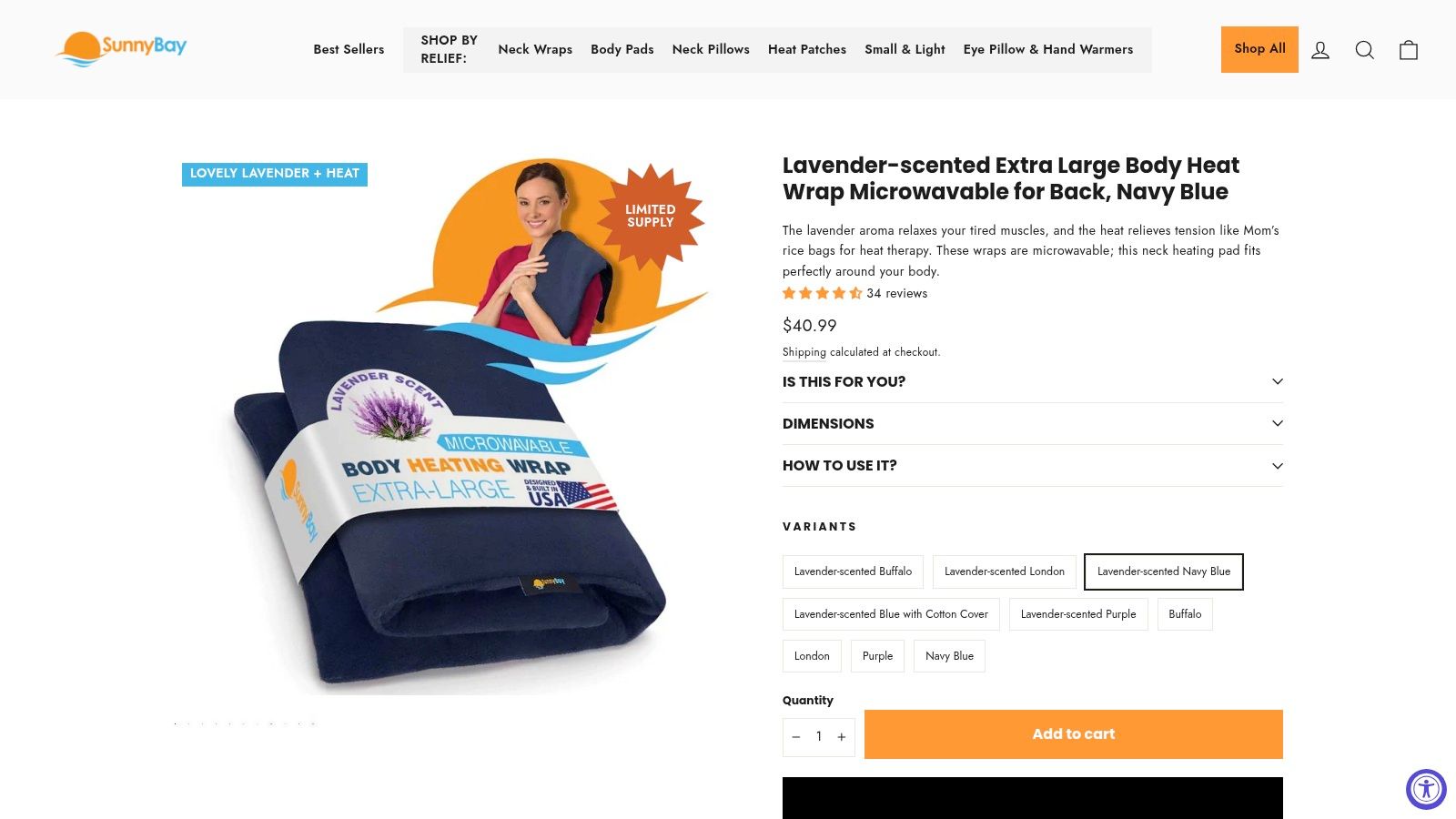
A 10 by 24 inch panel of flax seed and lavender buds is the closest thing to wrapping a warm towel around your whole lower back, and unlike a towel it stays warm long enough to matter. Size is the spec most buyers skip, and it's the one that decides whether a pack does anything at all.
Why the drape shape does most of the work
Pain across the lumbar spine and the tops of the shoulders is spread out. A 6-inch gel rectangle forces you to chase the worst spot with your hand. A drape covers the whole band of muscle at once, and the weight of a natural fill keeps steady contact instead of hovering.
SunnyBay fills this pad with flax seed, which holds heat with some mass behind it, and the cover comes off for washing. That last detail matters more than it sounds when a wrap gets used twice a day for months. The lavender is a genuine preference call, not a clinical feature, and it's the one thing here that some buyers will actively dislike.
Where the clinical support actually sits
Heat for back pain has moderate backing. A Cochrane review of superficial heat and cold for low back pain found heat-wrap therapy produces a small short-term reduction in pain and disability for acute or subacute low back pain. In two trials involving 258 participants, pain after five days improved by 1.06 points versus oral placebo on a 0 to 5 scale, with a 95% confidence interval of 0.68 to 1.45. Evidence for cold in low back pain, and for heat being superior to cold, is insufficient.
This is not a new category either. A history of the ice pack records the 1948 launch of the first multifunctional commercial pack, the Hot-R-Cold-Pak, which could be chilled in a refrigerator or heated in hot water, and a 1973 patent for a reusable pack that could be heated in boiling water or a microwave. That's more than 75 years of consumer history behind a design that was largely solved decades ago.
Trade-off to accept: a pack this size needs a microwave it fits into and freezer space it can occupy. If neither is available when your back seizes at 6am, a smaller pack you can actually prepare beats a bigger one you can't.
If microwave timing is the worry, this guide to microwave heating safety is worth five minutes before the first use.
- What works: broad coverage, a natural fill with real weight, hot or cold from the same pad, washable cover.
- What doesn't: it's a stay-home product, and the scent is permanent.
2. Core Products Dual Comfort Clover Pack
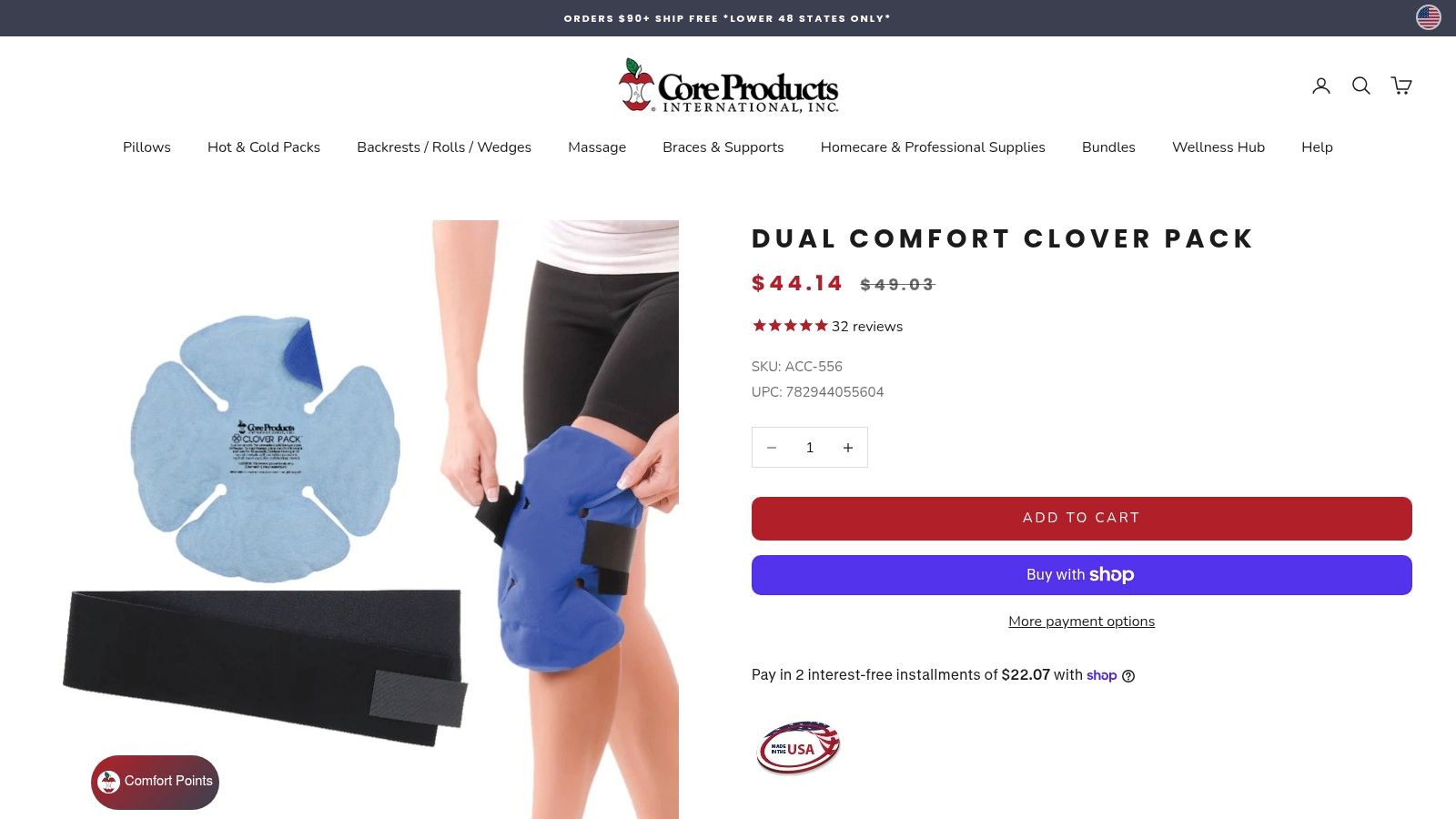
The clover shape exists because knees, ankles, shoulders and elbows aren't flat. A flat pack bridges across the joint and heats the air above it. A contoured clay pack wraps the curve and stays in contact when the joint moves.
At $44.14 this is the priciest single pack here, and most of what you're buying is the adjustable strap on the Core Products Clover Pack. Clay holds temperature with more mass than thin gel, which is why this format shows up in clinics. The manufacturer says it can be microwaved for heat or frozen for cold, and it's made in the USA.
The strap changes how often you use it
A pack you have to hold gets used once and then lives in a drawer. A pack that stays on gets used while you answer email or watch a film, and repeat use is what turns a purchase into relief. That's the honest case for paying four times the price of a plain gel rectangle.
The limit is coverage. A clover hugs a knee beautifully and does almost nothing for a full lumbar spine. Buy this for a joint, not for a back.
The screening question before you strap anything on
Strapped packs create compression, and compression plus impaired sensation is the combination that causes injury. The Merck Manual guidance on rehabilitative measures for pain and inflammation lists reduced skin sensation as a contraindication or major precaution, because users may not detect tissue damage, and warns against cold on tissue with reduced blood supply, such as areas affected by peripheral arterial disease.
Check this first: intact temperature sensation, normal circulation, no open wound, and the ability to check the skin every few minutes. Older adults, people with diabetes-related neuropathy, anyone on numbing medication and people with vascular disease should treat that list as a gate, not a formality.
3. Carex Bed Buddy Hot & Cold Wrap
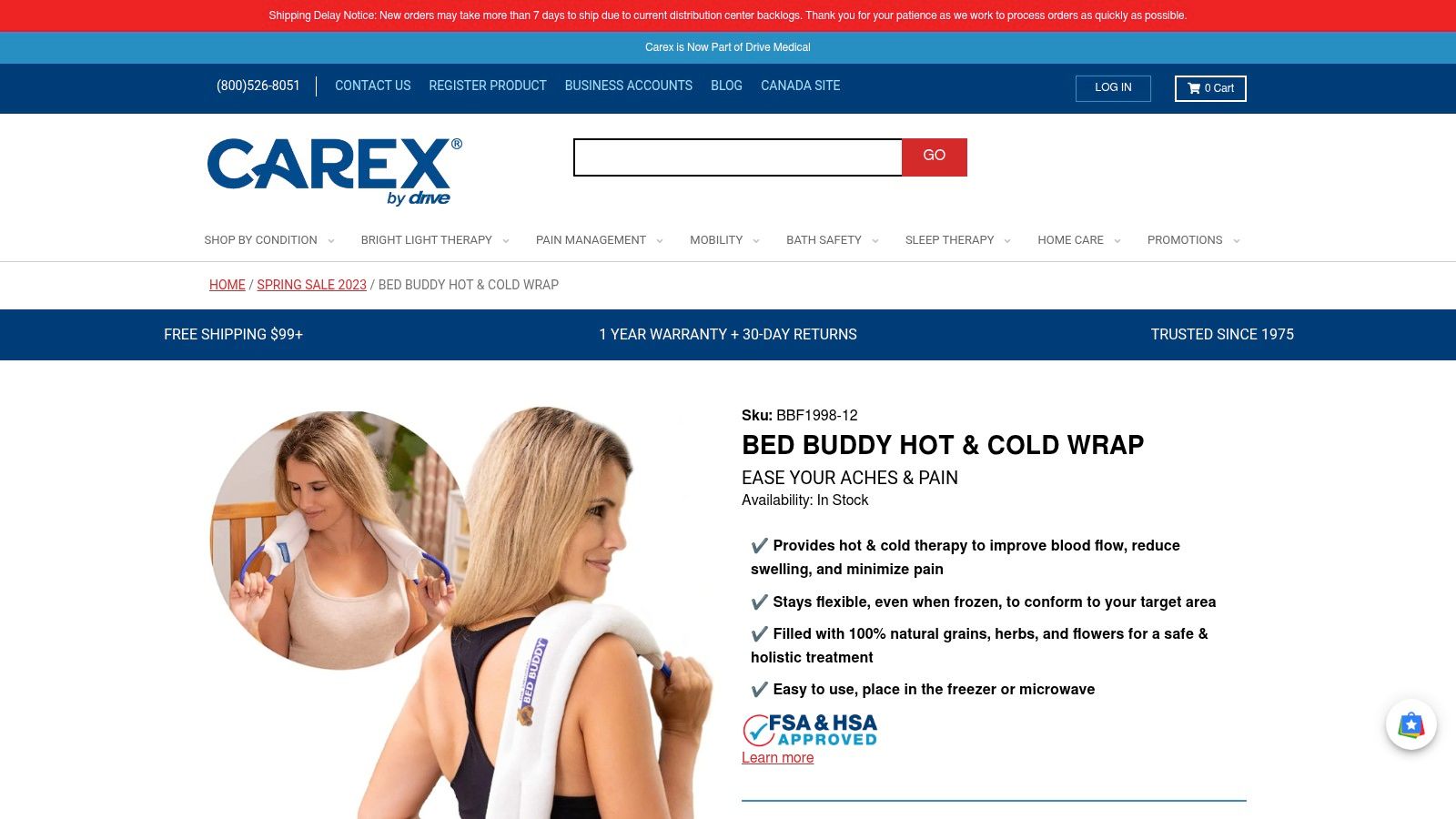
At $11.99, the Carex Bed Buddy Hot & Cold Wrap is the cheapest way to find out whether grain heat suits you. It's a long, flexible tube filled with natural grains, herbs and flowers, microwaved for moist heat or frozen for cold, and shaped to drape the neck, shoulders or a knee.
Moist heat without water, and without a strap
Grain fill releases a little moisture as it warms, which many people find more soothing than dry gel heat. The trade-offs are real. It's heavier than a gel pack, it heats less evenly, and there's no strap, so it slides off a shoulder the moment you stand up.
Carex lists a 60-day return policy and satisfaction guarantee for purchases through its own site, and at the time of writing noted shipping could take more than seven days because of distribution delays. Buying this one is a low-risk experiment, not a commitment.
What actually predicts satisfaction
A clinical trial of acute neck or back strain gave participants a 30-minute heating pad or cold pack alongside ibuprofen. Improvement was mild and statistically similar between groups, with 51.6% of heat users and 62.1% of cold users rating themselves better or much better, according to the PEDro trial record. Willingness to repeat was high on both sides, at 80.6% for heat and 75.9% for cold, and the trial did not establish a significant preference for either.
- Buy it if: you want a long wrap for neck and shoulders, you'll mostly use heat, and you want to spend under $15 to test the idea.
- Skip it if: you need hands-free use, or you want a firm, even cold pack for a hot swollen joint.
The broader case for owning a wrap rather than a bag of peas is covered in this guide to hot and cold therapy wraps.
4. Sherpa Therapy Small Reusable Hot & Cold Gel Pack
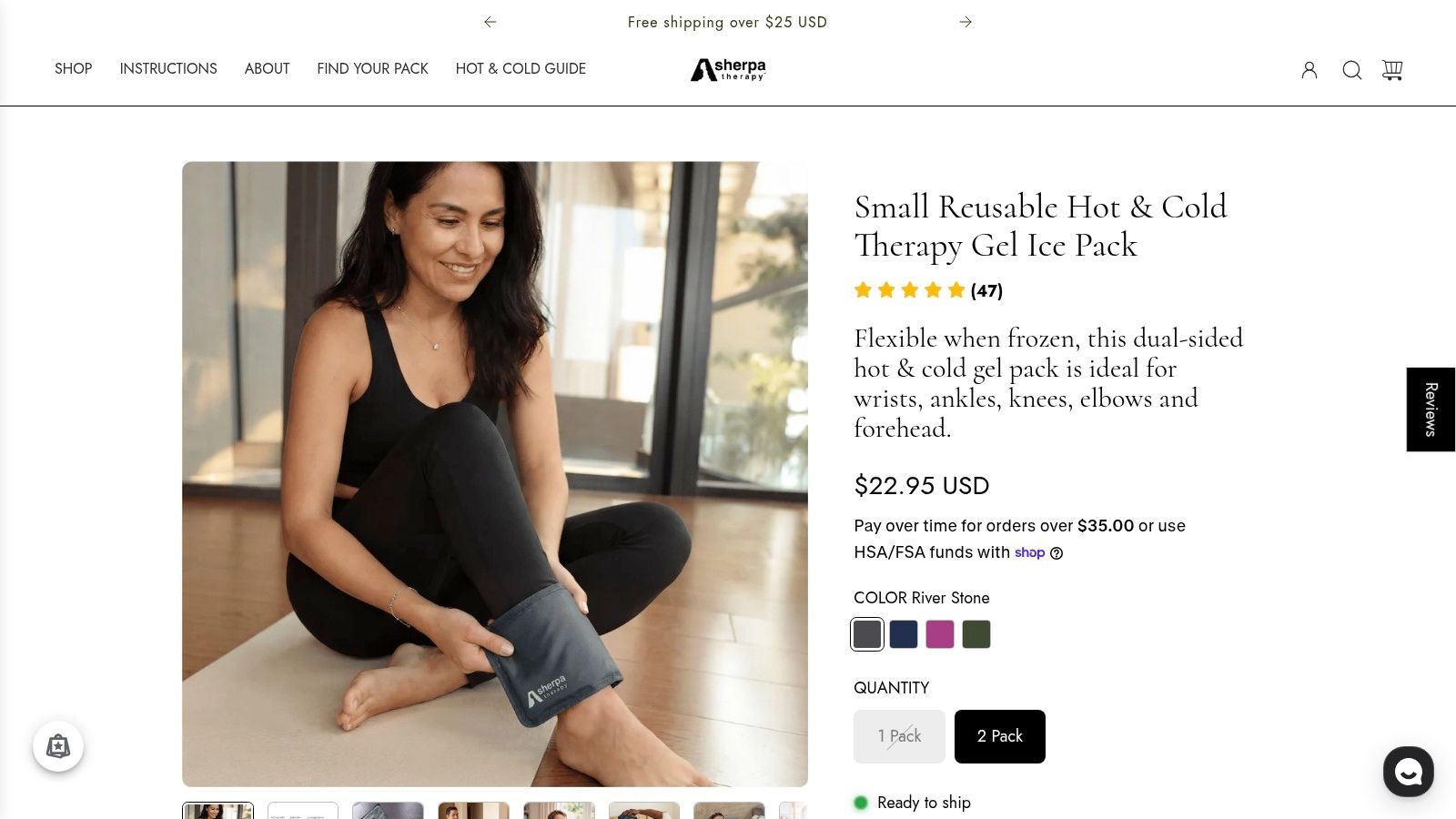
Small gel packs earn their place on wrists, ankles, elbows, the forehead and the back of the neck, places a big drape can't reach without wrapping your whole head. The Sherpa Therapy small gel pack is listed at $22.95, comes with a freezer bag, and the product page showed more than 1,000 reviews plus a lifetime guarantee.
Two faces, two jobs
The shell is plush on one side and nylon on the other, which is a small feature that changes how the pack feels in use. The plush side is for the ten minutes after the initial shock, when you want contact without rawness. The nylon side delivers a more direct temperature feel when you want intensity.
The gel is designed to stay flexible when frozen. That matters because a rigid block of ice sitting on a wrist edge is uncomfortable enough that people stop using it, and a pack that gets abandoned isn't therapy.
A two-sided pack is genuinely useful. A pack that's uncomfortable on the second minute is a pack you'll stop using by the fourth.
Where it stops being the right buy
Small means small. This isn't the pack for a broad back, a quad or a whole shoulder. It's also pricier than a basic gel rectangle at similar size, so you're paying for the fabric finish and the guarantee rather than capacity. Heating instructions should come from the specific product page, since gel formulations vary and microwave times don't transfer between brands.
5. Mueller Reusable Fabric Cold/Hot Pack
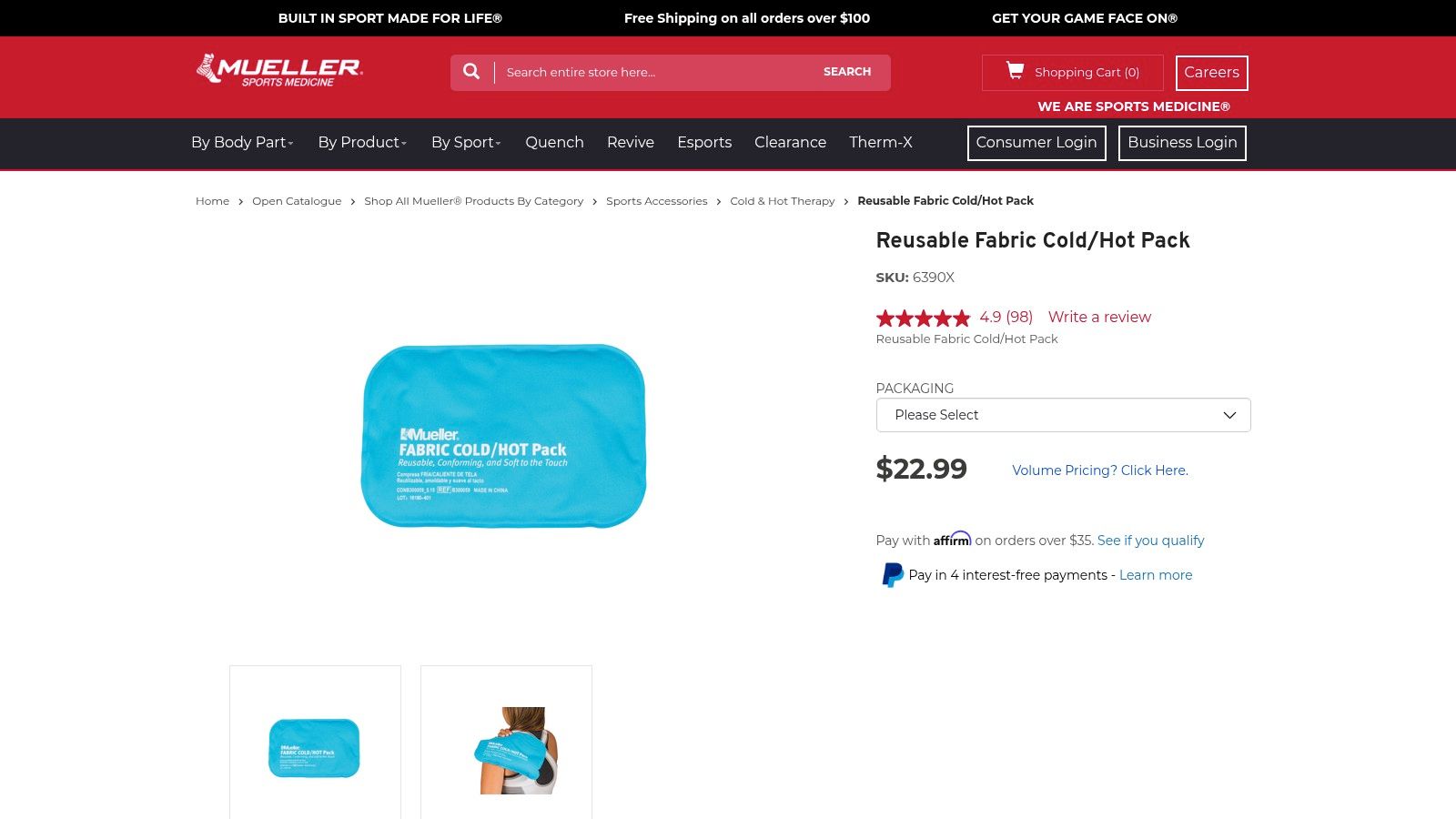
The Mueller Reusable Fabric Cold/Hot Pack is the pack you keep in a gym bag. Fabric-covered gel, listed at $22.99, with a 4.9 out of 5 rating from 98 reviews on Mueller's own product page at the time of writing.
The fabric shell is the feature
An uncovered gel pack sweats against skin, sticks, and feels harsher than it needs to. A fabric exterior gives you a built-in barrier, which is the thing every clinical instruction tells you to add manually. That single layer is why this format works well for people who use a pack quickly, with no towel handy.
Mueller says the gel is designed not to solidify in the freezer, so it conforms around a shoulder or a thigh instead of perching on top of it. It's part of the RecoveryCare line, which tells you the intended buyer: sports aches, weekend injuries, everyday stiffness.
Where a plain pack still wins
There's no strap, so it won't stay put hands-free on a knee or a neck. It isn't shaped for a specific joint either, so it's a generalist. For a lot of households that's exactly right. One pack in a drawer, cold for a turned ankle, warm for a tight shoulder, no decisions to make.
- Best for: a single household pack that covers most everyday aches.
- Weak spot: positioning on anything that moves, and no contoured fit.
- Note on price: packaging selection can shift the final cost, so check the variant before you buy.
6. North Coast Medical Comfort Hot/Cold Gel Pack
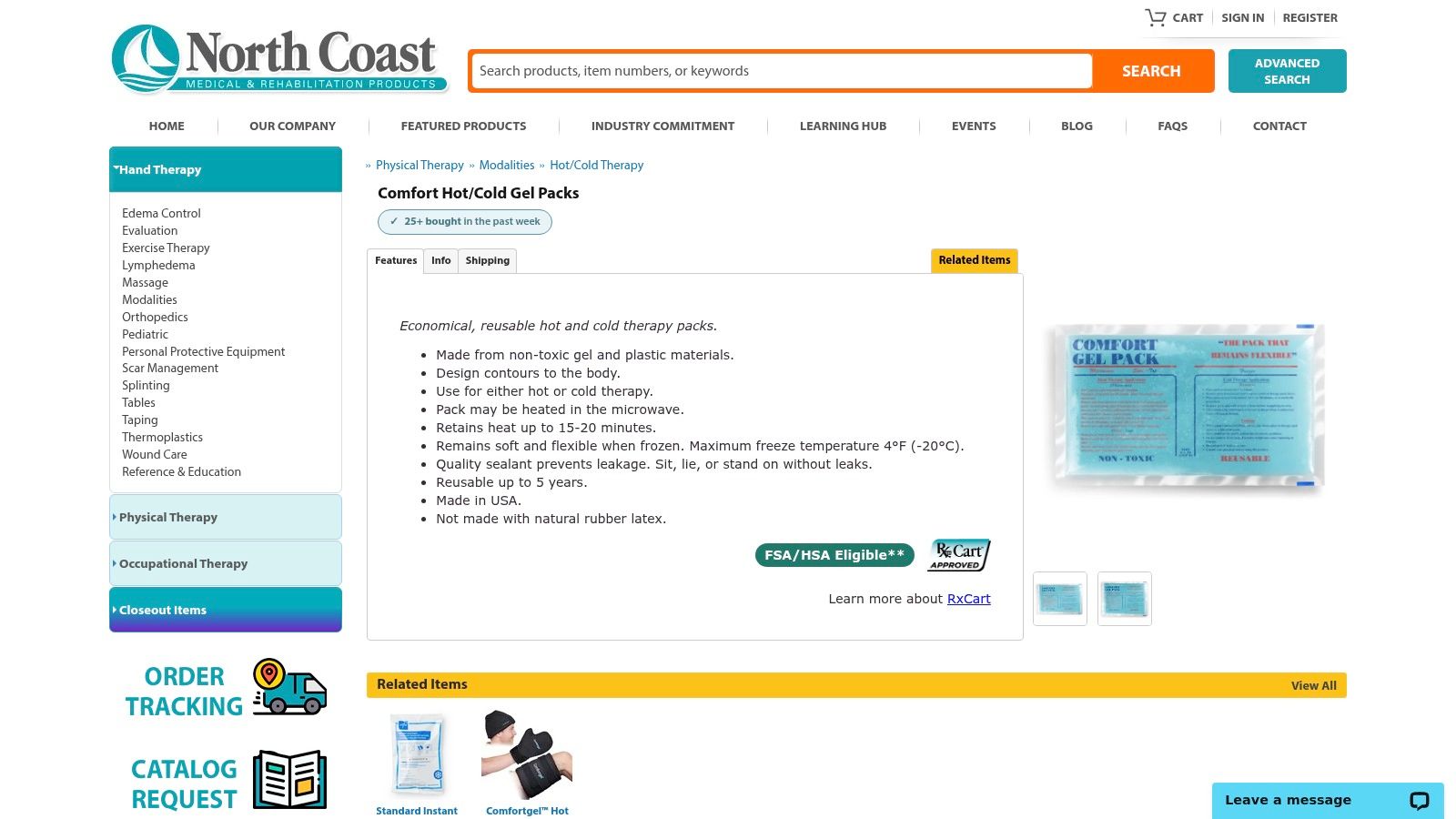
Sizing is the whole argument here. The North Coast Medical Comfort gel pack comes in 6 by 10 inch, 10 by 15 inch, 5 by 18 inch and 9 by 12 inch formats, starting at $7.95 with the size you pick setting the final price. That 5 by 18 inch strip is a useful back pack; the 6 by 10 is a knee and shoulder pack.
Pick the size, then respect the clock
The manufacturer states heat retention of about 15 to 20 minutes, which lines up neatly with the standard application window. Hong Kong government guidance on hot and cold therapy recommends limiting both heat and cold applications to no more than 20 minutes, generally two to three times daily, using a towel or cover to reduce burn and frostbite risk, and warns against pressing the body onto the pack.
That last warning is the contrarian bit. A heavy pack under your back while you lie on it is compressed, and compression pushes heat or cold into skin faster than the label assumes. Longer retention isn't automatically a benefit either; sustained exposure is exactly how people get hurt when they fall asleep with a pack in place.
Practical rule: count minutes, not comfort. If the pack still feels hot at 20 minutes, that's not a bonus, it's your signal to come off.
The manufacturer also says the gel stays flexible when frozen, that it's made in the USA and not made with natural-rubber latex, and the product page listed in-stock status with shipping in one to two days and 30-day returns. For choosing between the two modes, this comparison of heat therapy versus cold therapy is the short version.
7. TheraPearl Sports Pack
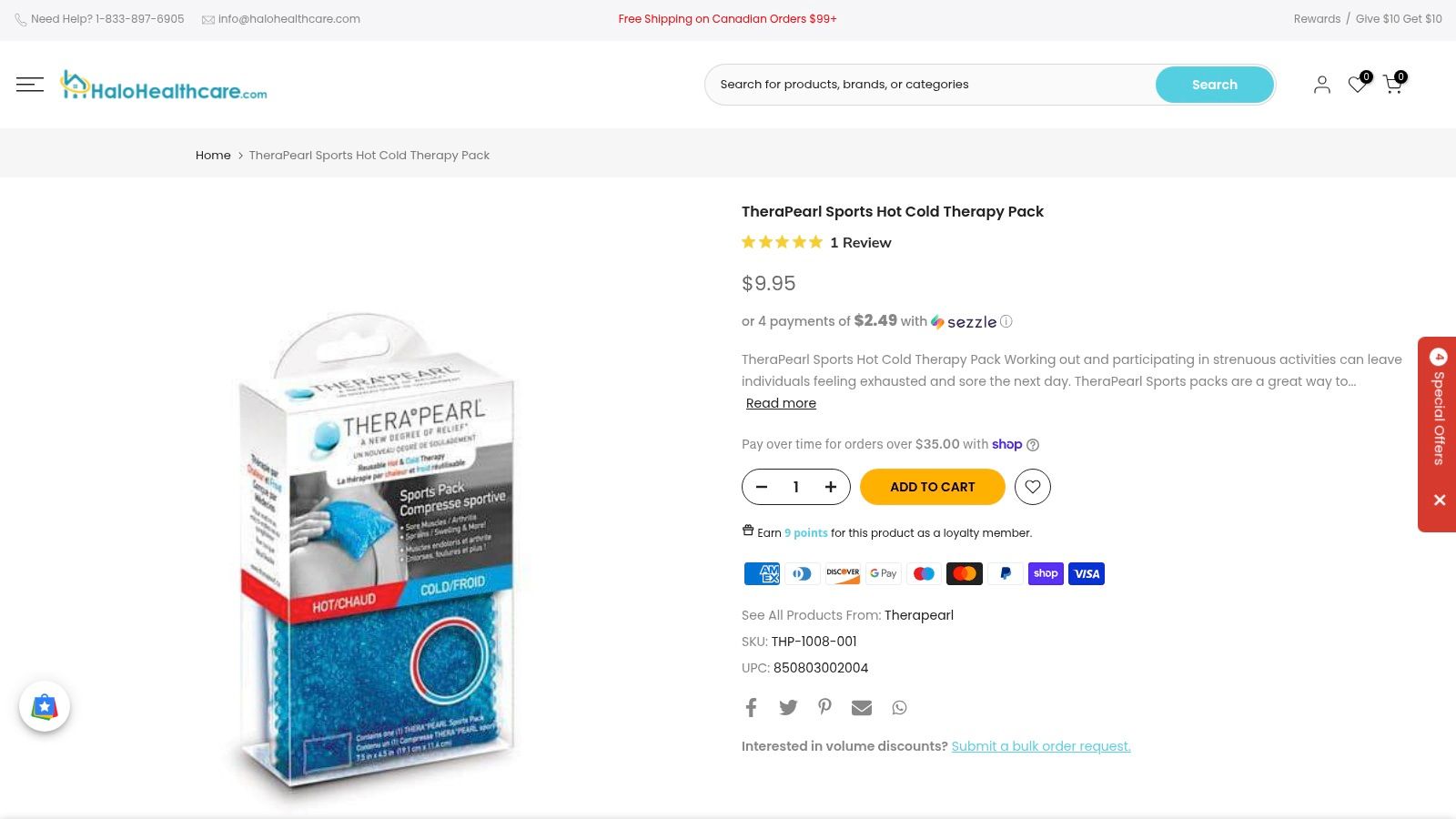
Gel beads are the underrated fill. Instead of one solid block, a bead fill moves like a beanbag and molds around a shoulder cap or an ankle bone without leaving a gap. The TheraPearl Sports Pack uses that construction in a compact format, listed at $9.95 at a U.S. retailer, with prices and availability varying by seller.
Small, cheap and best on one specific spot
This is an acute-injury pack. It goes in a gym bag, a glovebox or a desk drawer, and it's the one you reach for when something just happened. The size that makes it portable is the same size that makes it useless across a lower back, so treat it as a spot treatment rather than a whole-body pad.
TheraPearl's wider range includes back wraps and eye formats, which is worth knowing if the sports pack works for you and you want the same fill in a different shape.
The instruction trap with gel beads
Heating times differ from pack to pack, and bead packs can run hot fast because the beads heat through quickly. Follow the specific product's instructions rather than a generic microwave time carried over from another brand. The same applies to freezing: a bead pack left in a chest freezer for days gets harder and colder than one chilled for an hour.
For anyone weighing up where a hot cold pack fits alongside other recovery tools, the honest framing is that none of these are treatments. They're comfort and swelling control with a good safety record when used with a barrier and a timer.
The Seven Hot Cold Packs Side by Side
Read the table in this order: coverage shape, fill, then strap. That order explains why an $11.99 grain wrap and a $44.14 strapped clay pack can both be the right buy.
Small and cheap fits a wrist or fresh swelling. Contoured and strapped fits a joint that needs heat or cold while you keep moving.
| Item | Listed Price | Fill Material | Best Body Area | Hands-Free Fit | Hot & Cold Method |
|---|---|---|---|---|---|
| Lavender-scented Extra Large Body Heating Pad, Navy Blue | $40.99 | Flax seeds and lavender buds | Back and shoulders | Drapes hands-free over back or shoulders | Microwave for heat; freezer for cold |
| Core Products Dual Comfort Clover Pack | $44.14 | Clay | Joints such as knee, ankle, shoulder, or elbow | Adjustable strap stays put on a joint | Microwave for heat; freezer for cold |
| Carex Bed Buddy Hot & Cold Wrap | $11.99 | Natural grains, herbs, and flowers | Neck, shoulders, back, or joints | Wraps close; best seated or lying down | Microwave for moist heat; freezer for cold |
| Sherpa Therapy Small Reusable Hot & Cold Gel Pack | $22.95 | Gel | Wrists, ankles, knees, elbows, or forehead | Compact; hold or tuck in place | Microwave for heat; freezer for cold |
| Mueller Reusable Fabric Cold/Hot Pack | $22.99 | Gel with fabric exterior | General aches or sports-related areas | Flat pad; hold or rest against the area | Microwave for heat; freezer for cold |
| North Coast Medical Comfort Hot/Cold Gel Pack | Starting at $7.95 | Gel | Choose size for target area | Size to the area; hold or tuck in place | Microwave for heat; freezer for cold |
| TheraPearl Sports Pack | $9.95 | Flexible gel beads | Localized aches or swelling | Compact; hold or tuck in place | Microwave for heat; freezer for cold |
If two rows look equal, pick the one whose shape covers the painful area without folding. Coverage decides contact, and contact decides relief.
Match the Pack to the Ache With a Quick Buying Checklist
Work through four questions in order and the choice makes itself.
Step one, name the body area. A broad back or both shoulders means a drape-style pad in the 10 by 24 inch range. A knee, elbow or ankle means a contoured pack or one with a strap. A wrist, forehead or single small spot means a compact gel pack. Get this wrong and nothing else rescues the purchase.
Step two, choose the fill by how you'll use it. Natural grain and flax fills feel weightier, hold warmth well and suit at-home sessions where you're sitting still. Gel stays flexible when frozen, conforms to odd shapes and suits acute swelling. Clay sits between the two with more mass than gel.
Step three, decide whether you need hands-free. Only a strapped wrap or a drape-style pad stays put while you move. If your plan is to heat your back while cooking dinner, a strap isn't a luxury.
Step four, check the practical details. Microwave time, stated heat retention, whether the cover washes, and the return window. Those four details separate a pack you'll use for years from one that annoys you by week two.
Two habits stretch any pack further. Covering a warm wrap with a towel or blanket keeps the heat in longer, and a wrap that has cooled on the surface is still warmer inside than the room, so it needs less reheat time than a cold one. Both are small things that add up to fewer burns and more relief.
Buy for the body area first. Once the shape and the fill are right, the brand decision takes about ten seconds.
SunnyBay has been making reusable hot and cold therapy products since 2002, from microwavable neck wraps and extra-large body pads to a large ice bag with a strap that takes ice or hot water for $23.99. Every wrap warms in the microwave or chills in the freezer, so one purchase covers both stages of an ache. Visit SunnyBay to match the size and shape to the spot that hurts.


