


Is Microwave Heating Safe for Heat Wraps?
-
Microwave heating is entirely safe from a radiation standpoint when the oven is used as directed. The main danger is thermal burns from uneven heating and hotspots when a therapy pad isn't rotated, redistributed, or rested properly.
The popular advice to focus on whether microwaves make food or heat wraps “radioactive” points attention in the wrong direction. A functioning, standards-compliant microwave doesn't leave radiation behind in a flax wrap or lava-sand pad. What deserves your attention is simpler and more immediate: a pad can feel pleasantly warm on one area while holding a much hotter pocket elsewhere.
That distinction matters in physical therapy. Heat can relax stiff muscles and make movement more comfortable, but skin doesn't respond to the average temperature of a wrap. It responds to the hottest point touching it. Treat the microwave as a safe heating appliance, then treat the heated product as a warm object that needs careful handling.
Table of Contents
- The Real Safety Risks of Microwave Heating
- How Microwaves Actually Heat Natural Fills
- Comparing Flax Seed and Lava Sand Fill Materials
- Step-by-Step Guide to Safe Heating Techniques
- The Role of Dual-Fabric Covers in Burn Prevention
- Product Care and Recognizing When to Replace
The Real Safety Risks of Microwave Heating
The word radiation sounds alarming, but microwave-oven radiation isn't the same as ionizing radiation from X-rays. Microwaves use non-ionizing energy to generate heat, and ovens that meet safety standards are considered safe when used according to the manufacturer's instructions. The World Health Organization's guidance on microwave ovens explains that compliant ovens aren't hazardous to health, while the U.S. performance limit restricts leakage to 5 milliwatts per square centimeter at about 2 inches from the oven surface.
That figure describes the oven's external leakage standard, not the temperature of a therapy wrap. The FDA also distinguishes most microwave-oven injuries from radiation injuries. Hot containers, overheated food, steam, and exploding liquids cause the usual burns. The same principle applies to a reusable heating pad: the appliance can be functioning normally while the pad creates a painful surface burn.
Appliance safety versus skin safety
A damaged door, faulty latch, or compromised oven should never be ignored. Stop using an oven if the door doesn't close properly or if the door area has visible damage. For routine use, though, the practical question isn't “Will the wrap become radioactive?” It's “Could one part of this wrap become too hot for my skin?”
Dense natural fills can hold heat in the center or in compressed areas. A pad folded during heating, bunched against the oven wall, or applied immediately after the timer stops may contain a hotspot that hasn't equalized. Steam can add another hazard, particularly when a wrap is placed directly against sensitive skin.
Practical rule: Safe microwave operation doesn't guarantee safe skin contact. Check the product, redistribute its fill, and test the temperature before use.
Read the product instructions alongside SunnyBay's heating pad safety guidance, especially if you're buying a wrap for an older adult, a child, or anyone with reduced sensation. Numbness can make it harder to notice excessive heat before the skin is injured.
How Microwaves Actually Heat Natural Fills
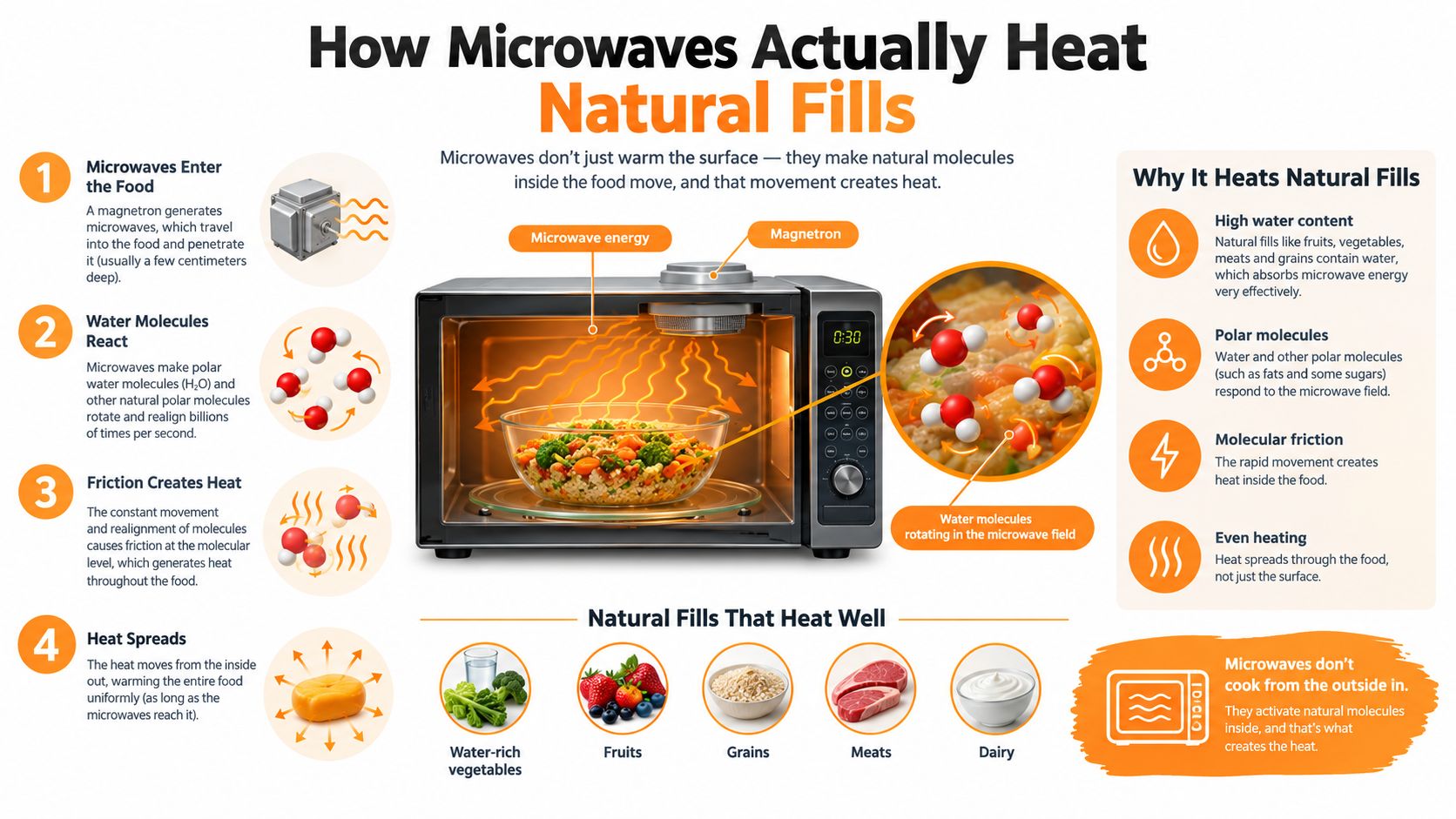
A microwave oven creates an electromagnetic field that makes molecules with moisture move and rotate rapidly. That movement produces heat. The process isn't perfectly uniform because a therapy pad isn't a smooth block of identical material. Its fill may have different densities, shapes, moisture levels, and areas of compression.
Think of the energy like traffic entering a road network. Broad, open lanes distribute cars reasonably well, while a narrow junction causes congestion. In a wrap, loose fill, seams, folds, and dense pockets act like different road conditions. Some areas absorb energy efficiently, while others remain cooler and then warm gradually through conduction.
Why the surface can mislead you
Microwaves don't guarantee an even temperature from the outside of a pad to its center. The outside fabric may feel moderate while an interior cluster of seeds or mineral fill is hotter. Conversely, a cool exterior doesn't prove the pad needs more heating, because the interior can continue transferring warmth outward after the cycle ends.
This is why stirring, rotating, resting, and checking matter in microwave cooking. Clemson University's microwave food-safety guidance emphasizes that cold spots can remain unless users redistribute the contents, allow standing time, and verify temperature appropriately. A therapy wrap has different safety requirements from food, but the underlying heat-transfer problem is similar.
The video's visual explanation can help you understand why energy distribution varies inside a microwave cavity.
For a wrap, rotation changes the pad's position relative to the oven's hot and cool zones. Massage or shaking separates compacted fill. Resting allows conduction to smooth out temperature differences. Those actions don't make heating mathematically perfect, but they reduce the chance that one concentrated pocket reaches the skin first.
Comparing Flax Seed and Lava Sand Fill Materials
Flax seed and lava sand don't behave identically in a microwave, so you shouldn't transfer one product's heating routine to another. Flax seed is an organic fill with natural oils and a variable moisture profile, while lava sand is a dense mineral material. The construction of the cover and the manufacturer's instructions still control the safe heating method, but the fill changes how the pad feels and how cautiously you should approach temperature checking.
Flax seed generally creates a pliable, conforming wrap. It can contour around the neck or shoulder and deliver a soft, moist-feeling warmth. Because it contains organic material and natural oils, repeated overheating or a scorched smell is a reason to stop using the product, not a sign that it needs more ventilation or a longer cycle.
Lava sand feels heavier and more grounded. Its density can provide steady pressure over a joint, but that same density means a hot pocket may remain concentrated. A lava-sand pad can also stay hot after removal from the microwave, so handling it immediately and placing it against bare skin without testing is poor practice.
Flax seed versus lava sand
| Fill Material | Heat Retention | Weight & Feel | Moisture Profile |
|---|---|---|---|
| Flax seed | Warm, flexible, and able to contour closely to the body | Light and soft, with a moldable feel | Contains natural oils and variable moisture, so overheating requires caution |
| Lava sand | Dense and capable of holding a steady warmth | Heavier, firmer, and more grounding | Mineral-based and less pliable, with concentrated heat possible in dense areas |
The SunnyBay guide to flaxseeds in hot and cold therapy offers useful product-specific context, but no general timing rule can replace the label on your own wrap. Microwave power, pad size, fill amount, and starting temperature all affect the result.
Use your hands to redistribute a flax wrap gently rather than compressing it into a tight bundle. With lava sand, rotate the pad and inspect the seams and edges so the fill stays spread across the intended treatment area. In both cases, test the pad over clothing or with the inside of your wrist before placing it on a sensitive area.
Step-by-Step Guide to Safe Heating Techniques
A safe routine should be repeatable, not improvised. Start with the product's instructions, keep the pad flat, and use short heating intervals rather than guessing from memory. If the wrap has been stored in a cold room or freezer, its starting condition may differ from the condition used in the manufacturer's testing.
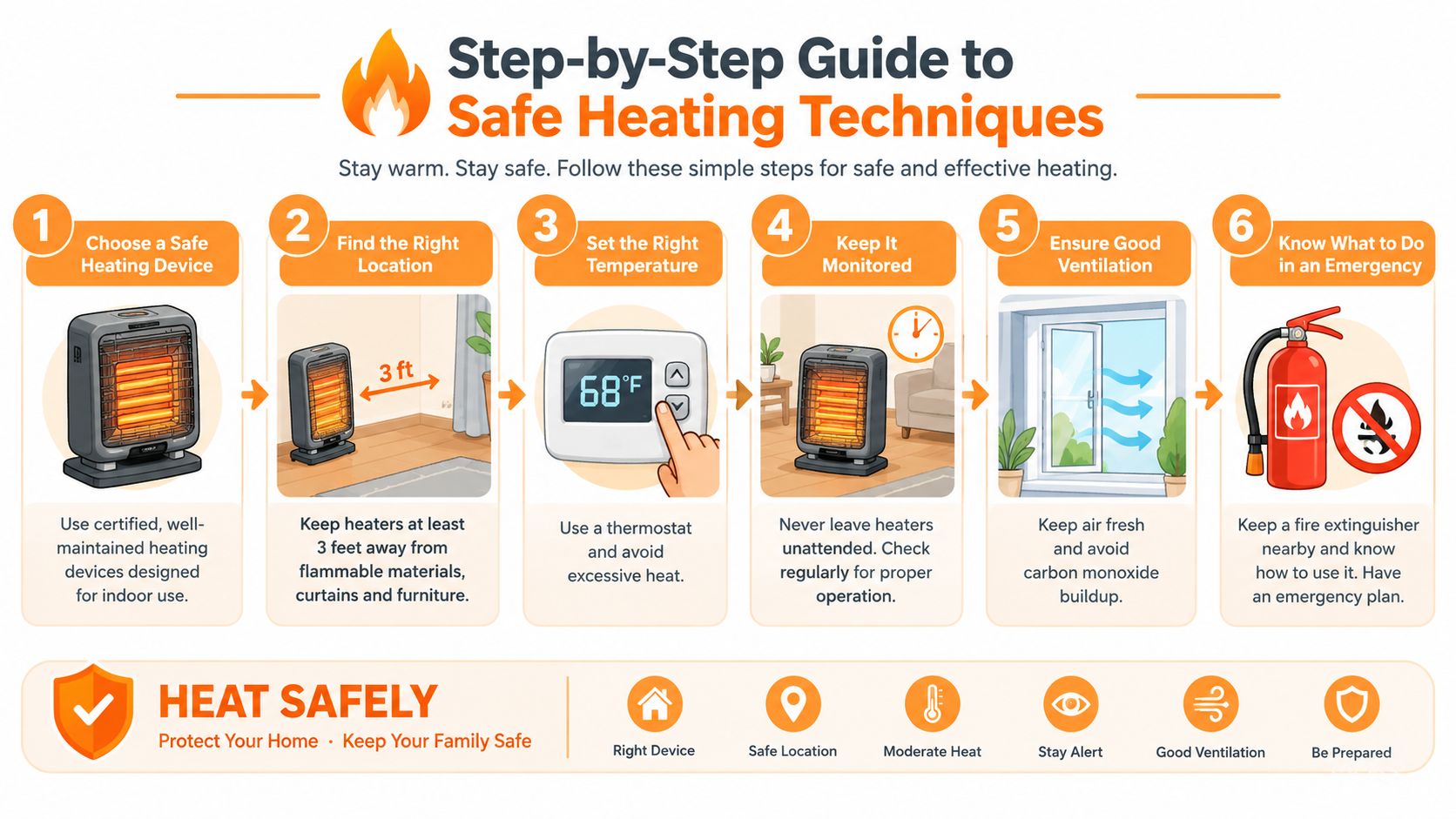
- Inspect the wrap. Check the fabric, seams, closures, and fill distribution. Don't heat a pad with a tear, leaking seam, exposed fill, or a strong burnt odor.
- Place it flat. Keep the wrap unfolded and away from the microwave walls. A folded or tightly rolled pad can trap heat in a small area.
- Use the labeled setting. Follow the product's stated microwave power and timing. If your oven has much higher power than the instructions assume, use caution and consult the manufacturer instead of extending a remembered cycle.
- Pause and redistribute. Halfway through the cycle, stop the microwave and rotate the pad. Gently shake, knead, or massage it so the fill doesn't remain in one compacted pocket.
- Rest before touching skin. When the cycle ends, leave the pad closed but allow it to stand briefly so heat can move from warmer regions into cooler ones. Then redistribute the fill again.
- Test the temperature. Hold the pad against the inside of your wrist or over a layer of clothing. Check several areas, not just the center. If any section feels sharply hot, set the pad aside and let it cool.
Keep a small cup of water in the microwave only if the product instructions specifically recommend that practice. Water can alter the microwave environment, but it isn't a universal safety fix and it won't correct a damaged wrap or an incorrect heating cycle.
Skin check: Warmth should feel soothing, not sharp, stinging, or difficult to tolerate. Remove the pad immediately if your skin becomes unusually red, numb, or painful.
For product-specific timing principles, consult SunnyBay's guide to how long to microwave a heating pad. Never leave a heating wrap unattended, and don't sleep with a freshly heated product against your body unless the manufacturer explicitly designs and labels it for that use.
The Role of Dual-Fabric Covers in Burn Prevention
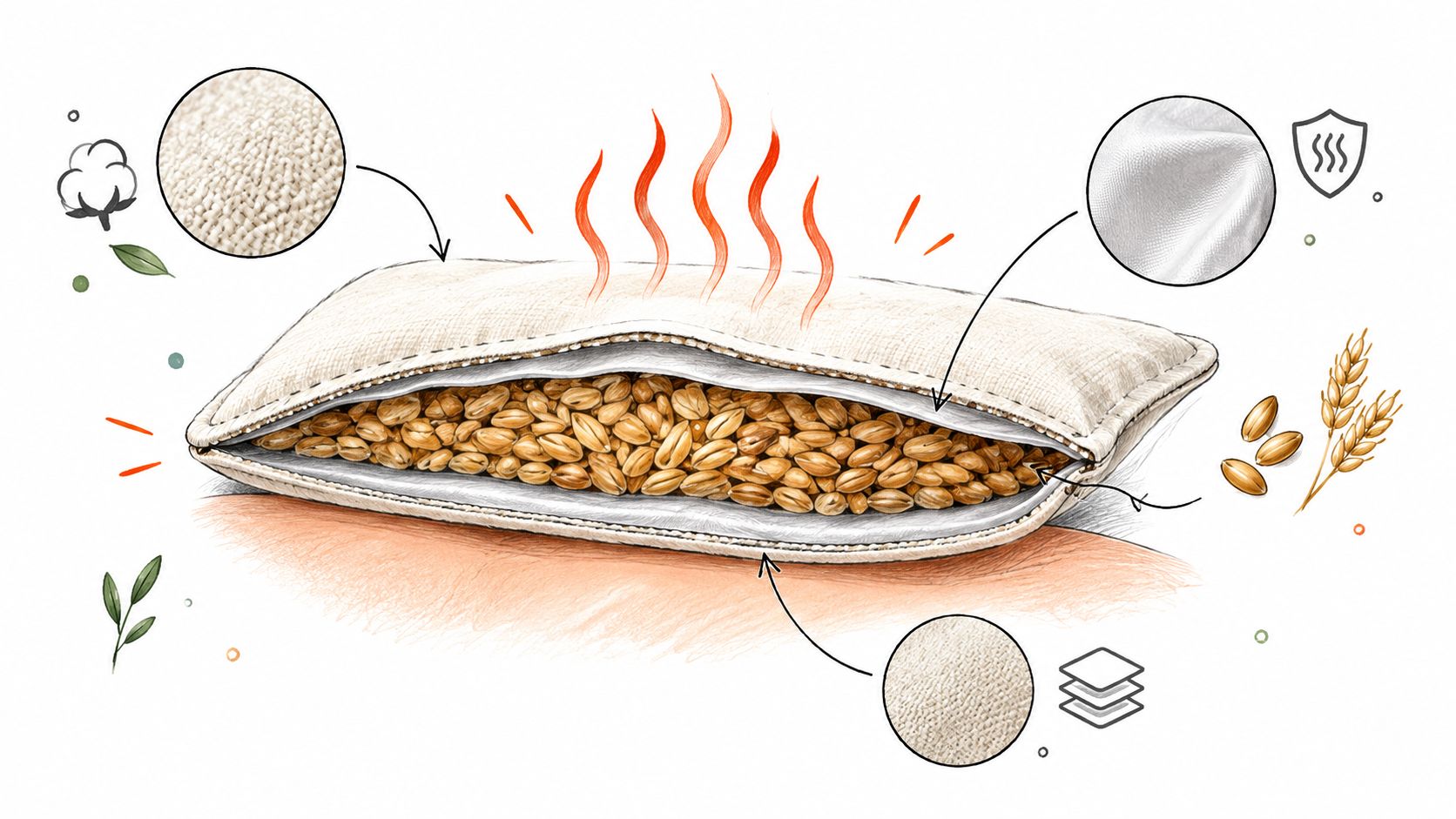
The fill generates and stores warmth, but the cover controls how that warmth reaches your skin. A dual-fabric design that combines soft fleece with breathable cotton can create a more comfortable thermal buffer than a single thin layer. The fabric doesn't eliminate hotspots, yet it can slow direct heat transfer and spread warmth across a broader contact area.
That buffering effect matters around the neck, shoulder, and eyes, where the wrap may press firmly against the body. A smooth cover can also reduce friction when you reposition the pad. Breathable cotton helps manage comfort during longer sessions, while fleece can feel softer against clothing or exposed skin.
Fit is part of temperature control
An ergonomic shape can keep the fill spread over the intended treatment zone. Elastic bands and hands-free features can reduce slipping, which means you won't need to fold or bunch the wrap to keep it in place. Bunching is a safety issue because it compresses fill into a smaller, hotter contact area.
Choose accessories that support stable positioning without adding pressure to a heated pad. For example, people who want a soft layer over their shoulders while resting may compare stretch-fit throw blanket options, but a blanket should never be used to hide an overheated wrap or prevent you from checking the skin.
A cover is not permission to exceed the manufacturer's heating instructions. Treat it as one layer of protection within a larger process: correct heating, redistribution, a standing period, and a careful temperature check. If the pad feels too hot through the cover, remove it. Extra fabric may delay your reaction without removing the underlying heat.
Product Care and Recognizing When to Replace
A reusable heat wrap changes with use. Oils, moisture, fabric fibers, and fill distribution can all affect how it heats. Store the pad dry and flat unless the manufacturer gives different instructions, and keep it away from sources of direct heat. Don't wash the main unit unless its care label specifically says that it's washable.
A removable cover can usually be handled according to its own care instructions. For a non-removable pad, spot-clean the outer fabric with a lightly damp cloth and let it dry completely before heating. Never microwave a damp product unless the manufacturer designed it for that purpose and provides instructions for doing so.
Warning signs that shouldn't be negotiated
Replace the pad or contact the manufacturer if you notice any of the following:
- Scorched odor: A burnt or toasted smell can indicate overheating of flax, fabric, or other internal components.
- Discoloration: Darkened fabric, singed seams, or a new brown patch signals heat damage.
- Hard or lumpy fill: Clumps can create concentrated zones that no longer redistribute normally.
- Leaking material: Stop using the product if seeds, sand, or other fill escapes through a seam.
- Damaged cover: Tears and weakened stitching can expose the fill or cause the wrap to bunch.
- Unexpected heating: A pad that develops unusually intense areas despite following the instructions needs inspection, not a longer rest.
A product that smells burnt has already given you useful information. Don't try to rescue it by reducing the next heating cycle.
Keep a simple habit of checking the pad before every use, especially after it has been stored for a while or used frequently. If you have reduced sensation, diabetes, circulation problems, or a recent injury, ask a clinician how to use heat safely and whether another treatment method is more appropriate.
SunnyBay offers reusable microwavable wraps, pads, eye masks, and other heat-therapy products designed for targeted areas such as the neck, shoulders, back, and hands. Review the product instructions and fill type before heating, then visit SunnyBay to choose a format that fits your treatment area and daily routine.


