


Lavender Eye Mask Guide: Benefits, Types and Use
-
The usual advice is to choose a lavender eye mask because lavender helps you sleep. That puts the fragrance ahead of the features that may matter more. Blocking light, providing controlled warmth, and carrying scent are separate jobs, and a mask doesn't necessarily do all of them.
Start with what you need: a darker bedroom, a warm-compress routine, or a pleasant bedtime ritual. Lavender scent has the least direct evidence for what it contributes inside an eye mask, so it's better treated as an optional preference than the reason to buy one.
Table of Contents
- What a Lavender Eye Mask Does for You
- Lavender Eye Mask Types Compared
- Materials and Fill Options Explained
- Does Lavender Scent Help You Sleep?
- Who It Fits
- Who Should Avoid Lavender Eye Masks
- How to Use a Lavender Eye Mask Step by Step
- Choose the Right Lavender Eye Mask for Your Routine
What a Lavender Eye Mask Does for You
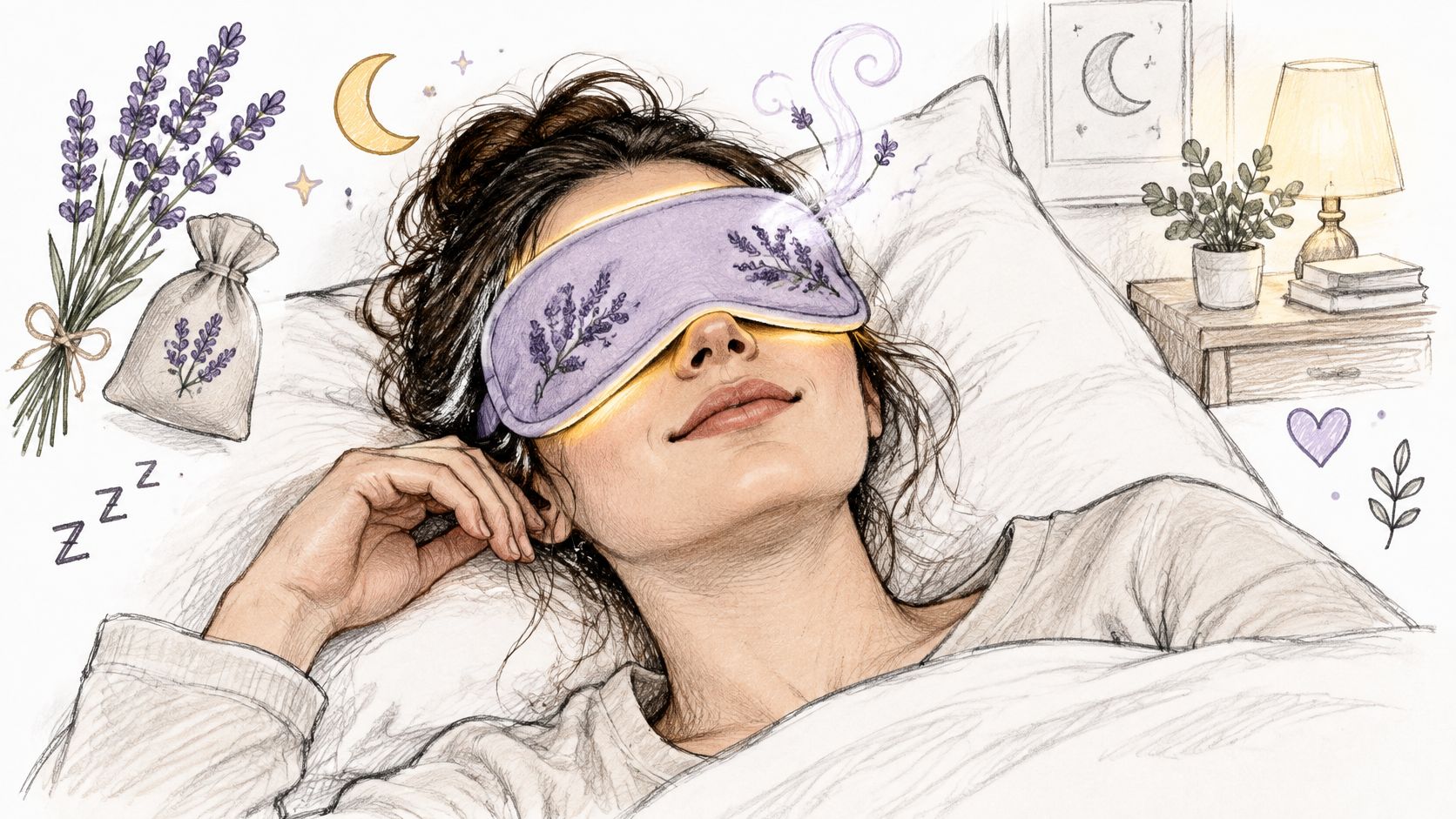
A lavender eye mask works like a portable curtain for your eyes. Say your partner reads in bed while you're trying to rest. An opaque, well-fitting mask addresses the light, whether or not it contains lavender.
In a pilot randomized trial involving hospital patients, participants using eye masks and earplugs had a mean sleep-quality score of 6.33 versus 5.09 in the control group, a statistically significant difference. Because the intervention included earplugs, the result doesn't isolate the mask's contribution or prove that a scented mask would work better.
Separate the jobs: Darkness addresses unwanted light. A heated model adds warmth. Lavender adds an aroma, not a guarantee of better sleep.
Warmth requires a mask specifically designed for heating. A soft sleep mask with lavender fragrance isn't automatically microwave-safe, and a warm-compress eye pillow isn't automatically suitable for overnight wear.
For more context on fragrance beyond bedtime, SunnyBay's guide to lavender and comfort discusses its role in relaxation. Choose the mask's construction first, then decide whether you want scent.
Lavender Eye Mask Types Compared
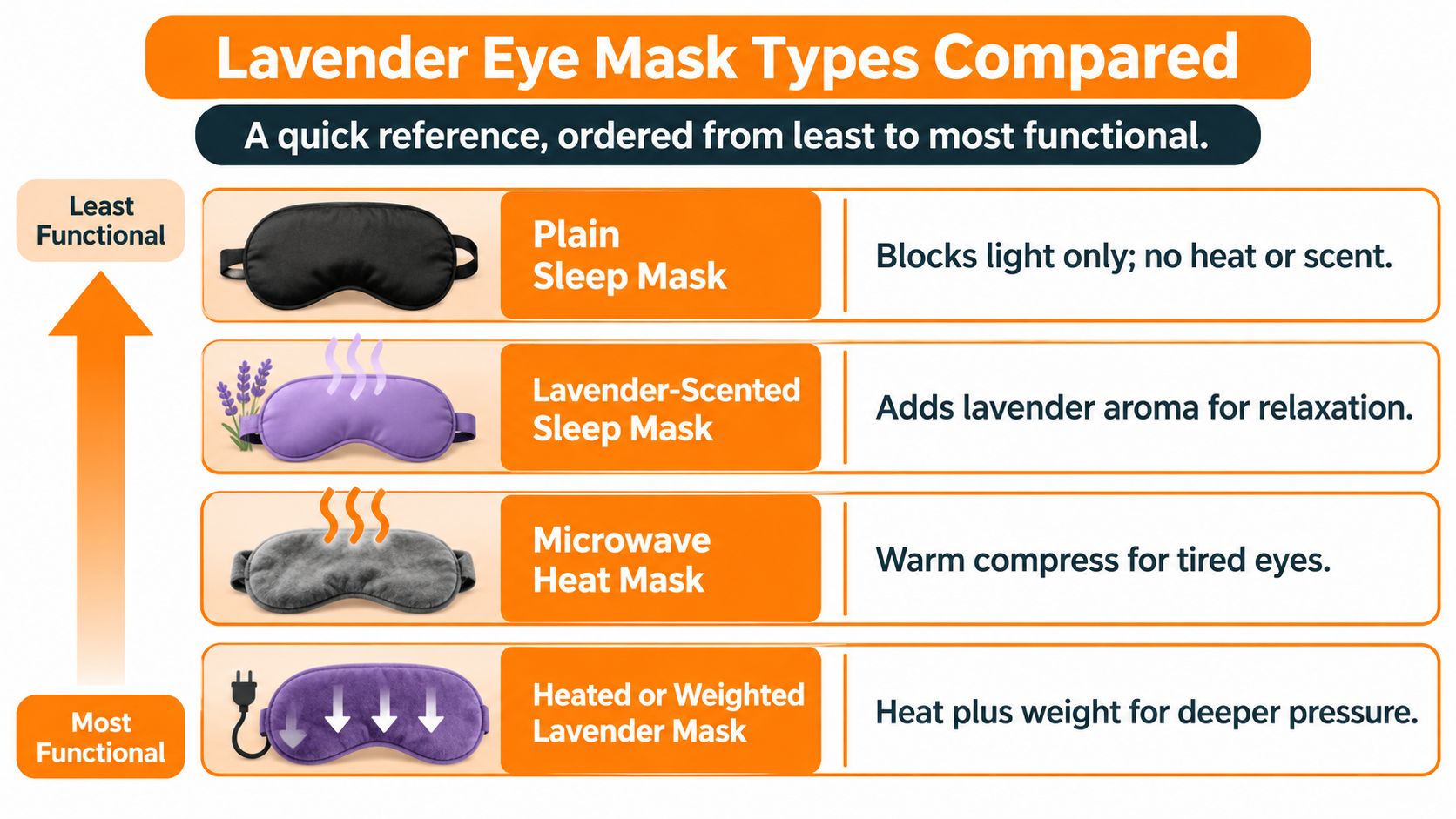
Use this quick reference to separate features that often get bundled under the same product name. The rows move from simple light blocking toward added scent options and heating functions, not from worse to better.
Lavender eye mask types by heat source, scent and best use
| Mask type | Heat source | Scent | Best for |
|---|---|---|---|
| Plain sleep mask | None | None | Light blocking only |
| Lavender-scented sleep mask | None | Lavender fragrance | Darkness plus a relaxing scent |
| Removable-scent mask | None | Lavender sachet that can be removed | Fragrance-sensitive users who still want the option |
| Microwavable mask | Microwave, heating time specified on the label | Lavender or none | Warm compress at home |
| Self-heating mask | Air-activated heat, single use | Lavender or none | Warmth without a microwave or power |
| USB-powered warming mask | USB power with temperature control | Unscented unless the label specifies added fragrance | Controlled warmth for dry-eye routines |
Choose by the job you need done. Treat scent as an option rather than a requirement.
Match the design to your routine
A plain sleep mask is the sensible starting point when stray light is the problem. Check whether it closes gaps around your nose without needing a tight strap.
A lavender-scented sleep mask suits someone who already enjoys lavender and wants fragrance alongside darkness. Don't assume that lavender in the product name means an aroma, though. It can also describe a fabric color, so read the materials and scent description.
With a removable-scent mask, look at where the sachet sits and whether it can be replaced. Removing it may not immediately remove fragrance already absorbed by the surrounding fabric.
Choose heat deliberately
A microwavable mask works well for a planned break at home. Its heating instructions must match the filling and your microwave; don't borrow a heating time from a different eye pillow.
A self-heating mask is convenient when you won't have access to a microwave or outlet. Check the sealed pouch and disposal instructions, and never try to reactivate it by microwaving it.
A USB-powered warming mask suits a routine where adjustable heating matters. Look for clear controls, cleaning instructions, and automatic shutoff rather than assuming every powered model performs alike.
The visual comparison offers a simplified overview of common designs.
Some microwavable masks can also be chilled, but only use that method when the product explicitly allows it. SunnyBay's cooling eye mask guide can help you distinguish cooling accessories from warm-compress products.
Before buying, ask: Does my mask need heat, scent, or both?
Materials and Fill Options Explained
The outer fabric determines what touches your face. The filling determines how the mask drapes and whether it can safely hold warmth or cold. Neither tells you, by itself, whether the product contains lavender.
Silk can feel smooth and lightweight, while cotton may suit someone who prioritizes straightforward laundering. Synthetic plush fabrics offer another texture, but washability comes from the care label, not the fabric name alone. A washable cover doesn't make the filled insert washable.
What's inside the mask
- Dry fill: Flaxseed and similar materials form a flexible eye pillow. Use only a heating-approved insert, and replace the inner pouch only if the design permits it.
- Gel fill: A sealed gel pack may be designed for warming, cooling, or both. Some aren't microwave-safe, so check the permitted heating method.
- Self-heating fill: An enclosed, air-activated mixture produces warmth after opening. Don't cut the pouch, wet it, or wash it as though it were a fabric sleep mask.
Scent may be incorporated into the filling, attached to the fabric, or contained in a separate sachet. A removable cover and removable scent insert offer different benefits, so check for both.
Before purchase: Find the cleaning instructions for the cover and the insert separately. If those instructions are missing, choose a product with clearer care information.
Check seams, filling distribution, and surface condition before use. Leaks, persistent clumps, or an unusual smell are reasons to stop and inspect the mask rather than heat it again.
Does Lavender Scent Help You Sleep?
You've probably heard that lavender helps you fall asleep. The more defensible claim is narrower: lavender inhalation may support relaxation and perceived sleep quality, but that doesn't establish that a lavender-scented eye mask treats insomnia.
A systematic review and meta-analysis of aromatherapy covered 34 studies and reported a pooled effect size of 0.6491 for improving sleep problems, with a 95% confidence interval of 0.542–0.757; among single-inhalation methods, lavender produced the largest effect. That effect size summarizes differences across study outcomes. It isn't a percentage improvement, a prediction of extra sleep, or a guarantee for an individual buyer.
Why aromatherapy evidence isn't mask evidence
Researchers have used different ways to deliver aroma, different concentrations, and different measures of sleep. A fabric mask with a fading scent doesn't necessarily reproduce those conditions.
There's also a difference between feeling that you slept better and sleeping longer. A pleasant bedtime experience can be worthwhile without establishing that the fragrance increases sleep duration.
- Reasonable expectation: You may enjoy lavender as part of winding down.
- Unproven expectation: A scented mask will reliably shorten the time it takes you to fall asleep or resolve persistent sleep problems.
- Buying implication: A stronger fragrance isn't evidence of a more effective product.
Keep the wider bedtime routine in view
If your bedtime varies, you're uncomfortable, or your room is distracting, fragrance alone won't address those practical problems. Choose an accessory that complements a workable routine rather than expecting it to compensate for everything else.
For broader ideas about preparing for rest, the Tip Top Furniture sleep tips from Tip Top Furniture & Mattresses offer a companion resource. Use that wider perspective to decide whether your priority is your sleep environment, your routine, or an accessory.
A lavender mask is a reasonable relaxation aid, not a sleep cure.
The evidence is promising enough to make scent an option for someone who likes it. It isn't strong enough to make lavender a required feature, especially when the mask's fit, cleaning requirements, or fragrance tolerance would make it uncomfortable to use.
Who It Fits
A warm eye mask may fit someone with evaporative dry eye associated with meibomian gland dysfunction, often shortened to MGD. These glands along the eyelids supply oil that helps limit tear evaporation. When they don't function well, an eye-care professional may recommend a warm-compress routine.
Warmth isn't the answer to every kind of dry eye. An ophthalmology discussion of warm-compress limitations distinguishes MGD-related problems from aqueous-deficient or inflammatory dry eye, which may require treatments such as tear substitutes or anti-inflammatory therapy.
Recognize symptoms without self-diagnosing
Gritty or burning eyes, crusting or oily residue along the lid edges, and discomfort that worsens later in the day can justify an eye examination. They don't confirm MGD on their own, and similar symptoms can have other causes.
- A diagnosed lid-gland problem: Ask how a warming mask should fit into your existing treatment and eyelid-care routine.
- Unexplained dryness or irritation: Get the cause assessed rather than choosing a mask by its dry-eye marketing.
- Pain, vision changes, or marked redness: Seek professional evaluation instead of experimenting with warmth.
For a prescribed warm-compress routine, temperature consistency, cleanliness, fit, and duration matter more than aroma. Lavender fragrance is not a proven dry-eye treatment, and a comfortable scent doesn't tell you whether a mask delivers appropriate warmth.
When scent is a preference
A person who enjoys lavender and tolerates it may choose a mild fragrance for relaxation. Someone who wants only eyelid warmth should be able to choose an unscented model without feeling they're missing the essential feature.
A meta-analysis of lavender essential-oil interventions included 11 randomized controlled trials involving 628 adults and found improved sleep outcomes, with a standardized mean difference of −0.56. That finding concerns essential-oil interventions and sleep, not treatment of blocked eyelid glands.
The practical fit is therefore specific: choose a warming mask for a suitable warming routine, a sleep mask for light control, and fragrance only when you want it. Persistent symptoms deserve an assessment rather than repeated changes of mask.
Who Should Avoid Lavender Eye Masks
People with fragrance sensitivity, scent-triggered migraine, asthma or respiratory irritation, eczema, or a known fragrance allergy should approach the scented version cautiously. For children and during pregnancy, check with an appropriate healthcare professional before introducing lavender exposure, rather than assuming an adult relaxation product is suitable.
Natural doesn't mean risk-free. The National Center for Complementary and Integrative Health notes that lavender aromatherapy may cause headache or coughing, while topical lavender products can cause allergic skin reactions; it also says lavender's effects on sleep quality and insomnia remain unclear.
Know what kind of exposure you're choosing
Breathing a fragrance and placing lavender-containing material against your skin are different exposures. A sachet can release aroma without touching your eyelids, while scented fabric or leaking filling can create direct contact with facial skin.
Don't add essential oil directly to the eye-facing surface to refresh an aging scent. That changes the product's exposure and can bring oil close to your eyes. Use only the manufacturer's intended replacement system.
Remove the mask and stop using it if you notice:
- Headache or migraine symptoms: Don't keep wearing it to see whether you adapt.
- Coughing or throat irritation: Move away from the scent and avoid another exposure.
- Itching, redness, or swelling: Stop contact with the scented material.
- Wheezing or other breathing symptoms: Seek medical help, urgently if breathing is difficult.
You don't need to tolerate an unpleasant scent to benefit from an eye mask.
An unscented mask is the clearest choice when lavender is a known trigger. A removable sachet can offer flexibility for someone without a known allergy, but it doesn't guarantee that the remaining fabric is fragrance-free.
Heat requires its own precautions, too. If you have reduced ability to sense temperature, recent eye surgery, or an active eye condition, get guidance before using a warming mask, regardless of whether it contains lavender.
How to Use a Lavender Eye Mask Step by Step
Start by identifying whether you have an ordinary sleep mask or a heating-approved compress. Never microwave a mask just because it looks like a filled eye pillow.
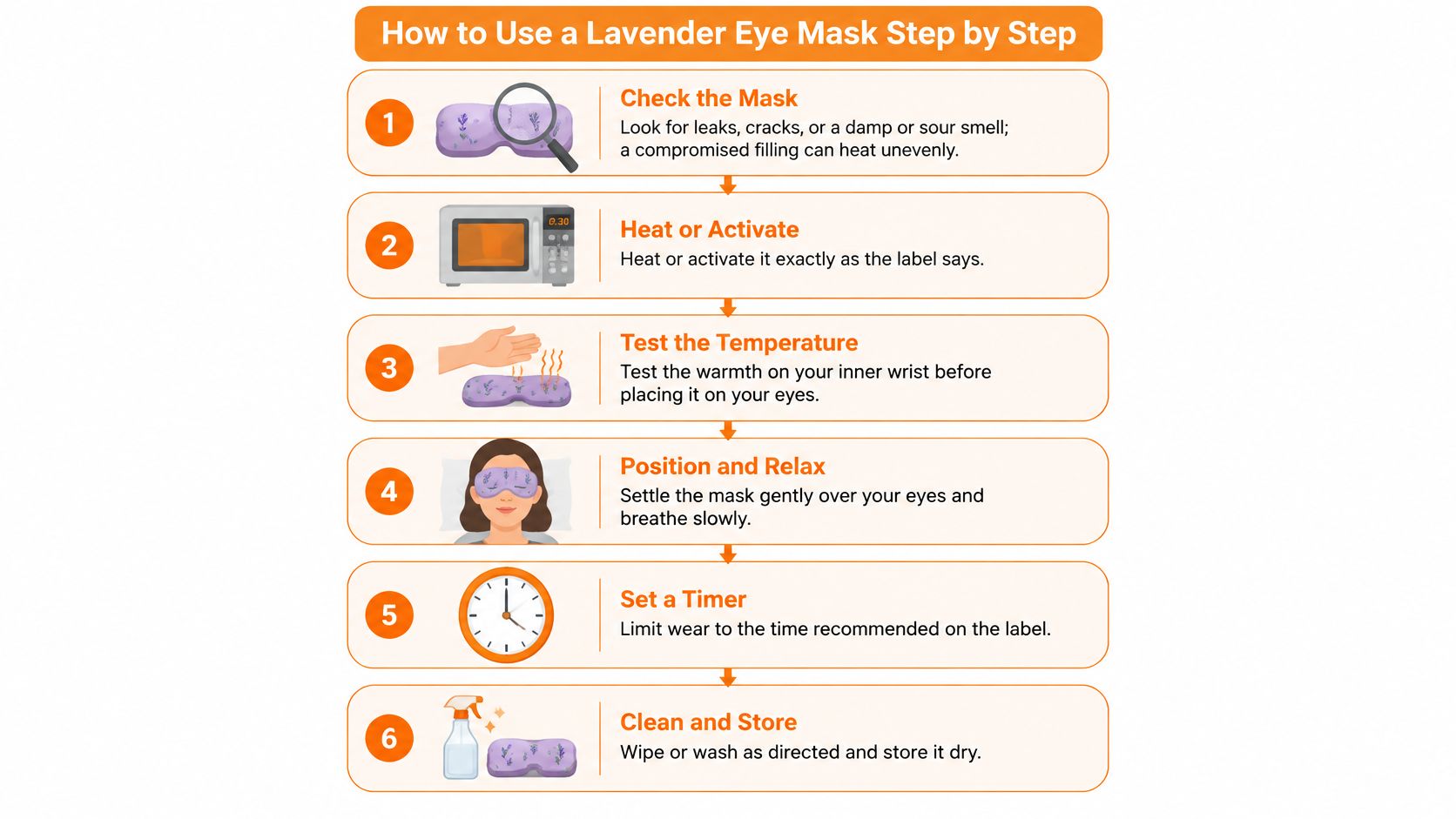
Use this visual reminder alongside the instructions for your particular product.
Prepare and position the mask
- Inspect it first. Check for leaks, split seams, cracks, dampness, and sour smells. Don't heat a damaged or questionable insert.
- Heat or activate it correctly. Follow the label's method and microwave-wattage instructions. Don't microwave an air-activated or powered mask, and don't improvise repeated heating cycles.
- Test the surface. Check the warmth against your inner wrist before placing it on closed eyelids. It should feel comfortably warm, not hot; a wrist check is a precaution, not a measurement of eyelid temperature.
- Settle it gently. Remove contact lenses before a warm-compress session unless your eye-care professional has instructed otherwise. Recline, close your eyes, and adjust the strap so the mask rests without pressing into the eyeballs.
Time the warmth and finish safely
A review of warm-compress therapy identifies approximately 40 °C at the eyelid as a therapeutic target and describes applications lasting 5–20 minutes, with useful sustained heat for at least 10 minutes being a relevant performance consideration. These values describe controlled therapeutic warming, not permission to exceed your product's instructions or your clinician's advice.
- Set a timer and remain awake. Use the duration appropriate to your mask and treatment plan. More heat or longer wear isn't automatically better.
- Stop for discomfort. Remove the mask if you experience pain, redness, or blurred vision. Never apply an overheated compress directly to your lids.
- Clean and dry it. Wash removable covers as directed, wipe only approved surfaces, and allow everything to dry fully. Store the mask away from direct sun and discard or replace damaged, leaking, or persistently smelly components.
SunnyBay's hot compress for eyes guide provides additional context for building a warm-compress routine.
For a video companion to these written instructions, use the player below and keep your own product label as the authority.
Choose the Right Lavender Eye Mask for Your Routine
Buy the feature you'll use, not the longest feature list. For a clinician-recommended warming routine, a reusable microwavable mask may be a practical starting point if heating, cleaning, and drying it fit your evening.
Before purchasing, check:
- Primary purpose: Darkness, controlled warmth, or optional aroma.
- Everyday handling: Required heat source, clear instructions, and storage.
- Comfort and hygiene: Nose and temple fit, contained filling, and a cleanable cover.
- Flexibility: Removable scent and a return policy that lets you assess suitability.
Compare descriptions as carefully as prices. Sonoma Lavender's Red Cardinal lavender sleep mask was listed at $24.95 in 2026, while Ulta Beauty's Drowsy Lavender Haze Original Silk Sleep Mask was listed at $85.00 in 2026; sleep-mask pricing alone doesn't establish heating capability or lavender fragrance.
Our Dry Eye Therapy Eye Mask, Reusable Microwavable Odorless Heat Therapy, Purple is $15.98. Its odorless description is an important distinction for anyone seeking warmth rather than scent.
For help considering other bedside accessories, consult the sleep accessory advice from Gorins from Gorins Furniture & Mattress. Then select the mask that addresses your actual need, test any permitted warmth on your wrist, and begin with a short, label-approved session.
SunnyBay offers reusable microwavable eye masks and other targeted heat-therapy accessories for home routines. Visit SunnyBay to compare eye-care options and choose a mask by its heating method, care requirements, and scent description rather than color or fragrance alone.


