


Hot Compress for Eyes: Benefits and Safe Use
-
You've spent the day switching between spreadsheets, messages, and video calls. By evening, your eyes feel gritty, tired, and oddly watery, so you reach for artificial tears and hope tomorrow feels better. A hot compress for eyes offers a different approach. Instead of only adding moisture to the eye's surface, it uses controlled warmth to support the eyelid glands that help keep your tears from evaporating too quickly.
Warm compress therapy isn't merely a relaxing ritual. Research describes it as a measurable, short-term physiological treatment for dry eye and meibomian gland dysfunction, or MGD. The right temperature and application time can improve tear quality, while repeated use may ease symptoms and support healthier gland function. (Evidence review on warm compress therapy)
Table of Contents
- Why Your Eyes Crave Targeted Heat Therapy
- The Science of Meibomian Gland Expression
- Choosing the Right Hot Compress Delivery Method
- Safe Application and Timing Guidelines
- Building a Sustainable Daily Eye Care Routine
- Investing in Long-Term Ocular Health
Why Your Eyes Crave Targeted Heat Therapy
After a long screen session, your eyes may feel dry, gritty, or watery because the tear film is breaking up too quickly. Screen use can reduce blinking or make each blink incomplete, leaving the eyelid margins less effective at spreading the tear film. Artificial tears coat the surface for a time, while a warm compress works on a different part of the system: the oil-producing glands within the eyelids.
A clean, comfortably warm mask or cloth placed over closed eyelids transfers heat toward the lid margins. That warmth can soften thickened oils in the meibomian glands, helping them move toward the openings more readily. The oil forms the tear film's outer layer, slowing evaporation and helping tears spread across the eye.
The practical idea: warmth changes the physical behavior of eyelid oils. It isn't just making tired eyes feel relaxed.
Heat retention determines how well this approach works. A thin towel may feel warm at first, but water evaporating from its surface and the fabric cooling against the skin quickly reduce the temperature. A purpose-built eye mask can hold warmth more evenly and maintain contact across both eyelids, rather than leaving some areas heated and others barely reached. For meibomian gland therapy, that steady coverage resembles warming butter evenly in a pan instead of touching one edge with a warm cloth.
Dry eye affects people across many settings and age groups, so accessible supportive care remains relevant. A 2026 systematic review reported a global pooled dry-eye prevalence of 34.6%, while an earlier Bayesian analysis estimated worldwide prevalence at 11.59%. The estimates differ because researchers used different definitions, populations, and methods. (Global dry-eye prevalence review)
What warm compress therapy actually targets
Warmth is most relevant when the eyelid margins and meibomian glands contribute to evaporative dry eye. In this form, tears disappear too rapidly because their protective lipid layer is insufficient or unstable.
Heat is not appropriate for every irritated eye. Sudden injury, marked swelling, significant pain, discharge, or a change in vision should be assessed by an eye-care professional rather than treated at home. Chronic gland-related discomfort may respond to warmth, but cosmetic puffiness has a different purpose and may have a different cause. For broader routines, this guide to morning after puffy eye treatments may be useful.
The Science of Meibomian Gland Expression
Along the edges of both eyelids, rows of meibomian glands release meibum, an oily secretion added to the tear film with each blink. This oil forms the outer layer, helping tears spread across the cornea and slowing evaporation.
If meibum thickens or gland openings become blocked, less oil reaches the eye's surface. Tears may break up sooner, causing scratchiness, burning, fatigue, or reflex watering. Extra watery tears can ease the sensation briefly, but they do not replace the missing protective lipid layer.
Meibum behaves much like butter. In a cool kitchen, butter stays firm and resists spreading. Gentle heat softens it, making movement easier. A hot compress does not mechanically empty the glands. It warms the eyelids so natural blinking and carefully performed lid massage can move more fluid secretions.
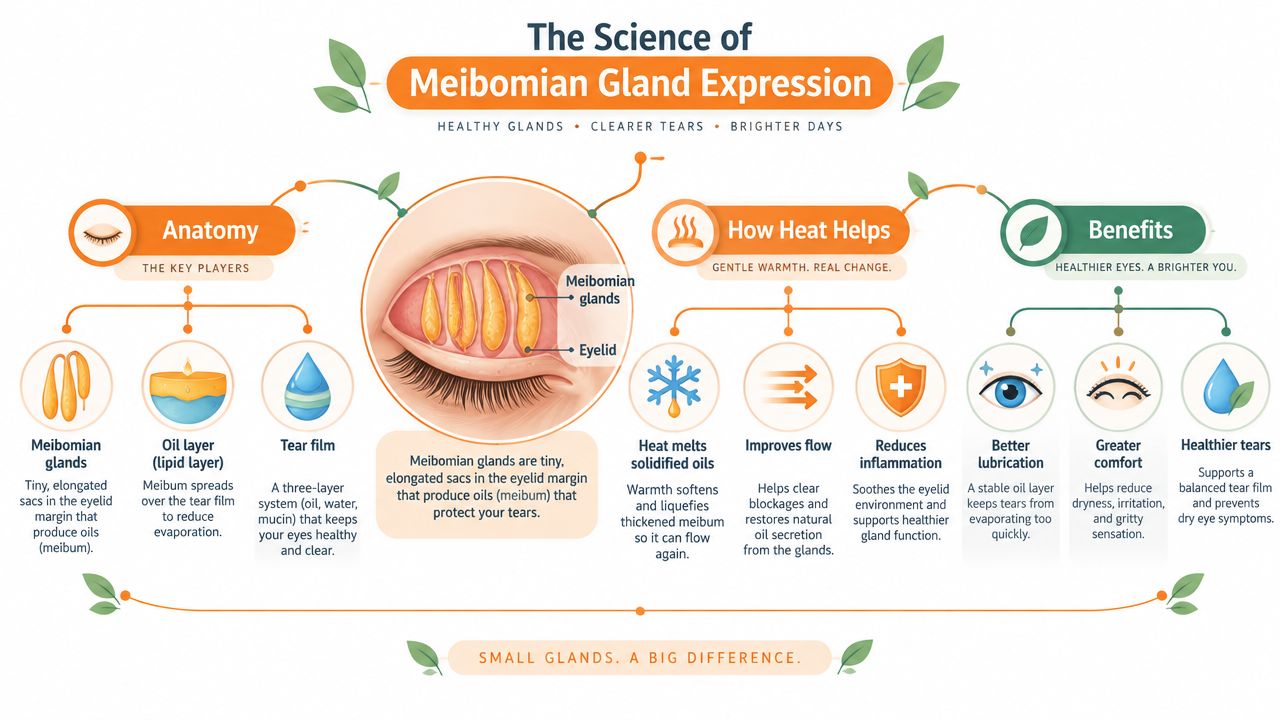
Why temperature and coverage matter
Effective therapy depends on controlled, even warmth, not making the eyelids feel hot. A review of warm-compress studies identified an eyelid temperature near 40°C and found that one application lasting 5 to 20 minutes could significantly improve tear quality. Repeated use may also ease dry-eye symptoms and support meibomian gland function. (Clinical review of warm compresses)
Heat may widen nearby blood vessels through vasodilation, increasing local blood flow. For meibomian gland dysfunction, the more direct target is the gland secretion and the lipid layer that helps stabilize tears.
One clinical study reported that warm, moist compresses increased tear-film lipid-layer thickness by more than 120% after 5 minutes, while extending treatment to 10 minutes produced only an additional 11% gain. The finding suggests that much of the measurable response occurred early, provided the eyelids stayed evenly warm.
A towel that cools quickly can interrupt this process. A specialized mask holds heat against both lids more consistently, like a covered pan keeping butter soft instead of a brief touch from a warm cloth. That heat-retention difference helps explain why mask design matters for gland therapy, not only comfort.
For further guidance, this resource on dry eye syndrome relief discusses related supportive care. A compress can assist the oil layer, while a broader plan may include regular blinking, environmental adjustments, lid hygiene, and an eye examination.
Choosing the Right Hot Compress Delivery Method
A patient may begin with a warm towel because it is easy and inexpensive. The practical question is whether it stays warm and evenly positioned long enough to soften the meibum inside the eyelid glands. Comfort matters, but consistent heat is the feature that supports this goal.
A damp cloth transfers heat readily into the air, fabric, skin, and surrounding room. As it cools, the eyelids receive less warmth, and the cloth may need repeated reheating. Each interruption can make the temperature uneven, with one part of the lid warmer than another. A towel is still a reasonable way to try heat therapy, especially for occasional use.
A microwavable dry mask uses a heat-holding filling, such as flax seed or lava sand, within a shaped cover. It rests across both eyelids, spreads warmth over a broader area, and leaves the hands free. Reusable masks in this category may retain warmth for up to 30 minutes, according to the publisher's product information. A session does not need to last that long to be useful.
The physics is similar to covering a pan instead of touching it briefly with a warm cloth. The cover slows heat loss, while the shaped mask helps keep the eyelid surface in contact with the warm material. That combination can make treatment easier to repeat, although it does not by itself prove better gland results.
Electronic heating devices provide another approach. Their main strength is temperature control when the design maintains a stable setting. They also introduce charging, cleaning, fit, and operating requirements. More controls do not automatically produce better clinical outcomes.
| Method | Heat Retention | Convenience | Best For |
|---|---|---|---|
| Warm, moist towel | Cools quickly and may need rewarming | Simple, but requires attention | Occasional use or trying the therapy before buying a mask |
| Microwavable dry eye mask | Holds warmth more consistently, depending on filling and preparation | Hands-free and reusable | Regular MGD-focused routines |
| Electronic heating device | Designed for controlled, sustained warmth | Convenient when charged and correctly maintained | Users who prioritize temperature consistency |
Does a specialized mask always win?
A 2025 systematic review found that eyelid-warming devices didn't significantly outperform warm towel compresses on overall efficacy. It did find that warming devices significantly improved OSDI symptom scores and noninvasive tear break-up time compared with controls. Evidence was insufficient to conclude that moisture-chamber devices outperform warm compresses. (Systematic review of eyelid-warming devices)
The distinction is useful: a mask may offer steadier coverage and easier preparation without being universally more effective. If a towel is the available option, rewarm it as needed and keep the warmth comfortable. If reheating causes skipped sessions, a reusable mask may fit the routine better.
One option is the SunnyBay dry eye therapy eye mask, designed for microwavable warm-compress use. Compare products by fit, instructions, cleanability, and ability to provide gentle, even heat, rather than appearance alone.
Safe Application and Timing Guidelines
Eyelid skin is delicate tissue, so a compress should provide controlled warmth rather than the intensity used for ordinary heating pads. Aim for a gentle, soothing sensation at the closed eyelids. Microwave instructions differ by product, and excessive heating can create hot spots even when the outer cover seems tolerable.
A careful home protocol
- Wash your hands. Clean hands reduce the transfer of debris and microorganisms to the eyelid area.
- Prepare the compress as directed. For a microwavable mask, follow the manufacturer's heating instructions exactly. Do not add extra heating time by guesswork.
- Test the temperature first. Press the mask against the inside of your wrist. If it feels too hot there, let it cool. A compress that feels painful or burning should never touch the eyelids.
- Close both eyes and position the mask gently. It should rest over the lids without pressing firmly on the eyeballs. Adjust the fit so warmth reaches the upper and lower lid margins evenly.
- Keep the treatment window focused. Warmth begins affecting the oils in the meibomian glands during the early part of a session. A practical starting range is 5 to 10 minutes, unless your optometrist gives different instructions. Longer sessions may add little benefit while increasing the chance of overheating or irritation.
- Remove the mask and pause. If an eye-care professional has recommended massage, follow with very gentle movements. Stop if you notice pain, burning, worsening redness, or visual disturbance.
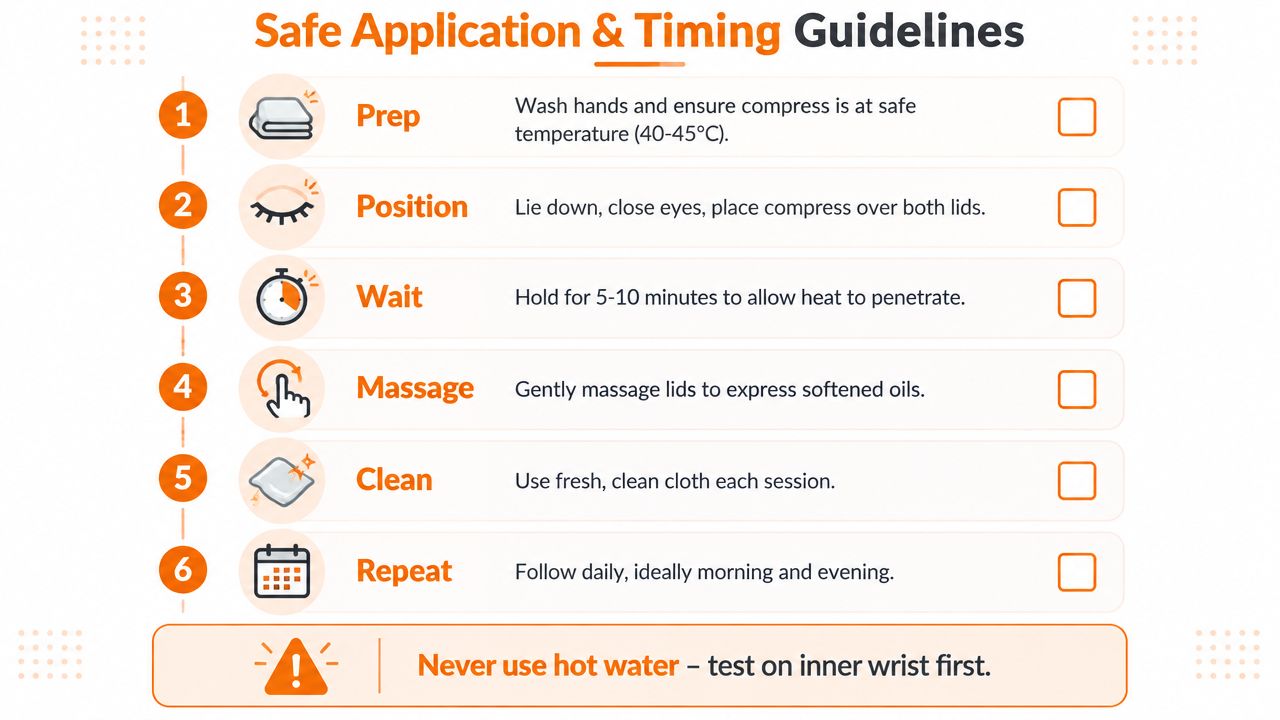
Safety rule: Never use boiling water, an overheated mask, or a chemical heat pack directly against closed eyelids.
A clean towel remains a reasonable option. Wet it with plain warm water, wring it until damp, and rewarm it whenever it loses heat. Because fabric cools quickly, repeated reheating may interrupt the treatment window. A purpose-built mask can retain warmth more evenly, but it still requires temperature checks and careful handling.
Keep essential oils, herbs, salts, and other additives out of the water. They can irritate the eyes and eyelid skin without improving the heat mechanism.
For general precautions around heat-producing devices, review this guide to heating pad safety. Seek medical care for severe pain, sudden vision changes, marked swelling, significant discharge, or symptoms that do not settle with appropriate care.
Building a Sustainable Daily Eye Care Routine
A warm compress is easier to maintain when it follows an existing habit. Try it after washing your face in the morning or before bed, at a time you can repeat without rushing. Ongoing eyelid-gland problems generally need regular management, not a single relaxing session after discomfort becomes distracting.
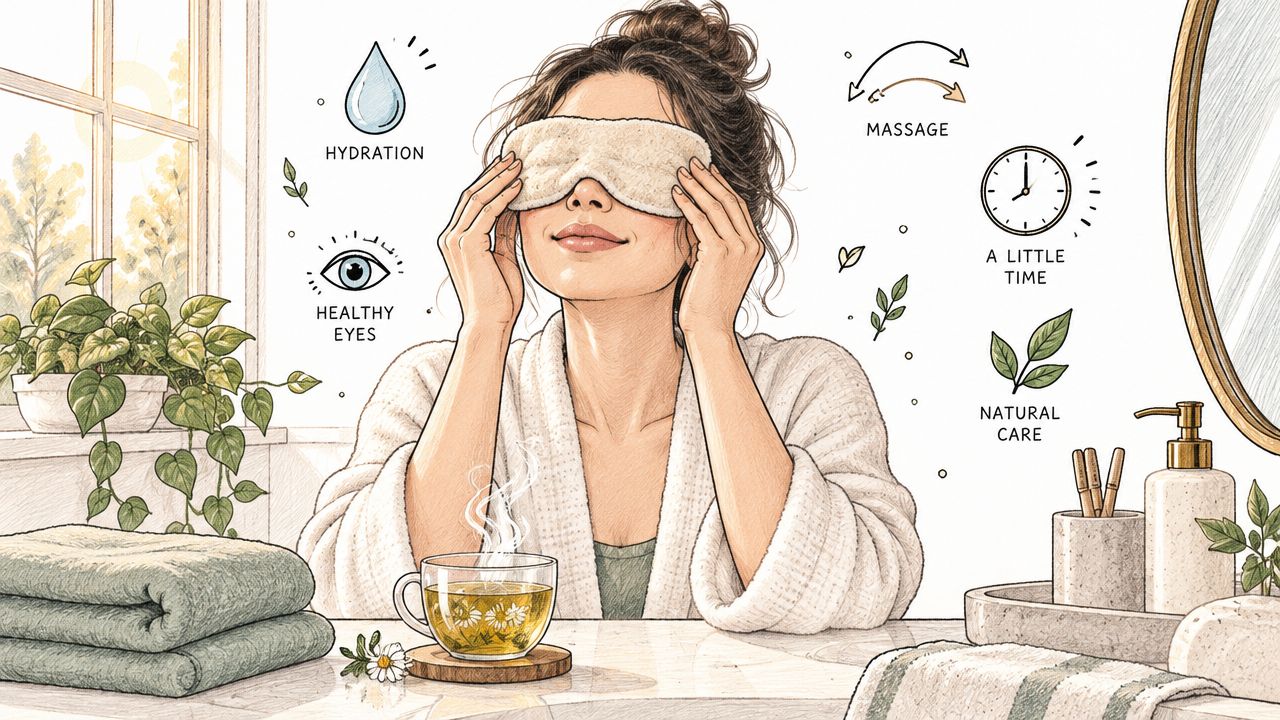
A simple morning or evening sequence
Begin with clean hands and a clean compress. Place comfortable warmth over closed eyes, then remove it without rubbing. If an eye-care professional has recommended massage, use light pressure along the eyelids toward the lash line. The purpose is to assist gentle expression, not to squeeze the glands forcefully.
Clean the eyelid margins afterward with the product or method recommended by your optometrist. This removes loosened oil and debris near the lashes. Avoid aggressive scrubbing, household soap, fragranced products, or unapproved ingredients around the eyes.
A routine can fit different parts of the day:
- Morning option: Use the compress before makeup or contact lenses, clean the lid margins, and give the eyes time to settle.
- Evening option: Apply it after screen work, then follow with any recommended massage and eyelid hygiene.
- Screen support: Take regular blink breaks and complete full blinks. Heat supports the glands, while blinking spreads the tear film across the eye.
- Environment check: Limit direct airflow from fans or vents, and observe whether smoke, dust, or dry indoor air worsens symptoms.
A clinical trial in the evidence literature compared disposable eyelid-warming masks with hot towels during twice-daily treatment over 12 weeks. Researchers assessed symptoms, tear break-up time, corneal staining, and gland function at the start, 4 weeks, and 12 weeks. These measures show why a routine should be judged by both comfort and changes in the tear film or glands, rather than by warmth alone. (Evidence review of warm compress treatment)
Heat retention also affects consistency. A towel cools as water evaporates, so reheating can interrupt the treatment window. A purpose-built mask may hold warmth more evenly, but temperature checks and careful handling still matter. Choose the method you can use safely and repeat reliably.
A routine should support professional care, not replace it. Persistent symptoms may reflect MGD, blepharitis, allergy, medication effects, contact-lens wear, or another condition. An optometrist can assess the cause and adjust treatment.
Here's a visual demonstration to reinforce the sequence and positioning:
Investing in Long-Term Ocular Health
Eye drops can provide quick surface lubrication, but they do not directly warm or express the eyelid glands that supply the tear film's protective oil. A well-used hot compress for eyes works closer to the source. Heat softens thickened meibum, helping it move through the glands more freely.
The cost or appearance of a device does not determine whether it suits you. Evidence suggests that warming devices may improve some symptoms and aspects of tear stability, while their overall results do not consistently exceed those of a warm towel. Research has not established which heat format offers the greatest long-term durability or value, so prioritize safe temperature, even contact, comfortable fit, simple cleaning, and a design you will use regularly.
A reusable mask may be practical if a towel cools quickly, needs repeated reheating, or makes the routine difficult to maintain. Natural-fill masks and washable covers can reduce disposable waste, although their environmental effect depends on manufacturing, care, and disposal. Electronic models may appeal to people who want temperature regulation, provided they follow the cleaning and charging instructions.
A clinical trial registry entry reports that a USB-powered warm compress slightly outperformed a self-heating eye mask for gland function and satisfaction, with no serious side effects reported in that entry. This comparison is useful, but it does not show that one format suits everyone. (Clinical trial registry entry)
Choose the method you can apply safely and repeat consistently. Begin with a brief, comfortable session, notice whether grittiness or tiredness changes, and arrange an eye examination if symptoms persist, worsen, or involve pain or vision changes. Ongoing symptoms can require treatment for a condition beyond dry eye.
SunnyBay offers reusable microwavable dry-eye therapy masks and other heat-therapy products designed for targeted, hands-free warmth. Visit SunnyBay to review the eye-mask options and choose a format that fits your routine.


