


Shoulder Pain After Sleeping on Side: Causes and Relief
-
Your alarm goes off, you roll onto your back, and there it is again. A dull ache in the shoulder you slept on, a bit of stiffness when you reach for your phone, mostly gone by the time you're dressed. By evening you've forgotten about it. Then you lie down on that same side and the whole cycle restarts.
Waking with a sore shoulder is common, and it's rarely evidence that you damaged something overnight. What it usually tells you is that a shoulder was already sensitive enough for several hours of body weight to make itself felt. The useful question isn't "did I sleep wrong?" but "why is this shoulder sensitive in the first place?"
The answer changes what you should do next. Below, you'll match your pain pattern to a likely cause, learn what sustained pressure does to the tendons, work through a repositioning routine you can test tonight, and finish with a seven-day check that tells you whether to keep going at home or book an appointment.
Table of Contents
- Match Your Pain to a Likely Cause
- Why Side Sleeping Irritates the Shoulder
- How to Reposition Your Shoulder Tonight
- Heat, Movement and Other Relief Options
- What Happens at a Shoulder Evaluation
- Warning Signs and Your Seven-Day Check
Match Your Pain to a Likely Cause
Shoulder pain is one of the most ordinary complaints in medicine, not a rare reaction to a bad pillow. A 2022 systematic review of 61 community-based studies found a median shoulder-pain prevalence of 16.0%, with individual estimates ranging from 0.67% to 55.2%. Wake up with an aching shoulder and you're in a very large group of people doing the same thing.
That same review is careful about blame. Its authors report that a large occupational-cohort analysis cited by the CDC found no consistent harmful association between preferred sleep posture and pain in the glenohumeral joint (the ball-and-socket itself) or rotator-cuff tendinopathy. They also note that people with pain tend to change position, which makes the relationship look stronger in reverse than it really is. Side sleeping is best understood as a symptom aggravator, not a proven universal cause.
So the pattern your pain makes matters far more than which side you slept on. Use the table below to find the row that sounds most like your morning.
Shoulder pain patterns and likely causes
| Pattern you notice | Likely cause | What it suggests | First move |
|---|---|---|---|
| Ache on the side you slept on that eases within 30 minutes of moving | Pressure and stiffness from lying on the shoulder | Mechanical and usually temporary | Change position and move gently |
| Pain on reaching overhead or lifting from the side, worse at night | Rotator-cuff irritation or tendon strain | Structural, may persist | Limit overhead load and get assessed if no improvement in two weeks |
| Pain running from neck to shoulder, stiff when turning the head | Neck-related referred pain or muscle guarding | Muscular, neck involved | Support the neck, use gentle warmth and range-of-motion work |
| Gradual loss of outward rotation over weeks, dull pain at rest | Possible frozen shoulder | Joint capsule stiffening | Clinical evaluation |
| Sudden weakness, visible deformity, fever or chest symptoms | Possible injury or systemic illness | Urgent | Seek urgent medical care |
How to read this table: these rows describe patterns, not diagnoses. Two people with identical morning aches can have completely different tissues involved, which is why the next step is a test you run on yourself rather than a label you apply.
If your row points toward tendon trouble, our guide to rotator cuff recovery explains how graded loading works once the acute soreness settles. For now, hold your row in mind. The rest of this article is about testing whether pressure is the main driver or whether something else is being uncovered.
Why Side Sleeping Irritates the Shoulder
The shoulder has very little room to spare. The rotator-cuff tendons pass through a narrow tunnel between the head of the arm bone and the bony roof of the shoulder blade, like a cable threaded through a short pipe with millimetres of clearance. Lying on that side for hours compresses the soft tissue between your body weight and the mattress, and an arm that drops forward or rolls inward adds traction on tendons that are already working to hold the joint steady.
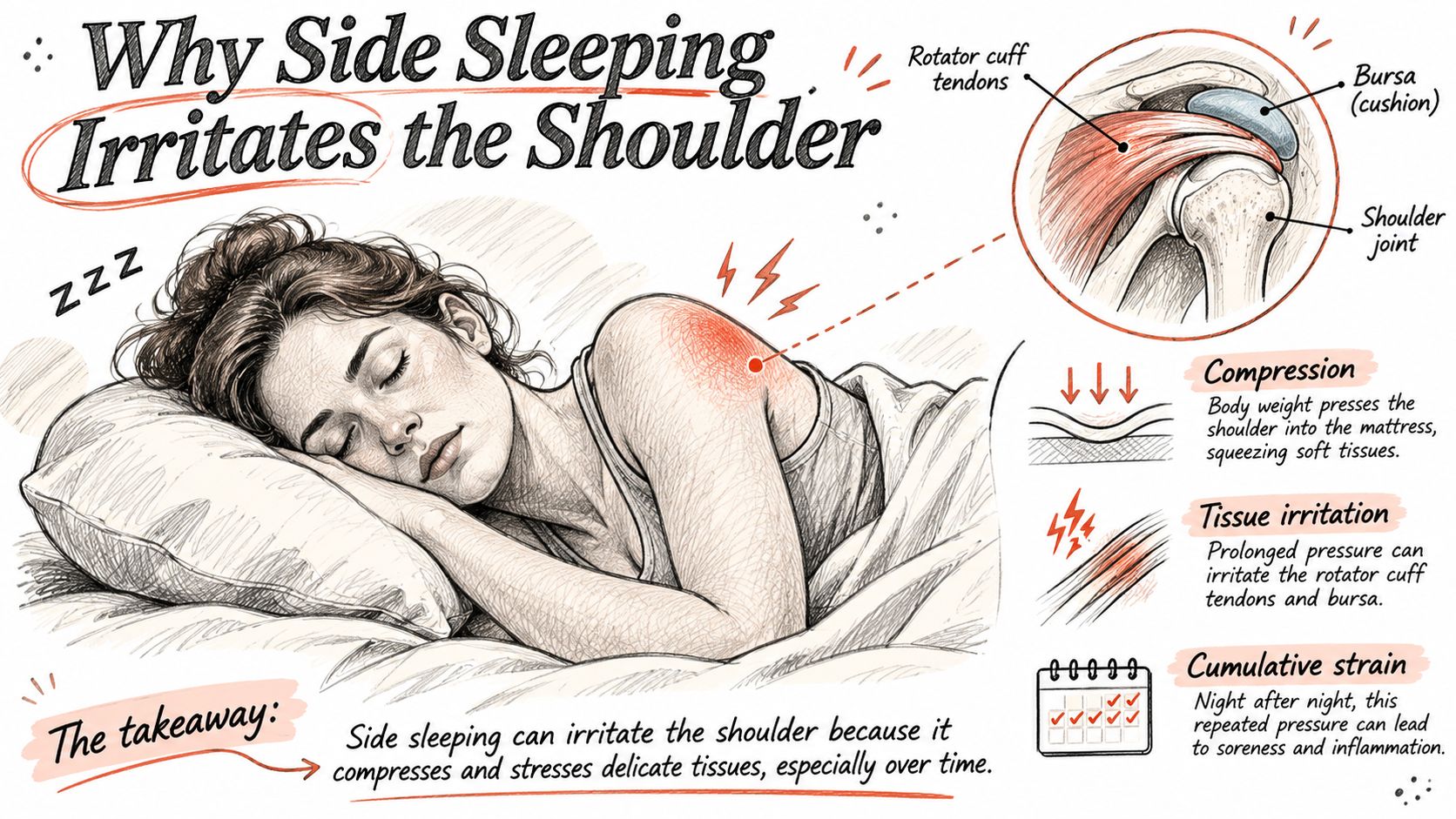
Here's how that plays out in a real week. Say you sleep on your left side with your left arm tucked under the pillow. Monday you wake with a dull ache that fades in the warm shower. Tuesday the same ache returns, slightly earlier in the night. By Thursday you're waking at 3 a.m. and rolling onto your back without fully registering why. Nothing tore. The tissue got a nightly dose of compression it doesn't tolerate well, and the pattern repeats because the position does.
If you'd rather see the mechanics than read them, this short walkthrough covers the same anatomy from a different angle.
Clinical studies hint at the link, though they can't prove cause. A 2024 study of 58 patients with rotator-cuff tears found that 52 preferred side sleeping, a proportion of 89.7%, with a statistically significant association at P < 0.0001. The authors are explicit about the limit: the sample consisted of people already diagnosed with tears, and patients with existing pain may have chosen or tolerated positions differently. A separate cross-sectional study of 83 Danish patients seeking chiropractic care for shoulder pain found roughly two-thirds slept on the painful side.
That leaves you with one question worth answering before you change anything: does this feel like pressure, or does it behave like a tendon problem? Pressure soreness is worst on first waking and eases with movement. Tendon trouble keeps announcing itself, especially on overhead reach and at night, long after you've got out of bed.
How to Reposition Your Shoulder Tonight
A small position change can show whether pressure is aggravating your shoulder. Keep the test simple: adjust one thing at a time, then compare how the shoulder feels in the morning.
- Keep the painful shoulder uppermost. Lying directly on it puts your upper-body weight through the shoulder for hours. If you tend to roll back onto it during the night, place a pillow behind your back as a gentle barrier.
- Hug a pillow against your chest. Rest your forearm on it so the upper arm stays near your trunk instead of falling forward. If the pillow sits too low, your shoulder may dip toward the mattress, which can put the joint at an awkward angle.
- Try lying on your back with a thin pillow under the affected arm. This removes direct body-weight pressure and gives you a useful comparison. Keep the arm low enough that your shoulder does not shrug upward.
- Check your neck support as well as your shoulder position. If you use a contoured neck pillow, turn it so the opening is at the top of your head for better support. A neck support pillow for side sleepers offers balanced side support and a flexible fit that molds to the neck.
- Keep the arm below your head. A peer-reviewed study found lower pressure beneath the shoulder during back sleeping, while side-lying and stomach positions with the arms overhead produced higher pressure. The rotator-cuff tendons and bursa sit in this area, so extra pressure may contribute to discomfort by morning.
- Test one change for three to five nights. Before getting up, rate your morning pain from 0 to 10, while the shoulder is still stiff. If you change several things at once, it becomes harder to tell which adjustment helped.
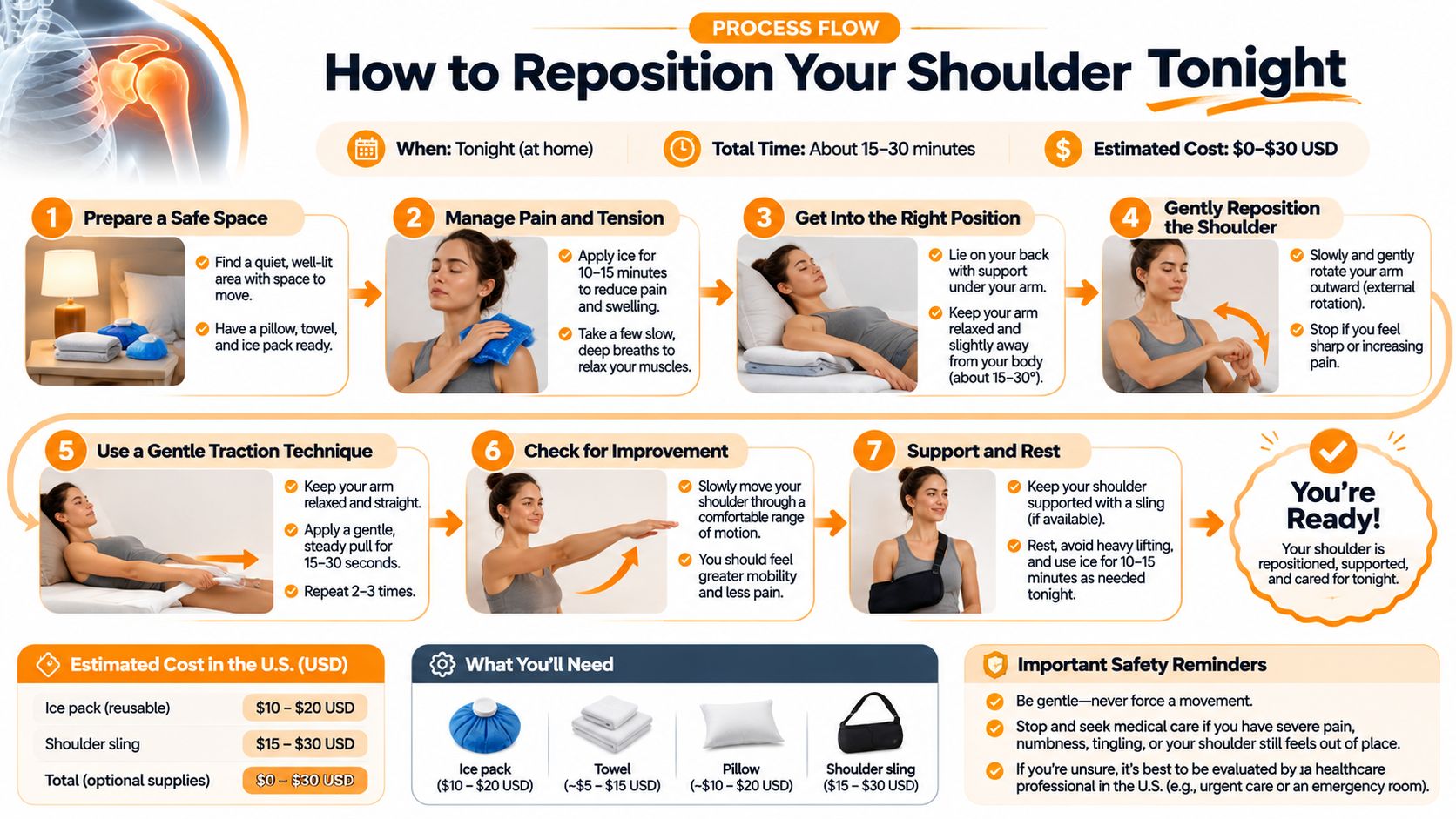
Look for less morning stiffness and easier movement through your first few reaches. If your 0-to-10 score stays the same, that is useful information too.
Should I stop side sleeping entirely?
Usually, there is no need to give up a familiar sleeping position. Side sleeping is not established as a universal cause of shoulder pain; it may aggravate symptoms when the shoulder is under pressure. Try alternating with back sleeping for a few nights and reducing the time the painful shoulder bears your weight. If the morning score improves, position may be contributing. If it remains unchanged despite less pressure, another factor may be involved.
Heat, Movement and Other Relief Options
If your shoulder feels sore after a night on your side, warmth may ease the discomfort, but it cannot identify the cause. Pressure during sleep can aggravate a sensitive shoulder without being the original problem. Use a comfortably warm wrap for about 15 to 20 minutes before bed or on waking, following its heating instructions and placing fabric between it and your skin. Do not fall asleep on an active heated pad. For positioning, Cleveland Clinic guidance describes ways to support the body during sleep; a shoulder that sinks toward the mattress may remain under pressure.
Relief options at home
| Option | How to use it | What to watch for |
|---|---|---|
| Warmth from a heat wrap | Use a comfortably warm wrap for about 15 to 20 minutes before bed or on waking | May ease muscle guarding; comfort does not prove a muscular cause |
| Gentle range of motion | Try pendulum swings and slow wall walks within a comfortable range | Keeps the joint moving without heavy loading |
| Over-the-counter pain relief | Take as labeled | Check with a pharmacist if you use other medicines |
Warmth can soothe guarding muscles and make the shoulder feel more comfortable. That relief is real, but it does not reveal whether the source is pressure, a tendon, or another problem.
Gentle motion can help you keep the joint moving without asking a sore tendon to work hard. For pendulum swings, lean forward and let the arm hang, then move it in small, easy circles. With wall walks, move the hand upward only as far as feels comfortable. The guide to heat therapy for shoulder pain explains how to apply warmth safely.
Before changing your mattress, test simpler variables: arm support, sleep position, and pillow height. A mattress affects how pressure is distributed and how comfortable you feel. If you are comparing options, side sleeper advice from Lucas Furniture discusses firmness and shoulder pressure. A folded blanket in front of your chest may support your arm, helping you test whether position is the more relevant factor.
Keep track of whether pain is improving, whether motion or strength is becoming more limited, and whether discomfort repeatedly wakes you. If it is not improving or is interfering more with movement or sleep, arrange an evaluation rather than relying on home measures alone.
What Happens at a Shoulder Evaluation
Picture the appointment so it feels less like a mystery. It starts with a conversation rather than a machine: when the pain began, which position triggers it, how long it lasts after you get up, what eases it, whether you've fallen or lifted anything unusual, and whether your neck is involved. Bring those answers and the visit moves faster.
Then comes the examination. A clinician will take your shoulder through its range, test strength in the rotator cuff, look for a painful arc as the arm lifts, check how your neck moves and refers symptoms, and screen for red flags such as deformity, fever or unexplained systemic signs. Two people can describe the identical morning ache and be examined in quite different directions. Describe pain on reaching overhead at night and expect your cuff strength to be tested. Describe stiffness with lost outward rotation and expect an assessment aimed at frozen shoulder.
Ask directly: "What's the likely cause, what should I avoid in the next month, and what finding would change your plan?" Those three questions turn a vague appointment into a working plan with a review date.
Imaging is a decision, not a reflex. Ultrasound or MRI is considered when a tendon tear is suspected, based on history, examination and how you responded to loading, not because the shoulder hurt in bed. Many sleep-related aches never need a scan.
A typical plan pairs position changes with a graded exercise programme or a course of physical therapy, plus a review date to check whether strength and range are improving.
Warning Signs and Your Seven-Day Check
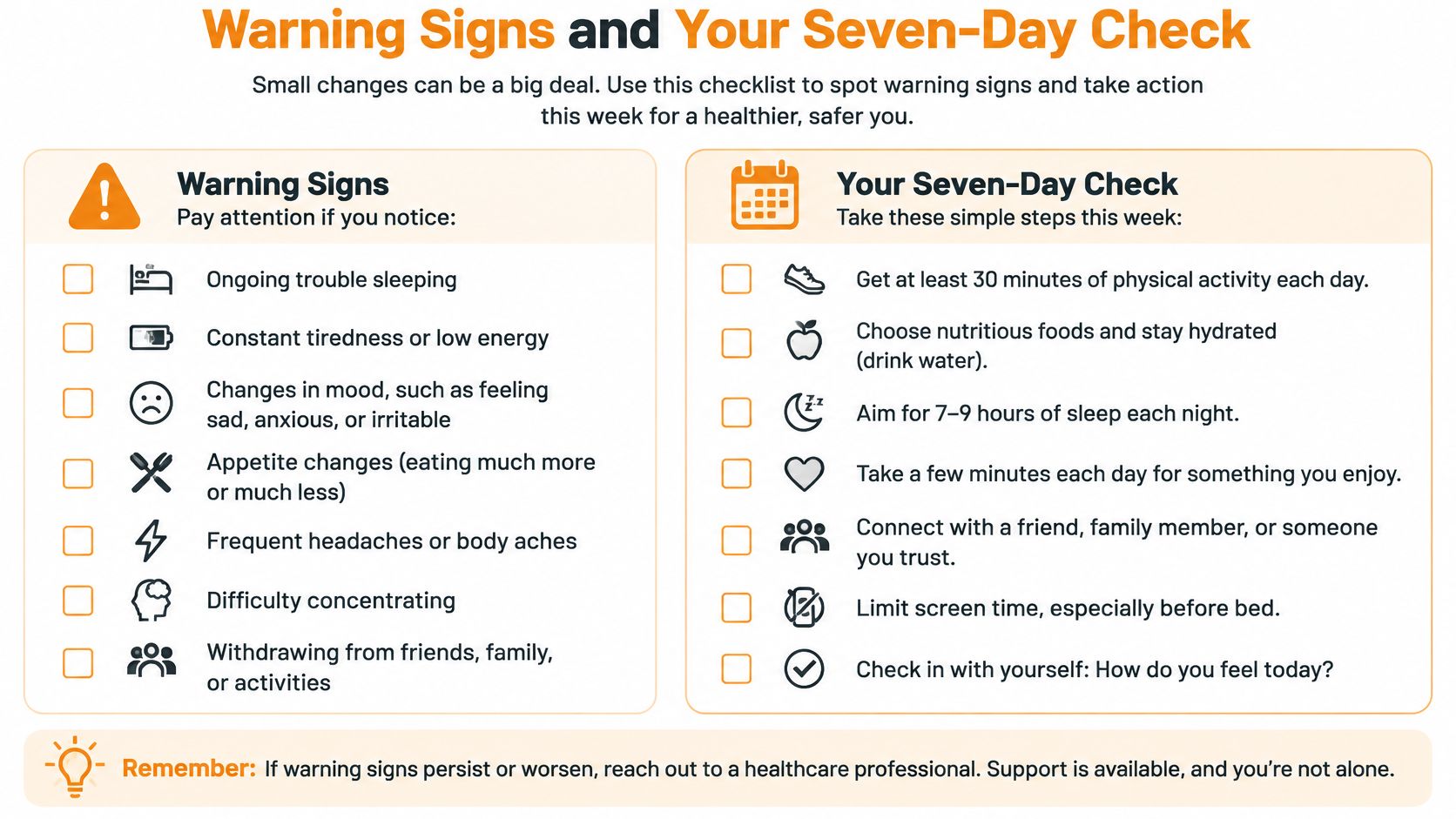
Waking with a sore shoulder after sleeping on your side does not, by itself, show that sleep caused an injury. Pressure can aggravate a sensitive shoulder, while pain that persists or comes with other symptoms may need assessment. The pattern matters.
Seek urgent care now if sudden weakness or inability to lift the arm follows a fall, the shoulder looks deformed, or it is hot and swollen with fever or chills. Get urgent help for shoulder pain with chest pain, shortness of breath, sweating, or pain spreading to the jaw or arm. Mayo Clinic's guidance on rotator-cuff injury advises prompt medical assessment for sudden weakness after an injury. These symptoms should not be treated as ordinary pressure soreness.
Book a routine appointment if night pain wakes you repeatedly, you cannot raise the arm to shoulder height for more than a few days, or symptoms are not steadily improving during your home trial. Night pain can accompany shoulder problems that disrupt sleep. A 2024 systematic review of shoulder-arthroscopy studies reported sleep disturbances in 75.8% to 100% of patients before surgery. That finding describes people studied before surgery, not everyone who wakes with shoulder pain.
Notice whether changing position eases the pain. Soreness that starts under pressure and settles after you move may be position-sensitive. Pain that is more noticeable at night can have a different explanation, and warmth helping does not prove that the cause is muscular or safe to manage alone.
Your seven-day check helps you test whether a position change makes a difference. For seven nights, follow your repositioning routine and do a few minutes of gentle movement. Each morning, record three things: whether pain woke you and how often, morning stiffness on a 0-to-10 scale, and how freely your arm moves before warming up.
On day seven, compare the entries. If symptoms are easing, continue the position change and gentle movement for another week. If they are unchanged or worse, or a warning sign has appeared, arrange an appointment with a primary care clinician or physical therapist and bring the log. Written entries make it easier to describe the pattern than relying on a general impression that it hurts at night.
The checklist is a guide, not a diagnosis. A controlled position change can help distinguish pressure-related soreness from pain that persists regardless of position, but a week of tracking cannot identify every cause. Seek care sooner if symptoms meet the urgent or routine criteria above.


