


Heat therapy for shoulder pain: Quick relief guide
-
That nagging ache in your shoulder is more than just a little annoyance, isn't it? It gets in the way of work, interrupts your hobbies, and can even ruin a good night's sleep. The good news is that heat therapy for shoulder pain is a simple, effective way to get back to feeling like yourself. By boosting blood flow and helping tight muscles finally let go, it provides a proven, non-invasive path to better mobility and real comfort.
How Heat Therapy Works Its Magic on Shoulder Pain

When your shoulder is stiff and achy, you just want relief—not some complicated treatment. That’s the beauty of heat therapy, sometimes called thermotherapy. It’s a straightforward approach, and the science behind why it works is both simple and powerful.
When you apply warmth to your shoulder, your blood vessels gently widen in a process called vasodilation. This opens up the channels for more blood to flow to those tight, sore muscles and tissues. It's like clearing a traffic jam on a busy highway, allowing everything to move freely again.
Better Circulation Means Faster Healing
This boost in circulation is a game-changer for recovery. More blood flow means more oxygen and essential nutrients are delivered directly to the damaged tissues that are crying out for help. Imagine you've spent hours hunched over a computer. Your shoulder muscles become starved of oxygen, leading to that deep, persistent ache. Applying heat is like sending a rush of reinforcements, kickstarting the repair process.
At the same time, that improved circulation acts like a cleanup crew, flushing out metabolic waste like lactic acid that builds up and contributes to soreness. This is a big part of why a warm compress feels so incredibly soothing.
By improving circulation, heat therapy does more than just mask the pain—it actively supports your body's own healing process for more than just temporary relief.
Releasing Muscle Tension
Beyond the circulatory benefits, heat works directly on the muscle fibers themselves. Warmth helps make the surrounding connective tissues more pliable and elastic, which means your muscles become less rigid and more flexible. This is crucial for a complex joint like the shoulder, which depends on a whole network of muscles and tendons to move properly.
If you'd like to dive deeper into these core principles, you can start by understanding the basics of heat therapy.
This isn't a small problem, either. Shoulder pain is incredibly common, with musculoskeletal issues impacting a huge number of people worldwide and often leading to significant disability. By combining the muscle-relaxing power of heat with some gentle self-massage, you can truly melt away stubborn tension knots and bring back comfortable movement. It’s no wonder this is a go-to first step for managing chronic stiffness and aches.
Finding the Right Heat Therapy Method for You
Not all heat sources are created equal, and honestly, choosing the right tool for your shoulder pain can make a world of difference. It really comes down to your lifestyle, the specific kind of pain you're feeling, and where you need that relief. Think of it as having a toolkit—you wouldn’t use a hammer for a screw.
For example, a busy professional named Sarah gets a dull, throbbing ache in her shoulder after spending eight hours at her desk. A discreet, single-use adhesive wrap is perfect for her workday. It provides a steady, low-level warmth without any cords, allowing her to find relief without interrupting her tasks.
But when she finally gets home and can relax? That’s when something like a large, form-fitting moist heat pack becomes her best friend for deep, therapeutic comfort.
Superficial vs. Deep Heat
To make a smart choice, it helps to understand the two main types of heat therapy.
Superficial heat is exactly what it sounds like—it warms the surface tissues of your skin and muscles. This is great for easing general muscle tension and improving blood flow right at the surface. A simple warm, damp towel is a classic example of superficial heat.
Deep heat, on the other hand, is designed to penetrate much further, getting into the deeper muscle and joint tissues. This is where you’ll find real relief for those nagging, chronic issues buried within the shoulder joint itself. While professional therapies like ultrasound are a form of deep heat, many modern at-home devices are now capable of delivering similar results.
This targeted approach is especially beneficial for chronic conditions where surface-level warmth just doesn’t cut it.
In fact, clinical trials are catching up with what many of us already know. A 2019 study looking at a new deep heating device found it produced significant improvements in both shoulder pain and function. Interestingly, the study concluded there was no major difference between its effectiveness and traditional ultrasound therapy. It really shows how advanced home-use technology is becoming. You can read more about these deep heat therapy findings if you want to geek out on the science.
Key Takeaway: For surface-level tightness from a long day, superficial heat is fine. For deeper, chronic aches like arthritis or rotator cuff soreness, a source that delivers deep, penetrating heat will provide much better results.
Moist Heat vs. Dry Heat
Another important distinction to make is between moist and dry heat.
Electric heating pads are probably the most common source of dry heat. They’re super convenient and easy to use, but the downside is they can sometimes dry out your skin and may not penetrate as deeply as you need.
That’s why physical therapists so often recommend moist heat, which you can get from things like steam towels or specialized microwavable packs. The moisture helps the heat penetrate more effectively into the muscles, often providing faster and more significant relief. For a full breakdown, check out our guide on the benefits of moist heat vs dry heat.
Comparing Heat Therapy Options for Shoulder Pain
To help you decide, here’s a quick comparison of the most common heat therapy methods you'll come across. Each has its own place, depending on your needs.
| Heat Source | Best For | Pros | Cons |
|---|---|---|---|
| Electric Heating Pad | Convenient, consistent dry heat while stationary (e.g., on the couch). | Easy to use; provides steady heat. | Requires an outlet; can dry out skin. |
| Microwavable Moist Heat Pack | Deep, penetrating relief for chronic pain and muscle soreness. | Excellent heat penetration; portable; conforms to the body. | Needs reheating; heat level can fluctuate. |
| Adhesive Heat Wrap | Discreet, all-day relief while active or at work. | Portable and hands-free; provides long-lasting, low-level warmth. | Single-use; less intense heat. |
| DIY Solutions (Hot water bottle, rice sock) | Quick, budget-friendly superficial heat for minor tightness. | Inexpensive and easy to make. | Can be messy; loses heat quickly; inconsistent temperature. |
Ultimately, by matching the heat source to your specific situation—whether you're at home, at work, or on the move—you empower yourself to manage your shoulder pain much more effectively.
How to Use Heat Therapy on Your Shoulder the Right Way
Getting heat therapy to work for your shoulder pain is pretty simple, but there's a big difference between just warming up the area and actually getting therapeutic relief. A few small details can make all the impact.
First things first, get comfortable. Find a spot where you can sit or lie down without tensing up your shoulder muscles. If you're all hunched over, the heat can't get in deep to do its job. Let those muscles relax so the warmth can really penetrate.
Create a Protective Barrier
This is non-negotiable: always place a thin, dry barrier between the heat source and your skin. A simple dish towel or even a layer of clothing is perfect. This is the single most important step to prevent skin irritation, redness, or even burns, making sure the whole experience is safe and soothing.
Think of it as using an oven mitt to pull a hot dish out of the oven—you just wouldn't skip it. The barrier allows for a gentle, consistent transfer of warmth without the risk. For a deeper dive, it’s worth reviewing some essential tips for staying safe while using a heating pad.
The right method really depends on your situation, whether you're at home or on the move.
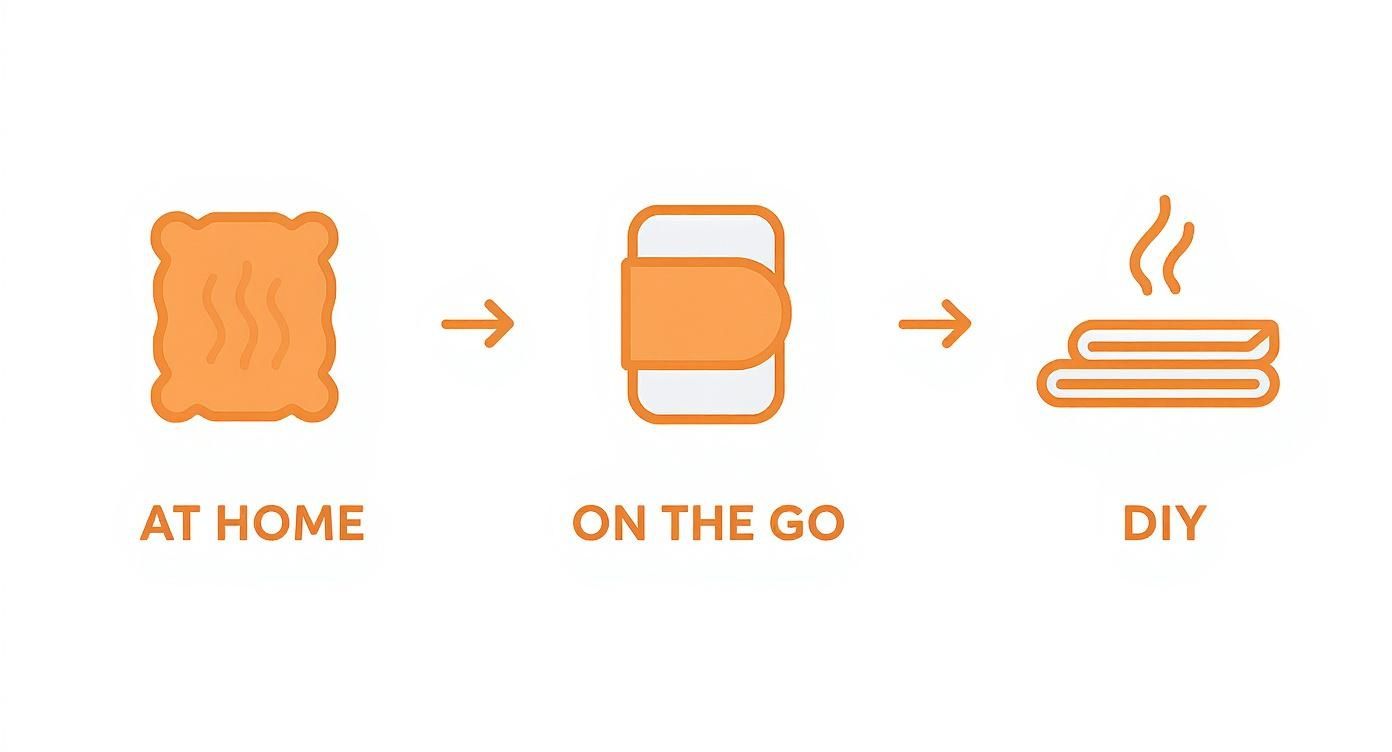
As you can see, there’s an effective option whether you're relaxing on the couch, stuck at your desk, or just need a quick, makeshift solution.
Timing and Frequency Are Key
So, how long should you apply the heat? The sweet spot for most people is between 15 and 20 minutes. That’s enough time for the warmth to boost blood flow and loosen up tight muscles, but not so long that it poses a risk to your skin.
You can do this a few times a day, but make sure to give your skin a break in between each session. For example, a 15-minute session first thing in the morning can be a game-changer for easing that overnight stiffness. Another one after a long day hunched over a computer can melt away tension before it settles in for good.
My best advice? Pay attention to what your body is telling you. If the heat starts to feel too intense or your skin gets uncomfortably red, take it off. Your safety always comes first.
It's also crucial to know when heat is the wrong tool for the job. Never, ever apply heat to a fresh injury—one that's swollen, bruised, or looks inflamed. Warmth will only make that kind of inflammation worse. The same goes for any area with an open wound or poor circulation. In those cases, you'll want to grab an ice pack instead.
Take Your Relief to the Next Level with Stretches and Self-Massage
Heat therapy is a fantastic starting point for shoulder pain, but you can amplify its benefits by adding gentle movement into your routine. Think of heat as the perfect warm-up. It gets blood flowing and tells your muscles it’s time to relax, making them much more receptive to a good stretch or massage. This combination is an incredibly powerful, natural approach to finding lasting comfort.
When your shoulder muscles are warm, they become more elastic and pliable. This means you can ease into a deeper, more effective stretch with less effort and less risk of strain. Combining heat with movement creates a powerful home-care routine that doesn't just mask the pain—it actively works to restore your shoulder's function and flexibility.

Gentle Stretches for a Warmed-Up Shoulder
After a good 15-minute heat session, your shoulder is primed and ready for some light movement. The idea here isn't to push through pain, but to gently coax your muscles into releasing tension. Always move slowly and listen to your body; if you feel any sharp discomfort, back off immediately.
Here are a couple of my go-to stretches for a tight shoulder:
- Pendulum Swings: Find a sturdy table or chair and lean forward, supporting your weight with your good arm. Let the sore arm hang straight down toward the floor. Now, use your body's momentum to create a gentle swing—forward and back, then side to side, and finally in small, slow circles. The key is to let the arm hang like dead weight; don't use your shoulder muscles to force the movement.
- Doorway Stretch: This one is a classic for a reason. Stand in an open doorway and place your forearms on the frame, keeping your elbows just below shoulder height. Take a small step forward until you feel a comfortable stretch across your chest and the front of your shoulders. Hold it for 20-30 seconds, breathe, and then relax.
Targeted movements can also make a huge difference. For example, a simple cross body shoulder stretch is excellent for releasing that deep tightness. Just remember to keep it gentle and controlled.
The Power of Self-Massage
Massage is the perfect partner for heat. Once the heat has relaxed the superficial muscles, you can more easily get in there and work out those stubborn, deep knots—what we often call trigger points. These little spots are frequently the real culprits behind that nagging, radiating ache.
You don’t need to be a professional to get results. A little self-massage can go a long way.
Heat and massage are a true one-two punch for muscle tightness. The heat loosens everything up on the surface, allowing the massage to go deeper and break up the specific points of tension.
Easy Self-Massage Techniques
You can use your own hand or a simple tool like a tennis or lacrosse ball to pinpoint those sore spots.
Here's how to get started:
- Using Your Hand: Get comfortable in a chair. Use the fingers of your good arm to gently explore the muscles around your sore shoulder, especially the top of the shoulder (your trapezius) and the upper back. When you find a tender spot, apply steady, gentle pressure for about 30 seconds while you take a few deep breaths.
- Using a Ball: This is great for hitting those hard-to-reach areas. Stand with your back to a wall and place a tennis or lacrosse ball between the wall and a tight spot near your shoulder blade. Gently lean into the ball and roll it around until you find a trigger point. Once you've found it, just hold that pressure for 20-30 seconds and let the knot release.
By weaving these simple stretches and self-massage techniques into your routine after applying heat, you create a truly proactive plan. You're not just waiting for the pain to go away; you're giving your body the tools it needs to heal, find lasting relief, and get you back to your daily life more comfortably.
Heat or Ice? Making the Right Call for Your Shoulder Pain
https://www.youtube.com/embed/igBHW8r6Ccg
One of the biggest questions I get is whether to use a heat pack or an ice pack for shoulder pain. It’s a common point of confusion, and picking the wrong one can sometimes make things feel worse. The good news is the basic rule of thumb is actually pretty straightforward.
It all boils down to the timing and type of your shoulder issue. Is it a brand-new injury, or is it a lingering ache you've had for a while? Answering that question is the key.
When to Grab an Ice Pack
Cold therapy, or cryotherapy, is your go-to for fresh, acute injuries. Think of those first 48 hours after you’ve tweaked your shoulder lifting something heavy, or you've suffered a sudden sports injury. When you see swelling and feel that sharp, immediate pain, that’s your cue for cold.
Ice works by constricting blood vessels. This simple action slows down the blood flow to the area, which is exactly what you want to do to reduce swelling and numb the pain. It’s the perfect first-aid response to calm down an angry, inflamed joint before it gets out of hand.
So, if you just strained a muscle and it’s starting to puff up, reach for an ice pack or even a bag of frozen peas. Apply it for 15-20 minutes at a time—always with a thin towel between the pack and your skin—to get that initial inflammation under control.
The core principle is simple: Ice for new injuries with swelling. Heat for old injuries with stiffness. Getting this right is the first and most important step to feeling better.
When It’s Time for Heat Therapy
On the flip side, heat therapy (thermotherapy) is the hero for chronic, nagging pain where the main problem is muscle stiffness and soreness. If you're dealing with that dull ache that's been around for weeks, or conditions like arthritis that leave you feeling stiff, heat is what your shoulder is craving.
Heat does the exact opposite of ice: it opens up the blood vessels. This boosts circulation, bringing a fresh supply of oxygen and nutrients to the sore tissues. This process helps relax tight muscles, ease soreness, and improve flexibility around the shoulder joint. It's the perfect treatment for a tired, stiff muscle—not a freshly injured one.
Take David, a weekend warrior who has lived with shoulder arthritis for years. Using a moist heat pack for 20 minutes each morning is non-negotiable for him. It dramatically reduces his morning stiffness, allowing him to get dressed and start his day with far less pain.
Heat Therapy vs. Cold Therapy for Shoulder Pain
Still not sure which to choose? This table breaks it down to help you decide at a glance.
| Condition | Recommended Therapy | Why It Works |
|---|---|---|
| Sudden Injury (first 48 hours) | Cold Therapy (Ice) | Constricts blood vessels to reduce swelling, inflammation, and numb acute pain. |
| Muscle Strain or Sprain | Cold Therapy (Ice) | Minimizes internal bleeding and swelling, which helps speed up initial recovery. |
| Chronic Pain & Stiffness | Heat Therapy | Increases blood flow to relax tight muscles and soothe persistent soreness. |
| Arthritis | Heat Therapy | Eases joint stiffness and improves mobility, especially helpful in the morning. |
| Post-Workout Soreness (DOMS) | Heat Therapy | Boosts circulation to help flush out lactic acid and relieve delayed onset muscle soreness. |
| Before Stretching/Activity | Heat Therapy | Warms up muscles and connective tissues, making them more flexible and less prone to injury. |
By understanding this fundamental difference, you can confidently choose the right therapy every time. This simple knowledge empowers you to take control of your shoulder pain relief and make sure you’re helping your body heal, not accidentally getting in its way.
Your Top Questions About Heat Therapy for Shoulders
Even when you know the benefits, putting heat therapy into practice can bring up a few questions. Let's walk through some of the most common things people ask to make sure you're using heat safely and effectively for your shoulder pain.
Is It Safe to Sleep with a Heating Pad on My Shoulder?
This is a big one, and the answer is a hard no. Please, never fall asleep with an electric heating pad turned on. Even those with auto-shutoff timers pose a real risk.
When you're asleep, you can't feel if the heat is becoming too intense for your skin, which can easily lead to serious burns. Safety first, always. Only use heat therapy when you're awake, alert, and can monitor how your body is responding.
If you're looking for some gentle, overnight relief, try a non-electric option like a long-lasting adhesive heat patch. They provide a much lower level of warmth that's safer for extended use.
How Quickly Will I Feel a Difference?
The good news is that you'll likely feel some immediate relief. That first 15-20 minute session should bring a welcome, soothing sensation as the warmth starts to relax tight muscles and get the blood flowing.
For more stubborn, chronic pain or that deep, nagging stiffness, think of the benefits as cumulative. It’s not a one-and-done fix. You’ll see the best results by being consistent. Sticking with daily heat therapy for several days is usually what it takes to notice a real, lasting improvement in both your pain levels and how well you can move your shoulder.
Heat Before a Workout or After?
This is a great question, and the answer depends on your goal.
Applying heat for 10-15 minutes before physical activity is a fantastic way to warm up a stiff shoulder. It gets the muscles and tendons primed and more pliable, which can help reduce your risk of pulling or straining something during your workout.
On the flip side, using heat after a workout can help with general muscle soreness. But here's the crucial part: if you think you've actually injured yourself and see any swelling, grab an ice pack instead. Heat will only make fresh inflammation worse.
Learning how to read your body's signals is the most important part of managing your pain and recovery. For professionals looking to improve how they share this kind of guidance, exploring effective patient education resources can provide valuable strategies for empowering patients. In the end, your body will tell you what it needs—you just have to listen.
Ready to experience deep, soothing relief for your shoulder pain? SunnyBay offers a wide range of U.S.-made, clinic-trusted microwavable heat packs designed for targeted comfort. Find your perfect solution and get back to what you love at https://sunny-bay.com.


