


Proven Ways for Reducing Muscle Soreness After Exercise
-
That satisfying, deep ache you feel a day or two after a tough workout? That's the hallmark of Delayed Onset Muscle Soreness, or DOMS. It's completely normal and, honestly, a good sign. It tells you you've pushed your muscles past their comfort zone, and now they're getting ready to rebuild and come back stronger.
Why Your Muscles Get Sore After a Great Workout
Whenever you introduce a new exercise, up the weight, or just push the intensity, you're creating tiny, microscopic tears in your muscle fibers. This isn't an injury—it's the entire point of training.
Your body's response is to kick off an inflammatory repair process. This inflammation is what causes that familiar stiffness and soreness, which usually peaks anywhere from 12 to 48 hours after your workout.
For example, imagine you haven't done squats in months. The day after your first leg workout, just walking down the stairs might feel like a challenge. That's DOMS in action, signaling that your leg muscles are adapting to the new stress you've placed on them. The trick is to manage the discomfort so you can keep moving forward without too much downtime.
The Good News: It's Part of the Growth Cycle
This whole process—challenge, soreness, recovery—is exactly what stimulates muscle growth. Without that initial stress, your muscles wouldn't have any reason to adapt.
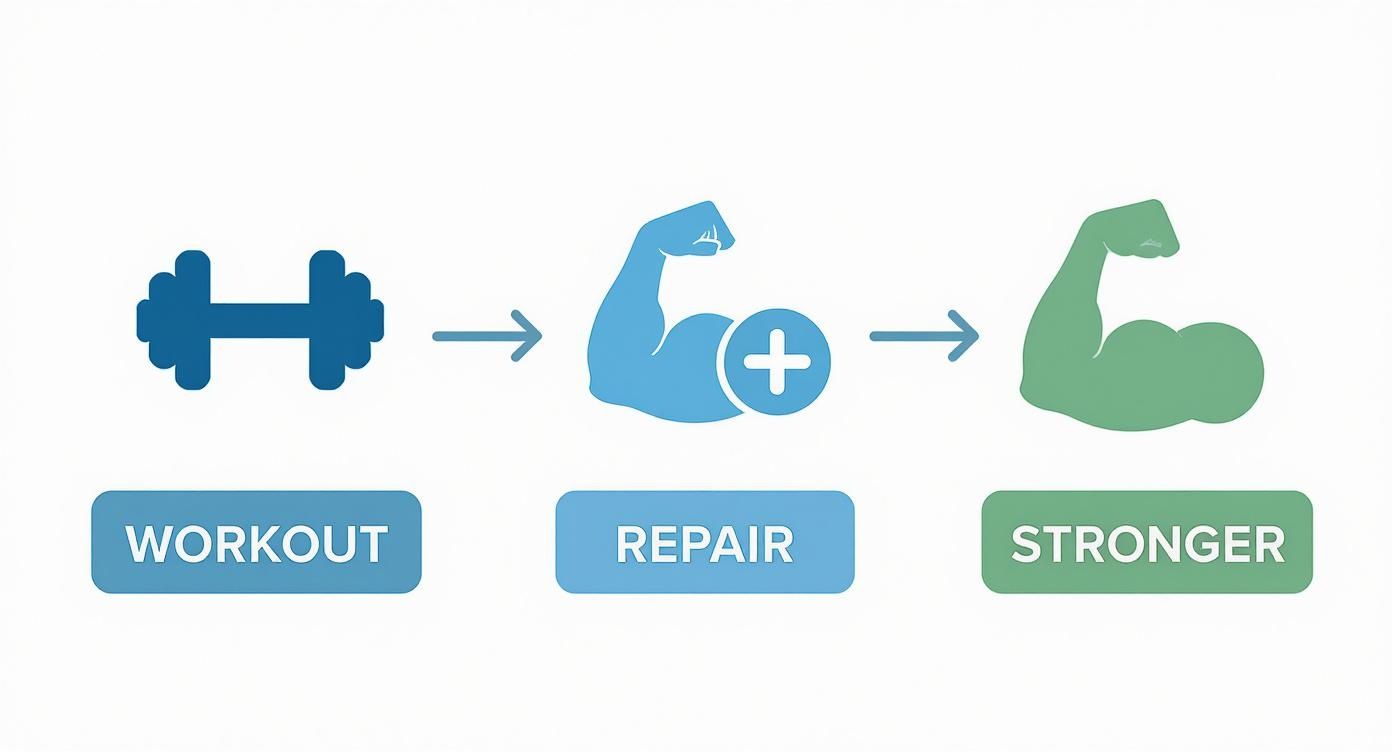
This image nails it. The soreness you feel is simply the "repair" phase in action. It’s not a roadblock; it's a sign that you're on the right track. This is where smart recovery strategies become your best friend, helping you manage the ache and get back to your routine faster.
How Long Does Recovery Really Take?
There's no single answer here, because recovery time really depends on the type and intensity of your workout. Different activities put different demands on your body.
For example, research on exercise-induced muscle damage has found that soccer players often need more than 48 hours to get back to full muscle function after a game. For athletes in high-impact sports like rugby, that recovery window can be even longer. The unique combination of sprinting, tackling, and eccentric muscle contractions just leads to more significant muscle damage and inflammation.
Why Gentle Movement Is Your Best Recovery Tool
When your muscles are screaming after a tough workout, the first thing you want to do is collapse on the couch. I get it. But as tempting as that sounds, it's one of the worst things you can do for that deep, post-exercise muscle soreness.
The real secret to feeling better, faster? Active recovery.
This just means getting in some low-intensity movement that gets your blood flowing without putting more stress on those already taxed muscles. Think of it as a gentle flush for your system. That increased circulation delivers a fresh supply of oxygen and nutrients to your aching tissues, which is exactly what they need to start repairing themselves.
At the same time, this boost in blood flow helps clear out the metabolic junk that builds up during intense exercise—the stuff that contributes to that stiff, achy feeling. It's a simple, proactive way to support your body's natural healing process.
Finding Your Active Recovery Sweet Spot
So, what does this actually look like in practice? It’s all about finding the right balance. You need enough movement to stimulate blood flow but not so much that you're just causing more muscle damage. The goal is to walk away feeling better, not more tired.
Here are a few real-world examples of what you can do the day after a hard session:
- After a heavy leg day: A brisk 20-30 minute walk or a slow, steady spin on a stationary bike does the trick.
- Following an intense upper-body session: Try a light swim or some gentle rowing, focusing on smooth, controlled movements.
- For full-body soreness: A relaxing yoga flow or a dynamic stretching routine can work wonders for easing stiffness all over.
The key is keeping the intensity low, somewhere around 30-40% of your maximum effort. A good rule of thumb is that you should be able to hold a conversation easily without getting winded. That's how you know you're aiding recovery, not adding to the problem.
The Benefits of Staying in Motion
Embracing gentle movement does more than just soothe those immediate aches. It helps you maintain your mobility and prevents that debilitating stiffness that can make even simple tasks feel like a monumental effort. For a deeper dive into other effective strategies, check out these top 6 post-workout recovery tips for fitness enthusiasts.
Ultimately, making active recovery a regular part of your routine helps you bounce back faster, stay more consistent with your training, and feel less beaten down by your workouts. It’s a simple shift in mindset—from motionless rest to purposeful, gentle movement—that pays huge dividends on your fitness journey.
Using Heat and Massage for Deep Muscle Relief
While gentle movement is a fantastic way to ease overall soreness, sometimes you need to get right to the source of the pain. For those deep, stubborn knots, the combination of heat and massage is a powerful one-two punch that can release tension and speed up your recovery. Trust me, once you experience how quickly heat can turn a stiff, aching muscle into a relaxed and mobile one, you'll make it a non-negotiable part of your recovery.
Imagine this: after a heavy upper-body day, your shoulders are so tight they feel like rocks. Draping a warm heating pad over them isn't just comforting; you can literally feel the tightness start to melt away as blood rushes to the area and the muscle fibers begin to relax. It's the difference between wincing every time you lift your arms and being able to move freely and comfortably again.
The Soothing Power of Heat Therapy
This isn't just about feeling good; it's pure physiology at work. Heat causes your blood vessels to open up—a process called vasodilation—which boosts circulation and delivers more oxygen-rich blood to your tired muscles. This helps clear out the metabolic junk left behind after a workout that contributes to that achy feeling, effectively speeding up the healing process.
Think of sore muscle fibers like cold, stiff rubber bands. They're rigid and don't want to move. But when you apply warmth, they become much more pliable and flexible. This not only eases the immediate pain but also helps restore your range of motion, making it easier to go about your day without grimacing.
It’s a simple, effective, and drug-free way to tackle muscle soreness. If you want to dive deeper into the science, you can explore the many benefits of heat therapy.
My go-to rule is to apply heat for about 15-20 minutes at a time. That’s the sweet spot for getting the warmth deep into the muscle tissue without overdoing it and irritating your skin. A good microwavable heat pack is perfect for this, as it delivers controlled, consistent heat right where you need it.
Amplifying Relief with Targeted Massage
Now, let's take it a step further. When you pair heat with massage, you create a seriously effective recovery combo. Massage therapy is your secret weapon for physically breaking up those tight spots and adhesions—what we usually call "knots"—to release tension. When your muscles are already warm and relaxed from heat therapy, they’re much more receptive to this kind of hands-on work, allowing for a deeper, more effective release of tension.

For example, after a long run like this, applying a warm pack to your quads or calves for 15 minutes before using a foam roller can make a world of difference. The heat loosens the muscles, allowing the roller to work more deeply and effectively, significantly reducing how sore you feel the next day.
And you don't always need to book a professional massage to get these benefits. Self-massage tools, or self-myofascial release, are incredibly effective for at-home care.
- Foam Rollers: These are your best friend for big muscle groups like the quads, hamstrings, and back.
- Massage Guns: Great for delivering rapid, percussive pulses to zero in on specific trigger points.
- Massage Balls: Perfect for digging into smaller, harder-to-reach spots like the arches of your feet or between your shoulder blades.
You can learn all about maximizing recovery with foam rolling to get started. Here's a pro tip: try foam rolling right after a warm shower. Your muscles will be warm and pliable, making the session doubly effective.
Fueling Your Body for Faster Recovery
You can’t out-train a poor diet—that’s a hard truth, especially when it comes to muscle soreness. What you put into your body right after a workout is just as important as the workout itself. It directly dictates how fast your muscles repair, how quickly the soreness fades, and ultimately, how you'll perform next time.
Think of it this way: a tough workout creates tiny micro-tears in your muscle fibers. That’s what causes the soreness. To fix them, your body needs raw materials. Protein provides the amino acids, which are essentially the "bricks" needed to rebuild and strengthen those fibers.
But you also need energy to do the construction work. That's where carbohydrates come in. They replenish your muscle glycogen—the fuel you just burned through—so you don't feel completely drained and can actually start the repair process.

Nail Your Post-Workout Nutrition
Timing and simplicity are your best friends here. The "anabolic window," while maybe a bit overhyped, is still a useful concept. Your body is primed to absorb nutrients most efficiently in the 1-2 hours following your workout. The goal is to get a solid mix of protein and carbs in during that time.
You don't need fancy supplements or complicated meals. Here are some real-world examples that work wonders:
- The Quick Fix: A simple protein shake with a banana blended in. It’s fast, easy to digest, and gets the job done.
- The Real Meal: A plate of grilled chicken or fish, a sweet potato, and some green veggies. This is perfect if your workout is right before a mealtime.
- The Smart Snack: A container of Greek yogurt with a handful of berries and a sprinkle of nuts. It’s a perfect balance of protein, carbs, and healthy fats.
Don't Forget to Hydrate! Water is the unsung hero of recovery. It helps shuttle all those important nutrients to your muscles and flushes out the metabolic waste you created during exercise. Being even slightly dehydrated can make muscle soreness feel so much worse.
Eat to Fight Inflammation
Beyond just rebuilding, you can actively combat soreness by eating foods that fight inflammation. Chronic inflammation is a recovery killer, but adding certain foods to your diet can help keep it in check. These foods are loaded with antioxidants and other compounds that naturally calm your body's inflammatory response.
We have a whole guide dedicated to reducing inflammation naturally if you want to dive deeper, but here are some of the heavy hitters:
- Berries: Blueberries, tart cherries, and raspberries are antioxidant powerhouses.
- Leafy Greens: Spinach and kale are packed with nutrients that help your body recover.
- Fatty Fish: Salmon, mackerel, and sardines deliver a huge dose of anti-inflammatory omega-3 fatty acids.
To help you put this all together, here’s a quick-reference guide to some of the best foods to have on hand.
Top Foods for Muscle Repair and Recovery
| Nutrient | Food Source Examples | Primary Recovery Benefit |
|---|---|---|
| Lean Protein | Chicken breast, Greek yogurt, eggs, whey/plant protein | Provides amino acids to repair muscle micro-tears and build new tissue. |
| Complex Carbs | Sweet potatoes, oats, quinoa, brown rice, bananas | Replenishes depleted muscle glycogen stores, providing energy for repair. |
| Omega-3 Fatty Acids | Salmon, walnuts, chia seeds, mackerel | Fights exercise-induced inflammation and can help reduce muscle soreness. |
| Antioxidants | Berries, tart cherries, leafy greens (spinach, kale) | Neutralizes oxidative stress and combats inflammation at a cellular level. |
| Electrolytes | Bananas, avocados, coconut water, leafy greens | Restores fluid balance and supports proper muscle function and nerve signaling. |
Making these foods a regular part of your diet is one of the most effective ways to manage soreness. For more ideas, this is a great resource on the best post-workout recovery foods. Smart nutrition isn’t just about performance; it’s about feeling good enough to get back out there and do it all again.
How Quality Sleep Accelerates Muscle Repair
Out of all the recovery tools at our disposal, there’s one that’s often pushed to the side but is easily the most effective: a good night’s sleep. You can do all the active recovery and nail your nutrition, but the real repair work—the kind that turns soreness into strength—happens when you’re deep in dreamland.
This is when your body gets down to business. During those deep sleep cycles, your brain cues the release of human growth hormone (HGH), which is absolutely essential for fixing those microscopic tears in your muscles caused by your workout. If you skimp on deep sleep, you’re basically cutting your body's repair crew's shift short. The result? You stay sore for longer and your progress stalls.
Beyond Just Logging Hours
Getting your eight hours is a great start, but the quality of that sleep is what makes all the difference. Tossing and turning or waking up constantly means you're likely not spending enough time in the most restorative deep and REM sleep stages. That’s where the magic really happens for muscle recovery.
Here are a few practical ways to dial in your sleep quality:
- Create a Cave-Like Environment: Think cool, pitch-black, and silent. Even a tiny bit of light can mess with your production of melatonin, the hormone that tells your body it’s time to sleep. Blackout curtains and an eye mask can be game-changers.
- Establish a Wind-Down Routine: Give yourself 30-60 minutes before bed to signal to your body that it's time to chill out. No screens allowed. Try reading a physical book, doing some gentle stretching, or just listening to some calming music.
- Ditch Your Phone an Hour Before Bed: This is a big one. The blue light from your phone, tablet, or computer screen is notorious for suppressing melatonin. It essentially tricks your brain into thinking it’s still daytime, making it that much harder to drift off.
A simple change I made was setting a "digital sunset" alarm on my phone for an hour before bedtime. It's my non-negotiable signal to plug it in across the room and disconnect for the night. This single habit has made a noticeable difference in how quickly I fall asleep and how refreshed I feel in the morning.
The Importance of Strategic Rest
Finally, don't forget that genuine recovery isn't just about sleep; it also demands planned rest days. These aren't lazy days or a sign of weakness—they're a critical component of any smart training plan. A dedicated rest day gives your muscles the time they need to finish the repair cycle, helps prevent mental burnout, and lets your central nervous system recharge.
Think of it like this: your workout is the catalyst for getting stronger, but the actual growth happens when you recover. By making both quality sleep and strategic rest a priority, you’re setting your body up to adapt, rebuild, and come back even stronger for the next session.
So, you’ve nailed your active recovery and are eating all the right things. What else can you add to your arsenal to really tackle muscle soreness? A few key tools can make a world of difference, especially when you're dealing with that deep, post-workout ache.
Let's round out your recovery strategy with some proven methods that target everything from swelling to stubborn stiffness.
One of the simplest yet most effective tools is the humble compression garment. Ever seen marathon runners sporting those knee-high socks after a race? There’s a good reason for that.
These garments provide a gentle, consistent pressure that helps your body manage swelling and keep blood circulating efficiently. Better blood flow means faster removal of the metabolic junk that builds up during a tough session and leaves you feeling sore.
It's not just a feeling, either—the science backs it up. One study found that athletes wearing compression tights reported significantly less soreness after their workouts. The benefits go deeper than perception; research in Nature Scientific Reports shows that compression can actually help limit muscle damage and inflammation at a cellular level. You can dive into the full research on compression's recovery benefits yourself.
When to Use Heat vs. Cold
Okay, let's settle the age-old debate: ice or heat? They both have their place, but timing is everything. Using the wrong one at the wrong time can do more harm than good, so let's get it right.
-
Go Cold First: Reach for an ice pack or take a cold plunge immediately after a particularly grueling workout. Cold therapy constricts your blood vessels, which is exactly what you want to do to reduce that initial, acute inflammation and swelling. Think of it as putting out the fire right after it starts.
-
Bring in the Heat Later: Save the heating pad for 24 hours after your workout, or even the next day. Warmth does the opposite of cold—it increases blood flow. This is perfect for relaxing those stiff, tight muscles and soothing the lingering aches that set in later. It brings comfort and helps restore your flexibility.
Knowing when to grab ice versus when to use heat is a game-changer. Cold therapy is your immediate damage control for inflammation, while heat is for comfort and repair once the initial storm has passed. It’s a simple but powerful strategy for a smarter recovery.
Common Questions About Post-Workout Soreness
Even with the best recovery plan, a few questions always seem to pop up. Let's tackle some of the most common ones I hear so you can recover with confidence.
Is This Soreness DOMS or an Injury?
Knowing the difference here is non-negotiable for your long-term health. The tell-tale sign of DOMS (Delayed Onset Muscle Soreness) is a widespread, dull ache across an entire muscle belly. It doesn't show up right away; you really start to feel it a day or two later, usually peaking around the 48-hour mark.
An injury, on the other hand, is a different beast entirely. Think sharp, specific, and localized pain. It often happens suddenly during a movement and gets worse, not better, with any kind of activity.
If you’re dealing with pain that's sharp, won't go away, or is paired with major swelling or an inability to use the joint or limb properly, it's time to stop guessing and see a healthcare professional.
Can I Still Work Out If My Muscles Are Sore?
You can, but you have to be smart about it. This isn't the day to go for a personal record on the same exercise that made you sore in the first place.
Instead, shift your focus. You could work on a completely different muscle group or, even better, opt for some light active recovery. A brisk walk, a gentle swim, or some dynamic stretching can actually help ease the stiffness by boosting blood flow. The key is to listen to your body—if you're incredibly sore, a full rest day will do you far more good than trying to push through the pain.
Remember, the goal is to help your muscles repair, not to pile on more damage. Gentle movement is your friend; another high-intensity session on those same muscles is your enemy.
Ready to feel the difference that targeted heat therapy can make? SunnyBay offers a whole range of U.S.-made, clinic-trusted microwavable heat packs built for deep, soothing relief. Check out the full collection of SunnyBay products and find the perfect tool to add to your recovery toolkit.


