


White Stuffed Elephant Buying Guide: What to Look For
-
You're standing in a shop, or scrolling through a product listing, comparing two nearly identical white elephant plushes. One feels slightly softer, the other looks a little fuller, and the price difference seems too small to explain why the products aren't the same. Without knowing what to inspect, it's easy to choose based on color and face alone.
A white stuffed elephant can serve several different jobs. It might be a nursery gift, a child's comfort object, a neutral décor piece, or a therapy-adjacent warmer filled with grains. The right choice depends less on the elephant shape than on fabric, fill, stitching, weight, care instructions, and the age of the person who'll use it.
Table of Contents
- Why Choosing a White Stuffed Elephant Is Harder Than It Looks
- The History and Symbolism Behind the White Elephant
- Materials, Fabrics, and Fill Explained
- Safety, Age-Appropriateness, and Build Quality
- Size, Weight, and Shape Options
- Care and Cleaning for a Long-Lasting Plush
- Gift, Nursery, and Comfort Use Cases
- Quick Quality Checklist Before You Buy
Why Choosing a White Stuffed Elephant Is Harder Than It Looks
White plush toys make small differences visible. A thin fabric can show the backing underneath, loose threads stand out against the pale surface, and uneven stuffing can make one ear sit higher than the other. Two elephants may share the same silhouette while offering completely different experiences when someone squeezes, carries, washes, or sleeps beside them.
Start by deciding what job the elephant must perform.
- For a nursery gift, prioritize a lightweight build, simple embroidered features, washable fabric, and clear age guidance.
- For a comfort object, look for a generous, even fill and a surface that feels pleasant against skin.
- For décor, shape retention, clean seams, and an upright sitting posture may matter more than washability.
- For a therapy-adjacent warmer, inspect the fill, heating instructions, fabric thickness, and whether the product is designed for warmth rather than ordinary play.
A decorative elephant can be beautiful but awkward to hug. A very soft nursery plush can collapse on a shelf. A weighted warmer may feel calming in an adult's lap but be unsuitable for an infant or unsupervised young child.
What shoppers often miss
The first difference you notice is usually the outer fabric. The difference you feel after several weeks often comes from the fill density and construction. A lightly filled body may look attractive in a photograph but flatten quickly under regular cuddling. Overstuffing can make the elephant firm and less comfortable to hold.
Pay attention to the ears, trunk, and legs. These projecting parts receive more pulling and bending than the body, so their seams reveal build quality quickly. If the listing only shows a front view and says little about the fabric, fill, care label, or age range, treat that missing information as a reason to investigate, not as proof of quality.
Practical rule: Choose the plush according to the youngest likely handler and the hardest task it will face.
The phrase “white elephant” can also confuse the purchase. It may refer to a meaningful cultural symbol, a novelty gift, or a seasonal gift-exchange joke. The plush itself doesn't automatically communicate which meaning the giver intends. You'll make a better choice when you separate the elephant's story from its physical job.
The History and Symbolism Behind the White Elephant
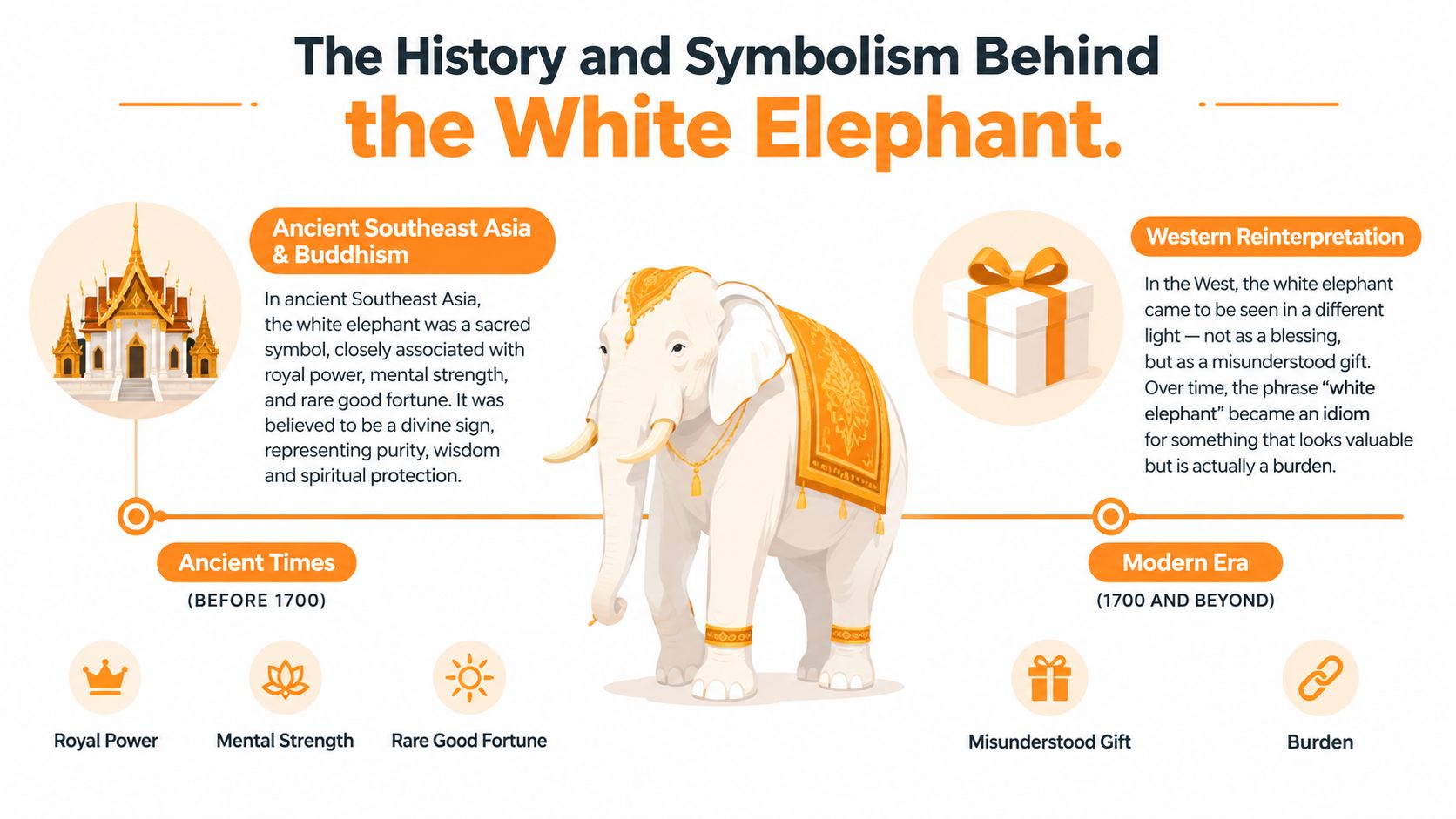
The white elephant carries meaning before it becomes a toy. Across South and Southeast Asia, rare pale or albino elephants were associated with royal power and sacred status. That history gives the animal a very different starting point from the modern party-game meaning, where a “white elephant” usually describes an unwanted, impractical, or burdensome gift.
A dated turning point came in 1883, when P. T. Barnum announced that he had spent 40,000 pounds to obtain the “Sacred White Elephant of Burma.” The episode helped connect the rare animal with an expensive curiosity and strengthened the modern English metaphor of a costly possession. By the early 1900s, the phrase had broadened into a commercial and cultural expression for unwanted gifts and impractical purchases. The documented history of stuffed elephants and the white elephant expression shows how quickly those meanings moved from royal and religious contexts into everyday language.
What that history means for a plush
A white stuffed elephant inherits both sides of the symbol. It can feel gentle, fortunate, and ceremonial in a nursery or housewarming gift. It can also be chosen as a playful novelty item because the phrase has a familiar comic meaning in Western gifting culture.
That doesn't mean every plush buyer is making a cultural statement. Sometimes the choice is practical. White works with a neutral nursery, a soft reading corner, or a room where stronger colors would compete with existing décor. The symbolism becomes more relevant when you're giving the elephant to someone who may appreciate a story about rarity, respect, or good fortune.
Stuffed elephants also have their own product history. Elephant plush forms were established early in the commercial stuffed-animal market. A historical account of Steiff identifies an elephant as the company's first stuffed-animal creation in 1879, while collectible elephant pieces include older examples from the 19th century and later versions from the 20th century. The documented marketplace history of stuffed elephant objects also shows that some pieces occupy a collectible space rather than functioning only as children's toys.
The useful buying question is simple: Are you purchasing a story, a toy, an ornament, or some combination of the three? Tell the recipient the story only if it suits the occasion. The object's cultural lineage can add warmth to a gift, but it shouldn't replace careful attention to construction and age suitability.
Materials, Fabrics, and Fill Explained
A plush elephant has three material layers you can evaluate: the outer fabric, the inner fill, and the construction holding them together. The best material depends on who will use the elephant and whether it needs to survive frequent washing, close contact, or display.
Short-pile plush and minky usually feel smooth and velvety, with a finish that suits cuddling. Velour offers a soft, slightly richer surface but may show handling marks. Organic cotton tends to feel more fabric-like and breathable, while linen has a natural texture that can look attractive in décor but may feel less traditionally plush. Fabric names alone don't tell you everything. Run your hand across the surface, check whether the pile sheds, and look at the reverse side near a seam.
The fill changes the elephant's response when squeezed. Polyester fiberfill is common and light, making it practical for children and easy carrying. Memory foam granules can create a different, slower-moving feel. Glass beads and weighted plastic pellets add mass, but they also make age guidance, seam security, and cleaning instructions more important. A weighted product must keep its contents enclosed, especially around children who pull at ears, feet, or access panels.
| Material Type | Common Variants | Feel & Look | Durability | Care Notes |
|---|---|---|---|---|
| Outer fabric | Short-pile plush, minky, velour | Smooth, fuzzy, or velvety | Usually suitable for regular handling | Check pile direction, colorfastness, and label instructions |
| Natural fabric | Organic cotton, linen | Matte, breathable, fabric-like | Depends on weave and seam finishing | May need gentler washing and flatter drying |
| Light fill | Polyester fiberfill | Soft, springy, easy to carry | Can flatten if loosely packed | Often simpler to clean, subject to the care label |
| Slow-moving fill | Memory foam granules | Mouldable and less springy | Needs secure internal containment | Avoid methods not approved for foam |
| Weighted fill | Glass beads or plastic pellets | Heavier, more grounded | Depends heavily on inner pouch and seams | Inspect for access points and follow special care directions |
Construction clues you can see
Turn the elephant inside out if the store allows it, or enlarge listing photographs. Look for tight, even stitching, reinforced points at the ears and legs, and no exposed filling. A hidden zipper can be useful when it removes a washable cover, but it deserves extra scrutiny if it gives access to pellets or loose material.
If the product is a warmer, natural grain filling may provide both thermal mass and a soft sensory experience. Some white elephant warmers combine natural grains with dried lavender, while a two-pound weighted build measuring around 8 inches by 6 inches by 13 inches is one documented format for gentle compression. This weighted white elephant warmer listing illustrates why fill and shape should be judged against the intended user, not just the product photograph.
For shoppers comparing grain-filled products, the material's care instructions matter as much as the softness. This guide to flaxseeds in hot and cold therapy provides useful background on why natural fillings need different handling from ordinary polyester plush.
Safety, Age-Appropriateness, and Build Quality
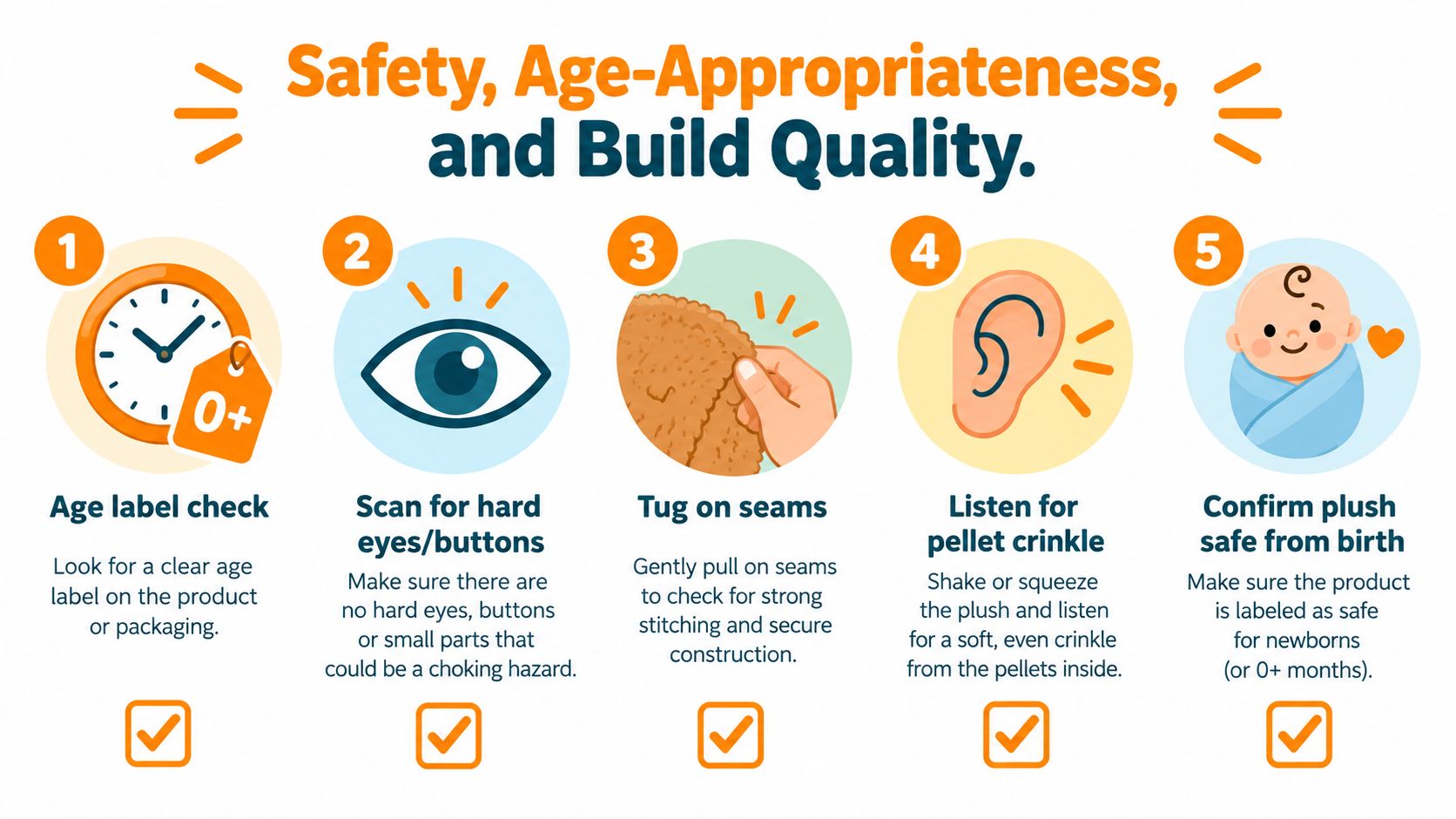
Safety inspection doesn't need to be complicated. You can perform a useful first check in a few seconds, either in a shop or by studying close-up listing photographs. Start with the age label, then inspect small parts, seams, and filling access.
Five checks before handing it over
- Read the age guidance. A plush marked safe from birth should have construction appropriate for babies, usually with securely made or embroidered facial details. A product intended for older children may include features that an infant could mouth, pull, or dislodge.
- Scan the eyes and buttons. Hard eyes, plastic noses, buttons, beads, and decorative charms can create a small-part concern if they loosen. Press gently around each feature. It should sit firmly and shouldn't rotate, lift, or reveal a gap.
- Tug the seams carefully. Give the ear, trunk, tail, and leg seams a gentle pull. Tight, even stitches are reassuring. Double-sewn stress points are preferable because these parts are handled more aggressively than the center of the body.
- Listen for pellet crinkle. A faint sound isn't automatically a problem, but it tells you the plush may contain pellets or a separate weighted pouch. Ask whether that fill is enclosed and whether the product is intended for the child's age.
- Look for exposed material. Loose threads, open seams, glued-on decorations, or visible filling suggest a tearing or ingestion risk. A zipper that opens directly onto pellets deserves particular caution.
The phrase “child safe” by itself isn't a complete safety explanation. Look for a clear age recommendation, material information, and any applicable certification details supplied by the manufacturer. A certification mark can indicate that a product has been assessed against a named standard, but vague reassurance without supporting details tells you very little.
For a wider discussion of material choices and baby-focused toy checks, the Playz 2026 toy safety guide can help you build a more informed inspection habit. It shouldn't replace the manufacturer's instructions or local safety requirements.
A microwavable elephant needs an extra layer of caution. Heating changes the product's use, and a plush made for warmth isn't automatically a suitable toy for a baby. Review the heating method, fill type, cooling requirement, and supervision guidance. For general background on safe heating practices, see this guide to whether microwave heating is safe.
Size, Weight, and Shape Options
Choose size according to the user's hands, the available space, and the way the elephant will be used. A small palm-sized plush can work as a stroller accessory or party favor, provided it has no unsafe detachable parts. A lap-sized elephant is easier for a toddler to carry, while a larger upright design can anchor a nursery chair or reading corner.
| Size Tier | Approx. Dimensions | Typical Fill | Best For |
|---|---|---|---|
| Palm-sized | Compact enough for one hand | Light polyester fill | Stroller use, small gifts, decorative accents |
| Lap-sized | Easy to carry and hold against the body | Standard soft fill | Toddlers, bedtime companionship, everyday play |
| Hug-sized | Broad enough to support an embrace | Generous polyester or weighted fill | Nursery seating, older children, couch comfort |
| Display-sized | Large room accent | Dense soft fill or structured interior | Chairs, shelves, reading corners, visual décor |
The shape matters as much as the measurement. A sitting elephant takes up less floor space and looks finished on a shelf. A lying elephant may be easier to cuddle or place across a lap. An upright elephant can function as a room accent, but its legs and trunk may experience more strain during carrying.
When weight helps and when it doesn't
Standard polyester fill keeps a plush easy to lift and reposition. Weighted pellets can create gentle pressure and reduce the feeling that the elephant shifts away during a cuddle. That can suit an older child or adult who wants a grounded lap companion, but it introduces a more serious need to check seams and age guidance.
A practical comfort rule is to compare the product's stated weight with the user's age in years, while treating that only as a rough starting point, not a safety formula. Very young children shouldn't use weighted plush without close supervision, and a weighted elephant shouldn't be selected for an infant just because it feels soothing to an adult.
Consider where the elephant will live. Measure the shelf, chair, crib-side area, or travel bag before buying. A plush that fits the child but overwhelms the room may become storage clutter rather than a useful companion.
Care and Cleaning for a Long-Lasting Plush
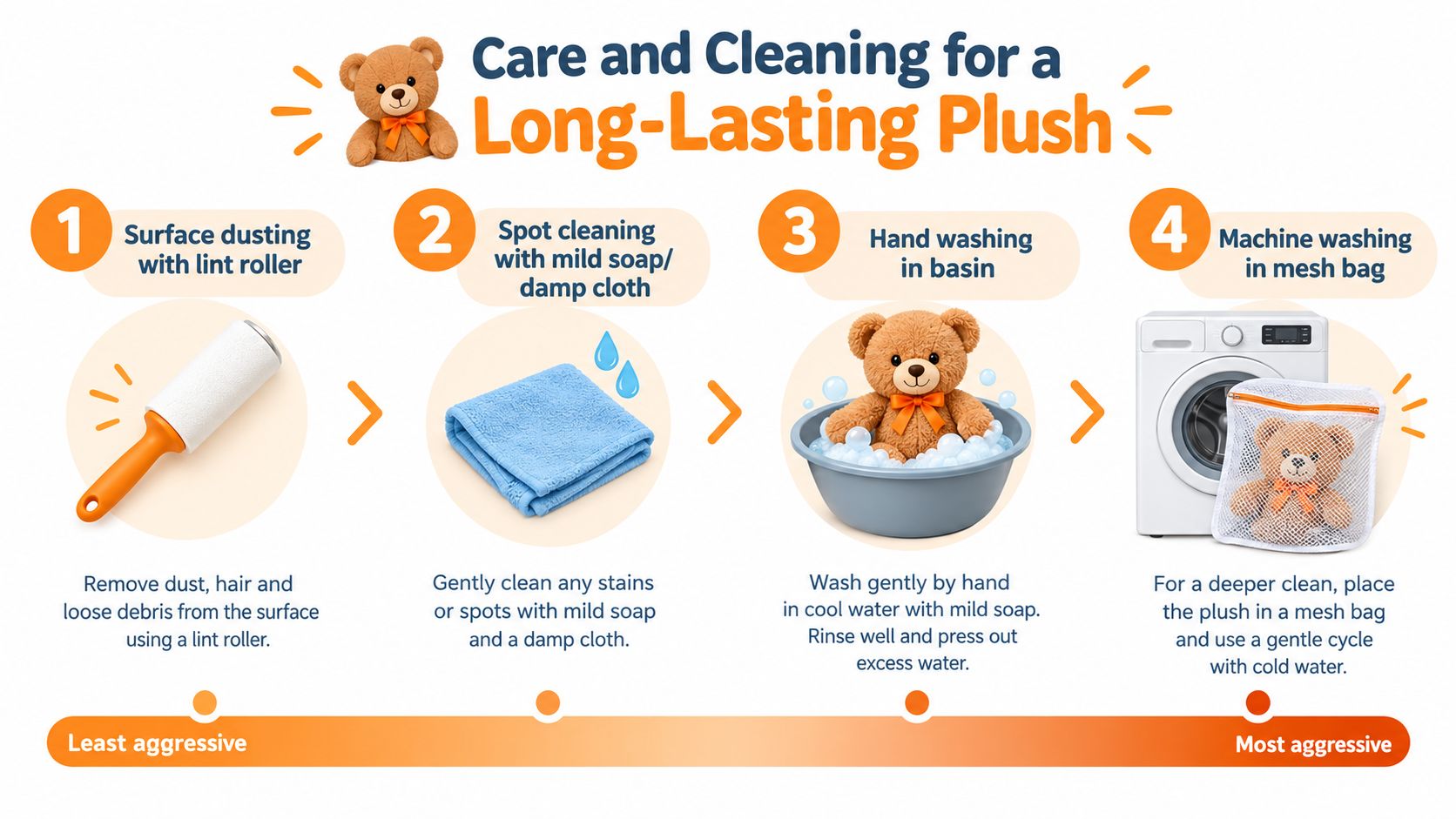
White fabric makes cleaning visible, so choose a method that matches the plush's construction. Start with the least aggressive option and increase the intensity only when the care label allows it.
Use the lightest method first
A lint roller or soft brush removes surface dust without soaking the fabric. Move in the direction of the pile, especially on minky or short-pile polyester, so you don't roughen the surface. For a small mark, use mild soap on a damp cloth and test an inconspicuous area first. Blot rather than scrub, because vigorous rubbing can spread a stain through pale fabric.
Hand washing in a basin is a better choice for delicate fabrics, glued features, embroidered details that may snag, or plushes with uncertain internal construction. Use cool or lukewarm water, rinse carefully, and press out moisture with a towel. Don't wring the elephant, since twisting can distort ears, legs, and internal seams.
Machine washing may suit a removable-cover design or a sturdy polyester plush. Place the elephant in a mesh bag, choose a gentle cycle, and follow the label rather than assuming every white toy is washable. The washing white plush horse guide offers a useful comparison for handling pale plush surfaces without treating them like ordinary clothing.
Heat can cause avoidable damage
Avoid hot water, harsh detergents, and high dryer heat unless the manufacturer specifically approves them. Heat can scorch or yellow white fabric, warp ears, and affect glued details. Air dry the elephant flat when its shape needs support, or hang it carefully when the seams and fabric permit. Sunlight can help brighten a pale surface during drying, but extended direct sun can fade or yellow fabric over time.
Weighted and grain-filled products need special attention. A weighted inner pouch may not tolerate a washing machine, and a grain-filled warmer must follow its heating and cooling instructions rather than being treated as a conventional toy. One documented grain-filled white elephant warmer can be heated for about 60 to 90 seconds and provide warmth for up to 2 hours, according to its product information. The product details for this microwavable elephant warmer also illustrate why heating and cleaning instructions should be read together.
Store the elephant clean and completely dry. Keep it away from long-term direct sunlight and humid basements, where moisture can encourage mildew and pale fabric can develop unwanted discoloration.
Gift, Nursery, and Comfort Use Cases
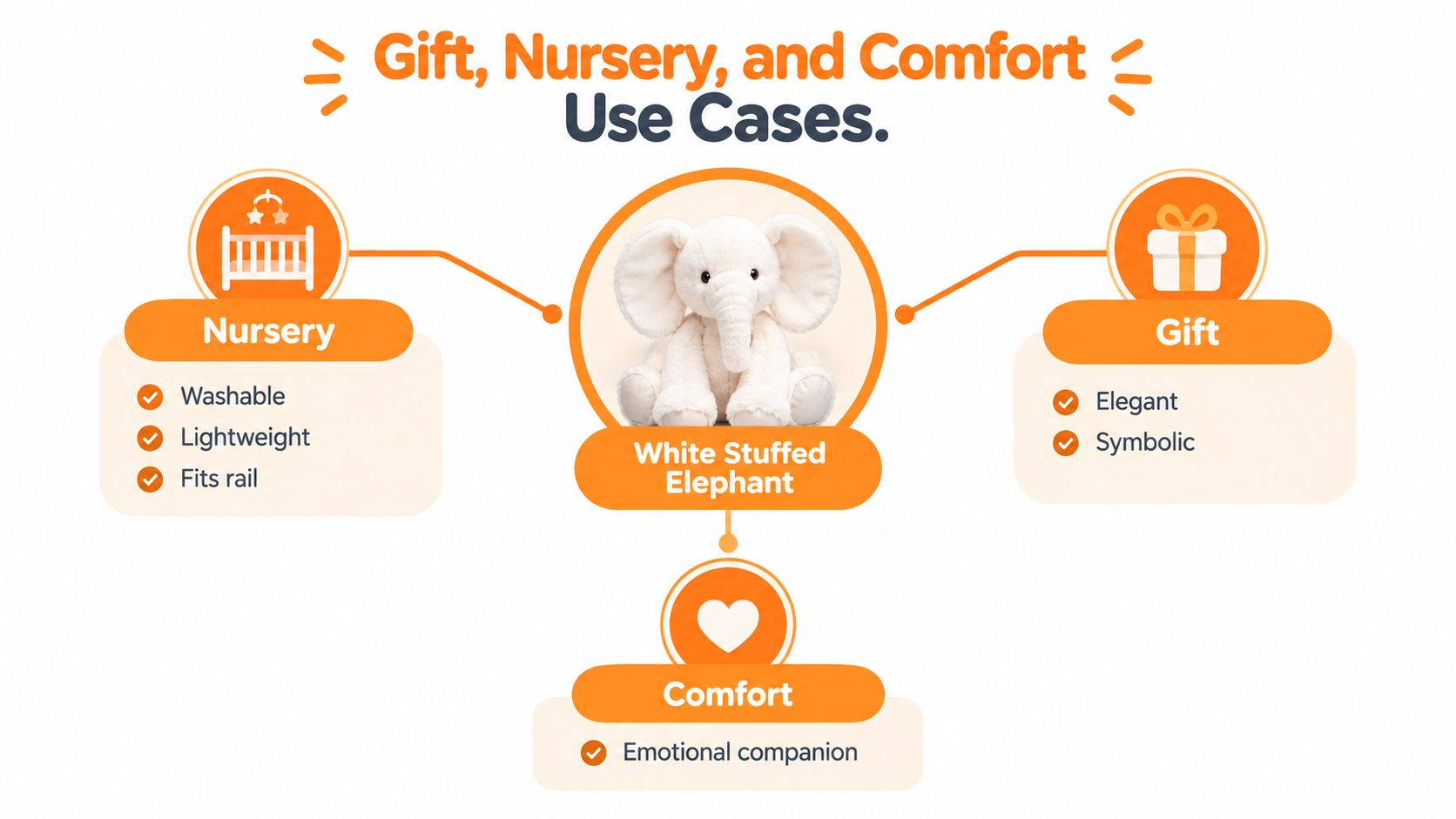
The same white stuffed elephant can be an excellent purchase for one person and a poor fit for another. The difference comes from the buyer's job, not the animal's appearance.
The nursery purchase
A parent preparing a nursery may want an elephant that feels soft but doesn't compete with patterned bedding or colorful wall art. A lightweight, washable plush with embroidered details is easier to integrate into daily life than a decorative piece with delicate attachments. Check whether it can sit on a shelf or chair safely, and remember that a plush placed near a crib shouldn't be treated as automatically suitable for unsupervised infant sleep.
Scent is another practical detail. A neutral-smelling elephant is often easier to introduce into a baby's environment than one with a strong fragrance or sound module. The parent may also want the toy to transition from nursery décor to a toddler's bedtime companion, so durable seams and a fabric that tolerates cleaning have long-term value.
The intentional gift
A baby shower or housewarming gift benefits from a clear visual story. White and ivory tones can feel calm and refined, while the elephant's history gives the giver an opportunity to explain why the animal represents something more than a generic plush. A ribbon-ready shape, tidy finish, and useful size can matter more than a complex feature set.
Check the packaging and the listing photographs. Does the plush arrive cleanly presented? Can the recipient understand the care instructions? If you're giving it to a household with young children, confirm the age guidance instead of assuming that a soft surface means universal suitability.
The comfort companion
An older child, teenager, or adult may want an elephant that fills the arms or rests securely across the lap. Here, a generous fill, pleasant hand-feel, and scent neutrality matter more than a tiny decorative footprint. A weighted version may feel more settled, but it should be chosen for the intended user and used with appropriate supervision.
For families comparing comfort objects with other playroom options, a broader guide to the best toys for toddlers can provide useful age-focused context. A plush that begins as a nursery accent can later become a reading companion, while a comfort elephant may eventually move to a shelf as a keepsake.
Some products combine the emotional appeal of a stuffed animal with reusable warmth. If that's the intended job, compare the fill and heating instructions with the guidance in this overview of microwavable stuffed animals. Don't confuse therapy-adjacent comfort with medical treatment. The product can provide warmth or pressure, but it shouldn't replace professional advice for pain or health concerns.
Quick Quality Checklist Before You Buy
Keep this checklist open while you shop online, or use it in the aisle before paying. It turns a vague impression of softness into a series of practical checks.
Look closely
Inspect the surface for pilling, bald patches, loose threads, uneven dye, and backing fabric showing through the pile. White fabric should look consistent across the body, ears, and trunk. If photographs are too distant to show these areas, look for alternate views or ask the seller for close-ups.
Check the face next. Embroidered eyes and noses often reduce the number of detachable features, while plastic eyes and buttons require a firm attachment check. Decorative ribbons, tags, tassels, and sound-module covers deserve the same attention as the main facial features.
Squeeze and lift
Press the body in several places. Good filling should feel reasonably even, without large hollow pockets, hard lumps, or areas that collapse and stay flat. A comfort plush usually benefits from a consistent response, while a display piece may intentionally be firmer.
Lift the elephant and compare the actual feel with the listed weight. A surprisingly heavy body may contain pellets or another dense filling, which makes the care instructions and age guidance especially important. For a therapy-adjacent warmer, check whether the fill is intended for microwave or cold use instead of guessing from its appearance.
Tug the stress points
Gently test the ears, trunk, legs, tail, eyes, and nose. The parts shouldn't shift under light handling, and the seams shouldn't gape. Look for tight stitching at the attachment points, with no exposed filling or long thread ends.
On an online listing, enlarge the photographs around these areas. A product page that clearly shows the seam finish gives you more useful evidence than one that only presents a styled nursery photograph.
Read the label, not just the headline
Confirm the fiber composition, fill type, age recommendation, cleaning method, and any safety certification information supplied by the maker. Read the country-of-origin information if it matters to your purchase, and look for warnings about pellets, heating, removable parts, or fragrance.
Use the youngest likely handler as your final filter. For an infant gift, favor secure embroidered details and avoid removable elements. For a long-term cuddle object, choose a neutral hand-feel rather than a slick finish. For décor, prioritize shape retention and surface appearance. For a warmer, follow the heating instructions exactly and wait until the product returns to room temperature before reheating when the manufacturer gives that direction.
The best white stuffed elephant isn't necessarily the largest, softest, or most elaborate. It's the one whose materials, construction, care routine, and safety profile match the job you need it to perform.
If you're choosing a white stuffed elephant that also needs to provide reusable warmth, explore SunnyBay for microwavable heat therapy products, wraps, and comfort-focused designs. Compare the fill, shape, washable covers, and intended use before selecting the option that fits your routine.


