


Leg Massager with Heat: How It Works and Benefits
-
You've spent the day sitting at a desk, standing at work, or pushing through a workout. By evening, your calves feel tight, your feet ache, and your lower legs seem heavier than they did that morning. A leg massager with heat can make that moment more comfortable, but its value depends on how it delivers warmth, pressure, and mechanical stimulation.
The right device may help with muscle stiffness, soreness, and the sensation of tired legs. It isn't a cure for every cause of leg pain, and more heat or stronger compression isn't automatically better. The most useful approach is to match the device and settings to your symptoms, then use it within a controlled, repeatable routine.
Table of Contents
- Understanding How Heated Leg Massagers Work
- The Science Behind Heat and Massage Therapy
- Comparing Main Types of Heated Leg Massagers
- Beyond Comfort and Circulation
- How to Choose the Right Leg Massager with Heat
- Safe Usage Tips and Important Contraindications
Understanding How Heated Leg Massagers Work
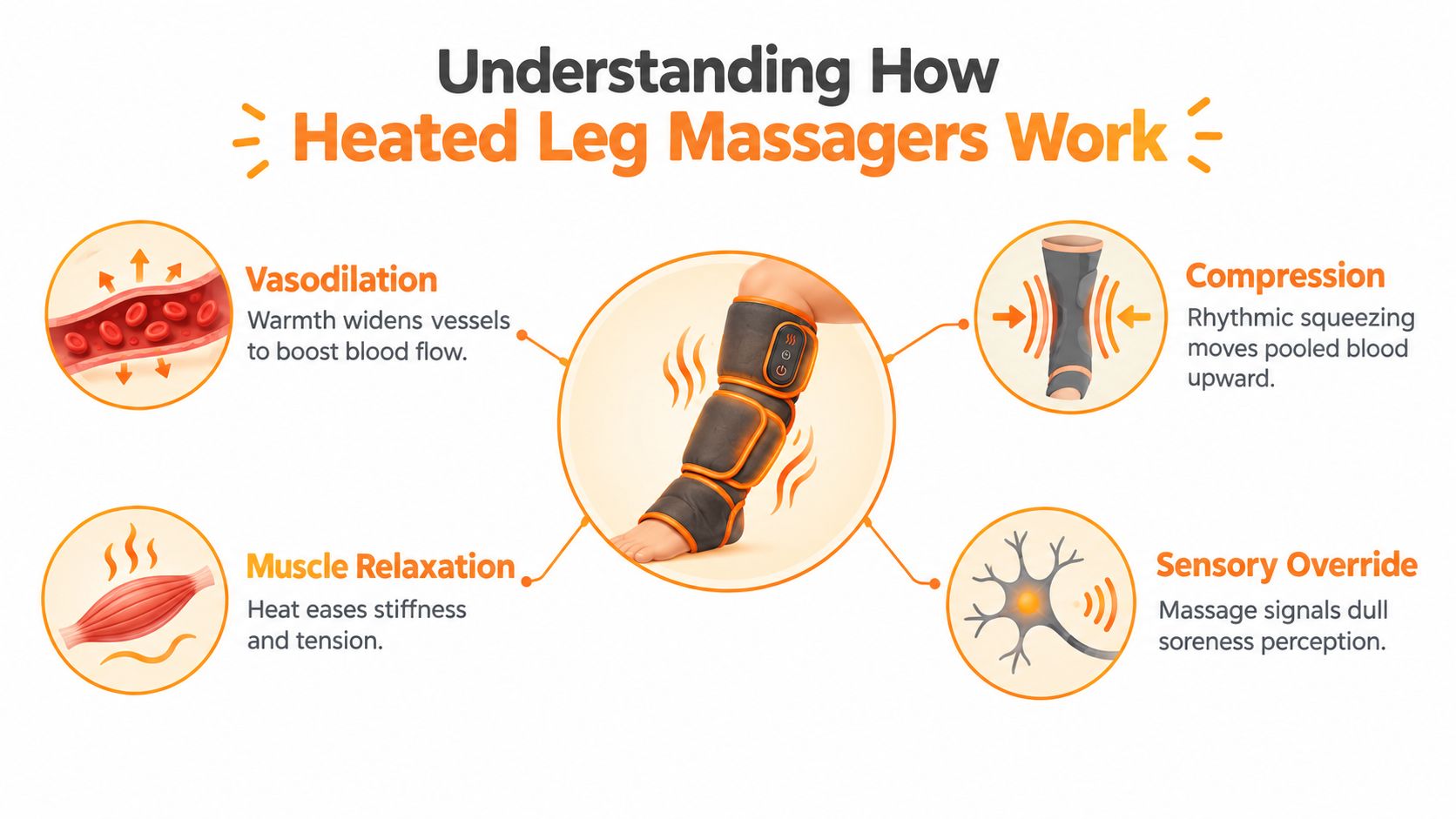
A heated leg massager combines several physical effects. Warmth increases the temperature of the skin and superficial tissues, massage stimulates sensory receptors, and air chambers or rollers may apply pressure to the limb. Together, those inputs can make a tired leg feel looser and less uncomfortable.
The circulation effect is often described as vasodilation, meaning that warmth encourages blood vessels near the treated area to widen. Think of the vessels as a congested road system. A controlled increase in warmth can open more lanes, while rhythmic compression acts like a series of pumps helping fluid move through the lower leg. This doesn't mean a retail device can correct an underlying vascular disorder, but it explains why warmth and gentle squeezing may feel useful after prolonged sitting or standing.
Why controlled warmth matters
The therapeutic window is narrower than many product advertisements suggest. Guidance on localized heat indicates that tissue warming is most effective when skin and superficial tissue temperature rises by roughly 9 to 12°F, while temperatures above 113°F can become painful and temperatures above 122°F may burn skin. Harvard Health Publishing explains how to use heat safely for pain relief, including why controlled delivery matters more than just choosing the hottest setting.
That's why even heat distribution, insulation, and automatic shutoff matter. A device that creates one very hot patch while leaving the rest of the calf cool is less useful than a device that warms the target area steadily. If you're comparing different wellness technologies, how OneTwenty works offers helpful context on how guided, measurable routines can differ from only using a device whenever discomfort appears.
Massage also changes how the brain receives information from the limb. Pressure and vibration provide competing sensory signals, which may temporarily reduce the prominence of soreness or tension. The result is usually symptom relief and relaxation, not tissue repair on demand. A heated massager can support a recovery routine, but it shouldn't replace movement, progressive strengthening, medical evaluation, or treatment of the cause of persistent pain.
The Science Behind Heat and Massage Therapy
A heated leg massager is most useful when its warmth follows a repeatable protocol rather than an improvised burst of high heat. A systematic review by Clijsen et al. of local heat applications found immediate pain relief superior to no treatment, standard therapy, pharmacologic therapy, and sham controls across clinical comparisons. One leg-focused protocol used 40 to 43°C for 20 minutes per session, three times per week, over four weeks, for 12 sessions total. That pattern gives measured exposure a clearer clinical rationale than occasional use until the skin feels very hot.
Heat may reduce perceived stiffness by making superficial tissues more extensible and changing sensory input from the treated area. This can help before gentle stretching or after activity when tightness is the main complaint. It is less appropriate to treat sudden, inflamed pain as though it were ordinary muscle tension. This guide to the basics of heat therapy explains the underlying principles in plain language.
Practical rule: Choose a temperature that creates comfortable, even warmth. Burning, sharp heat, or skin irritation means the setting is too high.
Where compression adds value
Compression introduces a second mechanism. An air-filled sleeve applies intermittent pressure, which can support venous return from the lower leg. Evidence summarized for compression and recovery found that pressure around 20 mmHg increased venous blood flow velocity and reduced swelling after prolonged sitting or standing. The same summary reported reduced delayed-onset muscle soreness pain within 24 hours and beyond that period with heat. The clinical evidence summary on PubMed discusses heat, soreness, circulation, and lower-leg compression.
This combination may fit legs that feel both stiff and heavy after travel, desk work, or exercise. Compression remains a symptom-management tool, not a diagnosis. A clot, significant arterial disease, or another cardiovascular concern can make pressure inappropriate, so unexplained swelling requires medical assessment before use. For suitable users, moderate, comfortable settings offer a more defensible approach than selecting the strongest heat or squeeze.
Comparing Main Types of Heated Leg Massagers
Shopping becomes easier when you separate the mechanisms instead of treating every heated device as equivalent. A sleeve that inflates around the calf behaves differently from a vibrating pad, and neither one is automatically the right choice for every complaint.
| Device type | Main action | More suitable for | Important trade-off |
|---|---|---|---|
| Air compression wrap | Sequential squeezing | Heavy, tired legs and temporary swelling sensations | Pressure may be unsuitable for some vascular conditions |
| Vibration or kneading device | Mechanical stimulation with warmth | Muscle tightness and post-exercise soreness | It may not provide the same pumping effect as compression |
| Combination unit | Compression, vibration, and adjustable heat | Users with changing recovery or comfort needs | More settings require careful adjustment and may increase cost |
Air compression wraps
Air compression is the most logical starting point when your main complaint is a heavy lower leg after inactivity. The chambers inflate and release in sequence, creating a rhythmic sensation rather than constant pressure. For someone who sits for long periods, that active squeezing may feel different from merely elevating the legs or wearing a static garment.
The device should never feel painful, numb, or sharply restrictive. People with suspected deep vein thrombosis, severe peripheral artery disease, severe heart failure, or active inflammation should get medical advice before using compression. This overview of air compression massagers explains the distinction between dynamic compression and other forms of leg support.
Vibration and combination devices
Vibration or kneading is usually more appealing when stiffness and exercise-related soreness dominate. Heat can make the sensation feel gentler, while mechanical stimulation temporarily changes how the nervous system registers discomfort. Research on heat and delayed-onset muscle soreness supports warmth as part of a recovery strategy, but it doesn't mean the device restores strength or eliminates the need for a sensible training progression.
Combination units offer flexibility. You might use warmth with light vibration after a walk, then select moderate compression when your legs feel heavy after sitting. The risk is setting everything too high at once. Start with one action, learn how your body responds, and add another feature only if the first setting feels comfortable.
Beyond Comfort and Circulation
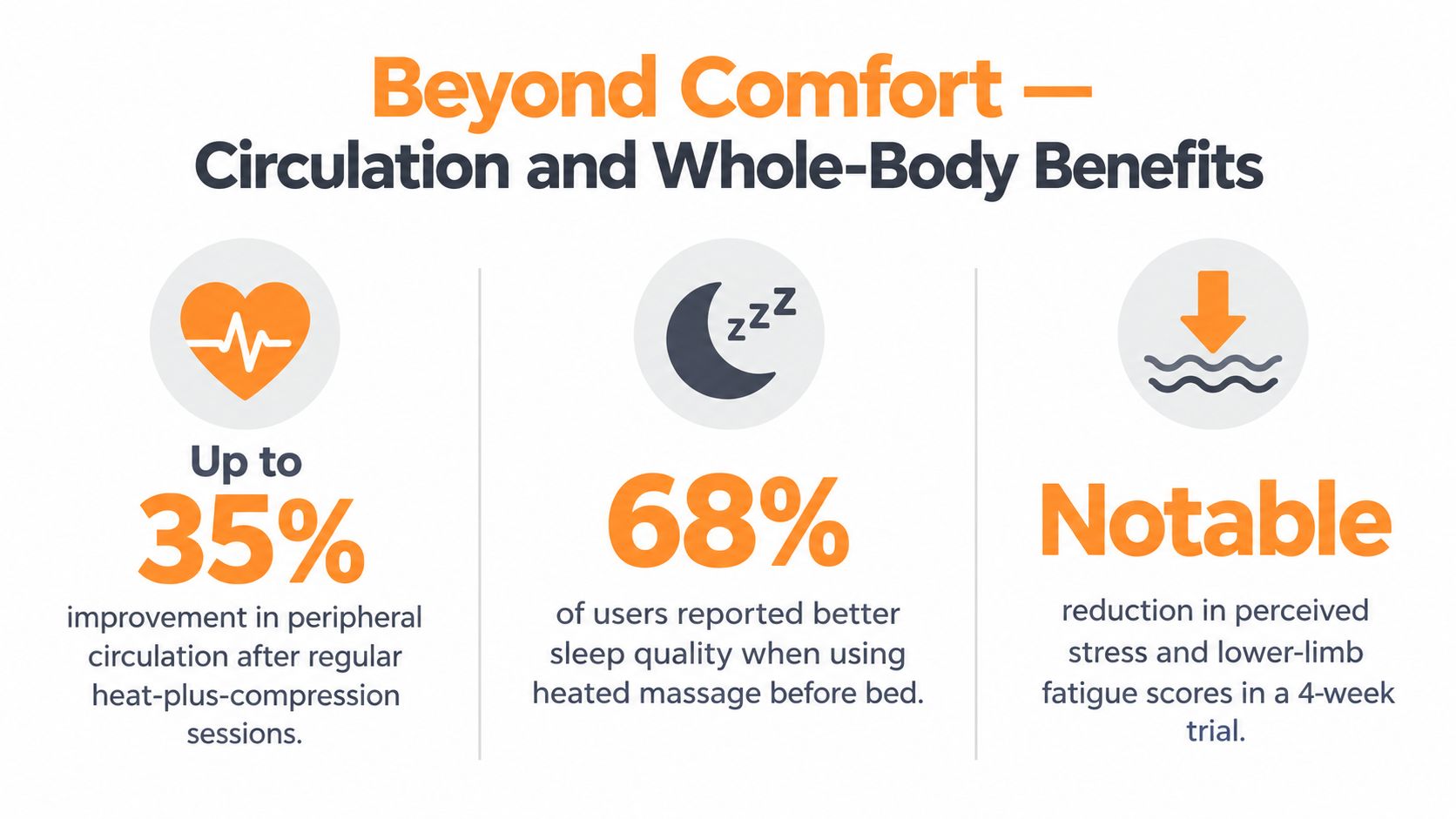
A heated leg massager may feel soothing after a long day, but its potential value is broader when warmth helps someone stand, walk, or sleep more comfortably. In a home-based randomized study of sedentary older adults, a controlled heat protocol over 12 weeks was associated with about a 7 mmHg reduction in systolic blood pressure and a 37.6 m improvement in six-minute walk distance, with no serious adverse events reported. The full trial report is available through the National Library of Medicine. A commercial summary of these findings is also available through VEVOR, but the trial report is the appropriate source for the clinical endpoints.
The practical distinction is important. Those results came from a defined heat-therapy protocol, not casual use of any retail device. The study does not show that a particular compression level, massage pattern, or consumer heat setting will produce the same change in blood pressure or walking distance. Use the findings to set realistic expectations, not to treat a heated massager as a substitute for exercise or medical care.
What this means for older users
For an older adult, the most useful outcome may be better comfort before regular movement. If gentle warmth reduces stiffness before a walk, it may make participation easier. Track the response that matters to you, such as walking tolerance, sleep, or how your legs feel afterward. Persistent swelling, limited mobility, or high blood pressure still requires appropriate clinical management.
The restless legs findings also argue against broad product claims. In a randomized pilot trial, the massage-only group had a 9.0-point improvement in restless legs syndrome severity after four weeks, compared with no intervention, while the heat-only group had a 17.4-point improvement in sleep scores. The combined massage-and-heat group did not outperform no intervention for restless legs severity in that study. The randomized pilot trial report is available through the National Library of Medicine.
Watch the video below for a visual overview of how heat and massage devices are commonly used in a home routine.
Heat can support comfort or sleep for some users, while massage may suit particular leg sensations. Blood pressure and mobility outcomes depend on a consistent protocol, so monitor those goals with a clinician rather than relying on device claims.
How to Choose the Right Leg Massager with Heat
Start with the symptom you want to address, not the longest feature list. A person with calf tightness after exercise may prefer warmth and vibration, while someone with heavy legs after sitting may prioritize sequential compression. If you have both problems, adjustable controls matter more than maximum intensity.
Five buying checks
- Fit the target area. The sleeve, wrap, or pad should contact the area you want to treat without leaving large gaps or creating a painful band. Check calf circumference and foot coverage before buying.
- Inspect the heat delivery. Look for even contact and a heat control that lets you begin gently. Published treatment ranges sit near 40 to 43°C, but a device's displayed setting is not the same as tissue temperature.
- Consider the fabric. Soft fleece, cotton, or a removable washable cover can improve comfort and hygiene. Materials that spread warmth across the surface are preferable to designs that concentrate heat in one small area. For a practical comparison of wearable warming options, this guide to heated leg warmers can help you think through coverage, fit, and use context.
- Check timing and controls. An automatic timer, separate heat and massage controls, and adjustable pressure let you tailor the session. You should be able to use warmth without compression, or compression without heat, when your symptoms call for one mechanism rather than both.
- Verify safety information. Clear warnings, cleaning instructions, electrical safety information, and a defined return policy matter more than vague promises about detoxification or dramatic healing. If the product does not explain how it limits heat or pressure, treat that as a purchasing concern.
Portability matters too. A large device may cover more of the leg but take longer to set up, while a compact wrap may suit travel or a small living space. Coverage, fit, and how often you will use it should guide the choice more than feature count.
Safe Usage Tips and Important Contraindications
More heat isn't a more effective treatment. The useful range is narrow, and skin can burn before a user recognizes the danger, particularly when sensation is reduced. Heat is generally more appropriate for chronic tightness and stiffness than for a fresh injury with swelling, bruising, or active inflammation.
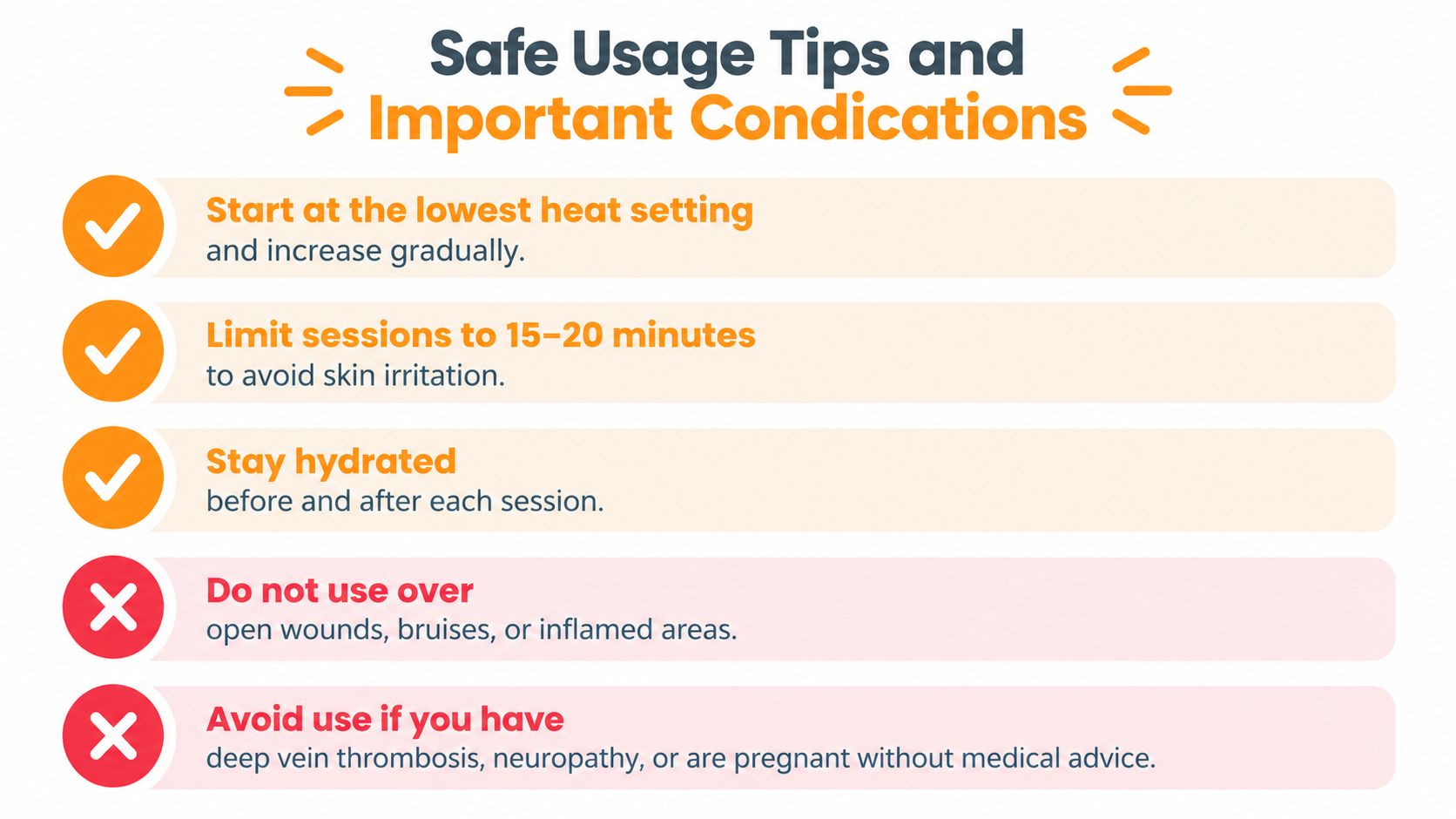
Keep the first session conservative. A session of roughly 15 to 30 minutes is commonly recommended in safety guidance, and the device should never be used while you're asleep because you may not notice excessive heat, pressure, or a change in skin color. Don't place the device over open wounds, unexplained redness, or an area that feels unusually hot.
Stop and seek advice when needed
Talk with a qualified clinician before using heated compression if you have vascular disease, diabetes, neuropathy, a pacemaker, hypertension, suspected thrombosis, or significant heart disease. Reduced sensation can make it difficult to detect a burn, while vascular conditions can change whether heat or compression is appropriate. Pregnancy also warrants medical advice before using a heated or compressive device.
Use this quick check before each session:
- Inspect your skin: Don't use the device over wounds, bruises, rashes, or inflamed tissue.
- Begin gently: Start with the lowest heat and pressure that produces comfort.
- Stay awake: Never sleep while the heat function is operating.
- Monitor symptoms: Stop if you notice numbness, burning, sharp pain, dizziness, or worsening swelling.
- Maintain the device: Clean removable covers, store the unit dry, and replace it if wiring, seams, chambers, or heating elements show wear.
Combined massage and heat may improve flexibility and reduce passive stiffness without increasing muscle strength. Treat that as a recovery and wellness benefit, not a performance upgrade. If leg pain persists, appears suddenly, affects one side with swelling, or interferes with walking, arrange a medical assessment instead of trying to mask it with heat.
SunnyBay offers reusable heating pads, wraps, massage tools, and hot or cold accessories for targeted comfort at home. Visit SunnyBay to explore heat-therapy options that may complement a careful leg recovery routine.


