


Back Heating Pad with Massage: The Complete Buyer's Guide
-
You wake up with a stiff lower back, roll onto your side, and brace yourself before standing. Sitting at a desk, driving, lifting, or sleeping in one position can leave the muscles around your spine feeling guarded and tight. A plain heating pad may feel soothing, but you may still wish you could combine that warmth with the pressure of a massage without holding a tool in place.
A back heating pad with massage combines thermotherapy with mechanical stimulation. The combination can be useful for muscular tension and soreness, but it isn't automatically better for every type of back pain. The pad's size, heat source, massage pattern, pressure, fit, and safety features matter more than a long list of buttons.
Table of Contents
- Understanding Your Back Pain Relief Options
- How Heat and Massage Work Together for Pain Relief
- Choosing the Right Design and Size for Your Needs
- Hands-Free Wraps Versus Handheld Massagers
- Managing Runtime and Heat Retention Effectively
- Safety Guidelines and Cleaning Your Device
- Making Your Final Purchase Decision
Understanding Your Back Pain Relief Options
A traditional heating pad delivers warmth across the skin and the tissues beneath it. That warmth can make stiff muscles feel more comfortable and may help you move with less guarding. A back heating pad with massage adds a second input, such as vibration, kneading, tapping, or rolling pressure, so you're not relying on temperature alone.
The distinction matters. Heat therapy generally means applying a controlled warm surface to a painful or tense area. A microwaveable pad uses a heated fill material, while an electric pad uses an internal heating element. In both cases, the goal is comfortable warmth, not intense heat. Massage features create mechanical stimulation, but they don't all produce the same experience or target the same tissue.
A gentle vibrating pad may provide a broad, calming sensation. Kneading or shiatsu-style nodes apply more focused pressure and can feel substantially stronger. Rolling mechanisms move along a defined path, while tapping produces repeated impacts. A device that feels relaxing against the upper back may feel too aggressive over the lumbar spine, especially when the area is acutely irritated.
Match the tool to the pain pattern
Consider a person who spends the morning working from a laptop. Their lower back feels tight after sitting, but the discomfort eases somewhat after walking and changing position. A warm wrap may help settle the muscle tension, while mild massage can make the area feel less rigid before movement. That use case differs from sharp pain after a fall, pain accompanied by leg weakness, or symptoms that don't change with position. Those situations need assessment rather than a stronger gadget.
Practical rule: Use a combination device to support comfort and movement, not to mask symptoms that need medical attention.
Clinical evidence supports a measured view. A Cochrane review of superficial heat and cold for low back pain included 9 trials with 1,117 participants. Within 2 trials totaling 258 people with acute or sub-acute low-back pain, heat wrap therapy reduced pain after five days compared with oral placebo by a weighted mean difference of 1.06 on a 0-to-5 pain scale, with a 95% confidence interval of 0.68 to 1.45. That result supports short-term relief from wearable heat, but it doesn't prove that every massage attachment adds a major therapeutic benefit.
How Heat and Massage Work Together for Pain Relief
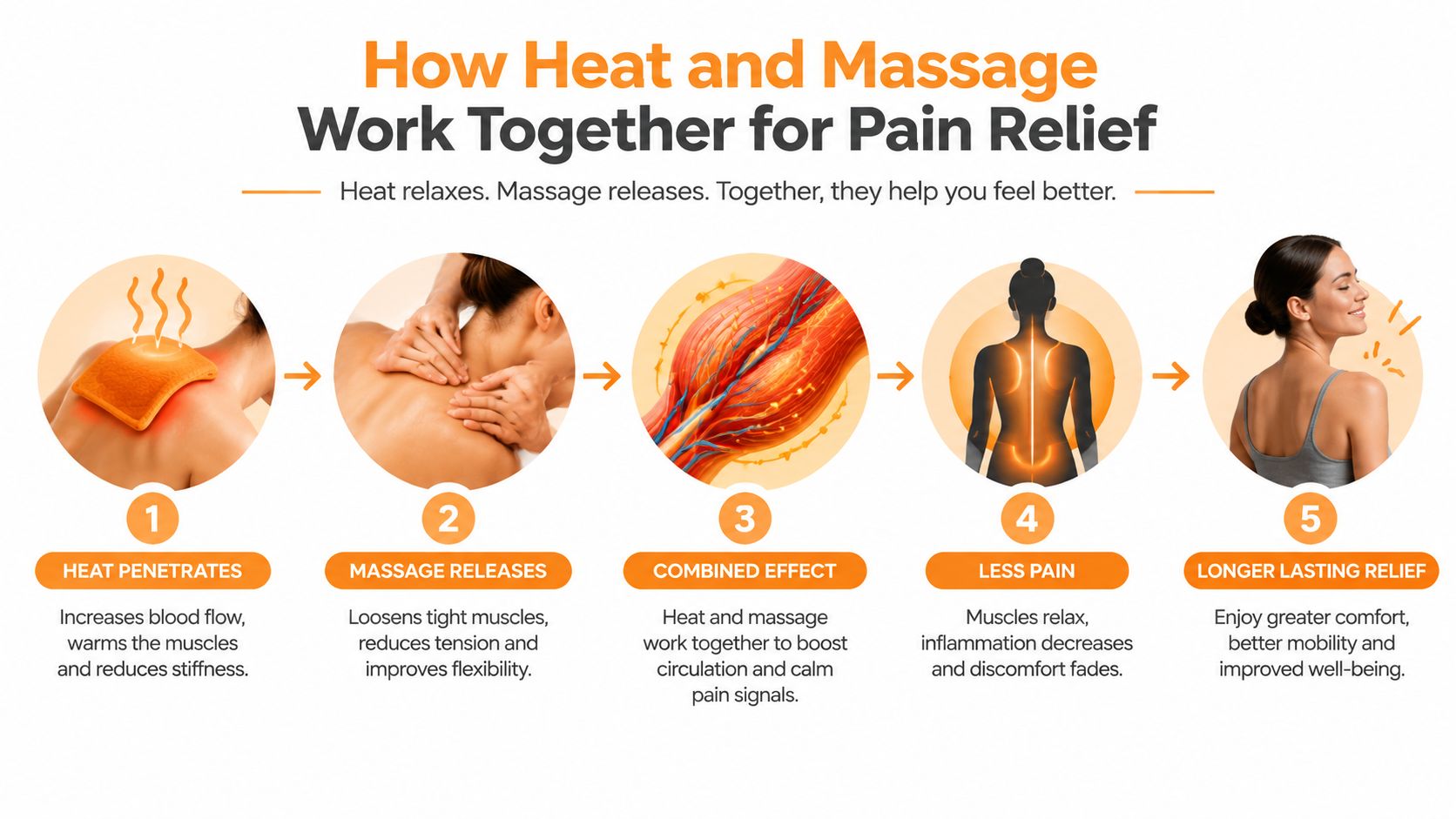
Heat and massage influence comfort through different mechanisms. Warmth encourages local vasodilation, meaning the blood vessels widen. That can increase circulation in the treated tissues, support delivery of oxygen and nutrients, and help clear metabolic byproducts associated with muscular activity. Heat also reduces the sensation of stiffness, which may make gentle movement easier.
Massage adds pressure and movement. Kneading can compress and release soft tissue, vibration can stimulate sensory receptors, and rolling can produce a traveling pressure pattern. These inputs may reduce the feeling of muscle guarding and can make a tense area feel more relaxed. The effect isn't merely “more intensity equals more relief.” Excessive pressure can aggravate a sensitive area.
The most useful way to think about the combination is preparation. Heat may make tissue feel more pliable, while massage adds mechanical input to muscles that already feel tight. That pairing can be comfortable for posture-related tension, general muscular soreness, and stiffness that improves with movement.
The massage pattern matters
A controlled study of 36 people with chronic non-specific spinal pain compared heat plus twisting massage with heat plus traditional vibration massage. Both groups received treatment twice weekly for four weeks, and pain reduction on the visual analog scale favored twisting massage, with a reported p-value of 0.0369 in the study results (clinical study on heat and massage patterns). This suggests that a targeted, rhythmic pattern may offer more than a diffuse vibration sensation in some settings.
That finding shouldn't be generalized to every consumer device. A separate randomized feasibility trial assigned 40 participants into two groups of 20 and found that both groups improved after four weeks, but simultaneous heat massage wasn't superior to conventional physical therapy overall (randomized feasibility trial and related clinical research). The practical conclusion is candid: massage may improve comfort for some users, but it isn't a replacement for examination, exercise, or physical therapy when those are indicated.
Choose a gentle setting first. If the device causes sharp pain, lingering soreness, numbness, or increased symptoms after use, reduce the pressure or stop using it. The best pattern is the one that helps you relax and move more freely, not the one that feels most forceful.
Choosing the Right Design and Size for Your Needs
Start with the area you want to treat. A broad lower-back pad should cover the muscles on both sides of the spine without forcing the heating element directly onto the spinal bones. A smaller wrap may suit one shoulder, the upper trapezius, or a narrow area of neck tension. Shape determines contact, and contact determines whether the warmth stays where you need it.
Use coverage as your first filter
- Lower back and broad lumbar tension: Choose a wide pad or wrap that spans the muscular area around the waist and lower spine. It should stay in place when you sit or recline.
- Upper back and shoulder tension: A contoured shoulder design can sit more securely around the joint and upper trapezius than a flat rectangle.
- Neck and focused areas: A narrower wrap is easier to position and usually less cumbersome than a large body pad.
- One-sided soreness: Look for a design that can be shifted or secured over the affected side without heating an unnecessarily large area.
Size isn't the only consideration. A pad filled with flax seed may feel soft and flexible, while lava sand provides a denser, more stable fill that conforms differently to the body. The ideal material depends on whether you value moldability, weight, even warmth, or a firmer sensation. A washable fleece-and-cotton cover can also make regular use more comfortable and hygienic.
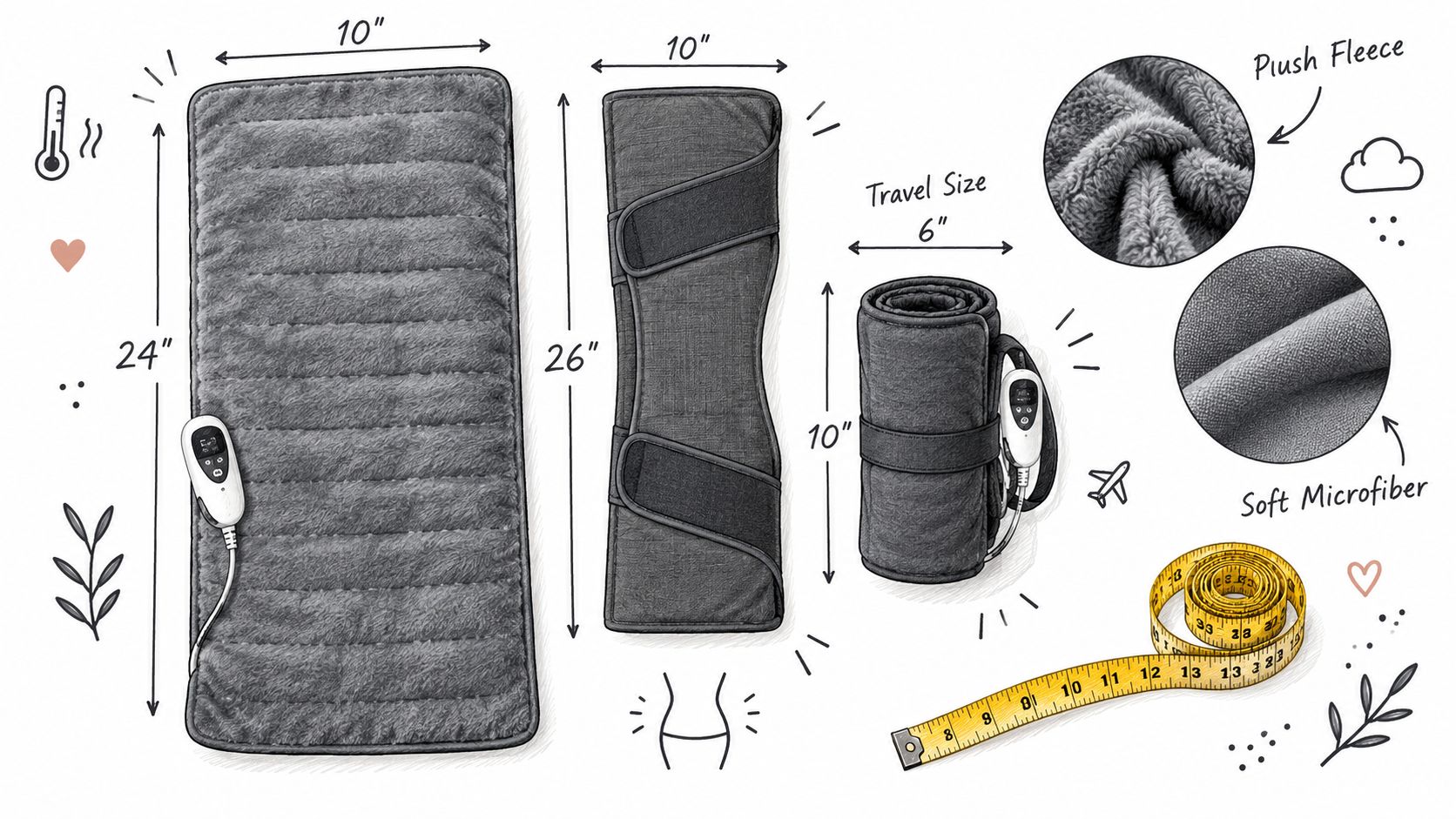
A useful sizing guide is available in this explanation of heating pad size and shape. Check whether the cover can be removed, whether the fill is evenly distributed, and whether the fastening system keeps the pad against your body without excessive compression.
Hands-Free Wraps Versus Handheld Massagers
Hands-free wraps suit people who want passive treatment. Elastic bands, contoured panels, or adjustable closures hold the warmth against the lower back while you read, work, or rest. That convenience is valuable for office workers with posture-related tension and for active people who want a simple recovery routine without repeatedly repositioning a tool.
A handheld massager gives you more control over location and pressure. You can work around the muscles beside the spine, move toward the gluteal area, or avoid a tender spot altogether. The drawback is practical. You need to hold the device, reach the area, and maintain a useful angle, which can be difficult when treating your own back.
| Format | Main advantage | Main limitation |
|---|---|---|
| Hands-free wrap | Stays positioned while you relax or work | Less precise pressure control |
| Handheld massager | Direct control over pressure and location | Requires active use and reach |
| Air-activated heat patch | Portable warmth without a microwave or outlet | Usually provides heat without massage |
A hands-free design is usually the better fit for broad muscular stiffness and predictable daily use. A handheld tool makes more sense when the painful area changes or when you need to work around specific muscle bands. Portable air-activated patches can be useful outdoors, while traveling, or during work situations where power and a microwave aren't available.
Massage tools vary widely in pressure and technique, so review this guide to massage tools for home use before choosing a format. Don't buy a handheld device just because it looks more powerful. If you can't comfortably position it, you won't use it consistently.
Managing Runtime and Heat Retention Effectively
Heat retention depends on the device, the fill, the cover, the surrounding temperature, and how closely the pad contacts your body. Microwaveable pads gradually cool rather than switching off at a fixed point. Denser fills, including lava sand, may retain warmth more steadily than lighter materials, while a thick cover can slow heat loss and protect the skin.
Plan your session around the product's instructions. Warm the pad evenly, shake or redistribute the fill if the design requires it, and test the temperature before placing it on your back. If the warmth fades quickly, reheating it repeatedly isn't necessarily the answer. The pad may need better contact, a cover, or a different design with greater thermal mass.
Use heat and cold deliberately
Some reusable products can be warmed in a microwave or cooled in a freezer. Heat is generally more comfortable for stiffness and muscular guarding, while cold may be preferable after a recent aggravating activity when the area feels hot or swollen. Neither should be applied directly to bare skin for an extended period.
A longer session isn't automatically a better session. Comfortable warmth should leave your skin normal and your symptoms settled, not reddened or irritated.
Massage adds another reason to respect usage limits. A vigorous setting can leave tissues feeling tender even when the heat itself feels pleasant. Follow the manufacturer's time and temperature guidance, remove the device if your skin becomes very red or numb, and give the area a break before deciding whether you need more treatment.
Safety Guidelines and Cleaning Your Device
Heat therapy is not suitable for every person or every symptom. Use extra caution if you have reduced sensation, diabetes-related neuropathy, circulation problems, an open wound, fragile skin, or difficulty recognizing excessive heat. If you have a diagnosed condition, recent surgery, unexplained pain, or symptoms such as weakness or progressive numbness, ask a clinician before using a heated massager.
Test the pad with your hand before applying it. Place a fabric layer between the device and your skin if the manufacturer recommends one, keep the temperature at a comfortable level, and never fall asleep with an active electric heating device. A heating pad should support comfort, not create a low-grade burn that you notice only after the session ends.
Keep the cover and mechanism clean
- Wash removable covers: Remove the heating insert, controller, or massage mechanism before laundering. Follow the care label rather than assuming the complete product is washable.
- Spot-clean fixed components: Wipe non-washable sections with a lightly damp cloth and let them dry completely before use.
- Inspect before each routine: Look for frayed fabric, exposed wiring, damaged seams, leaking fill, or a controller that behaves inconsistently.
- Store it dry: Keep the pad away from moisture and avoid folding it sharply if that could strain the internal components.
This heating pad safety guide offers additional practical precautions. Cleaning isn't only about appearance. A clean cover reduces skin exposure to accumulated sweat and oils, while a sound seam or cable helps the pad deliver predictable warmth without creating a new hazard.
Making Your Final Purchase Decision
Choose the device around your symptoms and routine, not around the longest feature list. For broad chronic lower-back stiffness, a larger hands-free wrap with a stable, durable fill may be more useful than a small handheld massager. For changing pain locations, a handheld tool offers more control. For work, travel, or outdoor use, an air-activated patch can provide warmth when you can't reach a microwave or electrical outlet.
Use this decision sequence:
- Identify the location. Lower back, upper back, neck, and shoulder pain call for different shapes and coverage.
- Assess the sensation. Choose mild vibration or gentle kneading if strong pressure makes you tense.
- Decide how passive you want treatment to be. A wrap lets you rest, while a handheld tool requires active positioning.
- Check maintenance requirements. Removable covers, washable materials, and accessible controls make repeated use easier.
- Set a realistic budget. Pay for the features you'll use, not for intensity or complexity that doesn't suit your pain.
Evidence supports heat as a reasonable short-term comfort option for some low-back pain, but it also argues against exaggerated promises. The Cochrane evidence summary on superficial heat and cold notes that benefits for low-back pain can be small and short term, while massage evidence is not strong enough for firm conclusions in every situation. That makes fit, comfort, and safe use more important than assuming a more expensive combination device will outperform physical therapy or a simpler pad.
For broader context on evaluating wellness tools, consult the Maximum Health Products wellness guide. SunnyBay offers microwavable heating pads and wraps, massage tools, reusable hot and cold products, and air-activated heat patches for targeted areas. Visit SunnyBay to compare designs that match your back pain location, preferred level of hands-free support, and everyday routine.
If your back feels stiff after sitting, training, or sleeping, start by choosing the coverage and pressure you can tolerate consistently. Review SunnyBay's heat wraps, massage tools, and portable options, then select the format that fits how you move through your day.


