


Can Heat Make Back Pain Worse? Causes and Safe Use
-
Heat usually doesn't worsen ordinary mechanical back pain, but it can aggravate a fresh injury, inflamed tissue, or skin exposed to excessive warmth, especially when reduced sensation makes burns harder to notice. A gentle session of 15–20 minutes may ease muscular stiffness, but increasing pain is a reason to stop, not push through.
If warmth is supposed to soothe a sore back, why would the same heating pad sometimes make it feel worse? The important distinction isn't heat versus no heat. It's what's causing the pain, when you apply warmth, and how your body responds.
Table of Contents
- Can Heat Make Back Pain Worse
- How Heat Changes Back Pain
- When Heat Helps or Aggravates Pain
- What the Evidence Says About Heat
- Use Heat Safely on Your Back
- Back Pain Examples and Red Flags
- Make the Right Heat Decision
Can Heat Make Back Pain Worse
You reach for a heating pad because your lower back feels tight after working at a desk. As the warmth spreads, the tension gradually eases. On another occasion, you try the same pad after a painful injury, but the area starts throbbing instead.
Those are representative situations, not patient case studies. They illustrate why the answer to “Can heat make back pain worse?” depends on context rather than the device alone.
Read the response, not just the temperature
Gentle warmth may help ordinary muscular stiffness, while a fresh injury, active inflammation, infection, or unsafe exposure can make heating unsuitable. The clinical review of heat therapy's applications and cautions distinguishes potential symptom relief from risks involving injured tissue, excessive temperatures, and impaired sensation.
You don't need to identify the exact diagnosis before removing an uncomfortable heating pad. You do need to resist the assumption that stronger discomfort means stronger treatment.
Practical rule: Comfortable warmth may help muscles relax. Pain that intensifies under heat means stop and reassess.
Relief and harm feel different
The useful distinction is between gradual easing and escalating discomfort:
- A potentially helpful response: Your back feels less guarded, and the warmth remains comfortable.
- A reason to stop: Pain becomes sharper, more intense, or increasingly throbbing.
- A skin warning: You notice burning, unusual redness, discoloration, or blistering.
These observations guide self-care; they don't diagnose the cause of back pain. Removing the heat is the immediate decision, while the symptoms that remain determine whether you need medical advice.
A mildly uncomfortable session doesn't automatically mean an emergency. It does mean you shouldn't increase the temperature or continue in hopes of forcing relief.
How Heat Changes Back Pain
Heat works mainly as a short-term comfort measure, not as a way to repair every structure that might hurt. Understanding that distinction helps explain both its usefulness and its limits.
Superficial warmth increases local blood flow. In a stiff, guarded area, controlled warming can make muscles feel more comfortable and reduce the sense of tension. But increased circulation isn't always helpful: Harvard Health's guidance on heat and cold advises avoiding heat over swelling, redness, or a newly sustained injury.
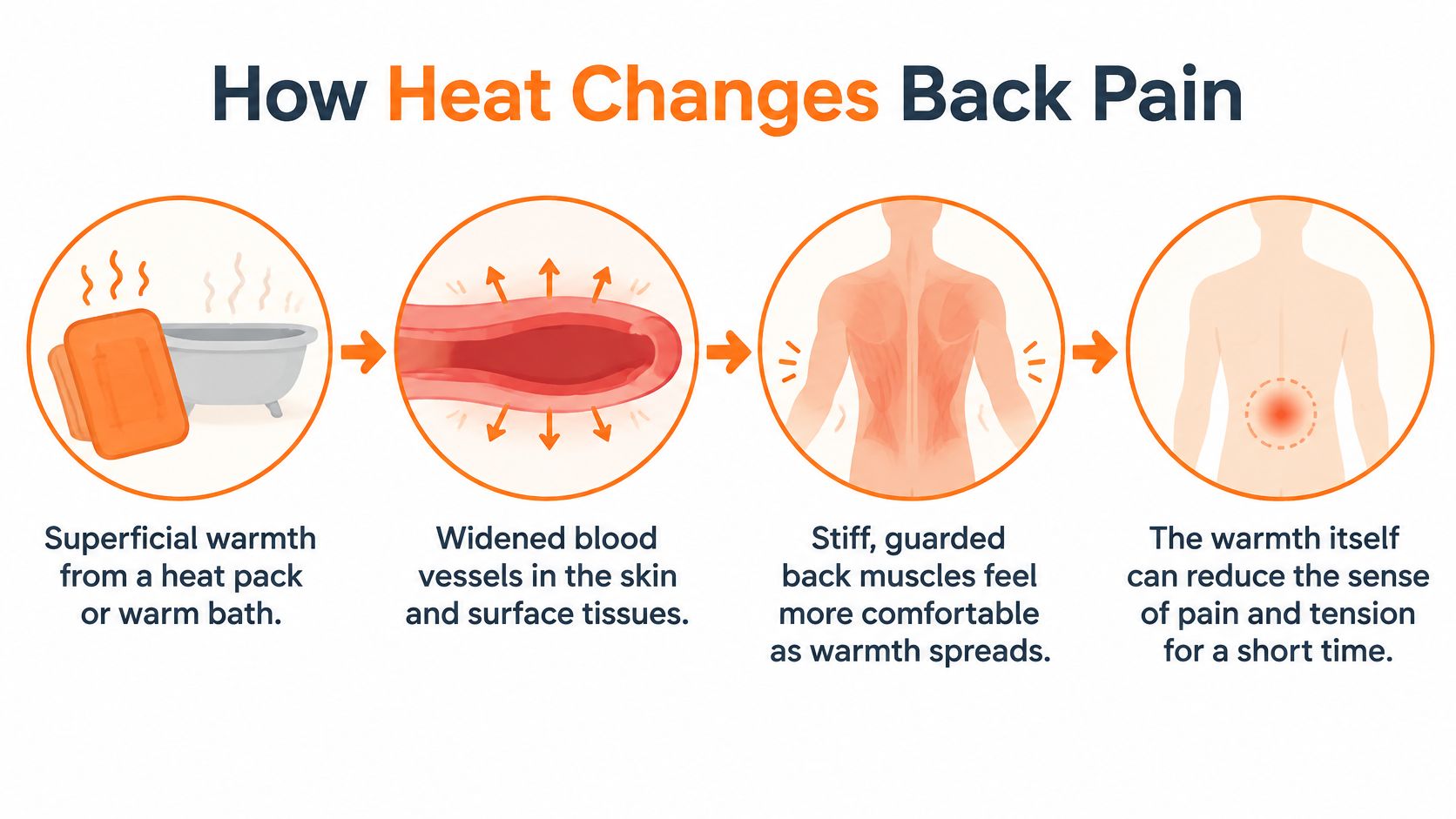
Why the same response can help or hurt
Think of increased blood flow like opening another lane on a road. More room for traffic can be useful, but it doesn't guarantee that every destination needs more incoming traffic.
Likewise, warmth can feel soothing when muscle guarding is the main problem. Around a newly injured area, however, increased blood flow may aggravate swelling, irritation, or bleeding. The biological response is similar, but the condition of the tissue changes whether it's welcome.
That's why “heat improves circulation” isn't enough information to decide whether you should use it. More circulation isn't automatically better treatment.
- For muscular tightness: The aim is a comfortable reduction in guarding and stiffness.
- For a swollen injury: Extra warming may add discomfort rather than ease it.
- For an unknown cause: A pleasant sensation doesn't establish what's wrong.
Comfort doesn't confirm the cause
A warm pack can soften the experience of pain without resolving its source. Think of turning down an alarm's volume: the quieter sound doesn't tell you why it went off.
This distinction matters when relief fades as soon as you remove the pad. That doesn't necessarily mean you need a hotter setting or longer exposure. It may mean you've reached the limit of what a comfort measure can accomplish.
Heat shouldn't be treated as proof that a disc, nerve, joint, or other structure is healthy. Its immediate effect tells you about tolerance and comfort, not the full explanation for your symptoms.
When Heat Helps or Aggravates Pain
A tight back after sitting and a painful back after an injury can both feel sore. Yet the surrounding clues call for different choices.
Gradual muscular tension without an obvious injury may be a reasonable setting for gentle warmth. A freshly injured area that's swollen, bruised, red, or already hot deserves a more cautious approach. Infection or broken skin makes ordinary trial-and-error heating inappropriate.
Compare the whole symptom pattern
When Back Pain May Respond to Heat
| Situation | Typical Response Pattern | Sensible Response |
|---|---|---|
| Gradual muscular stiffness | Comfortable warmth eases the tight feeling | Consider a brief, protected session |
| Fresh injury with swelling or bruising | Warming may increase throbbing or discomfort | Avoid heating the affected area and consider early injury guidance |
| Red, already-hot, or possibly infected area | Additional warmth may aggravate symptoms | Seek clinical advice rather than experimenting |
| Pain that increases during treatment | No gradual relaxation, or worsening discomfort | Remove the heat and reassess |
| Uncertain cause with persistent symptoms | Temporary comfort doesn't clarify the problem | Arrange an assessment |
The table is a decision aid, not a diagnostic checklist. You can't reliably rule out an injury or infection just because your symptoms don't match every description.
Timing matters, but it isn't a rigid countdown
An NHS back-advice booklet recommends cold during approximately the first 0–72 hours of an acute episode, using a protected pack for 10–15 minutes, and describes heat as potentially useful afterward for pain reduction.
That guidance doesn't mean every new backache requires ice. A fresh traumatic injury with swelling is different from noticing familiar muscle tightness after sitting. Nor does reaching the end of an early injury period automatically make heat appropriate if the area remains swollen or unusually hot.
- Suspected acute irritation: Consider whether early cold guidance fits the situation.
- Settled injury with residual stiffness: Gentle warmth may become more reasonable.
- Unclear or worsening symptoms: Don't rely on the calendar to decide that treatment is safe.
For a practical comparison of the approaches, consult this guide to heat therapy versus cold therapy.
The useful question isn't “Which treatment is always better?” It's “Which response fits the symptoms I have today?” Even a previously helpful routine needs reconsideration when the pattern changes.
What the Evidence Says About Heat
Research supports a measured expectation: heat can help some people feel and move better for a short time. It doesn't support treating every kind of back pain with increasingly intense warmth.
A review of superficial heat for low-back pain describes nine studies involving 1,117 participants, with small, short-term improvements in pain and mobility from continuous heat wraps. The practical message is modest relief, not a cure.
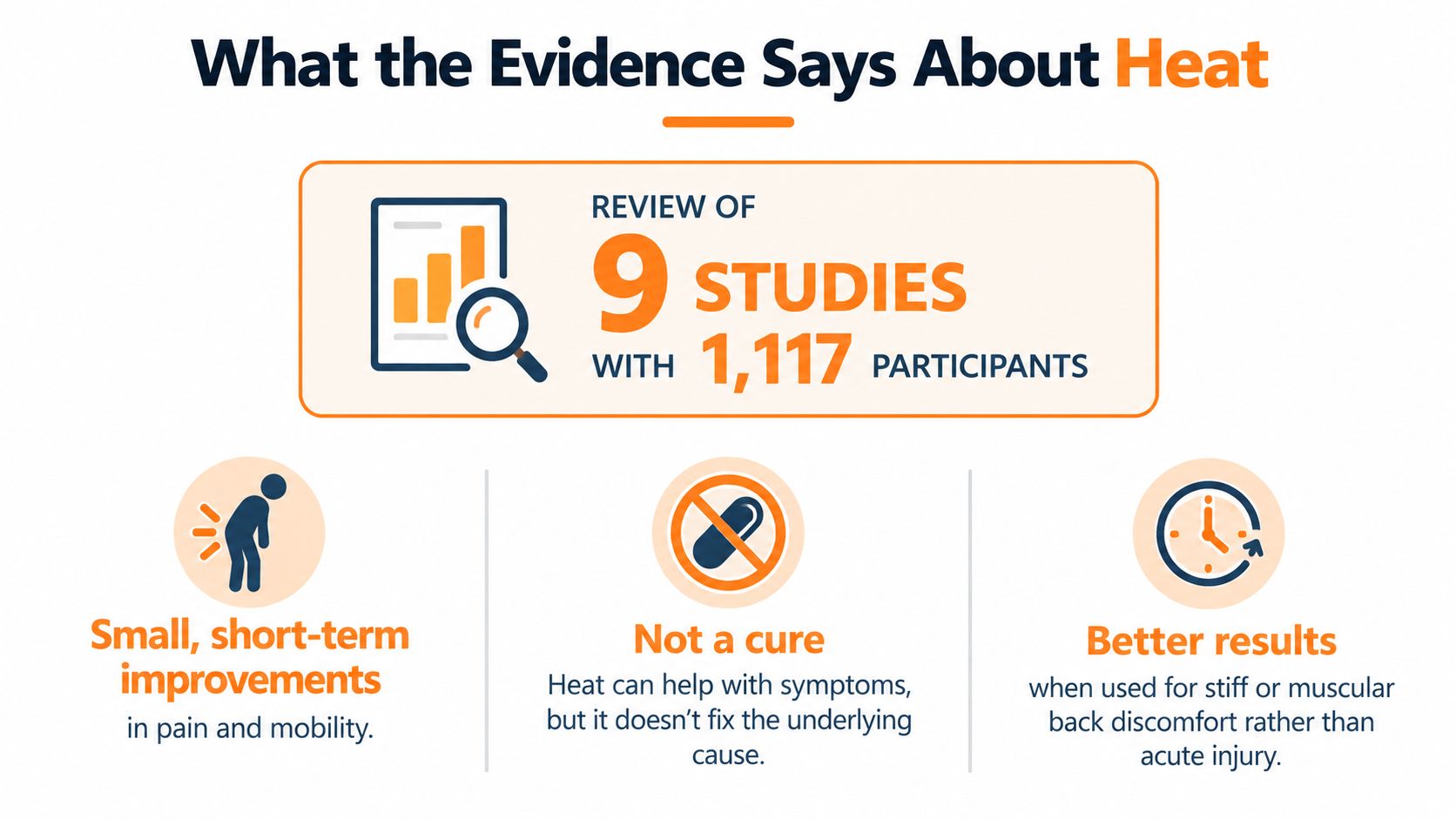
Controlled warmth isn't the same as a hot heating pad
The same review describes a randomized study of 371 participants using a heat wrap at approximately 40°C for 8 hours daily over two days, with greater early relief and improvements in stiffness, flexibility, and disability compared with the study's medication or control groups.
That research schedule describes a specific controlled heat-wrap intervention. It is not permission to leave an ordinary electric or microwavable pad on all day, and it doesn't show that higher temperatures produce better results.
A controlled research treatment and an improvised home-heating routine aren't interchangeable.
The distinction matters because readers can easily mistake duration for a dose they should copy. The more useful lesson is that researchers studied moderate, controlled warming, rather than the hottest tolerable sensation.
Immediate relief has limits
The Cochrane review of superficial heat and cold for low-back pain supports modest short-term benefits for acute or subacute pain, while evidence for pain lasting longer than three months is insufficient. It also reports that combining heat with exercise can improve pain and function more than heat alone.
That makes warmth an adjunct, something used alongside an appropriate plan, rather than the whole plan.
- Use relief constructively: Comfortable movement or prescribed rehabilitation may matter more than repeatedly reheating a pack.
- Don't chase a stronger sensation: Lack of lasting benefit isn't a reason to increase the heat.
- Reconsider repeated dependence: If you need warmth to manage the same unexplained pain day after day, discuss the cause and treatment plan with a clinician.
A treatment can be useful without being sufficient. Keeping that expectation realistic helps prevent temporary comfort from delaying needed assessment.
Use Heat Safely on Your Back
A safe routine starts before you warm the pack. Check whether the situation resembles ordinary muscular stiffness, then check whether your skin and sensation make self-treatment appropriate.
The NHS back-problems guidance supports gentle heat with a protective barrier and stopping if discomfort or burning occurs. The practical aim is comfortable warmth you can monitor, not maximum heat retention.
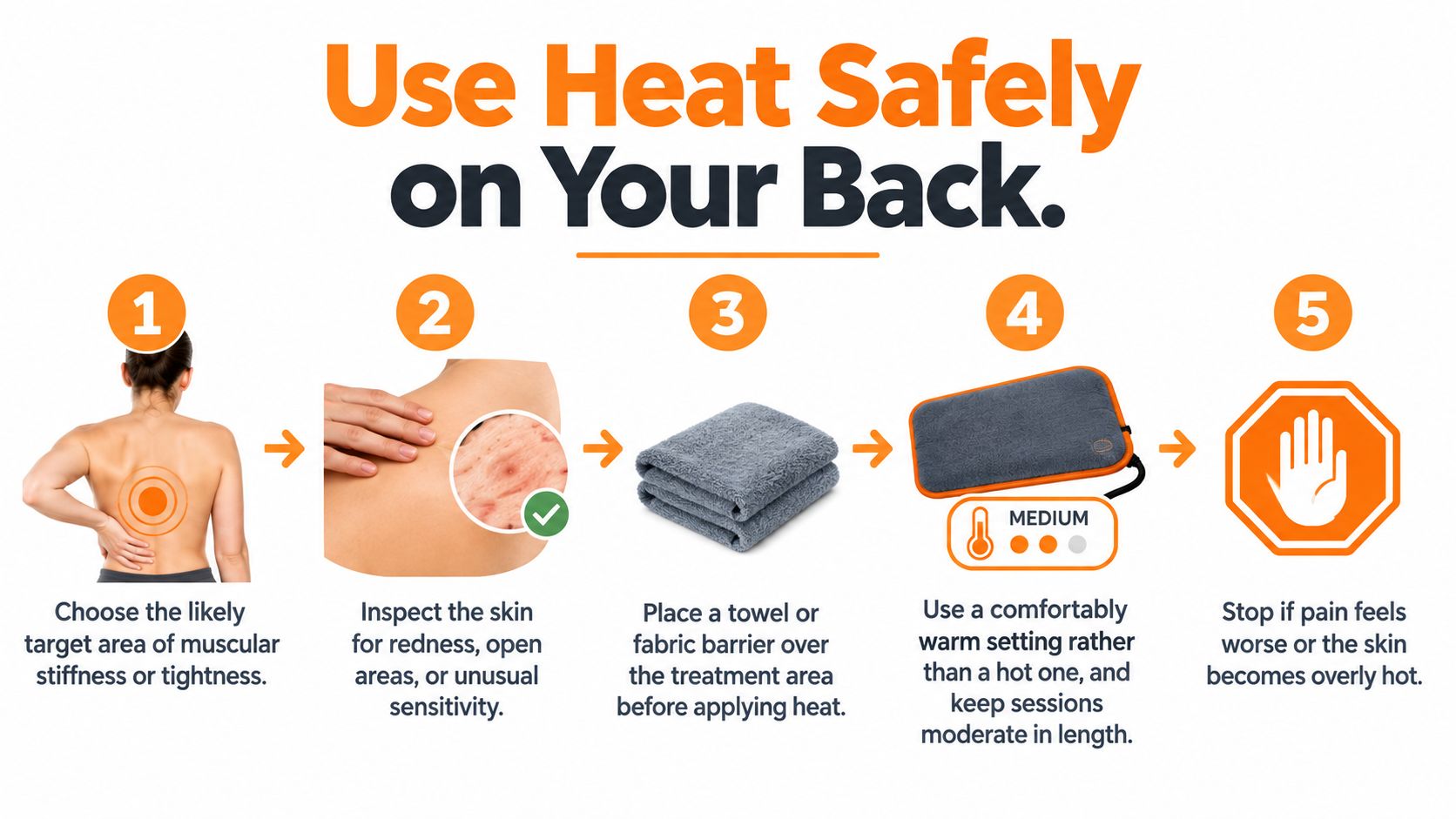
Prepare the skin and the heat source
Start by looking at the treatment area. Don't place heat over an open wound, an infected patch, or skin that's already unusually red or hot.
Choose a source you can use according to its instructions. An electric heating pad, microwavable wrap, and air-activated patch aren't interchangeable devices; their heating methods and directions differ.
- Protect the skin: Put a towel or appropriate fabric barrier between your skin and a reusable heat source. Follow the specific placement instructions for patches.
- Choose comfort over intensity: The sensation should be warm, not stinging or painfully hot.
- Stay able to check: Position the device so you can remove it easily and inspect the area.
For microwavable products, follow the heating instructions rather than guessing from how cold the pack feels. Don't assume a thicker cover makes unlimited exposure safe.
Limit the session and reassess
The previously cited clinical review summarizes Mayo Clinic guidance of up to 20 minutes at a time, as often as three times daily, while NHS back-care advice describes 15–20 minutes with a possible repeat after two hours. These are limits for cautious use, not targets you must reach.
Stop earlier if anything feels wrong. Remove the heat, inspect your skin, and notice whether your back feels easier, unchanged, or worse before deciding about another session.
Don't sleep with a heating pad or other heat source in place. A microwavable pack or air-activated patch may remain warm after you fall asleep, when you're no longer actively monitoring your skin.
Reduced sensation changes the decision
People with diabetes, poor circulation, or reduced skin sensation should seek professional advice before using heat. Some NHS guidance advises against heat treatment in these circumstances because unnoticed burns or tissue damage are more likely.
An area affected by infection also needs clinical advice rather than routine warming. Feeling little heat isn't reassuring if your ability to sense temperature is impaired.
Before repeating a session: Check your skin and your symptoms, not just whether the pack is still warm.
Use this heating-pad safety guide to review device precautions. A timer and a removable barrier are practical safeguards, but neither makes an unsuitable treatment appropriate.
Back Pain Examples and Red Flags
The assumption that heat must be helping because it initially feels pleasant can lead to poor decisions. These representative examples show how the same self-care rule changes with context.
Similar aches, different next steps
Desk-related tightness. Your back gradually feels tense during computer work, without a clear injury or unusual skin changes. Protected, moderate warmth feels comfortable and the tightness eases, making a short session a reasonable comfort option.
A fresh painful flare with swelling. Your back hurts after an injury, and the affected area looks or feels swollen. Don't use warmth to test whether you can loosen it up; early injury guidance and, when warranted, assessment are more appropriate.
Pain that builds under the pack. The warmth feels pleasant at first, then your back begins throbbing more strongly. Remove the source rather than turning it down and continuing to endure the session.
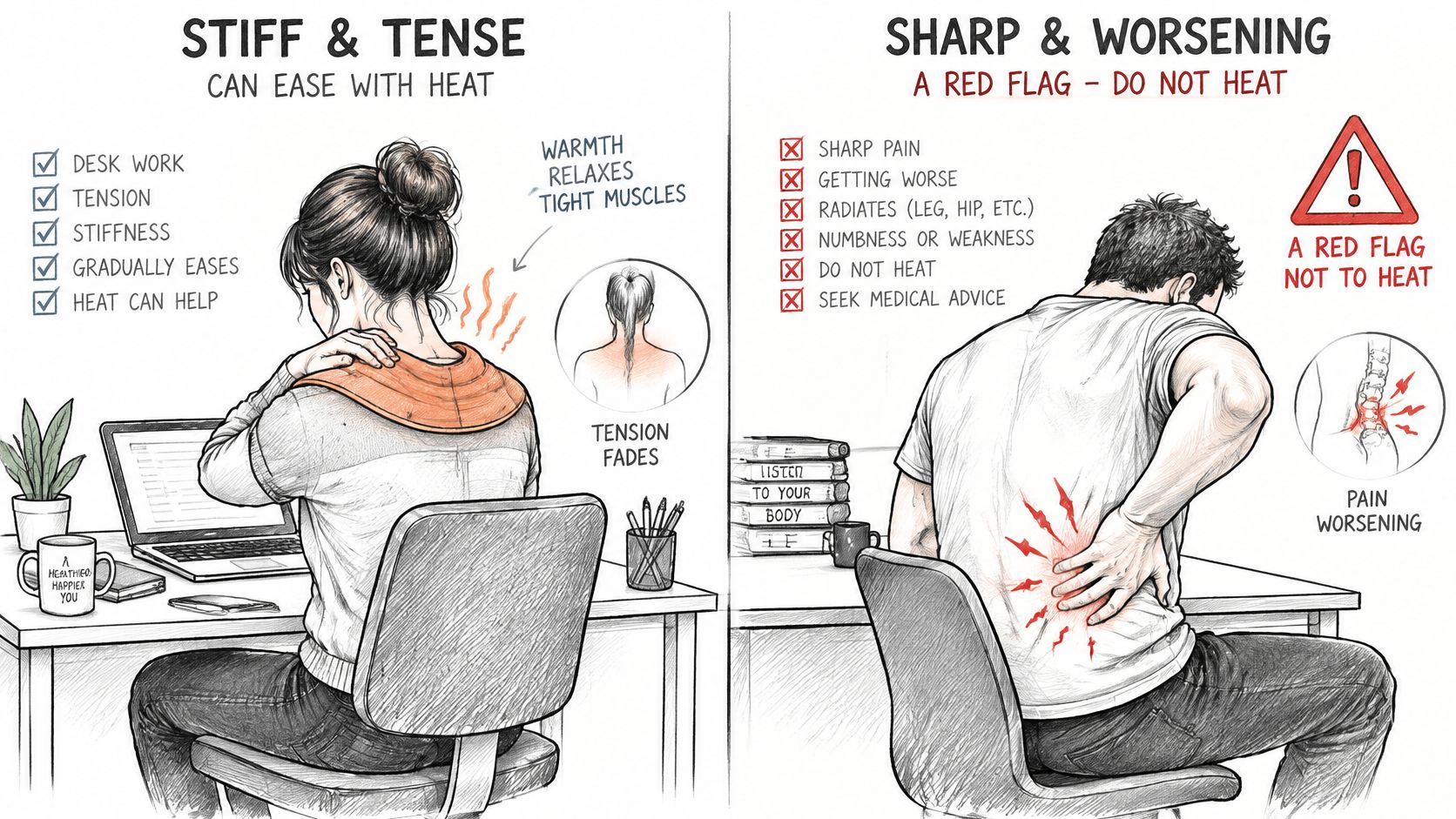
None of these examples establishes a diagnosis. They show that your response can change the next action, even when you've used the same device successfully before.
Separate treatment discomfort from warning signs
The NHS resources discussed earlier identify symptoms that shouldn't be managed by repeatedly trying heat or cold. Seek emergency assessment for back pain accompanied by new numbness around the genitals or buttocks, loss of bladder or bowel control, or inability to empty the bladder.
Other changes call for urgent medical evaluation rather than another heating session:
- New leg weakness: Don't assume it's ordinary muscle tightness.
- Severe sudden or rapidly worsening pain: Seek prompt assessment, particularly after significant trauma.
- Fever, chills, or feeling generally unwell: Back pain with systemic illness needs urgent advice.
Skin symptoms require a separate response. Redness, discoloration, blistering, or worsening symptoms after heat mean stop treatment and seek medical advice; they aren't signs that a deeper treatment effect is beginning.
Persistent pain needs a different question
The clinical cautions discussed earlier also support assessment for pain that remains independent of movement or continues beyond about a week, rather than repeatedly self-treating without review. You don't need to wait that long when symptoms are severe, unusual, or worsening.
If you suspect nerve involvement, this guide to whether heat is appropriate for a pinched nerve offers additional context. Don't use temporary relief as a reason to ignore neurological changes.
For readers already discussing breast size as a possible contributor to ongoing discomfort with a clinician, OC Breast Surgery's resource on surgical options for heavy breasts may help prepare questions for a consultation. It isn't a recommendation for surgery or a substitute for assessing other causes.
The broader lesson is to ask why the pain keeps returning, not which heat source stays warm longest.
Make the Right Heat Decision
A sensible heat decision combines timing, tissue condition, and treatment response. None of those clues works well on its own.
Likely muscular stiffness that gradually relaxes with comfortable warmth may suit a short, protected session. A fresh injury or a swollen, red, infected, or already-hot area calls for caution instead. Unexplained or persistent symptoms deserve an assessment rather than an increasingly elaborate heating routine.
Choose the next action, not the strongest treatment
Use a simple decision path:
- Comfortable and easing: Keep the session within the safe-use guidance and reassess afterward.
- Uncomfortable or worsening: Remove the heat rather than trying to tolerate more.
- Unusual, persistent, or accompanied by warning signs: Get appropriate medical advice instead of testing another device.
That framework doesn't require you to identify every possible cause of back pain. It helps you avoid treating an uncertain problem more aggressively just because the first attempt didn't work.
Heat is a tool, not a test of endurance.
Remember the distinction between comfort and correction. Warmth may make symptoms easier to manage, but the evidence discussed above doesn't make it a treatment for every underlying cause.
Keep sleep separate from heat treatment, respect changes in skin and sensation, and let new symptoms change your plan. The useful outcome isn't how much heat you can tolerate. It's whether you feel more comfortable without creating another problem.
SunnyBay offers microwavable heating pads, wraps, and hot/cold accessories for targeted self-care. Visit SunnyBay to compare options and review their instructions, choosing a product only when heat fits your symptoms and you can use it safely.


