


Is Heat Good for a Pinched Nerve? A Guide to Pain Relief
-
When you’re in the throes of a pinched nerve, any kind of relief sounds like a good idea. So, is heat good for a pinched nerve? Absolutely, heat can be excellent for a pinched nerve—but timing is everything.
You should only introduce heat after the initial 48-72 hours of acute injury. Applying it too soon can make swelling worse, but once that initial inflammation subsides, heat becomes one of your best tools for relief.
Why Heat Is a Game-Changer for Pinched Nerve Pain

To really understand why heat works, you have to look beyond the nerve itself. The real culprit is often the tight, spasming muscles surrounding and squeezing that nerve. This is where heat therapy, also known as thermotherapy, steps in and saves the day.
Think of it like a stubborn knot in a rope. If you just yank on it, you’ll only make it tighter. The better approach is to gently work the fibers around the knot to loosen them up, and the knot practically unties itself. Heat does the same thing for your muscles. It's a gentle, effective way to convince those tense muscles to let go, which is the first step toward real comfort.
How Warmth Unlocks Lasting Relief
When you apply warmth to the painful area, it kicks off a process called vasodilation. This is just a technical way of saying your blood vessels widen, which is a fantastic thing for healing.
This boost in circulation acts like a superhighway, delivering a fresh supply of oxygen and nutrients right to the injured tissues to speed up repair. At the same time, it helps flush out the metabolic waste products that contribute to pain. It's a win-win.
For instance, if you're dealing with sciatica from a pinched nerve in your lower back, the muscles in that area are probably wound up like a steel spring. Applying a good heat pack for about 15-20 minutes can work wonders. You'll feel the tension melting away, and the deep, nagging ache will start to fade.
- It helps relax those tense glute and piriformis muscles, which takes direct pressure off the sciatic nerve.
- It soothes the deep, nagging ache and eases the stiffness that makes it so hard to move comfortably.
- It even preps the area for gentle stretching, making those movements more effective and less painful.
To put it all together, here’s a quick look at how heat helps.
How Heat Therapy Helps a Pinched Nerve at a Glance
| Benefit | How It Helps Your Pinched Nerve | Best Time to Apply |
|---|---|---|
| Muscle Relaxation | Eases the tension in muscles that are compressing the nerve, directly reducing pressure. | After the first 48-72 hours, once initial swelling has gone down. |
| Increased Blood Flow | Delivers oxygen and nutrients to the site to promote tissue healing and repair. | When you feel stiffness, dull aches, or before gentle stretching. |
| Pain Reduction | Soothes the area and stimulates sensory receptors, which can help block pain signals. | Ideal for managing chronic or lingering pain from a pinched nerve. |
| Improved Flexibility | Warms up connective tissues, making the area more pliable and receptive to movement. | Before activities like physical therapy, stretching, or light exercise. |
Ultimately, using therapeutic warmth is a cornerstone of drug-free pain management. It offers a safe and powerful way to find comfort and support your body’s natural healing process.
What Is a Pinched Nerve, Really?
To get why something as simple as heat can work wonders, we first need a clear picture of what’s happening inside your body. Think of a garden hose. When it gets a kink in it, the water slows to a trickle or stops altogether. A pinched nerve is a lot like that. It's what happens when something nearby—like bone, cartilage, or a knotted-up muscle—squeezes or puts too much pressure on a nerve.
This pressure disrupts the nerve's communication highway, messing with the signals it's trying to send back and forth to your brain.
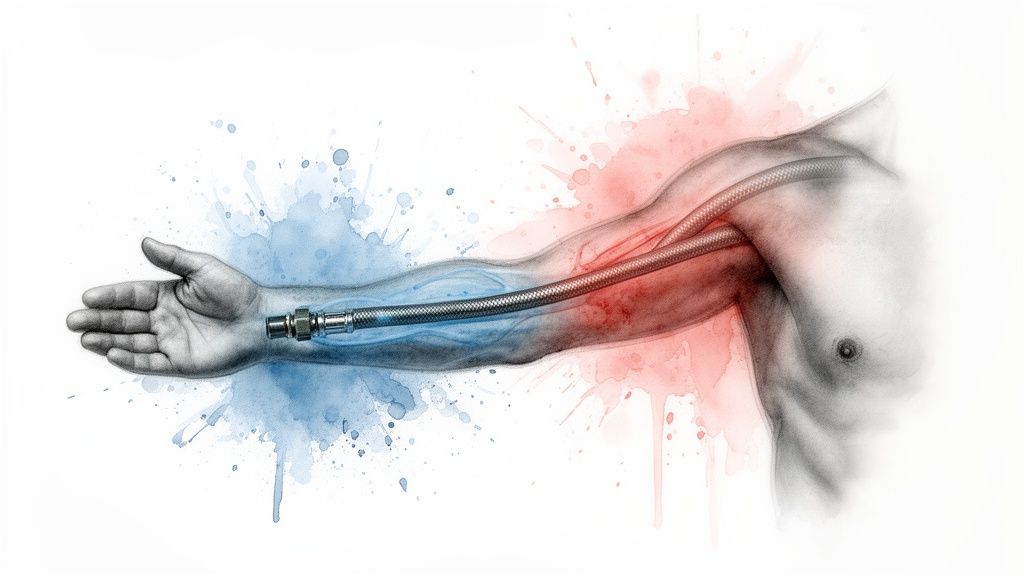
That "kink" is exactly why you're feeling that frustrating tingling, numbness, or sharp, shooting pain. It’s your body’s alarm system telling you a critical communication line has been compromised. The real goal of any treatment, then, is to gently and safely "unkink that hose" and take the pressure off.
Of course, this pressure doesn't just show up randomly. It’s usually a result of specific activities or physical issues that create compression points.
Common Causes of Nerve Compression
Several culprits can lead to a nerve getting squeezed. You might even see a bit of your own daily routine in some of these:
- Herniated Discs: The rubbery cushions between your vertebrae can sometimes bulge out or rupture, pressing right on the nerves in your spine. This is a classic trigger for sciatica.
- Poor Posture: We're all guilty of it. Slouching over a computer or constantly looking down at a phone creates chronic muscle tension in the neck and shoulders, which can eventually put the squeeze on nerves traveling down your arms.
- Repetitive Motions: Any task that has you repeating the same movement over and over—like typing, factory work, or playing an instrument—can inflame the surrounding tissues. Carpal tunnel syndrome is a perfect example, where nerve compression in the wrist can often be helped with a Carpal Tunnel Brace.
Seeing these causes laid out is the first step. Once you realize the problem often boils down to tight, angry muscles, it starts to make sense why figuring out if heat is good for a pinched nerve is such a crucial question.
Heat therapy goes right after the muscular tension that's so often at the heart of the problem. When you relax those tight muscles, you can effectively ease the pressure on the nerve, giving it the space it needs to function properly again.
This link between muscle tension and nerve pain is everything. Instead of just trying to numb the pain, a smart approach aims to fix the source of the compression. And that's exactly where focused heat and massage therapy can make a world of difference.
How Heat Actually Helps Heal a Pinched Nerve
When you press a warm compress against a sore muscle, that feeling of relief isn't just in your head. There's real science at play, a cascade of physiological events kicking off right under your skin. The warmth triggers a process called vasodilation, which is just a fancy term for your blood vessels widening.
Think of it like this: a pinched nerve creates a bottleneck in your circulatory system. Inflammation and waste products get stuck, causing pain and irritation. Applying heat is like opening up new lanes on a highway—it expands the blood vessels, getting traffic moving again.
This boost in circulation rushes oxygen and nutrients to the site of the injury, giving your tissues the raw materials they need to start repairing. At the same time, this improved blood flow acts like a cleanup crew, flushing away the metabolic junk that's contributing to your pain.
A Powerful Combination for Relief
This isn't just a passive process; it actively helps you heal. For instance, using heat right before a gentle massage can make a world of difference. The warmth helps tight, knotted muscles relax and become more pliable, allowing the massage to work its magic more effectively without aggravating the already-sensitive nerve. The feeling of a therapist working on warm, relaxed muscles is incredibly therapeutic and helps release those stubborn knots much faster.
The one-two punch of heat followed by massage is a classic for a reason. Heat gets the muscles to let go, and the massage manually encourages the release of whatever is pinching the nerve. It’s a strategy for both short-term relief and long-term recovery.
The evidence for this is compelling. A 2021 clinical study found that applying high-temperature pulsed heat therapy significantly reduced pain for people dealing with chronic nerve issues. After eight weeks, participants saw their average pain scores plummet from 5.81 down to 2.25 on an 11-point scale—that's a pain reduction of over 60%.
What's more, 72% of the people in the study reported that a single 30-minute session gave them pain relief that lasted for three hours or longer. It really shows how targeted warmth can make a meaningful impact.
Understanding how therapies like this fit into a larger recovery plan is key. Many in-home rehabilitation programs incorporate heat as a foundational element for managing pain and promoting healing. To get a better handle on the fundamentals, you can dive deeper by understanding the basics of heat therapy.
Choosing The Right Tool: Heat vs. Ice
When you're dealing with the sharp, radiating pain of a pinched nerve, walking over to the freezer or the microwave can feel like a major decision. Heat or ice? It's a classic question, but the answer is usually pretty straightforward once you understand what each therapy is designed to do.
Think of it this way: ice is your emergency first responder, while heat is the physical therapist that helps with long-term recovery. They each have a very specific job to do.
Ice is what you want for a brand-new injury, especially within the first 48 to 72 hours. Its main purpose is to reduce inflammation and swelling by constricting blood vessels. This also helps to numb the area, providing some immediate relief from that initial, sharp pain. It’s a short-term solution to calm things down right after an injury happens.
Heat, on the other hand, is the specialist you call in once that initial inflammatory phase has passed. Its job is to soothe stiffness, ease muscle spasms, and tackle the persistent, dull aches that often come with a pinched nerve that's been bothering you for a few days or more.
This simple decision tree can help guide you based on what your body is telling you.
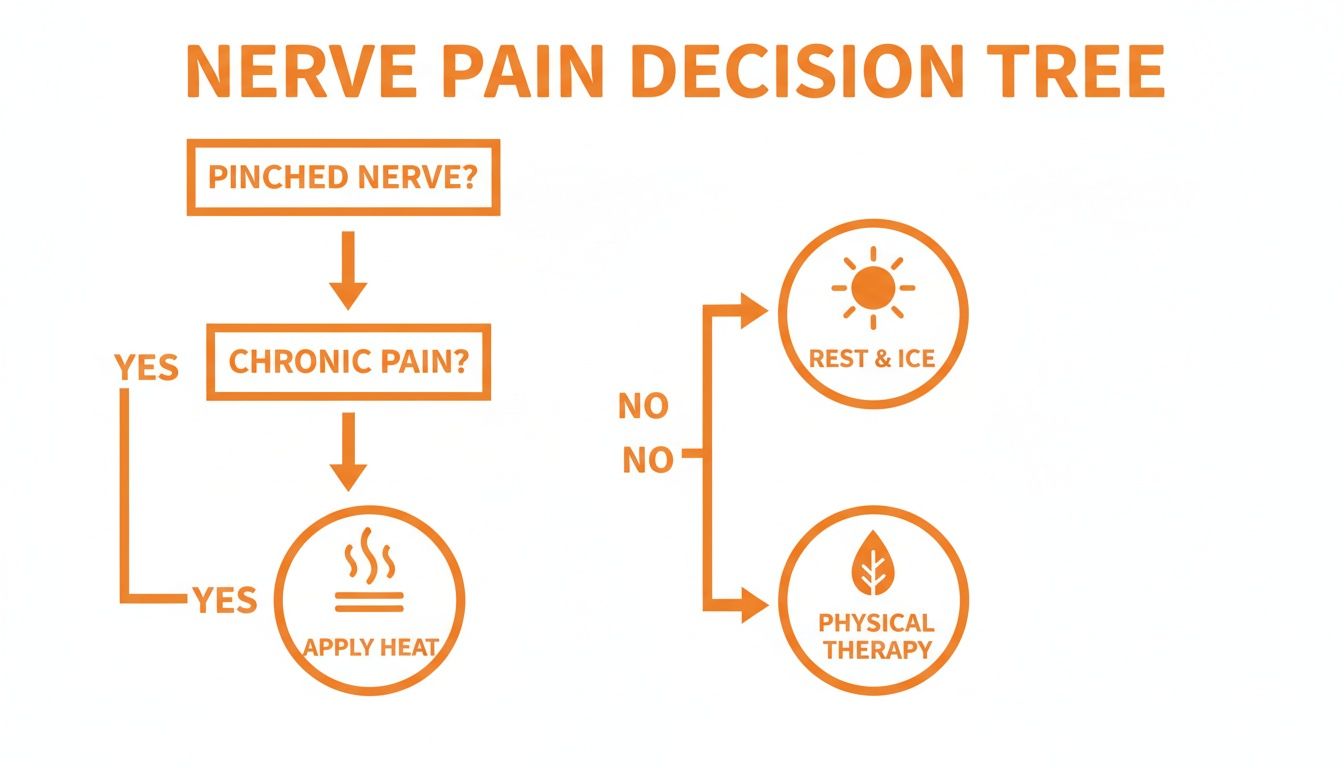
As you can see, once the pain from a pinched nerve settles in and becomes more of a chronic issue, heat therapy is typically the best path forward for real, lasting relief.
To make it even clearer, here’s a quick breakdown to help you decide which one is right for your situation.
Choosing The Right Therapy: Ice vs. Heat
| Therapy Type | When to Use It | Primary Benefit | How It Feels |
|---|---|---|---|
| Ice | First 48-72 hours of a new, acute injury | Reduces swelling and inflammation | Numbing, sharp cold that dulls acute pain |
| Heat | After the initial 72-hour window; chronic pain | Relaxes tight muscles and eases stiffness | Soothing warmth that melts away deeper aches |
Ultimately, choosing the right one comes down to timing. If the injury just happened and you see swelling, reach for ice. If it's a nagging, stiff pain you've had for days, heat is your best bet.
When Heat Is Your Best Friend
So, when is heat the clear winner for a pinched nerve? Almost always after that initial 72-hour window has closed. At this stage, the problem isn't fresh swelling; it's the tense, spasming muscles that are putting constant pressure on the nerve.
Here are a couple of classic scenarios where heat is the perfect solution:
- Waking up with a stiff neck: You know that deep, nagging ache that makes turning your head feel like a monumental task? That's a prime candidate for heat. The warmth helps those tight neck muscles to finally let go, taking pressure off the irritated nerve. Imagine the relief as that warmth seeps in and the stiffness begins to fade.
- Sciatic pain after a long day at your desk: If your lower back and leg are throbbing from sciatica, a heating pad can be a game-changer. It soothes the overworked piriformis and glute muscles that are often squeezing the sciatic nerve. The comfort it provides can make the difference between a restless night and a peaceful sleep.
And this isn't just folk wisdom; the science backs it up. Research focusing on low back pain found that continuous heat wraps provided 68% more pain relief on day one compared to a placebo pill. Participants also saw significant improvements in stiffness and flexibility.
The bottom line is simple: Ice is for new injuries with sharp pain and visible swelling. Heat is for muscle stiffness, chronic aches, and encouraging long-term healing. For most pinched nerve situations, heat is the therapy that provides both comfort and recovery.
When you apply heat, you're doing more than just dulling the pain signal. You're actively helping your body heal by relaxing the very muscles that are causing the compression. For a more detailed look, you can check out our guide on when to use ice vs. heat.
How to Safely Apply Heat for Maximum Relief
Getting the most out of heat therapy isn’t just about cranking up the dial; it’s about knowing how to apply it correctly to unlock its full healing potential. If you follow a few simple guidelines, you can get all the muscle-relaxing benefits for your pinched nerve without any of the risks.
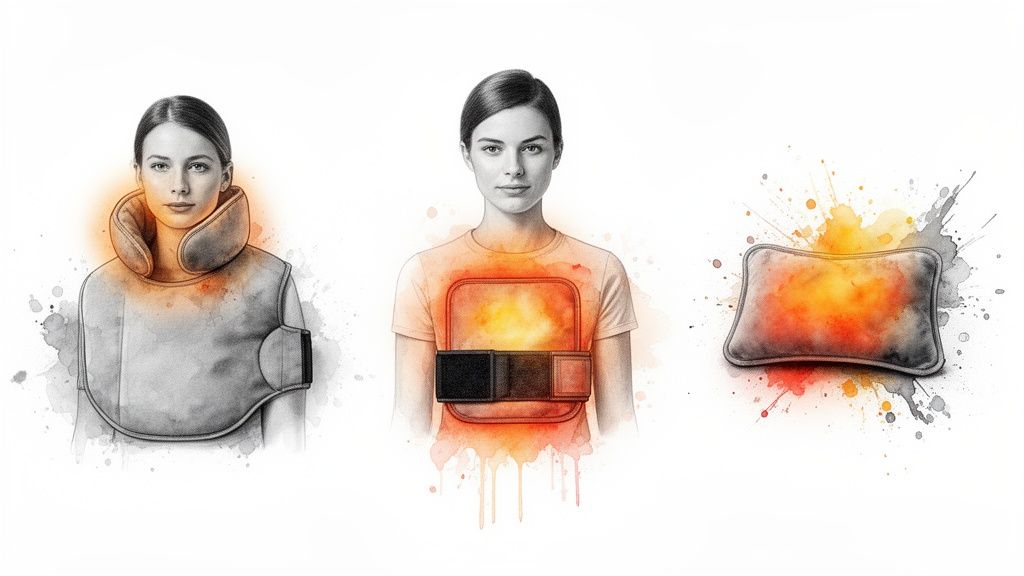
Consistency and safety are the name of the game. Try applying heat in 15 to 20-minute sessions, and be sure to give your skin a good break in between each one. This timeframe is the sweet spot—long enough to relax muscles and boost circulation, but not so long that you risk irritating your skin.
The Three Pillars of Safe Heat Application
To really get that deep relief and sidestep any problems, just remember three core principles: timing, temperature, and technique. Getting these right will make every heat therapy session that much more effective.
-
Keep Sessions Timed: Stick to that 15–20 minute rule like glue. It’s tempting to leave a heating pad on for hours, especially when it feels good, but that’s a recipe for low-grade burns or skin damage. Set a timer on your phone so you don't forget.
-
Mind the Temperature: The goal here is comfortable warmth, not scorching heat. Your heating pad should feel soothing, never painful or prickly. If your skin starts turning bright red or feels uncomfortably hot to the touch, the setting is definitely too high.
-
Use a Protective Barrier: This one is non-negotiable. Never place a heating pad or any heat source directly on your bare skin. Always wrap it in a thin towel or a layer of cloth first to create a safe barrier. This simple step helps distribute the heat more evenly and is your best defense against burns.
Following these steps is crucial for a good outcome. For a deeper dive into best practices, you can learn more about proper heating pad safety and how to avoid the most common mistakes.
The most effective heat therapy is gentle and consistent. The goal isn't to shock the muscle with intense heat but to provide a steady, penetrating warmth that allows it to relax and let go of its grip on the nerve.
Tailoring Heat to Your Pain
Not all pinched nerves are the same, so your approach to heat therapy shouldn't be either. Choosing the right tool for the job ensures the heat gets right to the source of the problem, targeting the exact muscles causing your grief.
-
For a Pinched Nerve in Your Neck: Look for a contoured neck wrap that’s designed to drape comfortably over your shoulders. This shape delivers heat right to the cervical spine and the tense muscles on either side. The best part is you can relax, read, or even work at your desk while the warmth does its magic.
-
For Sciatic Nerve Pain: A larger, rectangular heating pad—especially one with straps—is your best bet. You can wrap it securely around your lower back and glutes, making sure it stays put to soothe that deep piriformis muscle that so often irritates the sciatic nerve.
When you apply heat safely and strategically, you're giving those tight, angry muscles a clear message: it's time to release their hold on that nerve.
Pairing Heat Therapy with Massage for Better Results
Heat therapy on its own is a great way to soothe a pinched nerve, but you can really amplify its benefits by combining it with other treatments. Think of it as the perfect warm-up before the main event. Applying heat before you stretch or get a massage makes the muscles and tissues around the nerve much more pliable and ready to respond.
It’s a bit like trying to stretch a cold rubber band. If you pull it right out of the package, it’s stiff and might even snap. But if you warm it up in your hands for a minute, it becomes soft, flexible, and much easier to work with. Your muscles work the same way.
Just 15 minutes with a heating pad before you start a gentle stretching routine or see your massage therapist can make a huge difference. It paves the way for a deeper, more effective treatment with a lot less discomfort. This simple step transforms a good massage into a great one, allowing the therapist to work more deeply and bring you faster relief.
A Practical Example for Sciatica Relief
Let's put this into practice with a common problem: sciatica. This is when the sciatic nerve gets pinched in the lower back, sending shooting pain down your leg. Often, a tight piriformis muscle deep in the buttock is the culprit, putting the squeeze on that nerve.
Before you even think about stretching, try this sequence:
- Lie down comfortably and place a heating pad or warm compress over your lower back and glute area for about 15 minutes.
- Just relax and let that warmth sink in, encouraging those deep, tight muscles to let go.
- Once the time is up, gently move into a piriformis stretch.
You'll almost certainly notice you can get deeper into the stretch with far less pain than if you’d started cold. The heat has already done the hard part by signaling to the muscle that it's okay to relax its grip.
This is exactly why so many physical therapists, chiropractors, and massage therapists start their sessions with heat packs. They know from experience that warming up the tissue first leads to better results, makes the hands-on work more comfortable for you, and ultimately speeds up your recovery.
When you pair heat with hands-on therapies, you're doing more than just putting a temporary band-aid on the pain. You’re actively creating the best possible environment for your body to heal, helping you get back to your life much faster.
Got Questions About Using Heat for a Pinched Nerve? We've Got Answers.
Even when you know the basics, a few questions always pop up. Let's tackle the most common ones people have when they start using heat for a pinched nerve. My goal here is to clear up any confusion so you can feel confident you're doing the right thing for your body.
Can Heat Actually Make a Pinched Nerve Worse?
This is a great question, and the answer is yes, it can—but only if you use it at the wrong time. Timing is everything.
If you’ve just sustained an injury, you're in the acute phase. For the first 48-72 hours, inflammation and swelling are the main problems. Pouring heat on that is like adding fuel to a fire; it'll just make the swelling worse and potentially increase your pain.
During that initial window, ice is your go-to. Once that acute swelling subsides, that's when heat becomes your best friend. It gets to work on the tight, spasming muscles that are often the real culprit behind the nerve compression.

How Quickly Should I Expect to Feel a Difference?
Most people feel some immediate relief pretty quickly. Within a single 15 to 20-minute session, you should notice the muscles around the area starting to unclench and a soothing warmth taking the edge off the pain. That initial comfort is a huge win because it helps break that vicious pain-tension cycle.
But for deeper, more lasting healing, you need to be consistent. The real magic happens over several days of regular use. This gives that boost in circulation enough time to carry away inflammatory byproducts and deliver the nutrients your tissues need to repair themselves. Think of it as gently coaxing the area back to health, not just temporarily masking the pain.
What’s the Best Type of Heat to Use?
Any warmth is better than none, but if you ask a physical therapist, they'll almost always recommend moist heat. Why? Because it seems to penetrate deeper into the muscle tissue than the dry heat from a typical electric heating pad. It just feels like it gets to the core of the problem more effectively.
This is where things like microwavable heat packs filled with flaxseed or rice really shine. They give off a gentle, penetrating moist heat that’s perfect for relaxing those knotted-up muscles that are squeezing the nerve.
Here's a pro tip from the therapy world: try using a moist heat pack for 15 minutes right before a massage. The heat makes the muscles so much more pliable, allowing the therapist to work more deeply and effectively to release the pressure point without as much discomfort for you.
When Is It Time to Call a Doctor?
While home care is fantastic for mild to moderate pinched nerves, it’s crucial to know when you need professional help. You should definitely see a doctor if:
- The pain is severe and debilitating.
- It isn't getting any better after a week of consistent self-care.
- You're noticing significant muscle weakness in the affected limb.
And there are a few red flags that require immediate medical attention. If you experience spreading numbness or any loss of bladder or bowel control, don't wait. These can be signs of a much more serious issue that needs to be addressed right away.
At SunnyBay, we're all about empowering you with simple, effective ways to manage pain. Our microwavable heat packs, proudly made in the U.S., are designed to provide that deep, moist heat your muscles are craving. They target the tightness, helping you find real relief from pinched nerve pain. You can check out our full line of drug-free pain solutions at the official SunnyBay website.


