


Wearable Heat Wrap Guide for Targeted Pain Relief
-
You've been at your desk for hours, and your neck feels as though it's carrying the weight of the whole day. A plug-in heating pad might soothe the area, but the cord keeps you near the outlet. A loose pack slips from your shoulder when you stand. A wearable heat wrap solves a practical problem: it keeps warmth against the target area while leaving your hands available for work, reading, or light movement.
The important question is not just whether heat feels good. It is whether the wrap delivers an appropriate temperature, maintains reliable skin contact, and suits the way you'll use it. Fill material, shape, straps, weight, and reheating requirements all influence the experience. Clinical research supports heat therapy for some conditions, but a consumer product still has to fit your body and your routine.
Table of Contents
- The Science Behind Wearable Heat Therapy
- Microwaveable Fills Versus Air-Activated Patches
- Clinical and Everyday Use Cases for Targeted Relief
- Sizing, Fit, and Hands-Free Ergonomics
- Heat Retention and Temperature Expectations
- Safety Guidelines, Contraindications, and Maintenance
- Choosing the Right Wrap for Your Lifestyle
The Science Behind Wearable Heat Therapy
After hours at a screen, your upper trapezius muscles may feel tight, heavy, or tender. Gentle heat can make movement more comfortable by widening nearby blood vessels and increasing circulation. The warmed tissue may relax, while the area feels less stiff.
Blood flow under heat works like traffic gaining extra lanes. With more room for circulation, oxygen and nutrients can reach working tissues, and metabolic by-products can move away more efficiently. This does not address every cause of pain, but it helps explain why steady warmth may ease muscular tension and stiffness.
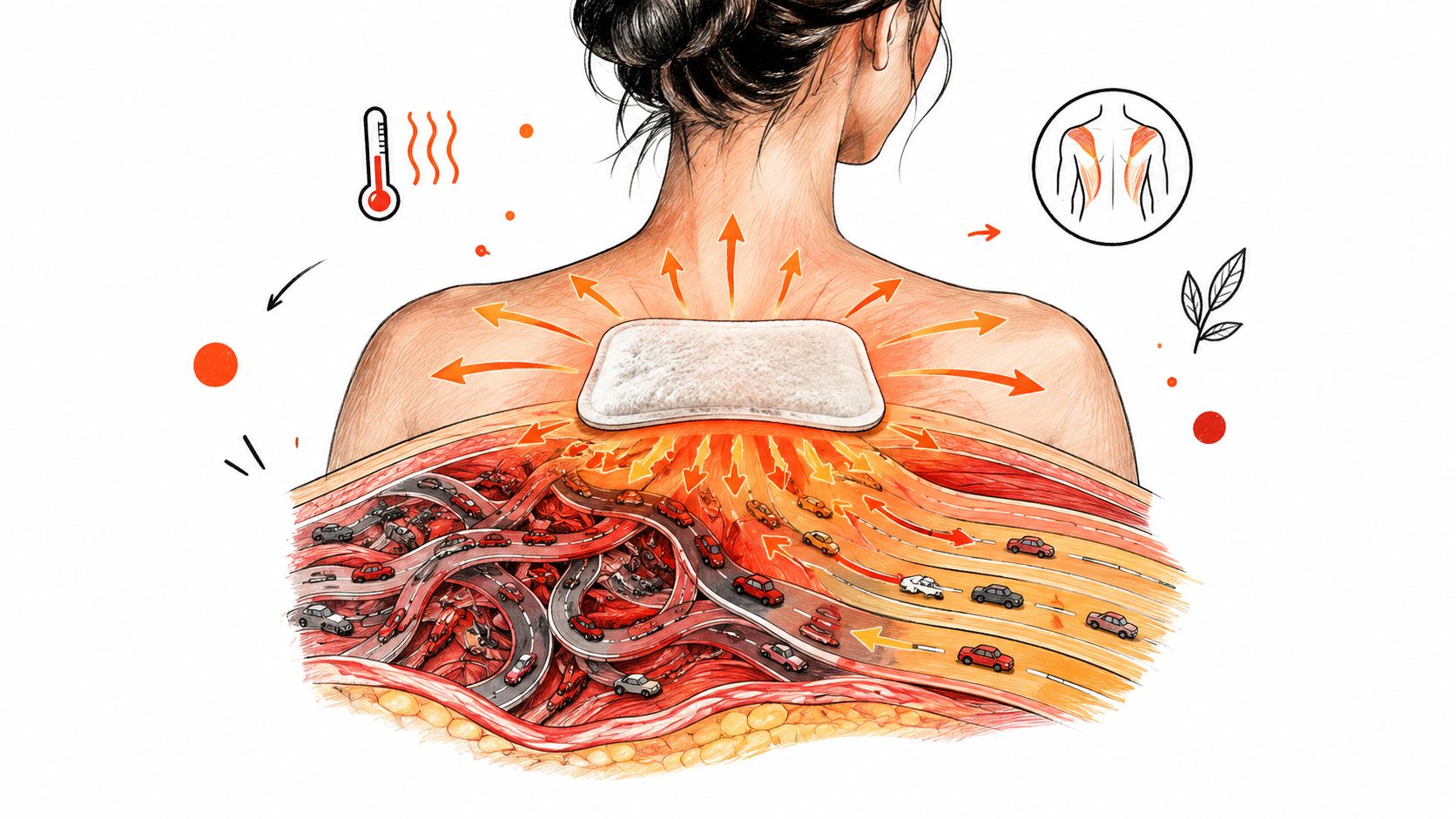
Why consistent contact matters
Heat also changes how the nervous system processes discomfort. A pleasant thermal signal can compete with pain signals traveling to the brain, while more flexible tissue may make gentle movement easier. The effect is supportive rather than curative, so warmth works best alongside activity changes, strengthening, mobility exercises, or medical assessment when appropriate.
The wrap's construction determines whether that warmth reaches the intended area. A shoulder pad that slides toward the arm leaves the tight region uncovered. A loose neck wrap may cool more quickly and create uneven coverage. Ergonomic straps and a stable shape help maintain contact without requiring you to hold the product or stay completely still.
Practical rule: Warmth works best when the wrap stays comfortably against the tissue you're trying to soothe.
Clinical research provides context for these design choices. A randomized, multisite trial from 2002 enrolled 371 people, with 344 evaluable participants, and found greater reported pain relief from a heat wrap than from acetaminophen on the first day and across days three to four for acute low back pain as summarized in this clinical report on heat-wrap therapy. A review of 9 trials involving 1,117 participants also found a small but real reduction in acute or subacute low back pain after five days compared with placebo.
These findings support low-level warmth as a practical relief option, not a cure for the underlying condition. The fill material, wrap shape, and strap placement determine how consistently that thermal treatment reaches the body. For a plain-language guide to the basics of heat therapy, the key point is straightforward: a wearable heat wrap is a delivery method, and its design affects the treatment you receive.
Microwaveable Fills Versus Air-Activated Patches
The right heat source depends on where you'll use it. A microwaveable wrap suits a home office, bedroom, or recovery routine where you can reheat the product. An air-activated patch suits travel, outdoor work, or sport when there's no microwave nearby.
Reusable wraps often contain natural materials such as flax seed, wheat, or lava sand. These fills hold warmth and conform to curved areas such as the neck, abdomen, shoulder, or lower back. Their flexibility can create broad contact rather than concentrating pressure at one hard edge. Some can also be chilled for cold therapy, provided the manufacturer's instructions allow it.
Air-activated patches use a chemical warming process that begins when the patch is exposed to air. They're thin, discreet, and convenient under clothing, but they're generally single-use. Their advantage is independence from a microwave. Their trade-off is less flexibility in repeated daily use and more waste after each application.
Heat source comparison
| Feature | Microwaveable Natural Fill | Air-Activated Patch |
|---|---|---|
| Heat preparation | Requires a microwave and careful heating according to the maker's instructions | Begins warming after exposure to air |
| Portability | Convenient when a microwave is available | Useful for travel, outdoor work, and activities away from power |
| Body contact | Soft, flexible fill can conform to body contours | Thin format sits discreetly beneath clothing |
| Reuse | Designed for repeated use when maintained correctly | Typically disposed of after use |
| Heat feel | Gradual warmth that fades as the fill cools | Convenient warming without reheating |
| Environmental considerations | Reusable format can reduce repeated packaging waste | Single-use format creates ongoing product waste |
| Best fit | Home routines, desk work, evening recovery, and regular use | Short-term portability and situations without microwave access |
Natural fills aren't automatically superior for every user. They're heavier than a thin patch and require attention to heating time, storage, and cleanliness. Patches aren't automatically stronger either. Their value is convenience, especially when stopping to reheat would make you abandon the routine.
Before buying a disposable option, compare application instructions, skin contact requirements, and placement guidance. This comparison of pain-relief patches can help you think through the differences between patch formats and reusable heat products without reducing the decision to “hotter is better.”
Clinical and Everyday Use Cases for Targeted Relief
You finish a long drive with a stiff lower back, or wake with shoulders that feel guarded and tight. A wearable heat wrap can make the next movement more comfortable, but its value depends on matching the design to the body area and the goal. Broad lumbar wraps spread warmth across a larger region, contoured shoulder pieces stay closer to a joint, and eyelid masks require much tighter temperature control.
Back, shoulder, and menstrual discomfort
For short-term low back stiffness, apply gentle heat before light movement, such as walking or comfortable mobility exercises. Building on the evidence summarized earlier, this is a practical symptom-management option rather than a standalone treatment. Persistent, severe, or unexplained pain still needs clinical assessment. A broad wrap can distribute warmth across the lumbar muscles, while a narrow design may leave part of the tense area uncovered.
Menstrual discomfort is another established use case. The 2002 randomized trial found a heat wrap more effective than 1,000 mg of acetaminophen for pain relief over an eight-hour period, with improvements also reported for cramping, tightness, fatigue, and mood disturbance in the original trial publication. In daily use, a flexible abdominal wrap or air-activated patch may be easier to position than a rigid pad. Choose the format that stays in contact while you sit, walk, or rest.
Arthritic stiffness often improves when warmth makes movement feel easier. Use a wrap before a gentle range-of-motion routine or a walk, then judge its usefulness by how comfortably you can move. Heat does not address every cause of joint pain. For rotator cuff or frozen-shoulder symptoms, a contoured shoulder wrap may keep the warming surface near the joint more reliably than a flat pad balanced on the upper arm.
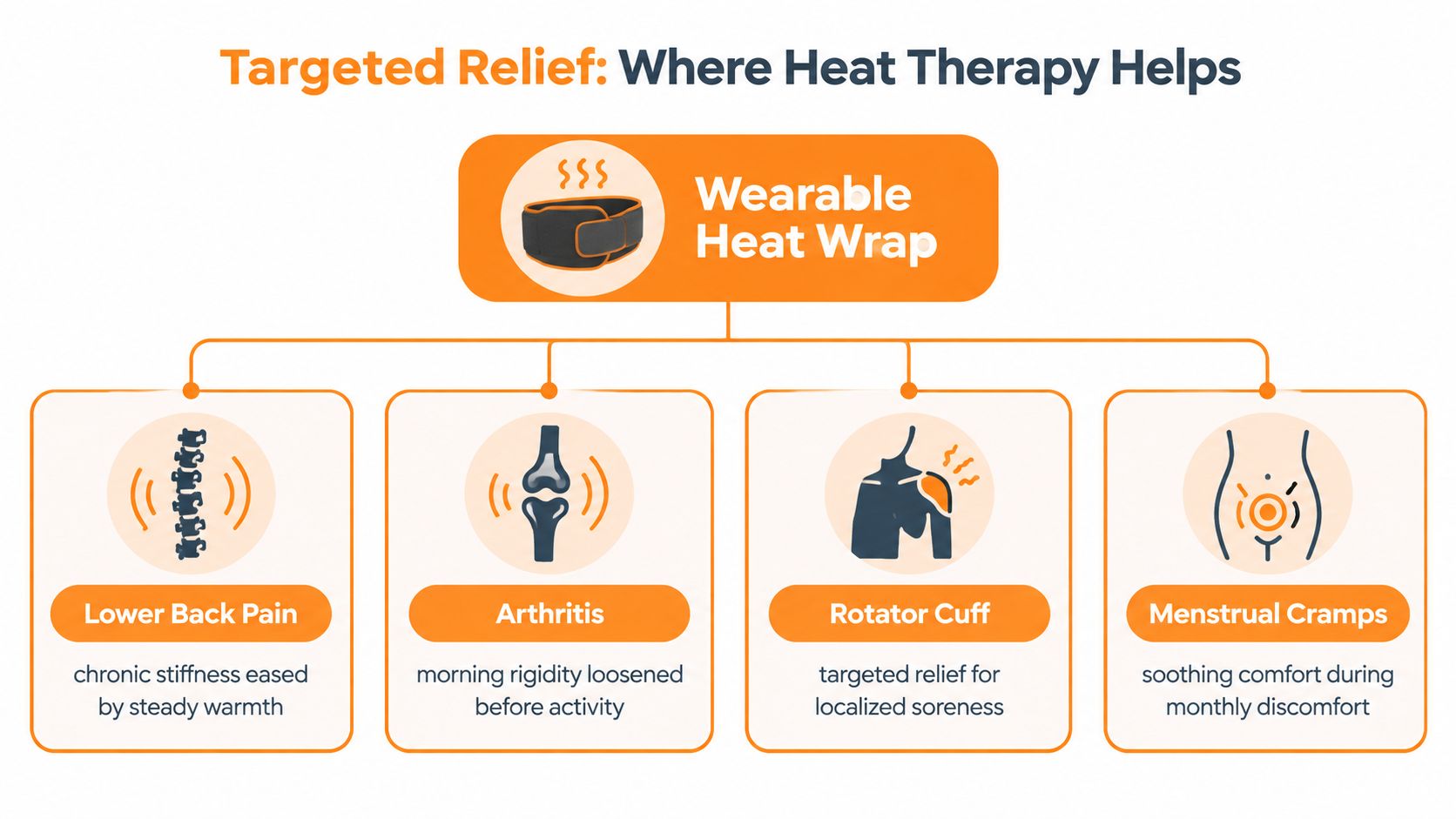
A specialized use for the eyelids
Dry-eye care calls for a separate product category. Warm compresses can soften oils in the meibomian glands and support tear quality, but the mask must provide even, controlled contact. A 2024 review found that single warm-compress applications lasting 5–20 minutes could improve tear quality, while repeated applications improved symptoms and meibomian gland health in most studies in this open-access review.
The same review described a 2024 randomized trial in which 144 dry-eye patients used warming treatment twice daily for 12 weeks. Compliance was 88.6% with disposable warming masks and 81.5% with hot towels. A pre-formed mask may therefore make a routine easier to follow, but an ordinary body wrap is not a substitute for an eye-specific design.
Sizing, Fit, and Hands-Free Ergonomics
A wrap can reach the right temperature and still disappoint if it won't stay where you put it. Fit determines contact, contact determines heat transfer, and heat transfer affects whether the session feels even and useful.
Start with the treatment area rather than the product label. A longer neck wrap can cover both sides of the neck and extend across the trapezius muscles, while a compact pad may suit one small spot. For shoulders, look for a contoured shape that follows the slope from the neck toward the shoulder joint. For the lower back, broader coverage can feel more stable than a narrow strip.
A practical fit check
- Place it over the target area. The warm surface should cover the painful or stiff region without pressing directly into the throat, spine, or a bony prominence.
- Test the closure. Elastic bands should hold the wrap close without squeezing. Velcro should fasten securely but shouldn't scratch exposed skin or restrict breathing.
- Stand and move gently. Raise your arms, turn your head, or walk a short distance. If the wrap slides immediately, it won't provide reliable hands-free therapy during ordinary tasks.
- Check the weight. Natural fills can feel soothing when supported by the body, but excessive weight around the neck or shoulder may add strain. A lighter design may be more appropriate for older adults or anyone with weakness.
- Inspect the edges. Soft, flexible borders reduce pressure points. A rigid seam can become irritating when you wear the wrap for repeated sessions.
A shoulder wrap should support the joint without forcing the arm into a fixed position. A neck wrap should permit comfortable head movement. You're looking for stable contact, not tight compression.
A secure wrap should disappear into the task. If you're constantly holding it in place, the design isn't doing enough of the work.
Placement also changes the result. This guide to wearing a shoulder wrap offers a useful practical reference for positioning a wrap around the shoulder rather than letting it migrate toward the upper arm. Follow the same principle elsewhere: align the warmest section with the tissue you want to treat, then adjust the strap until the product stays there without restricting movement.
Heat Retention and Temperature Expectations
Many people expect a microwaved wrap to remain intensely hot for hours. That expectation can lead to unsafe reheating or an uncomfortable product. Natural-fill wraps usually provide a gradual, moderate heat experience, and the useful session is defined by therapeutic comfort rather than maximum temperature.
The provided product information describes quality natural fills as retaining therapeutic warmth for 20 to 30 minutes. Treat that as a practical expectation, not a guarantee for every product. Fill density, room temperature, fabric layers, microwave power, body contact, and the shape of the wrap all affect how quickly it cools.
What the cover and fill actually do
A dual-fabric cover, such as fleece on one side and cotton on the other, can improve comfort and help distribute heat across the skin. It also creates a buffer between the fill and your body. That buffer matters because a localized hot spot is less desirable than even warmth.
A very dense fill may retain heat well but feel heavy or stiff. A loose, flexible fill may conform better to the body but cool sooner. The best balance depends on the treatment area. A neck wrap needs enough structure to remain stable, while an eye mask needs controlled contact and a comfortable pressure level.
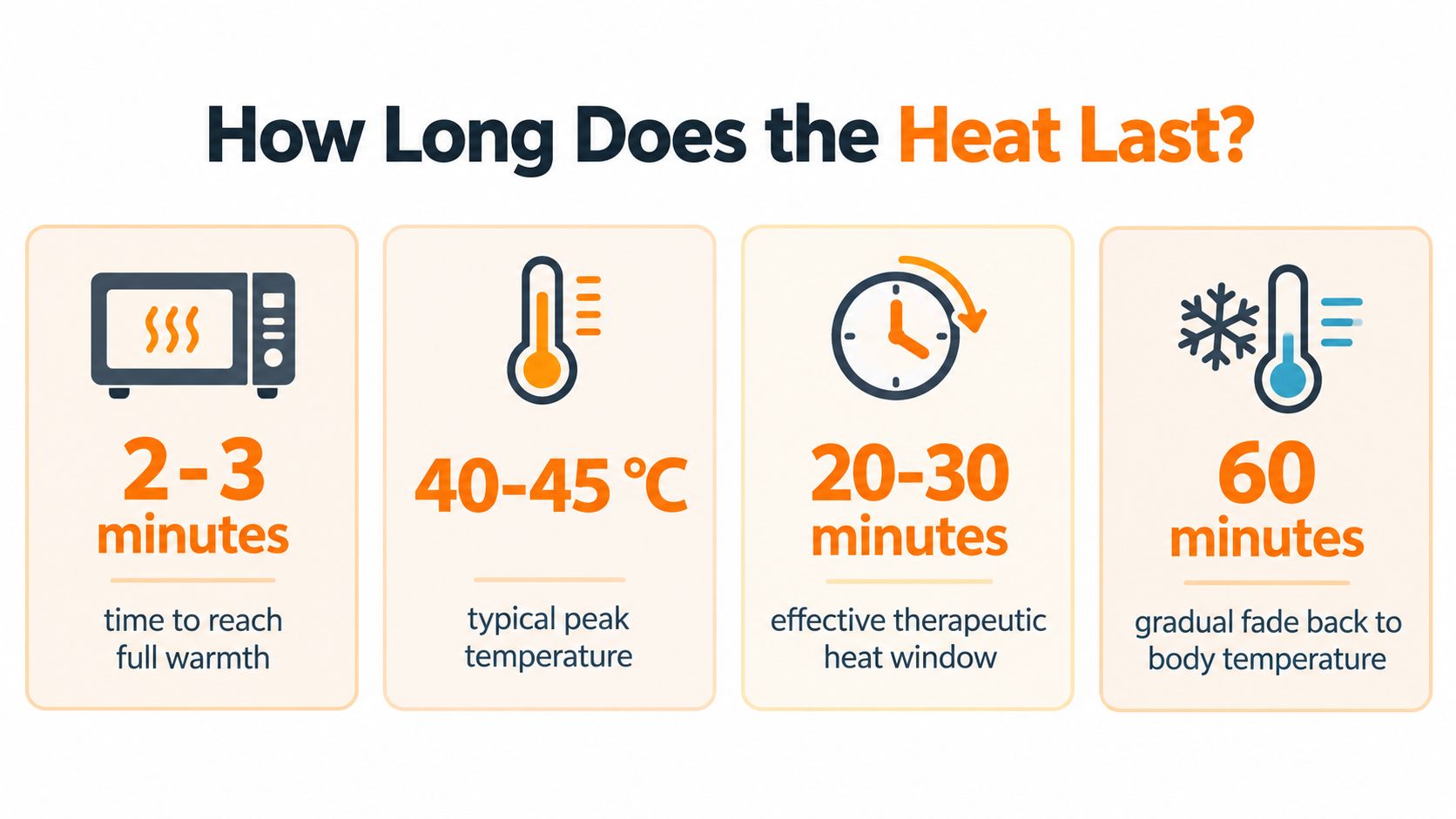
Why eyelid therapy needs precision
Warm-compress treatment for the eyelids has a specific thermal target. One comparative study used an inner eyelid temperature of about 40°C and found that a compress heated to 45 ± 0.5°C needed reapplication every 2 minutes to maintain an inner-lid temperature near 40.0 ± 0.6°C for at least 6 minutes in the comparative eyelid-warming study. This is why an eye mask shouldn't be treated like a neck pad. The mask's shape, contact, reheating schedule, and instructions all matter.
For a broader explanation of how fabrics manage warmth and comfort, this temperature-regulating blanket guide provides useful background. The same principle applies here: thermal comfort depends on how heat moves through materials, not just on the starting temperature.
Safety Guidelines, Contraindications, and Maintenance
Heat feels gentle, but “soothing” doesn't mean suitable for every situation. Many people reach for warmth automatically after pain begins, yet fresh injuries, swelling, or reduced sensation can make that choice inappropriate.
Avoid applying heat directly over open wounds, acute swelling, or skin that can't reliably sense temperature. If an area is numb, you may not notice excessive heat until the skin is irritated. People with circulation problems, diabetes, or other conditions affecting sensation should ask a clinician for individualized advice. If you're pregnant, seek medical guidance before using heat over the abdomen or lower back.
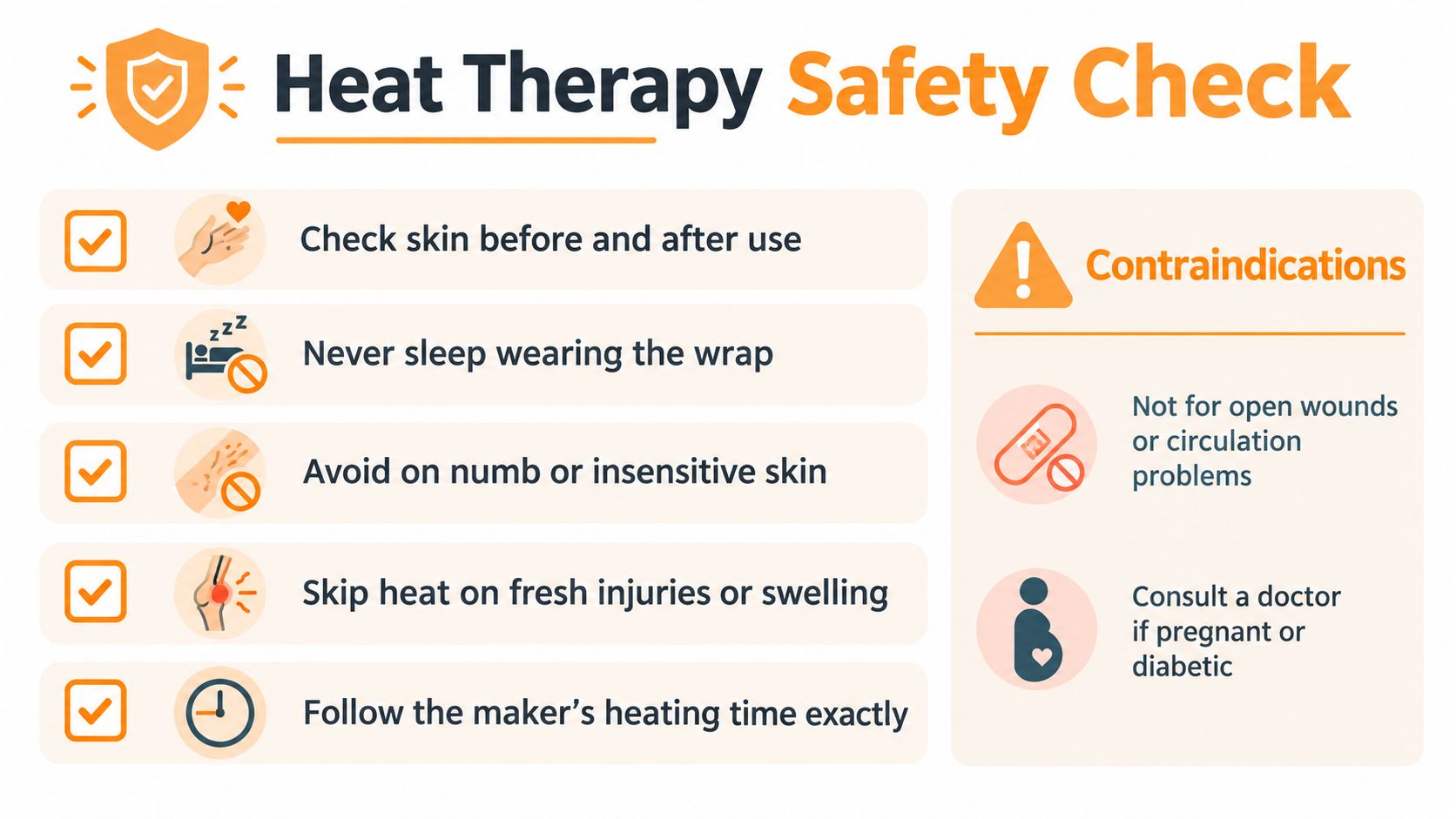
Use heat as support, not a diagnosis
A warm wrap may reduce symptoms without explaining why they started. Stop and seek medical assessment for severe or rapidly worsening pain, new weakness, significant numbness, unexplained swelling, or symptoms that don't behave like ordinary muscular stiffness.
Non-specific neck pain deserves particular caution. Recent clinical guidance says the evidence for heat in this condition remains limited, while heat combined with exercise may offer additional benefit for back pain even though the effect can be short-lived in this clinical guidance review. In everyday terms, use warmth to make gentle movement more comfortable, not to avoid movement indefinitely.
Follow these basic safeguards:
- Check your skin: Look before and after each session for unusual redness, irritation, or a mottled appearance.
- Stay awake: Don't sleep while wearing a heated wrap.
- Follow heating instructions: Microwave time varies by product and appliance. Never assume a familiar wrap can tolerate the same settings as another.
- Use a barrier when needed: If the warmth feels intense, add a thin layer of clothing rather than turning the temperature up.
- Inspect the wrap: Remove it from service if the cover tears, the fill leaks, or the product develops a persistent odor.
Maintenance affects safety as well as comfort. Use a removable cover when available, wash it according to the care label, and keep the inner pack dry unless the manufacturer specifically permits washing. Store a microwaveable wrap in a cool, dry place and avoid compressing it under heavy objects, which can deform the fill and reduce even heating.
Choosing the Right Wrap for Your Lifestyle
A wrap that works during a quiet evening may fail at a desk, on a walk, or while you move around the kitchen. Choose the delivery system you can use consistently. Begin with three questions: Where is the discomfort? Where will you use the wrap? Do you need portability more than reusability?
For desk-related neck and shoulder tension, a hands-free microwaveable wrap should cover the trapezius area without pulling on the neck. A flexible fill can follow the shoulder's curve, helping warmth stay in contact with the muscle instead of shifting toward the arm. Broad coverage and a soft cover suit longer seated sessions, while a lighter design may feel less restrictive during work.
For recurring lower-back stiffness or menstrual cramps, an abdominal or lumbar shape should remain stable when you stand. Reusable fills are practical when heat is part of a regular home routine. Outdoor use, travel, or workplaces without a microwave favor an air-activated patch, since its convenience may make timely relief more realistic.
Dry-eye care calls for a purpose-built warming mask. Controlled eyelid contact and careful temperature management matter more than adapting a general body wrap. For a shoulder problem, a contoured strap wrap maintains contact over the joint, where a rectangular pad may slide away.
A simple buying filter
- Body area and movement: Select a shape that follows the treated region. Contouring supports steadier heat transfer, while the wrong shape can lose contact as you change position.
- Daily setting: Choose a microwaveable format for predictable home sessions, or an air-activated patch when access to a microwave determines whether you can use heat at all.
- Fit and fastening: Look for secure contact without excessive pressure. Elastic hands-free straps can keep warmth over a shoulder or lumbar area while leaving your hands available.
- Fill and cover: A fill that conforms to the body, paired with a cover that distributes warmth, can reduce hot and cool spots.
- Care requirements: Check whether the cover comes off for washing and how the inner pack must be stored.
- Clinical context: Treat heat as supportive care, not a way to postpone assessment of unexplained or persistent symptoms.
SunnyBay's reusable wraps use flax seed and lava sand fills, dual-fabric covers, and elastic hands-free straps, with options for neck, shoulder, and lumbar use. Its targeted eye products and air-activated patches serve different routines.
Explore the options at SunnyBay, matching the design to your body area, routine, and need for hands-free comfort. When heat may not suit your symptoms, consult a qualified healthcare professional.


