


Pain Relief Patches: Types, Uses, and How to Choose
-
You finish a long day at your desk, roll your shoulders, and feel the familiar knot between your shoulder blades. In the bathroom drawer, there's a small box of pain relief patches. You peel back the foil, press one onto the sore area, and pause for a moment.
Will gentle heat loosen the stiffness, or would a medicated patch work better? Is the patch meant for a surface ache, an irritated joint, or pain that feels closer to a nerve? Those questions matter because pain relief patches aren't all built to do the same job.
The right choice depends on what kind of pain you have, where it is, and whether the patch delivers heat, medication, cooling, or a combination of effects. This guide uses everyday situations to explain the differences, so you can make a more informed choice without relying on guesswork.
Table of Contents
- A Familiar Moment With a Patch
- How Pain Relief Patches Actually Work
- The Three Main Types of Pain Relief Patches
- Matching Patches to Real-Life Pain Situations
- Using Pain Relief Patches Safely Every Day
- How to Choose a Patch That Really Fits You
- Wrapping Up and Your Next Step
A Familiar Moment With a Patch
A woman working from home might notice her neck tightening before she notices the clock. She's been leaning toward a laptop, holding her phone between her shoulder and ear, and skipping movement between meetings. By evening, the discomfort has spread from the base of her neck toward the upper back.
She doesn't necessarily need a strong drug. She may want something portable that stays in place while she makes dinner, takes a commute, or settles down for the evening. An air-activated heat patch can suit that type of stiffness because it provides warmth without requiring an outlet, microwave, or bulky heating pad.
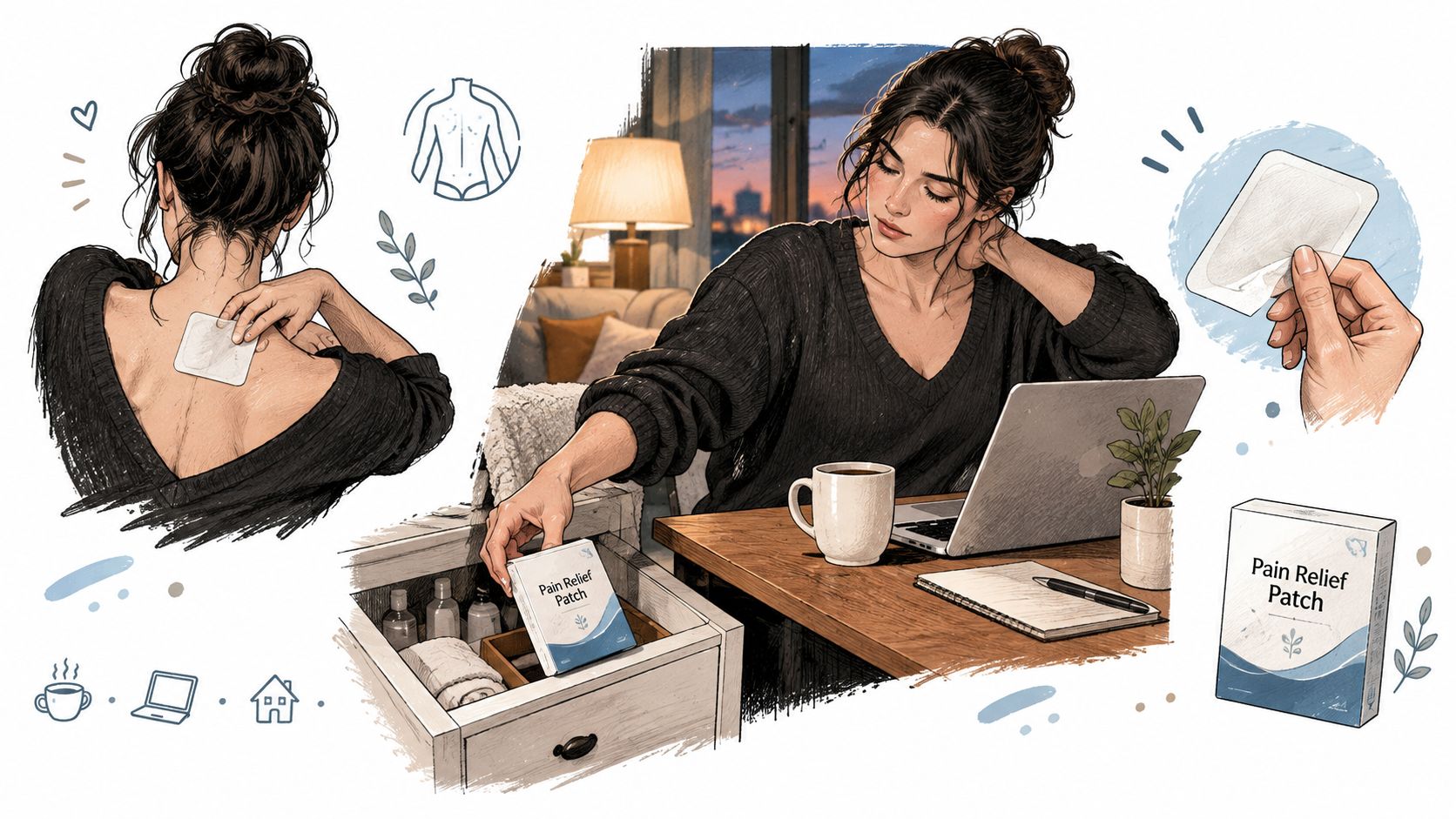
Someone else may feel a different kind of discomfort. A small area burns, tingles, or feels unusually sensitive. A topical medicated patch containing an ingredient such as lidocaine may make more sense for that localized sensation than a warming product. A person with a swollen area after activity may prefer cooling instead.
The useful question isn't “Which patch is strongest?” It's “What is this patch designed to do, and does that match my pain?”
Pain relief patches have become part of a broad consumer health category rather than a niche convenience product. One market estimate valued the global category at US$4.6 billion in 2026 and projected it to reach US$7.0 billion by 2033, while another report estimated US$3.9 billion in 2023 and forecast US$6.7 billion by 2032. Both reports describe a projected 6.2% CAGR, reflecting sustained interest in portable, localized approaches to recurring discomfort. (Persistence Market Research's pain relief patches market estimate)
The important point for a shopper is simple. A patch can be convenient, discreet, and targeted, but convenience doesn't replace careful selection. The sections ahead focus on the practical distinctions that affect comfort, fit, and safe use.
How Pain Relief Patches Actually Work
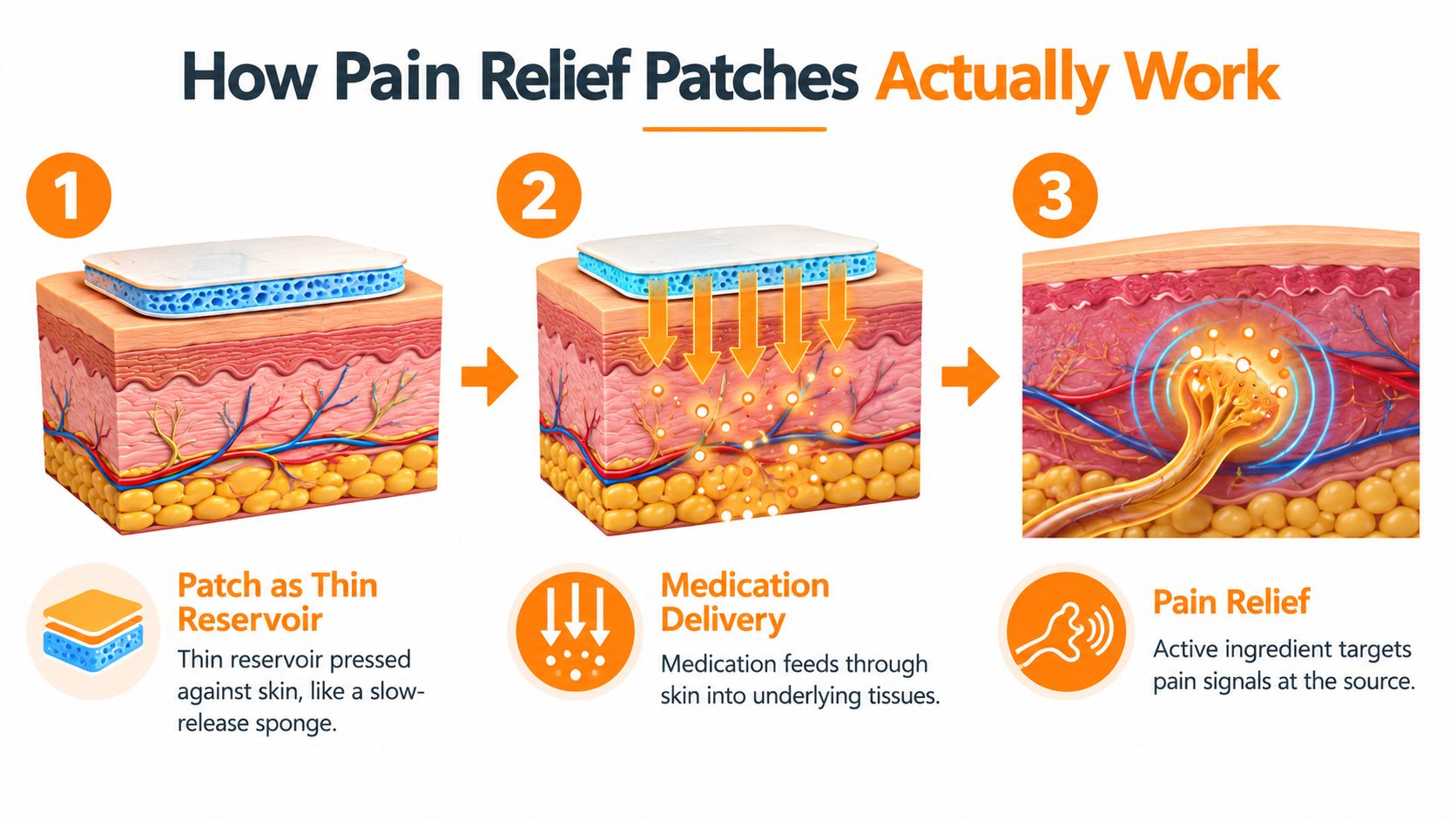
A pain relief patch is a thin layer that rests against the skin. Think of it as a slow-release sponge or a warm compress with a specific purpose. Depending on the product, the patch either releases an active ingredient into the skin or creates a controlled thermal effect over the area.
Medication through the skin
A topical medicated patch contains an ingredient intended to act near the application site. Lidocaine can numb or reduce certain localized nerve sensations. Menthol creates a cooling sensation that can change how the area feels. Capsaicin produces a warming sensation and is used in some products for localized nerve discomfort. An NSAID-based patch, such as one containing diclofenac, is designed for a different purpose, especially when inflammation around a joint contributes to pain.
The skin is a meaningful barrier, so delivery depends on the formulation, the thickness and condition of the skin, the patch's contact with the body, and the time it stays applied. A patch over a relatively flat area may maintain better contact than one placed across a sharply moving joint.
The history of transdermal delivery helps explain why this format is familiar today. The first nicotine patch was approved in the United States in 1984, establishing adhesive delivery as a platform before pain-specific patches became widely used. The non-opioid pain patches segment was estimated at about US$991.6 million in 2024 and projected to reach roughly US$1.4 billion by 2030. (Mordor Intelligence's market overview)
Heat instead of medication
Air-activated heat patches use a chemical reaction with oxygen to create warmth. The patch acts more like a portable, sustained warm compress. Heat can help tight muscles feel less guarded, support local circulation, and make movement more comfortable.
Heat isn't automatically better than medication. It's a separate approach that may fit stiffness, muscle tension, or cramping, while a medicated patch may be more appropriate for a localized nerve or inflammatory problem.
For a broader look at how warmth compares with cooling in different situations, these inflammation cream insights can help clarify how topical approaches differ from thermal therapy. You can also explore the gate control theory of pain for a plain-language explanation of how competing sensory signals can influence the experience of pain.
The Three Main Types of Pain Relief Patches
Most products on a shelf fall into three broad families. Their labels may use different names, but the underlying decision is usually the same: do you want warmth, a topical active ingredient, or cooling?
| Patch Type | How It Works | Best For | Pros | Cons |
|---|---|---|---|---|
| Air-activated heat patch | Uses an oxygen-driven reaction to create sustained warmth | Muscle stiffness, tension, and cramps | Drug-free, portable, discreet | Can irritate or overheat skin, and warmth may not reach deeper structures |
| Topical medicated patch | Releases an active ingredient at or through the application site | Localized nerve discomfort, joint pain, or surface muscle pain | Targeted delivery and less mess than creams | May cause irritation and can interact dangerously with added heat |
| Adhesive cold or hybrid gel patch | Cools on contact or combines cooling with light adhesion | Fresh soreness, swelling, and short-term post-activity discomfort | Easy to apply and useful when cooling feels more comfortable | Often provides shorter relief and may not suit cold-sensitive skin |
Air-activated heat patches
Heat patches are useful when the dominant feeling is tightness, stiffness, or cramping. They can work well for a desk worker with tense shoulders, someone dealing with lower-back stiffness, or a person looking for portable warmth during travel.
Their main advantage is that they don't require a power source. Their limitation is that heat can become uncomfortable if the patch is worn too long, placed over sensitive skin, or combined with another heat source. Don't apply one over broken skin, and don't layer it with a medicated topical unless the product instructions specifically allow that combination.
Topical medicated patches
These products use ingredients chosen for different sensations and pain patterns. Menthol may feel cooling, capsaicin may feel warming, lidocaine may provide localized numbing, and diclofenac is an NSAID used in some topical products for pain associated with inflammation.
A medicated patch can be practical when the discomfort is concentrated in a small, clearly defined area. It still deserves careful label reading because the active ingredient, application limits, and warnings vary. A useful place to compare topical product categories is the ArtNaturals pain relief lineup, especially when you're considering how different ingredient profiles match different goals.
Adhesive cold and hybrid gel patches
Cold patches can feel more suitable after an impact, strenuous activity, or a situation where the area feels hot and swollen. Some cool on contact, while hybrid formats combine mild cooling with adhesive support.
They're generally less about sustained drug delivery and more about immediate sensory comfort. Their reach can be limited, and cooling isn't ideal for every person or every type of stiffness. The heat therapy versus cold therapy guide offers a useful way to think about the basic choice before you select a format.
Matching Patches to Real-Life Pain Situations
A product label can sound abstract until you connect it to a real day. The same person may even choose different patches for different situations.
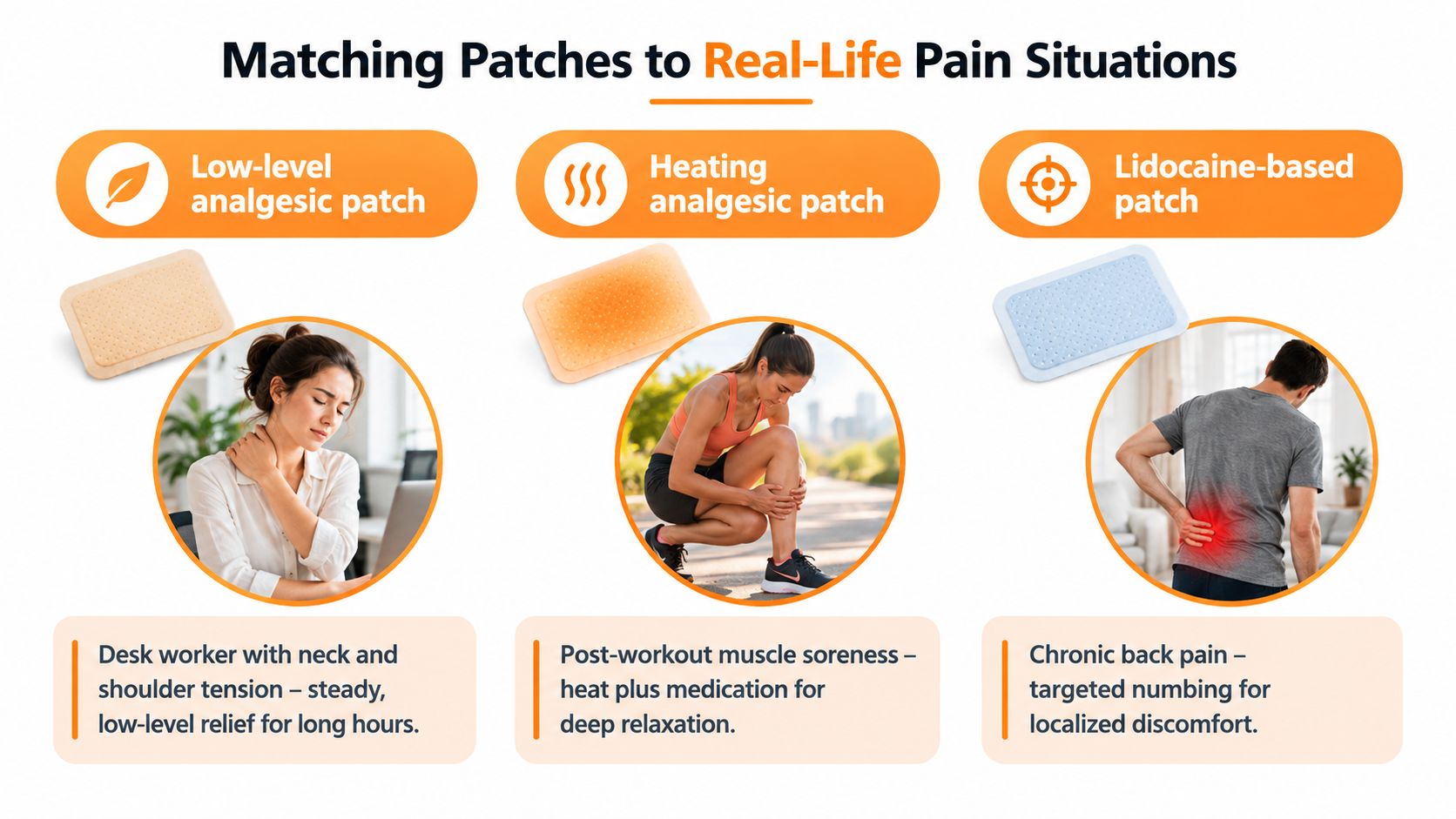
The office worker
For neck and shoulder tension after hours at a screen, a low-level air-activated heat patch may be the most intuitive starting point. It can provide hands-free warmth while the person travels home or completes light tasks. Place it over intact skin and avoid adding a heating pad or hot shower directly over it.
The older adult with joint discomfort
An older adult with a recurring arthritis flare may prefer a topical medicated patch when the discomfort is concentrated around one knee, hand, or other joint. Lidocaine or capsaicin may be considered for certain localized sensations, while an NSAID-based product follows a different medication pathway. Older adults, especially those taking other medicines or managing fragile skin, should ask a clinician or pharmacist to review the product first.
A patch is only one part of a broader routine. If you're comparing non-patch options for ongoing joint support, these joint health supplement details may help you understand how supplements differ from localized topical products.
The athlete after training
After strenuous activity, an adhesive cold patch may feel preferable when the area is freshly sore or swollen. Once that immediate phase has settled, warmth may feel more comfortable for muscular tightness. A patch shouldn't be used to mask pain that suggests a serious injury, loss of function, or a need for assessment.
Zone-specific discomfort
Menstrual cramps may call for a small, flexible heat patch designed for the lower abdomen or back. Eye-area discomfort is different again. Products intended for dry-eye-area warmth should be designed specifically for that delicate region, rather than adapted from a body patch.
The major safety boundary is heat and medication. Controlled heat increased diclofenac flux and cumulative permeation across tested skin formulations in ex vivo testing, which means temperature can alter how a topical product moves through skin. (PubMed research on heat and diclofenac permeation) Never assume that adding heat makes a medicated patch work better.
Using Pain Relief Patches Safely Every Day
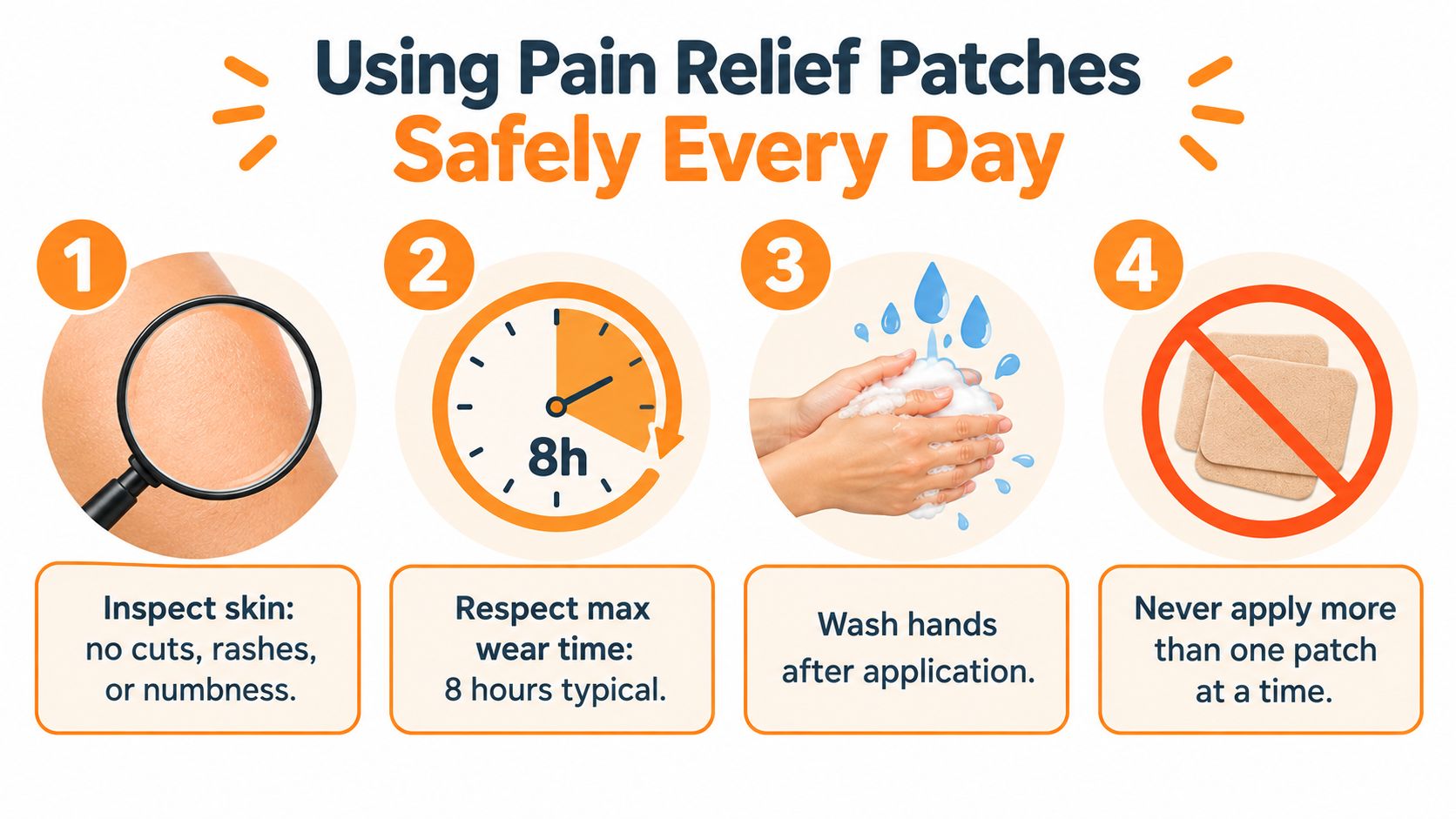
Treat the application like a small checklist, not an automatic gesture. Start with clean, dry skin and inspect the exact area. Cuts, rashes, irritation, swelling, and numbness can all change how the skin responds.
Before application
- Inspect the skin: Don't apply a patch over broken, inflamed, or numb skin.
- Read the active ingredient: Know whether you're using heat, lidocaine, menthol, capsaicin, diclofenac, or another formula.
- Check the instructions: Wear time and application limits depend on the specific product.
- Choose one approach: Don't place multiple patches over the same area or combine a medicated patch with an unapproved cream.
Some product directions may allow extended wear, but the label is the authority for that specific patch. Heat and medicated products deserve extra caution because external warmth can increase absorption. A review of transdermal analgesic systems reported that a heat pad increased plasma levels by up to 55% for buprenorphine and 61% for fentanyl, while a modeling study found local heat could raise fentanyl concentrations by about 100% to 180% above no-heat conditions over 30 hours, depending on the heat source. (Review of heat effects on transdermal analgesic systems)
Safety rule: Never add a heating pad, hot-water bottle, electric blanket, sauna, or unusually hot shower over a drug-delivery patch unless a healthcare professional and the product instructions specifically permit it.
During and after wear
Rotate application sites to reduce repeated irritation. Wash your hands after placing or removing a medicated patch, and fold used patches so the adhesive sides meet before disposal. Keep unused and used patches away from children and pets.
Remove the patch promptly if you develop intense burning, blistering, marked redness, dizziness, unusual drowsiness, or other concerning symptoms. People taking blood thinners, living with diabetes-related neuropathy, pregnant individuals, and anyone treating a post-surgical area should consult a clinician before choosing a product.
For safe use of heat products more broadly, review this heating pad safety guide.
This short video provides another practical reminder about using heat-based products carefully:
How to Choose a Patch That Really Fits You
Start with the goal, not the packaging. Are you trying to loosen stiff muscles, calm a localized nerve sensation, stay comfortable during recovery, or cool an area after activity? Then identify the body area and decide whether you need medication or a thermal effect.
| Selection Criterion | Why It Matters | What to Look For |
|---|---|---|
| Active ingredient | Different ingredients address different sensations and mechanisms | A clearly named ingredient and complete directions |
| Patch size | Coverage affects contact and comfort | A shape that fits the painful area without folding |
| Flexibility | Joints and moving muscles can loosen the adhesive | Stretchable construction or a secure fit for the body area |
| Adhesive | Poor adhesion creates uneven contact and residue | Firm attachment without excessive irritation |
| Heat duration | Excess warmth can increase discomfort and risk | Clear instructions for expected wear and removal |
| Single-use or reusable format | This changes cost, storage, and convenience | A format that fits your daily routine |
| Label clarity | You need to understand limits and warnings | Complete active-ingredient and safety information |
Match the ingredient to the problem
Menthol is often chosen for a cooling sensation. Lidocaine may suit a small, localized area where numbing is the intended effect. Capsaicin creates warmth and can be used in products aimed at certain nerve-related discomforts. An NSAID-based patch is a medication product, so its warnings and suitability deserve particular attention.
Avoid products with vague labels, missing active-ingredient information, unclear sourcing, or sweeping “one-size-fits-all” promises. A transparent label is more useful than a dramatic marketing claim.
Match the shape to your routine
A flexible patch may stay in place better over a shoulder or knee, while a broad back patch may cover a larger area but feel less discreet under clothing. If you want warmth without medication, a reusable hot or cold wrap can offer a different experience from a disposable adhesive patch. SunnyBay offers air-activated heat patches alongside reusable hot and cold therapy products, so shoppers can compare portable adhesive warmth with reusable formats.
Choose the simplest product that matches your situation. A clear purpose, appropriate size, readable instructions, and tolerable skin feel matter more than a crowded feature list.
Wrapping Up and Your Next Step
Pain relief patches make more sense when you sort them by function. Air-activated heat patches fit stiffness, muscle tension, and cramping. Topical medicated patches suit some localized nerve, joint, or inflammatory discomfort, depending on the active ingredient. Adhesive cold or hybrid patches can feel more appropriate for fresh soreness, swelling, or post-activity discomfort.
Three mistakes cause avoidable trouble. Leaving a heat patch on longer than directed can irritate or burn the skin. Layering a medicated patch over a cream can change contact and increase irritation. Applying heat over a drug-delivery patch can alter absorption, and external heat over fresh bruising or swelling may make the situation less comfortable.
A 2025 systematic review of transdermal buprenorphine in orthopedic surgery included 13 eligible studies and reported analgesia comparable to tramadol, fentanyl, and NSAIDs, with fewer respiratory and gastrointestinal side effects and higher patient satisfaction, particularly among elderly patients. That finding belongs in a clinical conversation, not a shopping shortcut. Post-surgery pain, opioid medicines, and medication patches require professional guidance. (Systematic review of transdermal buprenorphine in orthopedic surgery)
Today, write down your most common pain pattern, identify whether it feels stiff, swollen, inflamed, or nerve-related, and choose one patch family that matches. Apply it to intact skin, follow the label, and monitor your response before making it part of a routine.
SunnyBay offers reusable hot and cold therapy products, targeted wraps, and air-activated heat patches for areas such as the neck, back, shoulders, hands, and eyes. Visit SunnyBay to compare a format that fits your pain location and apply the safety checklist before you begin regular use.


