


How to ease joint pain naturally: Practical guide to relief
-
When you're dealing with aching joints, relief often boils down to two key things: calming inflammation and building up the muscles that support those joints. It's amazing how small, consistent changes—like using a heat pack to loosen up stiffness or adding more anti-inflammatory foods to your diet—can have a huge impact on your daily comfort and ability to move freely.
Your Quick Guide to Easing Joint Pain Naturally
Living with joint pain can be a real grind, but the path to feeling better doesn't have to be complicated. The best strategies usually mix immediate, comforting remedies with smart, long-term lifestyle adjustments. It's a common issue—more than 32 million adults in the U.S. have osteoarthritis, and many of them have discovered that combining their doctor's advice with natural approaches gives them the best shot at a better quality of life.
Think of this guide as your practical starting point. We'll walk through things you can do right away, from simple therapies that soothe aches to dietary tweaks that help fight pain from the inside.
Finding Your Starting Point
Not sure where to begin? This chart can help you pinpoint the best natural remedy for the specific type of pain you're feeling.
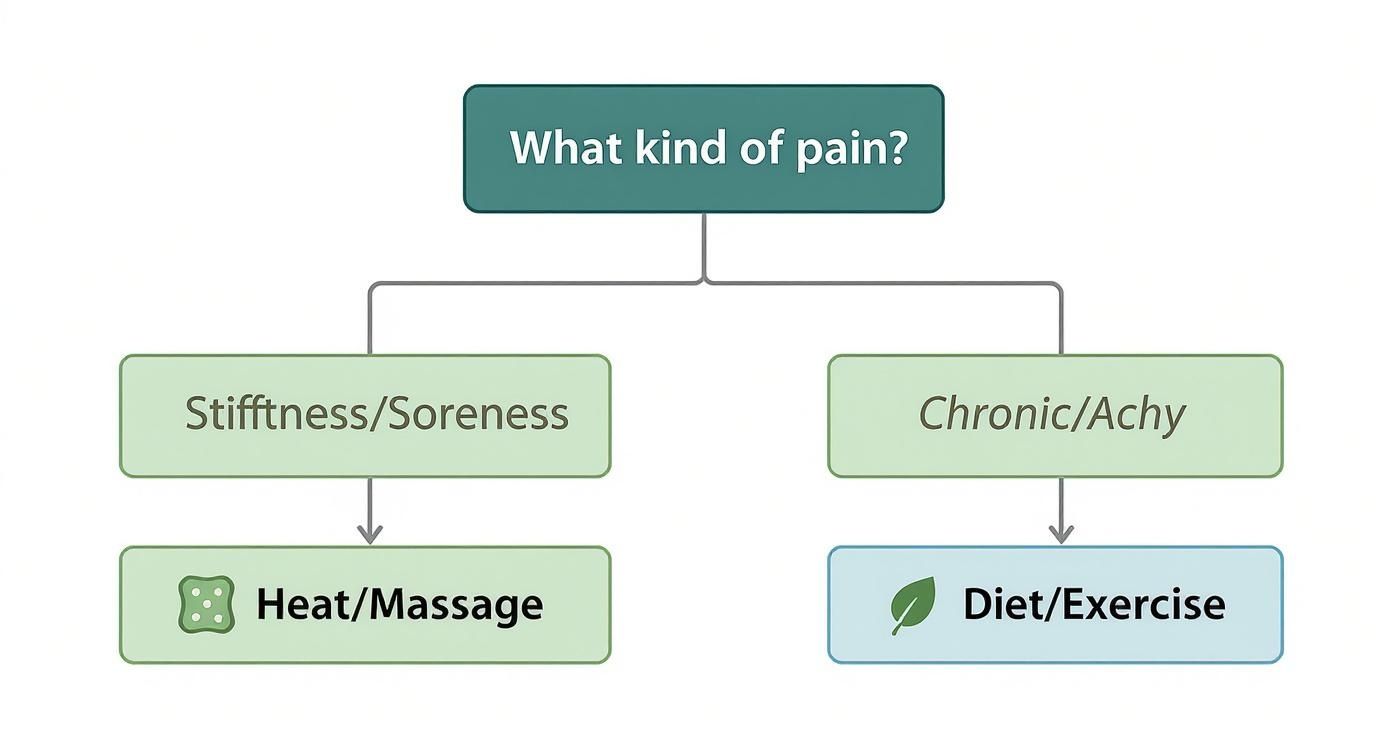
As you can see, if you're dealing with immediate soreness or stiffness, things like heat and massage can work wonders. For that deeper, persistent ache, it’s often the foundational changes in what you eat and how you move that make the biggest difference over time.
To give you a clearer picture, here's a quick summary of the natural methods we'll be diving into.
Natural Methods for Easing Joint Pain at a Glance
This table breaks down the most effective natural strategies, highlighting their core benefits and giving you a simple first step for each.
| Natural Method | Primary Benefit | How to Get Started |
|---|---|---|
| Heat & Massage | Provides immediate relief for stiffness and soreness. | Apply a warm compress to the affected joint for 15-20 minutes. |
| Dietary Changes | Reduces systemic inflammation that contributes to pain. | Add one anti-inflammatory food, like salmon or walnuts, to your meals daily. |
| Targeted Exercises | Strengthens supporting muscles to reduce joint stress. | Start with a 10-minute walk or gentle stretching session each day. |
| Lifestyle Adjustments | Improves overall joint health and reduces daily strain. | Focus on maintaining a healthy weight to lessen the load on your joints. |
These approaches work best when used together, creating a powerful, holistic plan for managing your joint pain and reclaiming your comfort.
The Power of Heat and Massage
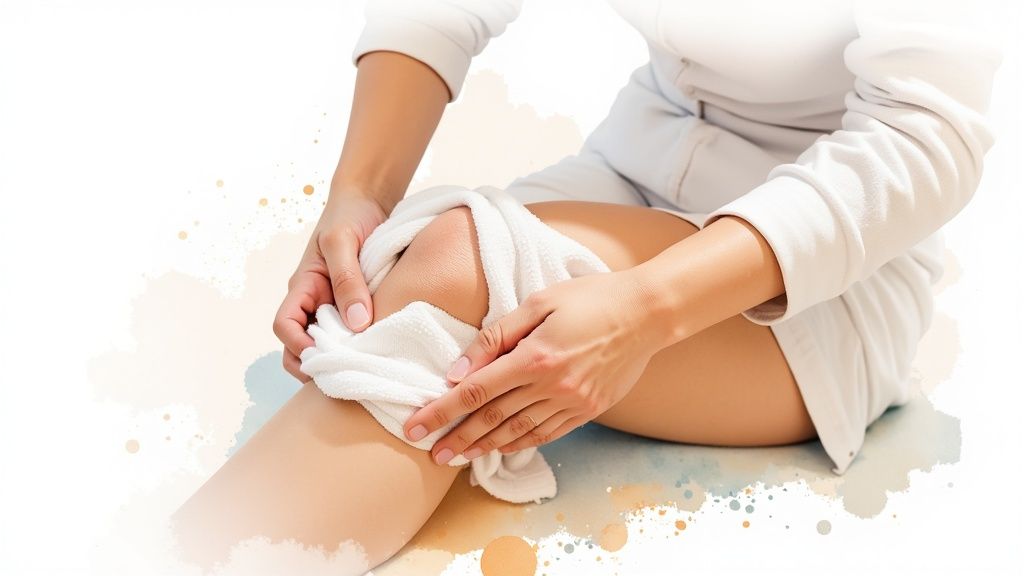
There's a reason a warm compress feels so good on a stiff joint, especially first thing in the morning. Applying heat is a brilliantly simple—and effective—way to ease into your day. A heating pad or even a warm towel gets the blood flowing, which helps relax those tight, sore muscles around the joint. It's a deeply comforting feeling that provides immediate, tangible relief.
Just picture it: you place a warm pad on that stiff knee for 15 minutes before you even think about getting up for your morning walk. Those first few steps suddenly feel less jarring, a little more fluid. It's a small ritual that can completely change the tone of your morning.
And massage? It's far more than just a spa treatment. For joint pain, it’s a hands-on tool for relief. A good massage works on the muscles and connective tissues that surround a painful joint, releasing built-up tension that often makes the discomfort worse. For instance, gently working the muscles around an arthritic hip can take a surprising amount of pressure off the joint itself, leading to real, tangible relief and better mobility. You're in control, and that's a powerful feeling.
Getting Hands-On: Heat and Massage for Soothing Relief
When you're looking for natural ways to ease joint pain, sometimes the simplest, hands-on therapies bring the fastest comfort. Think of heat as a way to gently coax stiff, achy joints back to life. Applying warmth gets the blood flowing, bringing a fresh supply of oxygen and nutrients to the tissues around the joint. This little boost in circulation is fantastic for relaxing tight muscles and easing that stubborn stiffness, which can make a world of difference in how you move.
For instance, if you wake up with a lower back that feels locked in place, try this: before you even swing your legs out of bed, lay a warm compress or heating pad on the area for 15 to 20 minutes. It’s a small ritual, but it can completely change your morning from a series of creaky, painful movements to a much smoother start. The warmth penetrates deep, calming the muscles and signaling to your body that it's safe to move. This simple act of self-care can transform your entire day.
"Heat therapy works by improving circulation and blood flow to a particular area due to increased temperature. Increasing the temperature of the afflicted area even slightly can soothe discomfort and increase muscle flexibility."
While heat is a go-to for chronic stiffness, it's not always the right choice. Knowing the difference between when to use heat and when to grab an ice pack is crucial for getting real relief. We've put together a full breakdown to help you figure it out. You can learn more about when to ice and when to heat joints in our guide.
The Power of a Good Massage
Massage therapy takes this hands-on approach a step further, directly targeting the muscle tension that almost always comes with joint pain. It’s a natural protective response—when a joint hurts, the muscles around it tighten up to guard it. But over time, this constant tension just adds more pressure and makes the whole situation worse, locking you in a frustrating cycle of pain and stiffness. The true benefit of massage is its ability to interrupt this cycle.
A skilled massage can break that cycle. By manually working out those tight muscles and knots, it eases the strain on the joint itself. Not only does it feel incredible, but it can also genuinely improve your range of motion and make daily activities far less painful. For example, regular massage on the thigh muscles can significantly reduce knee pain by alleviating the tension pulling on the joint. If you're interested in learning more advanced methods, this pain relief massage therapy guide is a fantastic resource for deeper insights.
Try This: A Simple Self-Massage for Hand Pain
The great thing is, you don’t always need a professional. A little self-massage can work wonders, especially for common issues like arthritis in the hands. Here’s an easy routine you can do anywhere, anytime you feel that familiar ache setting in.
Here's how to do it:
- Warm them up. Start by simply rubbing your hands together for a few seconds to generate a bit of natural warmth.
- Work the palm. Use the thumb of your other hand to press gently into your palm, making slow, circular motions.
- Give each finger some love. Gently pinch and pull each finger, starting from the base and moving to the tip. Pause at each knuckle to apply a little extra pressure.
- Don't forget the webbing. Finish up by gently massaging that fleshy area between your thumb and index finger.
Just a few minutes of this each day can make a noticeable difference in hand stiffness and help you keep your dexterity. It’s an empowering way to take control and manage your symptoms on your own terms.
Eating Your Way to Healthier Joints
It’s amazing how much of an impact our daily food choices have on how our joints feel. Think of it this way: your diet can either fan the flames of inflammation or help put them out. Adopting an anti-inflammatory eating style isn't about deprivation; it's about strategically adding delicious, powerful foods that work from the inside out to soothe your body.
Some foods are known to fuel the inflammatory process, while others act like a natural, calming balm. Take omega-3 fatty acids, for example. You’ll find them in fatty fish like salmon, mackerel, and sardines, and they are brilliant at directly fighting inflammatory responses. The same goes for the vibrant antioxidants packed into berries—blueberries, strawberries, and raspberries—which help shield your joint cells from damage.
You don't need to overhaul your entire kitchen overnight. The key is to make small, sustainable swaps. A great first step is trading your standard vegetable oil for extra virgin olive oil, which is a staple of the anti-inflammatory Mediterranean diet. Another easy win? Toss a handful of walnuts into your morning yogurt or on top of a salad.
Supercharging Your Diet with Inflammation Fighters
Let’s talk about one of the most well-known inflammation fighters: turmeric. The magic ingredient here is curcumin, a compound that has been studied extensively for its ability to ease joint pain. In fact, research shows it can make a real difference for people dealing with osteoarthritis.
One study found that participants taking 500 mg of curcumin twice daily saw a 58% reduction in their pain scores over just 12 weeks. That’s a significant improvement. You can read the full research on curcumin's benefits to see the data for yourself.
These dietary shifts are more than just a list of foods; they're a cornerstone of a holistic approach to joint health. The real goal is to create a lifestyle that supports your body's innate ability to calm inflammation and heal itself.
Getting more turmeric into your meals is easy. Sprinkle a teaspoon into your next soup, stew, or even a smoothie. Pro tip: always add a pinch of black pepper. This simple trick dramatically boosts your body's absorption of curcumin, making it far more effective. For more practical ideas, take a look at our guide on reducing inflammation naturally.
What a Joint-Friendly Day of Eating Looks Like
Wondering how to put this all together? Here’s a sample day of meals packed with anti-inflammatory goodness to show you just how tasty and simple it can be.
- Breakfast: Start with a warm bowl of oatmeal. Make it with unsweetened almond milk and top it with a generous handful of fresh blueberries, some chopped walnuts, and a dash of cinnamon.
- Lunch: Build a big, colorful salad. Use spinach and kale as your base, then add grilled chicken or chickpeas for protein, along with cherry tomatoes and cucumber. Drizzle it all with a simple dressing made from olive oil and fresh lemon juice.
- Dinner: How about some baked salmon seasoned with turmeric, garlic, and herbs? Serve it with a side of roasted broccoli and some quinoa for a perfectly balanced meal.
- Snack: If you get hungry between meals, an apple with a spoonful of almond butter or a soothing cup of green tea is a great choice.
This is just a template, of course, but it shows how you can build satisfying, delicious meals that actively work to support your joints. Every ingredient is chosen to provide nutrients that calm inflammation, helping you feel your best from morning to night.
Gentle Movement for Stronger, More Stable Joints
When a joint starts to ache, our first instinct is often to stop moving. It’s a completely understandable reaction, but it can actually backfire. Total rest can cause the muscles supporting your joints to weaken and the joints themselves to get even stiffer. It’s a frustrating cycle—the less you move, the more it hurts, and the more it hurts, the less you want to move.
The way out of this trap isn't to push through sharp pain, but to embrace gentle, consistent activity. The goal here is to build strength and flexibility around the joint without triggering a flare-up. Think of low-impact exercise as your best friend in this journey; it strengthens the very muscles that act as a natural brace for your joints.

For example, activities like swimming or water aerobics are fantastic. The buoyancy of the water takes the pressure off your body weight, so you can work the muscles around your hips and knees without the jarring impact of land-based exercises like running. It’s the perfect environment for building strength safely.
Low-Impact Exercises for Joint Health
Another wonderful option is tai chi. This ancient practice of slow, deliberate movements and controlled breathing is exceptionally good for improving both balance and flexibility. In fact, studies have shown that tai chi can lead to real improvements in pain, function, and overall quality of life for people with osteoarthritis.
The secret is finding something you genuinely enjoy, because that's what you'll stick with. Here are a few excellent low-impact ideas to get you started:
- Walking: Don't underestimate the power of a simple daily walk. It gets the blood flowing and strengthens muscles without putting major stress on your joints.
- Cycling: Whether you're on a stationary bike or hitting a local trail, cycling builds fantastic leg strength and cardiovascular health with almost zero impact.
- Yoga: Look for gentle or restorative yoga classes. These focus on mindful stretching and holding poses, which is incredible for boosting flexibility and easing stiffness.
If you’re dealing with specific knee pain, it’s smart to have a clear strategy before you start. We've got some targeted advice in our article covering 5 tips for exercising safely with joint issues.
Simple Stretches to Do at Home
You don't need a fancy gym membership to start feeling better. Just weaving a few simple stretches into your daily routine can make a huge difference in your mobility and help shake off that morning stiffness. Remember, consistency beats intensity every time.
Here are three straightforward stretches you can do right now to start easing joint pain:
- Knee-to-Chest Stretch: Lie flat on your back with both legs straight. Gently draw one knee in toward your chest, holding it there for 20-30 seconds. You’ll feel a nice, gentle stretch in your lower back and hip. Then, do the same with the other leg.
- Quad Stretch: Stand up and hold onto a chair or wall for a bit of balance. Grab your right ankle and gently pull your heel up toward your glute until you feel a stretch in the front of your thigh. Hold for 20-30 seconds and then switch sides.
- Hamstring Stretch: Sit down on the floor and extend one leg straight out in front of you. Bend your other leg, placing the sole of that foot against your inner thigh. Gently lean forward over the straight leg until you feel a comfortable stretch. Hold for 20-30 seconds before switching.
The point of these movements is to build stability and flexibility, not to cause more pain. Always listen to your body and stay within a comfortable range of motion.
By making gentle movement a regular part of your life, you're not just finding temporary relief—you're making a long-term investment in the health of your joints. It’s proof that small, steady efforts truly add up.
Choosing the Right Natural Supplements for Joint Health
Walking into the supplement aisle can be a dizzying experience. With so many bottles promising relief, how do you know what actually works? Let's cut through the noise and focus on a few natural compounds that have some real evidence behind them for easing joint pain.
Think of supplements as part of your support team, not a magic bullet. They work with your body over time, so patience is key. The first and most important step is always to talk with your doctor before adding anything new to your routine. They can make sure a supplement is right for you and won't interact with any medications you're taking.

What to Look For in a Joint Supplement
Some of the most well-known players are glucosamine and chondroitin. These are substances your body naturally produces to maintain the cartilage that cushions your joints. The thinking is that taking them in supplement form can give your body extra raw materials to help support that cartilage structure.
Another compound that's gotten a lot of attention is Methylsulfonylmethane (MSM). It's an organic sulfur compound found in small amounts in foods like fruits and veggies. Research suggests it has anti-inflammatory properties that can help with pain.
One pilot study from 2006 found that 6,000 mg of MSM daily over 12 weeks resulted in a 25% reduction in pain for people with knee osteoarthritis. Since nearly 27 million Americans deal with osteoarthritis, it's no wonder so many are curious about options like MSM.
For those interested in the latest advancements, it’s worth exploring the role of natural arthritis and joint remedies, including peptides to see what's on the horizon.
Comparing Common Natural Joint Supplements
To help you prepare for that conversation with your doctor, here’s a quick breakdown of some of the most common options out there.
| Supplement | What It Does | Typical Dosage | Things to Keep in Mind |
|---|---|---|---|
| Glucosamine & Chondroitin | Often called the "building blocks" of cartilage, they may help slow cartilage breakdown. | 1,500 mg of glucosamine and 1,200 mg of chondroitin daily. | They're usually taken together and can take several months to show any effect. |
| MSM | Provides sulfur, a key component for connective tissues, which can help reduce inflammation and pain. | 1,000-6,000 mg daily, usually split into a few doses. | Most people tolerate it well, but it can cause minor digestive issues for some. |
| Omega-3 Fatty Acids | These are powerful anti-inflammatories that can help with joint swelling and morning stiffness. | 1,000-3,000 mg of combined EPA and DHA daily. | You'll find these in fish oil. Always opt for a high-quality, purified brand. |
The bottom line? Talk to your doctor. They are your best resource for choosing a quality product, finding the right dose for you, and making sure any supplement fits safely into your overall health plan.
Frequently Asked Questions About Natural Joint Pain Relief
Diving into natural ways to manage joint pain always brings up good questions. When you start exploring different strategies, it’s completely normal to wonder about how long things will take, what’s safe, and what you can realistically expect. Let's tackle some of the most common questions I hear, so you can feel confident moving forward.
How Long Does It Take for Natural Remedies to Work?
This is the big one, and the honest-to-goodness answer is: it really depends. The time it takes to feel a real difference is tied directly to the method you're using.
For instance, something as simple as applying a warm heat pack can bring you almost immediate, soothing relief from that nagging stiffness and soreness. It's a fantastic way to ease into your morning or unwind after a long day, and you'll feel the benefits within minutes.
On the other hand, the more foundational changes take a bit more patience. Think of dietary adjustments or supplements—these work on a much deeper level to reduce underlying inflammation and support your joint structure. Because of that, you might need to stick with it for several weeks, or even a couple of months, before you notice a major shift in your pain levels.
The main thing to remember is that consistency is crucial for these long-term strategies to pay off.
Can I Stop My Medication If I Use These Natural Methods?
This is incredibly important, so I want to be crystal clear: No, you should never stop or change your prescribed medication without talking to your doctor first.
Think of natural remedies as powerful allies, not replacements. They are complementary strategies designed to support your main treatment plan. Your medication provides a certain level of pain management, and natural approaches like a better diet and targeted exercise can enhance those effects and seriously improve your quality of life. They work best as a team.
Always keep your doctor in the loop about any new therapies or supplements you're trying.
Your doctor can help you see the big picture—how these natural methods fit into your existing care plan and how everything can work together safely. This team approach is the smartest way to learn how to ease joint pain naturally.
Is Some Pain During Exercise Normal?
Learning to tell the difference between "good" soreness and "bad" pain is a skill every person with joint pain needs.
Feeling some mild muscle soreness a day or two after trying a new exercise is totally normal. It’s a good sign, actually! It means your muscles are adapting and getting stronger.
However, sharp, stabbing, or significantly worse pain right in the joint during or after exercise is a red flag. That’s your body’s way of yelling, "Stop!" The golden rule here is to always listen to your body. If a movement causes a flare-up, it’s not the right move for you right now. You can try a gentler version, but the best bet is to check in with a physical therapist who can create a program that's perfectly suited to your body's needs.
For over 20 years, SunnyBay has been focused on creating simple, effective, drug-free ways to find pain relief. Our microwavable heat packs are designed right here in the USA to deliver soothing, long-lasting warmth exactly where you need it most, helping you get back to doing what you love. You can see our full range of products at https://sunny-bay.com.


