


Your Guide to Period Heat Packs for Drug-Free Cramp Relief
-
That familiar, throbbing ache of menstrual cramps can bring your whole day to a grinding halt. But what if you could find powerful, drug-free relief? A period heat pack is a simple, science-backed way to soothe your muscles, get the blood flowing, and dial down the discomfort—no pills required. Think of it as a warm, targeted hug for your abdomen right when you need it most.
How a Little Warmth Can Conquer Big Cramps
When period pain hits, it’s easy to reach for a painkiller. But more and more of us are looking for natural ways to work with our bodies, not against them. That's where heat therapy comes in, and a period heat pack is the perfect tool for the job. It’s a straightforward, surprisingly effective way to manage one of the most common aches around.
The concept is beautifully simple: apply warmth to your lower belly or back, and you feel better. This isn't just wishful thinking; the heat kicks off real, physical responses that actively shut down pain signals.
Imagine your cramping uterus is a tightly clenched fist. Applying a heat pack is like running that fist under warm water—it coaxes the muscles to relax, unknot, and let go of that painful tension. This is the core benefit of heat therapy: it addresses the physical cause of cramps directly, offering a sense of control and immediate comfort.
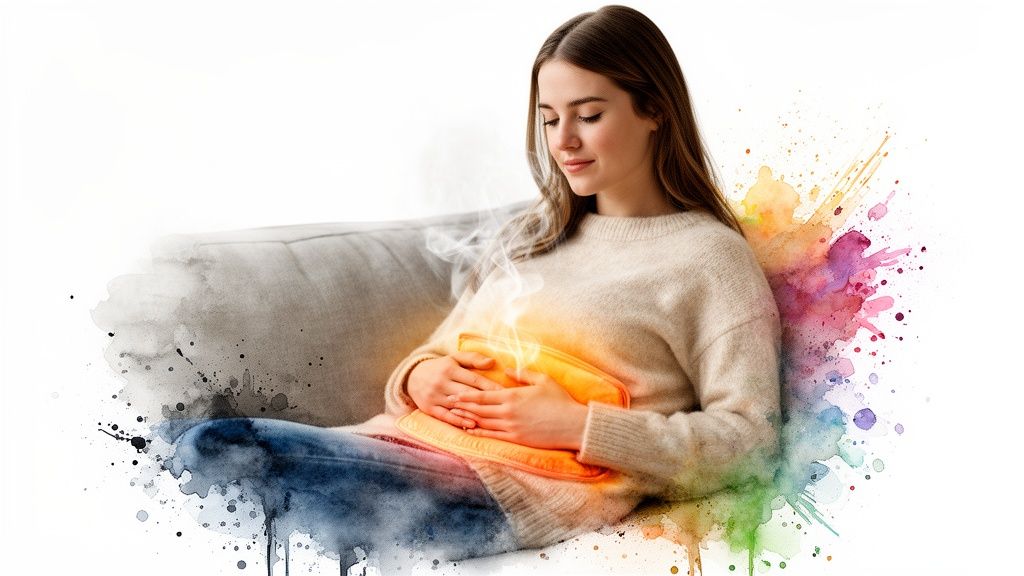
This feeling of relief is exactly what a heat pack aims to deliver, turning a moment of pain into one of calm and comfort. The warmth doesn't just tackle the physical ache; it's also incredibly comforting on an emotional level.
The Science Behind the Soothing Sensation
So, how does something so simple work so well? It all comes down to a one-two punch of muscle relaxation and better circulation.
- Muscle Relaxation: Heat is a natural muscle relaxant. The intense contractions of the uterine muscles are what cause that cramping feeling. Warmth helps those muscles unwind, dialing back the severity of the spasms and easing the pain.
- Increased Blood Flow: Applying a heat pack also opens up the blood vessels in the area. This boost in circulation is key—it brings more oxygen to your tissues and helps carry away the chemical messengers, called prostaglandins, that are responsible for the pain.
The results speak for themselves. With up to 90% of women experiencing painful periods, finding effective relief that doesn't disrupt daily life is crucial. Many find that heat packs can be just as effective as ibuprofen, but without any of the potential side effects.
Take It to the Next Level: Heat and Massage
Want to boost your comfort even more? Try combining heat therapy with a gentle massage. After you've had a heat pack on for about 15 minutes and the muscles feel warm and relaxed, use your fingertips to make slow, circular motions across your lower abdomen.
This pairing of heat and massage is incredibly effective. The heat makes the muscles soft and ready for the massage, and the massage then manually works out the tension while further improving circulation to flush away pain signals.
If you're interested in digging deeper into non-medical pain relief, exploring other natural pain management strategies can offer even more ideas. By embracing these simple techniques, you can feel more in control of your body and turn a dreaded time of the month into a far more manageable experience.
How Heat Therapy Actually Stops Period Pain
Ever wonder why a warm period heat pack feels like a miracle when cramps hit? It’s not magic, but the science behind it is pretty incredible. Think of your uterus during cramps as a muscle that’s contracting way too hard, like a clenched fist. When you apply heat, it’s like running that fist under warm water—it coaxes the muscle to relax and let go of that painful tension.
But there's more going on beneath the surface. That warmth is actually kicking off a series of biological responses that directly target the source of the pain. It's a completely natural process, working with your body to bring things back into balance. This isn't just a comforting feeling; it's your body's own biology working to provide real, drug-free relief.
Unlocking the Pain Gate
One of the coolest ways heat tackles pain is explained by something called the "gate control theory of pain." Imagine there's a gatekeeper in your nervous system that decides which signals get through to your brain. When you have cramps, the pain signals travel up small nerve fibers, opening the gate and shouting, "Hey, this really hurts!"
But when you introduce a heat pack, the warmth stimulates different nerve receptors in that same area—ones that don't sense pain. These new heat signals travel on bigger, faster nerve fibers.
The heat signals essentially race to the gate and shut it before the slower pain signals can get through. In short, the comforting sensation of warmth literally overrides the sensation of pain, which is why the relief can feel so immediate.
You're basically giving your nervous system something more pleasant to focus on. The warmth wins the race to the brain, and the pain message gets left behind.
Boosting Blood Flow to Wash Pain Away
Beyond just blocking pain signals, heat therapy is a fantastic way to improve circulation right where you need it most. During intense uterine contractions, the surrounding blood vessels can get squeezed, which reduces blood flow and oxygen. This lack of oxygen can actually make the cramps feel even worse.
Applying a heat pack helps to widen those blood vessels, a process called vasodilation. This simple change brings a couple of huge benefits:
- Delivering Fresh Oxygen: Better blood flow delivers a fresh supply of oxygen and nutrients to your uterine muscles, helping them work more effectively and with less strain.
- Flushing Out Prostaglandins: Improved circulation also helps to wash away the chemical compounds that cause pain in the first place, like prostaglandins. These are what trigger the uterine contractions, so clearing them out helps dial down the intensity of your cramps.
It’s a powerful one-two punch against menstrual pain: relax the muscles and improve circulation.
The Power of Gentle Massage
Want to take the relief to the next level? Try adding a little gentle massage to your heat therapy routine. After you’ve had the heat pack on for about 15 minutes, the muscles in your lower abdomen will be nice and warm, making them much more pliable.
Using just your fingertips, apply some light pressure in slow, circular motions across your lower belly. This combination is so effective because the heat has already done the heavy lifting of relaxing the muscles, so the massage can work that much better to release any lingering tension and boost circulation even more. To dig deeper into the science, you can explore more about how heating pads work. It's a simple step that can truly elevate your comfort.
Finding the Right Period Heat Pack for Your Lifestyle
Not all heat packs are made the same, and the best one for you really boils down to your daily routine and what you need in a moment of discomfort. Picking the right one can be the difference between so-so relief and a solution that feels like it was made just for you.
Think of it like choosing the right shoes for an occasion. You wouldn't wear stilettos on a hike, right? In the same way, the heat pack you love for lounging on the couch probably isn't the best choice for a busy day at the office. We'll walk through the three main players—microwavable, electric, and disposable—to help you find your perfect match.
The whole point is to find something that fits seamlessly into your life, offering comfort without being a hassle.
Microwavable Heat Packs: The At-Home Champion
For those cozy evenings when you just want to curl up and relax, a microwavable heat pack is an absolute gem. These are typically filled with natural ingredients like flaxseed or rice, and they provide a gentle, moist heat that penetrates deep into sore muscles. They also mold perfectly to your body, giving you a comforting, weighted feeling along with the warmth.
Picture this: You just got home from a long day, and that familiar crampiness is starting to kick in. You pop your SunnyBay pack into the microwave for a minute or two, wrap it around your lower belly, and settle in with a good book. That moist heat gets to work, your muscles start to unclench, and you can finally feel the tension melt away—no cords attached.
It's no surprise that these kinds of reusable solutions are so popular. The entire heating pad market was valued at a huge USD 54.32 billion in 2024 and is expected to climb to USD 90.79 billion by 2034. Microwavable and electric options are leading the way, holding a combined 42.3% market share thanks to how effective and eco-friendly they are.
Electric Heating Pads: Consistent and Controllable Relief
When you need that warmth to last and last, an electric heating pad is your best friend. It’s the perfect solution for when you're going to be in one spot for a while, like working at your desk or getting lost in a movie marathon. With adjustable temperature settings, you get total control over the heat level.
Let's say you're on a tight deadline, but cramps are making it impossible to focus. You plug in your electric heating pad, set it to a nice, low temperature, and tuck it behind your lower back. The constant, reliable warmth keeps those muscles from tensing up for hours, letting you get your work done without interruption.
This little guide can help you figure out what you need at a glance.
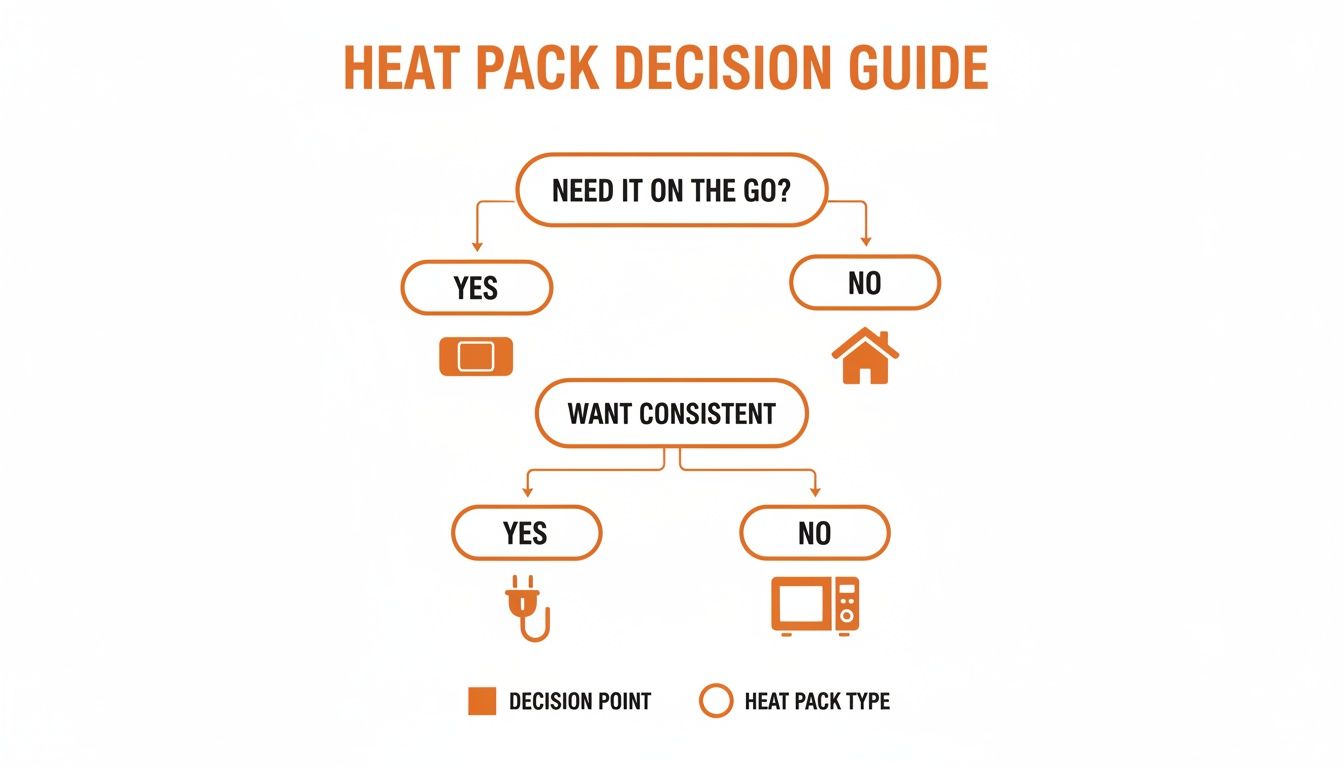
Ultimately, the biggest question to ask yourself is: Do I need portability or consistent, long-lasting heat? Your answer will point you in the right direction.
Disposable Heat Patches: The On-the-Go Essential
For those days when life just doesn't slow down, disposable heat patches offer discreet, portable relief that moves with you. These are thin, adhesive patches that you stick right onto your clothes, delivering a steady, low-level warmth for hours. They’re a lifesaver for commuting, traveling, or any time a bulky pack just won't work.
Imagine you have a day packed with meetings and errands, and your cramps decide to show up. You can just apply a discreet patch to the inside of your shirt, right over your abdomen. It’s completely invisible under your clothes but provides that gentle warmth you need to take the edge off the pain. You can go about your day feeling comfortable and confident.
The real magic of heat therapy is its versatility. By having different types of period heat packs on hand, you can tailor your pain relief to whatever you're doing, ensuring you always have the right tool for the job.
If you're still on the fence between the two main reusable options, you might want to check out our deep-dive comparison of electric heat pads vs microwavable body heat pads. And for those who love using technology to support their wellness, exploring different health tracking devices can offer some fantastic insights into your body's cycles and patterns.
To make things even clearer, here’s a quick side-by-side look at the three types.
Period Heat Pack Comparison Guide
| Feature | Microwavable Heat Packs | Electric Heating Pads | Disposable Heat Patches |
|---|---|---|---|
| Best For | At-home relaxation, moist heat therapy | Long-lasting, consistent heat at a desk or on the couch | On-the-go, discreet relief during active days |
| Heat Source | Microwave (flaxseed, rice, etc.) | Wall outlet | Air-activated chemical reaction |
| Portability | Limited; best for home use | Not portable; must be plugged in | Excellent; thin and wearable under clothes |
| Heat Control | None (cools down over time) | Adjustable temperature settings | One consistent, low-level heat |
| Reusability | Highly reusable (hundreds of times) | Highly reusable (for years) | Single-use only |
| Upfront Cost | Low to moderate | Moderate to high | Low (but recurring) |
Hopefully, this chart helps you zero in on the heat pack that will become your new best friend during that time of the month.
Key Features That Take Your Relief to the Next Level
Once you’ve settled on the type of period heat pack you want, it's the little details that can turn a good product into your absolute go-to for cramp relief. These features are what make all the difference, elevating a simple source of warmth into a truly comforting and convenient tool. It’s not just about getting warm; it's about making your life easier when you're feeling your worst.
Think about it—when you're doubled over with cramps, the last thing you want is a scratchy, uncomfortable fabric pressed against your already sensitive skin. The right material doesn't just feel better, it actually helps the heat pack do its job more effectively.
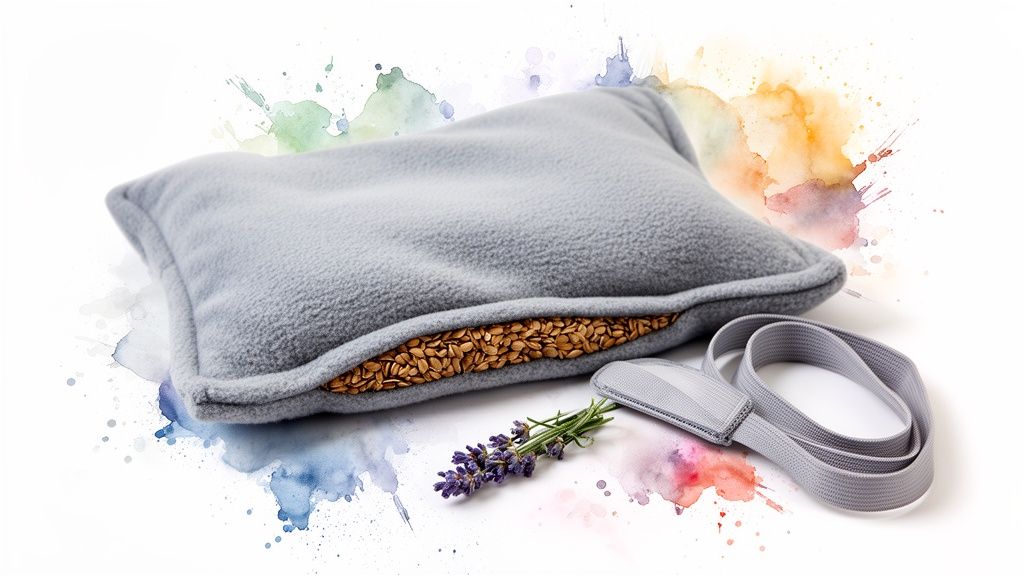
This is why you'll often see premium packs made with soft materials like anti-pill fleece. It's incredibly gentle and acts as a built-in buffer, delivering soothing heat without the risk of a burn. A well-made cover also traps that warmth, keeping you comfortable for much longer.
Why Natural Fillers Make a Difference
The real secret to a great microwavable heat pack is what’s on the inside. While you might see some filled with rice, higher-quality options like flaxseed offer some serious perks.
Flaxseeds are tiny and have a naturally high oil content. This means they mold to the shape of your body beautifully and hold onto a gentle, moist heat for an impressive amount of time. It feels less like a hot object and more like a warm, weighted hug right on your abdomen. That subtle pressure, sometimes called deep pressure stimulation, can even help calm your nervous system, adding another layer of relief.
The combination of moist heat and gentle weight from a flaxseed-filled pack is incredibly effective. It helps the warmth penetrate deeper into your muscles, encouraging them to relax more fully than dry heat alone.
Designed for Real Life (Because Life Doesn't Stop for Cramps)
Let's be honest, one of the biggest drawbacks of old-school heating pads is being stuck near an outlet. Modern period heat packs are built for people who have things to do, with smart features that deliver relief while you're on the move.
The most valuable feature here is an adjustable strap. This simple but brilliant addition lets you fasten the heat pack securely to your lower belly or back, and it's a total game-changer.
- Hands-Free Convenience: Keep working, cooking, or just stretching on the sofa. The heat pack stays put.
- Targeted Relief: Straps keep the pack pressed right against your sore spots, delivering constant, focused warmth.
- A Secure Fit: No more clenching your muscles to hold a heating pad in place. It just moves with you.
The Calming Boost of Aromatherapy
Pain isn't just physical—it's emotional and stressful, too. This is where aromatherapy comes in, creating a more holistic experience that tackles both body and mind.
For instance, lavender is famous for its ability to calm anxiety and promote relaxation. When you heat up a lavender-infused pack, it releases a subtle, soothing scent. This dual-action relief helps ease the physical pain of cramps while also melting away the mental tension that comes with it. It transforms a simple moment of pain relief into a genuinely restorative ritual.
How to Use Your Heat Pack Safely and Effectively
Once you've picked out the perfect period heat pack, knowing how to use it correctly is the key to getting real relief. When you apply it the right way, you maximize comfort, avoid any risks, and can get back to your day much faster. These simple tips will help you build a pain management routine that actually works for you.
It’s no surprise that people are turning to at-home solutions for pain relief. The global heat therapy market is on track to reach an incredible USD 2,430.20 million by 2031, and a big reason for that is its proven success with things like menstrual cramps. With over 50 million adults in North America dealing with chronic pain, the need for safe, drug-free options has never been greater. You can find out more about this growing market on cognitivemarketresearch.com.
Best Practices for Heat Application
Think of using a heat pack as a targeted treatment for your muscles. The idea is to apply warmth long enough to ease the tension, but not so long that you irritate your skin. For most people, that magic number is about 15-20 minutes per session.
After your time is up, give your skin a good hour-long break to cool down before you even think about putting the heat pack back on.
And here’s the most important rule: always use a barrier. Never, ever put a heat pack directly on your bare skin. It's a recipe for burns. A thin layer of clothing or the soft fleece cover on a SunnyBay pack is the perfect buffer.
That protective layer is what allows the heat to spread out gently and evenly, letting your muscles soak up the soothing warmth without scorching your skin. It’s a tiny step that makes a huge difference in both safety and comfort.
Tips for Different Types of Heat Packs
Every type of heat pack has its own little quirks and rules. Following these simple guidelines will ensure you get safe, consistent relief no matter which one you choose.
- Microwavable Packs: Pay close attention to the manufacturer's instructions. A common mistake is to nuke it for too long, which can create dangerous hot spots. A good pro-tip is to stop the microwave halfway through, give the pack a good shake to move the filling around, and then finish heating.
- Electric Pads: These are fantastic for providing a steady, consistent warmth, but you should never fall asleep with one on unless it has a trustworthy auto-shutoff feature. Always start on the lowest setting and slowly dial it up until you find a temperature that feels just right.
- Disposable Patches: These are designed to stick to your clothes, not your skin. If you stick one directly onto your stomach, it can cause skin irritation or even low-temperature burns after a few hours.
For a deeper dive, be sure to check out our complete guide on heating pad safety.
Take Your Relief to the Next Level with Massage
Want to make your heat therapy even more effective? Try adding some gentle self-massage into the mix. After you’ve had the heat pack on for about 15 minutes, your abdominal muscles will be warm and pliable, making them much more receptive to massage.
Try This Simple Routine:
- Get comfortable and lie down with your heat pack on your lower abdomen for 15 minutes.
- Take the pack off and use your fingertips to make slow, circular motions with light pressure.
- Pay extra attention to the areas that feel the tightest, and remember to breathe deeply to help your muscles let go of the tension.
This one-two punch is a powerhouse against cramps. The heat does the heavy lifting by loosening everything up, and the massage manually works out any leftover tension while giving your circulation an extra boost. It’s a simple two-step process that can bring some seriously profound relief.
Got Questions About Period Heat Packs? We’ve Got Answers.
When you’re trying a new remedy for cramps, it’s natural to have a few questions. I get it. You want to make sure you’re using it right and getting the most out of it. So, let’s clear up some of the most common questions about period heat packs.
Think of this as our final chat—a quick rundown of the practical stuff. We'll cover how long to keep it on, whether you can sleep with one, and more, so you can feel totally confident using heat to manage your cramps.
How Long Should I Use a Heat Pack for Period Cramps?
This is a great question because more isn't always better here. The sweet spot for getting relief without bothering your skin is about 15-20 minutes at a time.
That's usually long enough for the warmth to sink in, relax those cramping muscles, and really start working its magic. After that, give your skin a little break. Let it cool down and return to its normal temperature before you reapply the heat. You can repeat this every few hours whenever the cramps start to act up again.
The real goal is steady, gentle relief. Think of it as a series of short, soothing sessions rather than one long heat blast. It's safer for your skin and often works better to keep your muscles from tensing up.
Listen to your body. If your skin ever feels uncomfortably hot, take the pack off immediately.
Can I Sleep with a Period Heat Pack On?
I have to be really clear on this one for safety’s sake: it is strongly advised not to sleep with an electric heating pad. The risk of burns or even a fire is just too high, especially if the auto-shutoff feature fails. Unsupervised, plugged-in heat is a definite no-go while you’re asleep.
What about the non-electric kind? Microwavable or disposable packs are a bit safer since they cool down on their own. But even then, you can still get low-temperature burns from having something warm pressed against your skin for hours when you can't feel it.
The best strategy is to use your heat pack before you go to sleep. A 20-minute session while you're winding down can ease the pain, relax your body, and help you drift off much more comfortably. Just make it a habit to set it aside before you close your eyes for the night.
Are Microwavable Heat Packs Better Than Electric Ones?
One isn't "better" than the other—it's all about what works for your life and your cramps. They're just different tools for the job.
- Microwavable Heat Packs: These are the champions of portability and moist heat. Lots of people (myself included) feel that moist heat gets deeper into the muscle, providing a more thorough, satisfying relief. You aren't tethered to a wall, so you can use them while you're making coffee, in the car, or curled up on the couch.
- Electric Heating Pads: Their biggest win is the consistent, controllable heat. If you're stuck at your desk all day or plan on a movie marathon, an electric pad delivers a steady warmth that won't fade. You just set the temperature and forget it.
Think about your routine. Do you need something you can wear while you move around? Or do you need hours of uninterrupted heat while you're sitting still? Your answer will point you to the right choice.
Can Using a Heat Pack Affect My Menstrual Flow?
Yes, it can, and it’s usually nothing to worry about. When you apply heat to your lower abdomen, it boosts blood circulation in that whole area—which is exactly why it works so well. That improved blood flow helps relax the uterine muscles and carry away the prostaglandins that cause pain.
A natural side effect of this increased circulation is that you might see a temporary increase in your menstrual flow. For most people, it's a small and brief change. It’s really just a sign that the heat is doing its job and encouraging things to move along.
Of course, you know your body best. If you ever notice a flow that seems unusually heavy or lasts longer than your normal, it's always smart to check in with your doctor. But for the vast majority of us, a slightly heavier flow while using a heat pack is just part of the process.
Ready to find the perfect, drug-free solution for your period pain? At SunnyBay, we design high-quality, U.S.-made microwavable heat packs filled with natural flaxseed to deliver gentle, weighted comfort right where you need it. Explore our collection of hands-free wraps and soothing pads to reclaim your comfort today. Find your perfect match at https://sunny-bay.com.


