


The Ultimate Guide to Non Electric Heating Pads
-
At its core, a non electric heating pad is a wonderfully simple, cord-free tool for your well-being. It’s typically filled with natural materials like flaxseed, and a quick spin in the microwave is all it takes to provide portable, soothing warmth. Unlike electric pads, it gives off a gentle moist heat that works its way deep into your muscles to relieve tension and pain, all without being stuck near a power outlet.
Unplugged Comfort for Natural Pain Relief
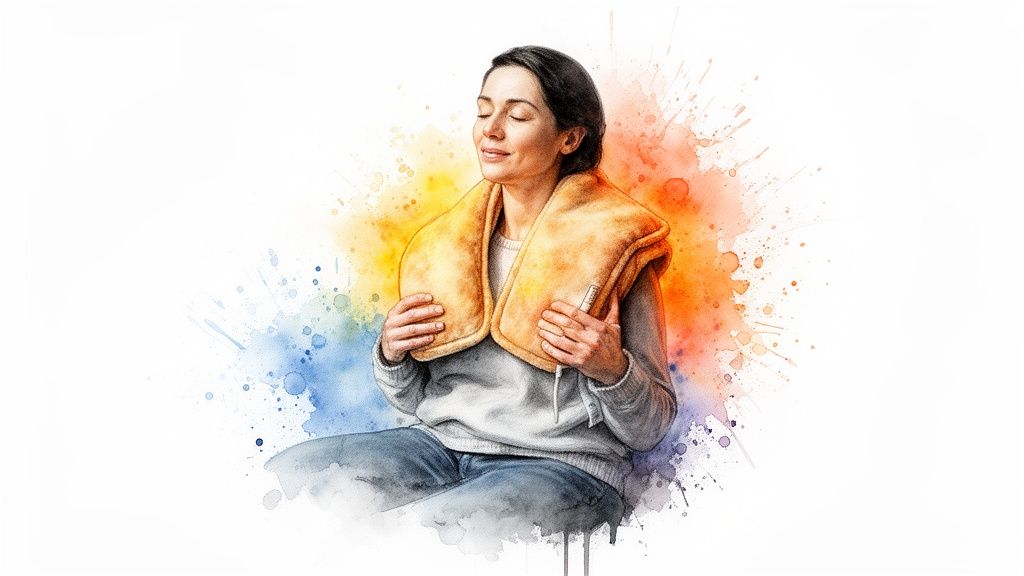
Imagine melting away the ache in your shoulders or easing that nagging lower back pain without having to search for a cord or an outlet. That’s the simple, liberating feeling of a non-electric heating pad. It's a go-to tool for anyone looking for drug-free pain management, delivering relief exactly where you need it, whether you're unwinding on the couch, sitting at your desk, or recovering from a workout.
The idea behind it is straightforward but incredibly effective. By combining gentle, weighted pressure with therapeutic warmth, these pads harness the fundamental benefits of heat and massage therapy. Think of it this way: the heat therapy gets your circulation going, which helps relax tight muscles and ease stiffness. At the same time, the subtle weight provides a comforting, calming sensation—almost like a gentle, reassuring hug from a massage therapist for your sore spots. It's a powerful combination that tells your body it's time to heal and relax.
Why People Are Ditching the Cords
This move towards simpler, effective solutions isn't just a fleeting trend; it’s a real shift in how we approach personal wellness. The global heating pad market, where non-electric options play a huge role, hit USD 52.44 billion and is expected to climb over USD 80 billion by 2032. North America is at the forefront, making up more than 40% of this market. This boom is fueled by a growing demand for non-invasive pain relief as chronic conditions like arthritis and back pain affect over 50 million adults in the U.S. alone. You can discover more insights about the growing heating pad market and its drivers.
This preference for unplugged relief becomes crystal clear when you see what people value most in a heating pad. Portability, safety, and the ability to deliver deep-penetrating moist heat are consistently at the top of the list—and these are the exact areas where non-electric models truly shine.
To put it into perspective, here's a quick look at how the two types stack up.
Non Electric vs Electric Heating Pad At a Glance
| Feature | Non Electric Heating Pad (Microwavable) | Electric Heating Pad |
|---|---|---|
| Heat Type | Moist Heat (deep penetration) | Dry Heat (surface level) |
| Portability | Completely portable, no cords | Requires a power outlet, limited range |
| Safety | No risk of electrical shock or fire | Potential for burns, fire risk with overuse |
| Heat Duration | Retains heat for 15-30 minutes | Continuous heat as long as it's plugged in |
| Contour | Molds to the body for targeted relief | Often stiff, may not fit body curves well |
| Maintenance | Easy to clean (removable covers) | Spot clean only, electronics can't be washed |
| Scent | Often infused with calming herbs (e.g., lavender) | No scent |
This table lays out the key differences, but it's the real-world experience that matters. The freedom to move around and the deeply soothing moist heat are why so many people are making the switch. In this guide, we'll dive deeper into these benefits to help you see why a simple microwavable pad might just be the best investment you make for your comfort and well-being.
How a Microwavable Heating Pad Actually Works
Ever wondered how a simple fabric pouch can deliver such powerful warmth without a single plug or wire? The secret behind a non-electric heating pad isn't magic—it's just elegant, simple science. Think of it as a natural, rechargeable battery for your body, one that soaks up energy and releases it as deeply soothing heat.
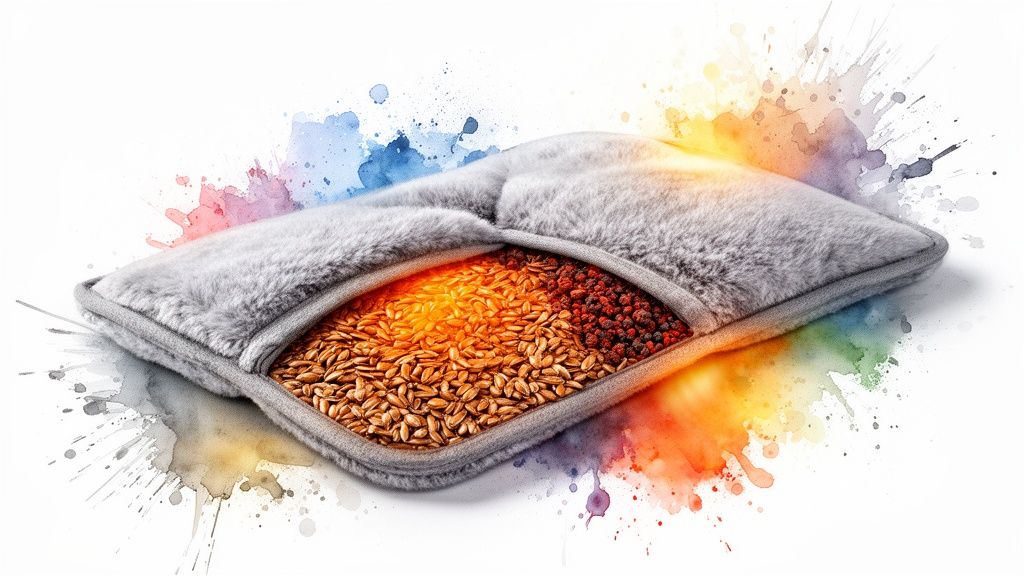
At the core of every pad are natural fillers, like flaxseed, whole wheat, or even special lava sand. When you pop the pad into the microwave, these materials absorb the microwave energy. This energy gets the tiny water molecules inside the filler excited, which rapidly raises their temperature. Once heated, these materials become tiny heat reservoirs, holding onto that thermal energy and releasing it slowly and evenly.
The Power of Moist Heat
What makes this warmth feel so different is that it’s moist heat. Fillers like flaxseed naturally contain a bit of moisture. As the pad cools down, it releases this moisture as a gentle, humid warmth that penetrates deeper into your muscles and tissues than the "dry" heat you'd get from a standard electric pad.
This deeper penetration is exactly why so many physical therapists and massage therapists recommend microwavable pads. It’s better at:
- Increasing blood flow to bring more oxygen and nutrients to sore spots.
- Relaxing muscles on a much deeper level to ease stubborn knots.
- Improving tissue elasticity, which is a huge help for flexibility and recovery.
"The ability of moist heat to penetrate deeper tissues makes it a superior choice for alleviating muscle soreness and chronic pain. It provides a more therapeutic experience compared to the surface-level warmth of dry heat."
Why Quality Construction Matters
Of course, the filler is only half the story. The way that heat gets to your skin is just as important. A high-quality pad will use fabrics like soft, anti-pill fleece or breathable cotton to create a safe, comfortable barrier. This ensures the heat is distributed gently and evenly, preventing hot spots and making the whole experience feel like a warm hug.
It’s no surprise that more and more people are turning to this natural solution. The U.S. heating pad market was recently valued at USD 544.76 million and is expected to climb to USD 668.81 million. A huge driver is the 80 million Americans who manage chronic pain each year, with 40% of them choosing heat therapy as their go-to non-drug solution.
Microwavable pads are a top choice because they deliver 20-25 minutes of therapeutic heat right in the sweet spot of 104-113°F—perfect for muscle relaxation without the overheating risks that affect up to 10% of electric pad users. If you're curious, you can explore more about these market insights and the benefits of non-electric options.
By understanding this simple science, you can feel confident that your non electric heating pad is a safe, effective, and powerful tool for natural pain relief.
The Science of Soothing Heat Therapy
Ever wonder why a warm compress feels like magic on a sore muscle? It’s not just in your head. There's real science at play here, a process called thermotherapy that doctors and physical therapists have trusted for centuries to deliver natural pain relief. When you apply warmth to an aching part of your body, you're actually kicking off a powerful, healing chain reaction.
Think of muscle pain like a traffic jam in your circulatory system. When muscles get tight and constricted, they slow down blood flow. This causes waste products, like lactic acid, to build up, which is what sends those nagging pain signals to your brain. A good non-electric heating pad acts like the green light that breaks up that jam. The warmth signals your blood vessels to open up—a process known as vasodilation.
Unlocking Your Body's Natural Healing
Once those blood vessels are open, fresh, oxygen-rich blood can finally surge into the area. This new blood flow does two critical things at once: it delivers the nutrients needed to repair damaged tissue and simultaneously flushes out all those pain-causing substances that were stuck there.
It’s a simple process, but the results are profound. Here’s how it works in real life:
- Shoulder and Neck Tension: For that tight, knotted feeling from sitting at a desk all day, heat therapy literally melts the tension away by relaxing muscle fibers and kickstarting circulation. For example, placing a heated neck wrap on your shoulders while you answer emails can prevent a tension headache from ever starting.
- Menstrual Cramps: The warmth helps calm the contracting uterine muscles, which can dramatically dial down the intensity of period cramps. For example, a rectangular pad on your lower abdomen while you watch a movie can provide enough relief to skip reaching for painkillers.
- Lower Back Pain: Applying heat to the lower back is fantastic for easing stiffness and soothing muscle spasms. For example, warming up a back pad before a long car ride can keep your muscles loose and prevent the ache that often sets in.
The Added Benefit of Gentle Pressure
But the heat is only half the story. A well-made non-electric heating pad also provides another therapeutic benefit: gentle, weighted pressure. This is what’s known as deep pressure stimulation, and it has an incredibly calming effect on your entire nervous system. That steady, comforting weight helps quiet your body’s “fight or flight” response, creating a deep sense of relaxation. It’s the same reason a firm hug or a weighted blanket can feel so reassuring.
This one-two punch of heat and pressure is remarkably effective. In fact, for certain sports injuries, heat therapy is shown to cut recovery time by as much as 40%. It’s a go-to method for 80% of massage therapists, who often prefer non-electric options for their clients to avoid the risks that come with cords and outlets. And for those on the go, 65% of global consumers prefer non-electric pads for travel because they're so convenient. You can discover more insights about these heating pad trends to see just how popular unplugged relief has become.
Knowing the 'why' behind the relief makes it even better. You can learn more about how heat pads work in our complete guide. By understanding and using these natural processes, you're not just masking pain—you're supporting your body's amazing ability to heal itself.
How to Choose the Perfect Non Electric Heating Pad
Ready to find your perfect match? Choosing a non electric heating pad goes way beyond just picking a color you like. It’s really about finding the right tool for your specific aches and pains. With a few key things in mind, you can find a pad that feels like it was made just for you, delivering comfort exactly where you need it.
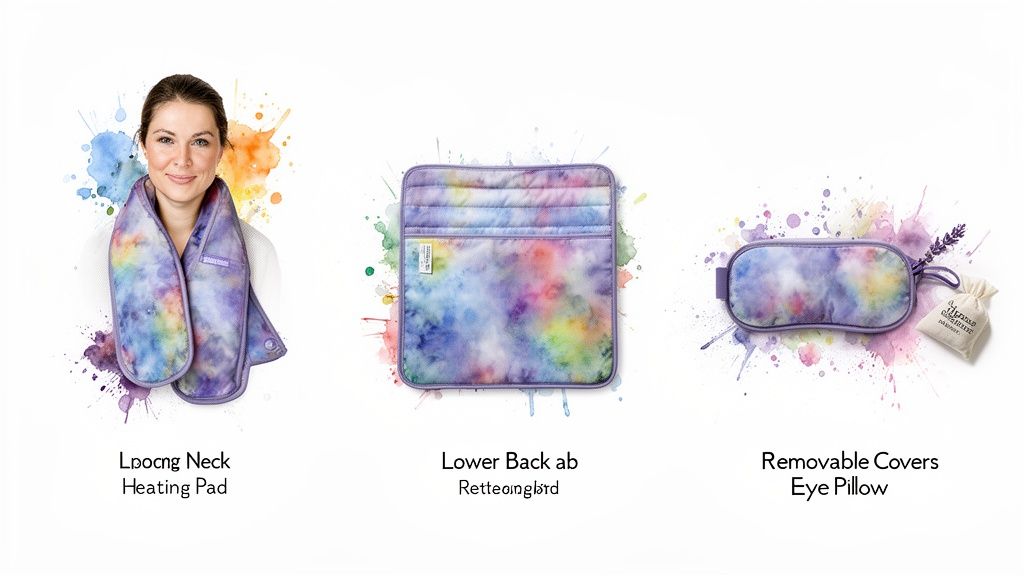
First things first, think about shape and size. A long, U-shaped wrap is an absolute game-changer for draping over your neck and shoulders, melting away the tension that builds up from sitting at a desk all day. For that nagging lower back pain, a wide, rectangular pad gives you that broad, comforting coverage. Smaller packs are perfect for zeroing in on joints like your knees or elbows.
Consider The Filling Material
What's inside your heat pack makes a huge difference in your experience. Different fillers offer unique benefits, from the kind of heat they emit to how they physically feel against your body. Getting to know these differences is the secret to making the best choice.
For a deeper dive, you can learn how to choose the best microwavable body heating wrap for your needs in our complete guide.
Picking the right filler really comes down to personal preference for heat type, weight, and texture. Here’s a quick comparison to help you decide.
Which Heating Pad Filler Is Right for You
| Filler Type | Heat Retention | Feel & Weight | Best For |
|---|---|---|---|
| Flaxseed | Excellent (moist heat) | Soft, conforming, lightweight | Deep muscle penetration and molding perfectly to body contours. |
| Whole Wheat | Very Good (moist heat) | Heavier, substantial feel | A comforting, weighted sensation combined with lasting warmth. |
| Lava Sand | Exceptional (dry heat) | Fine, sand-like texture | Unscented, long-lasting dry heat for consistent comfort. |
Each of these natural materials does a fantastic job, so it's hard to go wrong. It's more about finding the specific feel and type of heat that brings you the most relief.
Don't Overlook Key Features
Beyond the basics of shape and filling, a couple of extra features can seriously upgrade your comfort and convenience. A high-quality non electric heating pad is an investment in your well-being, so it's smart to pay attention to the little details that make a big difference.
A great heat pack should combine therapeutic effectiveness with practical design. Features like washable covers and aromatherapy aren't just luxuries—they are essential for creating a truly restorative experience that you'll want to use again and again.
Always look for a pad with a removable, washable cover. This is a non-negotiable for hygiene. It lets you easily clean the fabric, keeping your heat pack fresh and ready to go.
Also, think about whether you'd enjoy a bit of aromatherapy. Many pads include natural herbs like lavender, which releases a calming scent when heated. It adds an extra layer of relaxation to your heat therapy and turns a moment of pain relief into a mini spa session.
Safe and Effective Ways to Use Your Heat Pack
Getting the most out of your non-electric heating pad isn't just about knowing when to use it, but also how. Proper handling is the key to unlocking its full therapeutic benefits and making sure it remains a reliable part of your wellness routine for years to come. Think of it as a simple ritual for dependable, soothing relief.
Your journey to effective heat therapy begins right at the microwave. Since heating times can differ depending on your microwave’s wattage and the size of your heat pack, it's always smart to start low and go slow. Begin with 60 seconds, then add more time in small 15-second bursts if needed. This simple approach prevents you from overheating the natural fillers and creating dangerous hot spots.
Before placing the pad on your body, give it a gentle shake to spread the heat evenly. Next, and this is crucial, perform a quick touch test. Your inner wrist is a great spot for this. You're looking for a comfortably warm temperature, not something painfully hot. This one step is your best defense against skin irritation or burns.
Best Practices for Heat Therapy Sessions
Once your heat pack is perfectly warmed, applying it correctly is what makes all the difference. The whole idea is to deliver consistent, therapeutic warmth that coaxes your muscles to relax and boosts circulation without being too intense.
Here’s a simple guide to get it right every time:
- Keep Sessions Short and Sweet: For most situations, the sweet spot for a heat therapy session is between 15 and 20 minutes. This is just long enough to get the blood flowing and muscles to unwind, but not so long that it becomes ineffective or risks skin damage.
- Always Use a Protective Barrier: Never, ever place a freshly heated pad directly on your bare skin. A thin towel or a layer of clothing acts as the perfect buffer, allowing the moist heat to penetrate gently and safely.
- Listen to What Your Body Is Telling You: If the heat ever feels too intense, take the pad off immediately. Comfort is the cornerstone of effective therapy.
For a deeper dive into all the do's and don'ts, check out our complete guide on heating pad safety. It has everything you need to use your device with total confidence.
Proper use transforms a simple heat pack from a comfort item into a powerful therapeutic tool. By respecting heating times and session durations, you unlock its full potential for natural, effective pain relief.
Finally, a little care goes a long way in extending the life of your non-electric heating pad. Most high-quality pads come with removable covers that you can toss right in the washing machine. Keeping the cover clean is great for hygiene. When you're not using it, store your pad in a cool, dry place away from sunlight to keep the natural fillers inside in great shape.
How People Use Heat Packs in Real Life
The real magic of a non-electric heating pad isn't just in how it works, but in how people actually use it. Its versatility truly shines in real-world situations, offering targeted, unplugged relief that fits into your life, whether you're in a professional clinic or just curled up on your own couch.
Imagine this: a massage therapist begins a session by placing a large, warm pack on a client's lower back. That deep, moist heat immediately starts to relax the tight muscles and increase blood flow. This simple step makes the entire massage more effective, allowing the therapist to work deeper and providing the client with faster, more significant relief. It’s a perfect example of how heat therapy is a powerful partner to massage therapy.
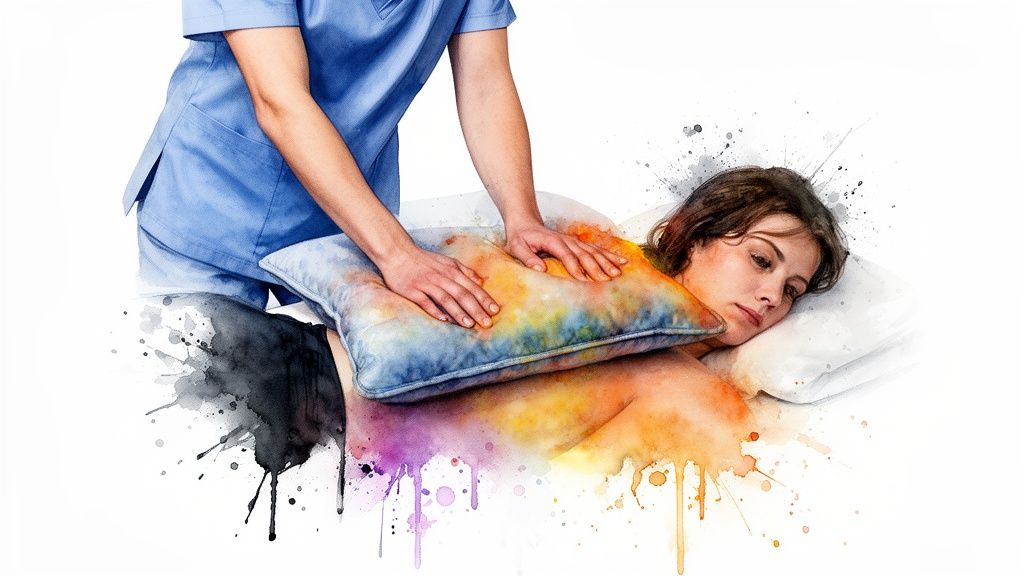
That same idea applies just about everywhere. The gentle warmth and subtle pressure deliver the core benefits of both heat therapy and massage, which is why it's a go-to tool for professionals and anyone serious about self-care.
Everyday Scenarios for Soothing Relief
The applications are practically endless. Think about an athlete grinding through a tough training season. Wrapping a heated pad around a sore knee or a strained quad can kickstart muscle recovery and cut down on that post-workout stiffness, getting them back in the game with less downtime.
Here are a few more common ways people find relief:
- The Office Professional: For anyone hunched over a laptop all day, that dreaded 'tech neck' starts to creep in. Draping a heated shoulder wrap over their chair provides instant relief right at the desk—no outlet required.
- The Chronic Pain Sufferer: Many people turn to heat packs to soothe persistent or sudden pain. For example, they are a popular, non-invasive way to help manage TMJ symptoms and find relief from jaw pain.
- The Weekend Warrior: After a long day of gardening or a tough hike, placing a rectangular pad on the lower back can melt away the ache from overworked muscles.
From menstrual cramps to arthritis flare-ups, the ability to apply targeted, moist heat provides a powerful, drug-free alternative for managing discomfort. It’s about giving your body the support it needs to heal and feel better naturally.
These are the kinds of stories that show just how indispensable a non-electric heating pad can be. Whether it’s part of a formal physical therapy plan or just your go-to for daily aches, its straightforward, effective nature makes it a cornerstone of any wellness toolkit. It’s not just a source of warmth; it’s a portable, reliable partner on your health journey.
Got Questions? We’ve Got Answers.
Let’s wrap things up by tackling some of the most common questions we hear about non-electric heating pads. Getting a few quick, clear answers can help you feel completely confident as you bring this amazing tool into your wellness routine.
How Long Does the Heat Last?
You can expect a high-quality microwavable heating pad to deliver therapeutic warmth for a solid 20-30 minutes. Of course, this can shift a bit depending on what it's filled with, its size, and even the temperature of the room you're in.
Physical therapists often say this is the sweet spot for an effective heat therapy session. It’s just long enough to provide that deep, soothing relief without the risk of overheating that can happen when electric pads are left on for too long.
Can I Use It for Cold Therapy Too?
Absolutely! This is one of their best features. Most premium non-electric pads are designed for dual use. Just pop your pad into a sealed plastic bag and let it chill in the freezer for a couple of hours.
It transforms into a fantastic reusable cold pack, perfect for calming inflammation, numbing sharp pain, or reducing swelling from a recent sprain or muscle strain. Just be sure to double-check your product’s instructions to confirm it’s freezer-safe.
Is the Smell of the Natural Fillers Strong?
When you first heat them up, natural fillers like flaxseed can have a subtle, earthy scent. Most people find it quite pleasant and comforting, and it tends to fade the more you use the pad.
For a little something extra, many people love pads infused with calming herbs like lavender. That combination of moist heat and gentle aromatherapy is a powerful recipe for relaxation, soothing both body and mind.
If you’re particularly sensitive to scents, don’t worry. You can easily find unscented options or choose a model with a removable, washable cover to help keep any natural aroma to a minimum.
Ready to experience the unplugged freedom and deep, soothing relief for yourself? SunnyBay offers a wide range of U.S.-made, clinic-trusted non-electric heating pads designed for every need. Find your perfect match today!


