


How to Treat Knee Pain Naturally for Lasting Relief
-
When you're trying to figure out how to treat knee pain naturally, it can feel like you're staring at a mountain of conflicting advice. But from my experience, lasting relief really boils down to a simple, effective strategy. It's not about a single magic bullet, but a multi-layered approach that combines immediate comfort, long-term strengthening, and supportive daily habits.
By weaving these elements into your routine, you can genuinely improve your mobility and get back to doing what you love—often without reaching for a pill bottle.
Your Path to Natural Knee Pain Relief Starts Here
Knee pain has a way of seeping into every part of your life, turning simple things like climbing stairs or going for a walk into a painful ordeal. The good news? You have a huge amount of control over your joint health.
This isn't just another list of generic tips. This is a practical roadmap. We’re moving past the "just rest it" advice to create a clear, actionable plan that addresses the why behind your discomfort, whether it's from overuse, a minor tweak, or a chronic issue like osteoarthritis. Many people feel trapped between gritting their teeth through the pain or relying on medication, but there's a powerful middle ground right in front of you.
The Three Pillars of Knee Health
In the clinic, we see that the most successful natural treatments always rest on three core pillars working in harmony. Don't think of this as a rigid checklist. Instead, see it as an integrated set of habits where each one makes the others more effective.
- Immediate Comfort: This is all about getting quick relief when your knee is actively hurting or stiff. Think of therapies like targeted heat or gentle massage that can soothe a sore joint and ease muscle tension almost instantly.
- Long-Term Strengthening: This is your foundation. Building up the muscles that support the knee—your quads, hamstrings, and calves—is non-negotiable. Stronger muscles act like a natural brace for the joint, absorbing shock and taking a significant amount of pressure off the knee itself.
- Lifestyle Support: Everything from the food you eat to the shoes on your feet matters. Adopting an anti-inflammatory diet, managing your weight, and improving your daily ergonomics all work together to reduce the constant stress on your knees.
This simple path shows how you move from getting that initial relief to building real, lasting strength and support.
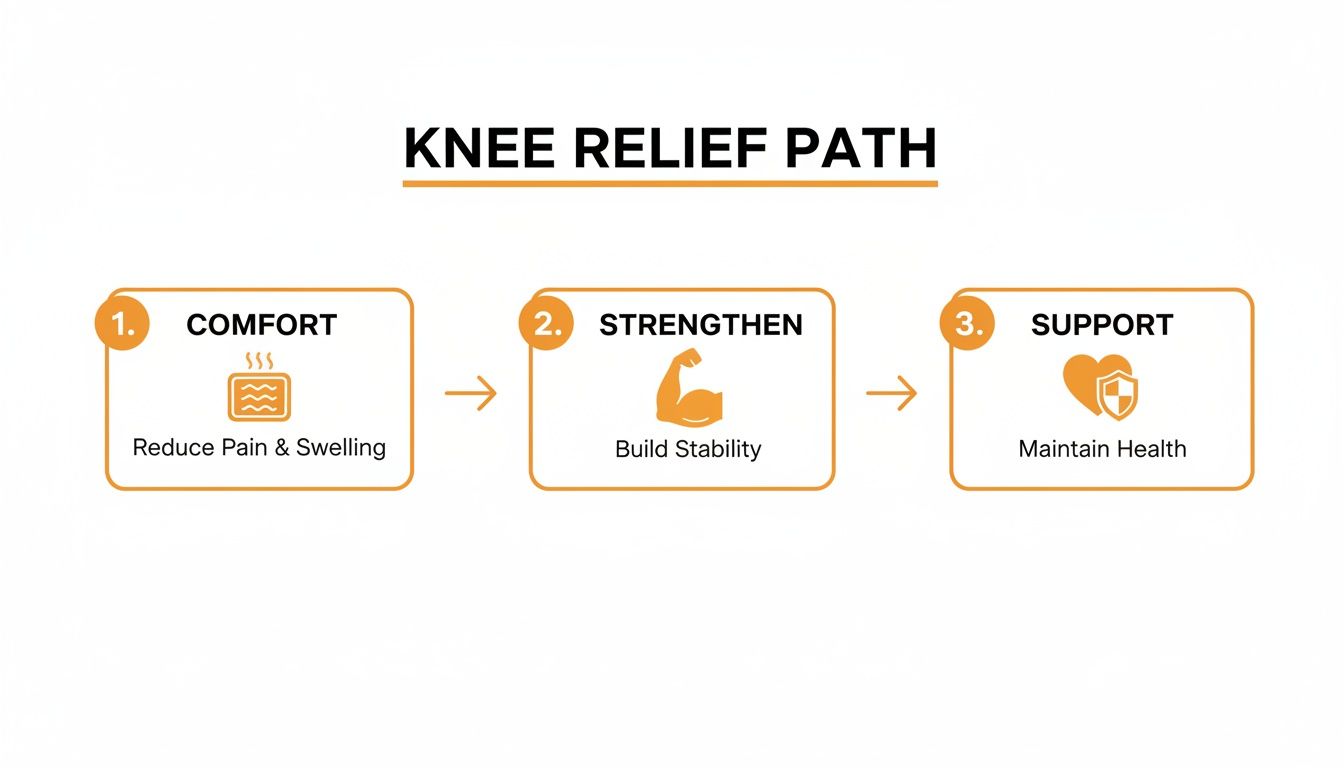
When you see it broken down like this, it’s clear how each stage builds on the one before it, creating a solid foundation for healthy, pain-free joints.
Key Takeaway: Real, lasting relief is born from consistency. A 20-minute session with a heat pack, ten minutes of gentle stretching, and choosing one anti-inflammatory meal are small, doable actions. Over time, they compound to produce incredible results.
Think about it. Instead of starting your day with stiffness and dread, you could begin with a gentle warm-up using a heat pack to ease your knee into motion. Instead of avoiding the stairs, you feel confident tackling them because you’ve put in the work to build up your muscular support. This is the real, tangible outcome of a dedicated natural approach.
In the sections that follow, we'll break down each of these pillars into practical steps you can start using today. It's time to take back control and start moving with freedom again.
Find Immediate Comfort with Heat and Cold Therapy
When your knee starts throbbing, you want relief, and you want it now. This is where the smart use of hot and cold therapy comes in. It's one of the simplest, most effective drug-free tools we have for calming an angry joint. But the real secret isn't just using them—it's knowing which one to use and when.
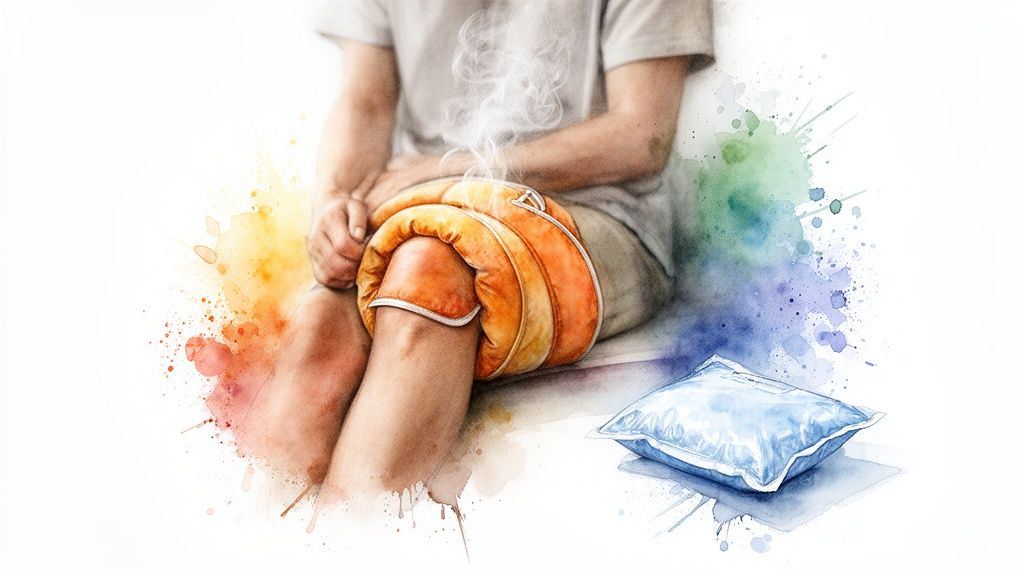
Most people's first instinct is to grab an ice pack, and for a brand-new injury, that's spot on. Cold therapy, also known as cryotherapy, works by constricting blood vessels. This is exactly what you want within the first 48 hours of an acute injury—think a sprain from a pickup basketball game or a tweaked ligament from a weekend hike. The cold numbs the sharp pain and, most importantly, keeps swelling down.
But for the chronic, nagging pain that so many of us deal with daily, heat is often the real hero.
The Soothing Power of Heat Therapy
For that persistent stiffness, deep ache, or the kind of chronic discomfort that comes with arthritis, heat therapy (thermotherapy) can feel like a miracle. It does the exact opposite of cold. Heat opens up the blood vessels, boosting circulation to the sore knee joint. This surge in blood flow is like a delivery service, bringing fresh oxygen and nutrients to damaged tissues to help them heal.
Beyond that, heat works wonders on the tight muscles and stiff ligaments that are almost always part of the problem. A cold, stiff muscle is brittle and prone to injury, but a warm muscle is pliable and flexible. Applying heat helps relax all those tense supporting structures, which takes a significant amount of strain off the knee joint itself.
Picture this: you wake up and your knee feels locked up and achy from osteoarthritis. Instead of hobbling around, you wrap it in a warm, moist heat pack. Within 15-20 minutes, you can feel the joint loosening, the deep ache starts to fade, and you can move into your day with far less pain and much more mobility.
This simple practice is more than a temporary fix; it's a way to actively manage chronic pain and improve your quality of life, day in and day out.
Making Heat Therapy a Daily Habit
Weaving heat therapy into your routine is easy. I often recommend it first thing in the morning to fight that overnight stiffness or in the evening to soothe a knee that's been working hard all day. The key is to use a heat pack that delivers safe, consistent, and deep-penetrating warmth.
Here are a few tips from my clinical experience for getting it right:
- Go for Moist Heat: Moist heat penetrates tissues much more deeply and effectively than dry heat. This is why we often recommend clinic-grade heat packs from brands like SunnyBay, which use natural fillers like whole wheat or lava sand to retain moist warmth.
- Keep it Consistent: A 15-20 minute session is the sweet spot. It's long enough to relax muscles and boost blood flow without risking any skin irritation.
- Safety First, Always: The heat should feel comfortably warm, never hot. Protect your skin by placing a thin towel between the heat pack and your knee.
This approach is so crucial because so many people are struggling. A 2022 study found that of the 1 in 4 US adults with chronic knee pain, many feel let down by common treatments. Even after trying over-the-counter meds (71%) and ice/elevation (64%), they still live with pain. You can read the full research about chronic knee pain treatments for yourself. This gap is exactly why effective natural options like heat therapy are so important.
Heat vs Cold Therapy A Quick Guide for Your Knee
Still not sure whether to reach for the freezer or the microwave? Use this simple table to quickly decide what your knee needs right now.
| Therapy Type | Best For | How It Works | Real-World Scenario |
|---|---|---|---|
| Heat | Chronic pain, stiffness, muscle soreness, and pre-activity warm-ups. | Increases blood flow, relaxes muscles, and improves flexibility. | Waking up with a stiff, arthritic knee that needs to be loosened before you start your day. |
| Cold | Acute injuries (less than 48 hours old), swelling, and post-activity inflammation. | Constricts blood vessels, numbs pain, and reduces inflammation and swelling. | Twisting your knee during a run and needing to control immediate swelling and sharp pain. |
See? It doesn’t have to be complicated. By keeping these guidelines in mind, you can confidently choose the right therapy to tackle your specific symptoms and get back to feeling better. For a deeper dive, check out our guide on when to ice and when to heat an injury.
Build Stronger Knees with Gentle Movement
When your knee hurts, your first instinct is probably to freeze and avoid moving it at all costs. For decades, that was the standard advice—just rest the aching joint. But as we've learned more about how the body works, we now know this can actually make the problem worse over time.
Believe it or not, the right kind of movement is one of the most powerful tools you have for managing knee pain naturally.
It seems counterintuitive, but here’s why it works. Your knee joint doesn’t operate in a vacuum; it relies on a whole network of muscles to keep it stable and absorb the shock of everyday life. When key muscles like your quads, hamstrings, and glutes are weak, the knee joint itself is forced to take on way more stress with every step you take.
Think of those muscles as your body's built-in shock absorbers. By strengthening them, you're essentially building a supportive scaffold around the joint. This offloads pressure from the sensitive cartilage and bone, making every movement smoother and less painful. The goal isn't to push through sharp pain, but to create a solid foundation of strength that protects the knee.
Your At-Home Knee Strengthening Routine
You don’t need a gym membership or a bunch of fancy equipment to get started. These exercises are gentle, incredibly effective, and can be done right from the comfort of your living room. The most important thing is to focus on slow, controlled movements. If you feel any sharp pain, stop immediately.
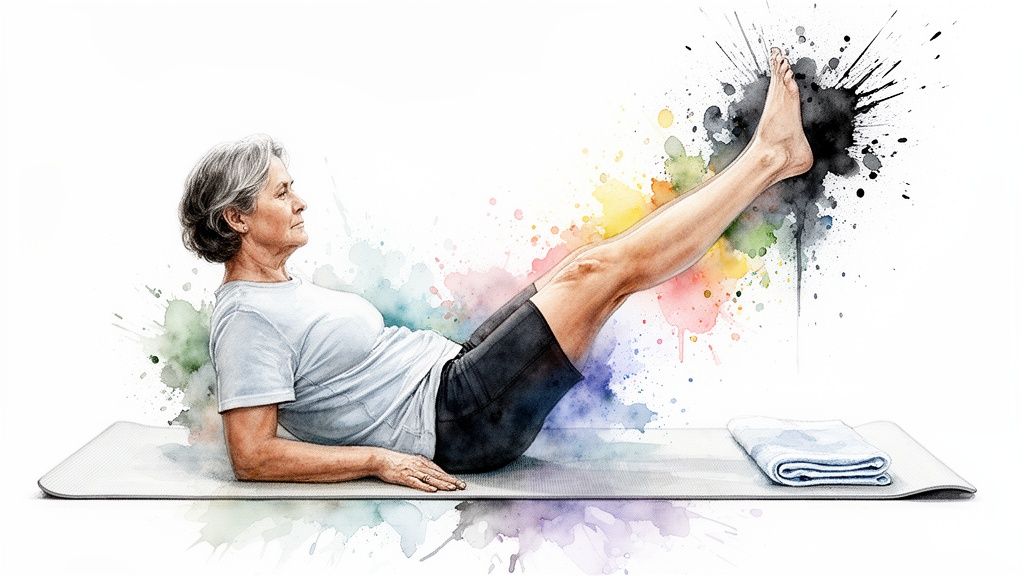
1. Straight Leg Raises This is a physical therapy staple for a reason. It’s fantastic for waking up your quadriceps—the big muscles on the front of your thigh—without putting any direct load on the knee joint itself.
- Lie on your back on the floor or a firm bed. Keep one leg straight and bend the other, placing your foot flat on the floor.
- Tighten the thigh muscle of your straight leg and slowly lift it about a foot off the ground.
- Hold it there for 3-5 seconds, keeping the leg perfectly straight, then slowly lower it back down.
- Your goal is 10-15 repetitions on each leg.
2. Standing Hamstring Curls Strengthening the muscles on the back of your thigh (your hamstrings) is just as important as working the front. It creates balance and provides crucial support to the back of the knee.
- Stand tall and hold onto the back of a sturdy chair for balance.
- Slowly bend one knee, bringing your heel up toward your glute. Imagine you're trying to gently kick your own backside.
- Go as far as you comfortably can, hold for a brief moment, and then lower your foot back down with control.
- Perform 10-15 repetitions on each side.
3. Wall Squats This is a much safer way to do a squat when you have tender knees. The wall supports your back and helps you maintain proper form, which is key to protecting your joints from unnecessary stress.
- Stand with your back flat against a wall. Walk your feet out about a foot or two, keeping them shoulder-width apart.
- Slowly slide your back down the wall until your knees are bent at a 45 to 60-degree angle. Don't go any deeper than that.
- Hold this position for 5-10 seconds. A quick check: make sure you can still see your toes. If not, your knees are too far forward.
- Slowly slide back up the wall to the starting position. Repeat this 5-10 times.
My Pro Tip: Consistency beats intensity every single time. Doing these gentle exercises for 10-15 minutes every day will yield far better results than struggling through one painful, hour-long session once a week.
Don't Forget About Flexibility
Strength is only half the battle. Tight muscles, especially in your calves and hamstrings, can pull on the knee joint, messing with its alignment and contributing to that nagging pain and stiffness. That's why gentle stretching after your exercises—when your muscles are warm and pliable—is so important.
Try adding these two simple stretches to your cool-down:
- Calf Stretch: Face a wall and place your hands on it for support. Step one foot back, keeping that leg straight and your heel firmly on the floor. Gently lean in until you feel a good stretch in your back calf. Hold for 30 seconds, then switch sides.
- Hamstring Stretch: Lie on your back. Loop a towel, yoga strap, or even a dog leash around the ball of one foot. Holding the ends of the strap, gently pull to lift your straight leg toward the ceiling until you feel a comfortable stretch along the back of your thigh. Hold for 30 seconds and repeat on the other leg.
Building a stronger, more flexible support system for your knees is a process. For more ideas, our article on 5 tips for exercising safely with joint issues has some great additional insights. Remember to listen to your body, celebrate the small improvements, and stick with it.
Using Natural Supplements and Topical Relief
While strengthening exercises and smart temperature therapy are the cornerstones of healthy knees, sometimes you just need a little extra help to cool things down. This is where nature offers some incredible tools. The right supplements and topical remedies can work from the inside out and the outside in, giving you powerful, non-medicated support for your joints.
Think of these natural options as a way to calm the inflammatory fire that so often fuels chronic knee pain. They aren't a magic bullet, of course, but when used consistently, they can genuinely improve your daily comfort and support your long-term joint health. It’s all about giving your body the best resources to heal itself.
Powerful Anti-Inflammatory Supplements
Certain plants and natural compounds have a well-earned reputation for their ability to dial down inflammation. For anyone with sore, achy knees, this can be a total game-changer. As you build your holistic approach, finding the best supplement for bones and joints can provide that crucial foundational support.
Two of the most trusted natural options are curcumin and ginger.
- Curcumin (from Turmeric): This is the vibrant yellow compound that gives turmeric its incredible medicinal punch. It works by blocking specific inflammatory pathways in the body. If you deal with arthritic knee pain, that can mean less morning stiffness and a real drop in that constant, nagging ache.
- Ginger: Often paired with turmeric, ginger contains potent compounds called gingerols that are known for their anti-inflammatory and pain-relieving effects. It’s especially good at soothing the soreness you feel after a workout or a long day on your feet.
This isn’t just old-school wisdom. A 2021 panel of multidisciplinary experts overwhelmingly backed curcumin and ginger as top-tier naturopathic choices for knee pain. Their findings reflect a huge global trend—between 5% to 30% of patients in many countries are seeking non-medicated relief, a figure that skyrockets to as high as 90% in some regions. It’s clear that millions are finding success with these natural options.
Targeted Topical Relief
While supplements work from within, topical treatments let you apply soothing ingredients directly to the source of your pain. This delivers targeted relief right where you need it, bypassing your digestive system for faster action.
It’s simple, really. If your knee is throbbing after a hike, rubbing in a comforting gel can bring relief much quicker than waiting for a pill to kick in.
A Quick Word of Caution: Always chat with your doctor or a qualified healthcare provider before starting any new supplement. They can help you figure out the right dose and make sure it doesn’t interfere with other medications or health conditions.
Here are a couple of my go-to topical remedies:
- Arnica Gel: Sourced from the arnica flower, this homeopathic staple has been used for centuries to ease bruising, swelling, and muscle soreness. It’s a fantastic choice for pain that stems from a minor sprain, bump, or general overuse.
- Capsaicin Cream: This cream harnesses the power of capsaicin, the very compound that gives chili peppers their heat. When you apply it, it creates a warming sensation that can temporarily override pain signals, offering significant relief, especially for those with arthritis.
By pairing internal support from supplements with external relief from topical creams, you build a truly comprehensive natural strategy. This multi-angled approach tackles pain from all sides, giving you the best shot at finding lasting comfort and getting back to doing what you love.
Support Your Joints with Smart Lifestyle Habits
While targeted stretches and heat therapy provide immediate relief, the small choices you make every day are what truly build lasting knee health. Think of it this way: lasting relief isn't just about what you do for 20 minutes a day; it's about creating a supportive environment for your joints 24/7.

This is where you build resilience. Smart habits work silently in the background, constantly reducing strain and inflammation. By focusing on your weight, diet, and even your shoes, you can dramatically lower the stress on your knees and take back control of your comfort.
Lighten the Load on Your Knees
Of all the changes you can make, managing your weight is arguably the most impactful for your knee joints. It’s a simple matter of physics.
For every extra pound you carry, your knees are hit with 4 to 6 pounds of pressure each time you take a step. That adds up incredibly fast.
Losing just 10 pounds can take up to 60 pounds of cumulative pressure off your knees. Just imagine the profound relief that provides over thousands of steps each day. This isn't just about easing current pain; it's about slowing down the wear and tear that leads to future problems.
Eat to Fight Inflammation
The food on your plate can either fuel the fire of inflammation or help put it out. An anti-inflammatory diet is a cornerstone of natural knee pain treatment, especially for chronic conditions like osteoarthritis. The idea is to fill your diet with foods that actively calm your body's inflammatory response.
Here are a few powerhouses to focus on:
- Omega-3 Fatty Acids: Find these in fatty fish like salmon and sardines, or plant-based sources like walnuts and flaxseeds. They are superstars at reducing inflammation.
- Leafy Greens: Spinach, kale, and other dark greens are packed with antioxidants that protect your cells from inflammatory damage.
- Berries and Cherries: These fruits are rich in compounds called anthocyanins, which have potent anti-inflammatory effects. Tart cherry juice is particularly well-studied for easing joint pain.
- Nuts and Seeds: Almonds, walnuts, and chia seeds offer a fantastic mix of healthy fats and antioxidants to support joint health.
At the same time, it’s just as important to limit foods known to promote inflammation, like processed sugars, refined carbs, and fried foods.
The Overlooked Power of Massage Therapy
Beyond diet and weight, don't underestimate the power of hands-on therapies. Massage isn't just a luxury; it's a therapeutic tool that directly addresses the tight muscles and poor circulation contributing to knee pain.
Regular massage can release tension in the quads, hamstrings, and calves—all of which pull on the knee joint and throw it out of whack. A study in the Oman Medical Journal found that 57.9% of patients with knee osteoarthritis are turning to complementary medicine, with massage being a top choice for 20% of them.
Real-World Example: Think about someone working a retail job, standing on hard floors all day. Their calves and hamstrings get incredibly tight, creating a constant, nagging pull on the back of their knee. A weekly self-massage or a professional session can break up that muscle tension, boost blood flow, and provide a level of relief that exercise alone might not achieve.
Small Ergonomic Tweaks, Big Difference
Finally, take a look at your daily movements and equipment. Simple ergonomic adjustments can prevent the accumulation of tiny stressors that eventually lead to significant pain.
Start from the ground up—with your feet. Unsupportive shoes can throw your entire alignment off, putting unnatural strain on your knees. In fact, it's very common to have knee pain related to foot issues. Investing in quality footwear with good arch support isn't an expense; it's a necessity for healthy joints.
Also, be mindful of how you lift things. Always bend at your knees and hips, not your back, using your powerful leg muscles to do the work. This simple habit protects both your knees and your lower back from injury. By weaving these smart habits into your life, you build a powerful, proactive defense against knee pain.
Your Questions About Natural Knee Care, Answered
As you start exploring natural ways to ease your knee pain, it's completely normal to have a few questions. Knowing you're on the right track is a huge part of sticking with it, so let's tackle some of the most common things people wonder about.
Think of this as a quick-reference guide to help you move forward with confidence and get the relief you're looking for.
How Long Does This Stuff Actually Take to Work?
It's the million-dollar question, isn't it? The honest answer is: it depends. The timeline for feeling better hinges on what's causing your pain and which strategies you're focusing on.
Some things bring comfort right away. Applying a warm, moist heat pack, for instance, can start to melt away stiffness and that deep, nagging ache in as little as 15-20 minutes. It's a fantastic go-to for immediate, daily relief.
Bigger changes, like strengthening exercises or diet adjustments, are more of a long game. You'll likely start to feel a real difference—more stability, less constant soreness—within a few weeks. But the truly significant, lasting improvement? That often takes one to three months of consistent effort. Remember, natural care is about healing from the ground up, not just putting a band-aid on the symptoms.
Can I Use Heat on My Knee Every Day?
For chronic issues like arthritis, a daily heat therapy routine can be a game-changer. It's generally very safe and one of the most effective ways to manage persistent stiffness and discomfort without reaching for a pill bottle.
A session of 15-20 minutes once or twice a day is perfect. I often recommend clients use it first thing in the morning to loosen up the joint or in the evening to soothe it after a day of activity. The gentle warmth gets the blood flowing and helps relax the muscles around the knee that can get so tight and painful.
One Crucial Caveat: If you have a fresh injury—we're talking less than 48 hours old with visible swelling—heat is not your friend. Stick with cold packs to calm down that initial inflammation. And whenever you use heat, make sure it feels comfortably warm, never painfully hot. A thin towel between the pack and your skin is always a smart idea.
This simple daily habit does more than just feel good. By keeping your muscles pliable and boosting circulation, you're creating a healthier, more resilient environment for your knee joint day in and day out.
When Should I Stop and Just Call the Doctor?
Natural methods are incredibly powerful, but they aren't a replacement for professional medical care when it's truly needed. Knowing the difference between something you can manage at home and a red flag is key.
It’s time to book an appointment with a doctor if your knee pain:
- Started suddenly from a specific, significant injury.
- Shows signs of infection, like a fever, redness, or the skin feeling hot to the touch.
- Is so bad you can’t put any weight on that leg.
- Causes your knee to lock, buckle, or give out without warning.
Also, listen to your body. If you’ve been diligent with your self-care for a few weeks and things just aren't getting better, it’s wise to get a professional diagnosis. They can rule out any underlying problems that might require a different approach.
Ready to make soothing heat therapy a core part of your natural pain relief strategy? SunnyBay offers a range of clinic-trusted, American-made heat packs designed for deep, comforting relief. Find the perfect wrap for your knees and start feeling better today.


