


How Long Do Heat Packs Last? A Guide to Lasting Warmth and Relief
-
Ever wondered why some heat packs feel like they cool down in minutes while others stay toasty all day? The answer is pretty simple: it all comes down to the type of heat pack you're using. You can expect a microwavable pack to provide warmth for about 20 minutes, while a disposable chemical warmer can last for an impressive 12 hours or more.
The type of pack is, without a doubt, the biggest factor influencing how long you’ll get to enjoy that soothing heat.
Your Quick Guide to Heat Pack Duration
When a muscle suddenly seizes up or that familiar ache starts to creep in, you want relief that actually works for your situation. Knowing how long a heat pack is designed to last isn't just a minor detail—it's what makes heat therapy truly effective. You need to match the duration to the job, whether that’s a quick 20-minute session for a stiff neck or all-day comfort for a sore back.
Imagine trying to soothe a deep muscle knot. The gentle warmth from heat therapy is incredibly beneficial because it boosts blood flow, bringing healing oxygen to the area and helping your muscles relax. Think of it like a warm-up before a massage; the heat preps your muscles, making them more receptive to deeper work and enhancing the overall benefits of the massage. Understanding the difference helps you choose smarter for your body.
A Visual Guide to Heat Pack Lifespans
To make things even clearer, here’s a quick visual breakdown of what you can expect from different heat therapy options.
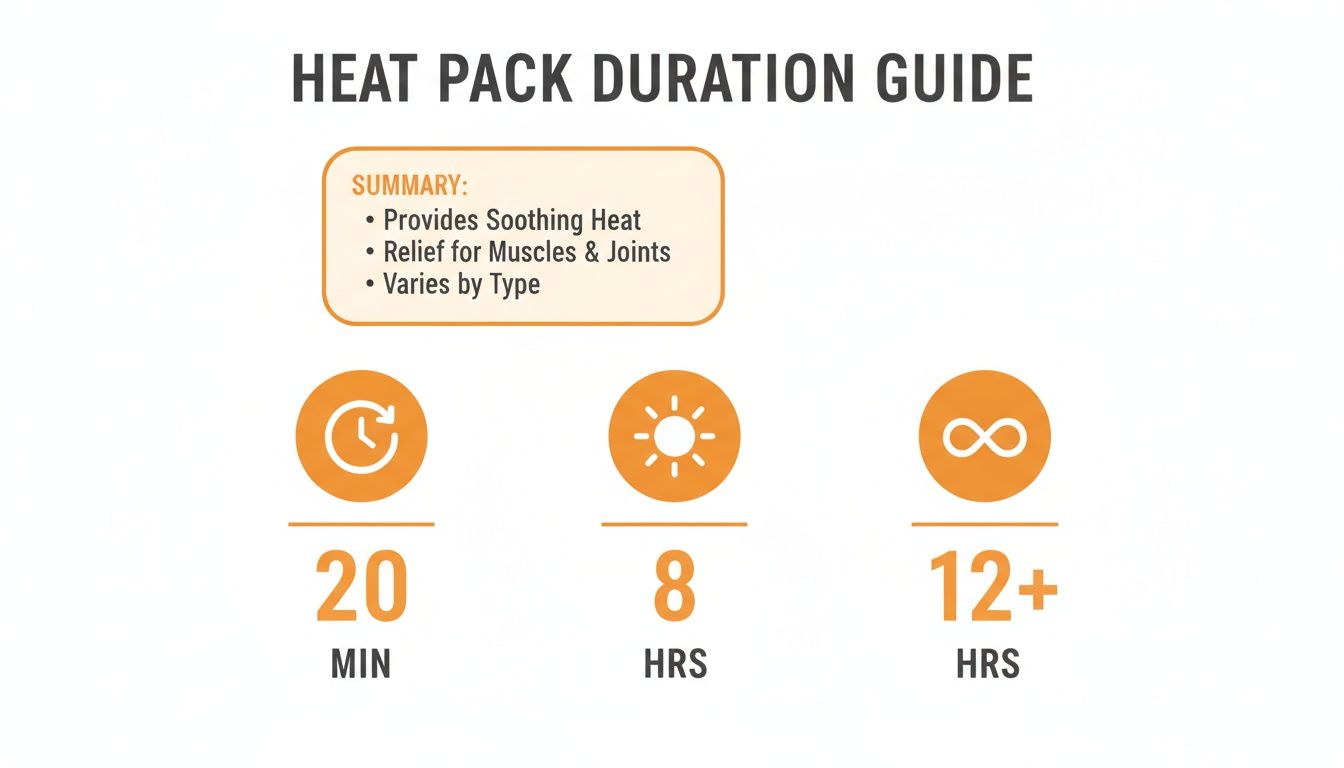
As you can see, the gap is huge. Some options are built for a quick burst of warmth, while others are designed to go the distance. This is why knowing your options is so important for getting the relief you actually need.
To give you a side-by-side look, this table breaks down the key differences in performance you can expect from common heat pack types.
Heat Pack Performance at a Glance
| Heat Pack Type | Average Heat Duration | Warm-Up Time | Reusability |
|---|---|---|---|
| Microwavable (Lava Sand, Flax) | 20–40 minutes | 1–3 minutes | Yes (Hundreds of times) |
| Reusable Gel Packs | 20–30 minutes | 1–2 minutes (Microwave) | Yes (Limited lifespan) |
| Chemical Disposable | 8–12+ hours | 5–15 minutes (Activation) | No (Single use) |
Each type clearly has its own strengths, making them suitable for different needs—from a quick, reusable option for daily aches to a long-lasting, single-use pack for extended relief on the go.
Pairing Heat with Other Therapies
Once you understand these timings, you can start using heat more strategically. For instance, a microwavable pack offers about 20-30 minutes of deep, moist heat, which is the perfect amount of time to relax muscles before a massage. Applying that warmth first helps loosen everything up, making the massage itself feel better and work more effectively.
How does heat therapy actually work? It’s a process called thermotherapy. The warmth widens your blood vessels, which ramps up blood flow to the sore spot. This boost in circulation brings in fresh oxygen and nutrients to help tissues heal, while also helping to block pain signals.
This simple act of applying targeted heat can truly change how you manage pain. Let's look at a few real-world examples:
- For Quick Relief: A student dealing with sudden menstrual cramps can pop a microwavable pack in the microwave for fast comfort between classes. The 20-minute duration is perfect for a short break.
- For Sustained Comfort: An office worker with a nagging lower back can use a long-lasting disposable patch for 8 hours of steady, discreet relief that won't get in the way of their work.
- For Deep Relaxation: Someone with chronic shoulder knots could use a lava sand-filled wrap from SunnyBay before bed to soothe those deep muscles, paving the way for a much better night's sleep.
By matching the heat pack's lifespan to what you're feeling, you're no longer just chasing temporary comfort—you're building a smarter, more effective wellness routine.
The Science Behind How Heat Packs Stay Warm
Ever wondered what's actually going on inside that heat pack to produce such comforting warmth? It's not magic, but it is some pretty cool science. The specific process happening inside each pack is exactly what dictates how long that heat will stick around, giving each type its own unique personality.
Getting a handle on how they work helps you pick the right tool for the job, whether you need a quick blast of heat for a few minutes or something that will keep you toasty for hours.
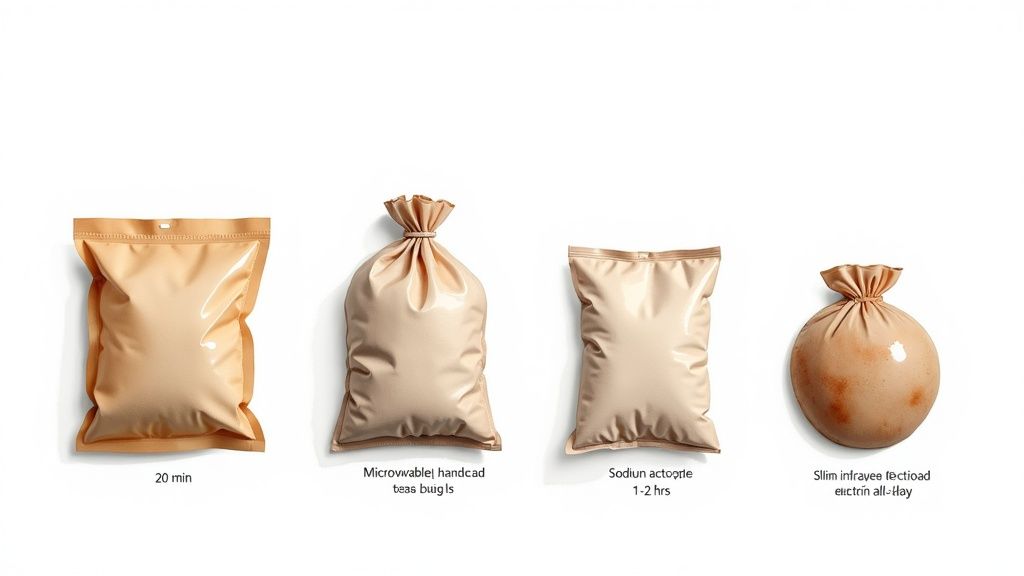
The Slow Burn of Disposable Warmers
Those single-use hand warmers are a marvel of simple chemistry. Think of it as a controlled, super-slow rusting process. The moment you tear open the plastic wrapper, you’re introducing oxygen to the contents inside, which kicks off a heat-releasing, or exothermic, reaction.
This is the secret to their long-lasting warmth. The packet is filled with a mix of iron powder, salt, activated carbon, and an absorbent material. As soon as air hits that iron, it starts to oxidize (rust), and this process gives off a steady, gentle heat. It's specifically engineered to happen slowly, which is why these little packs can last for so many hours.
Disposable warmers are designed to provide warmth for anywhere from 7 to over 24 hours, all depending on that specific chemical cocktail inside. The careful balance of iron powder, salt, and carbon is what sets the clock on how long you'll feel the heat.
The Crystal Snap of Reusable Gel Packs
Reusable gel packs work on a totally different, almost theatrical principle: a supersaturated solution of sodium acetate. Inside that squishy pouch, you've got this special liquid and a small metal disc. When you bend that disc, you create tiny "seed" crystals that set off an incredible chain reaction.
The liquid instantly solidifies into a crystal, releasing a powerful, but fairly brief, burst of heat. It's a fascinating display of phase-change energy. To reuse it, you just boil the pack in water. This melts the crystals back into their liquid, energy-storing state, ready for the next snap. This is why their heat is so intense at first but usually fades within 30-60 minutes.
Thermal Sponges: Microwavable Packs
Microwavable heat packs, especially the ones filled with natural goodies like flaxseed, lava sand, or wheat, act like little thermal sponges. When you pop one in the microwave, the energy agitates the tiny water molecules trapped inside the filling. The filling then holds onto this thermal energy, releasing it slowly and evenly over time.
The materials and design are everything here; understanding the impact of insulation on sustained warmth shows just how crucial quality construction is. The dense, natural fillers in products like our SunnyBay packs are fantastic at both absorbing and holding onto heat, giving you a deep, moist warmth that really gets into your muscles. You can learn more about making them work for you in our guide to microwavable hot packs.
The type of heat really matters. The moist heat from a microwavable pack often feels more effective because it penetrates deeper into your tissues than the dry heat from an electric pad. This helps increase muscle flexibility and provides a more thorough sense of relief.
The Consistent Current of Electric Pads
Finally, you have electric heating pads, which take a completely different route. They use good old-fashioned electrical resistance to generate heat. Insulated wires are woven throughout the pad, and as electricity flows through them, the resistance turns that electrical energy into a consistent, controllable warmth.
This gives you pinpoint temperature control and heat that lasts as long as the pad is plugged in. It’s a reliable technology, for sure, though you trade the portability and moist-heat benefits of other types for that endless supply of warmth. Knowing these core differences makes it much easier to predict how a heat pack will perform and pick the one that’s just right for what you need.
What Affects Your Heat Pack's Performance
Ever wonder why your trusty heat pack feels like a furnace one day but barely lasts through a commercial break the next? It's not just you. A few key factors are at play, and getting to know them can help you get the most out of every single use.
Think of your heat pack like a rechargeable battery for warmth. Its performance isn't just about what's inside; it's also about its size, how you use it, and even the temperature of the room you're in. Once you get a feel for these variables, you can extend that soothing heat and really maximize its therapeutic benefits.
The Power of Size and Mass
When it comes to holding heat, size definitely matters. A larger, heavier heat pack is essentially a bigger thermal battery. It has more mass, which means it can store more heat energy and—more importantly—release that energy much more slowly.
A small, pocket-sized hand warmer is perfect for a quick blast of warmth on a chilly walk, but it's going to cool down pretty fast. On the other hand, a big, weighted shoulder wrap, like a SunnyBay pack filled with natural lava sand, is built for the long haul. It’s designed to deliver sustained, deep heat to large muscle groups. Bottom line: more mass usually means a longer-lasting heat session.

Insulation: The Unsung Hero of Heat Retention
Here's a factor that most people completely overlook: insulation. Heat’s natural tendency is to escape into the cooler air around it. Insulation is just a barrier that slows that process down, keeping the warmth locked in right where you want it.
Boosting your heat pack’s performance with a little insulation is surprisingly easy.
- The Towel Trick: Try wrapping your heat pack in a thin towel. This simple layer not only protects your skin from getting too hot too fast but can also extend the pack's effective warmth by an extra 20-30%.
- Layer Up: Tucking the pack over a layer of clothing works the same way, trapping heat and preventing it from vanishing into thin air.
This one tiny step can make a massive difference in how long your heat pack stays warm and effective.
Just like a good thermos keeps your coffee hot for hours, a simple cover for your heat pack traps that thermal energy. You get a longer, more consistent healing experience. It's a low-effort trick with a big payoff.
Ambient Temperature and What's Inside
Where you use your heat pack makes a real difference. If you're using a hand warmer on a frigid ski lift, it's fighting a constant battle with the cold air and will lose its heat fast. But if you use that same pack indoors while snuggled under a blanket, you've created the perfect environment for it to last as long as possible. The temperature around you is always working for you or against you.
Of course, the quality of what’s inside the pack is just as crucial. High-end fillers like lava sand or whole flax seeds are champions at retaining heat, especially when compared to cheaper options like rice or corn. These premium materials are denser and hold onto warmth far more efficiently, giving you that consistent, deep, moist heat. This is why a well-made pack is a worthy investment—it pays you back with better, more reliable performance every single time.
Getting the Most Out of Your Reusable Heat Packs
Reusable heat packs are a fantastic, eco-friendly way to get consistent relief, but their lifespan really comes down to how well you treat them. Think of it as a small investment in care that pays you back with years of reliable warmth. Getting this right not only extends their life but also makes sure they work safely and effectively every single time.
The first step is knowing how to "recharge" them properly. This process is completely different depending on the type of pack you own, and nailing it is crucial for its longevity.
Proper Recharging for a Longer Life
If you have one of those crystal-based sodium acetate packs, the magic is all in the boil. After you've used it, the pack turns into a solid, crystallized mass. To reset it, you need to submerge it in boiling water and wait until every last crystal dissolves back into a clear liquid.
This is where people often go wrong. If even a tiny, single crystal is left behind, it acts as a seed, causing the pack to reactivate and harden all on its own. It's a common mistake that can seriously shorten its usable life.
Microwavable packs filled with natural things like flaxseed or lava sand need a different kind of TLC. The biggest risk here is scorching the filling. Overheating doesn't just create a burnt smell; it permanently dries out the contents, making them less effective at holding heat. In a worst-case scenario, it can even be a fire hazard.
To avoid this, stick to the manufacturer’s instructions like glue. If you're looking for more specific guidance, our article on how long to microwave your heating pad is a great resource.
Best Practices for Storage and Care
How you store your heat packs between uses is just as important as how you heat them. Storing them correctly protects them from damage and ensures they're ready to go when you are.
Here are a few simple rules I always recommend:
- Keep Them Dry: Always store your heat packs in a cool, dry spot away from direct sunlight. Moisture can cause mildew in microwavable packs, while extreme heat or cold can degrade the materials in gel packs.
- Store Them Flat: Try not to fold or crease your heat packs, especially the gel and sodium acetate types. Storing them flat helps prevent the outer casing from weakening or developing cracks over time.
- Clean the Covers: For packs with removable covers, like many of our SunnyBay products, make a habit of washing them. It keeps things hygienic and makes your heat therapy session a much cleaner, more pleasant experience.
These habits only take a moment, but they pay off with years of dependable pain relief.
Gentle care is the secret to a long-lasting heat pack. If you treat your pack like the therapeutic tool it is, instead of a disposable item, you can easily double or even triple its lifespan. That’s a great return on your wellness investment.
The Long-Term Value in Quality
This level of care becomes even more critical with high-end options like infrared heating pads. They are a perfect example of how maintenance directly impacts longevity. A quality infrared pad, which is fantastic for deep-tissue therapy, can last an impressive 3 to 10 years with regular use—far longer than cheaper alternatives. Some premium pads, often made with jade or tourmaline stones, can even handle over 5,000 cycles when properly cared for. You can find more great insights about the longevity of infrared heating pads on utktechnology.com.
In the end, it doesn't matter if you have a simple microwavable wrap or a sophisticated infrared pad. The principle is the same. By following these straightforward care guidelines, you're making sure your heat pack will be a reliable partner in your wellness routine for years to come.
How to Use Heat Therapy Safely and Effectively
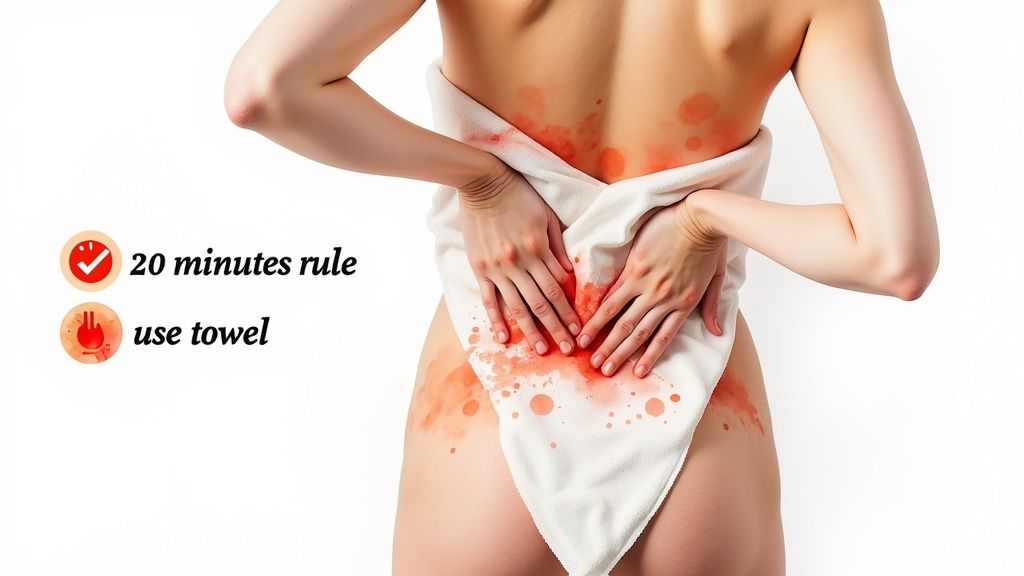
Heat therapy is a fantastic tool for easing pain and helping you unwind, but getting the most out of it means always putting safety first. As good as that warmth feels, there’s one simple principle that ensures the experience is all healing and no harm: the 20-minute rule. It’s the absolute cornerstone of applying heat the right way.
Leaving a heat pack on for too long can actually do more harm than good, sometimes leading to more inflammation or even skin damage. The idea is to gently encourage blood flow and relax tight muscles, not to cook them. Stick to that time limit, and you’ll give your body the therapeutic boost it needs without any of the risks.
The "Why" Behind the 20-Minute Rule
So, what’s so special about 20 minutes? Think of it as the sweet spot. Medical experts have found this is the ideal window to get blood flowing and muscles to release their tension. Go much longer, and the benefits start to level off as your body gets used to the heat.
Worse yet, your body might go on the defensive. Too much prolonged heat can trigger a rebound effect, causing blood vessels to constrict to protect the tissues underneath. This completely defeats the purpose of the therapy and, especially if you drift off, significantly raises the risk of burns.
Key Takeaway: Treat heat therapy like a targeted workout. You want to stimulate the area, not exhaust it. A 20-minute session is the perfect "set" for your muscles, giving you maximum benefit with minimum risk. Always let your skin rest for at least 20 minutes before going for another round.
Why You Should Never, Ever Sleep with a Heat Pack
It can be so tempting to fall asleep with a warm compress soothing your aching back, but it's one of the most dangerous things you can do. When you sleep, your ability to notice temperature changes plummets, leaving you wide open to serious burns, even from a source that doesn't feel that hot. This is a huge risk with electric heating pads.
Electric models are particularly tricky because they provide constant heat. Data from the US Consumer Product Safety Commission showed a startling 33.9% jump in burn incidents, from 1,600 cases in 1995 to 2,142 in 2008. This trend is exactly why medical professionals are so strict about limiting their use. You can find more details about the risks of heating device burns on hmpgloballearningnetwork.com.

Simple Rules for Safe Heat Application
Getting heat therapy right is easy once you know the ground rules. Follow these non-negotiable tips, and you can soothe your muscles and melt away tension without a single worry.
- Always Use a Barrier: This is a big one. Never put a heat pack directly on your bare skin. A thin towel or a layer of clothing creates a buffer, spreading the heat out evenly and preventing burns.
- Check Your Skin: Every so often during a session, peek at the skin under the pack. If you see any bright redness, blisters, or signs of irritation, stop immediately.
- Listen to Your Body: If it feels too hot, it is too hot. Your comfort is your best guide. Don’t try to "tough it out"—remove the heat or end the session.
- Avoid Damaged Products: Never use a heat pack that's leaking, torn, or, in the case of electric ones, has a frayed cord. A broken product is a major safety hazard.
Beyond just pain relief, heat has other interesting applications; for example, you can learn more about heat therapy skincare benefits. By making these simple safety habits second nature, you can confidently enjoy the powerful benefits of heat and massage, turning them into a reliable part of your wellness routine.
Choosing the Perfect Heat Pack for You
Now that we’ve covered the science and safety behind heat therapy, let's get practical. How do you pick the right heat pack? The truth is, there's no single "best" option for everyone. It’s all about matching the tool to your lifestyle and the specific relief you’re looking for.
Think of it as finding a wellness partner—a solution that fits so naturally into your daily routine that it’s always there when you need it. Let's find the one that feels like it was made just for you.
Matching the Pack to Your Pain
Different aches and pains call for different kinds of heat. Sometimes you need a quick, intense blast of warmth, while other times a slow, gentle heat that lasts for hours is what the doctor ordered.
Here are a few real-world examples to get you thinking:
- The Athlete: Just finished a killer workout and your muscles are screaming? A reusable gel pack is your go-to. It heats up in a flash, delivering that immediate, targeted warmth to kickstart your recovery.
- The Desk Worker: If you spend your days hunched over a keyboard, you know all about that nagging back stiffness. An infrared heating pad is perfect here, offering deep, consistent warmth you can control throughout the workday.
- The Outdoor Adventurer: Heading out for a winter camping trip or a day of skiing? Disposable chemical warmers are the undisputed champs. Activate them, toss them in your pockets, and enjoy reliable, all-day heat.
The Power of Thoughtful Design
The heat source is only half the story. The actual shape and design of a heat pack can completely change the experience, turning simple warmth into true therapeutic relief. A basic square pack does the job, but one that’s actually shaped to fit your body? That’s a game-changer.
This is where you get the added benefit of gentle, weighted pressure, which works wonders when combined with heat. It's a bit like getting a warm massage.
This is exactly why our SunnyBay collection features so many contoured designs, built to hug specific areas like your neck and shoulders for far better results.
When the heat is applied exactly where you need it most, wrapping around the muscles instead of just sitting on top of them, the relief is so much more effective.
For example, a wrap that drapes comfortably over your shoulders is infinitely better than trying to balance a clumsy rectangular pack. Likewise, for that deep abdominal or lower back pain, a weighted pack provides both soothing warmth and a calming pressure. A fantastic example is SunnyBay's USA-made lava sand microwave heating pad, which is designed for superior heat retention and lasting comfort.
By thinking about both how long a pack stays warm and how well it fits your body, you can find a solution that truly supports your well-being.
Frequently Asked Questions About Heat Packs
Diving into heat therapy often brings up a few common questions. Let's clear those up so you can use your heat packs confidently and get the safe, effective relief you're looking for.
Can I Reuse a Disposable Hand Warmer by Sealing It in a Bag?
It’s a clever idea in theory, but it just doesn't work well in practice. While sealing a disposable warmer in a plastic bag does cut off the oxygen and pause the reaction, it’s not a true "recharge."
When you take it out again, you’ll likely find the warmth is weak and doesn't last long. These packs are designed for one solid, reliable use. For something you can count on time and time again, a good microwavable or reusable gel pack is a much better investment.
Is It Safe to Sleep with a Heat Pack On All Night?
Absolutely not. This is a big safety risk, and we strongly advise against it. When you're asleep, your ability to feel heat and pain is significantly reduced, which means you could suffer serious skin burns without even realizing it.
Professionals always recommend the “20-minute on, 20-minute off” rule for heat therapy. If you're dealing with pain that keeps you up at night, it's best to talk to your doctor about safer long-term options.
Why Does My Microwavable Pack Have a Burnt Smell?
That unmistakable burnt smell is a dead giveaway that the pack was overheated. The natural filling inside—whether it's flaxseed, rice, or wheat—has been scorched, usually because it was left in the microwave for too long or got caught in a hot spot.
Once a pack is scorched, it's not just the smell you have to worry about; it's a potential fire hazard and it won't hold heat properly anymore. Always stick to the heating instructions that came with your pack. If the burnt smell lingers after it has completely cooled, your safest bet is to replace it.
Ready to find lasting, drug-free relief? SunnyBay designs high-quality wraps and pads with natural materials for targeted comfort. Explore our collection and discover the perfect solution for your wellness journey at the official SunnyBay website.


