


How to Speed Up Muscle Recovery and Train Harder
-
If you want to speed up muscle recovery, you need to nail the fundamentals: proper nutrition, consistent hydration, and adequate rest. These three elements are the absolute bedrock of any smart recovery plan. They're what your body uses to repair damaged muscle tissue, restock your energy stores, and reduce that lingering soreness so you can get back to doing what you love.
Your Blueprint For Faster Muscle Recovery
That familiar post-workout ache is a badge of honor—it means you put in the work. But being sidelined by soreness for days on end doesn't have to be the norm.
Let's quickly demystify what's happening in your body. When you train hard, you're essentially creating tiny, microscopic tears in your muscle fibers. The "recovery" phase is your body’s process of repairing those tears, rebuilding them to be even stronger and more resilient than before. It’s a brilliant system.
But here’s the catch: this repair process isn't automatic. It's on you to provide the right tools for the job. Think of your body as a construction site and your muscles as a structure that needs rebuilding. If you don't supply the crew with high-quality materials (nutrients and water) and give them enough time to work (rest), the repairs will be slow and shoddy. A structured approach is everything.
The Three Pillars of Recovery
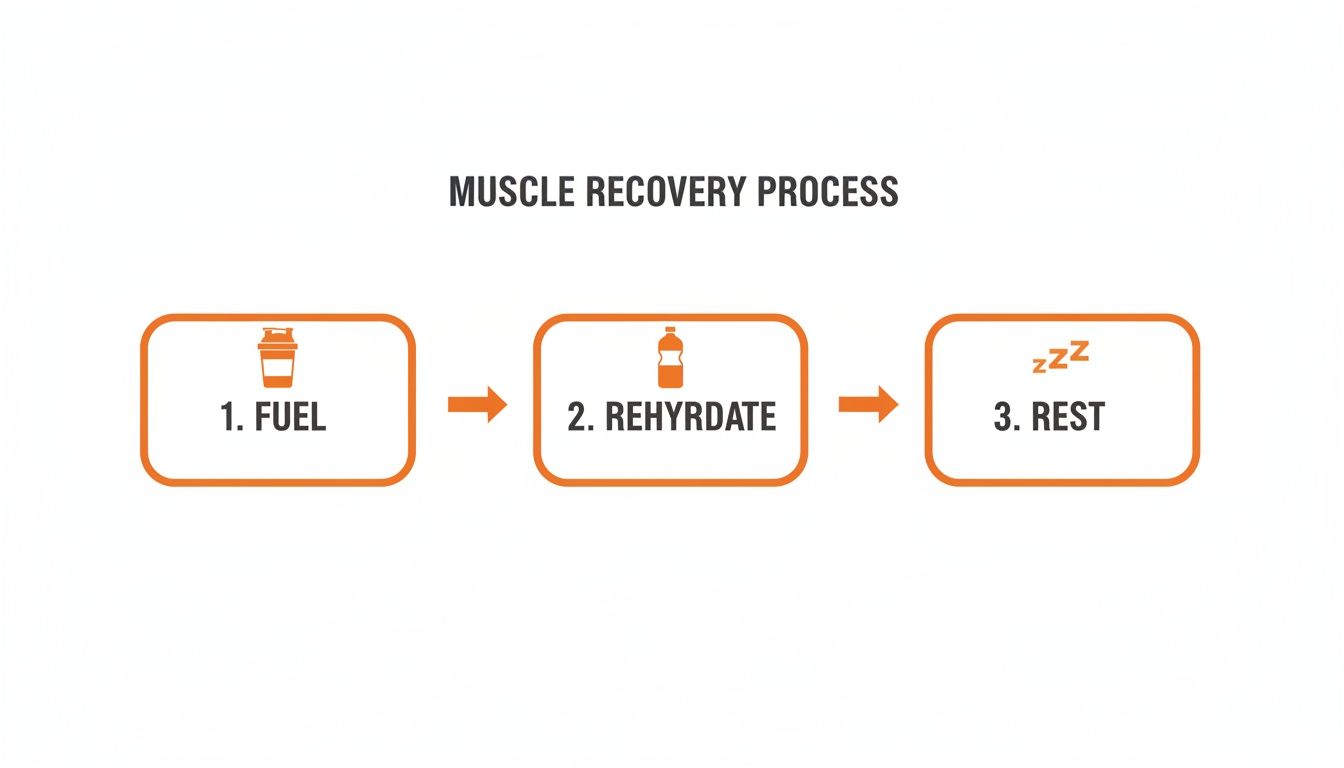
A killer recovery strategy doesn't have to be complicated or expensive. It really boils down to three critical actions you need to take as soon as your workout ends.
- Fuel Your Body: Getting protein and carbohydrates back into your system is non-negotiable. Protein supplies the amino acids—the building blocks—for muscle repair, while carbs are essential for refilling the glycogen stores you just burned for energy.
- Rehydrate Consistently: You sweat out more than just water; you lose critical electrolytes, too. Rehydrating properly is crucial for everything from transporting nutrients into your muscles to flushing out the metabolic byproducts that contribute to soreness.
- Prioritize Rest: This is where the real magic happens. When you rest, and especially when you sleep, your body ramps up the production of hormones that drive muscle growth and tissue repair.
This simple visual breaks down exactly what you should focus on right away.
This table sums up the immediate actions you should take within the first 60 minutes post-workout to kickstart the recovery process.
Immediate Post-Workout Recovery Checklist
| Recovery Action | Why It Matters | Quick Tip |
|---|---|---|
| Consume Protein & Carbs | Provides amino acids to repair muscle fibers and replenishes depleted energy (glycogen) stores. | Aim for a 3:1 or 4:1 carb-to-protein ratio. A protein shake with a banana or a glass of chocolate milk works great. |
| Rehydrate | Restores fluid balance, aids nutrient transport, and helps flush out metabolic waste. | Drink 16-24 ounces of water for every pound of body weight lost during exercise. Add an electrolyte tab if it was a sweaty session. |
| Gentle Cool-Down | Helps gradually lower your heart rate and prevents blood from pooling in your extremities. | Spend 5-10 minutes doing light cardio (walking, slow cycling) followed by some light static stretching. |
Getting these steps right, right away, sets the stage for a much faster and more effective recovery.
For a deeper dive, this practical guide to recovering faster after workouts is packed with great tips. You can also build out your routine by exploring these top strategies at https://sunny-bay.com/blogs/pain-relief-tips-and-news/top-6-post-workout-recovery-tips-for-fitness-enthusiasts.
Fueling Your Body for Optimal Repair
You can't out-train a bad diet, and you certainly can't out-recover one. What you eat after a tough workout is just as crucial as the work you put in at the gym. Think of your training session as digging into your body's resources; your post-workout meal is the first-response team, delivering the raw materials needed to patch things up and build back stronger.
Getting this part right is a non-negotiable for speeding up muscle recovery.
The two non-negotiables are protein and carbohydrates. Protein delivers the amino acids—the actual building blocks your body uses to repair those microscopic tears you created in your muscle fibers. Carbs, on the other hand, are all about refilling your muscle glycogen, which is the primary fuel tank you just spent the last hour emptying.
A classic rookie mistake is to slam a protein shake and call it a day, completely forgetting about carbs. If you don't give your body carbohydrates, it might resort to breaking down precious protein for energy, which completely defeats the purpose of your recovery meal.
Nail Your Nutrient Timing
You’ve likely heard about the "anabolic window"—that mythical 30-minute period where you either eat or lose all your gains. The reality is a bit more forgiving, but timing still plays a big role.
Your body is primed for nutrient absorption and repair in the 60-90 minutes after you finish exercising. This is when your muscle cells are most sensitive to insulin, making it the perfect time to shuttle in protein and glycogen. Eating within this window is a simple but powerful way to get a head start on recovery and cut down on next-day soreness.
Let's say you wrap up a heavy leg day at 6 PM. A great strategy would be to have a recovery shake around 6:30 PM, then sit down for a full, balanced dinner an hour later. This gives your muscles an immediate hit of fast-digesting nutrients, followed by a more sustained supply to fuel the repair process overnight.
Post-Workout Fuel Ideas
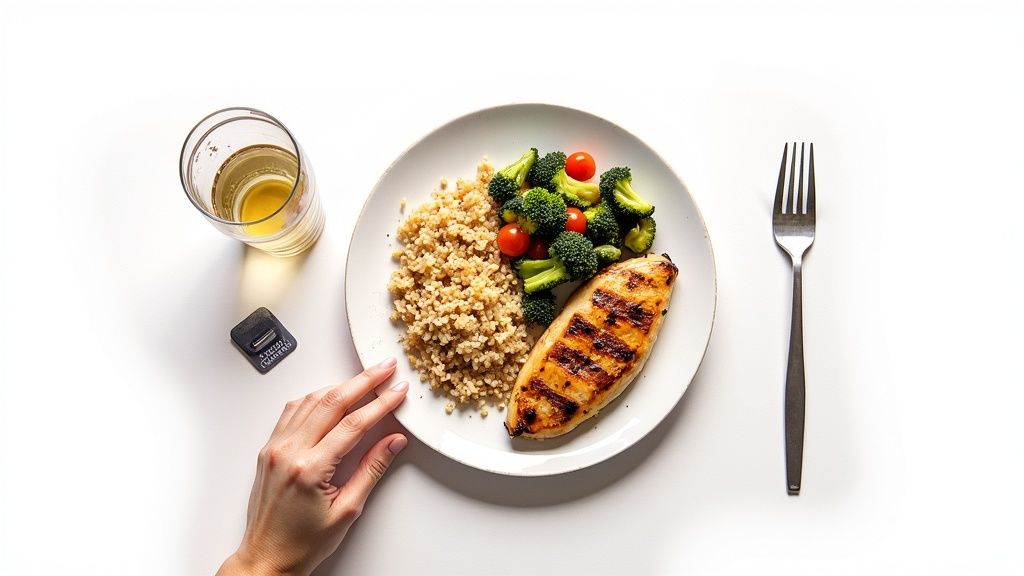
Your recovery meal doesn't need to be fancy or complicated. The simple formula is high-quality protein plus easily digestible carbs. Here are a few real-world examples that work:
- The Classic Meal: A grilled chicken breast with a sweet potato and some green veggies. Simple, effective, and gets the job done.
- Quick and Convenient: A protein shake (whey, casein, or a plant-based blend) mixed with a banana and a handful of oats. Perfect for when you're on the go.
- Plant-Based Power: A big bowl of quinoa loaded with black beans, corn, and avocado, maybe with some seasoned tofu or tempeh on the side.
- Simple Snack: A cup of Greek yogurt with berries and a bit of honey is a fantastic option. A couple of hard-boiled eggs with a slice of whole-wheat toast works great, too.
Don't Forget Hydration and Electrolytes
We often think of hydration as just drinking water when we're thirsty, but it’s a cornerstone of the recovery process. Water is the transport system that carries all those nutrients to your muscle cells and, just as importantly, flushes out the metabolic junk that contributes to that awful delayed onset muscle soreness (DOMS).
When you sweat, you're not just losing water; you're also losing key electrolytes like sodium and potassium. These minerals are essential for muscle contractions and nerve function. If you've just finished a really sweaty, intense workout, plain water might not be enough to rebalance things.
Tossing an electrolyte tablet into your water bottle or grabbing a coconut water (which is naturally high in potassium) can make a huge difference. This simple move helps restore your body's internal balance, creating the ideal environment for your muscles to repair and recover quickly.
Unlocking Faster Recovery With Sleep and Rest
You can nail your post-workout nutrition and stretching, but if you're skimping on sleep and rest, you're missing the most critical piece of the recovery puzzle. Real muscle repair doesn't happen while you're lifting weights—it happens when your body is resting. This is the non-negotiable downtime your system needs to rebuild tissue, recharge energy stores, and come back stronger.
When you're asleep, your body is anything but shut down. It actually shifts into a powerful anabolic state, kicking off the repair processes you've earned in the gym. During the deepest stages of sleep, your pituitary gland gets to work, releasing a major surge of Human Growth Hormone (HGH). This hormone is absolutely essential for repairing damaged muscle fibers and stimulating new growth.
Think of it as your body's dedicated overnight construction crew, showing up to fix all the micro-tears you created during your training session. If you don't get enough sleep, that crew never fully shows up, and you miss out on that vital HGH release. The result? A much slower recovery, leaving you sore and fatigued for days.
Your Blueprint for a Perfect Sleep Environment
Aiming for 7-9 hours of quality sleep is one of the single most effective things you can do for muscle recovery. But it's not just about the number of hours clocked; the quality of that sleep is just as important.
Creating an environment that tells your body it's time to wind down is key. Here’s what I’ve found works best:
- Keep It Cool and Pitch-Black: Your core body temperature needs to drop to initiate sleep. Setting your thermostat to around 65°F (or 18°C) and using blackout curtains can work wonders.
- Ditch the Blue Light: The blue light emitted from phones, tablets, and TVs messes with your body's production of melatonin, the hormone that makes you sleepy. Power down your screens at least an hour before you plan to hit the sack.
- Build a Wind-Down Routine: A simple pre-sleep ritual—like reading a book, doing some gentle stretching, or listening to calming music—trains your brain to recognize that it's time to rest.
Beyond just getting enough hours, the quality of your sleep is what truly moves the needle on recovery. To really dial it in, start exploring the principles of good sleep hygiene.
The Difference Between Rest Days and Active Recovery
Not all "off" days are the same. It's crucial to understand the difference between complete rest and active recovery, because both have a strategic place in any solid training plan.
A true rest day is exactly what it sounds like: no structured exercise at all. These are absolutely vital after particularly grueling workouts. They give your central nervous system a much-needed break and allow for deep, cellular-level repair to take place.
An active recovery day, on the other hand, involves light, low-impact movement.
A perfect example of active recovery would be a 30-minute walk, a casual bike ride, or a gentle yoga flow. This kind of light activity boosts blood flow to your tired muscles, helping deliver fresh nutrients and clear out metabolic byproducts without adding more stress.
Ultimately, learning to listen to your body is the most important skill you can develop. Pushing through deep fatigue is a surefire way to get injured or overtrained. Taking a planned day off isn't lazy—it's one of the smartest training decisions you can make. For a few more pointers, check out these five tips for going to sleep quicker.
Soothe Sore Muscles with Heat and Massage
Once you’ve nailed your nutrition and rest, it’s time to get a little more hands-on with your recovery. Two of the most effective and easily accessible methods are heat therapy and massage. These directly target those stiff, overworked muscles, giving you immediate relief while kicking the repair process into high gear. The feeling of warmth penetrating deep into a sore muscle isn't just comforting; it's a powerful signal to your body to relax and heal, making it an indispensable part of any serious recovery plan.
Applying warmth to sore areas is a classic for a reason. Heat therapy triggers vasodilation—a fancy way of saying it opens up your blood vessels. This boost in circulation rushes fresh oxygen and nutrients to your damaged muscle tissue and, just as importantly, helps clear out the metabolic junk that makes you feel so sore.

The Soothing Power of Heat Therapy
Picture this: you've just finished a brutal leg day, and you can already feel your quads and hamstrings getting ready to scream at you tomorrow. This is the perfect time to grab a microwavable heat pack. Applying it for 15-20 minutes can make a world of difference. The warmth coaxes tight muscle fibers to relax, eases that familiar stiffness, and can seriously dial down the intensity of delayed onset muscle soreness (DOMS).
This isn't just about feeling good in the moment; you're creating the ideal environment for your body to heal. While cold therapy is great for fresh injuries to knock down inflammation, heat is your best friend for general muscle soreness and stiffness. If you're ever on the fence, our guide on heat therapy vs. cold therapy can help you sort it out.
Here’s how it works in the real world: After a long run, your calves feel like tight, knotted ropes. If you apply a warm compress for a few minutes before you stretch, the muscle becomes more pliable. This allows you to get a deeper, more effective stretch without forcing anything, helping you get your range of motion back much faster.
Unlock Recovery with Massage and Foam Rolling
Massage is another fantastic tool, whether you're seeing a professional or using self-myofascial release techniques at home. A good massage helps break up adhesions—those stubborn "knots" in your muscle and connective tissue—restoring proper function and easing pain. The benefit is twofold: not only does it provide instant relief, but it also improves long-term muscle health, making you more resilient for future workouts.
The good news? You don't need a pro on speed dial. A foam roller or massage ball can be your best friend after a tough workout. These tools let you apply targeted pressure to tight spots, essentially giving yourself a deep-tissue massage whenever you need one.
There's a reason the market for sports medicine devices like foam rollers is projected to hit $11.90 billion by 2034. They flat-out work. Tools that improve blood flow can flush out lactic acid 40% faster and slash swelling by 25-30%. Studies even show that foam rolling can boost your range of motion by 10% and help you feel better from DOMS up to 48 hours faster.
Let's break down how to use a foam roller for a classic trouble spot:
- Targeting the Calves: Sit on the floor with your legs straight out in front of you. Place the roller under one calf and use your hands to support your weight.
- Applying Pressure: Lift your hips off the floor and slowly roll from your ankle up toward your knee. Don't rush it.
- Finding Trigger Points: When you hit a spot that feels especially tender, pause there. Hold that gentle pressure for about 20-30 seconds, breathing deeply until you feel the muscle start to release.
By weaving both heat and massage into your post-workout routine, you're not just waiting around for your body to heal. You're actively taking charge of your recovery, helping your muscles relax, repair, and get ready for your next session.
Supplements Can Give You an Edge, But Don't Forget the Basics
Let’s be clear: whole foods are always king. You can't out-supplement a bad diet. That said, strategic supplementation can give your body a powerful and targeted boost when it comes to recovery. Think of supplements as a way to deliver a concentrated dose of the exact nutrients your muscles are crying out for after you've pushed them to their limits.
The trick is to ignore the flashy marketing hype and focus on what actually works. A few smart additions to your routine can make a noticeable difference in how quickly you bounce back.

The Core Recovery Stack
These are the tried-and-true heavy hitters. They have mountains of scientific evidence behind them and are the cornerstone of any effective supplement plan.
-
Protein Powders: This is the most straightforward way to flood your system with the amino acids needed for muscle repair. A fast-digesting whey isolate is perfect right after a workout to get those building blocks to your muscles ASAP. For a slower, more sustained protein release—great before bed—casein or a high-quality plant-based blend is the way to go.
-
Creatine Monohydrate: As one of the most studied supplements ever, creatine is a no-brainer. It’s known for boosting performance, but it also helps your muscles regenerate energy more efficiently. This translates to faster recovery between sets and, ultimately, between training sessions. The standard dose is a simple 3-5 grams a day.
-
Branched-Chain Amino Acids (BCAAs): Leucine, isoleucine, and valine are the three amino acids that make up BCAAs, and they are absolutely critical for kicking off muscle protein synthesis. While you get them from food, taking a BCAA supplement during or after your workout can help put the brakes on muscle breakdown and jump-start the repair process.
Real-world scenario: Imagine you wrap up a tough morning workout but know you won't get to a proper meal for another hour or two. Sipping on a BCAA drink can be a lifesaver. It gives your muscles a quick hit of key amino acids, preventing your body from slipping into a catabolic (muscle-breakdown) state.
Beyond the Basics: Joint and Inflammation Support
Once you’ve got the fundamentals dialed in, you can look at supplements that offer more specialized benefits. These are aimed at tackling inflammation and supporting the connective tissues that take a serious beating from hard training.
Collagen is a perfect example. The sports nutrition market, valued at $45.24 billion in 2023, is buzzing about it for good reason—inquiries for collagen powder have shot up tenfold over the past decade. It's not just hype; one study found that collagen supplements reduced Achilles tendon pain by a significant 22% in runners after six months. If you want to dive deeper, you can read about the projected growth for muscle recovery supplements.
Another fantastic option is tart cherry juice. It's more than just a trendy health drink; it’s loaded with antioxidants and potent anti-inflammatory compounds. Research has consistently shown that regularly drinking tart cherry juice can seriously reduce muscle soreness and the loss of strength that follows intense exercise. It’s a natural, effective tool for keeping that post-workout inflammation in check.
Putting It All Together: A Sample Plan
So, what does this look like in practice? Here’s a simple supplement schedule for someone who trains in the evening:
| Timing | Supplement | Why You're Taking It |
|---|---|---|
| Pre-Workout | 5g Creatine Monohydrate | Saturates muscles to boost energy and performance. |
| Immediately Post-Workout | 25-30g Whey Protein | Provides a fast infusion of amino acids for immediate repair. |
| With Dinner | 10g Collagen Peptides | Supports joint and connective tissue health while you rest. |
| Before Bed | Glass of Tart Cherry Juice | Helps manage inflammation and soreness as you sleep. |
By being smart and selective, you can use supplements to genuinely accelerate your recovery and make sure you're always ready to hit your next workout hard.
Your Muscle Recovery Questions Answered
Even with the best plan, you're going to have questions. That's just part of the process. Fine-tuning your recovery is a skill you build over time, so let's walk through some of the most common questions and sticking points I hear from people. Getting these right can be the difference between making steady progress and getting stuck.
How Long Does Full Muscle Recovery Take?
Everyone wants a magic number, but the honest answer is, it depends. Recovery time is a moving target influenced by your workout’s intensity, your overall fitness, and how well you’re eating and sleeping. As a general rule of thumb, you’re looking at a window of 24 to 72 hours.
For a pretty standard lifting session or a moderate cardio workout, your muscles will likely feel good to go again in about 24 to 48 hours. But if you just hit a new deadlift PR or finished your first half-marathon, your body is going to need more time—think a full 72 hours, maybe even longer. The best advice I can give is to listen to your body. If the deep soreness is gone and your energy is back, you're probably ready to train again.
Is It Okay to Work Out with Sore Muscles?
Ah, the classic question. The answer really comes down to the kind of sore you're feeling. If it's just a mild, general muscle ache, doing some light active recovery can actually be a great idea.
A gentle walk, an easy spin on a bike, or some dynamic stretching will get blood flowing to those tired muscles. This helps shuttle nutrients in and waste products out, often leaving you feeling less stiff and more mobile.
On the other hand, if you're dealing with sharp, intense pain that makes it hard to move properly, that's your body's "check engine" light. Pushing through that kind of pain is a surefire way to slow down recovery and, worse, get injured. The smart play here is to train a different muscle group and let the screaming one heal.
Good Soreness vs. Bad Pain: What Is the Difference?
Learning to tell the difference between the ache of progress and the alarm bell of an injury is one of the most important skills you can develop.
- Good Soreness (DOMS): This is the classic Delayed Onset Muscle Soreness. It feels like a dull, widespread ache in the muscles you trained. It usually shows up a day or two after your workout, peaking around the 24-48 hour mark. This is a sign you’ve created the micro-tears necessary for your muscles to rebuild and get stronger.
- Bad Pain: This is a completely different animal. It’s often sharp, stabbing, or concentrated in a very specific spot, especially around a joint. It might pop up suddenly during a lift and hang around, or even get worse when you try to move. If you feel this, stop what you're doing immediately. It's not worth the risk.
For that deep, soothing relief your aching muscles are craving, SunnyBay has a fantastic line of U.S.-made, microwavable heat packs. They provide simple, drug-free comfort right where you need it. Find the right one to get you back in the game at https://sunny-bay.com.


