


heating pad for neck pain: Your Guide to Quick Relief
-
A good heating pad for neck pain is one of the simplest and most effective ways to deal with muscle stiffness and discomfort. When you apply that gentle, steady warmth, it gets right to work relaxing tight muscles, boosting circulation, and bringing a wave of soothing relief exactly where you need it.
Why Heat Is Your Neck's Best Friend
We’ve all been there—waking up with a neck so stiff you can barely turn your head, or feeling that familiar ache creep in after a long day at the desk. It’s a feeling most of us know all too well. While your first instinct might be to just grit your teeth and power through it, you have a simple, powerful ally ready to help: a heating pad. Its magic lies in a pretty straightforward biological process.
Think of your tight neck muscles like a tangled, knotted rope. Applying heat is like gently warming that rope, making it more flexible and much easier to untangle. This process is called vasodilation, and it’s just a fancy way of saying the heat widens your blood vessels. This allows more blood to flow to the area, rushing in fresh oxygen and nutrients that your sore muscles are craving. This helps kickstart and speed up the healing process.
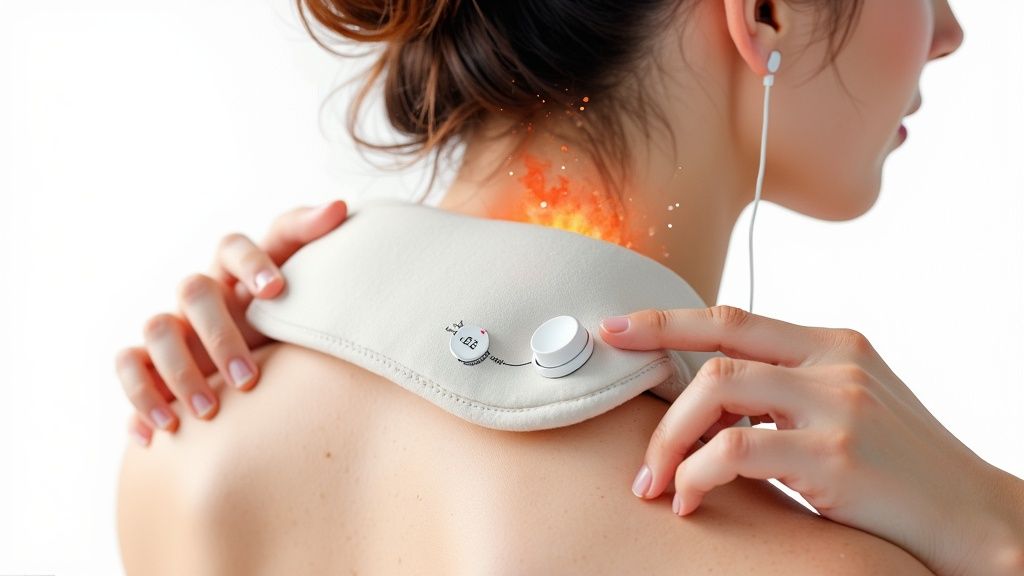
As you can see, a contoured heating pad is designed to hug the neck and shoulders, delivering warmth directly to the source of your pain and stiffness for targeted relief.
The Science Of Soothing Relief
But it’s not just about blood flow. Heat therapy also has a fascinating effect on how your brain actually registers pain. The warmth from the pad stimulates sensory receptors in your skin, which essentially creates "noise" that interferes with the pain signals trying to travel to your brain. In short, the comforting sensation of heat can override the discomfort signals coming from your stiff neck.
This two-pronged attack delivers both physical and mental relief:
- Physical Relaxation: The warmth directly eases muscle spasms and melts away tension.
- Mental Comfort: The soothing feeling itself is incredibly calming, helping to reduce the stress that often causes neck tension in the first place.
This quick table breaks down how heat therapy tackles common neck pain symptoms, turning discomfort into relief.
How Heat Therapy Transforms Neck Pain
| Symptom | How Heat Therapy Helps | The Feeling of Relief |
|---|---|---|
| Muscle Stiffness | Relaxes muscle fibers and increases flexibility. | The tight, "locked-up" feeling starts to loosen. |
| Dull, Aching Pain | Boosts blood flow to carry away pain-inducing toxins. | The constant, nagging ache begins to fade into the background. |
| Muscle Knots | Softens trigger points and tight muscle bands. | You feel those hard, painful knots start to soften and release. |
| Reduced Mobility | Eases tension to improve your range of motion. | Turning your head becomes easier and less painful. |
Ultimately, heat helps your body do what it does best: heal itself.
A Growing Need For Relief
The demand for this kind of relief is bigger than ever. With more of us leading sedentary lives, the global market for neck and shoulder heating pads is expected to hit USD 272 million by 2025. It's a clear sign that work-related stress and modern lifestyles are taking a toll on our bodies.
Heat therapy is more than just a quick fix; it's a foundational tool for managing muscle-related neck pain. By improving circulation and blocking pain signals, it helps your body's natural healing processes work more efficiently.
For those dealing with chronic tension, it’s always helpful to dig into what's causing it. You can learn more by understanding the causes and quick relief options for knots in the neck. And if you're new to using heat for pain, our guide on electric heat pads vs microwavable body heat pads is a great place to start.
Pairing Heat and Massage for Deeper Relief
A good heating pad is a fantastic tool for neck pain, but you can take its effects to a whole new level by adding massage into the mix. Think of it as a powerful one-two punch against stubborn muscle tightness. The two therapies work together, creating a result that’s far better than what either could do on its own.
Applying heat first is like the perfect warm-up for your muscles. Ever tried to work with cold, firm modeling clay? It’s tough and resistant. But once you warm it up, it becomes soft, pliable, and easy to shape. Your neck muscles aren't much different.
The warmth from the heating pad gets the blood flowing and encourages muscle fibers to relax, making them much more receptive to massage. This simple prep step allows you to work out deep knots and trigger points with a lot less effort and discomfort.
Transforming Two Treatments into One Superior Strategy
When your muscles are already loosened up by heat, a massage can get much deeper into the tissue. This doesn't just feel better in the moment—it also helps improve your overall range of motion more effectively. You'll likely find that the relief you feel sticks around a lot longer than when you use just one therapy by itself.
By applying heat for 15-20 minutes before a massage, you prime the muscles for release. This simple step can turn a good massage into a great one by making the tissue more pliable and responsive to pressure.
This combined approach is especially effective for that chronic, deep-seated tension that loves to settle in the neck and shoulders. Imagine you’ve had a stressful week, and a familiar knot has formed in your shoulder. Applying heat first will soften that knot, so when you begin a gentle massage, you can release the tension much more easily and with less pain, leading to lasting comfort.
A Simple and Effective At-Home Routine
You don't need to book a professional appointment to get the benefits of this powerful duo. It's surprisingly easy to create an effective at-home routine that can make a world of difference in your day-to-day comfort.
- Apply Heat First: Drape your heating pad over your neck and shoulders and let it work its magic for 15 to 20 minutes. Let that warmth sink in and really relax the area.
- Begin Gentle Self-Massage: Once you remove the pad, use your fingers to apply gentle but steady pressure to the sore spots. You can try small circular motions or long, smooth strokes along the muscle.
- Target Knots: If you find a particularly stubborn knot, hold steady pressure on it for 30-60 seconds. Remember to breathe deeply—it really helps the muscle let go.
To make self-massage even easier, you might want to try a specialized tool. A good dual-hand massage tool for trigger point relief can help you apply consistent pressure to those hard-to-reach spots without tiring out your hands. Combining targeted heat with a great massage tool turns two separate treatments into one superior strategy for managing your neck pain.
How To Choose The Right Heating Pad For Your Neck
Finding the perfect heating pad for neck pain can feel overwhelming with so many options out there. But don't worry—it's actually pretty straightforward once you know what to look for. The real goal is to find a pad that fits not just your neck, but your daily life, too.
This simple decision tree can help you take the first step, guiding you from figuring out the problem to landing on a core therapy like heat or massage.
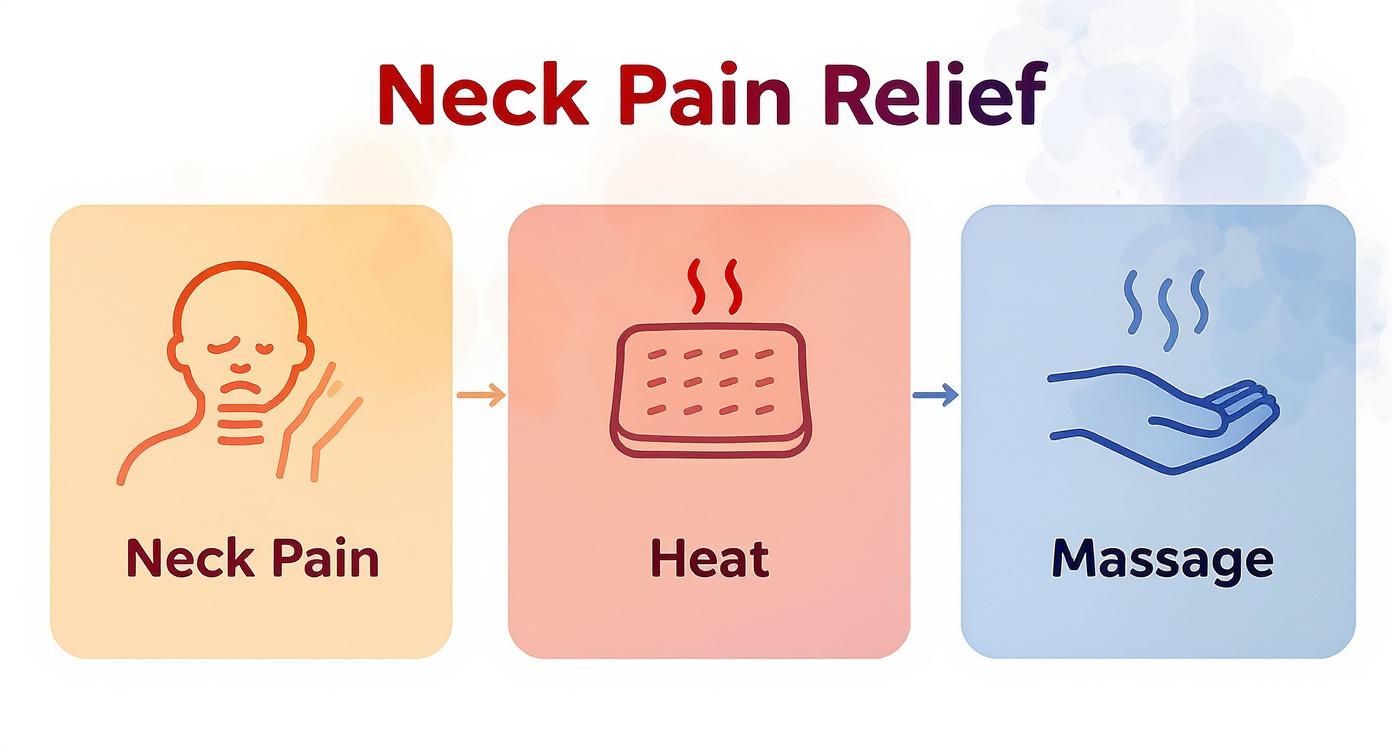
As you can see, both heat and massage are fantastic, effective ways to tackle neck pain. Now, let’s dig into finding the right tool for the job.
Comparing Heating Pad Types For Neck Pain
To help you quickly decide which type of heating pad best suits your lifestyle and pain relief needs, here’s a quick comparison of the most common options.
| Feature | Electric Heating Pad | Microwavable Pad | Infrared Pad |
|---|---|---|---|
| Heat Source | Electricity (wall outlet) | Microwave | Electricity (infrared light) |
| Heat Type | Dry, consistent heat | Moist, deep-penetrating heat | Deep, radiant heat |
| Portability | Limited by cord length | Excellent, completely cordless | Limited by cord length |
| Heat Duration | Continuous until turned off | 15-30 minutes, requires reheating | Continuous until turned off |
| Best For | Chronic pain, long sessions | Acute pain, muscle spasms, portability | Deep tissue pain, improved circulation |
| Maintenance | Spot clean or washable cover | Easy to clean, can be stored anywhere | Spot clean or washable cover |
Each type has its own strengths. Your choice really comes down to convenience, the kind of heat you prefer (moist vs. dry), and how you plan to use it.
Electric vs. Microwavable Pads
One of the first decisions you'll make is whether to go with an electric or a microwavable heating pad. Electric pads are workhorses, giving you consistent, controllable heat for as long as you need. This makes them a great option for managing stubborn, chronic pain.
On the other hand, microwavable pads are often filled with natural materials like flaxseed or wheat. They deliver a soothing, moist heat that many people feel penetrates deeper into sore muscles. Plus, they’re cordless and portable, which is a huge bonus if you want to move around.
If you’re stuck, it helps to weigh the pros and cons. You can get a better sense of the differences by exploring the debate between electric heat pads vs microwavable body heat pads. Ultimately, it boils down to personal preference and whether you need the freedom to be untethered.
Why Shape And Fit Matter
Sure, a standard rectangular heating pad might do the trick in a pinch, but for neck pain, a contoured design is a game-changer. Look for pads specifically shaped to drape over your shoulders and wrap snugly around your neck. This kind of ergonomic fit ensures the heat gets applied directly to the trapezius and cervical muscles—the usual culprits behind all that tension.
Some of the more advanced models are even weighted. This adds a gentle, comforting pressure that enhances the calming effect, a principle known as deep pressure stimulation.
A well-fitted heating pad should feel like a warm hug for your neck and shoulders. It shouldn't slip or require you to hold it in place, allowing you to fully relax and let the heat work its magic.
Essential Features For Safety And Comfort
Beyond the basics, a few key features can seriously elevate your experience and ensure you're using the heating pad safely and effectively. Think of these as the non-negotiables for a quality device:
- Multiple Heat Settings: This is a must. It lets you tailor the temperature to your comfort level and how bad your pain is. A low setting might be perfect for gentle, long-lasting relief, while a higher setting can knock out intense stiffness.
- Auto-Shutoff Function: This is a critical safety feature, no exceptions. It prevents the risk of burns if you happen to doze off, giving you total peace of mind during a relaxing session.
- Soft Fabric Cover: A soft, washable cover not only feels cozy against your skin but also protects it from direct heat. It also makes cleanup a breeze.
The market for these handy devices is booming. In fact, the rapid neck heating pad segment is projected to grow from USD 150 million in 2024 to USD 300 million by 2033, all thanks to new technologies and smart features. Innovation is constantly reshaping how we find relief from pain.
A Step-by-Step Guide to Using Your Heating Pad Safely
To get the most out of your heating pad, you need to know how to use it correctly. Think of it less as just a warm blanket and more as a therapeutic tool. When used properly, it can be incredibly effective, but following a few simple steps ensures every session is not just beneficial, but completely safe.
Before you even think about plugging it in, give your heating pad a quick once-over. Check the cord for any frays or damage, and scan the pad itself for cracks or sketchy-looking worn spots. This little safety check takes all of five seconds and is your first line of defense.
Proper Application and Duration
Okay, so your device is in good shape. Now it’s time to protect your skin. This is a big one: never apply a heating pad directly to your bare neck. Always, always place a thin layer—like a dishtowel or the pad’s own fabric cover—between the heat and your skin. This simple barrier is what prevents irritation or, in a worst-case scenario, burns.
Let’s say you just got home from a long day hunched over your computer and you can feel your neck and shoulder muscles starting to tighten up. This is a perfect time to drape a heating pad (with its cover on!) over the area for about 15 minutes. That gentle, consistent warmth will sink in and help stop the stiffness before it really settles in for the night.
Experts generally agree that the sweet spot for a heat therapy session is 15 to 20 minutes. That's just enough time to relax the muscles and boost blood flow without risking any skin damage.
I always recommend setting a timer on your phone. It’s way too easy to get comfortable and lose track of time. You can absolutely repeat these sessions a few times a day, just make sure to give your skin a solid break—at least an hour—in between so it can cool down.
Critical Safety Rules to Follow
A few non-negotiable safety rules will make your heating pad for neck pain a reliable, risk-free part of your routine. These aren’t just suggestions; they’re designed to keep you safe while you’re trying to find some relief.
Here are the most important rules to burn into your memory:
- Never Fall Asleep: It’s so tempting to drift off when you’re warm and relaxed, but you can’t sleep with a heating pad on. The only exception is if your model has a modern, trustworthy auto-shutoff feature that you’ve set.
- Avoid Damaged Skin: Never apply heat to open wounds, rashes, or any skin that’s already irritated or broken. Heat can make inflammation worse and get in the way of proper healing.
- Listen to Your Body: Always start on the lowest heat setting. You can slowly bump it up until it feels comfortably warm, not unpleasantly hot. If you feel any discomfort or a burning sensation, take it off immediately.
Think of it like this: heat therapy is a gentle conversation with your muscles. You're trying to coax them into relaxing with soothing warmth, not blast them into submission. By sticking to these simple guidelines, you can ensure every session is as safe as it is comforting.
Common Mistakes to Avoid for Better Results
So, you've got a great heating pad for neck pain, but are you really getting the most out of it? While heat therapy feels fantastic, a few common slip-ups can actually get in the way of real relief—or worse, cause problems. Let's walk through what not to do so you can make sure every session truly counts.
The biggest mistake by far is putting heat on a brand-new, acute injury. If you just tweaked your neck or woke up with a sharp, sudden pain, your body is in full-on inflammation mode. Applying heat is like telling your blood vessels to open the floodgates, which can ramp up swelling and make things feel a whole lot worse.
For any injury in the first 48 to 72 hours, reach for an ice pack instead. Cold works by constricting blood vessels, which is exactly what you need to dial down that initial swelling and numb the pain.
Finding the Sweet Spot with Heat and Time
It's easy to think "more is better," but that's another trap. Cranking your heating pad up to the max setting and leaving it on for an hour straight can seriously backfire. At best, you might irritate your skin; at worst, you could end up with a burn.
There’s also a physiological reason to keep it moderate. Too much heat for too long can trigger something called rebound vasoconstriction. Your body, trying to protect itself from overheating, will actually start to tighten up the blood vessels. This completely undoes the muscle-relaxing benefits you were aiming for.
Think of your heating pad as a tool for gentle persuasion, not brute force. The goal is to coax your muscles into relaxing with comfortable warmth, not blast them into submission.
Don't Skimp on Quality or Overlook the Big Picture
The quality of the heating pad itself really does matter. A cheap, flimsy model often delivers uneven heat, creating hot spots that are both ineffective and risky. A well-made pad, especially one shaped for the neck and shoulders, will give you consistent, safe, and far more effective relief.
Finally, it's crucial to keep your expectations in check. A heating pad is a phenomenal tool for managing the symptoms of muscle tension, stiffness, and those nagging chronic aches. It can be an absolute game-changer for getting through your day with less pain.
However, it's not a magic cure for an underlying medical issue. If your neck pain is severe, doesn't go away, or comes with other concerning symptoms, your heating pad should be a source of comfort, not a substitute for seeing a doctor. Steer clear of these common mistakes, and you'll be on your way to getting real, reliable relief.
When You Should See a Doctor for Neck Pain
A good heating pad can feel like a godsend for that all-too-common muscle stiffness and tension. It's often the perfect first step for tackling the aches that come from sleeping in a weird position or spending one too many hours hunched over a desk.
But it's crucial to understand where at-home care ends and professional medical advice begins. Sometimes, neck pain is a sign of something more serious.
https://www.youtube.com/embed/aXJJlxglfHo
While a heating pad for neck pain is fantastic for muscular issues, it’s not meant to replace a doctor's diagnosis. These things are incredibly popular for a reason—the neck heating pad market was valued at around USD 1.2 billion globally in 2023. That’s because neck pain is a massive problem, affecting over 30 million adults in the U.S. every year. You can dig into more details about the growth of the heating pad market at Deep Market Insights.
With so many people using them, it's more important than ever to know when to put the pad down and pick up the phone.
Red Flags That Warrant a Doctor's Visit
Think of your heating pad as a tool for managing symptoms, not a cure for whatever is causing them. If you notice any of the following signs, it's time to get a proper evaluation from a healthcare professional.
Here are the key indicators that your neck pain needs medical attention:
- Severe or Persistent Pain: The pain is intense and just isn't getting better after a few days of rest and heat.
- Radiating Pain: You feel pain shooting down your arms or legs. This can be a sign of nerve involvement.
- Numbness or Weakness: You're experiencing tingling, numbness, or a noticeable loss of strength in your hands, arms, or legs.
- Pain After an Injury: Your neck started hurting right after a specific event, like a car accident or a fall.
- Systemic Symptoms: The neck pain comes with other concerning symptoms like a fever, severe headache, chills, or unexplained weight loss.
Always trust your gut. If the pain just feels "off"—more intense than usual muscle tension or different in some way—getting it checked out is the smartest move you can make. Your health comes first.
Answering Your Questions About Neck Pain and Heat Therapy
Even with all this info, you probably still have a few lingering questions about using a heating pad for neck pain. That's completely normal. Let's tackle some of the most common ones so you can feel totally confident as you find the right way to soothe that ache.
Heat or Ice: Which One Is Right for My Neck?
This is the big one, and the answer really comes down to what kind of pain you're dealing with.
Think of it this way: if you just tweaked your neck or pulled a muscle—a fresh, new injury—ice is your friend for the first 48 hours. It's fantastic at calming down that initial inflammation and swelling.
But for that nagging stiffness, chronic soreness, or those tension knots that just won't quit, a heating pad is the clear winner. Heat works wonders to relax tight muscles and get the blood flowing to those sore, tired areas.
How Long and How Often Should I Use a Heating Pad?
For a single session, aim for about 15-20 minutes. That's the sweet spot—enough time to let the warmth penetrate and do its job without irritating your skin.
You can definitely repeat this a few times throughout the day as needed. The golden rule is to give your skin a break of at least an hour between sessions. This lets it return to its normal temperature and keeps it healthy.
A lot of people find that moist heat—the kind you get from a microwavable pad—feels more deeply soothing and does a better job of loosening up stiff tissues than the dry heat from a typical electric pad.
Is It Safe to Sleep with a Heating Pad on All Night?
In a word: no. I can't stress this enough—do not sleep with a heating pad on your neck. Even on a low setting, the constant, direct heat can cause serious skin burns over several hours. It's just not worth the risk.
If you think you might nod off, make sure you're using a modern heating pad that has an auto-shutoff timer. This is a non-negotiable safety feature that will power down the device after a set time, giving you peace of mind.
For a more complete approach to feeling better, it's a great idea to explore a range of natural remedies for neck pain, which can include gentle exercises and other effective therapies.
For drug-free, clinic-trusted relief, explore the full range of microwavable heat therapy solutions from SunnyBay. Our U.S.-made neck wraps are designed for simple, effective comfort so you can get back to the activities you love. Find your perfect fit at https://sunny-bay.com.


