


Heating Back Pain: An Evidence-Based Relief Guide
-
A heating pad can make your back feel better, but it can't diagnose why your back hurts, repair a disc, or replace rehabilitation. The more useful question isn't “Does heat cure back pain?” It's “Can warmth help me move safely enough to support recovery?”
That distinction matters. Evidence supports short-term symptom relief, particularly for acute and subacute low back pain, but benefits are generally modest and follow-up is often brief. Used well, heat is less a passive cure than a practical bridge between stiffness and movement.
Table of Contents
- How Heat Actually Relieves Back Soreness
- Deciding Between Heat and Cold Therapy
- Choosing the Right Heat Delivery Method
- Safe Application Protocols and Duration
- Pairing Warmth with Active Recovery
- Evaluating Material Quality and Ergonomic Design
- Building Your Daily Back Care Routine
How Heat Actually Relieves Back Soreness
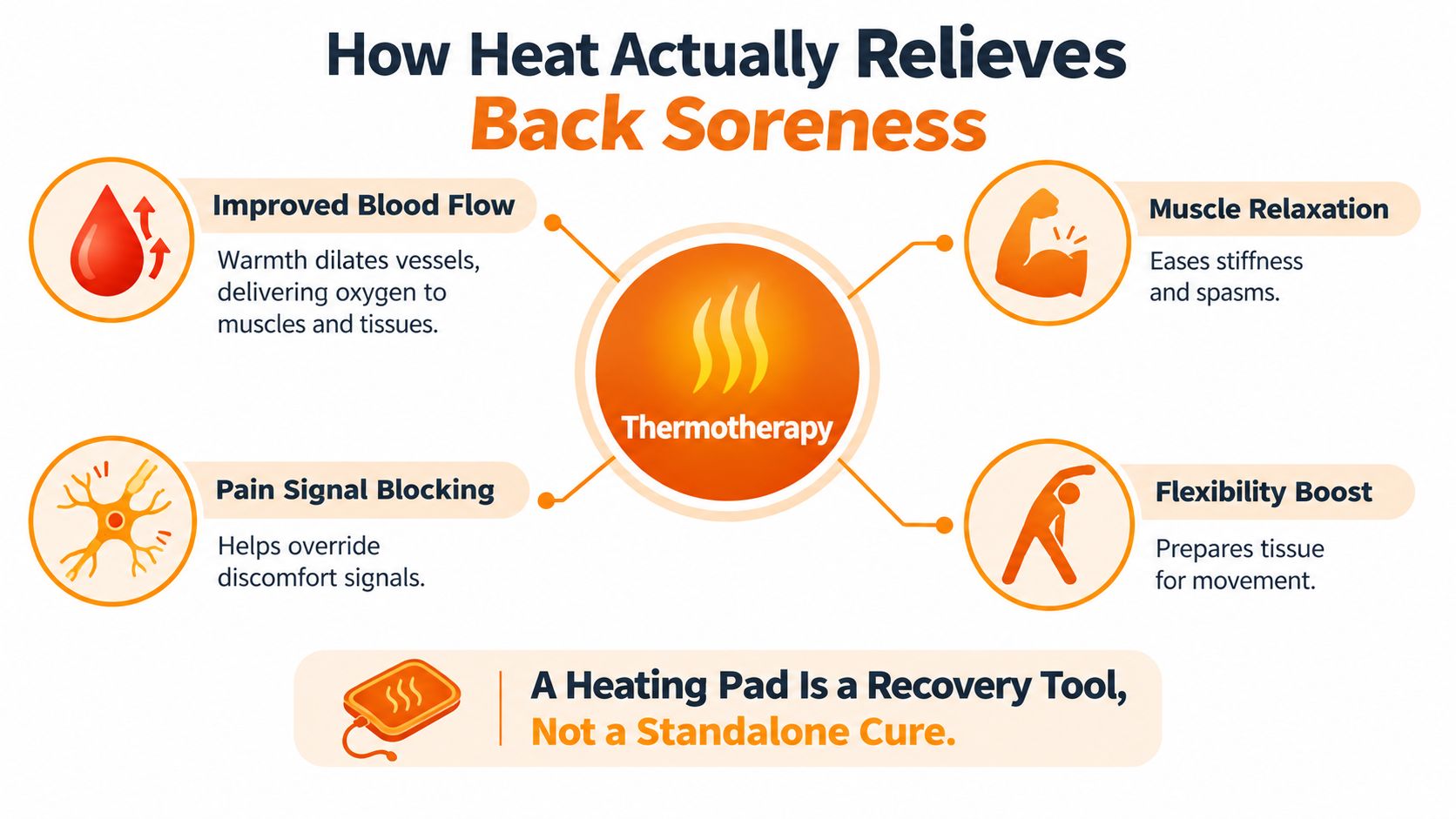
Heat changes what you can do with a painful back. Gentle warmth can relax guarded muscles, reduce the intensity of discomfort signals, and make stiff tissues feel more prepared for movement. That doesn't mean it corrects an underlying nerve, joint, disc, or inflammatory problem.
The body responds to warmth partly through vasodilation, the widening of small blood vessels near the treated area. Increased local circulation supports the delivery of oxygen and nutrients, while relaxed muscle tissue may become easier to stretch and move. Think of it as opening a congested road. Heat doesn't rebuild the road, but it may make it easier for useful traffic to reach the area.
What the evidence supports
A Cochrane review of superficial heat and cold treatments examined 9 trials involving 1,117 participants. In two randomized trials involving 258 people with acute or subacute low back pain, heat-wrap therapy reduced pain after 5 days compared with an oral placebo. The weighted mean difference was 1.06 points on a 0-to-5 pain scale, with a 95% confidence interval of 0.68 to 1.45.
The same review found that a heated blanket reduced pain immediately after application in a separate trial involving 90 participants, with a reported reduction of 32.20 points on a 0-to-100 scale. The review described the evidence as moderate, while emphasizing that the benefits were generally small and short term.
This is why a heating pad works best as preparation. Apply warmth, then use the window of improved comfort for controlled mobility, rather than remaining still until the effect fades. For a practical introduction to the options and limitations, you can learn the basics of heat therapy.
Some readers also explore broader oxygen-related approaches for persistent symptoms. If that interests you, learn about Atlanta Hyperbaric Center HBOT, while keeping the distinction clear: a home heat wrap is a local comfort tool, not a substitute for clinical assessment.
Clinical perspective: Heat earns its place when it helps you walk, stretch, exercise, or complete daily tasks. It becomes less useful when it only encourages you to postpone movement.
Deciding Between Heat and Cold Therapy
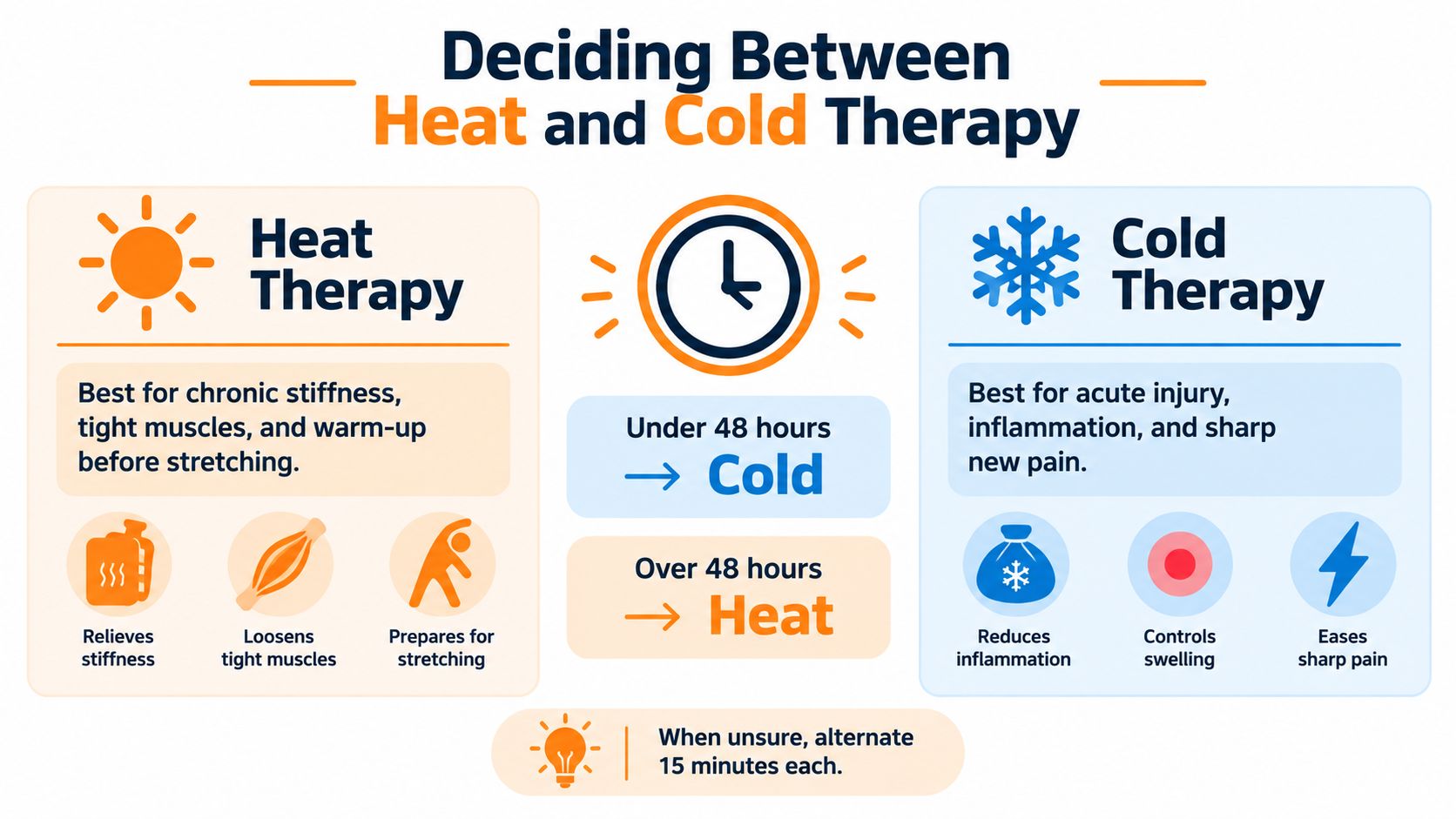
The heat-versus-cold decision shouldn't rely on a rigid clock alone. Start with the character of the problem. A sudden injury with swelling, marked warmth, or a sharp escalation in pain calls for caution and may be more appropriate for cold and medical guidance. Tightness, muscle guarding, and non-swollen stiffness are more likely to respond comfortably to warmth.
The evidence doesn't support presenting heat as universally superior. A 2022 systematic review and network meta-analysis examined 46 randomized controlled trials involving 8,765 participants and found that heat wraps ranked among the more effective interventions for immediate pain reduction compared with inert treatments. The standardized mean difference was -1.38, with a 95% confidence interval from -2.41 to -0.40, as reported in the British Journal of Sports Medicine review. Exercise showed a similarly strong immediate effect, with a standardized mean difference of -1.40.
Match the modality to the symptom
| Symptom pattern | More sensible starting point | Reasoning |
|---|---|---|
| New pain after a specific accident, especially with swelling | Cold may be more appropriate initially | Cooling can reduce sensation and may be preferable when acute swelling is present |
| Dull ache, muscle tightness, or stiffness without swelling | Gentle heat | Warmth may reduce guarding and make movement more comfortable |
| Pain lasting less than 3 months | Heat can support short-term relief | Evidence is strongest for acute and subacute episodes |
| Longstanding pain with uncertain cause | Use heat cautiously and seek assessment if it persists | Heat may soothe symptoms without explaining or treating their source |
The review also found important limitations in the evidence base. Only 9 of the 46 trials, or 19.6%, were judged to have a low risk of bias. 20 trials, or 43.5%, had unclear risk, and 17 trials, or 36.9%, had high risk. Study sizes were generally modest, with a median of 39.5 participants per study. Those findings support practical use, but not exaggerated promises.
Cold and heat evidence remains mixed when compared directly. If your back pain follows trauma, is worsening, or comes with visible swelling, don't use warmth to push through it. For a more detailed comparison of the two approaches, see this guide to heat therapy versus cold therapy.
Choosing the Right Heat Delivery Method
The right heat source depends on your setting, your symptoms, and how reliably you can monitor it. A product that works well on a sofa may be impractical during a commute, while a portable patch may not provide the same adjustability as a reusable wrap.
Reusable wraps for home use
Microwavable wraps are useful when you want targeted, moldable warmth across the lumbar region. A longer wrap can cover more of the lower back and may stay in position while you sit, read, or perform gentle mobility work. Natural-fill products can also be used as cold packs when the design allows it, giving one item more than one role.
Their limitation is consistency. You have to heat them according to the manufacturer's instructions, distribute the warmth carefully, and check the surface before applying it. A wrap that feels comfortable at first can become too warm in one concentrated area, especially if it has been overheated or folded.
Electric pads for adjustable warmth
An electric heating pad offers a controllable heat level and doesn't require reheating during use. That makes it practical for a planned session at home, particularly when you want to reduce stiffness before exercise. When comparing models, inspect the control unit, cord placement, cover, automatic shutoff features, and whether the pad stays flat against the body.
A heating pad for home therapy may suit someone who values steady electrical output and a familiar flat format. It still requires active supervision. Adjustable temperature doesn't eliminate burn risk, and hands-free use shouldn't mean unattended use.
Air-activated patches for portable relief
Disposable, air-activated patches are convenient for outdoor work, travel, or cold-weather activity when there's no microwave or power outlet nearby. Their thin profile can fit under clothing, and some designs attach to a belt or garment. The trade-off is less control over the thermal experience once activated, so skin checks remain important.
Patches also encourage a common mistake: wearing warmth continuously because the product is convenient. Portability doesn't change your symptoms or make prolonged heat appropriate. Use the product instructions, remove it if the skin becomes irritated, and don't apply it over topical pain rubs or medicated creams.
A practical choice is the one you'll use safely and consistently, not the one with the most features.
For a closer look at the differences between electrical and microwaveable options, compare electric heat pads with microwavable body heat pads. The goal is to match the tool to the task, then use warmth to support movement rather than to remain inactive.
Safe Application Protocols and Duration
Heat can burn skin without feeling dangerously hot at the start. The risk rises when a person falls asleep, has reduced sensation, can't remove the device independently, or combines warmth with products that intensify irritation. Safety is not a minor detail of heating back pain. It determines whether the treatment remains helpful.
Use a controlled sequence
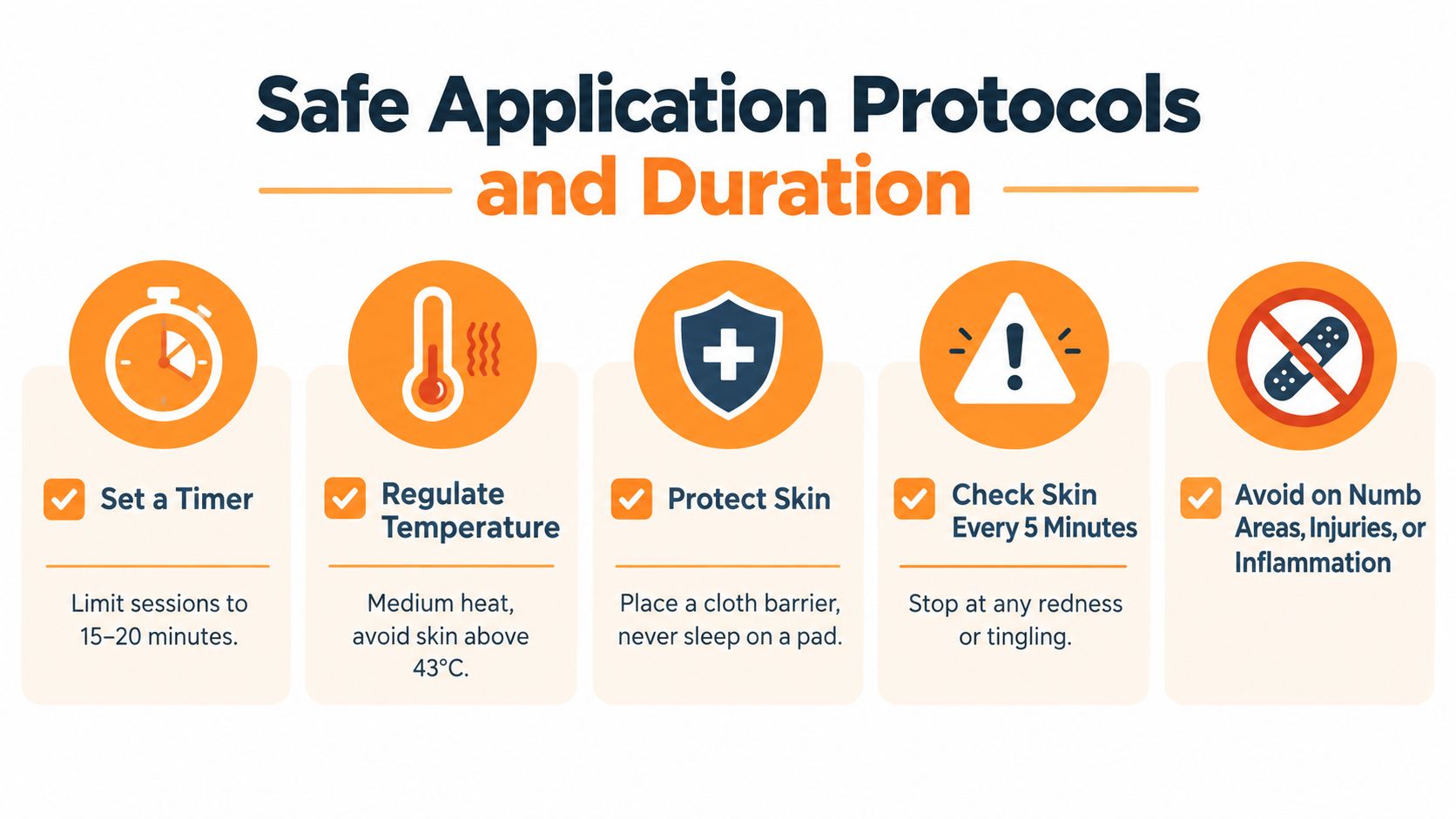
- Check the skin first. Don't apply heat over an open wound, suspected infection, significant swelling, or an area that already feels unusually hot.
- Start gently. Choose a lower setting and increase only if the warmth remains comfortable. A sensation of soothing warmth is enough. More heat isn't better treatment.
- Create a barrier. Use the cover supplied with the device or a thin layer of clothing. Don't place a very hot surface directly against bare skin.
- Set a timer. Keep the session brief and remain awake. Never sleep on an electric pad or leave a heated product on while you leave the room.
- Inspect the skin. Stop if you notice persistent redness, mottling, burning, tingling, blistering, or any change you can't explain.
The safety limits become stricter if you have diabetes, neuropathy, impaired circulation, reduced sensation, or difficulty removing the product. Ask a clinician before using heat if you can't reliably feel temperature or respond quickly to discomfort.
Avoid dangerous combinations
Don't place a heating pad over a topical pain rub, medicated lotion, cream, or ointment unless a qualified clinician and the product instructions specifically allow it. Heat can increase irritation and contribute to chemical burns. Clean the skin and follow the medication label rather than assuming that a familiar cream is compatible with warmth.
A 2025 review highlights the lack of consistent routine-practice guidance around indications, contraindications, application methods, and precautions. It also recommends medical evaluation if symptoms haven't improved after 7 days of combined superficial heat and over-the-counter analgesics, as discussed in the review of superficial heat for low back pain.
Know when heat is the wrong tool
Stop home treatment and seek medical assessment for progressive weakness, saddle numbness, loss of bladder or bowel control, fever, unexplained trauma, or worsening neurological symptoms. These signs can indicate a problem that a heating pad cannot safely manage.
Also seek advice when pain keeps deteriorating, repeatedly returns without an obvious explanation, or prevents normal walking and daily activity. Heat may reduce the warning signal temporarily, but symptom suppression isn't the same as resolution.
Pairing Warmth with Active Recovery
The strongest practical use of heat is often the few minutes after application. Warmth may make a stiff back feel less threatened, giving you a better opportunity to stand, walk, breathe normally, or perform a prescribed exercise. The movement provides the functional stimulus that a heating pad cannot provide by itself.
A 2025 Ontario Health quality standard for acute low back pain states that superficial heat is more effective when combined with physical activity or therapeutic exercise than when used alone. That recommendation changes the purpose of the session. You aren't heating the back so you can avoid using it. You're using warmth to make appropriate activity more tolerable.
A simple decision pathway
For uncomplicated stiffness that improves as you move, use gentle warmth before a short mobility routine. Try comfortable walking, pelvic movements within an easy range, or exercises already prescribed by your physical therapist. Keep the effort controlled. Pain that escalates, spreads, or changes character is a reason to stop and reassess.
For an acute or subacute episode, heat can support movement when there is no concerning swelling or red-flag symptom. The 2022 review found immediate benefits from both heat wraps and exercise, but the quality of the underlying trials varied. That means you should judge success by function, not by how intense the warmth feels.
Persistent pain needs a different plan. If symptoms continue, recur frequently, or limit work and sleep, a clinician can assess strength, movement, nerve signs, and contributing habits. Heat may remain a comfort measure, but rehabilitation should address capacity, confidence, and the activities that provoke symptoms.
Use the reduction in stiffness as an invitation to move, not as permission to ignore the cause.
Chronic low back pain deserves particular restraint. A controlled trial involving 100 people with longstanding chronic low-back pain found greater short-term analgesia from pulsed superficial heat reaching 45°C than from steady heat at 37°C, as described in the controlled study of pulsed superficial heat. That result supports the possibility of thermal neuromodulation, but it also reinforces why higher temperatures require careful regulation and skin protection. It isn't a reason to turn a home pad to its maximum setting.
Evaluating Material Quality and Ergonomic Design
A heating product's construction affects whether people can position it correctly, maintain even contact, and remove it quickly. Those practical details matter more than a marketing claim about intensity. A pad that slides away from the lumbar region or creates concentrated hot spots won't support a sensible recovery routine.
Look for stable, even contact
Natural fills such as flax seed and lava sand can provide a weighted, moldable feel in a microwavable wrap. That can help the product follow the curve of the back rather than pressing against one small area. These materials are also used in reusable hot and cold products, although the user must follow heating and cooling instructions carefully.
A dual-fabric cover can improve comfort and help distribute warmth across the contact surface. Soft fleece may feel suitable for direct comfort, while cotton can offer a different texture and breathability. The important test is whether the cover remains intact, washable when appropriate, and free from areas that feel significantly hotter than the rest.
Consider the shape before the feature list
An ergonomic back wrap with an elastic band or fastening system may stay in place better than a loose rectangular pad. Hands-free positioning is useful when you're sitting upright or preparing to walk, but it doesn't remove the need for supervision. A secure fit should prevent slipping, not encourage you to forget the product is there.
For someone who travels between home, office, and outdoor activity, the choice may be different. A lightweight air-activated patch offers portability, while a larger reusable wrap offers more control and less disposable waste. Neither format is automatically safer. Safety comes from controlled warmth, correct placement, skin checks, and appropriate session length.
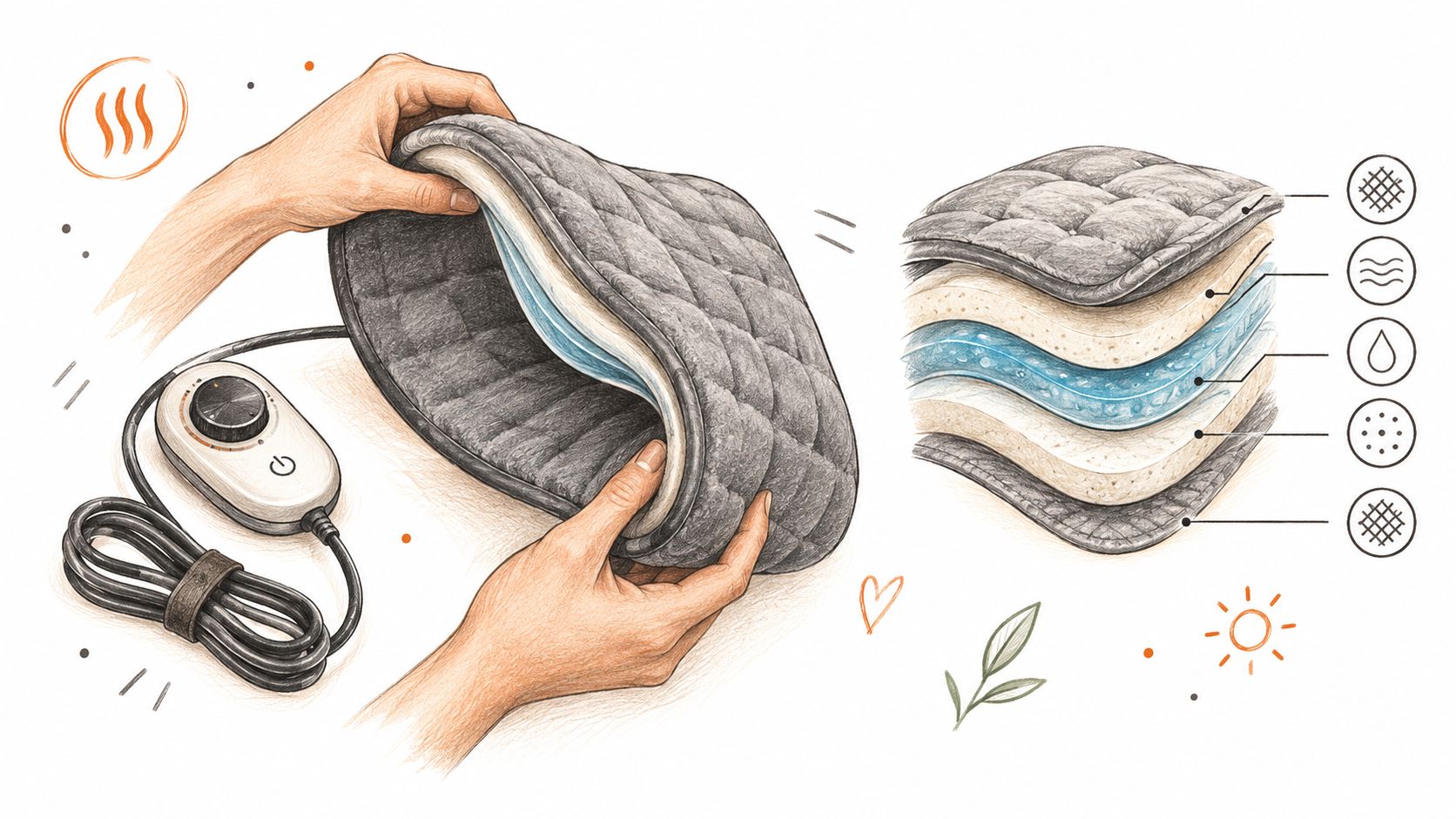
Before buying, check five practical details:
- Coverage: Does it reach the sore area without folding or bunching?
- Control: Can you choose a mild setting and switch it off easily?
- Contact: Does it stay flat and stable as you change position?
- Cleaning: Can you keep the cover hygienic through repeated use?
- Removal: Can you take it off immediately if your skin reacts?
A product should support good habits. If its design makes monitoring difficult, choose a simpler option or ask a clinician whether heat is appropriate for you.
Building Your Daily Back Care Routine
Consider an office worker who develops recurring lumbar tightness after long periods of sitting. The useful response isn't to wear a heated patch all day and wait for the back to settle. A better routine uses warmth briefly, then turns the improved comfort into movement.
Start by checking the symptoms. If the discomfort is familiar, non-swollen, and eased by changing position, apply gentle warmth while seated upright. Keep the device supervised and use a timer. During the session, avoid slumping into the same posture that triggered the stiffness.
When the heat comes off, walk around the room. Follow with easy movements that don't reproduce sharp or radiating pain, such as comfortable spinal motion, hip movement, or a prescribed strengthening exercise. The exact exercise should match your assessment and tolerance. A heating pad can't tell whether you need mobility work, strength training, nerve-related care, or a medical examination.
A routine that adapts to the day
On a typical workday:
- Before activity: Use brief warmth if stiffness is limiting your first movements.
- During the day: Change position regularly and take short walking breaks instead of waiting for pain to build.
- After movement: Judge the routine by easier function, not by temporary numbness.
- In the evening: Stop using heat if symptoms are worsening, spreading, or accompanied by neurological changes.
For persistent pain, don't keep escalating temperature or duration to chase the same relief. A clinician can help determine whether physical therapy, medication review, imaging, or another approach is appropriate. People exploring options beyond symptom management can read about regenerative medicine for spinal pain, but any procedure-based treatment should follow an individual medical evaluation rather than a product promise.
The practical conclusion is simple. Heat can open the door to movement, but movement and appropriate clinical care determine what happens next. If the pain is new, severe, progressive, or associated with weakness, numbness, fever, trauma, or bladder or bowel changes, skip home experimentation and seek medical advice.
SunnyBay offers reusable microwavable wraps, targeted air-activated patches, hot and cold therapy products, and massage tools for supervised comfort and mobility routines. Visit SunnyBay to compare options for heating back pain and choose a format that fits your daily activities without treating warmth as a substitute for recovery care.


