


Hand Warmers Microwavable
-
You're halfway through a winter walk when your fingers go numb. At your desk, the office feels cold enough to make every keyboard shortcut uncomfortable. Or you've just finished clearing snow and want warmth that doesn't disappear as soon as you take your gloves off. In each situation, microwavable hand warmers offer a simple answer: heat a small reusable pouch, hold it in your hands, and recharge it when needed.
The important detail is that these warmers aren't all the same. The filling inside acts like a heat battery, and the microwave's wattage controls how quickly that battery charges. By the end of this guide, you'll know how flaxseed, lava sand, and rice differ, how to heat each type more safely, and which design makes sense for outdoor use, daily comfort, or heat therapy.
Table of Contents
- Why Microwavable Hand Warmers Are Worth Knowing About
- What Microwavable Hand Warmers Are and How They Work
- Flaxseed, Lava Sand, and Rice Fill Materials Compared
- How to Heat Them Safely Every Time
- Benefits Beyond Just Warm Hands
- Choosing the Right Hand Warmers for Your Situation
- Caring for Your Warmers and Final Thoughts
Why Microwavable Hand Warmers Are Worth Knowing About
Cold hands are more than a minor annoyance. They can make a morning commute unpleasant, turn a winter walk into a constant search for shelter, or make stiff fingers harder to move during a cold office day. A small heated pouch tucked into each palm gives you targeted warmth without needing to warm your whole body.
Reusable hand warmers also suit people who want a repeatable routine. You heat them before leaving home, use them during a break, and warm them again later. That differs from a disposable air-activated warmer, which depends on a one-time chemical reaction and must be replaced after use. Reusable warmers are positioned as a low-waste option for repeated daily warmth, especially when you have access to a microwave but don't want electricity running continuously or disposable packs in your pockets.
The design still demands attention. Some products look similar on the outside but use completely different internal systems. A fabric pouch filled with flaxseed belongs in a microwave when the manufacturer provides microwave instructions. A reusable chemical warmer with a metal disk may not. Treating every reusable warmer as microwave-safe is one of the easiest ways to damage the product or create a burn hazard.
The useful question isn't only “How hot does it get?” It's “What's inside, how should it be heated, and how will it feel in my hands?”
Your ideal pair depends on the situation. A commuter may prefer compact pouches that slip into coat pockets. Someone with stiff fingers may want a glove-style warmer that stays in place without constant gripping. An outdoor worker may value a durable cover and even heat more than the lightest possible design.
The material comparison matters because the filling controls heat retention, weight, texture, and heating behavior. Once you understand that relationship, choosing becomes much easier. You're no longer buying a generic warm pouch. You're choosing a small heat reservoir that matches your hands, routine, and microwave.
What Microwavable Hand Warmers Are and How They Work
A microwavable hand warmer is usually a fabric pouch containing a natural or heat-stable fill. The microwave energizes that fill, and the pouch gradually releases the stored warmth against your skin. Think of it as a rechargeable heat battery. The microwave supplies the charge, the filling stores it, and the outer cover helps deliver it comfortably.
The basic process is straightforward:
- Check that the product is explicitly labeled for microwave use.
- Place it on a microwave-safe plate.
- Heat it according to the manufacturer's instructions and your microwave's wattage.
- Redistribute the filling if the design allows it.
- Test the temperature before holding it for an extended period.
The “microwave-safe” label matters because reusable warmers use more than one heating technology. Many chemical hand warmers rely on crystallization, often triggered by a metal disk. Some of those products must be reactivated in boiling water for about 15 to 20 minutes, and one product manual specifically states that its metal-disk warmer cannot go in a microwave, as explained in Wirecutter's hand-warmer guide. Putting that type in a microwave can damage the warmer and create a serious safety problem.
The filling is the working part
Microwave-safe designs generally use natural or heat-stable materials such as flaxseed, rice, or other suitable granular fills. The fabric holds the material in place, but the fill determines how the warmer stores and releases heat. Fabric affects comfort and insulation. It doesn't turn a non-microwave-safe internal mechanism into a microwave-safe one.
That distinction prevents a common mistake. A soft exterior, familiar pouch shape, or “reusable” product description doesn't automatically mean the warmer belongs in the microwave. Read the care label, product instructions, and heating limits before the first use.
A safe warmer should also be intact before heating. If the pouch has a tear, a scorch mark, a hard clump, or a persistent burnt odor, don't put it back in the microwave. Natural fillings can leak, and overheated warmers can burn skin. The product's instructions remain the primary authority because heating performance changes with fill material, pouch size, and microwave power.
Flaxseed, Lava Sand, and Rice Fill Materials Compared
The fill material determines how a microwavable hand warmer feels, how long it stays useful, and how sensitive it may be to heating conditions. Flaxseed releases warmth gradually, rice cools sooner, and lava sand adds a denser feel. Microwave wattage matters too. The same pouch can heat more quickly in a higher-wattage microwave, so fill choice and heating instructions need to be considered together.
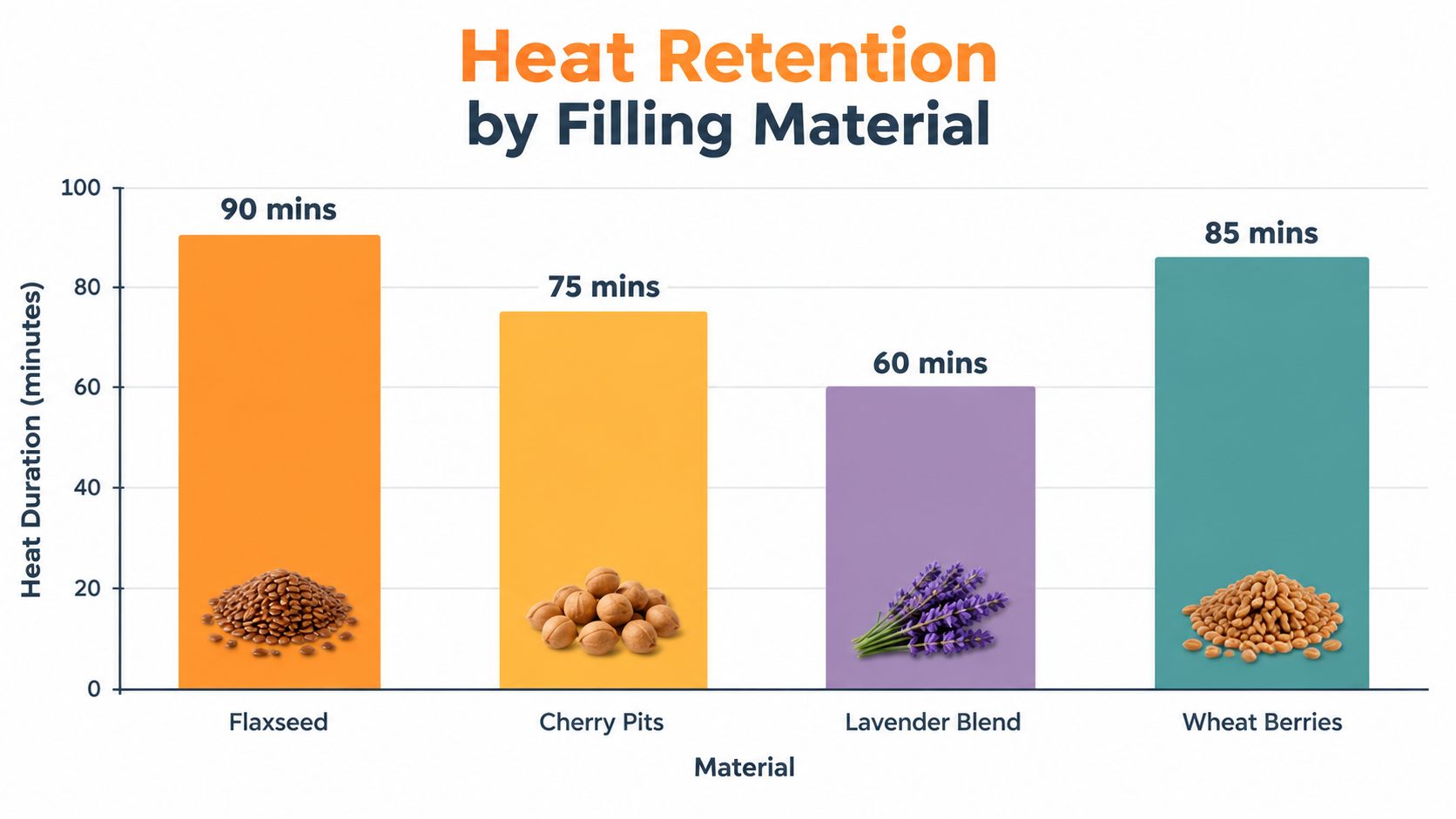
Flaxseed is often the strongest choice for sustained hand warmth. Independent testing found that flaxseed heat packs commonly provide about 30 to 45 minutes of usable warmth, while stronger-performing blends reached 45 to 60 minutes, according to independent testing of microwave heat packs. Its natural oil content and thermal mass help it give off warmth gradually instead of releasing most of it at once. The result is a soft, gently moldable pouch that can sit comfortably in the palm.
Flaxseed also responds well to a measured heating routine. Since its performance depends on pouch size, fill amount, and microwave wattage, follow the product's stated heating limit rather than treating the material as a universal setting. For more detail on flaxseed in hot and cold therapy, read SunnyBay's guide to flaxseeds in hot and cold therapy.
Lava sand suits users who prefer a denser, weightier warmer. The fine granules can create a grounded feel against the palm and may spread warmth evenly when the pouch is properly designed and filled. Its appeal is mainly tactile. Added weight can help the warmer stay settled instead of sliding around, although the actual heat-retention experience still depends on the pouch and microwave protocol.
Rice is familiar, accessible, and common in simple homemade or budget-friendly pouches. It provides pleasant warmth for shorter periods, but independent comparisons found that flaxseed retains heat better. Rice can suit occasional use when light weight and affordability matter more than the longest-lasting warmth.
| Fill Material | Heat Retention | Weight and Feel | Best For |
|---|---|---|---|
| Flaxseed | Generally longer-lasting than rice, with tested packs commonly offering about 30 to 45 minutes of usable warmth and some blends reaching 45 to 60 minutes | Soft, flexible, and gently conforming | Daily use, sustained warmth, and soothing stiff hands |
| Lava sand | Steady warmth depends on pouch size, fill quantity, and microwave wattage | Denser and more substantial in the palm | Users who prefer weightier, even-feeling warmth |
| Rice | Tends to cool sooner than flaxseed in independent comparisons | Light, familiar, and easy to shape | Budget-conscious shoppers and occasional use |
The practical choice is straightforward. Choose flaxseed when retention matters, lava sand when weight and a stable feel matter, and rice when you want a lighter, simpler option. The outer cover affects comfort, but the filling should be the first buying question.
How to Heat Them Safely Every Time
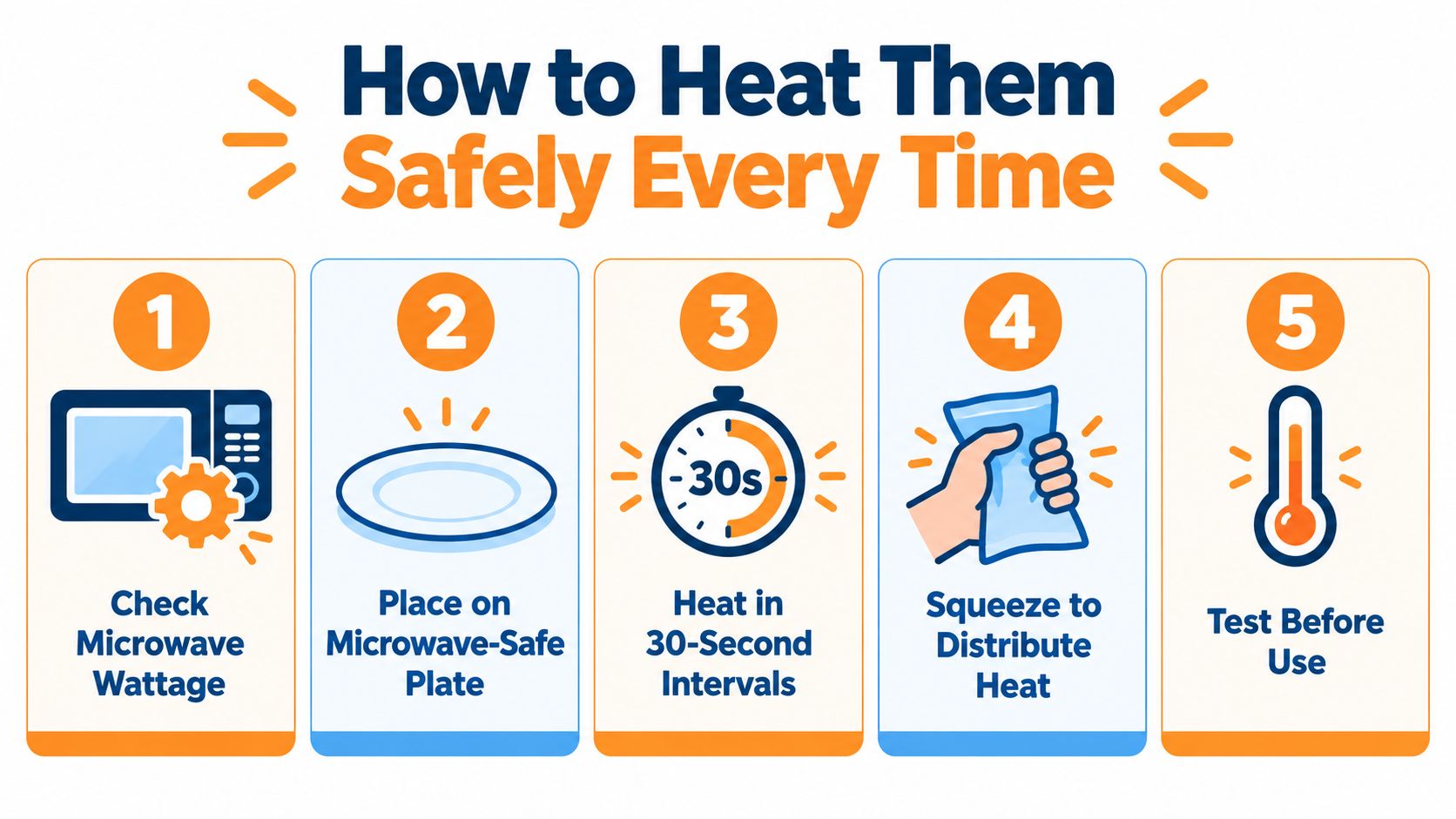
Microwave wattage changes the heating speed. A pouch that warms gradually in one microwave may become dangerously hot in another, so copying someone else's heating time isn't a reliable safety method. Start with the product's instructions, then use short stages rather than one long burst.
Use a staged heating routine
- Check the microwave wattage. Look inside the door, on the control panel, or in the appliance manual. Follow the warmer's stated time for that wattage when one is provided.
- Inspect the pouch. Don't heat a warmer with torn fabric, leaking filling, scorch marks, or a burnt smell. Place the intact pouch on a microwave-safe plate so any leak doesn't spread across the turntable.
- Begin with a short interval. A technical guide reports that flaxseed packs can reach effective therapeutic temperatures after roughly 60 to 90 seconds, depending on size and conditions, as described in this guide to choosing flaxseed heat packs. That isn't a universal setting. Use shorter stages and stop earlier if the product instructions specify less time.
- Pause and redistribute the heat. Flip, shake, or gently squeeze the pouch between intervals when the design allows it. This helps prevent hot spots and moves cooler filling toward warmer areas.
- Test before use. Press the warmer against the inside of your wrist. If it feels uncomfortably hot there, it's too hot for prolonged contact with your hands. Let it cool before using it.
Practical rule: You can add warmth gradually, but you can't remove a scorch once the filling has overheated.
Size affects the process. Smaller packs heat quickly but can cool below a useful range sooner. Larger packs may hold warmth longer, yet they can develop unsafe surface temperatures if you overheat them. The technical guidance cited above notes that properly sized and staged flaxseed packs can remain above about 43°C for more than 25 minutes, while oversized or overheated packs can exceed safe surface temperatures.
Never leave the microwave unattended while heating a warmer. Don't sleep with a heated pouch pressed against your skin, and don't assume a warm, comfortable feeling means extended contact is harmless. SunnyBay's advice on microwave heating safety offers additional practical guidance, but the product's own instructions should always take priority.
Benefits Beyond Just Warm Hands
A hand warmer can support more than outdoor comfort. Gentle localized heat may help relax stiff fingers, make a cold office more tolerable, and create a calming routine after repetitive hand use. Someone with arthritis may appreciate warmth before carefully moving the fingers, while a desk worker may use a pouch during a break after hours at a keyboard.
Heat also fits into routines that don't require medication. You can hold a small pouch while reading, place it over the back of the hand, or use a glove-style design that keeps warmth close without asking you to grip tightly. The most useful benefit is often consistency. A simple object that's easy to heat and easy to store is more likely to become part of your daily comfort routine.
Warmth and movement work together
Heat can make stiff areas feel more prepared for gentle movement. After warming your hands, slowly open and close your fingers, rotate the wrists, or massage the palm with light pressure. Keep the motion comfortable. A hand warmer is a comfort tool, not a substitute for medical evaluation when pain is severe, new, or worsening.
People with chronically cold hands should also pay attention to symptoms beyond ordinary discomfort. Persistent color changes, numbness, swelling, or pain deserves professional medical advice rather than repeated self-treatment. Heat may feel soothing, but it doesn't identify or treat the underlying cause.
Reusable construction creates another advantage. A microwavable pouch can be used repeatedly, which reduces the need to discard a new chemical warmer after every outing. Independent consumer testing found reusable warmers stayed warm substantially longer than some alternatives, with one review noting tested products remaining warm for at least five times as long as the comparators in that test, according to consumer safety and product testing guidance.
Warmth should feel gentle and controlled, not like a test of how much heat your skin can tolerate.
Some products can also be used cold after freezing, provided the manufacturer says they're suitable for that purpose. A cold pouch may offer comfort after minor swelling or activity, while a warm pouch may suit stiffness. Don't move a product between hot and cold use without checking its care instructions, and keep the cover clean and completely dry.
For a closer look at practical heat-therapy uses, see SunnyBay's overview of heat therapy benefits.
Choosing the Right Hand Warmers for Your Situation
Start with your routine rather than the product photograph. The best hand warmer for a winter walker may be frustrating for someone who needs hands-free comfort at a desk. A person with stiff fingers may care more about straps and easy positioning than compact pocket size.
Match the design to the user
For outdoor walkers and cold-weather sports, look for a durable washable cover, a shape that fits inside a pocket, and a fill that provides the retention you need. Flaxseed makes sense when you want a longer-lasting heat reservoir. Lava sand may appeal if you like a heavier pouch that stays settled in the palm.
For arthritis or chronic hand discomfort, consider a glove-style warmer or a design with an elastic band. These features can keep warmth around the fingers without requiring constant gripping. Soft fleece or cotton covers can also make prolonged contact more comfortable, but check that the entire product is designed for microwave use, including its internal pouch and construction.
Travelers should weigh portability against duration. A smaller warmer takes up less space and may heat quickly, while a larger design may offer more coverage but feel heavier in a bag. If you're traveling somewhere without reliable microwave access, an air-activated warmer may be more practical for the journey itself, while a microwavable model works well at a hotel or home base.
SunnyBay offers microwavable hand warmers with flaxseed or lava sand fills, washable fleece and cotton covers, and glove-style options intended to warm the fingers. Those are useful features to compare across any retailer, particularly if you want a reusable design for repeated home use. If your hands need extra coverage outdoors, you can also find cruelty-free fingerless gloves to layer over or around a hand warmer, provided the combination doesn't restrict circulation or create excessive heat.
| Your Situation | Key Features to Look For | Why It Matters |
|---|---|---|
| Winter walks or outdoor work | Durable cover, pocket-friendly size, flaxseed or lava sand fill | Balances portability with steady warmth |
| Stiff or arthritic hands | Glove-style shape, elastic band, soft washable cover | Keeps warmth in place without constant gripping |
| Desk use | Compact pouch, flexible fill, easy reactivation | Fits beside a keyboard and supports short comfort breaks |
| Travel | Lightweight construction, secure seams, manageable dimensions | Makes packing and handling simpler |
| Shared household use | Removable cover and clear heating instructions | Helps different users heat and clean it consistently |
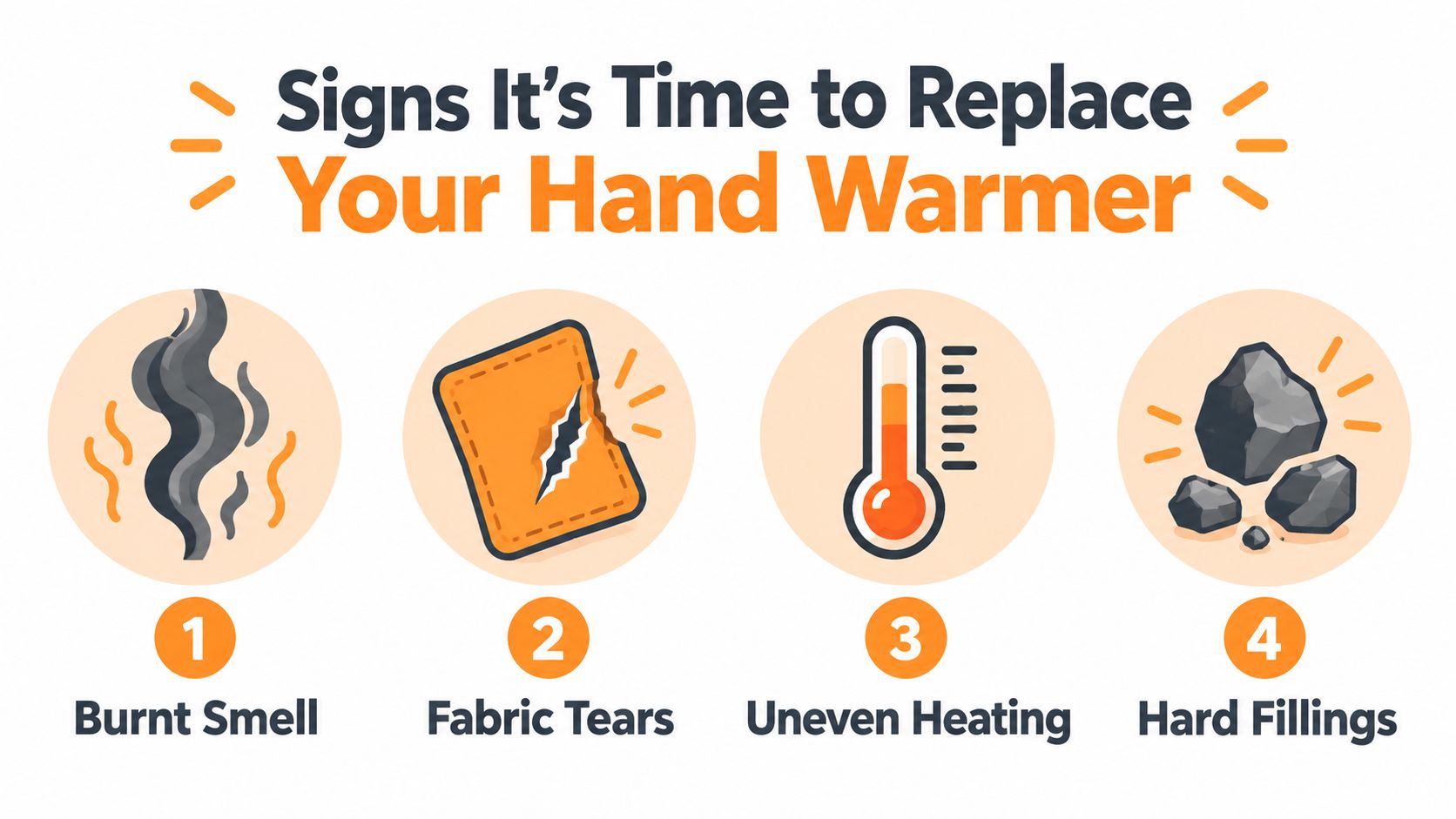
Replace the warmer if the fabric tears, the filling becomes hard or lumpy, the pouch heats unevenly, or a burnt smell remains after use. A low price isn't a good bargain if the product can no longer contain its fill safely.
Caring for Your Warmers and Final Thoughts
Care starts with moisture control. Keep the inner pouch dry, and don't use a warmer that has become damp unless the manufacturer gives clear instructions for drying and reuse. Natural fillings can develop an unpleasant odor when stored wet, and moisture can affect how evenly the pouch heats.
A removable cover makes maintenance easier. Wash the cover according to its label, then let it dry fully before putting it back on the inner pouch. For a non-removable cover, use gentle spot cleaning rather than soaking the whole warmer. The inner fill should stay protected from water unless the product instructions specifically allow washing.
Store the fill with care
A sealed bag can help protect a flaxseed-filled warmer from humidity, dust, and household odors. Store it in a cool, dry place rather than beside a radiator, heater, or sunny window. Don't compress it under heavy objects, since a flattened pouch may heat less evenly.
Watch for early warning signs:
- Scorched odor: Stop using the warmer if heating creates a persistent burnt smell.
- Weak seams: Retire a pouch when stitching or fabric can no longer contain the filling securely.
- Uneven texture: Hard areas or stubborn clumps can indicate internal damage.
- Unusual heating: If one section becomes much hotter than the rest, don't continue testing it on your skin.
Three rules make the category easier to manage. Check the fill and the heating mechanism. Heat in stages and test before contact. Match the shape, weight, and cover to the way you'll use it. A quality reusable warmer can become a small, practical part of cold-weather comfort, but only when you treat it as a heat appliance rather than an ordinary fabric pouch.
Cold seasons feel much more manageable when your gear works with your routine. Choose a suitable fill, follow the wattage instructions, and replace any warmer that shows damage instead of trying to stretch its life.
SunnyBay offers reusable microwavable hand warmers in options such as flaxseed and lava sand fills, along with washable covers and glove-style designs for finger warmth. Visit SunnyBay to compare hand warmers and related hot and cold therapy products for your daily comfort routine.


