


Finding the Best Moist Heat Heating pad for Lasting Pain Relief
-
When you're wrestling with those stubborn muscle aches that just won't quit, the best moist heat heating pad can feel like a godsend. It offers a much deeper, more penetrating relief than the dry heat you might be used to. The secret is in the moisture—it’s a better conductor, driving warmth deep into your muscle tissue to soothe pain right where it starts.
Why Moist Heat Therapy Is Your Best Bet for Pain Relief
If you’ve ever had that nagging ache in your neck after a long day hunched over a desk, you know what it’s like to crave real relief. While any heat feels nice, not all heat is created equal. Think of the difference between a dry sauna and a steamy shower. The shower’s warmth seems to soak right into your bones, right? That’s exactly what a moist heat pad does for your muscles.
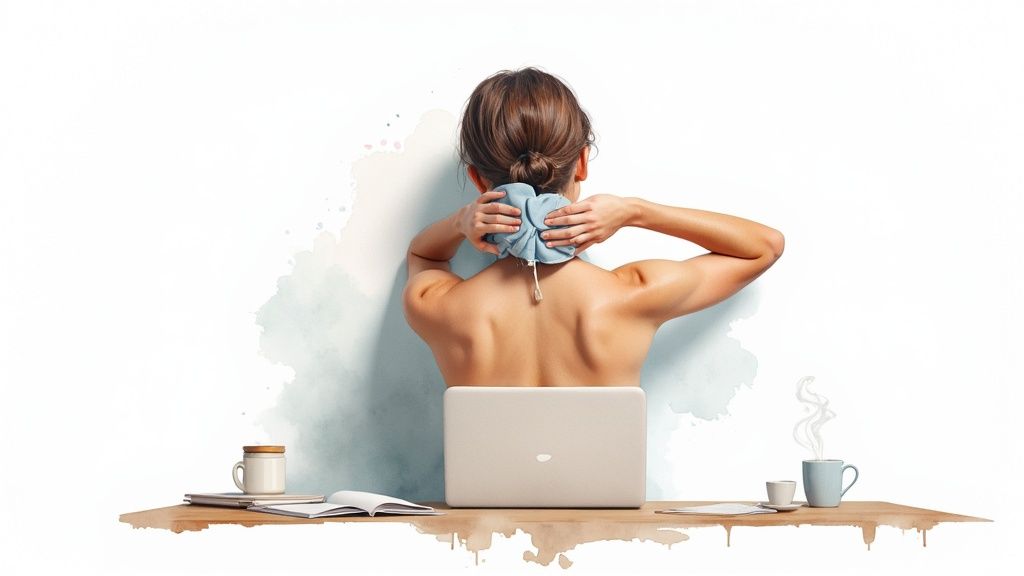
This deep, penetrating warmth is the key to its powerful therapeutic benefits. When you apply a moist heat pad, your blood vessels gently open up, a process that supercharges circulation to the sore spot. This fresh blood flow acts like a delivery service, bringing in oxygen and nutrients while carting away pain-causing byproducts like lactic acid. It’s a foundational element of effective heat therapy.
The Power of Penetrating Warmth
A standard electric heating pad mostly just warms the surface of your skin. Moist heat, on the other hand, dives deeper. It has this incredible ability to reach the underlying muscle and connective tissues, which is what truly sets it apart. It’s not just putting a band-aid on the pain; it’s actively encouraging your body’s own healing mechanisms.
Here’s how this targeted approach makes a real difference:
- Unlocks Tight Muscles: The gentle, deep heat persuades tense, spasming muscles to finally let go. It's a lifesaver for stress-related tension that builds up in the neck and shoulders.
- Boosts Flexibility: By loosening up stiff joints and tissues, moist heat can seriously improve your range of motion. This makes stretching feel less like a chore and more effective, especially for conditions like arthritis.
- Speeds Up Recovery: Anyone dealing with post-workout soreness will appreciate how this therapy helps cut down on stiffness, getting you back in action sooner.
This isn't just about feeling cozy. It's a non-invasive, drug-free way to manage pain and give your body the support it needs to repair itself. That's why it's a staple in both at-home self-care routines and professional physical therapy clinics.
From Aches to Action
Picture this: you get home after a really long day, and your lower back is screaming. Instead of just gritting your teeth and bearing it, you wrap a warm, moist heat pad around your waist. Within minutes, you can feel that knot of tension start to dissolve as the deep heat works its magic. This isn't just about temporary comfort; it's about taking a proactive step toward feeling better, day in and day out. This is exactly why finding the best moist heat heating pad is a true investment in your well-being.
Understanding Why Moist Heat Feels So Much Better
To really get why a moist heat heating pad is the gold standard for therapeutic relief, we need to look at what's happening beneath the surface. The secret is right in the name: moisture. Water is a fantastic conductor of heat, far better than dry air. When you lay a moist pad on a sore muscle, it transfers that soothing warmth much more efficiently and deeply into your tissues.
This deep, penetrating warmth kicks off a process called vasodilation, which is just a technical way of saying your blood vessels open up. Think of it like a traffic jam suddenly clearing on a highway. This improved blood flow rushes more oxygen and vital nutrients to the area that hurts, all while carrying away the junk that's causing pain, like lactic acid. It’s a simple, natural way to accelerate your body's own healing process.
The Difference You Can Feel
Here’s a simple way to think about it. Imagine you're trying to warm up your freezing hands on a cold day. Holding them over a dry air vent gives you a blast of surface heat, but the warmth vanishes the second you pull them away.
Now, picture wrapping those same icy hands around a steaming mug of coffee. The heat feels different, doesn't it? It’s a deep, comforting warmth that seems to soak right into your bones. That’s the exact difference between dry heat and moist heat therapy.
Deeper Penetration Means Faster Relief
Because moist heat can get past the top layer of skin, it goes to work right where the pain is. This is why it’s so incredibly effective for nagging chronic pain, stubborn muscle spasms, and that deep-seated stiffness that just won't go away. Dry heat, on the other hand, often just dries out your skin without ever reaching the muscles that are screaming for relief.
Here’s how that plays out in real life:
- Muscle Relaxation: Moist heat coaxes tight muscles to let go, providing almost instant relief from knots and spasms.
- Joint Stiffness: For anyone dealing with arthritis, that deep warmth helps lubricate stiff joints and improve flexibility, making it easier and less painful to move.
- Faster Recovery: By boosting circulation, moist heat gives your body the tools it needs to repair damaged tissue faster after a tough workout or minor injury.
The proof is in the results. In recent trials, a staggering 75% of people reported a 50% reduction in pain within just 15 minutes of using moist heat. Compare that to only 35% of those who used a standard dry heating pad.
Moist Heat vs. Dry Heat At a Glance
To make the choice crystal clear, let's put these two therapies head-to-head. This chart breaks down the essential differences so you can see why the best moist heat heating pad is what the pros often recommend for real therapeutic results.
| Feature | Moist Heat Heating Pad | Dry Heat Heating Pad |
|---|---|---|
| Heat Penetration | Soaks deep into muscles and tissues for more effective, long-lasting relief. | Primarily heats the surface of the skin, offering more superficial warmth. |
| Hydration Effect | Adds moisture to the skin, preventing it from drying out and feeling tight. | Can pull moisture from the skin, sometimes leading to dryness and irritation. |
| Pain Relief Speed | Often works faster and provides more profound relief due to efficient heat transfer. | Relief can take longer to kick in and may not feel as deep or lasting. |
| Best Use Cases | Chronic pain, muscle spasms, arthritis, deep tissue soreness, and menstrual cramps. | Quick, convenient warmth for minor aches where deep penetration isn’t a priority. |
| Professional Opinion | Frequently recommended by physical therapists and chiropractors for clinical results. | Typically used for casual comfort rather than targeted therapeutic treatment. |
It really boils down to this: any heat can feel good, but moist heat works smarter. It gets to the root of the problem to provide genuine, healing relief instead of just masking the symptoms.
Now that you understand these key differences, you're in a much better position to choose what's right for you. The science backs up what countless people have discovered for themselves—moist heat offers a superior path to comfort and recovery. For a deeper dive, check out our guide on the distinct advantages of moist heat vs dry heat. This knowledge will help you find the perfect heating pad for your specific needs.
Choosing Your Ideal Moist Heat Heating Pad
Finding the right moist heat heating pad isn't a one-size-fits-all deal. It really comes down to your specific pain, your daily routine, and what feels most comfortable to you. This guide will walk you through the most important features to look for, so you can pick a pad that feels like it was made just for you.
Think of it like picking the right tool for a job. You wouldn't use a tiny screwdriver on a massive bolt, right? In the same way, a small, square pad isn’t going to do much for that ache across your entire lower back. Let’s dive into what makes a heating pad genuinely effective.
This simple decision tree can help you figure out whether heat or cold is the way to go for the kind of pain you're feeling.
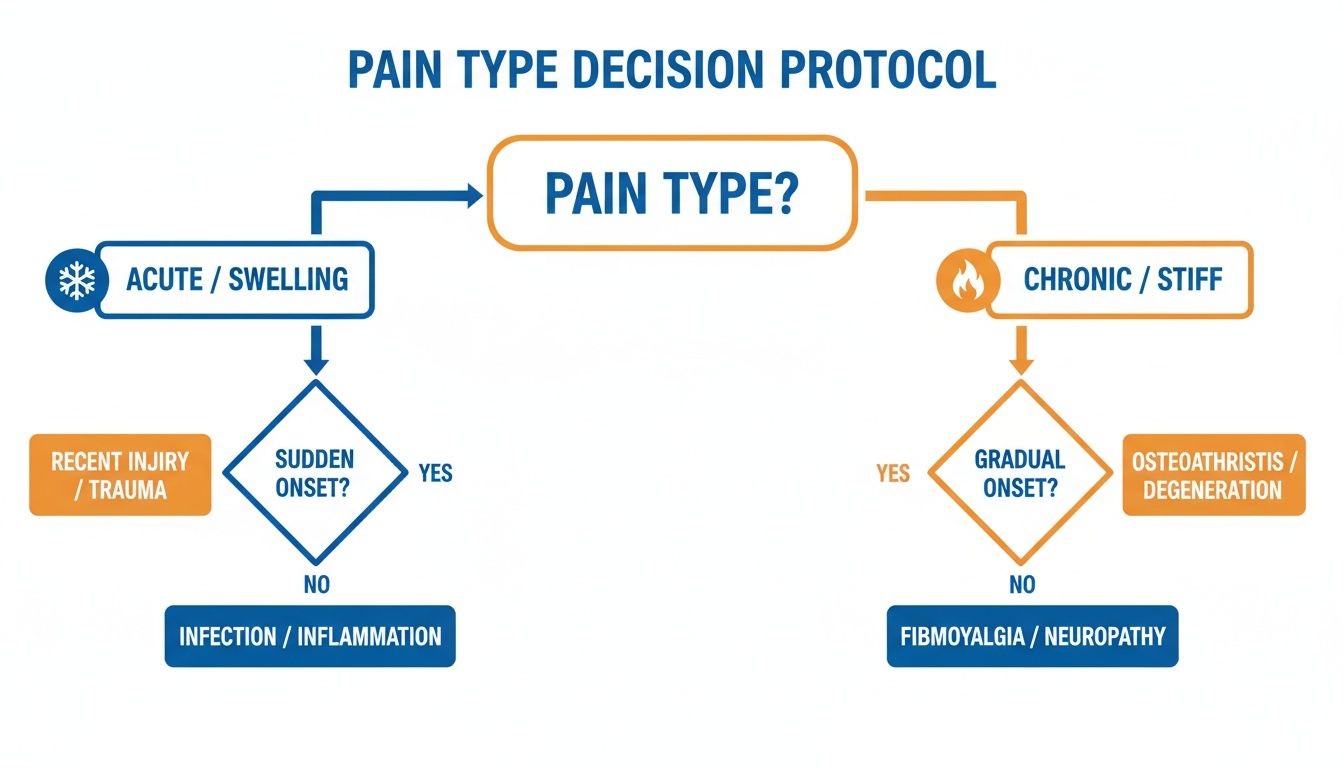
As you can see, for that stubborn, chronic stiffness and nagging muscle aches, heat is your best friend. But for those fresh injuries with swelling, you'll want to reach for a cold pack instead.
Materials That Matter for Comfort
The fabric of a heating pad is the first thing you'll feel, so it has to be comfortable against your skin. High-quality materials like soft microplush fleece offer a luxurious, soothing feel, while something like durable 100% cotton gives you great breathability. A well-made cover doesn't just feel better—it ensures the pad will hold up after being heated time and time again.
You want to look for fabrics that are gentle but also built to last. The last thing you need is a cover that gets scratchy or starts pilling after just a few uses. It's a small detail, but it makes a huge difference in your overall experience.
Natural Fillers: The Heart of the Heat
What’s inside a microwavable moist heat pad is what determines how well it holds warmth and molds to your body. Every type of natural filler has its own unique perks, making this a critical part of finding the perfect pad for your needs.
- Flaxseed: These small, oil-rich seeds are fantastic at holding onto moist heat for a long time. Their smooth, fluid texture lets the pad drape perfectly over tricky spots like your neck or knee.
- Rice: A classic for a reason. Rice is a popular and effective choice that provides a gentle, weighted pressure and holds heat reliably.
- Clay Beads: These are the gold standard for absorbing and distributing moist heat evenly. They deliver a consistent temperature for deep, penetrating relief and are often what you'll find in clinic-grade products.
The weight and texture of the filler also provide a kind of gentle pressure therapy, adding another layer of relief. That subtle weight can help calm your nervous system while the heat gets to work on your muscles.
Sizing and Shape for Targeted Relief
Pain doesn't show up in a perfect square, so why should your heating pad be one? The size and shape are crucial for getting heat exactly where you need it most. A pad that doesn't fit the area correctly simply won't be as effective.
For instance, a contoured U-shaped pad is specifically built to wrap around the neck and shoulders, hitting all the right muscles that get tight from stress or desk work. On the other hand, a large rectangular pad is perfect for covering the entire lower back or abdomen, giving you broad relief from chronic aches or menstrual cramps. Nailing the fit is key, and you can get more tips from our guide on choosing the right size and shape of heating pad.
Features That Enhance Your Experience
Beyond the basics, a few thoughtful features can make your heat therapy sessions so much more convenient and enjoyable. These are the little things that separate a good heating pad from a truly great one.
The whole point of heat therapy is to relax and find relief. Features that cut down on hassle—like straps or washable covers—let you focus completely on healing. It turns a simple treatment into a restorative ritual.
Keep an eye out for these practical add-ons:
- Secure Straps: For anyone who can't sit still, adjustable straps are a game-changer. They let you secure the pad to your back, shoulder, or knee, giving you hands-free relief while you work, read, or just move around the house.
- Washable Covers: Hygiene is a must. A removable, machine-washable cover keeps your heating pad clean, fresh, and ready to go, which is especially important for something you put right on your skin.
- Scent Options: If you enjoy aromatherapy, some pads are infused with natural scents like lavender to deepen the relaxation. The calming fragrance works right alongside the heat to soothe both your body and mind. Of course, if you have sensitivities, unscented options are easy to find.
Targeting Your Pain for Maximum Relief
Now that we've covered what makes a great heating pad, let's talk about putting it to work. The whole point of finding the best moist heat heating pad is to get relief right where it hurts. It’s not just about feeling warm and cozy; it's about using it as a precision tool to target your specific aches and pains.
When you match the right pad and technique to your discomfort, you elevate a simple comfort item into a core part of your wellness strategy.
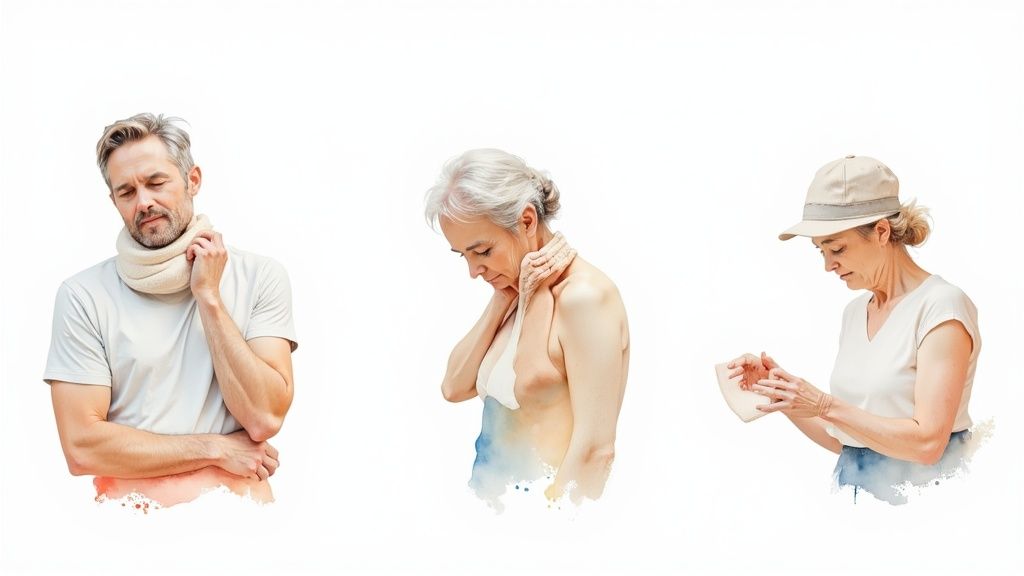
This targeted approach is what really makes a difference. Moist heat gets deep into your tissues, boosting blood flow. Think of it like opening up a highway for healing: fresh, oxygen-rich blood rushes in, while pain-triggering byproducts like lactic acid are flushed out. It's a natural, effective way to ease stiffness, calm spasms, and help your body heal itself.
Soothing Neck and Shoulder Tension
We've all been there—hours hunched over a desk or a phone, and suddenly you’re left with that familiar, burning ache in your neck and shoulders. That kind of postural strain creates deep, stubborn knots that a flat, basic heating pad just can't seem to reach.
Example in action: Imagine using a specially contoured, U-shaped neck wrap. It drapes perfectly over your shoulders, delivering consistent moist heat right to your trapezius muscles and the base of your skull. The gentle, weighted pressure from the flaxseed or clay bead filling encourages those tight muscles to finally let go, melting away the day's stress.
Easing Chronic Lower Back Pain
Chronic lower back pain can be a real battle, impacting everything from your ability to stand up straight to getting a decent night's sleep. The large, powerful muscles in your lumbar region need broad, even heat to really relax and find relief.
For this job, a large rectangular pad is your best friend. Look for one that comes with adjustable straps. This feature is key because it lets you secure the pad firmly against your lower back, so you can get deep, penetrating moist heat while you’re still moving around—working, cooking, or just relaxing on the sofa. It makes getting your therapy in completely effortless.
Alleviating Menstrual Cramps
Menstrual cramps are triggered by uterine muscle contractions, and applying heat is one of the oldest and most effective tricks in the book. The warmth coaxes these muscles to relax, which directly eases those painful spasms.
A medium-sized, flexible heating pad is perfect for this. You can place it comfortably over your lower abdomen, and the moist heat will sink in deep to calm the cramping. Many people find that choosing a pad with a soft fleece cover and a subtle lavender scent adds an extra layer of comfort when you need it most.
Reducing Arthritis Joint Stiffness
Anyone with arthritis knows that morning stiffness can make starting the day an uphill climb. Moist heat is fantastic for this because it helps "lubricate" stiff joints by increasing circulation to the surrounding tissues, improving your range of motion.
Example in Action: If you have arthritis in your hands, try this: apply a small, flexible moist heat pad to your knuckles for 15-20 minutes each morning. You'll likely notice a dramatic improvement in your grip strength and less pain throughout the day. It can make all the difference for simple tasks like holding a coffee mug or buttoning a shirt.
Amplifying Relief with Massage Therapy
Want to take your pain relief to the next level? Try combining moist heat with massage. Using a heating pad for about 15 minutes before a massage session warms up the muscles, making them far more pliable and responsive to the treatment. This one-two punch can lead to a much deeper release of tension and speed up your recovery.
Of course, when you're targeting pain, it helps to know what's causing it. For post-workout aches, a little reading on understanding DOMS (Delayed Onset Muscle Soreness) can be really insightful.
Ultimately, making moist heat therapy a regular part of your routine is a simple but powerful move. By boosting circulation and promoting deep relaxation, it gets to the root of muscle pain, making it a true cornerstone of any smart self-care plan.
How to Use and Maintain Your Heating Pad Safely
So, you've got your hands on a great moist heat heating pad. That's a fantastic first step for managing pain, but knowing how to use it correctly is what really makes the difference. Using it properly not only gets you the best results but also keeps you safe and helps your pad last for years to come.
Think of your heating pad as a specialized tool in your wellness kit. Just like you wouldn't fire up a new power tool without a glance at the manual, you should approach heat therapy with the same thoughtful care. A few simple guidelines are all it takes to make every session effective and worry-free.
And it’s clear people are catching on. The global heating pad market, which includes these effective moist heat options, was valued at a whopping USD 54.13 billion and is projected to hit USD 81.21 billion by 2032. That kind of growth shows a real trust in moist heat as a go-to for pain relief. You can dive deeper into the global heating pad market growth on databridgemarketresearch.com.
A Step-by-Step Guide for Safe Application
Whether you're using a quick-and-easy microwavable pad or an electric model, the basic safety rules don't change. The whole point is to get that deep, soothing warmth without ever getting close to a burn.
Here’s how to nail it every time:
- Heat it Right: For microwavable pads, stick to the manufacturer’s instructions—usually starting with 60-90 seconds. If you're using an electric one, always start on the lowest heat setting.
- Do a Quick Touch Test: Before you put the pad on, press it against your hand for a few seconds. It should feel comfortably warm, not unpleasantly hot.
- Create a Barrier: This is a big one. Always put a thin layer of cloth, like a t-shirt or a light towel, between the pad and your bare skin. It’s one of the simplest and most effective ways to prevent burns.
- Time Your Session: The sweet spot for heat therapy is right around 15-20 minutes. Set a timer on your phone so you don't lose track of time, especially if you start to feel sleepy.
Never, ever fall asleep with an electric heating pad on. Even if it has an auto-shutoff feature, prolonged, direct heat can cause serious skin damage.
When Heat Isn't the Answer
Heat is a true lifesaver for chronic aches and stiffness, but it's definitely not a one-size-fits-all solution. In some cases, applying heat can actually make things worse by increasing inflammation.
Steer clear of your heating pad if you have:
- A New Injury: If you just sprained your ankle or pulled a muscle (within the last 48-72 hours), you'll see swelling. That's a job for cold therapy, not heat.
- Open Wounds or Broken Skin: Don't apply heat to cuts, scrapes, or rashes. It can increase the risk of infection and slow down healing.
- Loss of Sensation: If you have a condition like neuropathy from severe diabetes, be extremely cautious. You might not be able to feel if the pad is getting too hot, which is a major risk.
When in doubt, especially if you have a chronic medical condition, just ask your doctor. It's always the safest bet. For a more detailed breakdown, check out our complete guide on essential heating pad safety tips.
Keeping Your Heating Pad in Great Shape
A little bit of care will keep your pad clean and working perfectly for a long, long time. For microwavable pads, you can spot-clean the surface with a damp cloth and a bit of mild soap. If your pad has a removable cover, just follow the washing instructions on the tag.
When you're not using it, store your pad in a cool, dry place out of the sun. This keeps the natural fillers from breaking down and makes sure your investment in your health keeps paying off.
Your Path to Lasting Comfort and Well-Being
Choosing the right moist heat heating pad isn't just another purchase. Think of it as a genuine investment in your comfort and your long-term health. We’ve walked through why moist heat gets the job done so much better than dry heat, penetrating deep into your muscles to bring relief right where you need it. Now, you’ve got all the knowledge you need to pick the perfect one for you.
Remember those key features we covered? Everything from the soft, durable materials and natural fillers like flaxseed to the practical details of size, shape, and straps matters. Each of these elements comes together to give you a therapy session that’s not just effective, but actually fits into your real life.
From Relief to Ritual
This is where the magic really happens. When you start weaving heat therapy into your daily routine, it stops being just a reaction to pain and becomes a proactive ritual for your well-being. Think of it as a reset button for your body. For instance, spending just 15 minutes with a heated neck wrap after a long day hunched over a keyboard can stop that familiar tension from escalating into a full-blown headache.
This kind of consistent self-care adds up, creating a powerful compounding effect that boosts your physical comfort and brings a sense of mental calm.
By following the safety guidelines and making this simple tool a regular part of your routine, you’re taking back control. You're empowering yourself to live with less pain and more freedom.
Embracing Total Wellness
At the end of the day, the goal is simple: a more comfortable, active life. The immediate relief from a moist heat pad is fantastic, but true wellness is built on a solid foundation. Consider exploring other essential sleep accessories for your wellness journey to create a truly restorative environment at home. When you combine therapies that soothe your muscles with habits that support restful sleep, you’re setting yourself up for lasting well-being.
So go ahead with confidence. You’re ready to choose a heating pad that feels like it was made just for you. It’s time to embrace the soothing power of moist heat and start getting back to the activities you love, one comforting session at a time.
Got Questions About Moist Heat? We’ve Got Answers.
When you're looking for the right kind of pain relief, a few questions are bound to pop up. Let's walk through some of the most common ones people ask about moist heat pads. Getting these answers straight will help you pick the perfect pad and use it like a pro for long-lasting comfort.
We’ll tackle everything from how long the heat lasts and whether you can use it on a fresh injury to how those electric pads work their magic. By the end, you'll feel completely confident in your choice.
How Long Does a Microwavable Pad Stay Warm?
You can expect a well-made microwavable moist heat pad to deliver therapeutic-level warmth for a solid 20-30 minutes. That's pretty much the sweet spot for a single therapy session.
Of course, the exact timing can shift based on a few things:
- What’s Inside: Natural fillers like flaxseed or special clay beads are fantastic at holding onto heat.
- Pad Size: It's simple physics—a bigger pad has more mass, so it will stay warm longer than a smaller one.
- Your Room: A chilly room will naturally pull heat from the pad a bit faster.
Can I Use a Moist Heat Pad on a New Injury?
That’s a definite no. You should never apply heat to an acute injury, which means anything that’s happened within the first 48-72 hours. New injuries almost always come with swelling and inflammation.
Putting heat on that kind of injury will just increase blood flow and make the swelling worse, which can actually set back your recovery. For something like a freshly sprained ankle or a muscle you just pulled, ice is your best friend.
Here’s an easy rule of thumb: Ice calms down an angry, inflamed injury. Heat soothes a tight, stubborn, and chronically sore muscle.
How Do Electric Moist Heat Pads Create Moisture?
It's actually a pretty clever, low-tech solution. Most electric moist heat pads don't need you to add water at all. Instead, they’re built with a special outer layer, usually a soft flannel or fleece, that naturally pulls humidity right out of the air.
When the pad heats up, it warms that trapped moisture, creating a gentle, penetrating moist heat. It’s a completely mess-free way to get the job done.
Are Scented Heating Pads Safe for Everyone?
Lots of people enjoy the extra dose of relaxation that comes from scents like lavender or chamomile. A subtle, natural fragrance can really elevate the whole experience and help you unwind.
But, they aren't for everybody. If you have asthma, allergies, or are just sensitive to strong smells, your best bet is to stick with an unscented pad. You’ll still get all the powerful pain-relieving benefits without any chance of irritation.
Ready to feel the deep, soothing comfort of clinic-grade heat therapy for yourself? SunnyBay offers a full range of U.S.-made moist heat solutions designed to ease your pain and help you get back to doing what you love. Find your relief at Sunny-Bay.com today.


