


Natural Remedies for Neck Pain That Actually Work
-
When you're dealing with a nagging ache in your neck, the most powerful solutions are often the simplest. Things like heat therapy, gentle stretching, and tweaking your posture can make a world of difference. These natural remedies work by easing tight muscles, helping you move more freely, and correcting the very habits that caused the strain, all without reaching for a pill bottle.
Why Your Neck Aches and How to Find Relief
That persistent throb or stiffness in your neck rarely just shows up one day. More often than not, it's the cumulative effect of small, repeated actions—like interest building on a debt of poor habits. The first step to finding lasting, natural relief is figuring out what those triggers are.

This modern discomfort is more than a personal annoyance; it's a rapidly growing global problem. As our lives have become more screen-focused and sedentary, neck pain is skyrocketing. In 2020 alone, an estimated 203 million people worldwide were affected by neck pain, which is a massive 77.3% increase since 1990. If things continue this way, that number is expected to hit 269 million by 2050. This shows just how badly we need accessible, drug-free ways to manage it.
The Everyday Causes of Neck Pain
The most common culprits are probably hiding in your daily routine. Once you know what to look for, you can start making small changes that have a big impact.
- "Tech Neck": We're all guilty of this one. It’s the strain from constantly looking down at our phones, tablets, and laptops. Believe it or not, for every inch your head juts forward, it adds about 10 extra pounds of pressure on your cervical spine.
- Poor Ergonomics: A workstation that isn't set up for you forces your neck and shoulders into awkward, strained positions for hours on end. A computer monitor that’s too low or a chair that offers no support are classic offenders.
- Sleeping Position: Ever wake up with a neck so stiff you can barely turn your head? Your pillow or sleeping posture is likely the culprit. Sleeping on your stomach is especially tough on the neck, as it twists it to one side all night.
These habits lead directly to muscle strain, where the soft tissues in your neck are simply overworked and inflamed. Think of those muscles like rubber bands—if you keep them stretched in one direction for too long, they get sore and lose their ability to bounce back. You can dive deeper into https://sunny-bay.com/blogs/pain-relief-tips-and-news/what-causes-neck-and-shoulder-tension in our detailed guide.
When It’s More Than Just a Strain
While most neck pain comes from tired, overworked muscles, it's good to know when something else might be going on. For instance, emotional stress makes many of us unconsciously clench our jaw and tighten our neck and shoulder muscles, which can lead to chronic pain and headaches.
By identifying your specific triggers—whether it's your desk setup or your sleep habits—you can choose the right natural remedies to not just mask the pain, but to address its source for long-term relief.
Sometimes, persistent neck pain can signal a more specific problem. A sharp, shooting pain that travels down your arm, for example, could be related to a pinched nerve in your neck. This kind of issue requires a different approach. Getting to the root cause is always the key to finding the most effective path to feeling better.
The Right Temperature for Your Neck Pain: Heat vs. Cold
When your neck starts aching, one of the simplest and most effective things you can do is reach for a temperature pack. But do you go for heat or cold? It’s a common question, and the right answer really depends on what kind of pain you're dealing with. Each one works in a completely different way.
Think of cold therapy (also called cryotherapy) as your emergency response team. It’s what you need for a new, acute injury—that sudden tweak you get from sleeping wrong or a strain from an awkward lift at the gym. For a fresh injury, applying a cold pack within the first 48 hours is key.
The cold causes your blood vessels to constrict, which is fantastic for tamping down immediate swelling and inflammation. It also gently numbs the nerve endings in the area, offering quick relief from that sharp, intense pain.
When to Choose Cold Therapy
A good rule of thumb is to grab a cold pack for any new neck pain that comes with noticeable swelling or feels hot to the touch.
- Sudden Strains: You tweaked your neck lifting a heavy box or during a workout.
- Acute Injury: Pain from a minor, recent incident where inflammation is the main culprit.
- Sharp, Localized Pain: The discomfort is intense and you can point to the exact spot that hurts.
To use a cold pack safely, always wrap it in a thin towel first—never put it directly on your skin. Apply it for 15 to 20 minutes at a time, then give your skin a break until it returns to a normal temperature before you reapply.
Why Heat Therapy Is a Hero for Chronic Stiffness
While cold is for those "ouch!" moments, heat therapy (thermotherapy) is the comforting, deep relief you need for persistent stiffness and soreness. It's the perfect solution for the chronic aches that creep in after a long day at the desk or from nagging tension. For that kind of pain, heat is your best friend.
Heat does the exact opposite of cold: it opens up the blood vessels, boosting blood flow to those tight, sore muscles in your neck and shoulders. This rush of fresh circulation delivers oxygen and nutrients that help the muscle tissue repair and, most importantly, relax. It also helps flush away the built-up waste products that make muscles feel so sore in the first place. You can learn more about the specific benefits in our guide to heat therapy vs cold therapy.
This process is exactly why heat feels so incredibly good on a stiff neck. Picture your tense muscles as a tightly wound knot. Gentle, consistent heat helps that knot slowly start to unwind, bringing back flexibility and easing that restricted feeling.
Let's walk through a real-world example of how this helps: Imagine you've spent the whole day hunched over your computer, and that familiar, dull ache is setting in across your neck and shoulders. Before settling in for the evening, you warm up a microwavable neck wrap and drape it around your neck for 20 minutes. That penetrating moist heat immediately begins to melt the tension away, easing the ache and making it easier to turn your head. This simple routine doesn't just soothe the immediate pain; it promotes overall relaxation, helping you get a better night's sleep so you can wake up with far less stiffness. It's a powerful, drug-free way to manage that day-to-day discomfort.
To make the choice crystal clear, here’s a simple breakdown of when to use each therapy.
Heat Therapy vs Cold Therapy for Neck Pain
| Therapy Type | Best For | How It Works | Example Application |
|---|---|---|---|
| Heat Therapy | Chronic stiffness, muscle soreness, and achiness (pain older than 48 hours). | Dilates blood vessels, increasing blood flow to deliver oxygen and nutrients, relaxing tight muscles. | Using a microwavable heat pack for 20 minutes on a stiff neck after a long day at the computer. |
| Cold Therapy | Acute injuries, new strains, and inflammation (pain within the first 48 hours). | Constricts blood vessels to reduce swelling, inflammation, and numb sharp pain. | Applying a cold pack to your neck for 15 minutes after you strained it during a workout. |
Ultimately, listening to your body is key. Cold is your first-aid for new injuries, while heat is your go-to for relaxing the chronic tension and stiffness that builds up over time.
2. Gentle Movement: Your Key to Unlocking Neck Mobility
When your neck is tight and sore, the last thing you probably want to do is move it. I get it. But believe it or not, gentle, intentional movement is often the best medicine. We're not talking about a high-intensity workout here. The goal is simply to perform slow, controlled motions that coax tense muscles to release, improve your flexibility, and start building up the muscles that hold your head up all day.
Think of it this way: a stiff neck is like a rusty door hinge. If you try to yank it open, you’ll probably just make things worse. But if you gently and patiently work it back and forth, you can ease away the stiffness and get it moving smoothly again. That's exactly what the right kind of movement does for your neck.
Stretches to Gently Release Tension
These are simple stretches you can do almost anywhere—at your desk, while waiting for your coffee to brew, or whenever you feel that familiar tension creeping in. The most important rule is to listen to your body. Move until you feel a light pull, never a sharp pain.
Hold each of these stretches for about 20-30 seconds, and remember, no bouncing!
- Chin Tucks: This is the ultimate move to counteract "tech neck." Sit up straight, relax your shoulders, and gently guide your chin backward as if you're trying to make a double chin. You should feel a nice stretch along the back of your neck. Hold it for a moment, then release.
- Side Tilts: Gently lean your right ear toward your right shoulder. Keep the left shoulder down to deepen the stretch along the left side of your neck. Slowly return to the starting position and repeat on the other side.
- Gentle Rotations: Look straight ahead, then slowly turn your head to the right, as far as is comfortable, like you’re looking over your shoulder. Hold, come back to the center, and do the same on the left side.
These simple movements work wonders because they directly combat the muscle shortening that happens when we sit in one position for too long. They bring almost immediate relief and help restore your range of motion.
Sometimes, warming up the muscles before you stretch can make a world of difference. This little flowchart can help you decide if heat or cold is the right first step for your kind of neck pain.
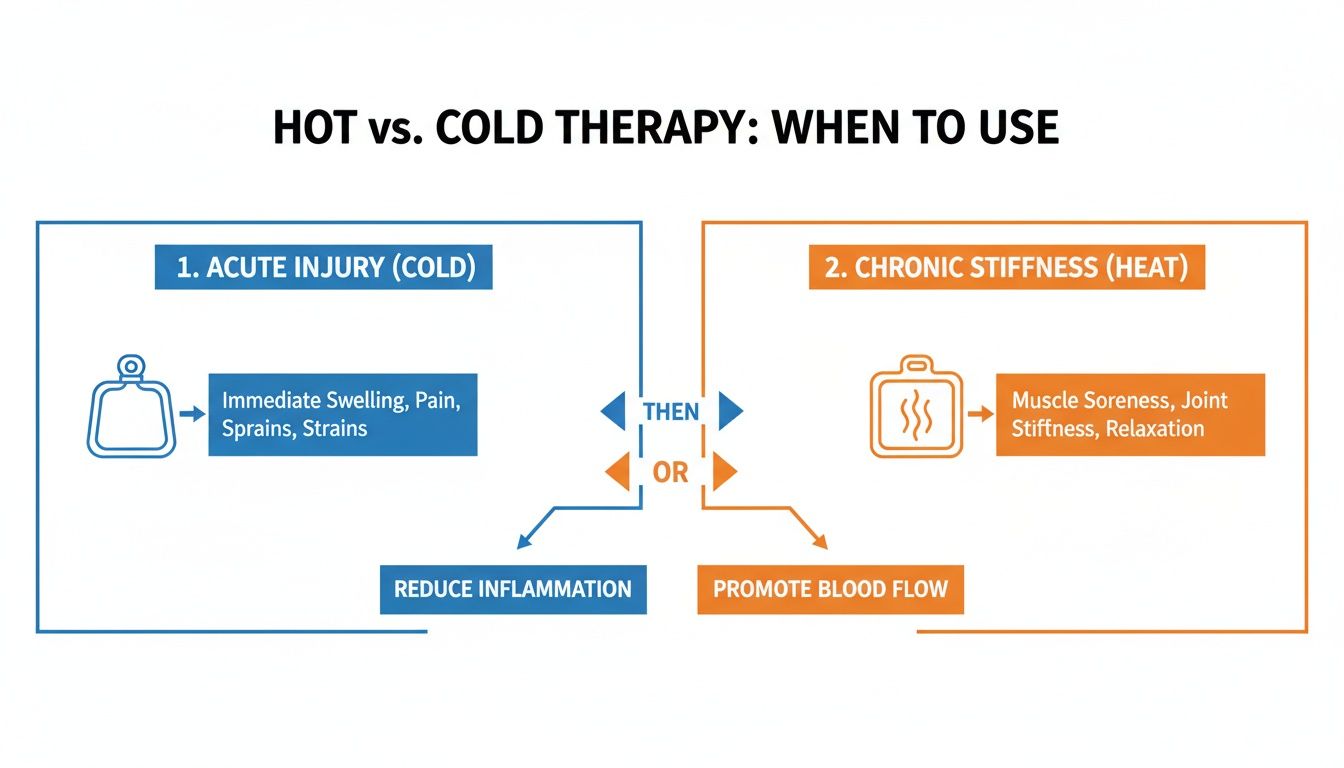
As you can see, cold is your friend for a brand-new injury, but for the chronic stiffness and achiness we're talking about, gentle heat is the way to go before you start stretching.
Building Your Neck's Support System
While stretching provides that wonderful "ahhh" feeling of immediate relief, building strength is what prevents the pain from coming back. Your neck muscles aren't designed to do all the work alone; they depend on a strong team of muscles in your upper back and shoulders. When those support muscles are weak, your neck has to pick up the slack, leading to strain and fatigue.
Think of it like this: by strengthening the muscles around your neck, you're building a natural, internal brace. This support system takes the daily load off those smaller, more delicate neck muscles, making them far less likely to get sore in the first place.
Try working these simple strengtheners into your routine a couple of times a week:
- Scapular Squeezes: Whether you're sitting or standing, just drop your arms to your sides and squeeze your shoulder blades together. Imagine you’re trying to hold a pencil between them. Hold that squeeze for 5 seconds, then relax. This move is fantastic for your posture.
- Wall Push-ups: Stand facing a wall, about an arm's length away. Place your palms on the wall at shoulder height. Keeping your back straight, slowly bend your elbows and lean in. Then, push yourself back to the starting position. This builds shoulder and chest strength without putting any stress on your neck.
It's clear people are looking for these kinds of drug-free solutions. The market for neck pain treatment, valued around $6.6 billion in 2025, is expected to climb to nearly $8.4 billion by 2029, a trend driven largely by the growing demand for natural and non-pharmacological therapies.
When you combine these strengthening moves with your daily stretches, you create a powerful one-two punch against neck pain. For more ideas on putting it all together, check out our complete guide on how to relieve a stiff neck for good. It’s that consistency that turns these simple motions from a temporary fix into a long-term strategy for a healthier, happier neck.
Mastering Self-Massage for Instant Relief
Wouldn't it be great to soothe your own neck pain the moment it strikes, without having to schedule an appointment? While a professional massage is fantastic, learning a few self-massage techniques is a game-changer. It puts you in the driver's seat, giving you a powerful, hands-on tool to manage the aches and stiffness that creep in during a busy day. The physical act of massage stimulates nerve endings, prompting your brain to release endorphins—natural pain-relieving chemicals—while also breaking down tight muscle knots.

This is all about empowering yourself. You don’t need any fancy equipment—just your own hands and a few minutes to tune into your body and release that built-up tension.
Finding and Releasing Trigger Points
The secret to effective self-massage is learning how to find and release trigger points. Think of these as tiny, irritable knots in your muscle fibers that feel like hard little bumps under your skin. When you press on them, they’re often quite tender and can even send pain to other spots, like sparking a tension headache.
To find them, simply use the fingertips of the opposite hand to gently probe the muscles along the side of your neck and where your neck and shoulder meet. Go slow. When you hit a spot that feels tender and knotted, you’ve found one.
Self-massage is a conversation with your muscles. By applying gentle, sustained pressure to these tight spots, you're encouraging them to let go, which improves blood flow and eases the feeling of stiffness.
Once you’ve found a knot, apply gentle but firm pressure with your fingers. Hold that pressure for about 30 to 60 seconds and focus on taking slow, deep breaths. You might actually feel the knot start to soften or "melt" under your fingertips. Just remember, the goal is a satisfying release, not sharp pain, so listen to your body and ease up if it’s too intense.
The Power of Heat in Your Massage Routine
Want to make your self-massage sessions even more effective? Add heat. It's a simple trick that makes a world of difference. This combination is a one-two punch against discomfort: heat relaxes the muscles on a surface level, allowing your massage to work deeper and be more effective at releasing those stubborn knots.
Imagine your muscles are like a piece of modeling clay. When the clay is cold, it’s stiff and hard to work with. But after you warm it up in your hands, it becomes soft and pliable. Your muscles behave in much the same way.
Applying a heat pack for 15-20 minutes before you start your massage is a game-changer. The warmth boosts blood circulation, bringing fresh oxygen to the tissues and making them much more relaxed and receptive to your touch.
Here’s what that can look like in real life:
Sarah's End-of-Day Relief Routine:
Sarah, a graphic designer, is no stranger to the tight, aching neck that comes from long hours at the computer. Instead of just living with it, she created a simple 25-minute routine.
- Warm-Up (15 minutes): She starts by popping her SunnyBay microwavable neck wrap in the microwave. Once it’s warm, she drapes it over her shoulders, letting the moist heat sink deep into her tense neck and trapezius muscles.
- Self-Massage (10 minutes): With her muscles now warm and pliable, she uses her fingertips to gently hunt for those trigger points. She applies steady pressure to each knot, breathing deeply until she feels it release.
This two-step process makes her self-massage far more effective. The pre-warmed muscles are less guarded and let go more easily, giving her deeper, more lasting relief than massage alone could.
Simple Techniques You Can Use Anywhere
The beauty of self-massage is you can do it almost anywhere. Here are a couple of quick techniques you can try right at your desk or while relaxing on the couch.
- The Kneading Technique: Use your thumb and fingers to gently squeeze and knead the thick, fleshy muscle on top of your shoulder and along the side of your neck.
- The Cross-Fiber Stroke: Place your fingers on a tight muscle. Instead of rubbing up and down along the muscle, gently rub back and forth across its fibers. This helps break up tiny adhesions.
By getting comfortable with these simple techniques—and understanding the amplifying power of heat—you can turn your own hands into your most reliable tool for neck pain relief.
Making Lifestyle Changes That Last
Real, lasting relief from neck pain isn’t about a single magic bullet. It’s about building a lifestyle that actively prevents the strain from happening in the first place. While things like heat therapy and gentle stretches offer fantastic relief in the moment, it's the small, consistent tweaks to your daily habits that truly protect your neck for the long haul.
This is where we get to the root of the problem. We’ll focus on the three pillars of neck health: how you work, how you sleep, and how you handle stress.
Don’t think of these as drastic overhauls. They're more like minor course corrections. Over time, these small adjustments will steer you away from the endless cycle of pain and stiffness and guide you toward lasting comfort and mobility.
Creating an Ergonomic Workspace
If you’re at a desk for hours every day, your workspace is either your greatest ally or your worst enemy. A bad setup forces your neck and shoulders into awkward, unnatural positions. This creates that slow, creeping strain that eventually blossoms into chronic pain.
The goal here is simple: set up your environment to support a neutral spine, so your body isn’t forced to adapt to a poor layout. A few simple tweaks can completely change how you feel at the end of the day.
- Monitor Height: The top of your screen should be right at or just a hair below eye level. You shouldn't have to look up or crane your neck down to see. A stack of books or a proper monitor stand is an easy fix.
- Chair Support: Your chair needs to support the natural curve of your lower back. Your feet should be flat on the floor, with your knees bent at about a 90-degree angle. If your feet don't reach, grab a footrest.
- Keyboard and Mouse Position: Keep them close. Your elbows should be able to hang comfortably by your sides, bent at roughly a 90-degree angle. If you're constantly reaching forward, you’re putting a ton of strain on your shoulders and neck.
An ergonomic setup isn't a luxury; it's a foundational tool for neck health. It works silently in the background, preventing the micro-strains that accumulate throughout the day and lead to that familiar end-of-day ache.
Optimizing Your Sleep for Neck Health
You spend about a third of your life in bed, which makes your sleep setup one of the most critical factors in managing neck pain. Waking up with a stiff, achy neck is a blaring signal that your pillow or sleeping position is working against you.
The right combination can be the difference between waking up refreshed or starting your day already in pain.
First off, sleeping on your stomach is the absolute worst position for your neck. It forces your head to be twisted to one side for hours on end. The best positions are on your back or your side, because they make it much easier to keep your spine in a straight, neutral line.
The right pillow is just as crucial. It should perfectly fill the gap between your head and the mattress, keeping your neck aligned with the rest of your spine—not propped up or sagging down.
- For back sleepers: A thinner pillow, maybe with a little extra padding or contour for your neck, is usually best.
- For side sleepers: You’ll need a firmer, thicker pillow to fill the space between your ear and the outside of your shoulder.
It's no surprise that the demand for pillows designed for neck health is growing so quickly. The market for cervical pillows, which often use natural fillers that fit perfectly with a holistic approach to wellness, was valued at a staggering $4.82 billion in 2024 and is expected to keep climbing. This trend really highlights a global shift toward combining natural remedies with supportive therapies for comprehensive, drug-free pain management. You can discover more insights about this growing market and see how it connects to holistic wellness.
Managing Stress to Relax Your Muscles
The connection between your mind and your neck pain is powerful and undeniable. When you get stressed, your body kicks into "fight or flight" mode. You unconsciously clench your jaw and tighten up the muscles in your neck and shoulders, preparing for a threat that isn't really there.
Over time, this chronic tension leads directly to stiffness, soreness, and even those nagging tension headaches.
Learning to manage your stress is one of the most effective natural remedies for neck pain. Simple mindfulness and breathing techniques can send a signal to your nervous system that it's safe to stand down, allowing those coiled-up muscles to finally let go.
A Simple Breathing Exercise to Try:
- Find a comfortable seat and let your shoulders drop.
- Close your eyes and place one hand on your belly.
- Breathe in slowly through your nose for a count of four, feeling your belly expand like a balloon.
- Hold that breath for a count of four.
- Now, exhale slowly through your mouth for a count of six, feeling your belly gently draw back in.
- Repeat this cycle for just two or three minutes whenever you feel tension creeping in.
This simple act of focused breathing can interrupt the stress cycle in its tracks. It offers immediate relief to your tense muscles and can help stop pain before it even gets a chance to start.
When It’s Time to See a Doctor
While the natural remedies we've covered are fantastic for tackling everyday stiffness and strain, it's absolutely crucial to know when your body is sending up a red flag. Think of self-care as your go-to first response, but knowing when to call in the professionals is a non-negotiable part of taking care of yourself.
This isn't about being an alarmist; it's about being smart and safe. A proper medical diagnosis can rule out more serious issues and help you create a recovery plan that often still includes the very self-care methods we've discussed. Your body knows when something is truly wrong—you just have to listen.
Red Flags That Mean "Call a Professional"
Some symptoms are clear signals that you need to put down the heat pack and pick up the phone. Don't try to push through these warning signs:
- Pain that shoots down your arm or leg. This isn't just a simple muscle ache; it could point to a compressed nerve.
- Any numbness, tingling, or weakness. If you start losing sensation or strength in your hands, arms, or legs, that’s a sign to get checked out right away.
- Severe pain after an injury. If your neck hurts badly after a car accident, a fall, or any kind of direct trauma, don't wait. See a doctor.
- A headache that won't quit. A bad headache combined with a stiff neck, especially with a fever, needs a professional evaluation.
- Loss of bladder or bowel control. This is a serious symptom that requires immediate, emergency medical attention.
If your neck pain just isn't getting better with consistent self-care, exploring options like professional chiropractic services specifically for neck pain can provide a more specialized assessment.
The goal is to pair responsible home care with expert guidance. That combination is your safest and most effective route to feeling better for good.
Answering Your Top Questions About Natural Neck Pain Relief
When you're trying to find natural ways to ease neck pain, it's normal to have a few questions. Let's walk through some of the most common ones so you can feel confident in your approach to finding relief.
Knowing the best way to use these remedies makes all the difference. It's how you get the most benefit safely and effectively.
How Long Should I Use Heat on My Neck?
For most muscle-related neck pain, the sweet spot for a heat application is about 15 to 20 minutes. That's just enough time for the heat to sink in, relax tight muscles, and boost circulation without irritating your skin.
Feel free to repeat this a few times a day, but be sure to give your skin at least an hour-long break between each session. This lets your skin temperature return to normal.
Think of it like this: A 20-minute session with a microwavable heat wrap while you unwind with a book or watch TV in the evening is perfect. It's a simple ritual that can melt away the day's tension, setting you up for a better night's sleep and less stiffness in the morning.
Can I Combine Different Natural Remedies?
Not only can you, but you absolutely should! Combining different approaches is often the most powerful way to tackle neck pain. It’s like having a toolkit—sometimes you need more than just a hammer to get the job done right.
Here's a great example of a combined approach:
- Start with 15 minutes of heat therapy to warm up the muscles.
- Follow that with some gentle neck stretches, which will be far more effective now that the muscles are pliable.
- Finish with a few minutes of self-massage to work out any stubborn knots.
This kind of layered routine addresses the pain and stiffness from several angles at once, leading to better, faster relief.
Are These Remedies Safe for Everyone?
For the most common causes of neck pain—like muscle strain, tech neck, or sleeping in a weird position—these remedies are generally very safe and effective. The most important rule is to always listen to your body.
However, they aren't a universal fix. If your pain is from a recent, sudden injury (like from a fall or car accident), you need to see a doctor before trying any at-home care. The same goes for any pain that is severe, getting worse, or comes with other red-flag symptoms like numbness, weakness, or pain shooting down your arm.
Ready to feel the soothing, deep-penetrating comfort of clinic-trusted heat therapy? The SunnyBay team has spent over 20 years perfecting simple, drug-free solutions to help you get back to the life you love. Our microwavable neck and shoulder wraps are designed and made in the USA, providing lasting relief for everyday aches and chronic stiffness.
Explore our collection of natural pain relief products at https://sunny-bay.com.


