


Natural Remedies for Chronic Pain: Drug-Free Relief That Works
-
When you're dealing with chronic pain, it's more than just an ache or a twinge—it's a constant battle that can take over your life. If you're one of the 1 in 5 adults navigating this reality, the search for relief that doesn't rely solely on medication can feel overwhelming. The good news is there's a world of effective, natural remedies for chronic pain that work with your body, not just on it, to soothe inflammation, relax a wound-up nervous system, and ease muscle tension.
Finding Relief Beyond the Pill Bottle
Living with persistent pain from conditions like arthritis, fibromyalgia, or an old back injury changes everything. It seeps into your sleep, your mood, and your ability to just get through the day. While medication certainly has its place, many people are finding real, lasting comfort in simple, at-home strategies that don't come with a long list of side effects. This guide is your toolkit, filled with practical, evidence-backed ways to manage pain by treating you as a whole person.

Think of it this way: instead of just silencing the alarm (the pain signal), these natural approaches help you find and fix the source of the fire. It's all about building a sustainable routine that puts you back in the driver's seat of your health.
To help you get started, here’s a quick overview of the strategies we'll be covering. Think of this table as your cheat sheet for natural pain management.
Your Quick Guide to Natural Pain Relief
| Remedy | How It Helps | Best For |
|---|---|---|
| Heat & Cold Therapy | Soothes stiff joints, relaxes tight muscles, and reduces acute inflammation. | Arthritis, muscle strains, back pain, and joint stiffness. |
| Gentle Exercise | Releases endorphins (natural painkillers) and improves strength and flexibility. | Fibromyalgia, arthritis, and general muscle deconditioning. |
| Sleep & Stress Management | Lowers cortisol levels and allows the body to repair itself, reducing pain sensitivity. | All types of chronic pain, especially when linked to stress or fatigue. |
| Manual Therapies | Releases deep-seated muscle knots and improves circulation to painful areas. | Neck pain, backaches, sciatica, and tension headaches. |
| Anti-Inflammatory Diet | Reduces systemic inflammation that can worsen chronic pain conditions. | Inflammatory arthritis, autoimmune conditions, and widespread pain. |
| Topical Options | Provides targeted, localized relief directly to the source of the pain. | Sore muscles, joint pain, and nerve pain near the skin's surface. |
This table gives you a snapshot, but the real power comes from combining these methods into a routine that fits your life.
A Holistic Toolkit for Pain Management
There's rarely a single "magic bullet" for chronic pain. The most successful approach is almost always a layered one that addresses the issue from different angles—physical, mental, and even emotional.
By weaving these strategies together, you create a powerful, personalized plan. We’ll explore how to:
- Use Heat and Cold Therapy: Learn the right way to apply temperature to either calm inflammation or relax stubborn muscles.
- Move Gently: Discover how activities like yoga and simple stretches can unlock your body's own pain-fighting chemistry.
- Explore Manual Therapies: Understand how techniques like massage can get to the root of deep-seated tension.
- Eat to Fight Inflammation: Find out which foods and supplements can help cool down pain from the inside out.
The goal is to move past temporary fixes and build a personalized pain management plan. It's about finding what combination of natural remedies works best for your body and lifestyle, giving you the power to manage your pain and get back to the activities you love.
We’ll start with one of the most accessible tools in your kit: targeted heat therapy using trusted products from SunnyBay. Something as simple as draping a heated neck wrap over your shoulders while you work can stop stiffness in its tracks. Using a heated pad on your lower back at the end of the day can soothe a chronic ache before it has a chance to ruin your evening.
By layering these easy, effective habits, you start building a strong defense against chronic pain, one day at a time.
1. Using Heat and Cold Therapy to Manage Pain
When you're dealing with chronic pain, some of the most effective tools are also the simplest. Temperature therapy, using either heat or cold, is a time-tested and incredibly accessible way to get relief, right in your own home. It’s all about understanding what your body needs at that moment.
Think of it like this: heat and cold act as signals to your body. Heat tells your muscles to relax and your blood vessels to open up, while cold tells them to constrict and reduce inflammation. Learning to use these signals correctly is a game-changer for managing everything from a stiff neck to an achy joint.

It’s about more than just feeling better in the moment; it's about giving your body the support it needs to heal and function with less pain.
When to Reach for Heat Therapy
Heat therapy is your best friend for chronic aches, muscle tension, and stiffness. When you apply warmth to a sore spot, it works as a vasodilator, widening your blood vessels. This boosts circulation, bringing a fresh supply of oxygen and nutrients to the area, which helps tight muscles finally relax and heal. The deeply penetrating warmth not only alleviates pain but can also dramatically improve your range of motion, making everyday activities easier.
This is exactly what you need for that deep, nagging lower back pain or the joint stiffness that comes with arthritis. The warmth eases the tension that makes every movement feel like a chore. For example, before you attempt to do some light gardening, applying a heated wrap to your lower back for 15 minutes can warm up the muscles, making them more flexible and less prone to strain. It's a simple, proactive step that can prevent hours of discomfort later.
When to Cool Things Down with Cold Therapy
On the other hand, cold therapy (or cryotherapy) is what you need for acute injuries and sudden flare-ups of inflammation. After an injury or during an arthritis flare, your body sends a rush of blood to the site, causing swelling, redness, and sharp pain.
Applying cold acts as a vasoconstrictor, which means it narrows the blood vessels. This immediately slows down the inflammatory process, reduces swelling, and gently numbs the nerve endings to provide fast, targeted relief. It’s perfect for calming down an angry, swollen joint after you’ve overdone it or for soothing the sharp pain of a recent muscle strain. Some people even find great relief through practices like the proven benefits of cold water therapy to manage systemic inflammation and pain.
Heat vs. Cold: Making the Right Choice
Knowing which therapy to use—and when—is the key to getting results. Using the wrong one can actually make things feel worse, so here’s a quick guide to help you decide.
Choose Heat Therapy For:
- Chronic Muscle Pain: That long-term stiffness in your back, neck, and shoulders.
- Arthritis Stiffness: Applying warmth before you get moving can ease joint stiffness and make your morning routine much smoother.
- Muscle Spasms & Cramps: Heat helps relax knotted-up muscles and calm painful spasms.
- Before Stretching: Warming up your muscles first makes them more flexible and helps prevent injury.
Choose Cold Therapy For:
- Acute Injuries: Use cold for new sprains or strains, especially within the first 48 hours.
- Inflammation & Flare-Ups: When a joint gets hot, red, and swollen from conditions like gout or rheumatoid arthritis.
- Post-Workout Soreness: Applying cold after intense exercise can help minimize muscle soreness and inflammation.
- Headaches & Migraines: A cold pack on your forehead or the back of your neck can help dull the throbbing pain.
Key Takeaway: A good rule of thumb is heat for muscle aches and stiffness, cold for inflammation and new injuries. Listen to your body—is the pain a dull, persistent ache or a sharp, swollen throb? That will almost always point you in the right direction.
If you’re still unsure, our detailed guide on heat therapy vs cold therapy breaks it down even further with more specific examples. Mastering this simple technique gives you a powerful, drug-free tool to manage your pain effectively, day in and day out.
Unlocking Relief Through Movement and Touch
When you're trapped in the cycle of chronic pain, your first instinct is usually to stay as still as possible. But here’s something that might sound backward: gentle, intentional movement is one of the most powerful tools you have. It’s like your body’s own built-in medicine.
The right kind of motion strengthens the very muscles supporting your aching joints and back. It also tells your brain to release endorphins—powerful, feel-good chemicals that act as natural painkillers. Think of it as a gentle, internal wave of relief that washes over you after a light swim or a calming yoga session.

Of course, the key is to start slow. Choose low-impact activities that build you up without putting extra stress on sensitive areas.
Gentle Movement as Medicine
You don't need to run a marathon to feel the benefits. The real goal is consistent, gentle activity that your body actually enjoys.
Some of the most effective and accessible options for chronic pain include:
- Yoga: This practice is a fantastic two-for-one. It combines gentle stretching with deep breathing to improve flexibility, calm your nervous system, and even help reduce how intensely you feel pain.
- Swimming or Water Aerobics: The water’s buoyancy is your best friend here. It supports your body, taking all the pressure off your joints while you build strength and get your heart pumping.
- Walking: Don't underestimate a good walk! It’s simple, accessible, and gets your blood flowing. Best of all, you can easily adjust the pace and distance to match how you're feeling that day.
- Tai Chi: This slow, graceful martial art is incredible for improving balance and easing stiffness. Studies have shown it’s especially effective for conditions like arthritis and fibromyalgia.
Even small bursts of activity count. Incorporating simple yet effective actions, such as these essential desk exercises, can make a world of difference in reducing stiffness and preventing pain during your workday.
The Therapeutic Power of Touch
Just as movement helps from the inside, the right kind of touch can provide profound relief from the outside. Massage therapy is so much more than a luxury; it’s a targeted treatment that gets to the physical root of chronic pain. By applying skilled pressure, a therapist can manually break down painful knots, release tension, and restore healthy blood flow to oxygen-starved tissues. This process not only provides immediate relief but also helps break the chronic pain cycle, allowing muscles to return to a relaxed, functional state.
A skilled therapist can find and release painful muscle knots, also known as trigger points. These are tight, irritable bands of muscle that often send pain to other parts of your body. Imagine that nagging tension headache you get after a stressful day. A massage therapist might find the source in a tight knot in your shoulder muscle. By releasing that specific point, they can effectively turn off the pain signal, providing relief that lasts far beyond the session itself. You can learn more about how this works in our guide on what is trigger point therapy.
Massage therapy works on multiple levels. It physically breaks down adhesions and knots in the muscle tissue while also signaling to the nervous system that it's safe to relax, helping to break the pain-stress cycle.
Supercharge Your Routine with Heat
Here’s a pro tip: you can seriously boost the benefits of both movement and touch by adding heat therapy into the mix. Applying warmth to your muscles before you stretch or get a massage makes them much more pliable and receptive.
It’s like trying to stretch a cold rubber band versus a warm one. The warm one is far more flexible and less likely to snap. Your muscles work on the same principle.
Try this simple but effective routine:
- Place a warm SunnyBay heat pack on your lower back for 15-20 minutes before your morning stretches.
- You’ll immediately notice your muscles are less resistant, allowing you to move more freely and with less discomfort.
- This small step can help you regain flexibility and start building a more positive, pain-free relationship with movement.
By combining gentle motion, therapeutic touch, and the targeted comfort of heat, you create a powerful, multi-layered approach. This strategy addresses your pain from all angles, helping you move with more confidence and live with greater ease.
Your Diet: The Foundation for Fighting Inflammation
What you put on your plate can either fuel the fire of inflammation or help put it out. It's that simple. Think of food as one of the most powerful tools in your pain management kit. You wouldn't put cheap gas in a high-performance car, so why not give your body the premium fuel it needs to function at its best and quiet down the inflammation that drives so much chronic pain?
This isn't about some miserable, restrictive diet you can't stick with. It’s about making smart, deliberate choices that empower you to manage pain from the inside out. The first step is learning which foods trigger your body’s inflammatory alarm bells and which ones offer soothing, natural relief.
Building an Anti-Inflammatory Plate
At its heart, an anti-inflammatory diet is all about one thing: eating real, whole foods. Things like processed sugars, refined carbs (think white bread and pastries), and unhealthy fats can cause your body's inflammation levels to spike, making your pain feel much worse.
On the flip side, foods loaded with antioxidants and omega-3 fatty acids act like your body's own internal fire department, calming the inflammatory processes that hurt. For a deeper dive, our guide on reducing inflammation naturally offers even more practical strategies you can start using right away.
Here’s a look at some simple swaps that can make a huge difference in your day-to-day meals.
| Swap This Inflammatory Choice | For This Anti-Inflammatory Option | Why It Helps |
|---|---|---|
| Sugary Cereals or Pastries | Oatmeal with Berries & Walnuts | Gives you fiber, antioxidants, and healthy omega-3 fats instead of a sugar crash. |
| White Bread Sandwich | Large Salad with Grilled Salmon | You're trading refined carbs for nutrient-dense greens and powerful anti-inflammatory omega-3s. |
| Processed Snack Foods (Chips) | A Handful of Almonds or an Apple | Provides healthy fats and fiber that stabilize blood sugar and fight inflammation. |
| Sugary Sodas or Juices | Green Tea or Water with Lemon | Hydrates your body and delivers antioxidants without the inflammatory sugar bomb. |
These might seem like small changes, but when you make them consistently, they add up to a real, noticeable improvement in your pain and overall well-being.
Powerful Plant-Based Supplements for Extra Support
Beyond what’s on your plate, certain plant-based supplements have been trusted for centuries as potent natural remedies for chronic pain. These can offer a more concentrated dose of anti-inflammatory and pain-relieving compounds.
Three of the most well-studied options are:
- Turmeric: That bright yellow spice gets its power from curcumin, a true anti-inflammatory superstar. It works by blocking specific enzymes and proteins that kickstart the inflammatory process in the first place.
- CBD (Cannabidiol): Sourced from the hemp plant, CBD interacts with our body's own endocannabinoid system—a master regulator of pain, mood, and immune response. It helps calm the nervous system without any of the psychoactive effects of THC.
- Willow Bark: Often called "nature's aspirin," willow bark contains a compound called salicin. Our bodies convert this into salicylic acid, the very thing that gives aspirin its power. People have been using it for thousands of years to ease pain and fever.
It’s no surprise these natural options are catching on. The market for plant-derived analgesics—including compounds like cannabinoids (CBD), salicin from willow bark, and curcumin from turmeric—is booming. Research projects it will more than double from USD 4,262.9 million in 2025 to USD 8,543.8 million by 2035. In one survey, an incredible 90% of chronic pain sufferers reported using natural products every day, often picking them over prescriptions because of safety concerns. You can read more about this trend over on Future Market Insights.
A Quick Word of Caution: While these supplements can be a fantastic help, they aren't for everyone. They can have side effects and might interact with other medications you're taking. Always, always talk to your doctor or a qualified healthcare provider before adding a new supplement to your routine. They can help you figure out if it’s a safe and smart choice for you.
Targeted Relief with Topicals and Aromatherapy
Sometimes, you need to go straight to the source of the pain. That's the real advantage of topical solutions—the creams, balms, and oils that deliver relief right where you need it most.
Instead of taking a pill that travels through your whole system, applying a natural cream lets you manage pain locally. It's like sending a special delivery of relief directly to an aching joint or a sore muscle, bypassing your digestive system and reducing the risk of side effects.
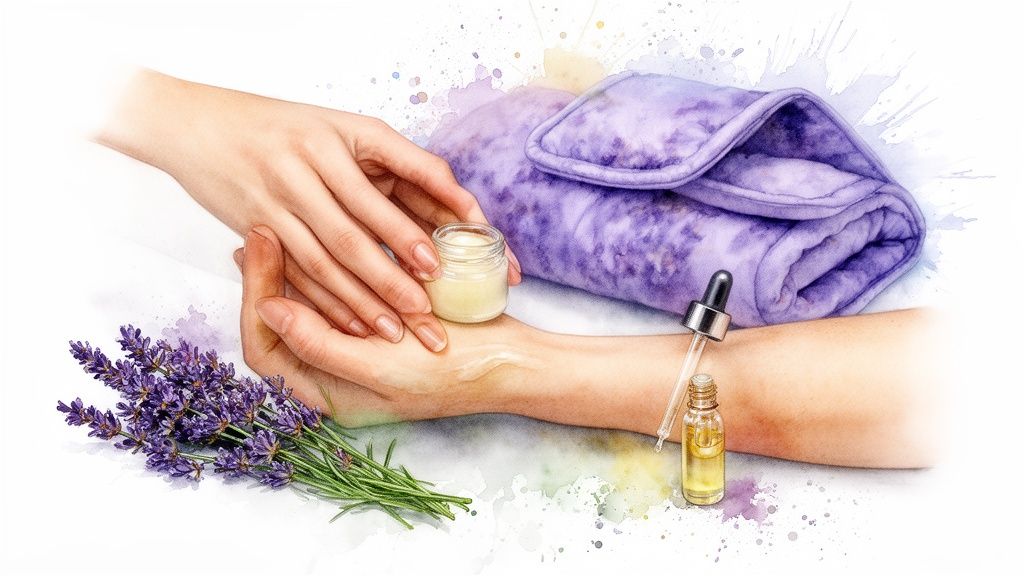
More and more people are turning to these plant-based options, and it shows. The market for topical pain relief is booming, expected to jump from US$10.2 billion in 2023 to US$14.7 billion by 2030. This isn't just a trend; it's a major shift driven by people who want effective, natural alternatives. You can read more about this growing movement on Persistence Market Research.
Common and Effective Topical Ingredients
As you look at different products, you'll start to notice a few key ingredients showing up again and again. Each one has its own unique way of bringing comfort.
- Arnica: A time-tested remedy from the arnica flower, it’s a go-to for bruises, swelling, and sore muscles. Its anti-inflammatory magic helps soothe angry, irritated tissues.
- Menthol & Peppermint: These are what give you that classic cool-tingling sensation. This coolness acts as a distraction, sending a new signal to your brain that overrides the pain and provides a gentle, numbing relief.
- Capsaicin: Sourced from the very compound that makes chili peppers hot, capsaicin creates a gentle warmth on the skin that helps block pain signals. It’s particularly helpful for arthritis and nerve pain.
- CBD (Cannabidiol): A non-psychoactive compound from hemp, CBD works with receptors in your skin to help dial down inflammation and calm local pain signals without affecting your whole body.
The Subtle Power of Aromatherapy
It's not just about what you feel—what you smell can have a profound effect on your pain levels, too. This is the world of aromatherapy, where the fragrant essential oils from plants are used to boost your physical and emotional well-being.
Scents like lavender, peppermint, or eucalyptus do more than just smell nice. They can actually trigger physical responses in your body. Lavender, for instance, is famous for its ability to calm the nervous system, which can ease anxiety and lower your perception of pain.
Aromatherapy works by stimulating smell receptors that send messages directly to your brain's limbic system—the control center for your emotions. This is why a simple scent can make you feel instantly more relaxed or even more alert.
Here’s where you can really start layering natural remedies for chronic pain to create a powerful, multi-sensory experience.
Think about using a SunnyBay lavender-infused heat wrap. You get the deep, penetrating heat that sinks into your muscles to ease soreness and stiffness. At the same time, the calming lavender scent helps to quiet a stressed-out mind. You're tackling both the physical pain and the mental toll, doubling the therapeutic effect for a more holistic sense of relief.
Calming Your Nervous System to Reduce Pain
Living with chronic pain isn’t just about the physical hurt—it’s a constant, exhausting dialogue between your body and your brain. When pain signals never stop, your nervous system can get stuck in a state of high alert. This kicks off a vicious cycle: stress makes pain feel worse, and the pain creates even more stress. The real goal is to interrupt that feedback loop by intentionally telling your nervous system it’s okay to stand down.
This is exactly where mind-body techniques shine. They are powerful natural remedies for chronic pain because they target the brain's interpretation of pain signals. By adopting these practices, you can actively lower stress hormones like cortisol and essentially turn down the volume on your pain, making it far more manageable day-to-day.
Mindfulness and Deep Breathing
One of the most accessible places to start is with mindfulness meditation. The point isn't to force your mind to go blank—that’s nearly impossible. Instead, it’s about learning to observe your pain without judging it or fighting it. When you simply acknowledge the sensation is there, you can strip away its emotional power, which often lessens its intensity.
Pairing mindfulness with deep-breathing exercises is a game-changer. Pain often makes our breathing shallow and rapid, which only fuels the body’s stress response. Consciously shifting to slow, deep belly breaths sends a direct message to your brain that you're safe and it’s time to relax. This simple act can almost instantly dial down your pain sensitivity.
Think of deep breathing as hitting a reset button for your entire nervous system. The 4-7-8 method is a simple but effective exercise: breathe in through your nose for 4 seconds, hold that breath for 7 seconds, and then exhale slowly through your mouth for 8 seconds. A few rounds of this can bring a surprising wave of calm.
Improving Sleep to Break the Pain Cycle
It’s a cruel irony: chronic pain disrupts sleep, and poor sleep makes you feel pain more acutely. This draining cycle is one of the biggest challenges for people living with persistent pain. That’s why improving your sleep hygiene isn't just a luxury; it's a fundamental part of managing pain and allowing your body the chance to heal and repair overnight.
A solid bedtime routine is your best ally here. It’s all about creating signals that tell your body and brain it's time to power down for the night.
- Try to turn off all screens at least an hour before you plan to sleep.
- Swap scrolling for reading a physical book or listening to some quiet music.
- A warm bath can work wonders for relaxing tight, sore muscles.
Incorporating gentle heat therapy is a fantastic way to cap off your day. Placing a warm SunnyBay body pack on an aching back or stiff joints for about 15 minutes before bed offers a double benefit. Not only does it provide direct, soothing relief to the area, but the comforting warmth also signals to your nervous system that it’s time to relax, making it that much easier to drift into a deep, restorative sleep.
Putting It All Together: Your Personal Pain Management Plan
We've covered a lot of ground, exploring a whole range of natural ways to manage chronic pain. Now comes the most important part: turning that knowledge into action. This isn't about adopting a strict, pre-made plan. It's about listening to your body and creating a personal routine that actually works for you.
Think of yourself as a detective. Your mission is to figure out which combination of these strategies brings you the most relief. The goal is to build a simple, reliable framework you can lean on every single day. Over time, that consistency is what delivers real, lasting results without relying on medication.
A Sample Daily Routine
So, what does this look like in real life? Here’s a simple template to get you started. Feel free to use this as a jumping-off point and swap things out based on what feels right for your body.
-
Morning (7:00 AM): Ease into your day with gentle movement. Before you even get out of bed, try a few simple stretches. To get things moving, place a warm heat pack on your stiffest spots—maybe your lower back or shoulders—for 10-15 minutes. Then, follow it up with an anti-inflammatory breakfast like oatmeal topped with berries and walnuts.
-
Midday (1:00 PM): A quick break in the afternoon can make a huge difference. Step away from your work for just five minutes to do a quick mindfulness exercise. A few deep, slow breaths can calm your nervous system and help keep stress from making your pain worse.
-
Evening (8:00 PM): Create a routine that tells your body it's time to wind down and heal. A warm bath is fantastic for soothing tired muscles. Afterward, while you're reading or relaxing, try applying a topical pain relief cream to any areas that are still giving you trouble.
This kind of layered approach is so effective because it tackles pain from different angles all day long—from the physical and nutritional to the mental. It’s about building small, manageable habits that, together, lead to big relief. Remember, consistency is far more important than perfection.
By building your own plan, you shift from just reacting to pain to proactively managing it. It's about taking back control, feeling more comfortable in your own body, and getting back to the life you want to live.
Ready to make targeted heat therapy a core part of your pain management plan? SunnyBay offers a wide range of U.S.-made, clinic-trusted heat packs designed for lasting comfort. Explore our collection and find the perfect drug-free relief solution for you at sunny-bay.com.


