


Heat Treatment for Shoulder Pain: Fast Relief Guide
-
You wake up with one shoulder feeling locked, or finish a day at your desk with a tight band running from your neck to the top of your arm. A warm shower or compress can feel like the fastest way to make that discomfort manageable. That relief is real, but it usually changes how the shoulder feels rather than repairing the tissue causing the pain.
Heat treatment for shoulder pain works best as a short-term symptom tool. Used carefully before gentle movement, it can reduce guarding and make mobility exercises easier. Used too hot, too long, or over the wrong type of injury, it can irritate symptoms or injure the skin.
Table of Contents
- Why Heat Feels Like Relief for a Sore Shoulder
- How Heat Therapy Works for Shoulder Pain
- Heat vs Cold for Shoulder Pain
- How to Apply Heat Safely and Effectively
- What the Evidence Says About Deep or Long Heat for Shoulder Conditions
- Choosing the Right Shoulder Heat Therapy Product
- When Heat Therapy Helps and When to Seek Professional Care
Why Heat Feels Like Relief for a Sore Shoulder
A stiff shoulder often becomes a protective shoulder. When movement hurts, the surrounding muscles tighten to limit motion. You may notice this after prolonged screen work, a restless night, or lifting something awkwardly. The joint itself may not be the only source of discomfort. Muscles around the neck, shoulder blade, and upper arm can all contribute to the feeling of heaviness or restriction.
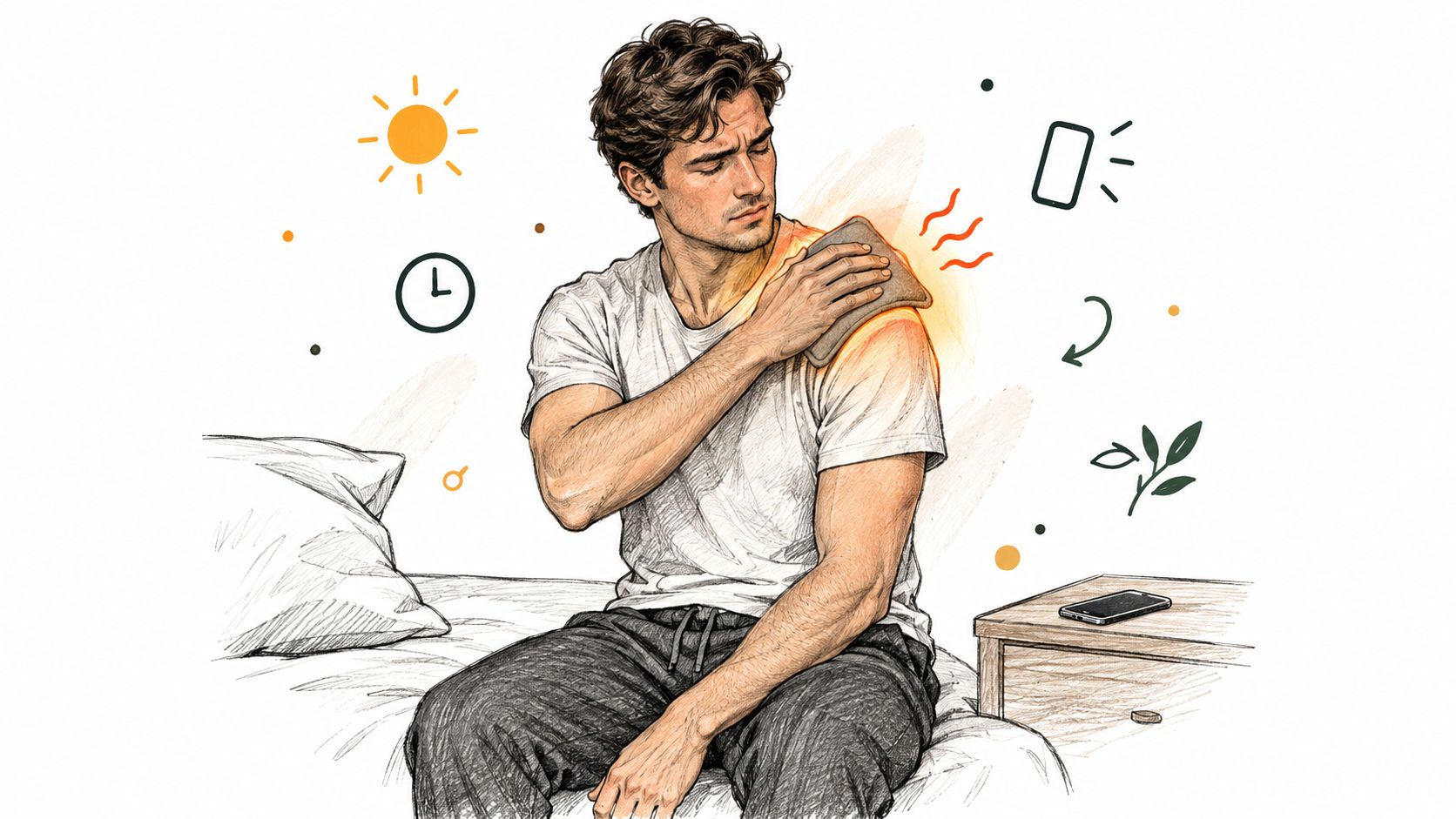
A warm compress gives those tissues a different signal. The heat feels calming, and the shoulder may move with less resistance for a while. That immediate change matters because pain can make people avoid movement, while comfortable movement helps preserve function.
Comfort is not the same as repair
Think of warmth as symptom modulation. It may lower the sense of tightness, reduce pain-related guarding, and help you tolerate a stretch or range-of-motion exercise. It doesn't prove that a tendon has healed, a tear has closed, or a restricted joint has regained normal movement.
That distinction prevents a common mistake. Someone applies heat, feels better, and then assumes the shoulder can handle heavy lifting or aggressive stretching. The temporary comfort may make movement easier, but it doesn't remove the need to respect the shoulder's limits.
Practical rule: Use warmth to make sensible movement more comfortable, not to test how much pain you can ignore.
Heat is most reasonable for non-acute soreness, muscle tension, and stiffness without visible swelling. If the shoulder became painful after a recent fall, forceful movement, or strain and now looks swollen or feels hot and inflamed, heat may be the wrong first choice. The timing and pattern of symptoms matter more than the popularity of a particular product.
How Heat Therapy Works for Shoulder Pain
A shoulder often feels different within minutes of warming up. Reaching overhead may seem less guarded. Turning the arm can feel smoother. That change usually comes from symptom relief, not tissue repair.
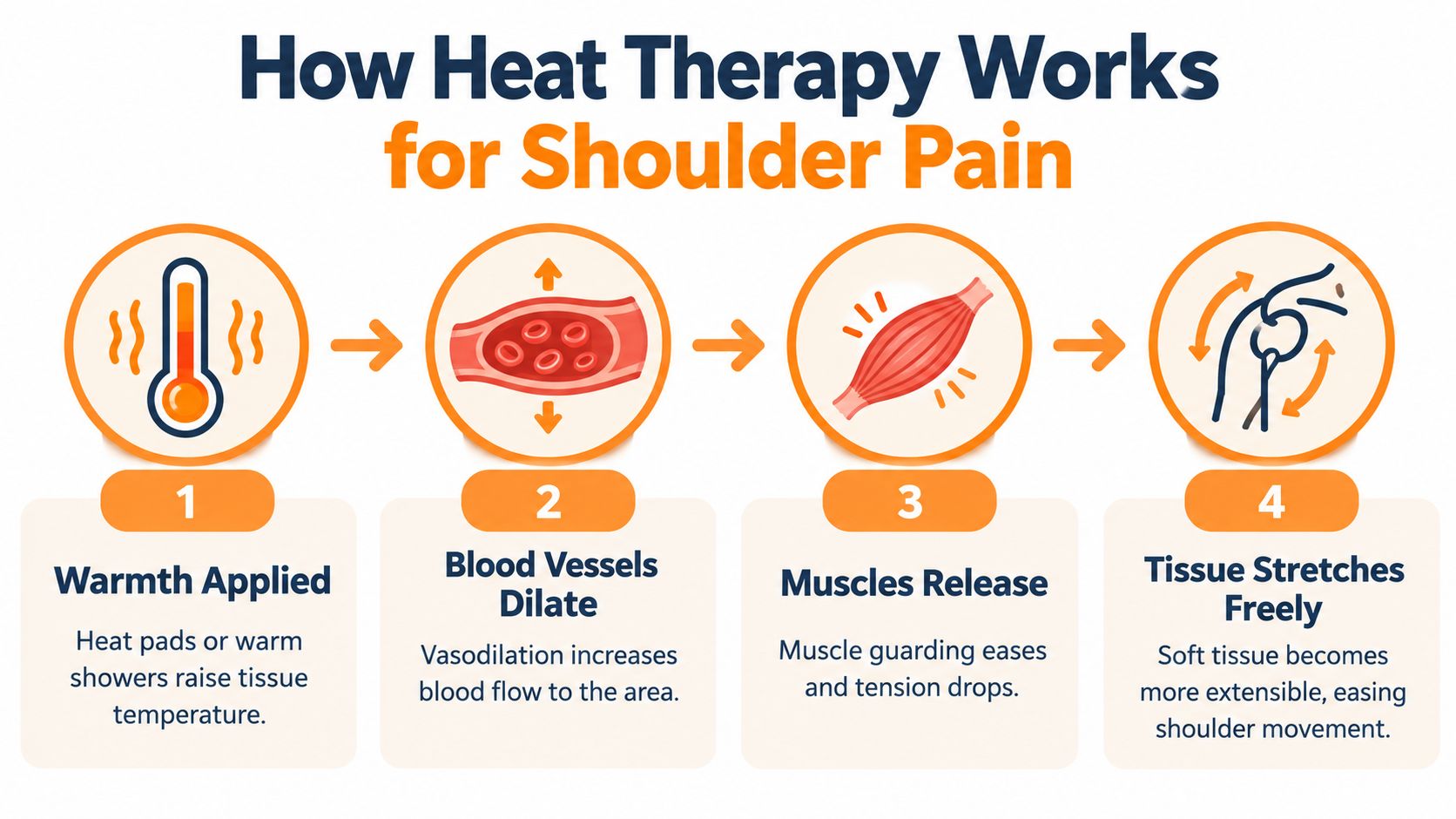
Heat raises local tissue temperature and promotes vasodilation, so blood vessels in the area widen. It also tends to quiet protective muscle activity and make soft tissue temporarily more pliable. In practice, that means a stiff or guarded shoulder may tolerate gentle motion more easily for a short time.
Pain changes too. A comfortable heat signal gives the nervous system another sensation to process, which can make pain feel less dominant for a while. That window is useful if you use it well. The best use is usually pairing warmth with easy mobility work, such as assisted shoulder flexion, pendulums, or controlled rotation, instead of treating heat as the whole intervention.
What the clinical evidence actually shows
One controlled clinical study looked at moist heat and ice, both combined with exercise, for shoulder pain linked to rheumatoid arthritis. It included 18 participants, with 9 in each group, over 3 weeks. Pain improved in 7 of 9 people in the heat group and 8 of 9 in the ice group, without a statistically significant difference. Heat also showed somewhat larger average gains in motion, with abduction improving by 26 degrees and flexion by 12 degrees, compared with 23 degrees and 5 degrees in the ice group, but those differences were not statistically significant either. The study record supports heat as a reasonable adjunct, not as a clearly superior treatment.
That distinction matters in clinic and at home. Relief from warmth does not tell you why the shoulder hurts. Rheumatoid arthritis, rotator cuff irritation, frozen shoulder, referred neck pain, and simple postural muscle tension can all respond differently. Consumer guides often skip that diagnostic blind spot, but it affects how much heat helps and what should come next.
Use heat to make the next step easier. After warming the area, do a few minutes of gentle range-of-motion work while the shoulder feels less guarded. If you train, local heat should not replace a full warm-up routine before lifting, because the shoulder usually does better when the trunk, upper back, and arm are prepared together.
Heat vs Cold for Shoulder Pain
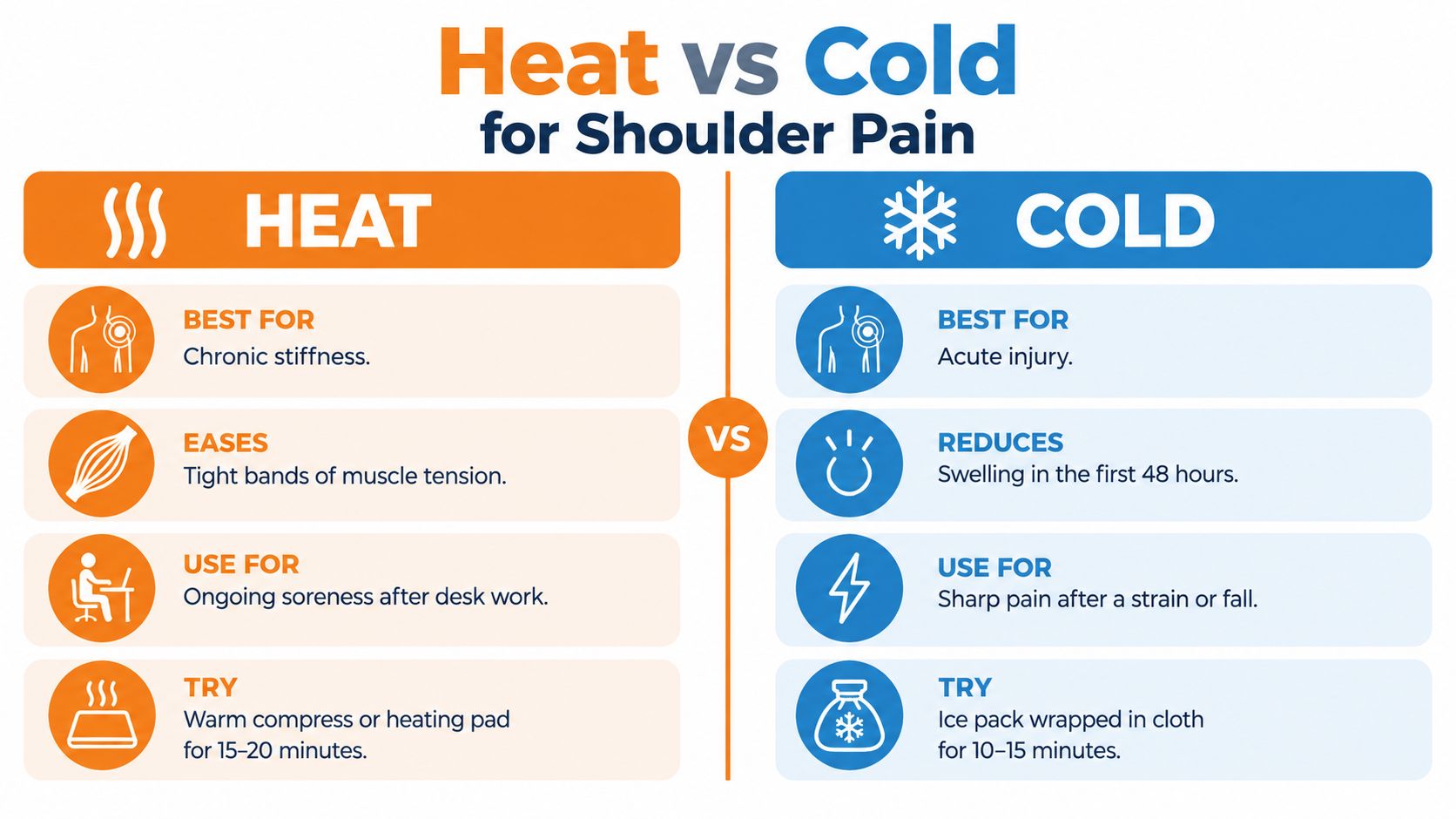
The right choice depends on when the pain started, whether swelling is present, and how the shoulder responds. Heat and cold aren't interchangeable, and neither one is automatically correct for every shoulder diagnosis.
| Situation | Usually more reasonable | Why |
|---|---|---|
| Ongoing stiffness without swelling | Heat | It may reduce guarding and make mobility easier |
| Tightness after desk work | Heat | Comfortable warmth can ease muscle tension |
| Recent strain, fall, or impact with swelling | Cold | Cooling is generally favored when acute inflammation and swelling are present |
| Shoulder pain with unclear cause | Assessment first | Self-treatment may delay recognition of a structural problem |
Match the treatment to the presentation
For a stiff, non-swollen shoulder that has bothered you for a while, warmth before gentle exercise is often the more comfortable option. For sharp pain after a new strain or fall, especially when the area is visibly swollen or feels acutely inflamed, cold is generally preferred. A cloth barrier protects the skin in either case.
A diagnosis can change the decision. Rheumatoid arthritis, rotator-cuff problems, bursitis, frozen shoulder, nerve irritation, and referred pain from the neck don't respond in exactly the same way. Even within one diagnosis, a flare can call for a different approach from a quieter period of stiffness.
Don't choose heat because it feels stronger. Choose it because the shoulder is stiff and non-acute, and because warmth helps you move without escalating symptoms.
If heat increases throbbing, swelling, or sharp pain, stop using it and reassess. Repeatedly heating a shoulder that is becoming more inflamed isn't a sign of persistence. It's a sign that the treatment doesn't fit the current presentation.
How to Apply Heat Safely and Effectively
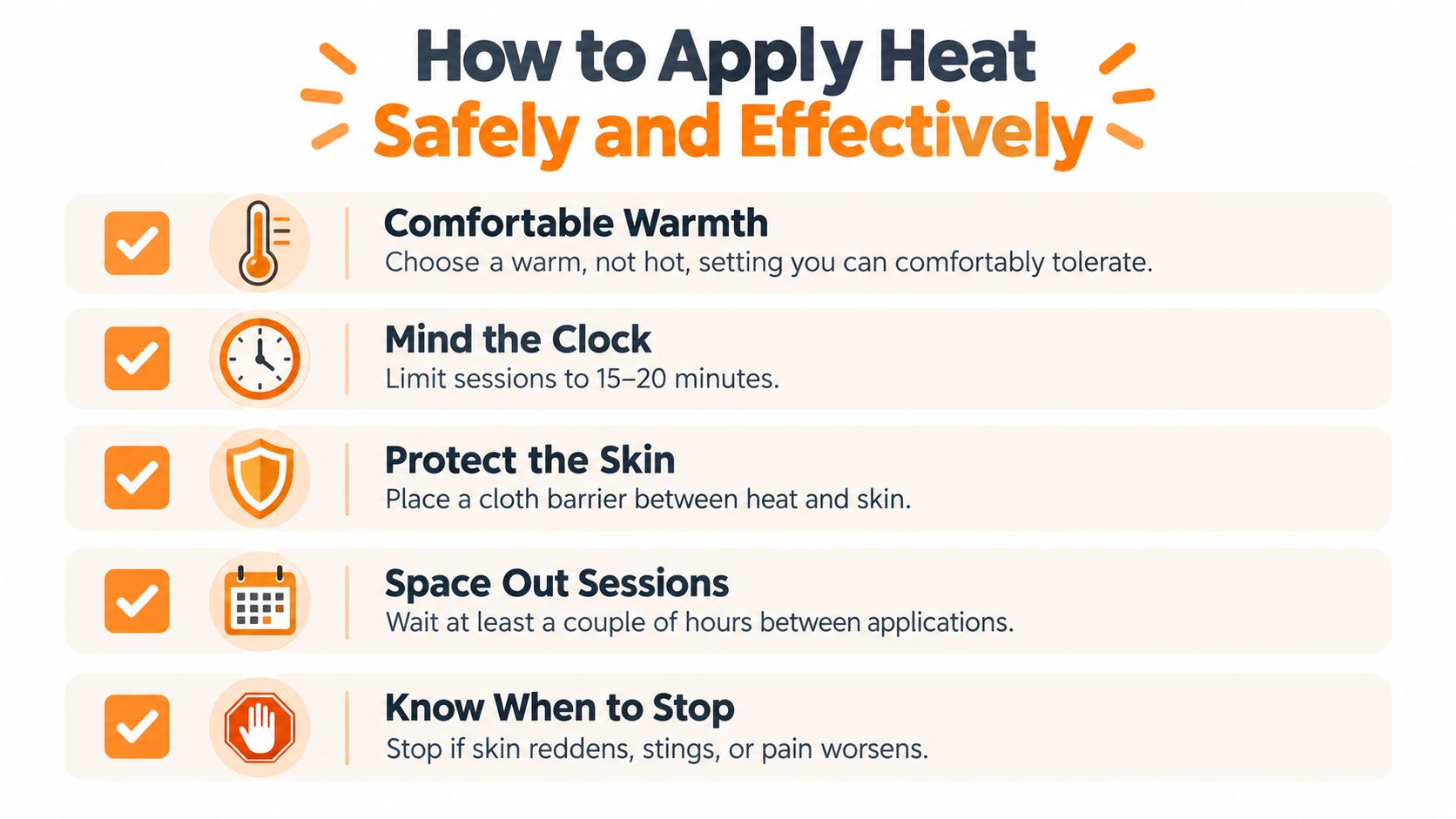
A safe home routine is simple, but the details matter. The heat should feel comfortably warm, never painfully hot. Use an even source with a protective cover, and avoid placing a heating pad directly against bare skin.
A practical home sequence
- Check the shoulder first. Don't apply heat over a newly injured, visibly swollen, or acutely inflamed area. Avoid heat if you have reduced sensation or circulation in the region unless a clinician has advised you otherwise.
- Use a barrier. Place a cloth cover between the thermal source and your skin. This reduces the chance of burns and makes it easier to tolerate steady warmth.
- Set a timer. Keep an application to roughly 15 minutes, with several hours between treatments, following the conservative guidance described by NHS Inform's shoulder advice. Don't fall asleep with an active heating device.
- Move while the shoulder feels easier. Try relaxed pendulum movements, assisted elevation with a stick or the opposite hand, or gentle external rotation. Keep the motion pain-limited. The aim is to reduce guarding, not force a blocked joint.
- Inspect your skin. Stop if you notice stinging, marked redness, blistering, increasing pain, or a worsening sense of heat. People with numbness, vascular disease, Raynaud's disease, or impaired sensation need particular caution because they may not detect excessive exposure promptly.
Product safety is part of treatment safety
A wrap that distributes warmth evenly and stays in place is usually more practical than one that creates a very hot spot. Timers, washable covers, and a secure fit help people use heat consistently without improvising with unsafe settings. The same principle applies in shared wellness spaces, where guidance on managing sauna liability at gyms highlights the importance of clear instructions and supervision around heat.
For device-specific precautions, review SunnyBay's heating pad safety guidance before using an electric pad, microwaveable wrap, or reusable hot pack. The safest routine is the one you can monitor, stop easily, and pair with gentle movement.
What the Evidence Says About Deep or Long Heat for Shoulder Conditions
Stronger heat isn't automatically better heat. A product that stays warm longer may feel soothing, but comfort alone doesn't show that it has restored shoulder motion or repaired a tendon.
This distinction is especially important with frozen shoulder. A 2025 clinical practice guideline advised that deep heat should be based on clinician judgment because evidence for effectiveness was insufficient and rated very low. That recommendation doesn't mean warmth is useless. It means consumers shouldn't assume that deeper penetration or prolonged exposure will shorten recovery.
Chronic shoulder care has a similar priority. Occupational-medicine guidance reports little high-quality evidence for heat or cold and places functional restoration, particularly exercise, at the center of care. Heat can help during a flare or before movement, but it shouldn't displace the active work that builds tolerance and restores function.
Temporary relief is a useful outcome, but it isn't the same outcome as long-term recovery.
A 2025 registered study comparing thermal microcautery with physiotherapy for frozen shoulder had recruited 16 of a planned 60 participants, so it can't justify broad claims about that approach. The more dependable practical conclusion is narrower: use a tolerable home heat application if it helps you perform prescribed or gentle mobility work, and ask a clinician to guide treatment when stiffness persists or the diagnosis isn't clear.
Choosing the Right Shoulder Heat Therapy Product
You feel tight across the top or front of the shoulder, reach for a wrap, and the first question seems to be how hot it gets. In practice, fit matters more. A useful heat product covers the sore area, stays put while you sit or do gentle range-of-motion work, and does not pull your neck into an awkward position.
Choose the product around the pattern of symptoms. Broad upper-trapezius tension often responds better to a wrap that also reaches the base of the neck. A more local sore spot near the deltoid or front of the shoulder usually needs a contoured shoulder design with adjustable straps and hands-free wear. The goal is simple. Comfortable warmth that lets the shoulder relax enough to move a little better.
Features that make safe use easier
- Even distribution: Pick a wrap that spreads warmth across the area instead of creating one hot spot.
- A protective cover: Fleece or cotton helps with comfort and adds a layer between the heat source and your skin.
- Secure positioning: The wrap should stay in place without squeezing the joint or making breathing feel restricted.
- Clear heating instructions: Microwaveable products need exact prep guidance. Electric pads should have adjustable settings and an automatic shutoff or timer.
- Practical maintenance: Reusable construction and washable covers make regular use easier.
Microwaveable wraps filled with materials such as flax seed work well for people who want portable heat without a cord. Electric options can hold a steadier temperature, which some people prefer before stretching or home exercises. Products that also allow cold use can be helpful if symptoms change day to day, but any cold application still needs a barrier between the pack and the skin.
Product choice also depends on what you want heat to do. Heat changes symptoms more than it fixes tissue. I usually recommend a wrap you will use for 10 to 15 minutes before gentle mobility, rather than a bulkier product marketed around maximum heat or long exposure.
SunnyBay offers reusable shoulder and neck wraps, including hands-free options, and its shoulder heat pad guide is a practical way to compare formats. As noted earlier, clinical evidence supports heat as one part of care for some shoulder presentations, but not as proof that any single consumer product format is superior.
When Heat Therapy Helps and When to Seek Professional Care
Heat can help when a non-swollen shoulder feels stiff, guarded, or tense, especially before gentle mobility work. Switch away from heat when a recent injury causes swelling or acute inflammation, and stop if warmth worsens pain, redness, or throbbing.
Seek professional assessment for new numbness, significant weakness, unexplained swelling, worsening pain, or persistent difficulty using the arm. If you're considering specialist options such as osteopathic regenerative care in Aurora, start with a proper evaluation rather than choosing treatment from symptoms alone. Guidance for rotator cuff recovery can support self-care, but it doesn't replace diagnosis.
SunnyBay offers reusable shoulder wraps, heating pads, and hot-cold products designed for targeted home comfort. Visit SunnyBay to choose a heat therapy option that fits your shoulder routine, then use it as a controlled aid for gentle movement rather than as a substitute for rehabilitation.


