


Heat Therapy for Neck Pain How It Works and When to Use It
-
You wake up with your neck already tight, or you finish a long stretch at a laptop and notice that turning your head feels oddly expensive. That's the moment when heat therapy for neck pain feels tempting, because warmth is simple, familiar, and doesn't require a prescription or a complicated routine.
Used well, heat can calm stiff muscles and make movement feel less guarded. Used blindly, it can miss the problem, especially when the neck pain is new, sharp, or tied to a recent injury. The difference matters, and it's the reason this guide separates chronic tension from acute strain and whiplash, then connects each situation to the right kind of heat, the right timing, and the safest way to use it.

If you're already comparing self-care options, it can help to think beyond pain relief and consider the setting of your whole day. For some people, that means pairing warm compresses with posture breaks, gentle movement, and even broader wellness support like find facials and bodywork in Lombok, especially when neck tension is part of a bigger pattern of stress and stiffness.
Table of Contents
- Introduction to Soothing Neck Pain with Heat
- How Heat Therapy Eases Neck Tension and Pain
- What Research Shows About Heat for Neck Pain
- Choosing the Right Heat Format for Your Neck
- How to Use Heat Safely and Get Better Results
- Common Misconceptions About Heat Therapy
- Your Next Steps for Lasting Neck Comfort
Introduction to Soothing Neck Pain with Heat
A sore neck can take over ordinary tasks. You turn to check blind spots while driving, and it pulls. You sit down at a screen, and your shoulders creep upward without warning. That is usually the moment warmth feels appealing, because it brings quick comfort before you even think about the reason.
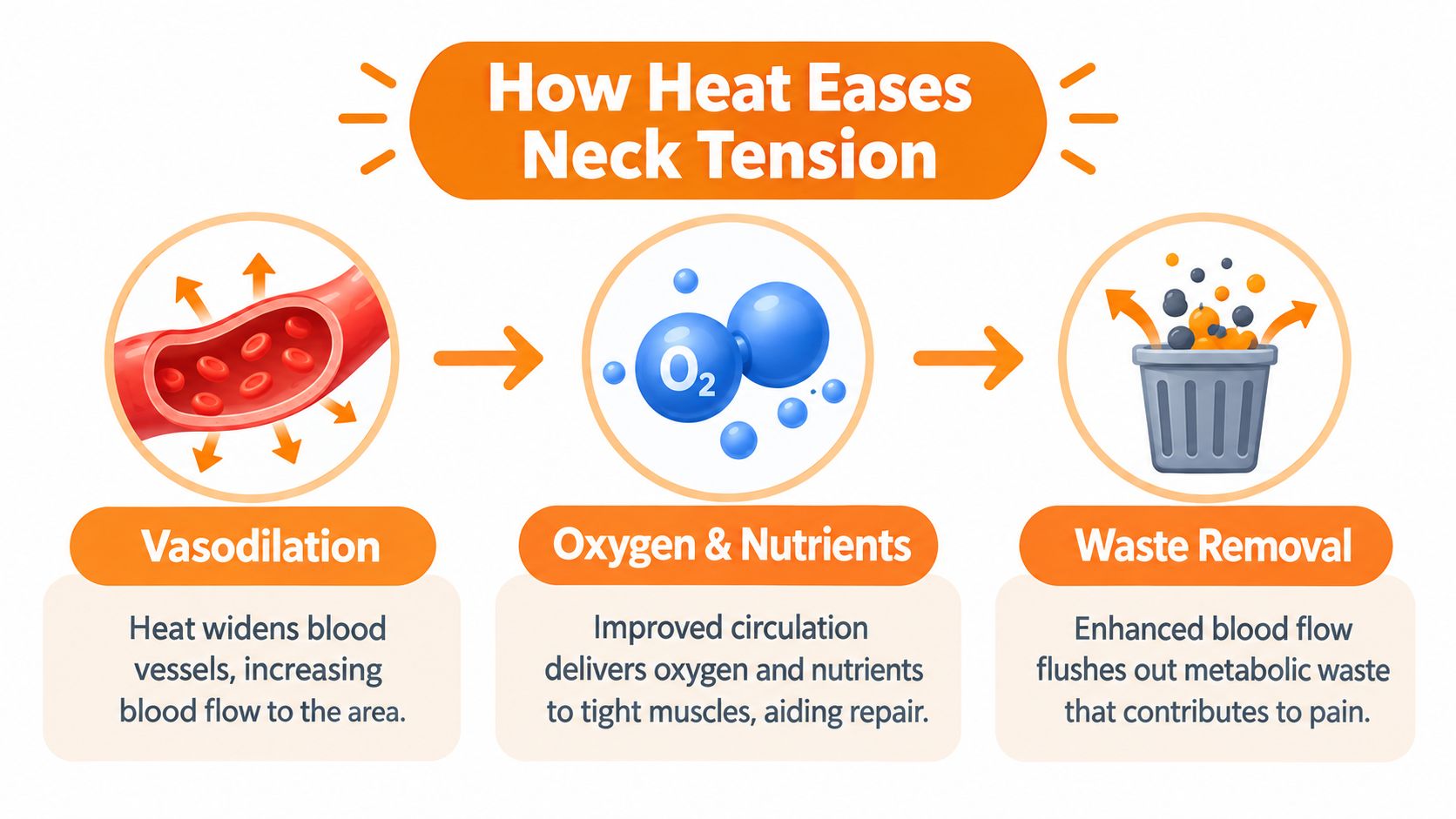
Heat also has a physical effect. It widens blood vessels and increases circulation to stiff tissue, so it is not vague comfort alone. That makes it especially useful for chronic tension, posture-related stiffness, and the dull morning tightness that builds without a clear injury.
The first question is simple, but important. Does your neck feel tight and overworked, or does it feel freshly injured and inflamed? Heat usually fits the first pattern better. A neck that has been sore for days or weeks often responds well to warmth, especially when stiffness is the main complaint. A neck pain episode that began after a fall, crash, or whiplash-type event needs more caution, because heat may not be the right first choice.
That is also why the right product and timing matter. A warm compress, heating pad, or other gentle heat source can help when the goal is to loosen guarded muscles, but it should be used carefully and not rushed. For readers comparing comfort tools, a related resource is the guide to Botox for jaw pain, useful when jaw tension and neck tightness seem linked. Some people also find that broader care helps when stress shows up in more than one area, including options to find facials and bodywork in Lombok.
How Heat Therapy Eases Neck Tension and Pain
Heat works by changing the local environment around tight tissue. Blood vessels widen, which lets more blood move through the area. When that happens, more oxygen reaches the tissue, and metabolic byproducts are cleared more easily. That extra circulation can matter when muscles have been tense for a long time, because the area is no longer working with the same steady supply it had at rest.
What the warmth signal does
Warmth also changes how the body reads discomfort. The skin and deeper tissues receive a soothing thermal signal that can make pain feel less sharp and less dominant. A heating pad can feel calming before the neck has fully loosened, because the nervous system is getting a gentler signal to settle down. The muscles often stop bracing quite so hard, which helps range of motion feel less restricted.
Practical rule: heat usually helps most when the neck feels guarded, stiff, or overworked, not when the area is hot, swollen, or clearly reacting to a recent injury.
That difference matters. A neck that has been tight for days or weeks often responds well to warmth, especially when the main problem is stiffness and protective muscle tension. A neck pain episode after a fall, crash, or whiplash-type event needs more caution, because heat may be the wrong first step.
Why it feels better with movement
Warm muscles behave more like warmed rubber bands than stiff ones. They are easier to stretch, easier to guide, and less likely to resist every small turn of the head. That is why heat and exercise are often used together in neck self-care.
Heat opens the door for movement. The warmth lowers the sense of resistance, and then movement helps the neck remember normal motion again. This is especially useful for chronic tension, desk posture strain, and stiffness that shows up after sleep or long hours at a screen.
For readers comparing comfort tools, a related resource is the guide to Botox for jaw pain, useful when jaw tension and neck tightness seem linked.
Heat is still a short-term comfort measure. It can make a neck feel more usable right now, but it does not correct the posture habit, sleeping position, or stress pattern that caused the tightness in the first place.
What Research Shows About Heat for Neck Pain
A warm pack can feel reassuring, but the research is more specific than “heat helps.” In chronic neck pain, low-level continuous heat used before home exercise improved pain and function, and the heat group had a larger mean pain-score change than control, 18.6 versus 6.4 (PMC trial summary). A review of the same evidence also described pain falling from about 5/10 to 3.5/10 in the heat-treated group (PMC13269032).
Chronic stiffness looks different from fresh strain
That pattern makes sense. Long-standing stiffness often behaves like a tight knot in a rope, it loosens better with warmth and then responds more easily to movement. Heat seems to work best as a companion to exercise or therapy, not as a stand-alone fix.
Acute strain looks different. In a 2010 trial, a 30-minute heating pad or cold pack added to ibuprofen produced only mild improvement, and there was no meaningful difference between the two. Pain severity moved from 75 mm to 66 mm in the heat group and from 72 mm to 64 mm in the cold group (acute strain trial). Heat may still feel soothing, but a single short session is not a reset button for a fresh injury.
What guidance suggests in practice
Heat also shows up often in everyday care. One dataset summarized in a broader review reported that about 84% of neck-pain patients received it, and the same guidance recommends short sessions of about 15 to 30 minutes to ease stiffness and lower burn risk (PMC review of trial evidence). Another trial of chronic neck pain found that low-level continuous heat alongside ibuprofen and physical therapy improved pain and function more than therapy alone, with pain dropping from about 5/10 to about 3.5/10 and neck mobility improving (PMC review of trial evidence).
Heat works best as short-term pain relief plus muscle relaxation, especially when paired with exercise or therapy.
Recent injury needs a different lens. One evidence summary says heat is likely not helpful for recent grade I-II whiplash, while other reviews and consensus statements say superficial heat may help some people with mild acute or chronic neck pain and can be combined with analgesics in moderate-to-severe cases (review on whiplash and heat guidance). The practical takeaway is simple: heat fits best for chronic tension and posture-related stiffness, while a fresh crash, fall, or whiplash-type injury calls for more caution.
Choosing the Right Heat Format for Your Neck
A sore neck does not always need the same kind of warmth. A desk worker with posture-related tightness may want a different setup from someone trying to stay comfortable while commuting, traveling, or standing outdoors in the cold. Even the same person may need a different format from one day to the next.
For stiffness that sits in the neck and shoulders, a microwaveable wrap is often the easiest choice because it can sit close to the skin and stay in place. If the tension spreads into the upper back, a larger pad gives broader coverage. Air-activated patches suit people who need warmth without electricity, while contoured shoulder wraps help when the tightness sits at the neck-shoulder junction and hands-free wear matters.
Heat Format Comparison for Neck Pain Needs
| Format | Heat Duration | Portability | Best For |
|---|---|---|---|
| Microwavable neck wrap | Moderate, often designed for repeated short sessions | Good for home or office use | Neck stiffness, posture-related tension, hands-free comfort |
| Extra-large body pad | Broad coverage, better for longer contact | Less portable | Upper back and neck-shoulder overlap |
| Air-activated heat patch | Steady warmth without electricity | Very high | Travel, outdoor work, intermittent use |
| Contoured shoulder wrap | Focused fit around neck and shoulders | Moderate | Users who want secure placement and even coverage |
Product features only help if they match the situation. A wrap with a contoured shape and a fill such as flax seed can hold warmth for roughly 30 minutes, which makes sense for one focused session at the desk before reheating. SunnyBay's reusable microwavable wraps and soft covers fit that use case well, especially for people who want heat that stays put while they keep working, and its product range is easier to compare through Heating Pads, Their Types.
The simple question is not which pad feels strongest. It is which format matches where the neck gets tight, how long the session should last, and whether the pain is from ongoing tension rather than a fresh injury. That is the point where the evidence becomes useful in real life.
How to Use Heat Safely and Get Better Results
Safety is part of effectiveness. If the pad is too hot, too long, or placed badly, you can end up with irritated skin instead of relief. If it's too loose, the warmth spreads unevenly and the neck never really settles.
A simple routine that works
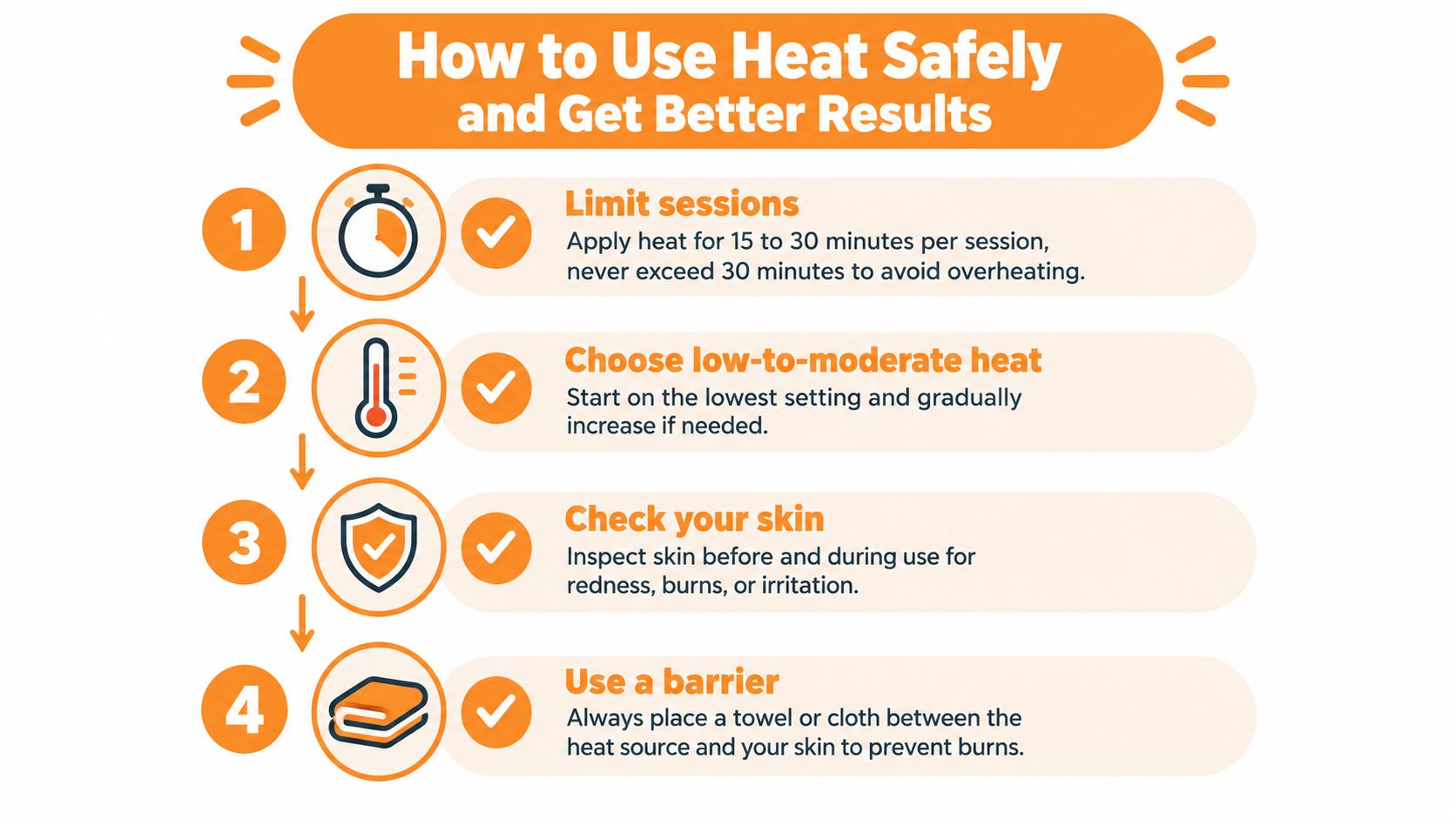
Start with 15 to 30 minutes per session, and don't push past that window. Begin on a low-to-moderate heat setting, then adjust only if the warmth feels comfortable rather than intense. Check your skin before and during use, especially if you have reduced sensitivity or tend to ignore discomfort when you're busy.
Keep a cloth or towel between the heat source and your skin. That extra layer reduces the risk of burns and makes the temperature feel steadier. If the wrap is hands-free and contoured, the contact tends to be more even, which helps the warmth sit where you need it instead of sliding down or bunching up.
When to prefer something else
Heat isn't the right first move for every neck problem. If the pain is from a recent whiplash-type event or a new injury, the guidance is mixed and heat may not help much, especially early on (whiplash evidence summary). If the area is swollen, hot to the touch, or worsening after use, stop and reassess.
Microwavable wraps can pull double duty here, because some are also usable as cold packs after freezing. That makes them useful for households that want one reusable item for both comfort modes. If you're building a routine for chronic tension, a simple pattern works well, heat first, then gentle mobility work, then a short posture reset before you return to the task that tightens your neck again.
For fit and safety details, the internal guide at Heating Pad Safety is worth a look before you make heat part of a daily routine.
If your skin feels too warm for comfort, it's already too warm.
Common Misconceptions About Heat Therapy
Heat is not a repair switch. If you wake with a tight neck after hours at a desk, warmth may loosen guarded muscles and make movement more comfortable. It does not instantly correct posture, restore an injured structure, or guarantee faster recovery. A brief acute-strain trial found only mild improvement, with no meaningful advantage over cold, as noted in the Wiley 2010 trial. The detailed pain measurements appear earlier in this article, so they are not repeated here.
Hotter is not automatically better. Neck skin can burn or become irritated before deeper muscles feel extra benefit. Use a comfortable temperature, place a fabric layer between the heat source and your skin, and check the area rather than leaving it unattended.
Heat and cold also serve different situations. Recent whiplash or injury can involve swelling and changing symptoms, and evidence does not support one simple rule, as discussed in the Springer whiplash review. For a fresh, swollen, hot, or worsening area, heat may be the wrong first choice. For ongoing stiffness, muscle guarding, or posture-related tension, gentle warmth may fit better.
For a quick comparison, read this guide to when to ice and when to use heat before choosing a comfort method.
Your Next Steps for Lasting Neck Comfort
A simple test can help with the next choice. If your neck pain is ongoing stiffness, posture strain, or chronic tension, heat is often a sensible comfort tool, especially when you pair it with movement and better desk habits. If pain started suddenly after a crash, whiplash, or another injury, slow down and watch timing, severity, and any changes in symptoms.
Choose a format that matches your routine. A contoured microwavable wrap works well for hands-free use at home, much like a warm compress that stays in place while you keep reading or working. A portable patch fits better when you are away from a microwave. A reusable option makes sense if you want a tool you can keep using without treating each flare-up like a new project.
For a reusable, hands-free option that fits a daily routine, visit SunnyBay to explore microwavable neck wraps and hot/cold accessories.


