


Will Heat Help Kidney Stone Pain? Quick Relief Guide
-
When you're in the throes of kidney stone pain, you don't have time for guesswork. You need to know what works, right now. So, will heat help kidney stone pain? The answer is a clear and simple yes. Applying heat is one of the most reliable and immediate ways to take the edge off the excruciating pain, known as renal colic, by relaxing spasming muscles and improving circulation right where you need it.
Your Immediate Answer To Kidney Stone Pain Relief
If you're dealing with that sharp, cramping, wave-like pain in your back or side, immediate relief is the only thing on your mind. The good news? Heat therapy is a simple, effective tool you probably already have at home. Think of the pain as a tightly knotted rope in your muscles; applying warmth is like slowly and gently uncoiling that knot, releasing the tension.
This isn't just folk wisdom—it’s backed by solid evidence. Research has consistently shown that applying warmth directly over the affected kidney or flank can significantly reduce pain. One study, for instance, found that patients suffering from acute renal colic reported an average pain score drop of 56% after applying heat. They also felt less anxious and nauseous. You can read more about the powerful pain-relieving effects of heat therapy in the published research.
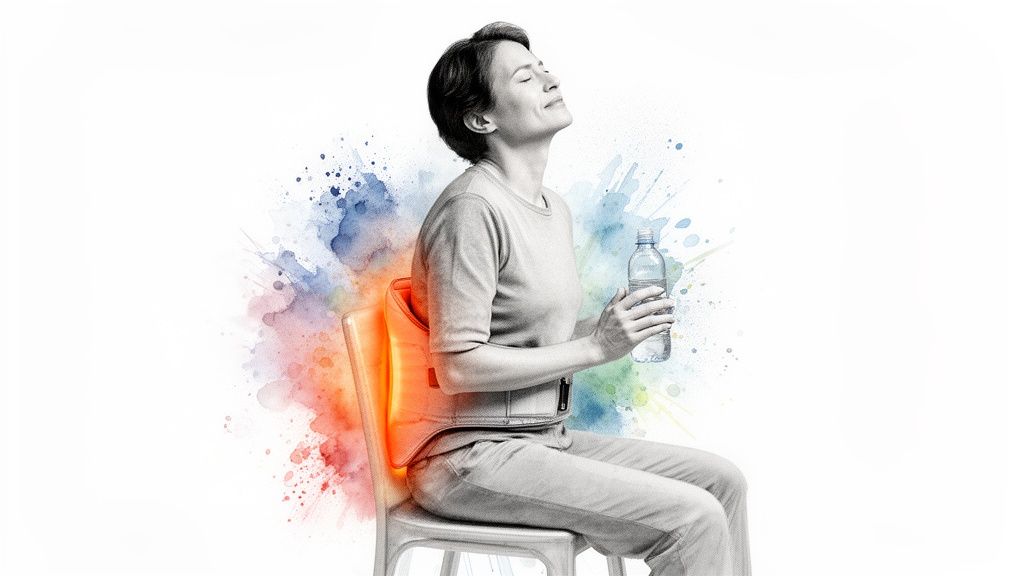
Why Heat Is a Go-To Solution
Most of that blinding pain comes from the ureter—the tiny tube that carries urine from your kidney to your bladder—going into intense spasms as it tries to force the stone along. Heat targets this problem head-on.
Here’s a quick look at how it works:
- Muscle Relaxation: The warmth penetrates deep into the tissues, helping the smooth muscles of the ureter unclench. This directly eases the cramping that causes the signature agony of renal colic.
- Improved Blood Flow: Heat causes blood vessels to widen in a process called vasodilation. This brings more oxygen-rich blood to the area, which helps calm distressed tissues and wash away pain-causing inflammatory substances.
- Pain Signal Interruption: Think of it like a traffic jam on your nerve pathways. The pleasant sensation of warmth can "outrun" the pain signals traveling to your brain, effectively distracting it and turning down the volume on your discomfort.
To give you a quick reference, here's a breakdown of how heat therapy provides relief for kidney stone pain.
Heat Therapy For Kidney Stone Pain At A Glance
| Benefit of Heat Therapy | Mechanism of Action | Key Consideration |
|---|---|---|
| Reduces Muscle Spasms | Relaxes the smooth muscles of the ureter, easing renal colic cramps. | Apply heat directly over the flank or lower abdomen where the pain is most intense. |
| Decreases Pain Perception | The sensation of warmth can override pain signals sent to the brain. | Use a temperature that is warm and soothing, not painfully hot, to avoid skin burns. |
| Improves Circulation | Vasodilation brings more oxygenated blood to the area, aiding tissue relief. | Stay hydrated while using heat, as it can cause you to sweat more than usual. |
This table shows that heat doesn't just mask the pain; it actively works on the physiological sources of your discomfort, making it a powerful ally in your relief strategy.
The real benefit of using a quality heat pack is gaining control over your pain without relying solely on medication. It empowers you to actively manage your symptoms, stay hydrated, and remain mobile—all of which are crucial for helping the stone pass.
A modern, hands-free wrap can be a total game-changer. Instead of being trapped in one position with a clumsy hot water bottle or heating pad, you can strap the pack securely to your back or abdomen. This frees you up to walk around, keep drinking water (which is vital!), and let gravity help move the stone along, all while getting continuous, soothing relief.
Why Kidney Stones Cause Such Intense Pain
To understand why a simple heating pad can bring such profound relief, you first have to appreciate what’s actually happening inside your body. The pain from a kidney stone isn't just a dull ache; it's an aggressive, full-body response to a serious plumbing problem.
Think of your ureter—the tiny, delicate tube connecting your kidney to your bladder—as a very narrow garden hose. Now, imagine a sharp, jagged piece of gravel trying to force its way through. The pain isn't just from the stone scraping against the sensitive lining, though that's certainly part of it.
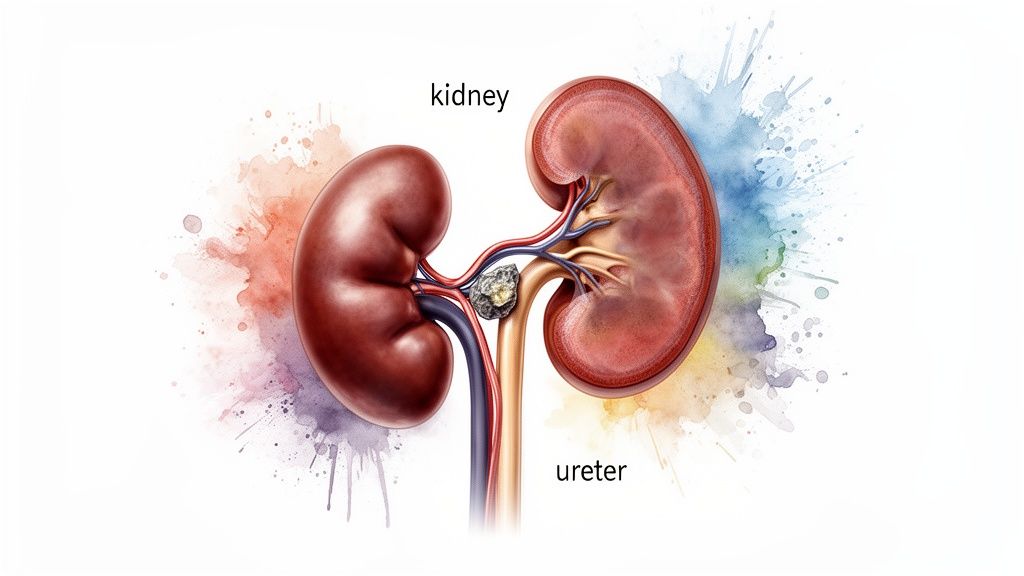
The real agony comes from something called renal colic. This is your body's emergency override kicking in. The smooth muscles lining the ureter start to contract violently, spasming powerfully as they try to push the blockage forward. It’s a desperate attempt to clear the path.
The Anatomy of Agony
These muscle spasms are what create those signature waves of excruciating pain. It's like a severe charley horse, but happening deep inside your flank in a place loaded with nerve endings. This intense cramping sets off a chain reaction of other painful problems.
As the ureter squeezes down on the stone, it creates a traffic jam. Urine backs up, and the pressure builds all the way into the kidney itself. This causes the kidney to swell, stretching the sensitive outer lining (the renal capsule) and triggering even more pain signals.
The pain you feel is a triple threat: the physical scrape of the stone, the powerful muscle spasms trying to expel it, and the pressure of a swollen kidney. This is why the pain is so overwhelming and why it seems to radiate everywhere.
The stone's exact location in the ureter dictates where you'll feel the worst of it. Understanding this helps you know exactly where to apply heat to get the most relief.
How a Stone's Location Changes the Pain
A kidney stone's journey is a painful one, and the location of the pain often shifts as the stone makes its slow, agonizing descent.
- Upper Ureter: When the stone is still high up near the kidney, the pain is usually a deep, severe ache in your flank—that fleshy area on your side between your ribs and hip.
- Mid Ureter: As the stone travels down, the pain often follows, wrapping around toward your lower abdomen. It's not uncommon for this to be mistaken for appendicitis.
- Lower Ureter: Once the stone gets close to the bladder, the pain typically moves to the groin or genitals. At this stage, you might also feel a constant, urgent need to urinate, often with a burning sensation.
This traveling pain is a classic clue for doctors. The relentless muscle contractions fire off pain signals along shared nerve pathways, which is why a problem in your ureter can make your entire side, back, and lower belly feel like they're on fire.
Now that you see the core of the problem is muscular—those powerful, involuntary spasms—it becomes clear why heat is such an effective tool. Heat goes right to the source, helping those spasming muscles to relax their grip, which is the first and most important step toward getting some much-needed relief.
When you press a warm compress against your aching back or side, you’re not just chasing a comforting feeling. You're actually setting off a chain reaction in your body that directly tackles the root causes of kidney stone pain. Think of it as a natural, three-in-one remedy: a muscle relaxant, a circulation booster, and a pain blocker all working together.
It’s not just about distraction; it's about actively calming the storm raging inside your urinary tract. Let’s break down exactly what’s happening when you apply that warmth.
Unclenching Those Agonizing Muscle Spasms
First and foremost, heat is brilliant at soothing spasming muscles. As we've touched on, that sharp, gripping pain of renal colic comes from the smooth muscles in your ureter contracting violently and involuntarily. They’re in overdrive, trying to squeeze that stone out.
Applying warmth sends a direct signal to these tense, overworked muscles: relax. The heat helps the muscle fibers lengthen and release their vise-like grip. This immediately dials down the agonizing cramping and eases the immense pressure building up behind the stone. It’s the most direct way to attack the mechanical source of your pain.
Boosting Blood Flow to Soothe and Heal
Next up, heat triggers a process called vasodilation. It’s a fancy word for something simple: your blood vessels widen in the area. Imagine a narrow, congested garden hose suddenly expanding, allowing water to flow freely.
This surge in circulation brings a rush of fresh, oxygen-rich blood to the stressed tissues in your kidney and ureter. This is a game-changer for two reasons:
- It helps flush out the inflammatory byproducts that gather around the stone and signal pain.
- It delivers more oxygen and nutrients to the area, helping the tissues better handle the stress of the blockage.
This one-two punch not only dulls the pain but also fosters a healthier environment inside the ureter, which can only help your body’s effort to pass the stone.
The principle is pretty straightforward: where blood flow improves, pain often subsides. By widening these pathways, heat therapy helps your body's natural healing and cleansing mechanisms kick into a higher gear.
Closing the Gate on Pain Signals
Finally, heat therapy takes advantage of a fascinating trick of our nervous system, explained by something called the "Pain Gate Theory." Think of your nervous system as a busy highway with different lanes sending signals to your brain. Sharp, stabbing pain signals, like those from a kidney stone, travel on slower, smaller nerve pathways.
The comforting sensation of warmth, however, travels along faster, thicker nerve pathways. When you apply heat, these speedy "warmth" signals flood the highway and create a traffic jam at the spinal cord. This effectively "closes the gate" on the slower pain signals, stopping many of them from ever reaching your brain to be registered as pain.
This isn’t just theory; it’s backed by experience and research. A 2018 study, for example, found that applying heating patches led to a significant drop in pain scores for 75 people going through renal colic. The relief comes from this powerful trio of effects: relaxing the ureter, reducing spasms, and improving circulation—all of which create better conditions for a stone to pass. This makes sense when you consider that most small stones (under 5mm) pass on their own with just supportive care to manage symptoms.
It's also important to remember that for this kind of deep muscular pain, heat is almost always the right call over ice. While ice is fantastic for a sprained ankle or joint inflammation, heat is far better for the kind of muscular spasms at the heart of kidney stone pain. For a deeper dive, check out our guide on when to use ice versus heat for pain.
Applying Heat Safely For Maximum Relief
Knowing that heat can help is one thing, but knowing how to use it safely and effectively is what really brings relief. When you're in the throes of kidney stone pain, the last thing you want is to accidentally cause skin irritation or a burn. Let’s walk through the right way to do it—covering the best methods, ideal temperatures, and proper placement—so you can get the most out of every moment of warmth.
The whole point is to get gentle, consistent heat right where it hurts most, whether that’s your flank, lower back, or abdomen. The right tool for the job can make a world of difference, especially when you also need to focus on other crucial things, like chugging water to help pass that stone.
This flowchart breaks down exactly how heat therapy interrupts the pain cycle.
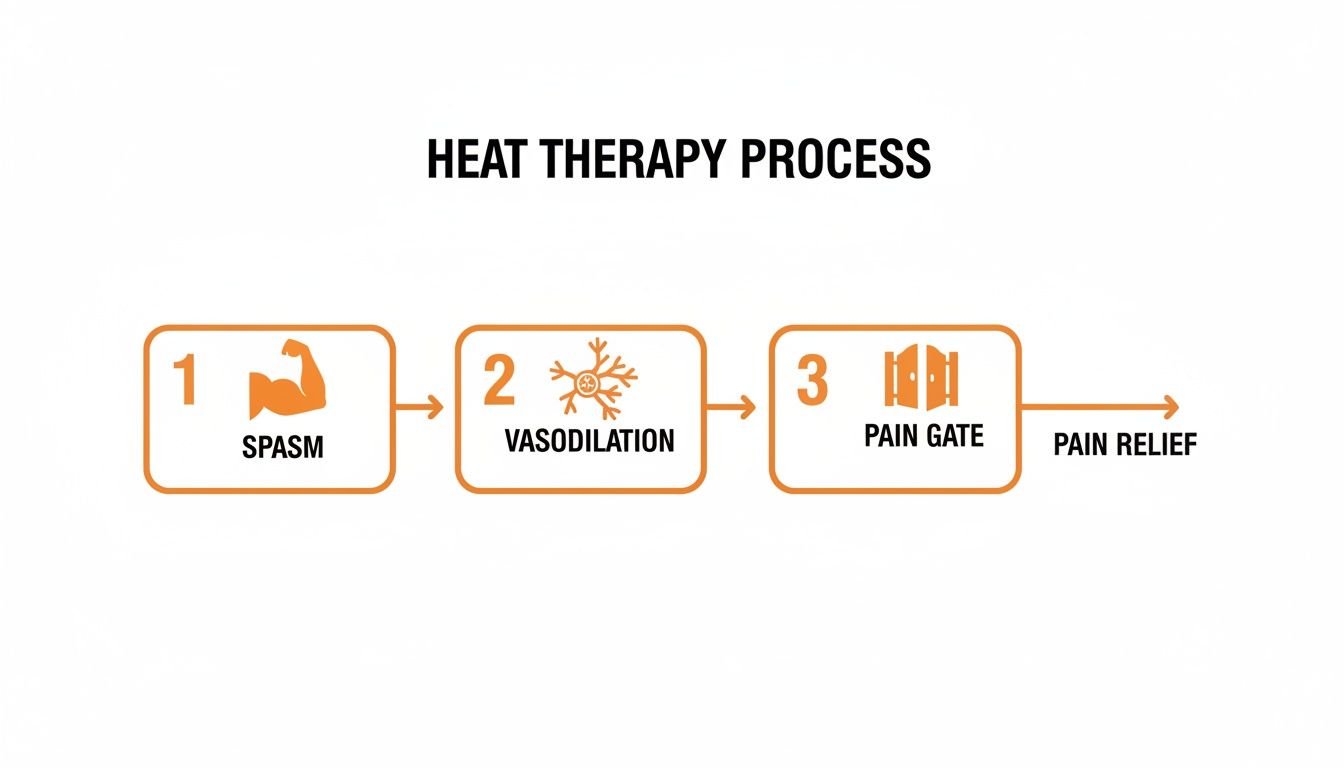
As you can see, it all starts by calming down those deep muscle spasms. This simple action helps increase blood flow (a process called vasodilation) and, most importantly, helps block the pain signals from ever reaching your brain.
H3: Choosing Your Heat Source
You’ve got a few solid options when it comes to applying warmth, and each has its own strengths and weaknesses. Honestly, the best choice often comes down to how bad the pain is, whether you need to move around, and simply what you have on hand.
- Microwavable Heat Packs: These are fantastic. They’re usually filled with natural materials like flaxseed or wheat, which deliver a deep, almost damp kind of heat that feels incredible. Their biggest plus is that you’re not tethered to a wall. Find one with a strap, and you can secure it to your back while you walk around and drink water—two of the most important things you can be doing.
- Electric Heating Pads: The classic choice for a reason. They provide steady, adjustable heat for as long as you need, which is perfect when you’re laid up on the couch or in bed. The downside, of course, is that they keep you stuck in one spot.
- Warm Baths or Showers: Never underestimate the power of a good soak. The all-encompassing warmth of a bath can be a lifesaver for that intense, radiating pain of renal colic, relaxing your entire body. It’s a temporary fix, though, and you can’t exactly live in the tub.
- Adhesive Heat Patches: A good heat patch for back pain can deliver targeted, low-level warmth for hours. These are single-use patches that stick to your clothing, making them a super discreet option for when you need to be out and about but still want some relief.
To make things a little easier, here's a quick comparison of your options.
Comparing Heat Sources For Kidney Stone Pain
| Heat Source | Key Advantage | Potential Drawback | Best For |
|---|---|---|---|
| Microwavable Pack | Portable and provides moist heat | Heat duration is limited (20-30 mins) | Staying mobile and active at home |
| Electric Pad | Consistent and adjustable temperature | Restricts movement to one location | Resting in bed or on a sofa |
| Warm Bath | Full-body muscle relaxation | Temporary and requires being stationary | Intense pain episodes needing immediate calm |
| Adhesive Patch | Discreet and long-lasting warmth | Lower heat intensity, single-use | Mild to moderate pain while away from home |
Ultimately, having a couple of these on hand gives you the flexibility to tackle the pain no matter where you are or what you're doing.
The Golden Rules of Heat Application
No matter which tool you reach for, safety has to be your top priority. Your skin is vulnerable, and even moderate warmth can cause a burn if you’re not careful. Following just a few simple rules will make sure you get all the soothing benefits without any of the risks.
The guiding principle here is simple: comfortably warm, never painfully hot. You're aiming for a gentle, soothing sensation that melts away muscle tension, not a searing heat that makes you flinch.
Always keep these essential safety tips in mind:
- Create a Barrier: Never, ever put a heating device directly on your bare skin. Always wrap it in a thin towel or make sure there’s a layer of clothing between the heat source and your body.
- Limit Your Sessions: Stick to 20-30 minute sessions. Any longer and you risk skin damage. Once your time is up, give your skin a break for at least an hour to cool down before you even think about reapplying heat.
- Mind the Temperature: If you’re using an electric pad, start on the lowest setting and work your way up if needed. For a microwavable pack, do a quick touch test on your inner arm to make sure it’s not scalding hot before placing it on your back or side.
- Stay Awake: This is a big one. Never fall asleep with an electric heating pad still on. It’s one of the easiest ways to get a nasty burn without even realizing it.
For a deeper dive into avoiding common mistakes, it’s worth reading up on safe heating pad practices. By keeping these guidelines in your back pocket, you can confidently use heat to get a handle on your kidney stone pain.
Pairing Heat With Other Drug-Free Strategies
Heat therapy is a fantastic tool for managing kidney stone pain, but it's even more powerful when you team it up with other simple, at-home strategies. Think of it this way: heat is your star player, tackling the immediate pain and muscle spasms. But to win the game—passing that stone—you need a full team working together.
By combining heat with a few other techniques, you create a comprehensive plan that not only eases your discomfort but also helps your body do what it needs to do. The heat calms everything down, and the other strategies get things moving.
Gentle Massage for Deeper Relaxation
A deep tissue massage is the absolute last thing you’d want right now, but a gentle, soothing touch can make a real difference. After a 20-minute session with a heat pack, the muscles in your lower back and side are warmed up and much less tense. That’s the perfect moment for a little light massage.
With your fingertips or the flat of your hand, apply soft, circular pressure to the areas that ache. The idea isn't to dig into deep knots; it's simply to soothe the surface muscles that have clamped down in response to the pain inside. This one-two punch of heat followed by massage can take your comfort to the next level. For example, after applying a warm pack to your flank for 20 minutes, you can sit comfortably and use your opposite hand to gently rub the sore area in slow circles. This simple act can release lingering tension and provide a profound sense of relief.
Hydration: The Non-Negotiable Foundation
If heat is your pain manager, then water is the engine that gets that stone out. Hydration is, without a doubt, the most important thing you can do. The goal is to make your urine less concentrated and increase the flow, creating a current that helps push the stone along its path.
Think of your urinary tract like a waterslide. To get the stone to move down and out, you need a strong, steady flow of water pushing it. If things are too dry, it’s far more likely to get stuck.
You should be drinking enough water to keep your urine a pale yellow, almost clear color. While everyone is different, a good target during an attack is 2 to 3 liters of water spread throughout the day. I always recommend keeping a large water bottle right next to you—it’s a simple visual cue to keep sipping.
Gentle Movement to Enlist Gravity
When you're hit with that kind of pain, the natural instinct is to curl up and not move. I get it. But surprisingly, a little gentle movement can be a huge help. Simply walking around the house or doing a few light chores puts gravity to work for you, helping to nudge the stone down through the ureter.
This isn’t about hitting the gym or going for a jog. Just staying upright and mobile can make a real impact. If you have a portable, hands-free heat pack, you can get continuous pain relief while you’re on your feet—it's the perfect combination of comfort and action. For many people, this pairing of heat and movement is what finally convinces them that the answer to will heat help kidney stone pain is a resounding "yes."
Relaxation Techniques for Mind and Body
The intense, unpredictable pain of a kidney stone is incredibly stressful. That stress, in turn, makes your muscles tighten even more, creating a nasty feedback loop. Simple relaxation techniques are a great way to interrupt that cycle by calming down your nervous system.
- Deep Breathing: It sounds basic, but it works. Inhale slowly through your nose for a count of four, hold your breath for four, and then exhale slowly through your mouth for a count of six. This can physically slow your heart rate and quiet that panicked feeling that often accompanies severe pain.
- Mindful Distraction: Take your mind somewhere else. Put on a comfort movie, listen to a calming playlist, or get lost in a podcast. Engaging your brain with something pleasant helps pull your focus away from the pain signals.
Combining these simple, drug-free approaches with targeted heat therapy creates a powerful plan for managing kidney stone pain at home. If you want to explore more options, you can find a wealth of information in our guide to alternatives to pain medication.
When To See A Doctor For Kidney Stone Pain
While home remedies are fantastic for taking the edge off, it's absolutely crucial to know when it's time to call in the professionals. Heat therapy can work wonders for pain, but it’s not a cure. It won’t make the stone disappear, and it certainly can’t fix serious complications like a total blockage or a nasty infection.
Knowing the difference between pain you can manage at home and a genuine medical emergency is the most important part of getting through this safely. There are a few "red flag" symptoms that are your body’s way of saying it’s time to stop what you're doing and get medical help right away.
Critical Red Flag Symptoms
If you experience any of the following along with your kidney stone pain, don't wait for things to improve. It's time to call your doctor or head to an urgent care clinic immediately.
- Unbearable Pain: We're talking about pain so intense that you can't sit, stand, or lie down comfortably. If heat and over-the-counter pain meds aren't touching it, that's a sign you need stronger care.
- Fever and Chills: This is a big one. A fever, especially with chills, is a classic sign of an infection in your kidney or urinary tract. This won't go away on its own and requires prompt medical treatment, usually with antibiotics.
- Persistent Nausea and Vomiting: If you can't keep any liquids down, you're on a fast track to dehydration. Dehydration not only makes you feel awful but also stops your body from producing the urine needed to flush the stone out.
- Difficulty Passing Any Urine: If you find you're barely urinating or can't go at all, the stone may be causing a complete blockage. This is a serious medical situation that needs to be addressed immediately.
Remember, the whole point of using heat is to make passing a kidney stone more bearable. It’s a great tool for managing the misery, but it can’t solve an underlying emergency like an infection or a blockage.
While our focus here is on kidney stones, it’s also wise to know the general guidelines for when to see a back pain specialist, as overlapping symptoms can sometimes be confusing.
Ultimately, trust your gut. If something feels seriously wrong, it probably is. It's always better to play it safe and get a professional opinion.
Your Questions About Heat Therapy, Answered
When you're in the throes of kidney stone pain, you need straightforward answers, not guesswork. Let's walk through some of the most common questions people ask about using heat, so you can find relief with confidence.
How Quickly Can I Expect Relief?
For many, the soothing effects of heat kick in pretty fast. You can often feel a noticeable difference in your pain levels within just 15 to 20 minutes of application. The warmth gets to work quickly on those intense muscle spasms, offering a welcome dose of comfort while you wait for pain medication to start working or for the stone to pass.
Is a Microwavable Heat Pack Better Than an Electric One?
Both can do the job, but there's a good reason many people prefer microwavable packs. They often deliver a moist, penetrating heat that seems to get deeper into the sore muscles.
The biggest plus, though, is their portability. A pack with straps means you're not tethered to a wall outlet. You can get up, walk around, and keep drinking water—all things that actually help a kidney stone pass—while still getting that constant, comforting heat. That freedom to move is a game-changer.
Pro Tip: Try following up a heat session with a gentle massage. The warmth loosens up all those tense muscles, making them much more receptive to a light, soothing touch that can help melt away any lingering discomfort.
Can Heat Actually Make the Kidney Stone Pass Faster?
This is a great question. While heat's main job is pain management, it can absolutely help the process along indirectly. By relaxing the smooth muscles lining your ureter, it essentially widens the path for the stone, reducing the resistance it has to fight against.
When you combine that muscle-relaxing effect with staying well-hydrated and moving around, you create the best possible conditions for the stone to make its exit.
Should I Use Heat or Cold for This Kind of Pain?
When it comes to the deep, cramping pain of renal colic, heat is the clear winner. Its ability to relax spasming muscles and boost blood flow is exactly what you need.
Cold therapy, on the other hand, is designed for things like a sprained ankle or a swollen joint—entirely different types of pain. For the internal muscle agony of a kidney stone, always reach for warmth.
For reliable, clinic-grade heat therapy you can use at home, SunnyBay creates a range of U.S.-made microwavable wraps and packs designed for deep, lasting comfort. You can find a hands-free solution to manage your pain and get back to your life at the official SunnyBay website.


