


What Causes Tight Hip Flexors: what causes tight hip flexors and relief tips
-
More often than not, that nagging tightness in the front of your hips boils down to a few usual suspects: prolonged sitting, poor posture, and underlying muscle imbalances. Think of your hip flexors like a rubber band. If you keep a rubber band in a shortened, bunched-up position for too long, it eventually loses its ability to stretch back out. That’s exactly what happens to your muscles when you sit for hours on end.
What Causes Tight Hip Flexors?
Ever stand up after a long stint at your desk and feel a deep, stubborn ache in the front of your hips? That's a classic signal from your hip flexors. This group of powerful muscles is in charge of lifting your knees toward your chest and keeping your pelvis stable. When they get tight, it can set off a chain reaction of problems, from lower back pain to frustratingly limited movement.
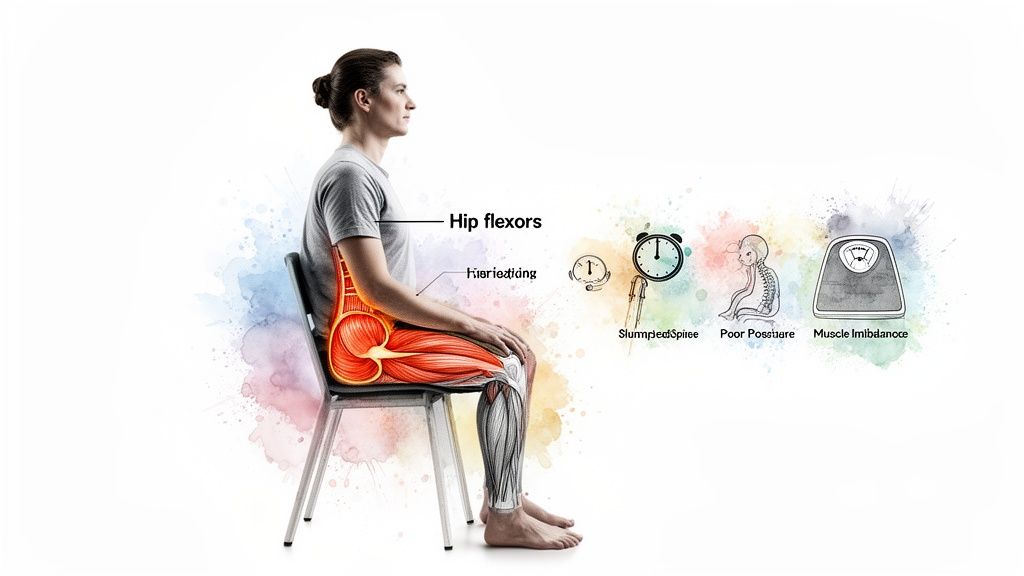
This tightness is largely a product of our modern lifestyles, and its impact is more widespread than you might think. For example, shortened hip flexors are a factor for a staggering 63.5% of people dealing with low back pain. One study looking at ice hockey players found that 60% had tight hip flexors, drawing a direct line between that stiffness and their back issues. You can read the full research about these findings to see the data for yourself.
To truly find relief, you have to get to the root of the problem. Here’s a quick rundown of the primary causes and how they contribute to that locked-up feeling.
Quick Guide to Common Causes of Tight Hip Flexors
This table breaks down the most frequent reasons your hip flexors might be giving you trouble, helping you pinpoint what's happening in your own body.
| Cause | How It Leads to Tightness | Who Is Most Affected |
|---|---|---|
| Prolonged Sitting | Locks hips in a shortened, flexed state, causing them to adapt and lose flexibility over time. | Office workers, drivers, and anyone with a sedentary job or lifestyle. |
| Poor Posture | An anterior pelvic tilt (arched lower back) keeps the hip flexors in a constantly contracted position. | Individuals who stand or sit with a pronounced forward pelvic tilt. |
| Muscular Imbalances | Weak glutes or core muscles force the hip flexors to overcompensate and become overworked. | People with weak posterior chains (glutes, hamstrings) or inactive core muscles. |
| Overuse from Exercise | Repetitive movements like running or cycling can lead to micro-tears and chronic tightness without proper recovery. | Runners, cyclists, dancers, soccer players, and other athletes. |
| Previous Injury | The body may tighten surrounding muscles, including hip flexors, to protect an injured area, leading to lasting stiffness. | Anyone who has experienced a past hip, groin, or lower back injury. |
While these are the most common culprits, it’s clear that a combination of factors is often at play. Addressing just one piece of the puzzle might not be enough to resolve the issue for good.
Releasing this deep-seated tension often requires more than just a few quick stretches. Simple, smart therapies can make a world of difference.
For instance, imagine ending a long day at your desk. Instead of just trying to force a stretch on cold, stiff muscles, you first apply a warm heat pack to your hips for 15 minutes. The soothing warmth melts away the tension, increases blood flow, and prepares the muscles to be stretched. When you finally do your kneeling hip flexor stretch, you'll find you can move deeper into it with less resistance, achieving a far more effective release. This is the power of heat therapy. Similarly, a targeted massage can work out the stubborn knots that keep those muscles chronically tight, providing both immediate relief and long-term mobility gains.
How Your Desk Job Sets the Sedentary Trap
If you spend most of your day in a chair, you might be unintentionally walking your body into a trap. We were built to move, but modern life—especially at the office—often glues us to a seat for hours on end. This sedentary lifestyle is one of the biggest culprits behind the question, "what causes tight hip flexors?"
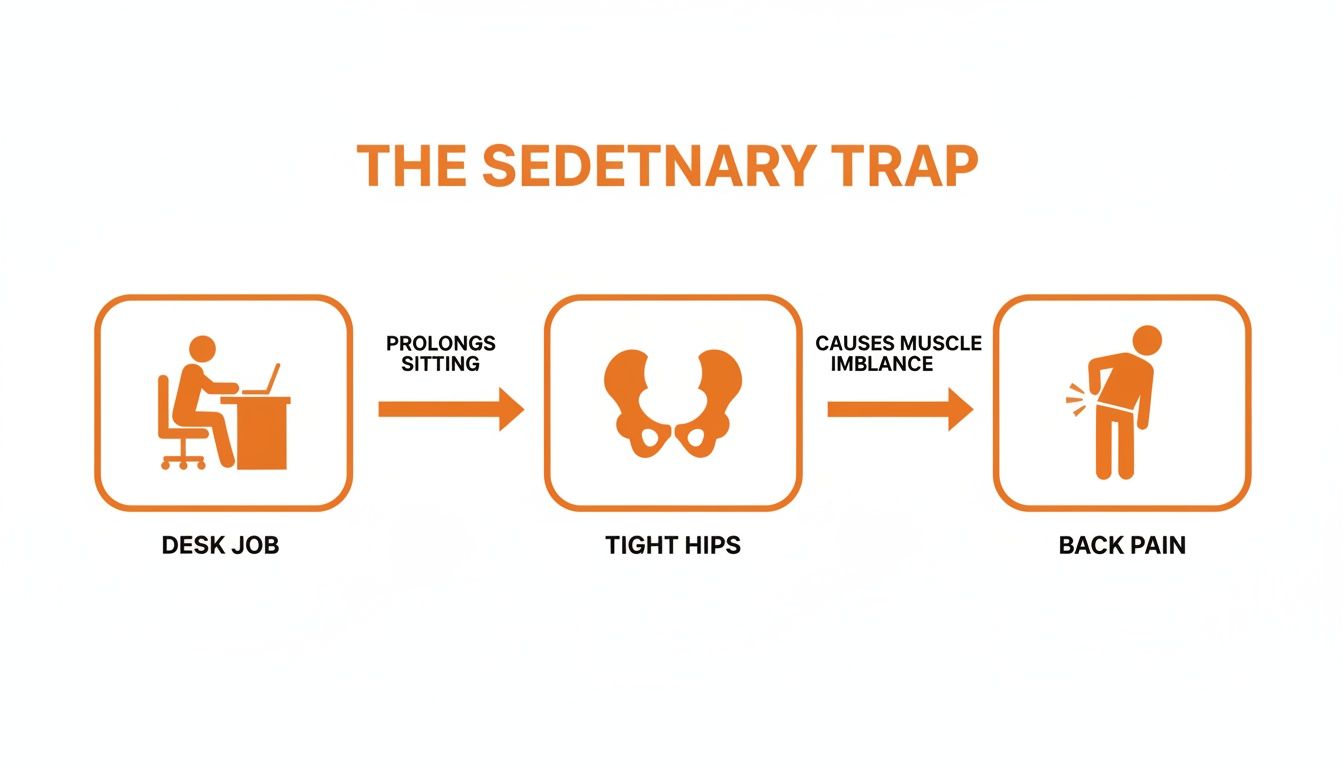
Here's a simple way to think about it: when you're sitting, your hip flexors are stuck in a shortened, bunched-up position. Day after day, these muscles start to think this is their new normal. They adapt by becoming stiff and losing their natural ability to lengthen, a process called adaptive shortening. It's the very heart of the sedentary trap.
And this isn't just about feeling a little creaky when you finally stand up. This chronic tightness can kick off a domino effect of other problems, from poor blood flow to weak glutes that are constantly being overstretched and shut down.
The Mechanics of Sitting All Day
Let's picture a typical office worker, Sarah. She's been dealing with a nagging low back pain that just won't quit. She's tried stretching her back, but the relief never lasts. The real problem isn't her back at all—it's her hips, which have grown tighter and tighter after years of spending eight hours a day at her desk.
Being stuck in a flexed position from sitting doesn't just tighten your hip flexors; it also tells your glute muscles to take a nap. This creates a serious muscular imbalance that forces your lower back and hamstrings to pick up the slack, often leading to pain and strain.
This imbalance is a massive issue. Research shows that people who sit for 50-75% of their day have significantly less hip mobility. It’s a problem that’s particularly bad in the U.S., where low back pain—often tied directly to tight hips—costs the healthcare system an eye-watering $134.5 billion every year. You can discover more insights about this hip flexor epidemic and just how far-reaching it is.
How to Break the Cycle of Stiffness
The good news? You don't have to quit your job and become a full-time yoga instructor to fix this. The key is to consciously bring more movement into your day and make a few smart adjustments to your routine. Small, consistent changes really can unlock your hips and keep the pain away.
Here are a few practical ways to get started:
- Take Micro-Breaks. Set an alarm to get up and walk around for a couple of minutes every hour. It sounds simple, but this keeps your muscles from seizing up.
- Fix Your Workspace. An ergonomic setup is non-negotiable. Check out our guide on how to improve posture at your desk for easy tweaks you can make to your chair and monitor height.
- Warm Up Before You Stretch. Imagine trying to stretch a cold rubber band—it’s stiff and might even snap. Your muscles are the same. Applying a microwavable heat pack for about 15 minutes before you stretch warms the tissue, making it pliable and ready to lengthen. This simple step can dramatically increase the effectiveness of your routine.
- Try Some Gentle Massage. A foam roller or a handheld massage tool can be a game-changer. By applying pressure to tight spots, you help break up adhesions (knots) and improve circulation. Think of it as manually telling your muscles to let go of that built-up tension, paving the way for better movement.
The Vicious Cycle of Posture and Muscle Imbalances
Tight hip flexors are rarely a solo act. They're usually caught in a toxic partnership with poor posture and widespread muscle imbalances, creating a vicious cycle that can be tough to escape. Getting to the bottom of this connection is the key to understanding why tight hips can become such a nagging, chronic problem.
Here’s a helpful way to think about it: picture your pelvis as a bowl of water. When your hip flexors get tight, they tug the front rim of the bowl downward, spilling water out the front. This is a great visual for anterior pelvic tilt, a super common postural issue where the hips tilt forward, forcing the lower back into a deep, stressed curve.
This constant forward tilt doesn't just stay in your hips. It cascades through your body, leaving your glutes and hamstrings in a permanently stretched-out, weakened state. Because these powerful muscles can't fire properly, your hip flexors and lower back muscles have to pick up the slack, becoming even tighter and more overworked. It’s a self-perpetuating loop that makes the problem so stubborn.
How Everyday Habits Feed the Imbalance
This entire cycle is often fueled by little habits that seem harmless on the surface. Slouching in the driver's seat on your commute, standing with all your weight on one leg, or always slinging a heavy bag over the same shoulder—these all feed into the imbalance. Over time, these small, repeated actions effectively train your body to hold itself in a misaligned posture.
If you're looking to break these habits, our guide on the importance of good posture for pain relief is a great place to start. Correcting these patterns is a massive step toward getting things back in balance.
The real kicker is that your body adapts to these positions. Muscles that are always shortened (like your hip flexors when you sit) become neurologically tight, while muscles that are always lengthened (like your glutes) become weak and lazy. This imbalance is exactly why just stretching the tight spot often isn't enough for lasting relief.
A Simple Self-Check for Imbalance
Curious if your muscles are playing on the same team? Here's a quick test you can do right now. Lie flat on your back, either on the floor or a firm bed. Gently pull one knee in toward your chest, but keep your other leg extended straight out on the surface.
Pay close attention to that straight leg. Does it lift off the floor? If you can't keep it flat on the ground, that's a tell-tale sign that the hip flexors on that side are tight. This simple movement clearly shows how one tight muscle group can throw your entire alignment off-kilter. Recognizing this is the first step toward fixing it.
Your Action Plan for Unlocking Tight Hips
Knowing why your hips are tight is one thing, but getting them to loosen up takes action. Think of this as your practical toolkit for unlocking those stiff hips. The secret isn't a single, magic fix; it's a balanced approach combining stretching, strengthening, and smarter daily habits. It's not about punishing workouts, but consistent, small actions that add up to real, lasting change.
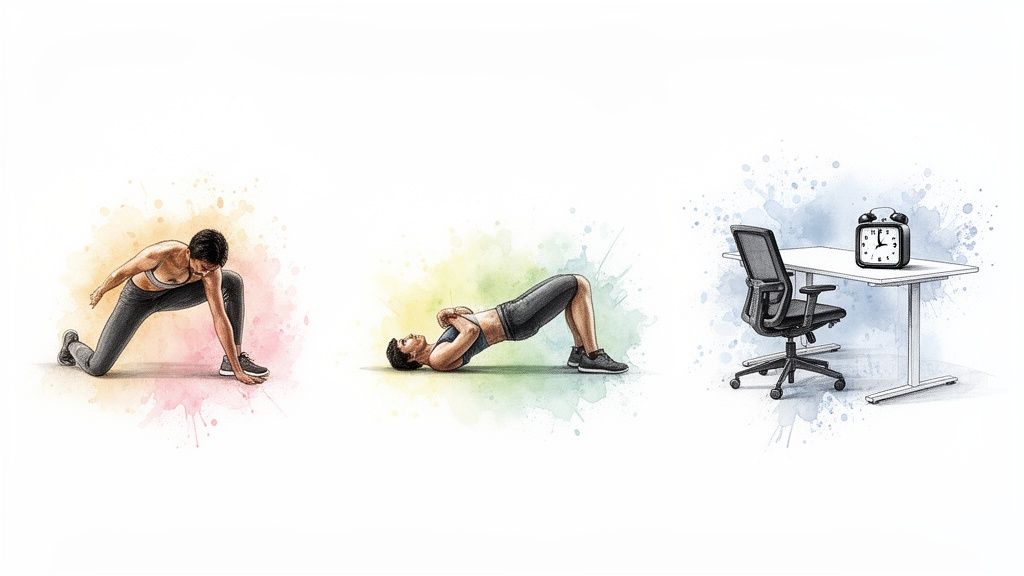
We’ll start by gently coaxing those overworked muscles to lengthen out. This is key to restoring flexibility and getting rid of that frustrating, locked-up feeling.
Essential Stretches for Hip Relief
When it comes to stretching, consistency trumps intensity every time. Your goal is a gentle pull, not pain. Hold each of these stretches for a steady 30-60 seconds—and please, no bouncing.
- Kneeling Hip Flexor Stretch: Get down on one knee, with your other foot planted in front (knee bent at 90 degrees). Now, gently ease your hips forward. You’ll feel a nice stretch along the front of the hip on your back leg. To deepen it, give the glute on that same side a little squeeze.
- Pigeon Pose: This classic yoga pose is a miracle worker for opening the hips. From a hands-and-knees position, slide one knee forward toward your wrist and extend the other leg straight behind you. You should feel this one in the outer hip of your front leg.
- Seated Figure-Four Stretch: Perfect for a quick reset at your desk. While sitting, cross one ankle over the opposite knee. Now, gently press down on the bent knee until you feel a good stretch in your glute and hip.
But remember, stretching is only half the story. If you only stretch the tight muscles without waking up the weak ones, you're just spinning your wheels.
A lot of the time, tight hip flexors are just a symptom of sleepy glutes. When your glutes aren't doing their job, your hip flexors pick up the slack, becoming overworked and chronically tight. The real solution lies in waking up your glutes to restore balance to your pelvis.
Strengthening Your Support System
By strengthening the muscles on the other side—especially your glutes and core—you're essentially telling your hip flexors it's okay for them to relax. These exercises help re-establish that crucial muscular balance. To build a well-rounded routine, you can explore a variety of leg exercises that support overall lower-body health.
- Glute Bridges: Lie on your back, knees bent and feet flat on the floor. Squeeze your glutes and lift your hips off the ground until your body forms a straight line from your shoulders to your knees. Hold for a moment, then lower back down.
- Clamshells: Lie on your side with your knees bent and stacked on top of each other. Keeping your feet touching, lift your top knee toward the ceiling without letting your torso rock back. This is fantastic for targeting the glute medius, a key muscle for hip stability.
Building Hip-Healthy Daily Habits
Finally, let's talk about prevention. Small, simple tweaks to your day can stop your hips from getting tight in the first place.
- Set a Movement Alarm: Every hour, get up. Just walk around for 2-3 minutes. Think of it as lubrication for your joints.
- Fix Your Workspace: Adjust your chair so your hips and knees are at roughly a 90-degree angle, with your feet resting flat on the floor. This simple change keeps your hips out of that severely flexed, tension-building position.
To make this even easier, here’s a sample schedule you can adapt to fit your day.
Your Daily Hip Health Routine
This simple schedule helps weave these healthy habits into your daily life, turning small actions into a powerful routine for preventing hip tightness.
| Time of Day | Activity | Goal |
|---|---|---|
| Morning | 5-minute stretch session (e.g., Kneeling Stretch) | Wake up muscles and start the day with better mobility. |
| Mid-Day | Seated Figure-Four stretch at your desk. | Counteract the effects of prolonged sitting during work. |
| Throughout Work | Hourly movement alarm: walk for 2-3 minutes. | Prevent stiffness from setting in and promote circulation. |
| Evening | 10 minutes of strengthening (e.g., Glute Bridges). | Activate weak glutes and core to restore muscle balance. |
Consistency is what builds results. Stick with this framework, and your hips will thank you for it.
Using Heat Therapy for Deep Muscle Relief
Sometimes, stretching just doesn't cut it. You can do all the right moves, but those deep, stubborn knots in your hip flexors just won't budge. If you're dealing with stiffness that feels locked in, it might be time to bring in a powerful ally: heat therapy. Applying warmth to the area is like sending a gentle signal to your muscles, telling them it's safe to relax and let go.
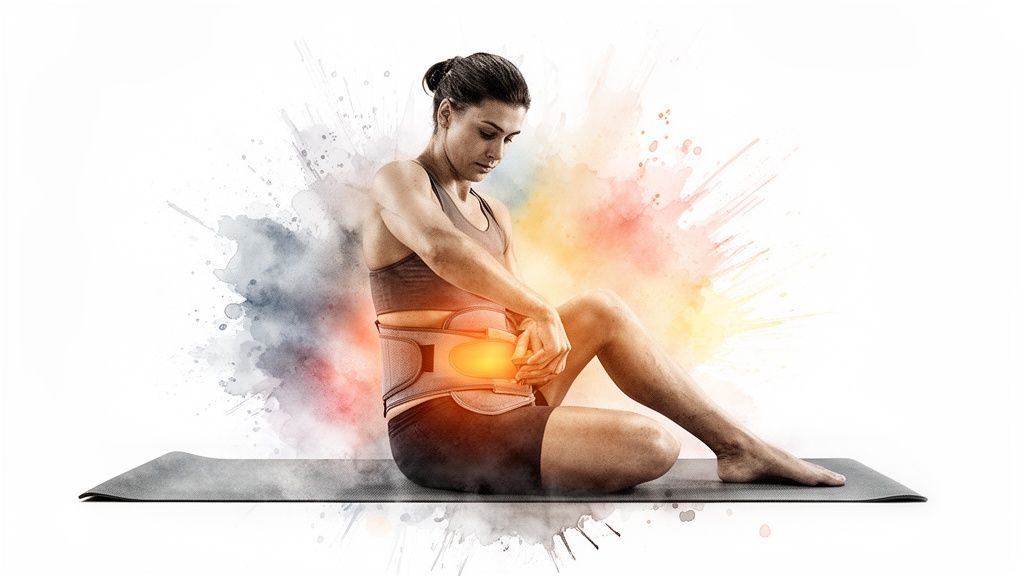
The logic here is pretty simple. Heat boosts blood flow to the muscles you're targeting. This rush of circulation delivers a fresh supply of oxygen and nutrients right to the tissue, which helps ease stiffness, soothe pain, and quiet down those overactive pain signals. It’s a great way to prep the muscle for movement and make it far more pliable.
Think of an athlete using a SunnyBay heat pack on their hips before a workout. That’s not just for comfort—it's a smart, strategic move to warm up the muscles, improve flexibility, and reduce the risk of injury. For them, it means better performance and faster recovery. For you, it means being able to touch your toes again or stand up from your chair without that familiar ache.
How to Maximize the Benefits of Heat
To really get the most out of heat therapy, it’s all about timing and application. Using a little warmth before you stretch can make a world of difference in your routine. The heat loosens up those muscle fibers, which means you can sink into a deeper, more effective stretch without having to force anything.
Try applying heat for about 15-20 minutes right before your daily stretches. This simple step prepares the tissue, making it much less resistant to lengthening. It's like the difference between stretching a cold, brittle rubber band and a warm, flexible one. The warm one is always going to be more cooperative. Products like a hands-free lower-back wrap are perfect for this, delivering consistent, comforting heat while you get ready.
Heat therapy is a game-changer for the kind of chronic tightness that comes from a desk job. It directly counters the stiffness that builds up after hours of sitting, making it the perfect first step before you jump into any corrective exercises or stretches.
Integrating Heat and Massage for Lasting Relief
Want to take it to the next level? Combine heat with a bit of gentle massage. After warming up the area, use your hands or a massage tool to work on the tissue. This one-two punch is incredibly effective. The heat makes the muscles receptive, and the massage works out the deep knots and trigger points that are contributing to that constant feeling of tightness.
Here’s a simple routine you can try:
- Warm the Area: Apply a microwavable heat pack to the front of your hip and lower back for about 15 minutes.
- Perform Gentle Stretches: Now, move into your kneeling hip flexor stretch. Hold it for 30-60 seconds on each side and pay attention to how much more accessible the stretch feels.
- Use Targeted Massage: After you’ve stretched, use a massage tool to gently work on any tender spots you find around your hip and upper thigh. This helps break down stubborn adhesions and promotes long-term healing.
When you understand what causes tight hip flexors—usually a mix of prolonged sitting and muscle imbalances—it becomes clear why therapies that boost circulation and muscle pliability are so incredibly effective. You can learn more about the benefits of heat therapy and how to weave it into your daily routine. By making heat a regular part of your self-care, you give your body a powerful tool to fight back against stiffness and reclaim comfortable, fluid movement.
When to See a Professional for Hip Pain
While you can often manage tight hips with stretches and smarter habits, there are times when self-care just isn't enough. It's crucial to know when to stop trying to fix it yourself and get a professional opinion. Ignoring certain signs can turn a small problem into a much bigger one.

What feels like simple muscle tightness could actually be masking something more serious. If you’re dealing with stubborn discomfort that won't quit, especially things like persistent hip flexor pain while running, a professional can help figure out the root cause and get you on the right track.
Key Signs It’s Time for an Appointment
Think of these as "red flag" symptoms. They’re your body's way of telling you that the issue is beyond a simple home remedy.
You should book an appointment with a doctor or physical therapist if your hip pain is sharp, radiates down your leg, or is accompanied by numbness or tingling. Also, pain that wakes you up at night or doesn't improve after 2-3 weeks of consistent self-care needs a professional look.
Don't just learn to live with pain. An expert can give you a clear diagnosis—whether it's a muscle strain, tendonitis, or another underlying condition—and build a treatment plan that actually works for you.
What to Expect from a Professional
When you go in, a clinician will likely do a full assessment. They'll check your range of motion, test your muscle strength, and ask about your lifestyle and activity levels to get the full picture.
From there, they might suggest a few things:
- Physical Therapy: A physical therapist can give you specific, targeted exercises to correct muscular imbalances and rebuild strength safely.
- Manual Therapy: This involves hands-on techniques like deep tissue massage or joint mobilization to release tension that regular stretching can't reach.
- Imaging Tests: If they suspect something more serious, like a tear or joint issue, they might order an X-ray or MRI to get a look inside.
Making that appointment is a proactive step. It's about taking control and getting back to moving freely and without pain.
Got Questions About Hip Flexor Pain? Let's Get Them Answered.
If you're dealing with nagging hip flexor pain, you've probably got a few questions. Let's walk through some of the most common ones I hear from people, so you can get some clarity and start feeling better.
One of the first things everyone wants to know is how long this whole process takes. It's a fair question, but the answer is that it's a journey, not a sprint.
How Long Does It Take to Fix Tight Hip Flexors?
Look, this problem didn't happen overnight, and it won't be fixed overnight either. Think about it—that tightness likely built up over months, maybe even years, of sitting at a desk or repeating the same movements. So, you'll need to give it some time.
Most people start to feel a real difference within a few weeks of consistent, dedicated effort. But to build lasting flexibility and truly resolve the issue, you're probably looking at a few months.
The secret sauce here is consistency over intensity. Gentle, daily stretching and strengthening will get you much further than trying to force it with an aggressive session once a week.
Can Tight Hips Cause Pain Elsewhere?
Oh, absolutely. This is a huge point that often gets missed. Your body is a connected system, and the hip flexors are right at the center of it all. When they get tight, they can pull everything else out of whack, creating a domino effect of aches and pains.
This "referred pain" often pops up in a few key places:
- Lower Back Pain: This is the most common one. Tight hip flexors tug your pelvis forward, creating an arch in your lower back that puts a ton of strain on your spine.
- Groin Discomfort: Because the main hip flexor muscle (the iliopsoas) runs right through the groin, deep tightness can easily be mistaken for a groin pull that just won't go away.
- Knee or Thigh Pain: When your hips aren't moving right, your body compensates. This can change how you walk and run, putting extra stress on your quads and knee joints.
Is Heat or Ice Better for Hip Flexor Pain?
Choosing between heat and ice really comes down to what you're dealing with at the moment. For the chronic, day-to-day stiffness that most people with tight hip flexors experience, heat is your best friend. A good heat pack warms up the muscles, boosts blood flow, and helps them relax and let go before you stretch.
Ice is for fresh, acute injuries. If you've just pulled something or have sharp, sudden pain and swelling after a workout, that's when you reach for an ice pack to calm things down. But for that stubborn, underlying tightness, heat is the clear winner for promoting relaxation and flexibility.
When you need that deep, soothing warmth to melt away chronic stiffness, SunnyBay has you covered. Our microwavable heat packs are designed to relax those tight muscles, making your stretches far more effective. Check out our drug-free solutions for pain relief.


