


What Causes Lower Back Stiffness: Quick Guide
-
That familiar morning groan as you swing your legs out of bed—what makes lower back stiffness a daily ritual for so many people? The short answer is that overnight, your body goes into a state of rest and repair, but this inactivity can have a downside.
Think of your muscles and connective tissues like a sponge. Without regular movement to keep them hydrated and flexible, they can become a bit dry and rigid overnight. This is why those first few steps out of bed can feel like a painful, creaky challenge.
Why Does My Lower Back Ache Every Morning?
Waking up with a stiff, achy lower back can put a real damper on your entire day. It’s a super common complaint, and it’s not just a sign of getting older. It’s often your body's way of telling you that something is out of balance.

We're going to dive into the specific lifestyle habits and underlying issues that might be contributing to your discomfort. More importantly, we'll explore simple, drug-free ways to find relief and make your mornings much smoother.
The Overnight Effect on Your Back
While you're sleeping, a few key things are happening (or not happening) that can leave your back feeling locked up by morning:
- Decreased Blood Flow: When you're not moving, circulation to your back muscles slows down. This means they get less of the fresh oxygen and nutrients they need to stay loose and supple.
- Inflammatory Buildup: Lying still for hours allows inflammatory fluids to pool in your joints and the surrounding tissues. This accumulation is a major cause of that classic morning stiffness and pain.
- Muscle and Fascia Tightening: Your soft tissues, from the big muscles to the web-like connective tissue called fascia, can shorten and stiffen without the regular stretching and movement of daily activity.
If you consistently wake up feeling this way, your bed itself could be a big part of the problem. You can learn more about how your mattress impacts morning back aches and what to look for in a supportive sleep setup.
To help you pinpoint the cause, here’s a quick breakdown of the most common triggers for that morning stiffness.
Quick Guide to Morning Back Stiffness Triggers
This table summarizes the main reasons you might be waking up with a stiff back and offers a simple starting point for relief.
| Trigger | How It Causes Stiffness | Simple First Step |
|---|---|---|
| Prolonged Inactivity | Muscles and fascia shorten and tighten overnight due to a lack of movement, reducing flexibility. | Perform gentle stretches (like knee-to-chest) for 5-10 minutes before even getting out of bed. |
| Poor Sleeping Posture | Sleeping in a twisted or unsupported position puts sustained strain on your spine, muscles, and ligaments. | Try placing a pillow between your knees if you're a side sleeper, or under your knees if you sleep on your back. |
| Unsupportive Mattress | A mattress that is too soft or too old fails to keep your spine in a neutral alignment, causing muscles to overwork. | Assess your mattress for sagging. If it's over 7-10 years old, it might be time for a replacement. |
| Inflammation | Inflammatory substances can accumulate in your joints and soft tissues while you're still, leading to pain and rigidity. | Apply a warm compress or heat pack for 15 minutes upon waking to boost circulation and soothe tissues. |
| Dehydration | Your spinal discs lose water overnight naturally. Insufficient hydration can worsen this, making them less cushiony. | Drink a full glass of water first thing in the morning to start rehydrating your body and spinal discs. |
Understanding these factors is the first step toward reclaiming your mornings. Often, a small change can make a huge difference.
Imagine your back muscles are like a cold piece of modeling clay. First thing in the morning, they're firm and difficult to shape. Gentle warmth is like kneading that clay—it restores pliability, making movement easier and a whole lot more comfortable.
This is where simple, at-home therapies can be a game-changer. Heat therapy, for example, is fantastic for this. The benefit is undeniable: it works by increasing blood flow to the stiff area, which helps flush out those inflammatory substances and deliver fresh oxygen to your tight muscles.
Just a quick 15-minute session with a microwavable heat pack can completely transform your morning routine, making that first stretch feel restorative instead of painful.
The Hidden Culprits in Your Daily Routine
While that morning ache gets all the attention, the real source of the problem is often hiding in plain sight: your daily habits. What you do for hours on end, usually without a second thought, is what sets the stage for chronic lower back stiffness.
Think of your spine like a tent pole. It’s held upright and stable by a network of guy ropes—your muscles. When you spend hours slouched at a desk, some of those “ropes” (like your hamstrings and hip flexors) get incredibly tight from being stuck in a shortened position. At the same time, others (like your glutes and core) get weak and go slack. This imbalance pulls the whole structure out of alignment, yanking on your lower back and causing that familiar, nagging pain.
Your Desk Job and The Sedentary Effect
One of the biggest modern-day culprits behind lower back pain is a sedentary lifestyle. All those hours spent sitting are basically training your muscles to be imbalanced. It's not just about bad posture; it's the sheer lack of movement that's the issue. In fact, physical inactivity is now considered the fourth leading risk factor for global mortality.
Research shows a clear link between activity levels and low back pain (LBP), with both extremes—being too active or not active at all—upping your risk. But it's people with sedentary jobs who really feel the burn, facing a much higher likelihood of LBP. This isn't a small problem; it affected a staggering 577 million people worldwide back in 2017. You can read the full research about this global health issue to get a sense of the scale.
The good news? You can fight back. Learning how to improve posture at desk with a few simple ergonomic tweaks can make a massive difference. Even just setting a timer to remind yourself to stand up, stretch, and walk around every hour can help hit the reset button on your muscles.
Lifting, Living, and Everyday Strains
It’s not just the office chair, though. Plenty of other daily habits can slowly chip away at your back health.
- Improper Lifting: We’ve all done it—using our back like a crane to hoist something heavy instead of using our legs and core. That puts a huge amount of strain right on the lumbar spine. Always remember to bend at your knees and hips, keeping your back straight.
- Unsupportive Footwear: Those flimsy shoes might look good, but if they lack proper arch support, they can throw your entire body out of alignment, and that chain reaction often ends with a sore lower back.
- Weak Core Muscles: Your core is more than just a six-pack; it’s the whole muscular corset around your midsection. When it's weak, your lower back has to pick up the slack to keep you stable, which leads directly to fatigue and stiffness.
Think of your daily activities as deposits or withdrawals from your "back health" account. Slouching and improper lifting are withdrawals. Mindful movement, stretching, and applying heat are deposits that build resilience.
Making small, conscious changes to these routines can start to turn a vague, chronic problem into a series of solvable challenges. For instance, before you head out to do yard work or lift groceries, try applying a heat pack for 10-15 minutes. The benefit here is prevention: it warms up the muscles, making them more pliable and much less likely to get strained. In the same way, a little gentle heat therapy after a long day at your desk can help undo all that built-up tension before it settles in for good.
Medical Reasons Your Lower Back Feels Stiff
While our daily grind is often the number one suspect, that nagging lower back stiffness can sometimes be a sign of an underlying medical issue. This isn't about jumping to worst-case scenarios; it's about being informed so you can have a smarter conversation with your doctor. Getting to the root cause is always the first step toward finding relief that actually works.
Many times, the problem stems from a few common daily habits that feed into each other, from sitting all day at a desk to lifting a box the wrong way.
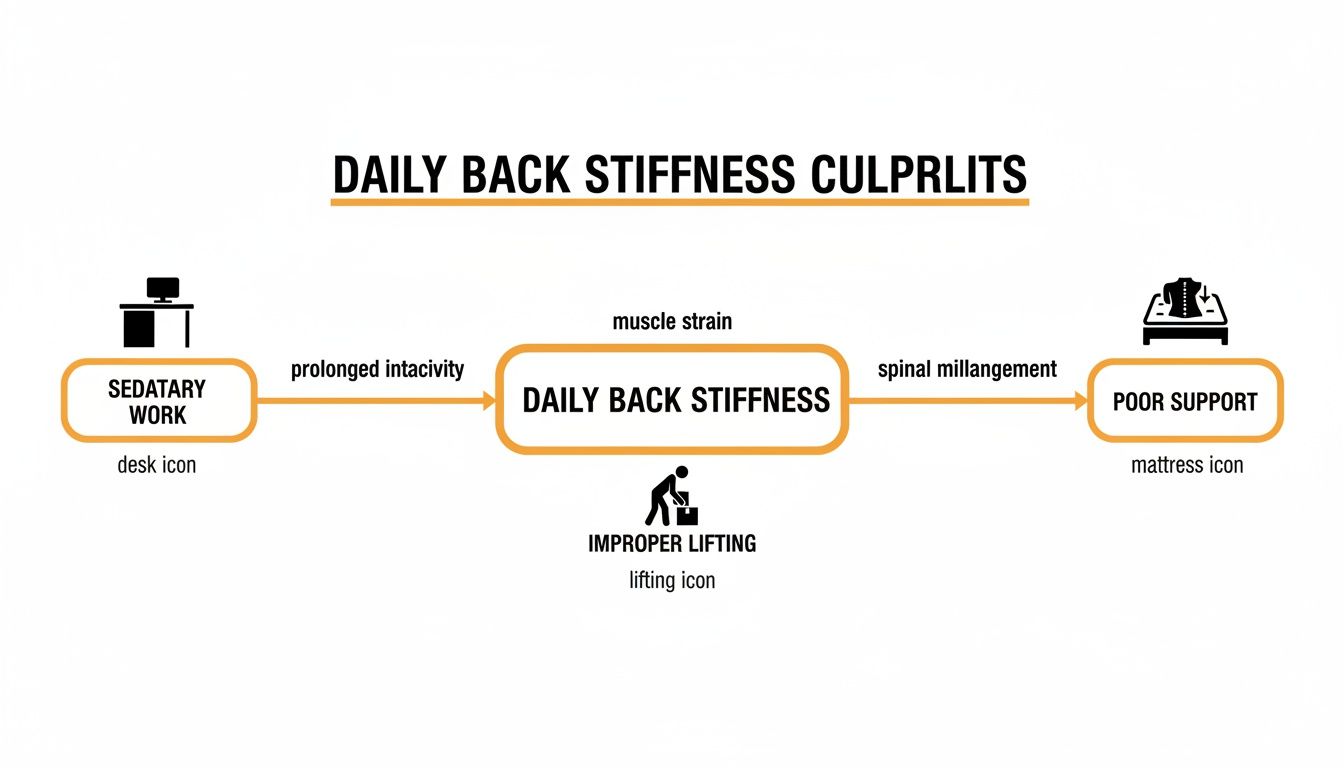
As you can see, these triggers are often linked. A bad mattress, for example, just makes the stiffness from a sedentary job that much worse.
When Your Spine's Parts Wear Down
Several conditions are tied to the natural, age-related wear and tear on your spine's components, which can absolutely lead to that stiff, locked-up feeling.
Think of Degenerative Disc Disease like the tires on your car slowly losing their tread and air pressure. The soft, cushiony discs between your vertebrae thin out and become less effective shock absorbers. This loss of cushion can cause the bones to sit closer together, resulting in stiffness and pain, especially right after you get out of bed.
Similarly, Facet Joint Arthropathy is essentially arthritis in the small joints of your spine. Imagine rusty hinges on a gate. These little joints, which help your back bend and twist, become inflamed and worn, making every movement feel stiff and painful. It’s usually worst in the morning or after you’ve been sitting for a while.
Another common issue is Spinal Stenosis. This is where the spinal canal itself starts to narrow, putting a squeeze on the nerves running through it. This pressure can cause more than just stiffness; you might also feel pain, numbness, or weakness in your legs that gets worse when you stand or walk.
Issues Within the Muscles and Nerves
It’s not always about the bones and joints. More often than not, the soft tissues are the real source of lower back stiffness. A simple muscle strain from lifting something too heavy or twisting the wrong way can trigger inflammation and tightening that hangs around for days.
A more chronic and frustrating problem is Myofascial Pain Syndrome. This condition involves painful trigger points, or "knots," that form in your muscles and the surrounding connective tissue (fascia). These tight knots can cause a deep, aching pain and even refer stiffness and discomfort to other parts of your back. You can learn more about what is myofascial pain syndrome to see if the symptoms sound familiar.
The key takeaway is that chronic stiffness is your body's signal that something is amiss. It’s not just a sign of aging but a specific symptom that can be addressed once the underlying cause is understood.
Gentle therapies can be a game-changer for managing the chronic symptoms that come with these conditions. For instance, heat therapy is a fantastic tool for soothing the stiffness from arthropathy or muscle-related pain. Applying a warm compress increases blood flow to the area, which helps tight muscles relax and eases the pain signals, making it easier to move. In the same vein, the benefits of targeted massage therapy are profound for myofascial trigger points; it can release those stubborn knots, restore flexibility, and significantly improve your quality of life.
Your At-Home Guide to Lasting Lower Back Relief
Knowing what’s behind your lower back stiffness is one thing, but getting your hands on real, lasting relief is what truly matters. The good news? You don't need a lot of fancy equipment or pricey appointments to start feeling better. Two of the most effective tools in your arsenal—heat and massage—are simple, accessible, and have the science to back them up.
When you apply warmth to your lower back, you’re triggering a natural process called vasodilation. It sounds technical, but all it means is that your blood vessels widen. This lets more oxygen-rich blood rush into the area, which helps flush out the junk causing inflammation and deliver fresh nutrients to your sore, tight muscles. This isn't just a comforting feeling; it's a physiological process that accelerates healing and provides tangible relief.
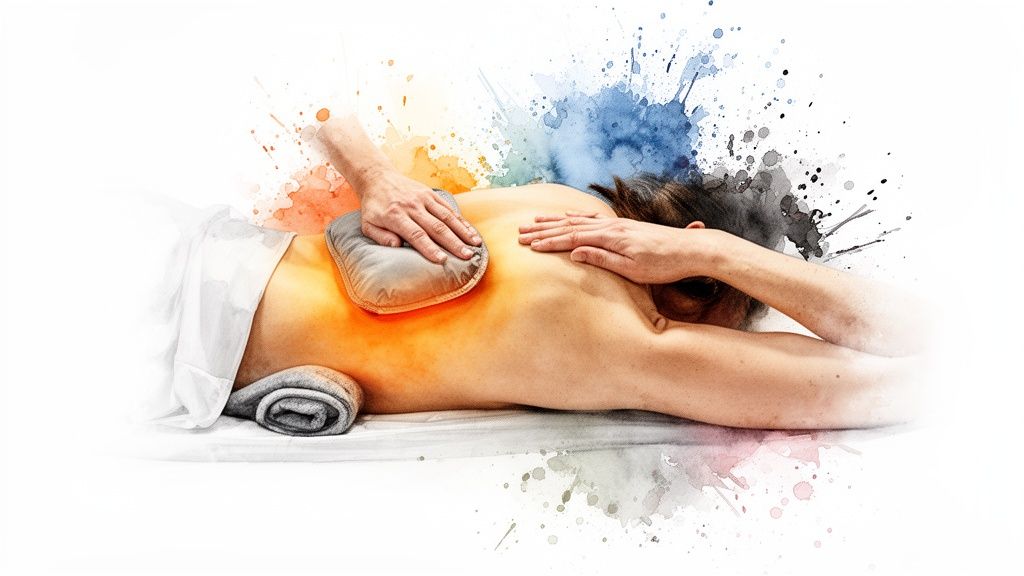
Think about a cold, stiff piece of modeling clay. It's brittle and impossible to shape. But after a few minutes of gentle, steady warmth, it becomes soft and pliable. That’s exactly what targeted heat therapy does for the muscles and connective tissues in your back.
Harnessing the Power of Heat Therapy
One of the easiest ways to put this into practice is with a microwavable heat pack. These are great because they provide a deep, moist heat that sinks into muscle tissue far more effectively than the dry heat from a standard electric pad. The benefit of this approach is deep, penetrating relief that prepares your back for gentle movement.
Here’s a simple routine to get you started:
- Prepare Your Pack: Follow the instructions for your heat pack, which usually means warming it in the microwave for 1-2 minutes. Always test the temperature on your inner arm first to make sure it's comfortably warm, not scorching hot.
- Get Comfortable: Find a relaxing spot, maybe lying on your side or stomach. Place a thin towel over your lower back to protect your skin, then lay the heat pack right over the stiffest spot.
- Relax and Recharge: Let the heat work its magic for 15-20 minutes. Try to use this time to practice some deep, slow breathing. This helps calm your nervous system and encourages your muscles to let go even more.
Making this a daily ritual, even just once or twice, can make a huge difference in your stiffness levels. If you want to dive deeper into the science and best practices, our comprehensive guide on heat therapy for back pain is a great resource.
The Benefits of Self-Massage
While heat gets the muscles to relax, massage therapy takes it a step further by manually working out those painful knots and adhesions. You can get some serious relief on your own with something as simple as a tennis ball or a firm massage ball. By investing a few minutes in self-massage, you can enjoy benefits that rival a professional session, right in your own home.
Self-massage is a game-changer because it:
- Releases Trigger Points: It lets you apply direct, sustained pressure to those stubborn muscle knots (myofascial trigger points), convincing them to finally release their grip.
- Improves Flexibility: By breaking up the tiny adhesions in the fascia surrounding your muscles, massage helps restore your normal range of motion and gets rid of that "locked-up" feeling.
- Boosts Circulation: Just like heat, the physical pressure from a massage gets the blood flowing right where you need it most.
The combination of heat followed by gentle self-massage creates a powerful one-two punch against stiffness. The heat warms up and prepares the muscle tissue, making the massage more effective and less painful.
Give this a try after your next heat session. Lie on your back with your knees bent and slip a tennis ball under the stiff part of your lower back (just off to the side of your spine, never directly on it). Gently roll your body over the ball, and when you find a tender spot, just pause there for 20-30 seconds while you breathe deeply. It's a fantastic way to release deep-seated tension.
If your stiffness often pops up after a workout or a day of activity, learning how to properly ease lower back pain after exercise is another crucial piece of the puzzle. When you combine these simple at-home therapies with gentle, consistent movement, you have a solid strategy for a more flexible and comfortable back.
Proactive Strategies for Building a Stronger Back
Moving beyond just chasing pain relief is where the real win is. To truly break the cycle of lower back stiffness, you have to shift your mindset from reacting to pain to building long-term resilience. This means actively creating a strong, supportive structure that can handle everything you throw at it, whether that’s sitting at your desk or lifting a heavy bag of groceries.
Think of it like building a "natural corset" of muscle around your spine. When your core muscles—your abdominals, obliques, and the deep muscles along your spine—are strong and balanced, they act like a set of built-in support cables. They hold your spine stable and protected, taking the pressure off your vertebrae and discs. With a strong corset, your skeleton doesn't have to bear the full load, which dramatically cuts down on strain and stiffness.
This approach puts you in the driver's seat, allowing you to stop stiffness before it even starts.
Building Your Core Foundation
A resilient back is built on a foundation of simple yet incredibly powerful exercises. You don’t need a fancy gym membership; all you need is consistency with a few key movements.
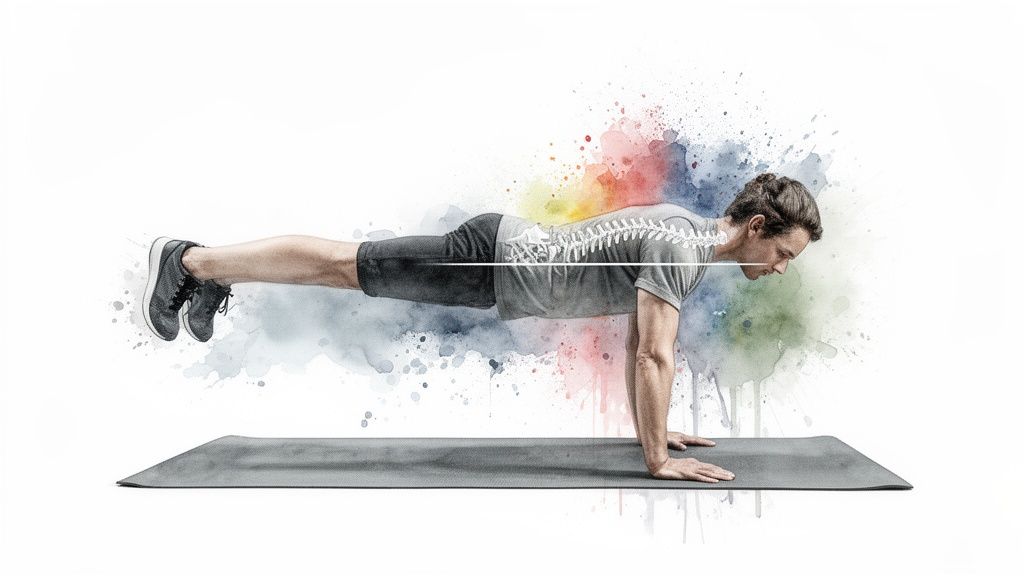
- Planks: This is the ultimate core-engaging exercise. Aim to hold a solid plank for 20-30 seconds, making sure to keep your back flat and your hips from sagging or rising too high.
- Bird-Dog: Start on all fours, then slowly extend one arm straight out in front of you and the opposite leg straight back. This move is fantastic for building stability and strengthening the tiny muscles that hug your spine.
A strong core diffuses the stress of daily movements across your entire midsection instead of allowing it to concentrate in your vulnerable lower back. It’s the difference between a flimsy tent pole and a well-supported structure.
Creating an Ergonomic Workspace
For so many of us, our desk is ground zero for back strain. With one in four adults sitting for more than eight hours a day, tweaking your workspace isn't a luxury—it's essential for preventing stiffness.
An ergonomic setup isn’t about buying expensive gear; it’s about smart alignment. First, adjust your monitor so the top of the screen is at or just below eye level. This simple change stops you from craning your neck forward. Your chair should support the natural curve of your lower back, but if it doesn't, a rolled-up towel or a small cushion placed at the small of your back can make a world of difference.
By taking these proactive steps—strengthening your core and refining your workspace—you can take control and significantly reduce how often stiffness gets in your way. It’s about building a body that allows you to live actively and comfortably, without constantly worrying that your back will hold you back from the things you love.
When to See a Doctor for Lower Back Stiffness
Most of the time, that nagging stiffness in your lower back is something you can manage at home. But every once in a while, it’s your body’s way of waving a red flag, signaling that something more serious is going on.
Think of it less as a reason to panic and more as a clear signal that it’s time to get a professional opinion. Ignoring these signs won't make them go away. The smart move is to let a doctor figure out exactly what's happening.
Knowing how to spot these "red flags" is just as important as knowing which stretches to do. It’s not about giving up on self-care; it's about being smart and getting the right diagnosis so you can get on a safe, effective treatment plan.
Red Flag Symptoms That Need a Doctor's Attention
If your stiff back comes with any of the following, don't wait. It's time to make that appointment.
- Numbness or Weakness Down Your Legs: This isn't just a little ache. It’s a distinct tingling, numbness, or even weakness that travels from your back down into one or both legs.
- Trouble with Bowel or Bladder Control: Any sudden, unexplained change here is a major warning sign and should be treated as a medical emergency.
- Pain That Won't Quit: We're talking about severe, constant pain that doesn’t ease up, no matter how much you rest or what position you try.
- Unexplained Weight Loss: If you’re dropping pounds without changing your diet or exercise and your back is in agony, your body is telling you something is wrong.
- Fever and Chills: Back pain paired with a fever can point to an infection that needs immediate attention.
Your health always comes first. Getting these symptoms checked out quickly helps rule out serious conditions and puts you on the fastest, and safest, road to recovery.
Putting It All Together: Your Questions Answered
When you're dealing with a stiff lower back, a lot of questions pop up. Let's tackle some of the most common ones so you can put this knowledge into practice.
Is It Better To Rest or Move When My Back Is Stiff?
This is a classic dilemma, but for that everyday, achy stiffness (not a sharp, sudden injury), movement is your friend. Staying still for too long can actually make things worse.
Gentle activities like walking, light stretching, or some beginner yoga poses get the blood flowing. This circulation helps lubricate the joints in your spine and release that clenched-up feeling in your muscles.
Think of it like a rusty door hinge. If you leave it alone, it stays stuck. But if you work it back and forth gently, it starts to move freely again. Even a slow 10-minute walk can work wonders compared to an hour on the couch.
Can Stress Really Cause Lower Back Stiffness?
Without a doubt. When you're stressed, your body goes into a "fight or flight" mode, and one of the first things it does is tighten your muscles. If you're living with chronic stress, those muscles—especially in your lower back and shoulders—never get the signal to relax.
This constant, low-level tension is a direct cause of persistent stiffness and pain. It's not just "in your head"; it's a very real physical response.
Here’s a practical tip: Combine heat therapy with some simple mindfulness. Place a warm pack on your lower back for 15 minutes and focus on taking slow, deep breaths. This sends a powerful signal to your nervous system that it’s safe to let go, helping those tight muscles finally release their grip.
Massage therapy is also fantastic for working out the physical knots that emotional and mental stress can create.
At SunnyBay, we know that nagging back stiffness can throw a wrench in your day. Our American-made, clinic-trusted microwavable heat packs are designed to give you that deep, comforting heat that melts away tension. Find a simple, drug-free way to manage your stiffness and get back to your life at sunny-bay.com.


