


Effective Pain Management Without Medication You Can Start Today
-
If you’ve ever reached for a bottle of pills and wished there was another way to handle your pain, you’re in good company. More and more people are looking for real, sustainable ways to manage everything from a cranky back to monthly cramps, all without relying on medication. This isn't about toughing it out; it's about smart, proactive strategies that get to the root of the problem instead of just silencing the alarm for a few hours.
Why Drug-Free Pain Relief is Gaining Ground
The shift away from a "pill for every ill" mindset isn't just a fleeting trend. It's a deeper understanding of how our bodies work and a desire for solutions that empower us. People are tired of potential side effects and want long-term strategies that do more than just mask symptoms. It’s about building a body and mind that are more resilient to pain in the first place.
This guide is designed to give you that power back. We'll build a practical plan around three core ideas:
- Right-Now Relief: What to do the moment pain shows up.
- Daily Resilience: Simple habits that stop pain before it even starts.
- Mind-Body Mastery: Using your mind to change how your body experiences pain.
Think of this as your first line of defense—a toolkit of actionable strategies that put you firmly back in the driver's seat of your own well-being.
A Major Shift in How We Handle Pain
This isn't just a grassroots movement; the medical world is changing, too. The data shows a massive swing in how chronic pain is treated professionally. In the U.S., by 2019, opioid prescriptions for chronic pain had dropped to just 15.52% of cases. Meanwhile, the use of non-drug methods skyrocketed to 43.84%.
This is especially true in outpatient clinics, where treatments like physical therapy, acupuncture, and massage are now more common than painkiller prescriptions. If you're curious, you can read more about these pain management trends and their impact on public health.
This isn't about ignoring your doctor's advice. It's about expanding your options and becoming an active partner in your own healing process.
The Power of Being Proactive
A drug-free approach is all about listening to your body's whispers before they become screams. It's about proactive care, not reactive fixes.
For example, imagine you get tension headaches that start in your neck after a long day at your desk. Instead of waiting for a full-blown migraine, you could make a habit of using a heated neck wrap for 15 minutes as soon as you get home. That simple routine can melt away the day's tension before it has a chance to escalate, dramatically reducing how often you even think about reaching for a pain reliever.
The same idea works for menstrual cramps. A well-placed heat pad over the lower back or abdomen, combined with a few gentle stretches, can be a game-changer. The heat boosts blood flow and coaxes tight muscles to relax, while the stretching eases the pulling sensation. It’s a perfect example of targeted, pain management without medication that works with your body, not just on it.
To help you get started, here is a quick overview of the core strategies we'll be covering in this guide. Think of this as your new pain relief toolkit.
Your Core Toolkit for Non-Medication Pain Relief
| Strategy | Primary Use | Best For Pain Types |
|---|---|---|
| Heat & Cold Therapy | Immediate relief for muscle soreness, stiffness, and acute inflammation. | Low back pain, neck tension, menstrual cramps, arthritis, muscle strains. |
| Stretching & Movement | Improving flexibility, reducing stiffness, and preventing future pain. | Chronic back pain, shoulder tightness, joint stiffness, general muscle aches. |
| Ergonomics & Posture | Preventing pain caused by daily activities and improper body alignment. | Neck pain, carpal tunnel, sciatica, backaches from sitting/standing. |
| Mind-Body Techniques | Reducing the nervous system's pain response and improving coping skills. | Chronic pain conditions, fibromyalgia, migraines, stress-related tension. |
| Adjunct Therapies | Professional-led treatments for targeted, intensive pain relief. | Post-injury recovery, severe chronic pain, specific conditions like sciatica. |
Each of these tools has a role to play, and learning how to combine them effectively is the key to creating a truly personalized and sustainable pain management plan.
Getting a Handle on Pain the Moment It Starts
When a flare-up hits, you need something that works now. This is where practical self-care techniques become your greatest asset for pain management without medication. The goal is to soothe angry muscles and calm irritated nerves before you even think about reaching for a pill. Two of the most reliable tools are heat and cold therapy. But to truly unlock their power, it helps to understand why they feel so good.
Think about that tight, knotted feeling in your shoulders after a long day at the computer. Draping a warm neck wrap over the area feels comforting, but it’s also kicking off a real physiological response. The warmth penetrates deep into the muscle, boosting blood flow. This influx of fresh, oxygenated blood helps flush out the metabolic byproducts that cause soreness, encouraging those tense muscle fibers to finally relax and let go. This isn't just masking pain; it's helping the tissue heal.
On the flip side, a cold pack on a fresh injury—like a sprained ankle or a muscle pull at the gym—does the opposite. It constricts blood vessels to reduce swelling and inflammation, effectively numbing the area and giving your body a chance to recover without being overwhelmed. Knowing which one to grab is the first step toward taking back control the second discomfort strikes.
Putting Heat Therapy to Work for You
Heat therapy, or thermotherapy, is a true game-changer for chronic pain, stiffness, and the kind of deep soreness that doesn't involve swelling. Its benefits are profound, especially for aches that settle into your lower back, neck, or joints.
The real magic of heat is its ability to make stiff tissues more pliable. For someone with arthritis, this is invaluable. Imagine waking up with stiff, achy hands. Applying a microwavable heat pack for 15-20 minutes before even getting out of bed can dramatically improve your range of motion, making those first movements of the day far less painful. It’s a gentle wake-up call for your joints, preparing them for the day ahead.
Here’s another powerful example: menstrual cramps. Instead of immediately popping a pain reliever, try laying a warm compress, like a SunnyBay Lower Back Heat Wrap, over your abdomen. The steady, gentle heat helps relax the contracting uterine muscles that cause the pain. For many, this simple, nurturing act can reduce their discomfort by half or more, providing effective relief without any side effects.
This is where a proactive plan comes in, integrating that immediate relief with habits that support you long-term.
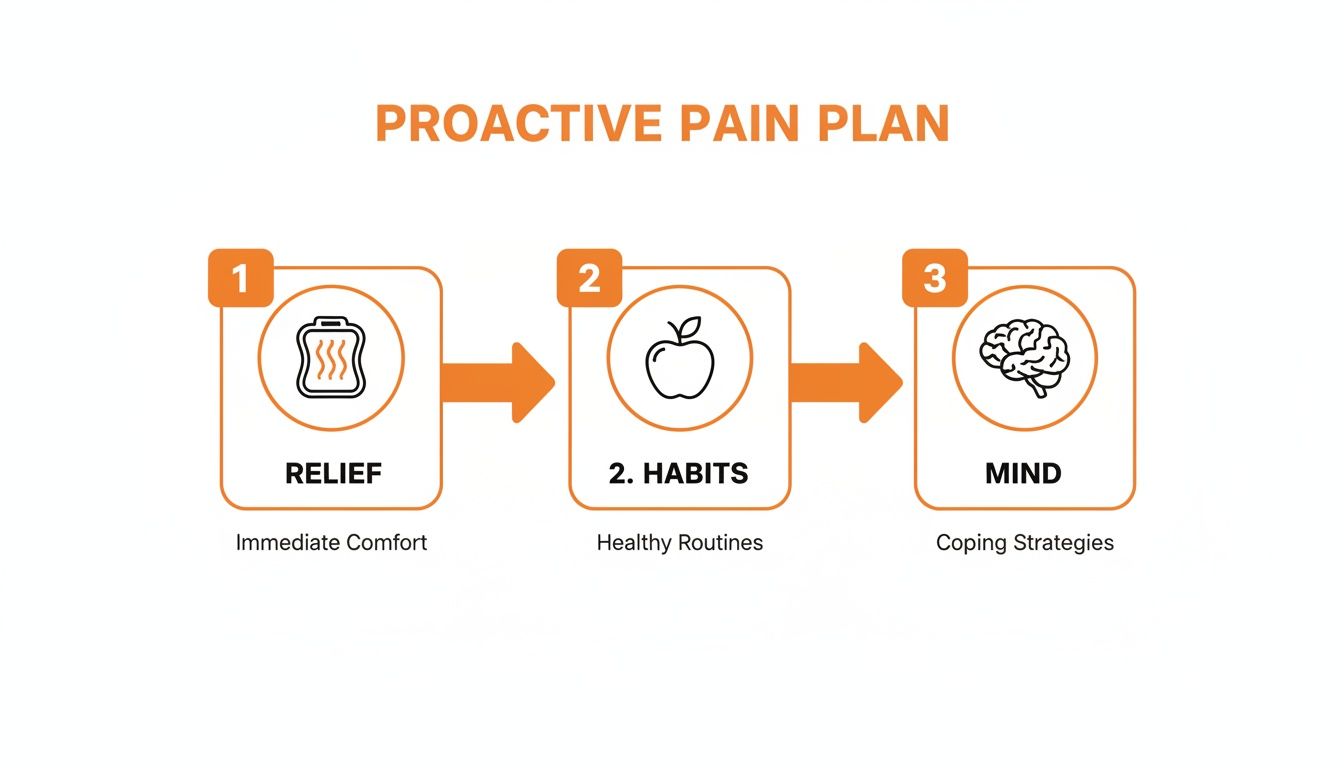
As you can see, real pain management isn't a one-and-done deal. It’s a cycle that starts with immediate relief (like that heat pack), is built upon healthy daily habits, and is held together by smart coping strategies.
The Power of a Good Massage—Done by You
Massage is another fantastic tool for immediate, drug-free relief, and you don't always need to book an appointment. Self-massage is a highly effective way to target "trigger points"—those tight, painful knots in your muscles that often refer pain to other parts of your body. The benefit here is empowerment; you learn to listen to your body and provide the relief it needs, right when it needs it.
Consider the common tension headache. It often originates in the trapezius muscle, which runs from the base of your skull down across your shoulders. Stress and poor posture cause this muscle to tighten, leading to neck pain that radiates into a debilitating headache.
Real-World Scenario: You're at your desk, and you feel that familiar throb of a headache starting. Don't just power through it. Take two minutes. Use your fingertips to find those tender spots along the tops of your shoulders, right near your neck. Apply firm, steady pressure for 30-60 seconds, then release. That simple action can interrupt the pain signal and release the tension at the source, often stopping the headache in its tracks.
For those hard-to-reach spots, a simple tool can be a lifesaver. A dual-hand massage tool lets you apply targeted pressure to your own back and shoulders without straining. It empowers you to tackle muscle tightness the moment you feel it, stopping it from escalating into a bigger issue. This is proactive pain management without medication in action.
Quick Fixes With Positioning and Movement
Sometimes, the fastest relief comes not from adding something new, but from simply changing your position. The way you sit, stand, and sleep can either be a source of your pain or a source of your relief. Tiny, mindful adjustments can make a huge difference.
If shoulder pain is keeping you up at night, your sleeping position is the likely culprit. Try sleeping on your back with a pillow tucked under your knees, which takes the pressure off. Or, if you're a side sleeper, lie on your non-painful side and hug a pillow to your chest to keep your top shoulder from collapsing forward. For a much deeper dive into using heat versus cold for different issues, our guide on heat therapy vs. cold therapy is packed with clinic-grade advice.
Sometimes the problem is the surface you're sleeping on. It might be worth exploring the best mattress for back pain to see if an upgrade could drastically improve your daily comfort levels.
Here are a few more positioning tricks you can use right now:
- Achy Lower Back? When you're sitting, roll up a small towel and stick it in the curve of your lower back. This tiny bit of lumbar support helps maintain your spine’s natural curve, taking a load off your muscles and discs.
- Stiff Neck? Check your computer monitor. The top of the screen should be at eye level. This stops you from constantly looking down and developing that dreaded "tech neck."
- Sciatica Acting Up? Lie on your back and gently pull one knee to your chest, holding it for 30 seconds. This can help release the piriformis muscle, a common culprit that presses on the sciatic nerve.
These immediate actions—applying heat, a bit of self-massage, and smart positioning—are the foundation of a solid, drug-free pain response. They put you back in the driver's seat, giving you real relief you can feel, right when you need it.
Building a Pain-Resistant Daily Routine
While quick relief is a lifesaver when pain strikes, the real win is having fewer flare-ups in the first place. That’s where your daily routine comes in. Lasting pain management without medication isn’t about some dramatic, one-time fix; it’s about weaving small, consistent, and supportive habits into the fabric of your everyday life.
These habits get to work quietly in the background, building a stronger, more resilient body that’s less likely to complain. Think of it like maintaining your car—you don't wait for it to break down on the highway to check the oil. These daily practices stop the small stresses of life from snowballing into chronic pain.
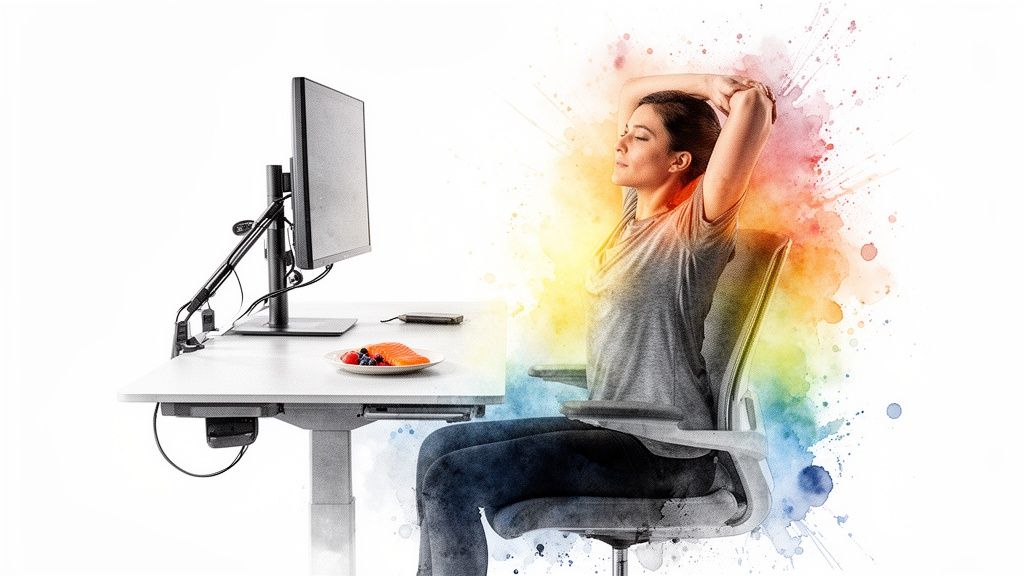
This proactive mindset shifts your focus from just reacting to pain to actively preventing it. We'll dig into three key areas you can start improving today: gentle movement, smart ergonomics, and the food you eat.
Make Gentle Movement a Daily Habit
When you’re hurting, the last thing you probably feel like doing is moving. I get it. But inactivity often makes stiffness and weakness worse, creating a vicious cycle of pain. The secret is to find gentle, low-impact movements that nourish your joints and muscles instead of straining them.
You don't need a gym membership or a complicated workout plan. Simple stretches you can do right at your desk can make a world of difference, especially for that nagging neck and shoulder strain from hours staring at a screen.
For instance, try this simple "Desk Angel" stretch right now:
- Sit tall at the edge of your chair with your feet flat on the floor.
- Raise your arms out to the sides, elbows bent at 90 degrees, like a football goalpost.
- Slowly squeeze your shoulder blades together as if you're trying to hold a pencil between them.
- Hold for 5-10 seconds, then gently release. Try to do this 5 times every hour.
This tiny movement is the perfect antidote to the forward slump of "tech neck." It wakes up your postural muscles and breaks the cycle of static posture that leads to deep-seated knots and tension headaches.
Design a Pain-Free Workspace
Your environment plays a huge part in how your body feels. If you spend your days at a desk, setting up an ergonomic workspace is one of the most powerful things you can do to prevent chronic neck, back, and wrist pain. It's all about making your space support your body's natural alignment, not fight against it.
Let's go beyond just "sit up straight" with a few actionable tips:
- Get Your Monitor Height Right: The top of your computer screen should be at or just below eye level. If it's too low, you're constantly craning your neck forward, putting a ton of strain on your spine. Use a stack of books or a monitor stand to prop it up.
- Support Your Lower Back: Your chair needs to have good lumbar support. If it doesn't, just roll up a towel or use a small pillow to fill the natural curve in your low back. This simple trick can prevent hours of slouching and the back pain that follows.
- Keep Your Wrists Straight: Position your keyboard and mouse so your wrists stay in a neutral, straight line. Constantly bending your wrists can lead to painful conditions like carpal tunnel syndrome.
Making these small tweaks can eliminate the very triggers that cause your daily aches, making your workday so much more comfortable.
Fuel Your Body to Fight Inflammation
What you eat can either fan the flames of inflammation or help put them out. For anyone dealing with chronic conditions like arthritis or fibromyalgia, nutrition is a powerful tool for pain management without medication. An anti-inflammatory diet is all about focusing on whole, unprocessed foods that help calm your body's inflammatory response.
This doesn't mean a restrictive or complicated meal plan. It’s about making smart additions. Focus on bringing more of these anti-inflammatory powerhouses into your meals:
- Fatty Fish: Think salmon, mackerel, and sardines. They’re rich in omega-3 fatty acids, which are famous for reducing inflammation.
- Leafy Greens: Spinach, kale, and collards are packed with antioxidants and vitamins that fight cellular stress.
- Berries & Cherries: These fruits are loaded with compounds called anthocyanins, which have potent anti-inflammatory effects.
- Nuts & Seeds: Almonds, walnuts, and flaxseeds provide healthy fats and fiber.
- Turmeric & Ginger: These spices are superstars for their natural anti-inflammatory properties. Add them to smoothies, soups, or teas.
By choosing these foods more often, you give your body the building blocks it needs to dial down systemic inflammation. For more great ideas, check out our detailed guide on reducing inflammation naturally to create an eating plan that works for you. Small, consistent dietary changes can lead to a big reduction in pain over time, helping you build a truly pain-resistant body from the inside out.
Using Your Mind to Manage Physical Pain
The connection between your brain and your body is a powerful one. When you’re in pain, though, that connection can feel like a one-way street where pain does all the talking. But what if you could change that conversation? This is where mind-body techniques come in, forming a crucial part of pain management without medication. They teach you how to influence that dialogue and turn down the volume on pain signals.
This isn't about ignoring the pain or pretending it's not there. It's about fundamentally shifting how your brain responds to it. By calming your nervous system and reframing your thoughts, you can reclaim a sense of control that often gets lost in the day-to-day struggle with chronic pain.

It all starts with something you already do thousands of times a day: breathing.
Harnessing the Power of Your Breath
When pain strikes, your body instinctively tenses up. Your heart might race, and your breathing gets shallow and quick. This is the classic "fight or flight" response, and it actually makes pain worse by flooding your body with stress hormones. The good news is that controlled breathing acts like an off-switch for this reaction.
One of the simplest and most effective techniques is called box breathing. It's incredibly easy to remember and you can do it anywhere—at your desk, in the car, or while waiting in line at the store.
- Inhale slowly through your nose for a count of four.
- Hold your breath for a count of four.
- Exhale slowly through your mouth for a count of four.
- Hold again at the bottom of the exhale for a count of four.
- Repeat this cycle for 1-2 minutes.
This steady, rhythmic pattern sends a powerful signal to your brain that you're safe. It helps release muscle tension, slows your heart rate, and can immediately interrupt a pain flare-up before it gets a chance to spiral.
Real-World Example: Let's say you feel the familiar twinge of a migraine coming on. Your first instinct might be to panic. Instead, try pausing to do five rounds of box breathing. That small action creates just enough mental space to calmly grab a cold pack and find a quiet room, preventing the usual wave of anxiety that can amplify the pain.
Observing Pain Without Judgment
Mindfulness is really just the practice of paying attention to the present moment on purpose, without passing judgment. When you apply this to pain, you learn to observe the sensation without getting tangled up in the emotional story that often comes with it—the fear, the frustration, the anger.
It’s about separating the raw physical sensation of pain from your emotional reaction to it. You start to see the pain for what it is: a temporary, changing signal from your body, not a permanent part of your identity.
To get started, try this simple practice:
- Find a comfortable position, sitting or lying down.
- Bring your attention to the physical sensation of your pain. Where is it? Does it throb, ache, or burn?
- Acknowledge it without judgment. Instead of thinking, "My back is killing me," try observing, "I'm noticing a sensation of tightness in my lower back."
- Imagine your breath traveling to that area, creating a little space around the discomfort.
- When your mind inevitably wanders, gently guide your focus back to your breath.
This isn't a magic trick to make the pain vanish. What it does is reduce the suffering associated with the pain. Over time, you’re essentially retraining your brain to react less intensely to those pain signals. If your pain stems from an injury, understanding how the mind works can be a game-changer. Resources like this guide on the psychology of sport injury and mental recovery offer great insights into these very coping strategies.
Changing the Story You Tell Yourself
Chronic pain has a way of creating negative thought loops that feel impossible to break. You might catch yourself thinking, "This is never going to get better," or "I can't do anything today because of this pain." Cognitive reframing, a cornerstone of Cognitive Behavioral Therapy (CBT), is all about challenging and changing these kinds of thoughts.
The goal is to swap a negative, limiting thought with one that's more realistic and helpful. For instance, if you catch yourself thinking, "This pain is ruining my whole day," you could try reframing it to: "I'm feeling pain right now, but I can still find a moment of peace by doing my breathing exercises."
This isn't about toxic positivity; it's about being more accurate. A moment of pain doesn't have to define your entire day. This mental shift can have a profound impact on your emotional state and, in turn, your physical comfort. If you want to dive deeper, our article on the eight benefits of deep relaxation you must know explores how these very techniques help create a healing environment within the body.
When It's Time to Call in the Pros
Your home-based pain management plan is a fantastic first line of defense, but sometimes you need to bring in an expert. While your daily self-care builds strength and resilience, professional therapies offer targeted support that can get to the root of complex pain and speed up your recovery. It's best to think of these practitioners not as a last resort, but as key allies who can seriously boost the effectiveness of your own efforts.
When you work with a professional, you're getting access to years of specialized training and a deep understanding of how the body works. They can help you figure out why you’ve hit a plateau, get a proper diagnosis, and build a customized plan that works hand-in-hand with everything you’re already doing at home.
Physical Therapy: Your Guide to Moving Better
Physical therapy (PT) is a true cornerstone of managing pain without medication, especially for stubborn issues like chronic back pain, arthritis, or recovery after an injury.
A good physical therapist is like a detective for your body's movement. They don’t just focus on the spot that hurts; they analyze the way you walk, sit, stand, and move to pinpoint the underlying imbalances or weaknesses that are actually causing the problem.
Their goal is to empower you. They’ll create a personalized plan of targeted exercises designed to strengthen key supporting muscles, improve your flexibility, and correct the unhelpful movement patterns you’ve developed over time. This isn’t just a generic workout from a magazine. For instance, if you're dealing with chronic low back pain, a PT might teach you specific core exercises that create a "natural corset" around your spine, offering a kind of deep, internal support that no pill could ever provide.
Chiropractic Care and Acupuncture: Getting to the Point
Chiropractic care and acupuncture are two very different approaches that can offer powerful, targeted relief.
Chiropractors focus on the intricate relationship between your spine and your nervous system. Using skilled manual adjustments, they work to restore proper alignment, which can take pressure off nerves and improve your body's overall function. This can be a game-changer for issues like sciatica or tension headaches that are directly linked to misalignment in the neck or back.
Acupuncture, a key component of traditional Chinese medicine, involves placing ultra-thin needles at specific points on the body. The practice is thought to stimulate your body's own natural painkillers (endorphins) and improve the flow of energy. Don't just take my word for it—the evidence is growing. Extensive reviews covering over 300 different publications have endorsed both acupuncture and spinal manipulation for conditions like low back and neck pain. You can read more about the evidence supporting non-pharmacological pain management and see why it's gaining so much traction in modern healthcare.
The Power of a Good Therapeutic Massage
A lot of us think of massage as just a spa day treat, but a true therapeutic massage is a serious clinical tool for pain relief. The benefits go far beyond simple relaxation. A skilled massage therapist can manually release deep-seated trigger points—those nasty, persistent knots in your muscles—that are often a major source of chronic pain and restricted movement. This hands-on approach directly addresses the physical source of your discomfort.
Here’s a real-world example: Let's say you've been using your SunnyBay heat pack on a stubborn knot between your shoulder blades. The heat feels great and provides temporary relief, but the knot always comes back. A massage therapist can use specific techniques like deep tissue massage to manually break down that adhesion, forcing fresh, healing blood into the area and restoring mobility in a way that heat alone can't. You'll not only feel immediate relief but also enjoy longer-lasting results as the muscle's function is restored.
This targeted work is especially effective for conditions like:
- Fibromyalgia: Gentle, targeted massage can help ease the widespread pain and tender points.
- Sports Injuries: Therapists can work on breaking down scar tissue and improving the flexibility of muscles as they heal.
- Repetitive Strain: For issues like carpal tunnel or tennis elbow, massage can release chronic tension in the over-stressed muscles and tendons.
Finding the right physical therapist, chiropractor, or massage therapist is all about building your personal wellness team. They bring the focused expertise that can help you finally move beyond just managing your pain to truly healing.
Got Questions About Going Drug-Free for Pain? We’ve Got Answers.
Stepping into the world of non-drug pain relief can feel like a big move, and it’s completely normal to have questions. You're probably wondering how long it takes, what actually works, and when you should just call a doctor. Let's clear up some of the most common concerns so you can feel confident taking control of your comfort.
A big question I hear is whether these methods are truly as effective as medication. The best way to think about it is to understand their different jobs. A painkiller might temporarily mute the pain signals your body is sending, which is sometimes necessary. But therapies like heat, ice, and targeted movement work on the reason for those signals—things like stiff muscles, inflammation, or restricted blood flow.
It’s like this: a pill can silence a smoke alarm, but applying a heat wrap or doing specific stretches is like finding the source of the smoke and putting out the fire. One is a temporary fix for the symptom, while the other addresses the underlying problem.
How Long Until I Actually Feel Relief?
This is the million-dollar question, isn't it? The honest answer is: it depends. The timeline for relief varies quite a bit based on the technique you're using and what kind of pain you're dealing with. Some methods give you that "ahhh" feeling almost instantly, while others are more of a slow burn, building up their benefits over time.
Here's a realistic breakdown of what to expect:
- Near-Instant Comfort (Minutes): Things like heat therapy really shine here. You can feel a noticeable difference within 15-20 minutes as the warmth sinks into your tissues, easing muscle spasms and soothing stiffness. It’s my go-to for an acute low back flare-up or intense menstrual cramps.
- Noticeable Improvement (Days to Weeks): This is where daily habits start to pay off. Consistently doing your stretches or improving your desk ergonomics won't fix things overnight, but within a few weeks, you should start to feel less daily aching and more flexibility.
- Lasting Change (Ongoing): Deeper strategies like physical therapy, regular massage, or mind-body practices are about creating fundamental, long-term change. A single massage feels great, sure, but a consistent series can retrain muscle patterns and dramatically reduce how often you experience pain in the first place.
Is It Okay to Combine Different Therapies?
Not only is it okay, it's often the best way to get results. Think of it as a tag-team approach. When you combine different methods, you create a powerful synergy that tackles the pain from all sides—the physical, mental, and emotional.
A classic example from my own experience is using a SunnyBay heat wrap on the lower back for 20 minutes before doing gentle stretches recommended by a physical therapist. The heat loosens everything up, making the muscles much more receptive to movement. You get a better, safer stretch with a lot less discomfort.
Another fantastic pairing is combining mindfulness or breathwork with something like acupuncture or massage. The physical therapy releases the knots in your muscles, while the mindfulness helps you manage the stress and anxiety that likely contributed to that tension. Just be sure to run your plan by a healthcare professional if you're starting several new things at once.
When Is It Time to See a Doctor?
Self-care is an incredibly powerful tool, but it has its limits. It’s absolutely critical to know when to put the self-help on hold and get a professional opinion. You need to make sure you're not masking a more serious issue that requires medical intervention.
It's time to book an appointment if your pain is:
- Sudden, severe, or has no clear cause.
- The direct result of a major injury or accident.
- Paired with other concerning symptoms like fever, numbness, weakness, or sudden weight loss.
- Getting progressively worse, even with your best self-care efforts.
A doctor can give you an accurate diagnosis, which is the most important first step. From there, they can help you build a safe and truly effective plan that blends the right professional care with your at-home routine.
At SunnyBay, we're dedicated to giving you simple, effective tools to manage your pain without relying on medication. Our microwavable heat packs and hands-free wraps are designed to bring targeted, soothing warmth exactly where you need it, so you can get back to living your life. Explore our collection of USA-made wellness products at sunny-bay.com and feel the difference for yourself.


