


Your Guide to Finding the Best Microwave Hot Pack for Pain Relief
-
Think of a microwave hot pack as your personal, on-demand heat therapist. It's a simple, reusable pouch filled with natural materials that you pop in the microwave for fast, soothing relief. This is your go-to for managing everything from post-workout soreness to chronic aches, using the simple power of focused warmth to melt away pain and stress.
What Is a Microwave Hot Pack and How Does It Work?
Imagine that deep, comforting warmth sinking into your sore muscles after a long day hunched over a keyboard or a tough gym session. That feeling is exactly what a microwave hot pack is designed to deliver. It’s a beautifully simple tool for self-care—no cords, no chemicals, just targeted heat therapy right where you need it. At its heart, it's a fabric pouch filled with heat-retaining natural goodies like flaxseed, wheat, or rice.
When you heat the pack, these fillers absorb and store the microwave's energy. Then, when you place it on your body, the pack slowly releases that gentle, moist heat, letting it penetrate deep into your muscle tissue. This process, known as thermotherapy, is a trusted, age-old method for pain relief and pure relaxation.

The Science of Soothing Heat Therapy
So, what's happening under the surface? Applying warmth triggers a few key things in your body. First, it causes your blood vessels to widen in a process called vasodilation. This is a big deal for healing.
More blood flow means more oxygen and nutrients are rushed to the damaged tissues. At the same time, this increased circulation helps flush out the metabolic waste products that contribute to pain. It’s like giving your body’s natural repair crew a supercharge.
Heat also has a way of quieting the pain signals your body sends to your brain. It stimulates specific sensory receptors in your skin, which can actually block the transmission of pain messages. This is why a warm compress on a stiff neck feels so good, so fast.
Think of it like this: Applying a hot pack is like opening up a traffic-jammed highway. The heat widens the road (your blood vessels), allowing healing resources to rush to the scene of the accident (your sore muscle) and clear away the wreckage, restoring smooth, pain-free movement.
More Than Just Warmth: The Massage Factor
A quality microwave hot pack offers something an electric pad can't: gentle, weighted pressure. This subtle weight helps to ground your nervous system, acting almost like a mini massage and deepening your sense of relaxation. That combination of penetrating heat and light pressure is what makes it so profoundly effective.
Consider a few real-world scenarios where a hot pack can be a total game-changer:
- Post-Workout Recovery: After a run or weightlifting, draping a warm pack over your shoulders or lower back eases muscle soreness and improves flexibility. You'll feel the difference tomorrow.
- Menstrual Cramp Relief: A warm, weighted pack on the lower abdomen is one of the best drug-free ways to relax uterine contractions and soothe that deep, aching pain.
- Chronic Arthritis Pain: For joints that are stiff and achy, especially in the morning, the gentle warmth improves tissue elasticity, making it easier and less painful to get moving.
This simple tool is far more than just a cozy accessory. It's a versatile and effective partner in managing pain and promoting your well-being. By understanding how it blends heat therapy with gentle pressure, you can see why it’s a staple in homes and professional clinics alike.
Unlocking the Power of Moist Heat Therapy
Not all heat is created equal. When it comes to soothing sore muscles and achy joints, this couldn't be more true. The real magic behind a microwave hot pack comes from something called moist heat therapy, and it's what sets these packs miles apart from other heating methods.
Let's use a simple analogy. Think of dry heat—the kind you get from a standard electric heating pad—as standing in the warm sun. It feels nice on your skin, but the warmth is mostly on the surface.
Moist heat, on the other hand, is like wrapping a warm, damp towel around a sore muscle. It has a unique ability to penetrate deeper, getting past the skin and into the muscle tissue where the real problem is. This deep, penetrating warmth is what truly melts away tension from the inside out.
How a Microwave Hot Pack Creates Moist Heat
So, where does this "moist" heat come from? It's all thanks to the natural fillers inside the pack, like flaxseed or whole wheat. These grains and seeds naturally hold a tiny amount of water.
When you pop the pack in the microwave, the energy from the microwave makes that trapped moisture heat up, creating a gentle, penetrating steam. In just a couple of minutes, a simple grain-filled pack becomes a powerful tool for deep-tissue relief. You can learn more about the science behind this in our guide to what is moist heat therapy.
This deeply penetrating warmth works wonders by:
- Improving Tissue Elasticity: It helps muscle fibers and connective tissues become more flexible and pliable, which is fantastic for reducing stiffness and improving your range of motion.
- Boosting Blood Flow: The moisture helps transfer heat far more efficiently than dry air, opening up blood vessels deep inside the muscle. This ramps up circulation, rushing oxygen and nutrients to the area to speed up healing.
- Providing Longer-Lasting Comfort: Because moist heat gets in deeper, its soothing effects tend to stick around long after you've taken the pack off—unlike the fleeting warmth from a dry heat source.
The Double Benefit: Heat and Gentle Pressure
Beyond the moist heat, your microwave hot pack offers another key advantage: the calming effect of gentle, weighted pressure. When you drape a pack over your shoulders or lay it across your lower back, its weight provides a constant, soothing sensation known as deep pressure stimulation.
The combination of moist heat and gentle acupressure is a powerful one-two punch against pain. The heat relaxes the muscle tissue, while the weight helps calm your nervous system, leading to a profound sense of relaxation and well-being.
This diagram shows just how much deeper moist heat can penetrate compared to dry heat.
You can clearly see how moist heat gets past the surface layers of the skin to warm the underlying muscle, delivering much more effective therapeutic relief.
This combined approach is why so many people swear by them. In fact, the market for hot and cold therapy packs was valued at an estimated USD 1.2 billion in 2023 and is only expected to grow. That number shows just how many people rely on tools like microwave hot packs for daily pain management. It’s not just a passing trend; it’s a trusted solution for real, lasting relief.
Choosing the Right Filler for Your Hot Pack
The secret to a great microwave hot pack isn’t just the fabric—it’s what’s inside. The filling is the real engine behind the therapy, dictating everything from how long the heat lasts to how the pack feels draped over your shoulders.
Think of it like choosing the perfect pillow. Some people need firm support, while others want something soft that molds to their shape. The same idea applies here. The right filling makes all the difference, turning a simple pack into a therapeutic experience that feels custom-made for you.
This simple process shows how the filler inside a microwave hot pack transforms into powerful, soothing moist heat.
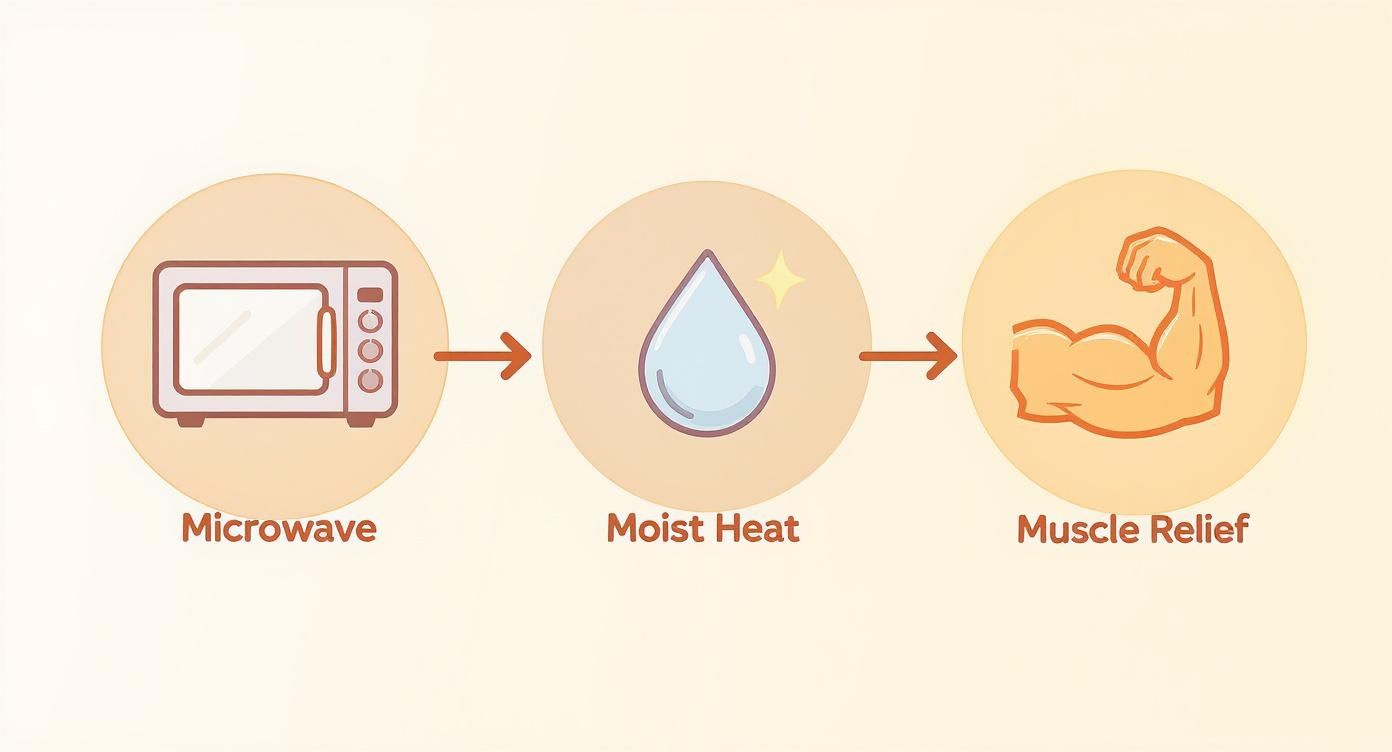
As you can see, the magic starts with the right materials inside. When activated by the microwave, they deliver a penetrating warmth that goes deep to soothe sore muscles.
The Most Popular Natural Fillers
Most high-quality hot packs are filled with natural grains or seeds, and each one brings something different to the table. Microwavable pads are typically filled with materials like rice, wheat, or flax, which are fantastic at retaining heat for long periods and providing that sustained, therapeutic warmth we’re all after.
It’s no surprise that these simple, affordable pain relief options are getting more and more popular. If you’re curious about the trend, you can read the full research on the heating pad market to see just how fast it's growing.
Let’s break down the top contenders:
- Flaxseed: Many people consider flaxseed the gold standard. Thanks to a high oil content, it holds onto moist heat for an impressively long time. The tiny, smooth seeds also give the pack a silky, fluid feel that contours beautifully to tricky spots like your neck or knees.
- Whole Wheat: A classic and effective choice, wheat offers a comforting, firm weight. It holds heat really well and gives off a subtle, earthy scent when warmed up, which many find incredibly calming.
- Rice: As a widely available and budget-friendly option, rice delivers a satisfying moist heat. Its heat retention might be a little shorter than flaxseed’s, but it’s still a reliable go-to for general aches and pains.
- Corn: The larger kernels in corn can hold heat for a good while. The downside is that they can feel a bit bulky, and some people find they develop a "cooked" smell after being heated many times.
Key Insight: The best filler often comes down to personal preference. It's a mix of how it feels, how it smells, and how long you need the heat to last. For anyone looking for the most comfortable, longest-lasting moist heat, the high oil content in flaxseed usually makes it the winner.
Comparing Your Options at a Glance
With a few great options on the table, a side-by-side comparison can help you pinpoint what’s right for you. Think about what you need most. Is it long-lasting heat for chronic pain? A specific feel for sensory comfort? Or maybe an unscented option for sensitive noses?
This table compares the most common fillers for microwave hot packs based on heat retention, feel, scent, and best use cases to help you choose the right one.
Comparing Microwave Hot Pack Fillers
| Filler Type | Heat Retention | Feel & Weight | Natural Scent | Best For |
|---|---|---|---|---|
| Flaxseed | Excellent | Silky, smooth, and moldable with a light weight. | Faintly nutty and very subtle. | Contouring to sensitive areas like the neck, face, and joints. |
| Whole Wheat | Very Good | Firm and dense with a satisfying medium weight. | Earthy and bread-like when heated. | All-purpose relief for the back, shoulders, and abdomen. |
| Rice | Good | Softer than wheat with a medium weight. | Can have a noticeable "cooked" scent. | Budget-friendly general use and DIY packs. |
| Corn | Very Good | Bulky and firm with a heavier weight. | May develop a strong, food-like odor over time. | Large packs that require long-lasting heat for broad areas. |
At the end of the day, the right filler turns a simple bag of grains into a powerful tool for wellness. Whether you land on the luxurious feel of flaxseed or the dependable warmth of whole wheat, making a thoughtful choice ensures your microwave hot pack will deliver comforting, effective relief every single time.
Getting the Most Out of Your Hot Pack
So, you've got a microwave hot pack. That's the easy part. The real game-changer is learning how to make it your go-to tool for comfort and relief, weaving it seamlessly into your daily routine. Let's move past the basics and get into the practical ways you can use it to target pain and stress right where it hits.
Think about the end of a long day hunched over a computer. You know that familiar, nagging tension that builds up in your neck and shoulders? Instead of just living with it, imagine draping a warm, flexible pack over that exact spot. In just a few minutes, you can feel that deep, moist heat start to penetrate, literally melting away the knots and soothing those overworked muscles. That’s heat therapy at its best—simple, direct, and incredibly effective.

Targeting Specific Pains
The beauty of a microwave hot pack is its versatility. Different aches and pains call for different solutions, and the pack’s pliable design lets you deliver targeted relief exactly where you need it. Once you know how to apply it for specific issues, you unlock its true potential.
Here are a few common situations where a hot pack can feel like a lifesaver:
- Soothing Menstrual Cramps: For that deep, relentless ache from period cramps, lie down and rest a warm pack over your lower abdomen. The combination of gentle, weighted pressure and moist heat works wonders to relax uterine muscles, easing the contractions and offering serious, drug-free relief.
- Speeding Up Post-Workout Recovery: After a tough gym session, your muscles are often screaming. Applying a hot pack to your quads, hamstrings, or lower back for about 15-20 minutes boosts circulation. This increased blood flow helps carry away lactic acid and brings fresh oxygen to repair those tired muscle tissues faster.
- Warming Up Cold Feet at Night: If you’re someone who battles cold feet in bed, a hot pack is your new best friend. Just tuck a warm pack at the foot of your bed for a safe, contained warmth that helps you relax and drift off to sleep without the hassle or risk of an electric blanket.
Best Practices for Heating and Application
Getting the best results is all about following a few simple guidelines. Proper heating is key for both safety and effectiveness, and knowing how to apply it turns a simple warm pack into a truly therapeutic experience. You're aiming for consistent, comforting warmth—not a scorching-hot hazard.
A common mistake is zapping the pack for too long in the microwave. Overheating can damage the filling and, more importantly, poses a burn risk to your skin. The goal is a temperature that feels comfortably warm, never unpleasantly hot.
Always start by following the manufacturer’s instructions. A good rule of thumb is to heat it in 30-second intervals, checking the temperature after each one until it’s just right. For a deeper dive, it’s worth understanding how long to microwave a heating pad, as the ideal time can vary based on the pack’s size and filler.
Combining Heat with Gentle Massage
Here's a pro-level tip: pair your hot pack with a bit of self-massage. The heat works to prime your muscles, making them more pliable and much more receptive to pressure.
For example, try warming your lower back for about ten minutes first. Then, gently use your fingertips or a small massage ball to work on any particularly stubborn knots. Because the muscles are already warmed up, you’ll find you don’t have to press nearly as hard to release that built-up tension. This one-two punch of heat and massage can provide a level of relief that feels almost as good as a professional treatment. While your hot pack is perfect for daily use, it’s also great to know about other pain relief tools you can use to round out your self-care routine.
Finding the Perfect Microwave Hot Pack for You
Ready to find the perfect companion for your aches and pains? Choosing a microwave hot pack isn't just about grabbing one off the shelf. It’s about finding the right tool that fits your body and your specific needs. A little bit of know-how can turn a simple purchase into a long-term investment in your own comfort.
Think of it like buying the perfect pair of shoes. You wouldn't wear hiking boots to a dinner party, and you wouldn't use a tiny hand warmer for deep lower back pain. The size, shape, and material of your hot pack all play a huge role in how effective it will be. Taking a moment to match the pack to its purpose is the key to getting the most therapeutic bang for your buck.
Size and Shape Matter
First things first: where does it hurt? Hot packs are designed to contour to different parts of the body, so they can deliver heat exactly where you need it most.
- U-Shaped Neck Wraps: These are your go-to for "desk jockey" pain. They drape perfectly over the shoulders and hug the neck, targeting the tension that builds up in the trapezius muscles from stress or hunching over a computer.
- Large Rectangular Packs: When you have a bigger area to cover—like your lower back, abdomen, or the length of your thigh—a large rectangular pack is the answer. It provides consistent, widespread warmth to soothe those larger muscle groups.
- Small or Joint-Specific Packs: For tricky spots like a knee, elbow, or even arthritic hands, you’ll want a smaller, more flexible pack. Their compact size lets them mold snugly around joints for targeted relief.
Fabric and Feel
The outer fabric is what you'll feel against your skin, so it should be just as comforting as the heat inside.
Soft fleece is a popular choice for that cozy, luxurious feel. But if you're looking for something practical and built to last, a durable 100% cotton cover is incredibly breathable and stands up well to frequent use and cleaning.
Here’s a pro tip: Look for a hot pack with internal chambers or baffles. These are stitched-in dividers that stop the filling from shifting around and clumping up. Without them, you get uneven heating and hot spots, which is the last thing you want.
Identifying Clinic-Grade Quality
When you’re ready to buy, it pays to look for the signs of a superior, long-lasting product. A clinic-grade hot pack is built to handle repeated use while delivering consistent, safe heat every single time. This means checking for durable stitching, premium fillers like flaxseed, and smart design features like those internal chambers.
The industry is always moving forward, with new fabrics that hold heat better and other innovations for a more customized experience. For more on these trends, you can discover more insights about the microwave heating pad market. By choosing a pack with these high-quality features, you're not just buying a source of warmth; you're investing in a reliable wellness tool that will feel like it was made just for you.
Proper Care and Safety for Your Hot Pack
A great microwave hot pack can be a trusted friend for years, but like any good tool, it needs a little TLC. Taking a few simple steps to heat, clean, and store it correctly will keep it safe, effective, and ready to soothe whenever you need it.
Getting the heating process right is probably the most important part of using your pack safely. You're aiming for a deep, comforting warmth—not a scorching heat that could burn your skin. Before you even start, give your microwave a quick wipe-down to make sure you don't bake old food smells onto your pack's fabric.
And whatever you do, don't just set it and forget it. An unattended pack can easily overheat, which can damage the filler and, in a worst-case scenario, become a fire risk.
The Golden Rules of Heating
To get that perfect, even heat, always place your pack on a clean microwave turntable that can spin freely. If it gets stuck in one position, you can end up with dangerous “hot spots” where one part of the pack gets way too hot.
Follow these simple steps every time:
- Start Low and Slow: Pop the pack in for just 30-60 seconds to start. Every microwave has a different personality and power level, so this is the best way to gauge yours.
- Do a Touch Test: Carefully take it out and check the temperature against a sensitive spot, like the inside of your wrist. It should feel pleasantly warm, not painfully hot.
- Add Heat in Small Bursts: If you need a little more warmth, put it back in for short 15-30 second intervals. Keep testing until it’s just right for you.
Safety First: Never go beyond the manufacturer's recommended total heating time. Overheating is the number one reason these packs get damaged and the biggest safety mistake you can make.
Cleaning and Storing Your Hot Pack
Keeping your pack clean and fresh is easy. High-quality packs, like the ones we make at SunnyBay, usually come with a removable cover you can toss right in the wash. Just follow the care label, and it’ll stay hygienic and soft.
The inner pack itself should never be submerged in water—that will completely ruin the filling. If you happen to spill something on it, just spot-clean the area with a damp cloth and let it air-dry completely before you use it again.
When you're not using it, find a cool, dry home for your pack, like a linen closet or a dedicated drawer. This keeps it away from direct sunlight and prevents the filling from getting damp. For a more detailed look at best practices, check out our complete guide on heating pad safety.
Got Questions About Hot Packs? We’ve Got Answers.
When you're new to heat therapy, a few questions are bound to pop up. And that's a good thing! Getting clear, simple answers is the best way to make sure you're using your microwave hot pack safely and getting the most out of every session. We've rounded up the questions we hear most often to help you get started with confidence.
Think of this as your go-to cheat sheet. From how long they stay warm to whether you can chill them, these quick answers will help you feel like a pro in no time.
How Long Does a Microwave Hot Pack Stay Warm?
A well-made microwave hot pack will give you a solid 20-30 minutes of therapeutic warmth. This window is actually perfect, as it lines up with the duration most physical therapists recommend for a single heat therapy session.
Of course, the exact time can shift a bit. It depends on things like the filler—flaxseed, for instance, is fantastic at holding heat—as well as the pack's size and even the temperature of the room. Just remember to let it cool down completely before you even think about reheating it for another go. This simple habit keeps the natural fillings inside safe and sound.
Can I Use My Microwave Hot Pack for Cold Therapy?
You bet! This is one of the best things about packs with natural fillers. To switch from a hot pack to a cold compress, just seal it in a plastic bag and stick it in the freezer for a couple of hours.
The bag is key—it keeps the pack from picking up any stray freezer smells or moisture. This dual-use feature makes your pack an incredibly versatile tool, ready to soothe a swollen ankle one day and a tension headache the next.
A lot of people don't realize their hot pack can pull double duty. Using it for both heat and cold therapy makes it a cost-effective, all-in-one solution for a whole range of aches, pains, and injuries.
Is the Smell from a New Hot Pack Normal?
Yes, that faint, earthy, or slightly "toasted grain" smell is completely normal when you first start using your pack. It's just the natural fillers like flax or wheat releasing their aroma when heated.
Don't worry, this scent usually fades after a few uses. In fact, some of the best hot packs come with calming herbs like lavender mixed in, adding a bit of relaxing aromatherapy to your session.
Which Is Better: A Hot Pack or an Electric Pad?
This really boils down to what you need and how you live. An electric heating pad is great for continuous, steady heat, but you're stuck near an outlet. You’re literally tethered to the wall.
A microwave hot pack, on the other hand, sets you free. It gives you portable, cord-free relief with deep, penetrating moist heat. Plus, you get the bonus of gentle, weighted pressure that molds to your body. For anyone who needs to move around, wants deeper muscle relief, or just hates being tied down, a microwave pack is almost always the better choice.
Ready to feel the difference that clinic-grade heat therapy can make? SunnyBay has a whole collection of USA-made microwave hot packs designed for targeted comfort that lasts. Find the perfect one to melt away your pain so you can get back to doing what you love.


