


Microwavable Heat Bags: Your Guide To Soothing Natural Pain Relief
-
Picture this: you've spent all day hunched over a desk, and that familiar, nagging tension is setting in right between your shoulders. Now imagine getting simple, drug-free relief in minutes. That’s the magic of a microwavable heat bag—think of it as a reusable, warm hug for your muscles, ready to go whenever you are.
Your Go-To Solution For Everyday Aches And Pains
In our crazy-busy lives, finding easy, natural ways to take care of ourselves is a real win. Microwavable heat bags are a perfect example of simple, effective self-care. This guide will show you how this straightforward tool can become your best friend for tackling everything from a stiff back to menstrual cramps.
The idea is simple: apply gentle, therapeutic warmth right where it hurts. This isn't just about feeling cozy; it's about using the science-backed benefits of heat therapy. The warmth encourages your muscles to relax and boosts blood flow, which in turn helps speed up your body's own natural healing process.
Unlocking The Benefits of Heat Therapy
Think of a tight, knotted muscle like a cold, hard piece of clay. It's stiff, stubborn, and inflexible. Applying warmth is like gently working that clay, making it soft and pliable again. That's exactly what a microwavable heat bag does for your body. The consistent, soothing heat from the bag is a form of thermotherapy, a technique proven to provide significant comfort and aid in recovery.
The gentle heat helps to:
- Soothe Muscle Tension: For a real-world example, imagine you just finished a long drive and your neck is aching. Instead of reaching for a pill, you can drape a warm pack over your shoulders for 15 minutes. The targeted heat penetrates deep into the trapezius muscles, melting away the stiffness and preventing a tension headache.
- Ease Joint Stiffness: If you have arthritis, you know how hard mornings can be. Applying moist heat to your hands or knees before you even get out of bed can dramatically increase mobility, making simple tasks like buttoning a shirt or walking downstairs much less painful.
- Alleviate Cramps and Spasms: When menstrual cramps strike, placing a heated bag on your lower abdomen offers targeted, comforting relief that feels like a warm embrace. It works by relaxing the uterine muscles, providing a natural alternative to painkillers.
The Power of Massage Therapy at Home
It’s not just about the heat. Many of these bags are filled with natural materials like flaxseed or wheat, which gives them a bit of weight. This gentle pressure actually mimics a core technique in massage therapy known as compression, creating a calming sensation that helps you relax even more deeply. This is a fundamental concept in massage—applying steady pressure to an area helps release tension and calm the nervous system.
The one-two punch of moist heat and gentle, weighted pressure is what makes these so effective. It calms the nervous system and dials down pain signals without you ever having to reach for a pill bottle. It’s the same basic principle massage therapists use to prep muscles for deeper work.
This dual-action approach is what sets these simple bags apart. They don't just cover up the pain; they actively work to relax the tight muscles causing the problem in the first place, offering a truly therapeutic experience that rivals professional treatments.
For a more well-rounded approach to managing aches and staying mobile, you can pair heat therapy with gentle movement practices. For instance, activities like Pilates for seniors can be a fantastic complement to the immediate relief you get from a heat bag. Our goal here is to give you practical, effective tools for finding real comfort.
How Heat Therapy Actually Heals Your Body
Ever wonder why a warm compress feels so unbelievably good on a sore muscle? It’s more than just a cozy feeling; there’s some fascinating science going on beneath the surface. Using a microwavable heat bag is a lot like gently warming up a stiff, cold piece of modeling clay—it makes everything more pliable, flexible, and relaxed.
When you apply that comforting warmth, you're kicking off a powerful physiological process called vasodilation. Think of your blood vessels as tiny highways. Heat causes these highways to widen, opening them up for a surge of traffic. This is a core benefit of heat therapy, promoting circulation and kickstarting the body's repair mechanisms.
This boost in blood flow is the real magic. It's like an express delivery service, rushing fresh oxygen and vital nutrients straight to the injured or tense area. This influx of resources gets to work repairing damaged tissue, flushing out metabolic waste, and giving your body’s natural healing process a serious jump-start.
The Science Of Soothing Pain
Heat therapy isn't just about relaxing your muscles—it also plays a clever trick on your nervous system to dial down pain. When you feel an ache, it's your pain receptors firing signals up to your brain. Applying heat introduces a new, competing sensation: warmth.
This warmth creates a sort of 'traffic jam' on those neural pathways. The pleasant signals from the heat effectively crowd out the unpleasant pain signals, making it much harder for the "ouch" message to get through to your brain. This is based on a concept called the "Gate Control Theory" of pain, where the warmth essentially closes the gate on pain signals.
It's a technique trusted by professionals for a reason. Physical therapists, chiropractors, and massage therapists often use heat packs to prime muscles before treatment, making them more responsive and easier to work with.
This one-two punch of physical relaxation and neurological pain blocking is what makes microwavable heat bags such a go-to tool for so many common issues. For a deeper dive, check out our guide on how heat pads work to learn more about the specific ways they interact with your body.
Practical Examples of Heat in Action
So, how does this science translate into real-world relief? Let's look at a few common scenarios where vasodilation and pain gating make all the difference.
- For Stiff Joints: If you're dealing with arthritis, warming up your knees or hands with a heat bag before you start your day can dramatically reduce stiffness. The increased blood flow helps lubricate the joints, making movement much less painful.
- For Muscle Spasms: A sudden, sharp back spasm can be completely debilitating. Placing a heated bag right on the spot helps the contracted muscle to let go, interrupting the spasm cycle and bringing almost immediate relief.
- For Post-Workout Soreness: After a tough gym session, your muscles are full of metabolic byproducts like lactic acid. Heat boosts circulation to help flush all that junk out, which can significantly reduce delayed onset muscle soreness (DOMS) and speed up your recovery.
This turn towards non-drug pain management is clearly visible in market trends. The global heating bag market is on track to hit about US$310 million by 2031. Microwavable heat bags are a huge part of that growth, mostly because they're reusable and completely drug-free.
With 20–30% of adults worldwide living with chronic pain, it's no surprise that people and health systems alike are looking for effective alternatives to pain medication.
Finding The Perfect Microwavable Heat Bag For You
Choosing the right microwavable heat bag isn't as simple as grabbing the first one you see. Think of it less like buying a product and more like finding the right partner for your wellness routine. The goal is to match the tool to your specific needs, because the right heat bag can be the difference between mild warmth and truly targeted, effective relief.
To find your perfect match, you really need to look at three things: what’s inside it, what it’s wrapped in, and its overall shape. Getting these three elements right ensures the heat bag will become an indispensable part of your self-care, delivering comfort exactly where you need it, when you need it.
This simple guide helps you remember that soothing heat is for muscle aches, while a cold pack is what you want for a fresh injury.
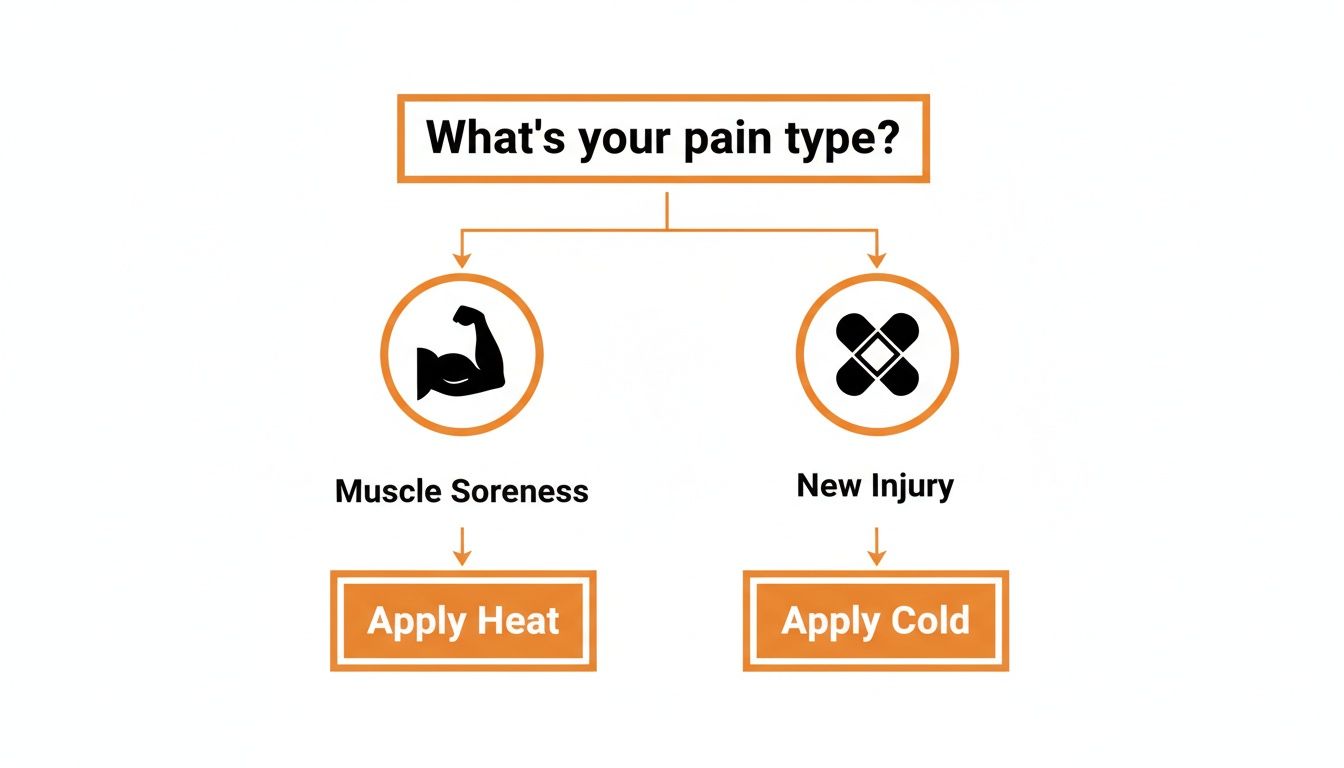
This distinction is crucial—heat is fantastic for relaxing chronic soreness but can make the inflammation from a new sprain worse.
Choosing Your Ideal Filler
The material tucked inside your heat bag is its engine. It’s what determines how the heat feels, how long it hangs around, and whether it has a natural scent. Each filler offers a totally different experience, so it’s all about finding what works for you.
- Flaxseed: This is a fan favorite for a reason. Flaxseed has a high oil content, which helps it produce a gentle, moist heat that seems to sink deep into your muscles. It also holds its warmth for an impressive amount of time and drapes beautifully over the body’s curves, which is why you see it in so many clinic-grade packs.
- Whole Wheat: Another great natural option, whole wheat gives off a slightly different kind of warmth and has a subtle, earthy scent when heated. It offers a nice balance of solid heat retention and a comforting, weighted feel.
- Lava Sand: If you have allergies or just can't stand scents, lava sand is your hero. As an odorless filler, it provides a clean, dry heat that lasts and lasts. You get consistent, fragrance-free warmth every single time.
Picking the right filler is the first step toward customizing your comfort.
Selecting The Right Fabric
The fabric cover is what will be touching your skin, so its texture and material properties are incredibly important for both comfort and safety. It’s the difference between a scratchy wool sweater and your favorite cozy sweatshirt.
A soft fleece cover, for example, is pure luxury. It's perfect for those moments when you just want to curl up and relax, feeling incredibly comforting against the skin while also insulating the heat to make it last longer.
On the flip side, a breathable cotton cover is all about practicality. Cotton is tough, allows heat to transfer evenly, and is often removable and machine washable. This makes it a fantastic choice for a heat pack that gets a lot of use. For more tips on what to look for, our guide on the best microwavable heating pad breaks down even more options.
Here’s a quick breakdown of how fillers and fabrics stack up against each other, which can help you narrow down your choices.
Comparing Microwavable Heat Bag Fillers And Fabrics
| Feature | Flaxseed | Whole Wheat | Lava Sand | Fleece Cover | Cotton Cover |
|---|---|---|---|---|---|
| Heat Type | Moist, penetrating | Drier, weighted | Dry, consistent | Insulated | Even transfer |
| Heat Retention | Excellent | Good | Excellent | Enhances retention | Good |
| Scent | Subtle, nutty | Earthy | Odorless | None | None |
| Feel | Soft, conforming | Firm, beaded | Fine, smooth | Ultra-soft, cozy | Smooth, breathable |
| Best For | Deep muscle relief | General aches | Allergies/scent sensitivity | Maximum comfort | Durability/frequent use |
Ultimately, whether you lean toward the deep, moist heat of flaxseed or the pure, odorless warmth of lava sand, matching the filler and fabric to your preferences is key.
Finding The Right Shape For Targeted Relief
Finally, let’s talk shape. While a simple rectangular bag is a good all-rounder, specialized shapes are engineered to deliver relief with much greater precision.
A contoured wrap designed specifically for the neck and shoulders provides targeted relief that a simple rectangular bag can't match. It stays in place, delivering consistent heat to the trapezius muscles and the base of the neck without you having to hold it.
Here’s how different shapes are designed for different problems:
- Neck and Shoulder Wraps: These are typically U-shaped or curved to drape perfectly over your shoulders. They hit all the right spots that get tight from sitting at a desk or dealing with stress.
- Lower Back Pads: Many of these are designed with adjustable straps, letting you cinch the heat pack securely against your lumbar area. This hands-free design means you can get relief while sitting, standing, or even moving around the house.
- Joint Wraps: For knees, elbows, or ankles, you’ll find smaller, more flexible packs. These are made to wrap around the joint, providing 360-degree warmth to soothe arthritis or soreness from a workout.
By taking a moment to consider the filler, fabric, and shape, you can find a microwavable heat bag that feels like it was custom-made for you. This turns a simple wellness tool into a powerful, personalized solution for your aches and pains.
Getting the Most Out of Your Heat Pack
Using a microwavable heat bag is pretty straightforward, but a few simple tips can make all the difference between a good experience and a great one. It's not just about cranking up the heat; it's about using it smartly to get that deep, therapeutic relief you're looking for. When you get it right, that simple bag becomes your go-to for comfort.
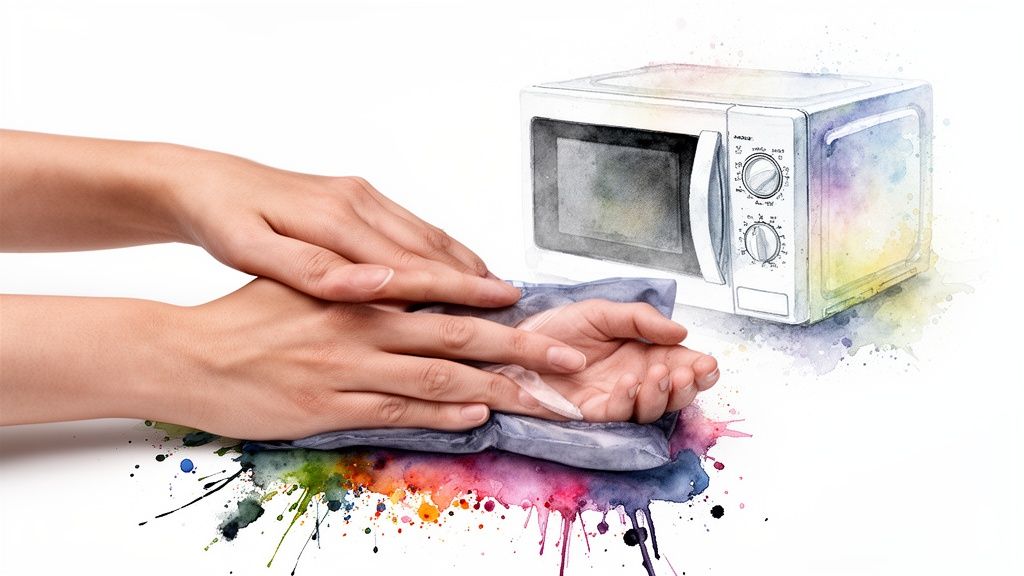
The most important part? Nailing the heating process. Think of it like Goldilocks—you don't want it too hot or too cold. You want it just right. Overheating is the biggest mistake people make, and it can damage the filling or, worse, lead to a nasty burn.
Your Step-By-Step Heating Guide
Heating your bag properly is easy once you get the hang of it. First, always make sure your microwave plate is clean so you don’t end up with old food residue baked onto the fabric. Lay the bag as flat as you can, ensuring it has enough room to spin freely.
- Start Low and Go Slow: Every microwave is different. Begin by heating your microwavable heat bag in 60-second intervals. You can always add more time, but you can't undo overheating.
- Test the Temperature: After that first minute, carefully pull the bag out and give it a little shake to even out the hot spots. The best way to check the heat is to test it against the inside of your wrist. It's a sensitive spot that will give you a true feel for how hot it is.
- Adjust as Needed: If it's not quite warm enough, pop it back in for another 30 seconds and test again. Remember, you're going for a deep, soothing warmth, not something that feels scorching.
That little wrist test is the single most important step. It prevents burns and ensures the heat is genuinely relaxing. If it's too hot, your muscles will tense up in response—the exact opposite of what you want.
For a deeper dive into all the best practices, our guide on heating pad safety is a great resource. It’s packed with insights to make sure every experience is a safe and positive one.
Practical Applications for Maximum Relief
Once your heat pack is perfectly warmed, it’s time to put it to work. The real magic of these bags is their versatility. You can really get creative with how you use them to target specific aches and pains.
Here are a few real-world examples to get you started:
- For Desk Warriors: Shoulders and neck stiff from staring at a screen all day? Drape a contoured neck wrap over your shoulders while you're still at your desk. The combination of gentle warmth and light pressure is incredible for melting away that built-up tension.
- For Lower Back Pain: When your lower back starts complaining, a rectangular pack, especially one with a strap, is a lifesaver. You can secure it right where you need it and keep moving around the house, making dinner, or just lounging on the sofa.
- For Menstrual Cramps: This is one of the best non-medicinal remedies out there. Just lie back and place the warm bag over your lower abdomen. The heat helps relax the spasming muscles and provides amazing comfort when you need it most.
Proper Care For Long-Lasting Use
If you take good care of your microwavable heat bag, it will take care of you for years to come. A little bit of maintenance goes a long way in preserving the fabric and the filling.
If your bag has a washable cover, just zip it off and toss it in the wash. A gentle cycle with cold water is usually all it needs to stay fresh and clean. The inner bag, however, should never be submerged in water. If it gets a little spot on it, just wipe it with a damp cloth. Soaking it will ruin the natural filling inside.
When you're not using it, store your heat pack in a cool, dry spot like a linen closet or a bedroom drawer. Keeping it out of direct sunlight will prevent the filling from drying out and keep the fabric looking new. That way, it’s always ready for your next soothing session.
Microwavable Heat Bags Vs Other Pain Relief Options
When you're hurting, you just want something that works—something effective, convenient, and safe. There are a ton of options out there, but microwavable heat bags have a unique mix of benefits that really make them stand out. Let's break down how they stack up against other common pain relief therapies so you can find what's right for you.
The most obvious win? You're not tied to a wall outlet like you are with an electric heating pad. That freedom is a total game-changer. You can soothe a stiff neck while making coffee, ease lower back pain while relaxing on the porch, or even take your heat pack in the car. It’s cordless, go-anywhere relief that fits your life, not the other way around.
Convenience And Sustainability
That convenience factor gets a huge boost from our everyday habits. Let’s face it, we all use our microwaves. The global market for microwavable foods hit about USD 132.4 billion in 2024 and is expected to climb to USD 184.5 billion by 2031. Since we’re already zapping meals, tossing a heat bag in takes almost zero extra thought. It makes therapy incredibly easy to stick with.
This easy access also shines a light on another big difference: single-use heat patches. While those disposable patches are certainly portable, they create a mountain of waste and a constant dent in your wallet. A quality microwavable heat bag is a one-time purchase that gives you years of reliable comfort, making it a much smarter choice for both the planet and your budget.
The real advantage is the combination of portability and reusability. You get the freedom of a disposable patch with the long-term value of an electric pad, all powered by an appliance you already use every day.
This simple, effective design makes them an essential part of any home wellness toolkit.
Therapeutic Feel And Effectiveness
The classic hot water bottle is another old-school remedy, but it honestly falls short in a few key ways. A stiff rubber bottle just can't mold to your body's curves the way a weighted, flexible bag can. The gentle pressure from a flaxseed or grain-filled pack adds a whole other layer to the therapy, giving you a comforting sensation that feels a bit like a gentle massage.
On top of that, most microwavable heat bags deliver moist heat. This is a big deal. Moist heat penetrates deeper into muscle tissue than the dry heat you get from a typical electric pad or hot water bottle. That deeper warmth does a better job of increasing blood flow, offering more profound and longer-lasting relief from stubborn stiffness and muscle spasms. It's the kind of heat therapy physical therapists often prefer for its superior results.
Of course, for a more all-encompassing experience, other options like specialized furniture can provide broader, sustained heat. For a more integrated approach to full-body comfort, you can find lift recliners with built-in heat and massage features that take relaxation to another level.
A Clear Comparison Of Heat Therapies
To make your decision a little easier, let's lay out the key differences. Every option has its place, but for versatile, everyday use, the strengths of a microwavable bag really become clear.
This table gives you a quick snapshot to help you decide which heat therapy best fits your lifestyle and pain relief needs.
Heat Therapy Options At A Glance
| Therapy Type | Pros | Cons | Best For |
|---|---|---|---|
| Microwavable Heat Bag | Portable, reusable, delivers moist heat, conforms to body | Heat is not constant, requires microwave | Quick, targeted relief for everyday aches anywhere. |
| Electric Heating Pad | Consistent, adjustable heat, covers large areas | Requires an electrical outlet, less portable, dry heat | Sustained warmth for chronic pain while resting. |
| Disposable Heat Patch | Very portable, discreet under clothing | Single-use (wasteful), lower heat intensity | On-the-go relief during outdoor or work activities. |
| Hot Water Bottle | Inexpensive, widely available | Can leak, awkward shape, doesn't conform well | Basic, low-cost warmth for general comfort. |
So, what’s the verdict? The best choice really depends on what you need. But if you're looking for a natural, reusable, and super adaptable way to manage pain, the microwavable heat bag is a clear winner. Its unique ability to combine soothing moist heat with gentle, weighted pressure offers a level of comfort and effectiveness that other options just struggle to match.
Got Questions About Microwavable Heat Bags? We’ve Got Answers.
When you're trying something new for pain relief, it's natural to have a few questions. To make sure you feel totally comfortable with your choice, let's walk through some of the most common things people wonder about. Think of this as your quick-start guide to getting the most out of your heat bag, safely and effectively.
Clearing up these details is the last step before you can really dive in and make this simple, natural therapy a go-to part of your wellness routine.
How Long Does The Heat Actually Last?
This is usually the first thing on everyone's mind, and for good reason—you want relief that sticks around. A good quality microwavable heat bag will typically provide deep, soothing warmth for about 20-30 minutes. That timing isn't random; it lines up perfectly with what doctors and physical therapists recommend for a single heat therapy session.
The exact duration can change a bit based on what's inside the bag. Fillers like flaxseed, for example, are famous for their excellent heat retention thanks to their natural oil content, often staying warm for that full half-hour. This window is the therapeutic sweet spot—it’s just long enough to boost blood flow and ease muscle tension without ever putting your skin at risk from too much exposure.
Can I Use It For Cold Therapy, Too?
Yes, you absolutely can! Most well-made heat bags are designed to be versatile and can easily pull double duty as a cold pack. This dual-use feature makes them an incredibly handy tool to keep in your home wellness kit.
To switch gears to cold therapy, just slip the bag into a sealed plastic bag (this keeps it dry and free from freezer smells) and leave it in the freezer for a couple of hours. This method, often called cryotherapy, is perfect for a different kind of ache. While heat is your best friend for relaxing sore muscles, cold is what you need to reduce inflammation and numb the sharp pain from a fresh injury like a sprain, bruise, or swollen joint. It’s like having two powerful therapies in one simple package.
Are The Aromatherapy Scents Going To Be Overpowering?
It's a valid concern. Many of us are drawn to the idea of aromatherapy but worry about cloying, artificial fragrances. With a reputable microwavable heat bag, that’s not something you need to worry about. They use natural, dried lavender buds that release a gentle, earthy aroma when heated. The scent is meant to be subtle and calming, helping you relax more deeply rather than overwhelming your senses.
The whole point of adding lavender is to create a more holistic experience—combining the physical relief of heat with the mental calm of aromatherapy. It’s a gentle boost to the healing process.
But what if you have a sensitive nose or just prefer no scent at all? You’ve got great options. Plenty of brands offer unscented versions filled with excellent heat-retaining materials like flaxseed, whole wheat, or lava sand. You still get all the amazing benefits of moist heat and weighted pressure, just without the aroma.
Is It Safe For Everyone To Use?
Generally speaking, microwavable heat bags are incredibly safe and easy to use, but there are a few important situations where you need to be cautious. Your safety always comes first, so it’s crucial to know when to hold off.
People with medical conditions that cause numbness or reduced skin sensation—like diabetic neuropathy or severe circulatory problems—should steer clear. If you can’t accurately feel how hot something is, the risk of an accidental burn goes way up.
Here are a few other key safety tips to keep in mind:
- Never place a heat bag on an open wound or broken skin. This can interfere with healing and increase the risk of infection.
- Try not to fall asleep with a hot bag on. Prolonged contact, even with moderate heat, can sometimes cause burns.
- If you are pregnant or have a serious medical issue like a heart condition, it's always best to check with your doctor before trying any new therapy, including heat.
Your well-being is what matters most. A quick chat with a healthcare provider can give you the peace of mind to use your heat bag with confidence. By following these simple guidelines, you can safely enjoy all the wonderful, soothing relief these bags have to offer.
At SunnyBay, we're committed to bringing you clinic-grade, U.S.-made heat therapy solutions you can count on. Take a look at our full range of neck wraps, back pads, and aromatherapy products, all designed for natural, effective pain relief. Find your perfect match and start your journey to a more comfortable, active life today.


