


How to Relieve Carpal Tunnel Pain for Good
-
When carpal tunnel pain flares up, knowing what to do in those first few moments can make all the difference. You don't need to suffer while waiting for a doctor's appointment. The right immediate actions can calm the storm in your wrist and set you on a faster path to recovery.
Let's dive into the foundational steps for managing that sudden tingling, numbness, or sharp pain right when it starts.
Your First Steps for Immediate Carpal Tunnel Relief
When that all-too-familiar pain hits, your initial response is crucial. The goal is to address what your wrist is telling you it needs. Is it an angry, inflamed flare-up, or is it a dull, stiff ache that won't go away? The answer points you toward your best first move.
These simple, at-home strategies are your first line of defense, helping to dial down the discomfort and stop a minor issue from becoming a major one.
The Big Debate: Heat or Cold?
For a sudden, sharp flare-up—especially if you notice any swelling—cold therapy is your go-to. Applying an ice pack wrapped in a light towel for 15-20 minutes at a time is incredibly effective. The cold constricts blood vessels, which immediately helps reduce inflammation and numbs the sharpest pains. It’s like calling in the emergency services for an irritated median nerve.
On the flip side, if you're dealing with that nagging, chronic stiffness that makes your hand and wrist feel locked up, gentle heat is the better choice. Warmth boosts circulation, encouraging tight muscles and ligaments to relax. This can provide immense relief from that deep, persistent ache.
To help you decide what's right for your situation, check out our detailed guide on when to use ice versus heat.
This quick guide can help you visualize the best approach.
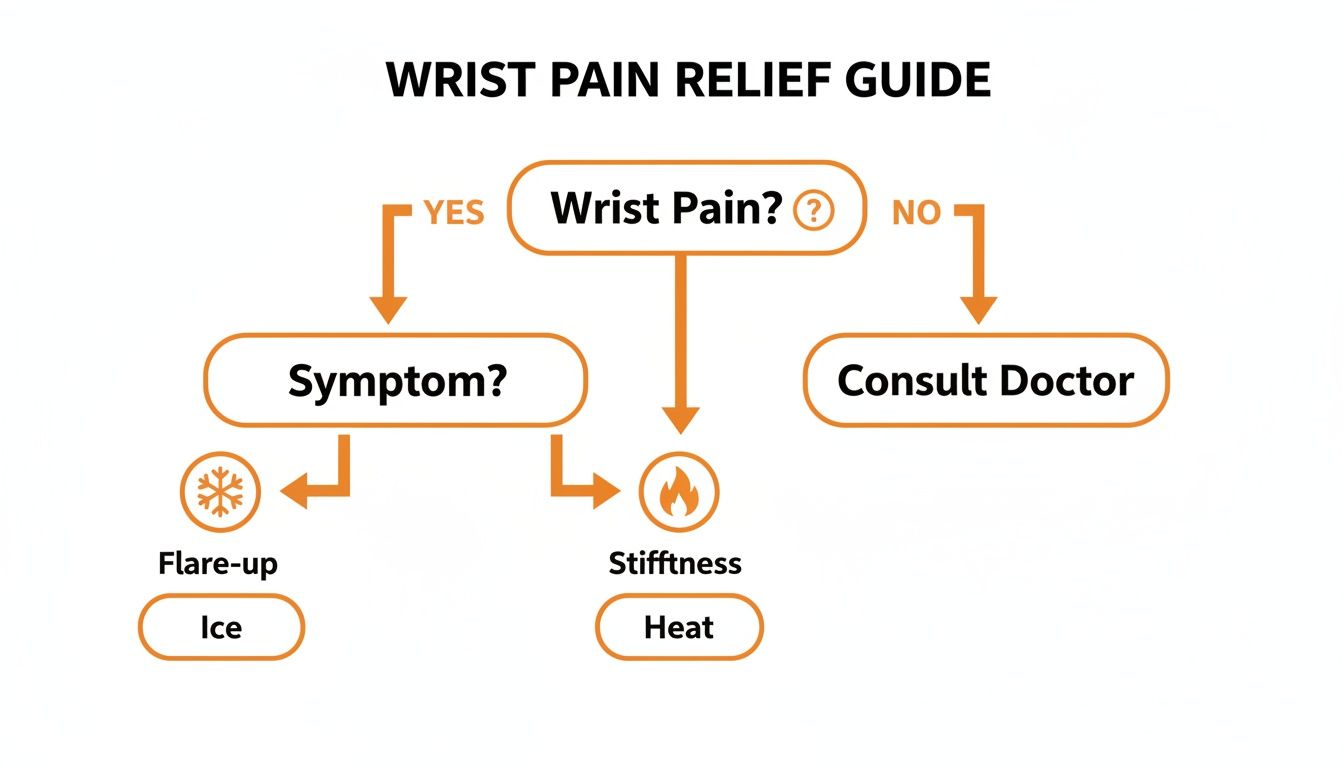
As you can see, the type of pain you're feeling is the most important clue. Reach for ice to cool down inflammation, and use heat to soothe chronic stiffness.
For a quick reference, here's a simple breakdown of these immediate relief methods.
Immediate Relief Methods at a Glance
| Method | Best For | How It Helps |
|---|---|---|
| Give It a Rest | Any type of carpal tunnel pain, especially during a flare-up. | Stops the repetitive motions that are aggravating the median nerve. |
| Cold Therapy | Sudden, acute flare-ups with sharp pain and swelling. | Reduces inflammation and numbs the area by constricting blood vessels. |
| Heat Therapy | Chronic stiffness, dull aches, and soreness without swelling. | Increases blood flow to relax tight muscles and soothe persistent discomfort. |
These simple, yet powerful, techniques empower you to take control the moment symptoms arise.
Why Mastering This Matters
Carpal Tunnel Syndrome (CTS) is more common than you might think, particularly in jobs and lifestyles that involve a lot of repetitive hand movements. While global prevalence hovers around 4-5%, the numbers are much higher in certain regions.
In fact, one analysis revealed a prevalence of 16.4% in North America, with urban populations often more affected due to desk jobs and other occupational factors.
By learning how to respond correctly—using cold for acute pain and heat for chronic aches—you create your own effective first-aid plan. This simple knowledge helps you manage symptoms immediately, often reducing the need for pain medication and preventing the condition from getting worse.
Gentle Stretches and Exercises to Improve Hand and Wrist Mobility
When your wrist is aching and numb from a carpal tunnel flare-up, the last thing you might want to do is move it. While rest is absolutely vital, introducing some gentle, targeted movements into your day is a game-changer for long-term relief.
The right exercises can work wonders by improving your flexibility, easing that frustrating stiffness, and ultimately reducing the pressure on that pinched median nerve. The goal here isn't intensity; it's consistency. Think of these as little therapeutic breaks for your hands, woven throughout your day. You don't need a gym, just a few minutes and a commitment to yourself.
Simple Stretches You Can Do Just About Anywhere
You'd be surprised how easy it is to fit these movements into your daily routine. Sneak in a few prayer stretches during a quick coffee break or practice your tendon glides while on a conference call. The key is to make these exercises feel like a natural part of your day, not another chore.
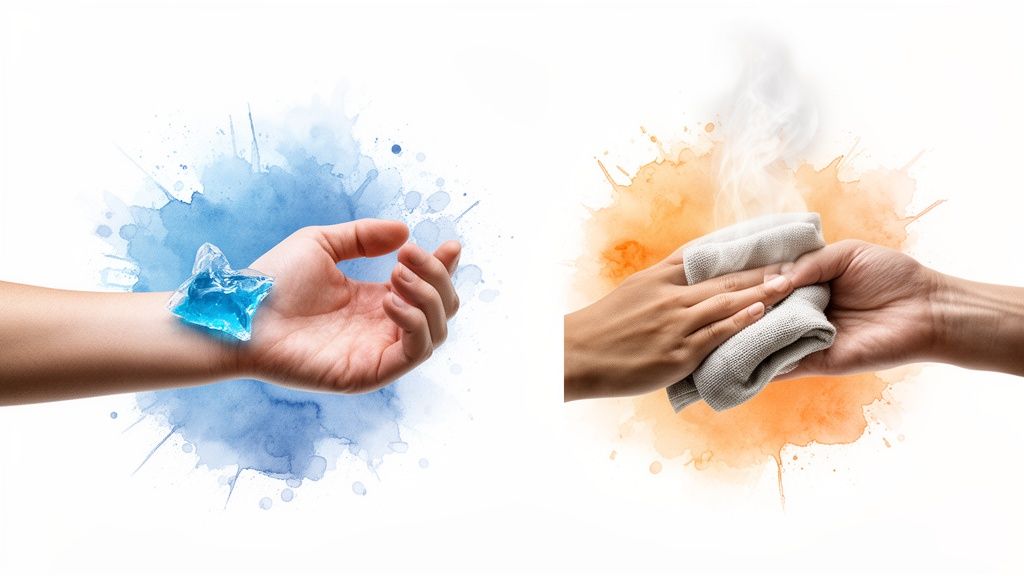
Here are a few of the most effective stretches to get you started:
- Prayer Stretch: Start with your palms together in front of your chest, as if in prayer. Keeping your palms pressed firmly together, slowly lower your hands toward your waist. You should feel a gentle stretch in your forearms. Hold this for 15 to 30 seconds.
- Wrist Flexor Stretch: Hold one arm straight out in front of you, palm facing up. With your other hand, gently bend your wrist down so your fingers point toward the floor. Apply just enough pressure to feel a nice, moderate stretch. Hold for 15 to 30 seconds, then switch sides.
- Wrist Extensor Stretch: This is the opposite of the flexor stretch. Extend your arm with your palm facing down. Now, gently bend your wrist so your fingers point down. Use your other hand to deepen the stretch slightly. Hold for 15 to 30 seconds and repeat on the other wrist.
These simple movements specifically target the tight spots around the carpal tunnel, helping to create a little more breathing room for the median nerve. If you're experiencing similar joint discomfort, you might also find these natural ways to treat tendonitis helpful.
Master the Tendon Glide to Keep Your Nerves Moving Freely
Tendon glides are a fantastic sequence of hand movements designed to help the median nerve and surrounding tendons slide smoothly through the carpal tunnel. They might seem subtle, but they are incredibly effective at reducing irritation.
Think of it like this: Tendon glides are like flossing for your median nerve. They help prevent the nerve from getting "stuck" or compressed, which is exactly what causes that pins-and-needles feeling.
Here’s how to do the five-step sequence:
- The Starting Point: Begin with your wrist in a neutral, straight position. Extend your fingers and thumb straight up toward the ceiling.
- Hook Fist: Now, bend just your finger joints to make a "hook" shape, keeping your main knuckles straight.
- Full Fist: Gently close your hand into a full, relaxed fist.
- Tabletop: From the fist, straighten your fingers out flat, keeping the main knuckles bent at a 90-degree angle. Your hand should look like a little tabletop.
- Straight Fist: Finally, keep your fingers straight and bend only at the main knuckles.
Move through each position slowly, holding it for a couple of seconds before moving to the next. Aim to complete the entire sequence 5 to 10 times, several times a day. It’s this consistent, gentle movement that paves the way for lasting relief from carpal tunnel pain.
Using Heat Therapy to Soothe Chronic Wrist Pain
While cold packs are great for calming a sudden, sharp flare-up, heat therapy is your secret weapon against the deep, persistent ache of chronic carpal tunnel. When you're dealing with that nagging stiffness that makes simple tasks feel monumental, applying gentle warmth can be a true game-changer. Think of it as a comforting hug for your wrist, melting away the tension and promoting healing from within.
The science behind it is simple yet powerful: heat boosts circulation. This increased blood flow brings more oxygen and nutrients to the tissues in your wrist, helping to relax tight ligaments and soothe the irritated median nerve. This isn't just about feeling good in the moment; it's about creating a better healing environment for your wrist.

Making Heat Therapy Part of Your Daily Routine
You don't need a complicated setup to integrate heat therapy into your life. The real key is consistency. A short, focused session can provide hours of relief and make a huge difference in your overall comfort.
For example, imagine a graphic designer who struggles with a deep, aching wrist after hours of using a mouse. They take a 15-minute break and use a microwavable hand warmer, letting the deep, moist heat sink into the joint. This simple act eases the built-up tension, allowing them to finish their workday without the distracting pain and regain the precision they need for their creative work.
The Power of Massage and Gentle Warmth
Combining heat with gentle massage takes the benefits to a whole new level. The warmth primes the muscles and ligaments, making them much more receptive to massage. This one-two punch helps break down adhesions and further improve blood flow, offering a more profound sense of relief.
Products like SunnyBay's USA-made hand warmers are designed with this in mind. Filled with natural flax seeds, they provide sustained, gentle warmth along with a subtle, weighted pressure that can mimic a therapeutic touch. This dual action often soothes the area more effectively than just heat alone.
Applying a warm compress before you do gentle stretches or self-massage can significantly boost the effectiveness of both. The heat prepares the tissues, reducing the risk of strain and maximizing the pain-relieving benefits of the movements.
Carpal tunnel is a widespread issue. A comprehensive review of 38 studies found that carpal tunnel syndrome affects a huge portion of the global population, with a 9% prevalence in North America alone. These figures show just how much CTS disrupts daily life for millions, making simple fixes like heat therapy incredibly important. Microwavable packs like SunnyBay's, crafted with breathable 100% cotton, deliver targeted warmth that dilates blood vessels, helping to slash nerve pressure. You can dive deeper into the prevalence and impact of CTS in this F1000Research article.
Safe and Effective Heat Application Tips
To get the most out of heat therapy without any risks, it's smart to follow a few practical tips. Making these a habit ensures you get consistent, safe relief.
- Keep it brief: Apply heat for 15 to 20 minutes at a time. This is long enough to relax the tissues without risking skin irritation.
- Use a barrier: Always place a thin towel or cloth between the heat pack and your skin to prevent burns.
- Avoid heat with swelling: If your wrist is visibly swollen or feels hot to the touch, stick with cold therapy until that acute inflammation subsides.
By understanding how and when to use warmth, you can effectively manage chronic carpal tunnel pain. For more detailed information, you can explore the fundamentals of using heat therapy safely in our guide.
How to Design an Ergonomic Workspace and Prevent Strain
Your desk setup might be the silent culprit behind your carpal tunnel pain. When you spend hours with your wrists bent at funky angles, you're putting constant, low-grade pressure on the median nerve. Over time, your workstation can become a source of chronic, nagging pain.
The good news? You don't need a fancy or expensive overhaul. Creating an ergonomic space is all about making smart, simple adjustments that encourage your body’s natural alignment.
The main goal is to keep your wrists in a neutral, straight position—not bent up, down, or sideways. Just imagine a straight, solid line running from your forearm through your wrist and into your hand. If you glance down and see your wrists are angled sharply to use your keyboard or mouse, that’s a huge red flag that needs fixing right away.
Your Ergonomic Workspace Audit
Making a few targeted tweaks to your primary tools can dramatically cut down on daily strain. You don't need to rush out and buy all new gear; often, you can use things you already own to make your setup work better for you. Let's break down the key components.
Chair and Keyboard Position
Your chair height is the foundation of a good setup. Adjust it so your feet can rest flat on the floor with your knees bent at roughly a 90-degree angle. From there, your elbows should also fall into a relaxed 90-degree angle, allowing your wrists to float straight over the keyboard without bending.
If your chair is too low, you'll find your wrists bending upward to type, which compresses the carpal tunnel. If it’s too high, they’ll bend downward, creating a different kind of strain. Don't be afraid to use a footrest if you need one to get this alignment just right.
Monitor Height and Mouse Placement
Your monitor should be positioned directly in front of you. The top of the screen should be at or just slightly below your eye level. This simple trick stops you from craning your neck forward, which can mess with the nerve pathways that run all the way down your arm. A stack of books is a perfect no-cost solution to prop up a monitor that’s too low.
Keep your mouse close enough that you aren't reaching for it. Your elbow should stay comfortably tucked by your side. For many people, an ergonomic mouse—one that holds your hand in a more natural "handshake" position—is a game-changing investment.
Small Changes Make a Big Impact
It's helpful to understand that carpal tunnel is just one of several conditions that fall under the umbrella of repetitive strain injuries.
One major meta-analysis found that a staggering 14.4% of people worldwide deal with carpal tunnel syndrome. In high-income countries, that number climbs to 16.9%, mostly because of desk jobs and other repetitive tasks. For many, this leads to chronic stiffness and pain.
This is where gentle, moist heat can work wonders. Using something like SunnyBay's microwavable hand warmers can boost blood flow right where you need it—around the median nerve—helping to ease that deep-seated inflammation. In fact, studies have shown that applying heat can reduce musculoskeletal pain by up to 50%, making it a powerful tool for daily relief. You can find more details on carpal tunnel syndrome's global impact from the National Institutes of Health.
Key Takeaway: Take a hard look at your workspace with one goal in mind: neutral wrist posture. Even small adjustments to your chair, keyboard, and monitor height can prevent the daily micro-stresses that build into significant carpal tunnel pain.
Smart Lifestyle Habits for Long-Term Relief
While immediate fixes like heat therapy or gentle stretches are fantastic for getting you through a painful flare-up, the real secret to lasting relief from carpal tunnel pain is woven into your daily habits. It's the small, consistent adjustments you make that prevent the chronic strain that keeps your median nerve angry. It really comes down to being more mindful of how you position and use your hands all day—and even while you're asleep.
Lasting relief isn't about some grand, one-time fix. It’s about building a foundation of healthier habits that protect your wrists from unnecessary stress.

Protect Your Wrists While You Sleep
It’s amazing how much damage we can do while we’re fast asleep. Many of us bend our wrists into awkward positions, compressing the carpal tunnel for hours. If you often wake up with numb, tingling "pins and needles" in your hands, that’s a classic sign this is happening to you.
Wearing a simple wrist splint to bed can be a game-changer. It holds your wrist in a neutral, straight position, finally giving that median nerve a break from the constant pressure. Even without a splint, just try to be more conscious of your posture. Tuck your hands loosely at your sides instead of curling them under your body or pillow.
Integrate Micro-Breaks Into Your Day
If your work involves a lot of typing, mouse use, or any repetitive hand task, frequent breaks aren't just a good idea—they're essential. Taking a quick 30-60 second break every hour is far more effective than waiting for one long break after hours of strain. This simple habit interrupts the cycle of stress before it can build into a real problem.
What can you do in under a minute? A lot, actually.
- Gently shake out your hands to get the blood flowing again.
- Do a quick prayer stretch or wrist flexor stretch.
- Just stand up and let your arms hang loosely at your sides for a moment.
This isn't about being lazy; it's a proactive strategy. Consistent, small movements prevent the stiffness and inflammation that set the stage for pain, keeping your hands and wrists more resilient throughout the day.
Remember, the point of these breaks is prevention. By stepping away from the keyboard before the pain starts, you're actively reducing the cumulative stress on your median nerve. That’s the key to managing carpal tunnel for good.
When to See a Doctor
Self-care can do wonders, but it's just as important to know when it's time to call in a professional. Carpal tunnel syndrome is often a progressive condition. Ignoring worsening symptoms can, in some cases, lead to permanent nerve damage.
It's time to book an appointment with your doctor if you notice any of these red flags:
- Persistent Numbness: The tingling just won't go away, or it’s making it hard to feel things properly.
- Weakening Grip Strength: Are you dropping things more often? Do you struggle to hold a coffee mug or a pen?
- Pain That Disrupts Sleep: If your wrist pain is so bad it consistently wakes you up at night, that’s a clear sign of significant nerve compression.
- Muscle Wasting: Take a look at the fleshy part of your palm at the base of your thumb. If it looks smaller or weaker than the other hand, see a doctor.
A doctor can give you a proper diagnosis and walk you through the next steps, which could include physical therapy, cortisone injections, or, in more severe cases, surgery. When it comes to nerve issues, early intervention is always your best bet for a full recovery.
Your Top Carpal Tunnel Questions, Answered
When you're dealing with carpal tunnel pain, a lot of questions pop up. Getting straight answers is the first step toward getting relief. Let's break down some of the most common things people ask so you can feel more in control of your recovery.
Is Heat or Cold Better for Carpal Tunnel Pain?
This is a classic question, and the answer isn't one-size-fits-all. It really comes down to what you're feeling right now.
- Reach for Cold when you're having a sudden, sharp flare-up, especially if you see any swelling. Cold therapy helps calm down that angry inflammation and can numb the pain quickly.
- Go with Heat for the nagging, chronic stiffness and dull aches that just won't quit. The wonderful thing about heat is how it relaxes everything. A little warmth from something like a SunnyBay hand warmer boosts blood flow, which helps ease those tight forearm muscles and soothe the irritated nerve. It's perfect for daily comfort and managing persistent symptoms.
Can Carpal Tunnel Go Away on Its Own?
It's tempting to hope it will just disappear, but that's rarely the case. If you have a very mild case from a one-off activity (like a weekend of heavy gardening), it might resolve with rest.
However, for most people, carpal tunnel is a progressive issue. Ignoring it usually means the tingling, numbness, and pain will gradually get worse, potentially leading to long-term nerve damage. The best approach is to be proactive with simple stretches, ergonomic tweaks, and supportive therapies.
Does Massaging the Wrist Help Carpal Tunnel?
Yes, absolutely. Gentle massage can make a real difference, and it's one of the most empowering self-care tools you have. It helps boost blood flow, which delivers healing nutrients to the area and flushes out inflammation. Plus, it can ease the muscle tension in your forearm that often contributes to the problem.
Imagine this: a musician who plays guitar for hours finds their forearm muscles are rock-solid and painful. A few minutes of self-massage helps release that tension, which in turn takes pressure off the wrist and median nerve, allowing them to play more comfortably.
A Pro Tip: Try a little self-massage. Use your opposite thumb to gently but firmly rub the base of your palm and the muscles running down your inner forearm. For an even better experience, use a heat pack first. The warmth loosens everything up, making the massage feel incredible and far more effective.
How Long Should I Wear a Wrist Splint?
Wearing a splint at night is a game-changer for many people. Why? Because most of us curl our wrists when we sleep, which puts a ton of pressure on the median nerve. A splint holds your wrist in a neutral, straight position, giving the nerve a much-needed break all night long.
Most doctors will suggest wearing it every night for a few weeks to really feel the benefits. Some people also wear one during the day if they're doing an activity that they know triggers their pain. But as always, it’s a good idea to chat with your doctor to get advice tailored to your specific needs.
For over 20 years, SunnyBay has been committed to creating simple, drug-free pain relief solutions right here in the USA. Our microwavable hand warmers are specifically designed to deliver that deep, soothing heat that helps ease the chronic aches of carpal tunnel. Let us help you get back to doing what you love. Find your perfect source of comfort at sunny-bay.com.


