


What helps severe menstrual cramps: Practical relief you can try today
-
When severe menstrual pain hits, you don't have time to sort through complicated advice—you just need something that works, and fast. The best way to get immediate relief often comes down to a simple, powerful combination: targeted heat, the right over-the-counter painkiller, and a bit of gentle movement.
This trio works together to tackle the pain from all sides, helping to relax your muscles, block the chemical signals causing the cramps, and improve circulation right where you need it most.
Your Quick Guide to Easing Severe Menstrual Cramps
Severe menstrual cramps, clinically known as dysmenorrhea, can be completely debilitating. But knowing exactly what to do in the moment can give you back a sense of control when the pain feels overwhelming.
Let's start with your first-response toolkit for getting through the worst of it. Each of these strategies is a piece of the puzzle, and when you put them together, you create a much stronger defense against intense pain.

Immediate Relief Strategies
When you're doubled over in pain, you need a clear game plan. Think of these as your go-to moves for immediate relief. Applying heat, for instance, isn't just about feeling cozy; it’s a proven way to increase blood flow and tell those spasming uterine muscles to calm down. Likewise, a short walk isn't about pushing through pain—it's about prompting your body to release its own natural painkillers.
To make it even clearer, here’s a quick breakdown of the most effective strategies and why they work.
Immediate Relief Strategies for Severe Menstrual Cramps
| Strategy | How It Works | Best For |
|---|---|---|
| Heat Therapy | Relaxes the uterine muscles and improves blood flow to the pelvic area, which helps ease the intensity of contractions. | Soothing those deep, persistent aches and providing comfort without medication. |
| NSAIDs | Directly blocks the production of prostaglandins—the hormone-like compounds that trigger painful uterine contractions. | Tackling the chemical source of the pain for more widespread, effective relief. |
| Gentle Movement | Increases circulation throughout the body and prompts the release of endorphins, your body's natural pain and stress fighters. | Alleviating stiffness, reducing that awful bloated feeling, and giving your mood a lift. |
The real magic happens when you combine these methods. Try using a hands-free heating patch while you take a slow, gentle stroll around the block. This approach tackles both the physical muscle tension and the underlying chemical triggers, giving you your best shot at finding meaningful relief, fast.
So, What's Really Causing Your Severe Cramps?
If you're looking for real relief from severe menstrual cramps, the first step is knowing what’s actually going on inside your body. That intense, often debilitating pain isn't something you're imagining—it has a very real biological trigger: hormone-like compounds called prostaglandins.
Each month, the lining of your uterus thickens in preparation for a potential pregnancy. When that doesn't happen, the lining breaks down and sheds, which is what we know as our period. This whole process is kicked off by prostaglandins, which act as signals telling the uterine muscles to contract and push the lining out.
Think of it like a charley horse in your leg after a tough workout. When your body pumps out too many prostaglandins, those uterine contractions become overly strong and frequent. This intensity can actually squeeze the blood vessels, cutting off oxygen to the muscle tissue. That lack of oxygen is precisely what causes the sharp, cramping pain you feel.
Primary vs. Secondary Dysmenorrhea: What's the Difference?
Not all period pain is created equal. Doctors usually categorize severe cramps into two main buckets, and figuring out which one you fall into is key to finding a solution that works.
- Primary Dysmenorrhea: This is your classic, run-of-the-mill (though still incredibly painful) period pain. It isn't caused by any other medical condition. It's a direct result of that prostaglandin overproduction we just talked about. Typically, it starts a day or two before your period and hangs around for the first few days.
- Secondary Dysmenorrhea: This kind of pain points to an underlying issue with the reproductive organs. Conditions like endometriosis, uterine fibroids, or Pelvic Inflammatory Disease (PID) are common culprits. The pain often gets worse over time and can last much longer than typical menstrual cramps.
If your cramps are a new thing for you, have gotten significantly worse recently, or just aren't budging with the usual remedies, it might be a sign of a secondary problem. Getting a handle on what's going on with your hormones can be a great place to start, as this detailed female hormone blood test guide explains.
Knowing the "why" behind your pain is incredibly empowering. It validates that what you're feeling is real and has a physiological basis, shifting your mindset from just enduring the pain to actively managing its source.
You're Not Alone: The Global Impact of Period Pain
Severe menstrual cramps are a huge global health issue, throwing a wrench into daily life for millions of people. A major World Health Organization review found that rates of dysmenorrhea ranged from 8.8% to a staggering 94% across different populations.
Overall, the prevalence sits somewhere between 16% and 91% in communities, with 2% to 29% of women reporting pain so severe it completely disrupts their lives.
Here in the United States, about 15% of adolescent girls report severe dysmenorrhea, which is a leading cause of missed school and work. Since many people are understandably hesitant to rely on strong painkillers every single month, they often seek out drug-free options like rest and heat therapy.
Even though more than half of young women with period pain turn to medication, up to 40% still struggle with daily activities. This really underscores the need for effective, accessible relief methods—like a good reusable heat pad—that don't involve popping a pill. For a deeper dive, you can read the full research behind these menstrual pain statistics.
The Power of Heat and Massage for Natural Pain Relief
When you're doubled over with severe menstrual cramps, sometimes the simplest, drug-free solutions are the most effective. Two of the most trusted methods out there are heat therapy and gentle massage. And no, these aren't just old wives' tales—there's real science behind why they work so well to calm down those intense uterine contractions.
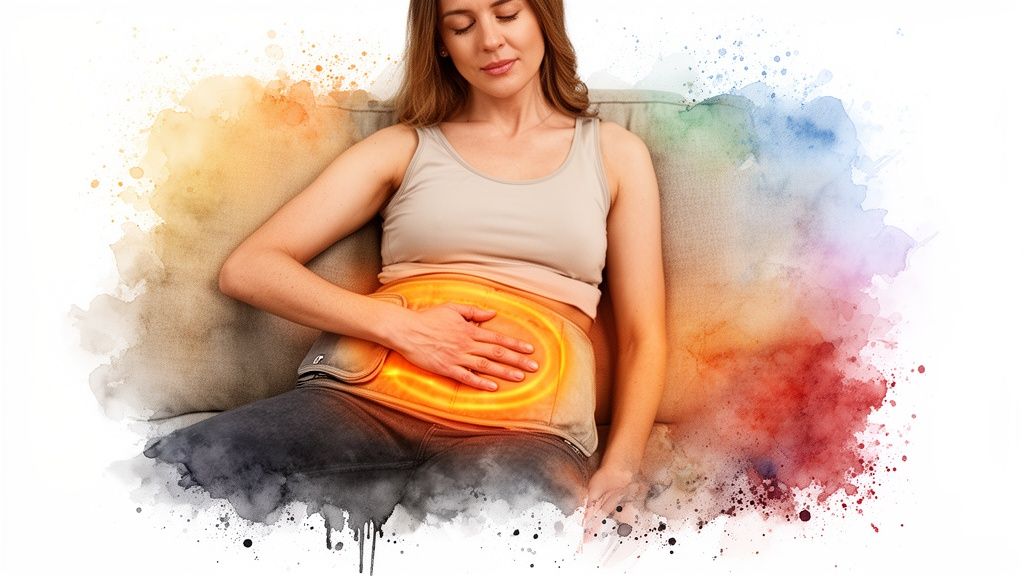
Applying warmth to your lower abdomen does more than just feel cozy. Think of it as a signal for your cramping muscles to finally let go. The heat helps your blood vessels open up, boosting circulation right where you need it. This improved blood flow brings a fresh supply of oxygen to the spasming muscles and helps whisk away the prostaglandins and other pain-inducing substances.
Unlocking the Comfort of Heat Therapy
The real magic of heat happens at a molecular level. Researchers have found that applying warmth of around 104°F (40°C) activates specific heat receptors in your body that are located right next to your pain receptors. When you flip the "on" switch for these heat receptors, they actually block pain signals from getting to your brain. For many people, the relief is powerful enough to rival over-the-counter pain meds.
Imagine this: You've had a long, stressful day, and the familiar ache of cramps starts to build. Instead of reaching for pills, you warm up a heat wrap and settle onto the couch. Within minutes, the steady, deep warmth begins to melt the tension in your abdomen. The sharp pain softens into a dull, manageable ache. This isn't just about feeling warm; it's about actively turning down your body's pain volume, allowing you to relax and reclaim your evening.
You can dive deeper into the science behind the benefits of heat therapy in our detailed guide. It's an incredibly effective tool for managing severe cramps without any side effects.
How to Use Heat Therapy Effectively
Getting the most out of heat therapy is easy. Just follow these simple steps for safe, soothing relief:
- Choose Your Tool: You've got options! Electric heating pads, microwavable wraps, a classic hot water bottle, or even a warm bath will do the trick. A microwavable wrap filled with something like flaxseed is a great choice because it offers both warmth and gentle, comforting pressure.
- Apply with a Barrier: Never put a heat source directly on your bare skin. Always wrap it in a thin towel or place it over a layer of clothing to prevent burns.
- Find the Right Duration: Aim for sessions of 15-20 minutes. You can repeat this every couple of hours, or whenever you feel the pain creeping back.
This consistent warmth helps keep your muscles relaxed and blood flowing, stopping cramps from getting worse.
Pairing Heat with Gentle Abdominal Massage
While heat tackles the pain from the inside out, a gentle massage offers direct, physical relief to those tense muscles. Massaging your abdomen can help manually relax the uterine muscles and the surrounding area. It also has a neat trick up its sleeve: the sensation of touch can actually interrupt and scramble the pain signals traveling to your brain.
Just picture it: Sarah, a graphic designer, often has to call in sick because of debilitating cramps. This time, she decides to combine her trusty heating pad with a simple massage. Lying down with the warm pad on her lower belly, she uses her fingertips to make slow, clockwise circles around her navel for just five minutes.
The heat had already started to dull the ache, but the massage felt like it was untying the tight knots of pain deep inside. This one-two punch allowed her to manage the pain without medication and finish her project from the comfort of her home. It was a small victory that felt absolutely huge.
A Step-by-Step Guide to the Heat and Massage Combo
Combining these two therapies creates a powerful duo that attacks severe cramps from multiple angles. Here’s how you can do it yourself:
- Step 1: Prepare: Lie down comfortably on your back, bending your knees. Slide a pillow under your knees to take any strain off your lower back.
- Step 2: Apply Heat: Place your heating pad or warm wrap on your lower abdomen. Let the warmth sink in for about five minutes to give your muscles a head start on relaxing.
- Step 3: Begin the Massage: Using the flat pads of your fingers, start making gentle, circular motions around your belly button. Move in a clockwise direction, slowly making the circles bigger.
- Step 4: Continue for 5-10 Minutes: Keep the pressure light but firm. The goal here is to soothe, not create more discomfort. Breathe deeply and try to focus on the feeling of your muscles releasing.
This simple routine can easily become your go-to strategy for period pain, offering a reliable and nurturing way to reclaim your comfort.
Proven At-Home Remedies and Lifestyle Adjustments
When you're dealing with severe menstrual cramps, a few quick fixes are great, but the real game-changer is building a long-term strategy. It's about looking at your daily habits and making small, consistent tweaks that can mount a powerful defense against pain before it even has a chance to start. Think of this as your playbook for smart, at-home strategies that put you back in control.
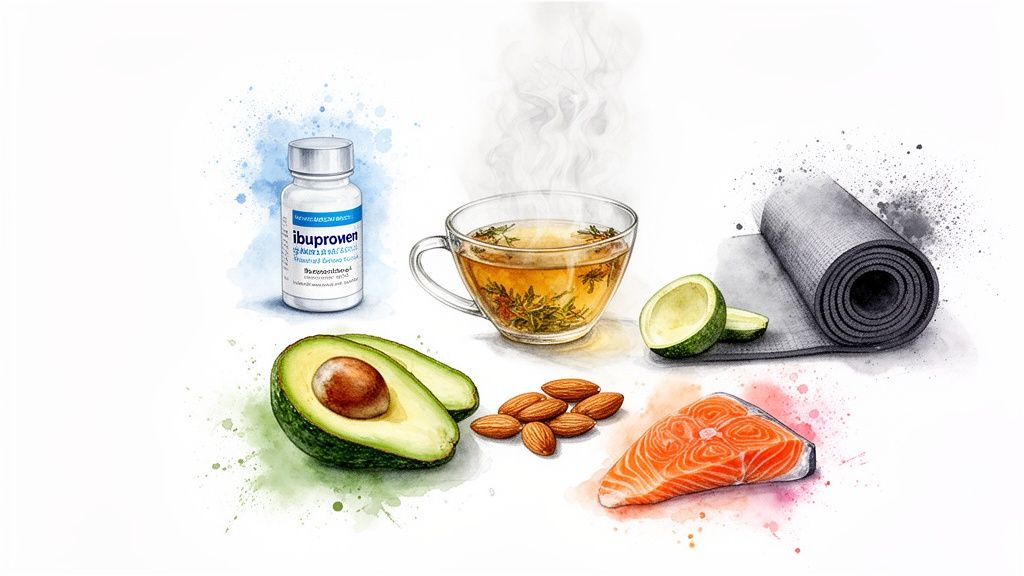
We'll get into the nitty-gritty of using over-the-counter meds effectively, the surprising power of gentle movement, and how to make food choices that work with your body, not against it. Each of these tips is designed to be simple and easy to weave into your life.
Using Over-The-Counter Medications Strategically
When the pain hits hard, reaching for an over-the-counter (OTC) pain reliever is often the first line of defense. And for good reason. Nonsteroidal anti-inflammatory drugs (NSAIDs) like ibuprofen and naproxen are especially good for cramps because they get right to the source, blocking the production of prostaglandins—those pesky compounds that make your uterus contract so fiercely.
The secret to making them truly effective is all in the timing. Instead of waiting until you’re already doubled over, try taking an NSAID a day or two before you expect your period to start. This proactive move stops the prostaglandin party before it even gets going, preventing the pain from escalating in the first place.
Here’s what that looks like in real life: Let's say your cramps always kick in on a Wednesday morning. By taking your first dose of ibuprofen on Tuesday evening, you’re getting ahead of the chemical chain reaction. It can literally mean the difference between a normal day and one spent curled up in a ball.
Of course, always stick to the dosage on the package and have a chat with your doctor if you have any underlying health issues or are on other medications.
The Gentle Power of Movement
I know, I know. When you're in pain, the last thing you feel like doing is moving. But hear me out—light physical activity can be one of the best natural things you can do for severe cramps. Gentle movement gets blood flowing to your pelvic region and, even better, prompts your body to release endorphins, which are essentially nature's painkillers.
This isn't about pushing through an intense workout. The goal here is to soothe, not to strain.
- Restorative Yoga: Poses like Child's Pose or a gentle Cat-Cow can ease tension in your lower back and abdominal muscles.
- A Calm Walk: A slow, mindful stroll around the block can boost circulation and your mood without demanding too much from your body.
- Light Stretching: Focus on simple stretches for your hips and lower back to release the tightness that often makes cramping feel worse.
Fighting Cramps from Your Kitchen
What you eat can have a surprisingly direct impact on how bad your cramps get. Some foods help cool inflammation and calm muscle spasms, while others can pour fuel on the fire. A few simple swaps in your diet can make a world of difference.
Try to fill your plate with foods rich in:
- Magnesium: This mineral is a muscle-relaxing powerhouse that can help ease those intense uterine contractions. You'll find it in dark leafy greens, nuts, seeds, and even a little dark chocolate.
- Omega-3 Fatty Acids: Famous for their anti-inflammatory effects, omega-3s can help lower prostaglandin levels. Salmon, walnuts, and flaxseeds are fantastic sources.
On the flip side, it’s a good idea to ease up on things that can increase inflammation and bloating, like too much caffeine, salt, and heavily processed foods. If you're looking for more ideas on an anti-inflammatory diet, our guide on reducing inflammation naturally has some great tips. And for anyone whose cramps are linked to a condition like endometriosis, this endometriosis flare-up survival guide is an incredibly helpful resource.
When It's Time to See a Doctor About Your Cramps
We've covered some great home remedies and lifestyle shifts, but it’s crucial to know when your body is telling you something more is going on. Yes, period cramps are incredibly common, but pain that consistently throws your life off track isn’t something you just have to "tough out."
Knowing when to call in a professional is a powerful part of taking charge of your health.
Think of it this way: a little engine noise in your car might be normal, but a flashing red light on the dashboard is a clear signal to pull over. Certain symptoms are your body's "check engine" light, letting you know it's time to book an appointment.
Red Flags That Mean It's Time to Call the Doctor
It’s easy to get stuck wondering what's "normal" pain versus a sign of a real problem. The best advice? Trust your gut. If your pain feels different, has ramped up in intensity, or is showing up with new sidekicks, it's always worth getting a professional opinion.
Here are some specific signals that it's time to make that call:
- Sudden or Severe Worsening: Your cramps have abruptly become much more intense than they used to be.
- Your Go-Tos Stop Working: The heating pad or NSAIDs that used to bring relief suddenly aren't cutting it anymore.
- Pain Outside Your Period: You're dealing with significant pelvic pain at other times of the month, not just before or during your period.
- Extremely Heavy Bleeding: You’re soaking through a pad or tampon every hour for several hours, or you're passing large clots (think bigger than a quarter).
- Other Concerning Symptoms: Your cramps are accompanied by fever, dizziness, nausea, or a foul-smelling vaginal discharge.
- Pain During Intercourse: You experience deep pain during or after sex (a common sign of underlying conditions like endometriosis).
For example, maybe your cramps have always been a manageable 4-out-of-10 pain, easily quieted with a warm compress. But for the last three months, the pain has shot up to an 8, and now it lingers for a full week. That kind of distinct change is your body’s way of waving a red flag.
How to Prepare for Your Appointment
Going into a doctor's appointment prepared can make all the difference. The more specific you can be, the easier it is for your doctor to connect the dots and figure out what’s going on. Your goal is to paint a clear picture of your experience.
Before you go, take a few minutes to jot down some notes.
- Symptom Timeline: When did the severe pain start? Does it hit before, during, or after your period? How many days does it last?
- Pain Description: Try to describe it. Is it a dull, constant ache or more of a sharp, stabbing sensation? Where do you feel it—your abdomen, lower back, or thighs?
- Cycle Details: Keep a simple log of your last few periods. Note the start dates, how long your cycle is, and whether your flow is light or heavy.
- What You've Tried: List the remedies you've used (like heat wraps, ibuprofen, certain stretches) and note how well—or not well—they worked.
- Other Symptoms: Mention anything else you've noticed, even if it seems unrelated. Things like bloating, fatigue, or changes in bowel movements can be important clues.
What to Expect at the Doctor's Office
Your doctor's main goal is to figure out if your pain is primary dysmenorrhea (cramps without an underlying medical condition) or secondary dysmenorrhea (cramps caused by something else). They'll start by simply talking with you, using the information you’ve gathered to guide the conversation.
Don't hold back. There’s no such thing as TMI when it comes to your health. Your doctor has heard it all before, and your honesty is the fastest path to an accurate diagnosis.
After you talk, your doctor will likely perform a pelvic exam. This is a standard procedure to check for any physical abnormalities in your reproductive organs. From there, they might suggest other tests to get a better look, such as:
- An Ultrasound: This uses sound waves to create a picture of your uterus and ovaries, which can help spot things like fibroids or cysts.
- Blood Tests: These can check for signs of infection or see if your hormones are out of balance.
Asking for help isn't a sign of weakness—it's the opposite. It means you’re taking your pain seriously and taking control of your health.
Creating Your Monthly Pain Management Plan
Switching from simply reacting to pain to proactively managing it can completely change your relationship with your cycle. When you create a personalized monthly plan, you're not just dreading your period anymore—you're meeting it with a strategy that anticipates your body’s needs. This is all about building a system that works for you, month after month.
The basic idea is to think in two distinct phases: the week leading up to your period and the days when you're actually menstruating. By tackling both, you can soften the blow of severe cramps and have your support system ready when you need it most.
The Pre-Period Prep Phase
In the 5-7 days before your period is expected, simple, preventative steps can make a huge difference in the severity of the pain to come. This is your chance to get ahead of the inflammation and muscle tension that cause those debilitating cramps. It’s like training for a marathon instead of just showing up on race day and hoping for the best.
Some effective preventative measures include:
- Focusing on Anti-inflammatory Foods: Load up on omega-3-rich foods like salmon and walnuts. Don't forget magnesium-packed leafy greens and almonds, either.
- Prioritizing Gentle Movement: Try to incorporate daily stretching, some restorative yoga, or even just a calm walk to boost circulation and release natural, mood-lifting endorphins.
- Staying Hydrated: It sounds simple, but drinking plenty of water really does help reduce bloating and can ease the overall intensity of cramps.
Assembling Your Period Relief Toolkit
For the days when your period actually arrives, having a dedicated 'relief toolkit' can be a game-changer. Instead of scrambling for solutions when you're already doubled over in pain, you’ll have everything you need in one convenient spot.
Your toolkit is your personal comfort station. It’s a practical act of self-care that acknowledges your pain is real and ensures you have immediate access to the things that bring you the most relief.
Here’s a good starting point for your toolkit:
- Your Go-To Heat Source: Whether it’s an electric pad or a microwavable wrap, have it clean and ready. To find the right fit, check out this guide on the best heating pad for menstrual cramps.
- NSAIDs: Keep ibuprofen or naproxen on hand so you can take them at the very first twinge of pain.
- Comforting Teas: Herbal teas like chamomile or ginger can soothe your system and help you relax.
- A Simple Symptom Tracker: Use a small notebook or a phone app to jot down pain levels, what you ate, and which remedies you tried.
This timeline helps visualize the journey from dealing with typical cramps to recognizing the red flags that mean it's time to see a doctor.
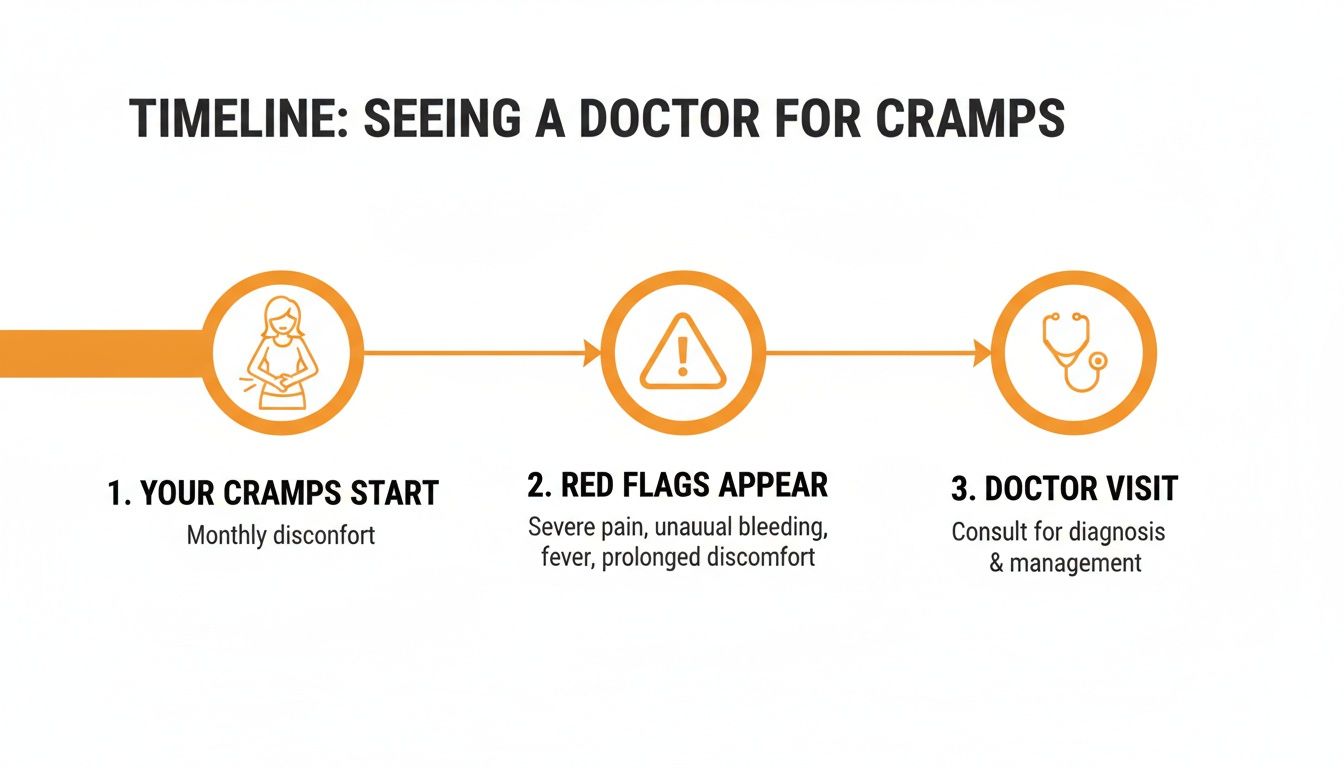
The main takeaway is that while self-care is a powerful first step, pain that gets worse or becomes unmanageable needs a doctor's attention. Over time, your symptom tracker will reveal your unique patterns and triggers, helping you refine your plan and turn a monthly struggle into a predictable, manageable routine.
Got Questions About Severe Menstrual Cramps? We've Got Answers.
It's totally normal to have questions when you're dealing with intense period pain. After digging into the causes and remedies, let's tackle some of the most common concerns that might still be on your mind.
Can Severe Menstrual Cramps Be a Sign of Infertility?
This is a big worry for many, and it’s a valid question. The short answer is: it depends. Most of the time, severe cramps (the kind doctors call primary dysmenorrhea) have absolutely no impact on your ability to conceive.
However, if the pain is caused by an underlying condition like endometriosis or pelvic inflammatory disease (PID), there can be a link to fertility challenges. If your pain feels debilitating, doesn't go away, and you're worried about your future plans, the best step is to see a healthcare provider for a proper diagnosis and peace of mind.
How Long Can I Safely Use a Heating Pad?
When you’re in pain, that warmth feels like a lifesaver. For most standard electric heating pads, a good rule of thumb is to apply them for 15-20 minutes at a time. This gives your muscles a chance to relax without overdoing it.
Some products, like low-level continuous heat wraps, are designed for longer wear—often several hours. The key is to always, always read and follow the manufacturer's specific instructions.
Safety First: To avoid burns or skin irritation, never put a heat source directly on your bare skin. Always have a layer of clothing or a thin towel in between. And please, try not to fall asleep with an electric heating pad still switched on.
Why Do My Back and Legs Hurt So Much During My Period?
If you feel like your cramps are radiating into your lower back and down your thighs, you're not imagining things. This is a classic case of what’s known as “referred pain.”
Think of it like a busy intersection for your nervous system. The nerves connected to your uterus are closely intertwined with the nerves in your lower back, hips, and legs. When your uterus contracts intensely, it sends out powerful pain signals that can get "crossed," making your brain think the pain is also coming from those other areas.
This is where a large, flexible heat pack can be a game-changer. By draping it over both your abdomen and lower back, you can soothe all the affected nerve pathways at once, offering much more comprehensive relief.
Are There Any Supplements That Actually Help with Cramps?
While no supplement is a magic bullet, some research suggests certain ones can genuinely help take the edge off.
- Magnesium: This mineral is a muscle's best friend. It can help ease the spasms in your uterine wall.
- Omega-3 Fatty Acids: Known for their anti-inflammatory power, these can help dial down the production of those cramp-causing prostaglandins.
- Vitamin B1 and Vitamin E: Studies have also linked both of these vitamins to a reduction in the intensity and duration of period pain.
Before you start a new supplement regimen, it's really important to chat with your doctor. They can help you figure out if it's a good choice for you and what the right dosage should be.
For drug-free, reliable relief that targets pain right where it hurts, explore the full range of microwavable heat wraps and pads from SunnyBay. Designed for deep, soothing comfort and long-lasting warmth, our products can help you find your comfort zone, month after month. Find your perfect solution at https://sunny-bay.com.


